Voice AI5 articles

Voice AI

Articles

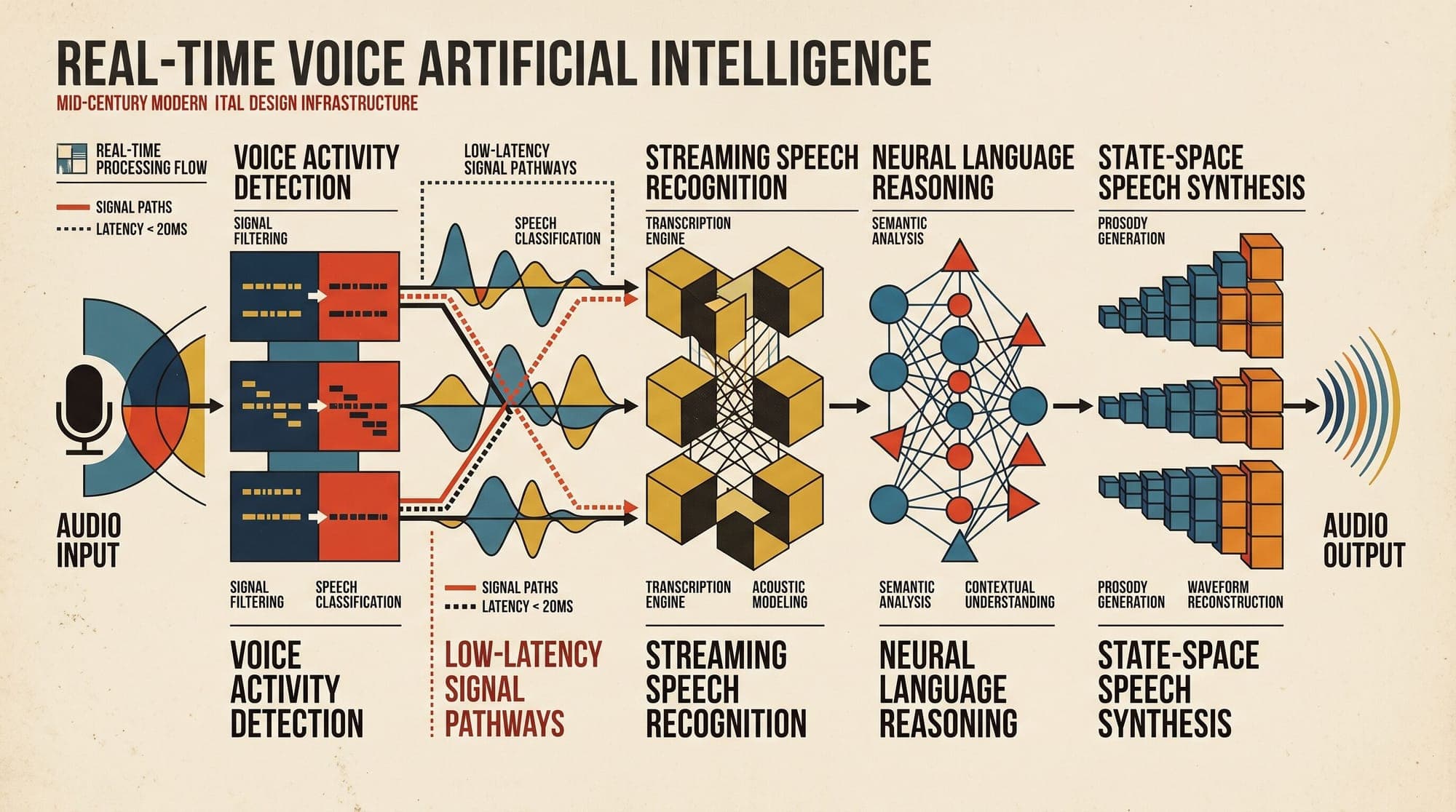
  • Real-Time Voice AI Agent Frameworks in Production: Comparing LiveKit Agents, Pipecat, OpenAI Realtime API, and Ultravox

    Real-Time Voice AI Agent Frameworks in Production: Comparing LiveKit Agents, Pipecat, OpenAI Realtime API, and Ultravox Deploying conversational voice agents in production requires solving a fundamental physics and networking problem: human conversational turn-taking occurs within an average gap of 200 to 300 milliseconds. When an artificial conversational agent exceeds 600 to 800 milliseconds of round-trip latency, users perceive the interaction as sluggish, talk over the assistant, or experie

    1 min
  • Ringg Raises 0M from Peak XV to Scale Enterprise Voice AI Agents

    Indian voice AI startup Ringg has secured $10 million in fresh capital from Peak XV Partners as an extension to its Series A round. The funding brings the startup's total Series A capital to $15.5 million, following an initial $5.5 million tranche closed earlier in 2026. The capital injection comes as voice remains the dominant channel for commercial communication in India. According to survey data from Truecaller, over 76% of Indian consumers prefer phone interactions when contacting businesse

    1 min
  • Speech-to-Text Serving in Production: Comparing Faster-Whisper, Moonshine, SenseVoice, and NeMo Canary Architecture, Streaming Latency, and GPU Economics

    In conversational voice AI and real-time agentic workflows, the speech-to-text (STT) layer sets the hard lower bound on system responsiveness. Human conversational cadence expects turn-taking latencies between 200ms and 500ms. When an AI pipeline must accommodate downstream large language model (LLM) time-to-first-token generation (100ms to 250ms) and text-to-speech (TTS) audio synthesis (100ms to 200ms), the automatic speech recognition (ASR) stage cannot exceed 100ms to 150ms of processing ove

    1 min
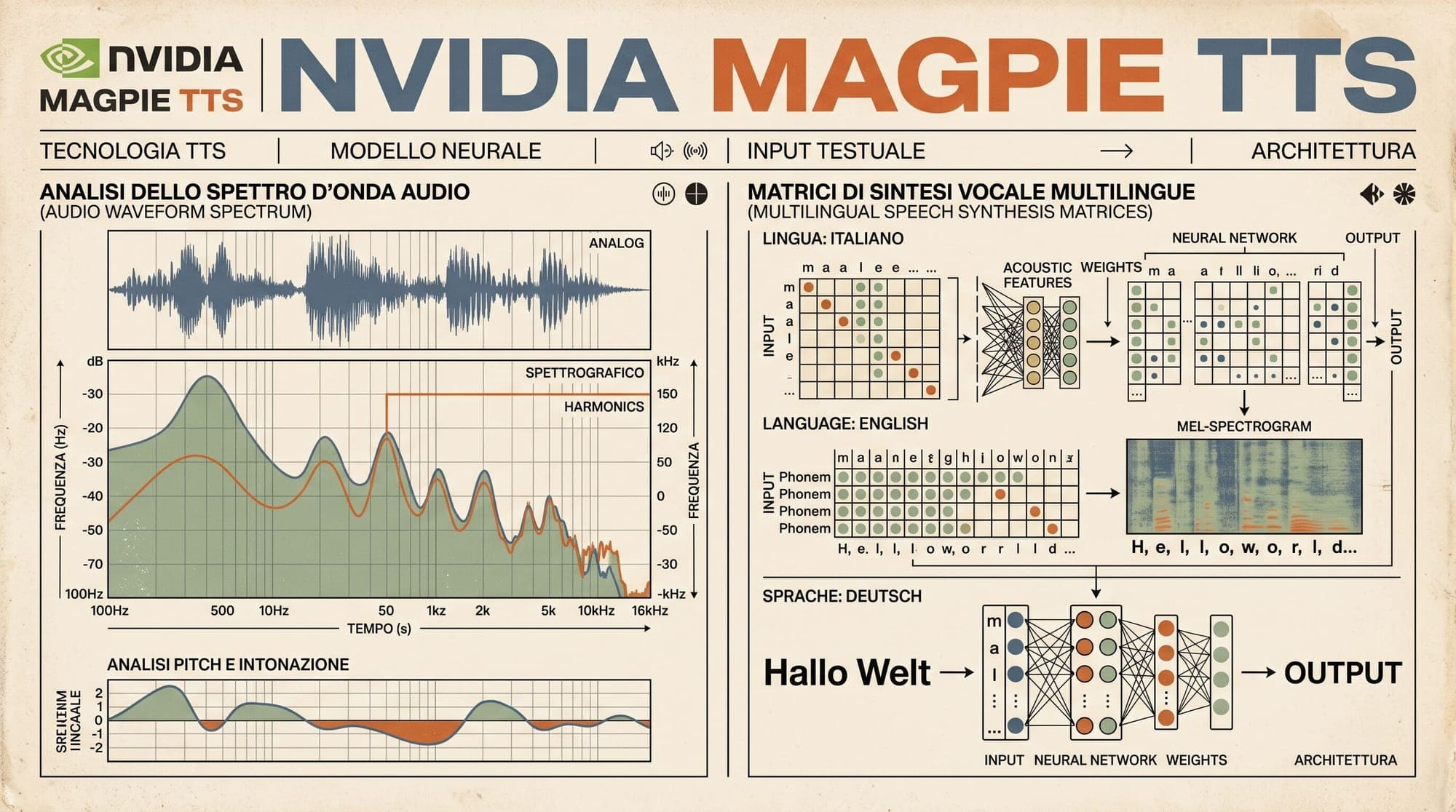
  • NVIDIA Releases Magpie Multilingual TTS: 364M Open-Weight Model for Sub-200ms Voice Agents

    NVIDIA has released Magpie Multilingual TTS, a 364-million parameter open-weights text-to-speech model engineered for low-latency conversational AI agents. Released under the NVIDIA Open Model License, the model is available as open checkpoints on the Hugging Face Hub and as an optimized microservice container within NVIDIA NIM. The release expands language support to 12 languages: English, Spanish, French, German, Italian, Vietnamese, Mandarin, Hindi, Japanese, Modern Standard Arabic, Korean,

    1 min
  • Real-Time Voice Agent Architecture: WebRTC, Cascaded Pipelines vs. Native Speech-to-Speech, and Sub-500ms Latency Budgets

    Building production-grade real-time voice AI systems requires engineering around a strict physical constraint: human conversational cadence. In natural human dialogue, the typical gap between turns ranges from 200 to 300 milliseconds. When an interactive voice agent incurs a total round-trip latency above 700 milliseconds, users perceive the interaction as sluggish. When latency exceeds 1,000 milliseconds, conversational dynamics collapse into frequent interruptions, speech collisions, and awkwa

    1 min