Agents12 articles

Agents

Articles

  • IBM Research Evaluates Agentic Memory Sizing Across 8 Models: Dosage Calibrations, Ceiling Effects, and Token Efficiency

    In a technical report published on August 18, 2026, researchers at IBM Research detailed empirical evaluations on sizing and calibrating agentic memory across eight large language models. The study, conducted using the open-source ALTK-Evolve framework across the AppWorld benchmark, demonstrates that agentic memory performance is governed by capability-dependent dosage rather than uniform prompt accumulation. Agentic memory architectures typically extract procedural guidelines from prior execut

    1 min
  • Google Opens Gemini in Chrome to All U.S. Android Users and Extends Auto Browse to Mobile

    Google expanded Gemini in Chrome to all Android users across the United States on August 18, 2026. The update introduces the browser's built-in AI assistant to mobile handsets and extends "auto browse," Google's agentic web automation feature, to smartphones for Google AI Pro and AI Ultra subscribers. The Android rollout follows the initial launch of Gemini in Chrome for desktop environments in September 2025. On mobile devices, the assistant provides on-page article summaries, contextual answe

    1 min
  • Executable Code Actions vs. JSON Tool Calling: Architecture, Token Economics, Sandboxing, and Expressivity in Production AI Agents

    Executable Code Actions vs. JSON Tool Calling: Architecture, Token Economics, Sandboxing, and Expressivity in Production AI Agents The dominant paradigm for connecting large language models to external tools has relied on structured JSON function calling. First standardized across commercial APIs via JSON Schema manifests and constrained decoding, this approach frames agent interaction as remote procedure calls (RPC): the model outputs a JSON object specifying a tool name and parameters, the ho

    1 min
  • Warp Launches Warp Factories to Automate Multi-Agent Software Development Lifecycles

    Terminal and developer tools maker Warp has introduced Warp Factories, a turnkey infrastructure system designed to manage and orchestrate autonomous AI coding agents across the software development lifecycle. The platform aims to lower the barrier for engineering teams implementing multi-agent workflows by providing preconfigured orchestration pipelines, evaluation harnesses, and runtime observability. Software Factory Architecture The "software factory" model structures development into five

    1 min
  • Agent Memory Architectures in Production: Working Context, Episodic Buffers, Semantic Graphs, and State Serialization

    Large Language Models operate as stateless prediction engines: every API call processes an input prompt independently, without retaining memory of previous turns, decisions, or external interactions. While extending context windows to 1 million or 2 million tokens provides temporary capacity for long transcripts, treating raw context windows as long-term memory introduces severe engineering bottlenecks. Unbounded context growth dramatically inflates time-to-first-token (TTFT) latency, increases

    1 min
  • Tencent Releases UI-Mate: Open-Weight Foundation GUI Agents with In-Context Demonstration Learning

    Tencent's HY Frontier team has released UI-Mate, an open-weight foundation GUI agent designed for autonomous computer operation across desktop environments. Available in 27-billion and 9-billion parameter configurations, the models pair environment-grounded reinforcement learning with an in-context demonstration pipeline that allows agents to reference structured human workflows during execution. Alongside model weights on Hugging Face, Tencent published a technical report, code repository, and

    1 min
  • Multi-Agent Orchestration in Production: State Machines, Swarms, and Error Cascades

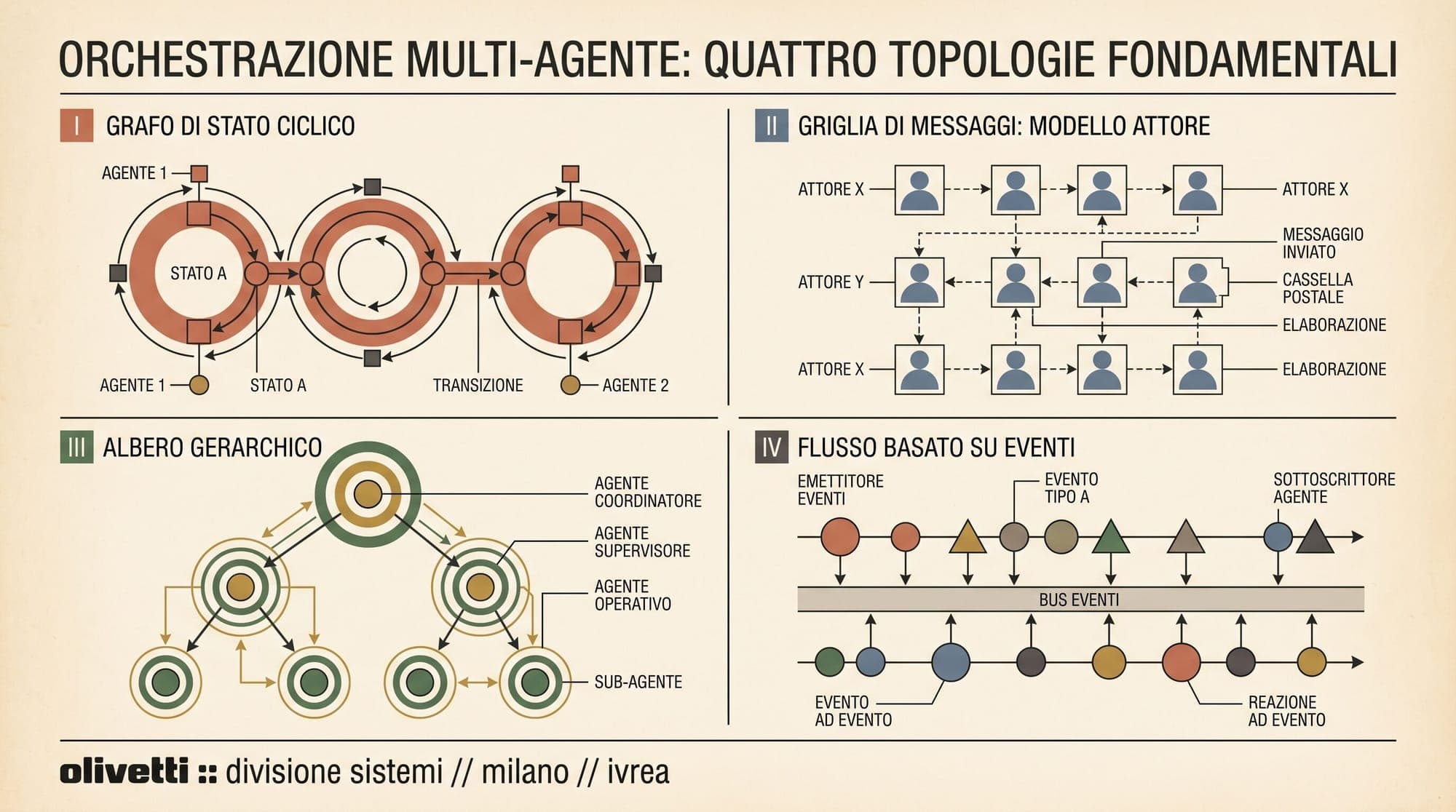
    Moving large language model applications from isolated prompts to multi-agent architectures introduces distinct systemic complexities. While single-agent systems face localized points of failure, multi-agent topologies exhibit emergent dynamics such as cascading hallucinations, coordination deadlocks, and severe context bloat. Designing multi-agent systems for production environments requires selecting explicit orchestration paradigms, bounding error propagation, and enforcing durable state per

    1 min
  • Model Context Protocol (MCP) in Production: Architecture, Security Boundaries, and Latency Overheads

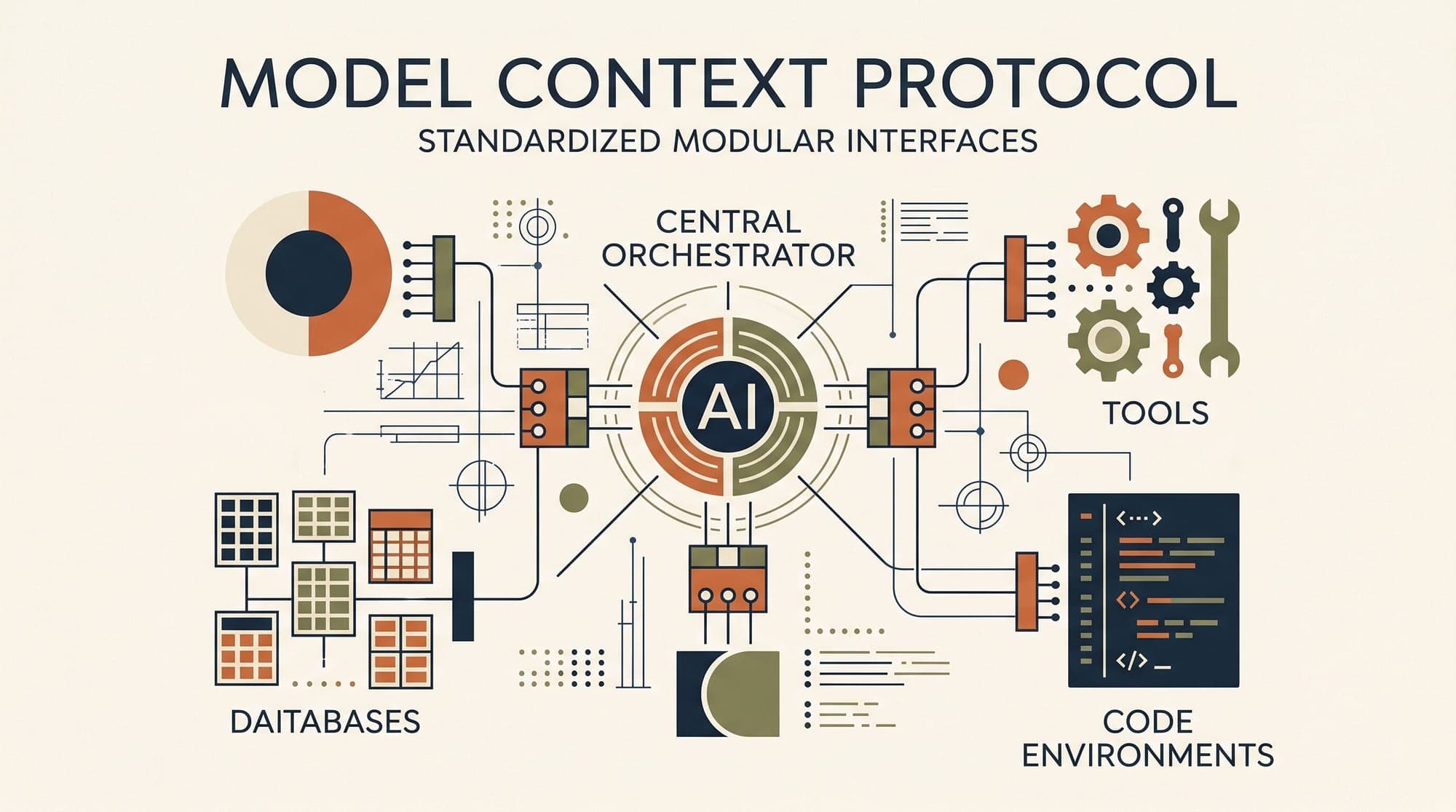
    As autonomous language model agents transition from experimental chat interfaces into enterprise production infrastructure, the architectural bottleneck has shifted from raw model reasoning to external environment integration. In early agent implementations, connecting an LLM to external systems required bespoke tool definitions, vendor-specific function schemas, and custom API wrappers. Every framework maintained its own incompatible tool-calling abstraction, fragmenting integrations across age

    1 min
  • DeepSeek V4 Flash tops charts but fails half its real agent tasks

    DeepSeek's V4 Flash has become the most-used AI model on OpenRouter and one of the highest-rated open-weight models available. In real agent tests, though, it finished barely more than half of the jobs it was given. The gap between leaderboard and workplace is the story. What Composio found The integration company Composio ran V4 Flash through eight agent harnesses, including Claude Code, Codex, and OpenCode, on 30 deliberately hard multi-step tasks. The tasks used live tools: Gmail, GitHub,

    1 min
  • DeepSeek builds a team to challenge Anthropic's Claude Code

    DeepSeek is no longer keeping its agent ambitions quiet. The Hangzhou-based lab has opened an official social media account for a new "DeepSeek Harness Team" and posted job listings for roles aimed at building AI agents that can take on products like Anthropic's Claude Code. The account sits on WeChat, the Chinese super-app run by Tencent. Corporate records reviewed by Bloomberg show the account belongs to a Beijing-based entity controlled by DeepSeek, and Tencent has verified it. "Harness"

    1 min
  • Liquid AI releases LFM2.5-2.6B, a 2.6B model that rivals 4x larger models on agent tasks

    Liquid AI released LFM2.5-2.6B on Monday, a 2.6-billion-parameter model designed to run capable AI agents entirely on consumer hardware. The model is available on Hugging Face with open weights and targets on-device deployment across laptops and phones. LFM2.5-2.6B achieves 220 tokens per second on an Apple M5 Max and 113 tokens per second on an AMD Ryzen CPU, fitting within 2.5 GB of memory. Liquid AI positions it as competitive with models roughly four times its size on tool use, instruction

    1 min