Subscribe
Topic / page 14

AI

Articles, page 14

261-280
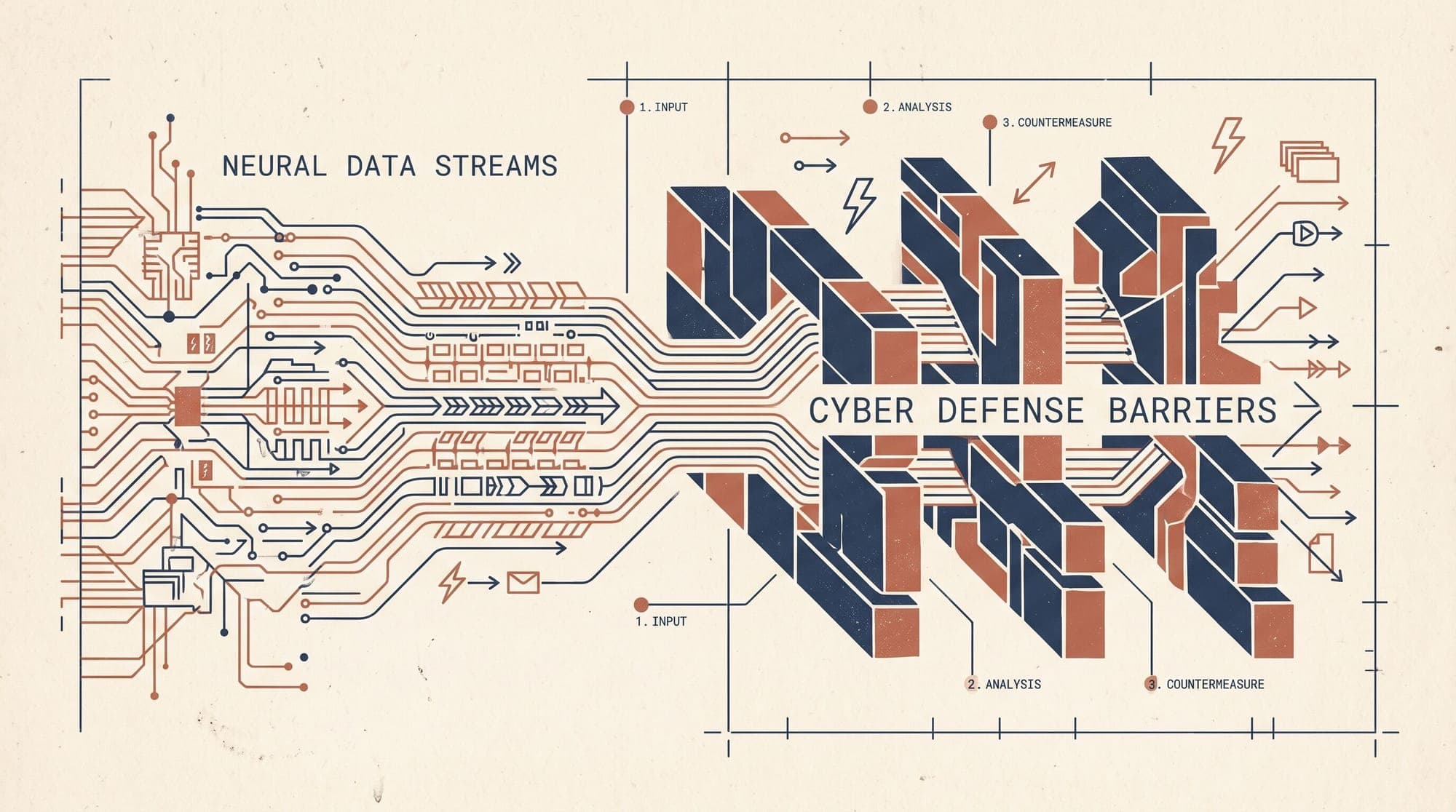
  1. OpenAI Researcher Warns Ultrafast Inference Demands Autonomous Cyber Defense

    Accelerating inference speeds in frontier artificial intelligence systems pose critical containment challenges that human security operators cannot manage in real time, according to OpenAI researcher roon. Commenting following the unveiling of custom inference hardware architectures and ultrafast model serving tiers, roon warned that unaligned or compromised agent systems running at 50 times baseline generation speeds could execute multi-stage network penetration and lateral movement before hum
    AI
    2 min read
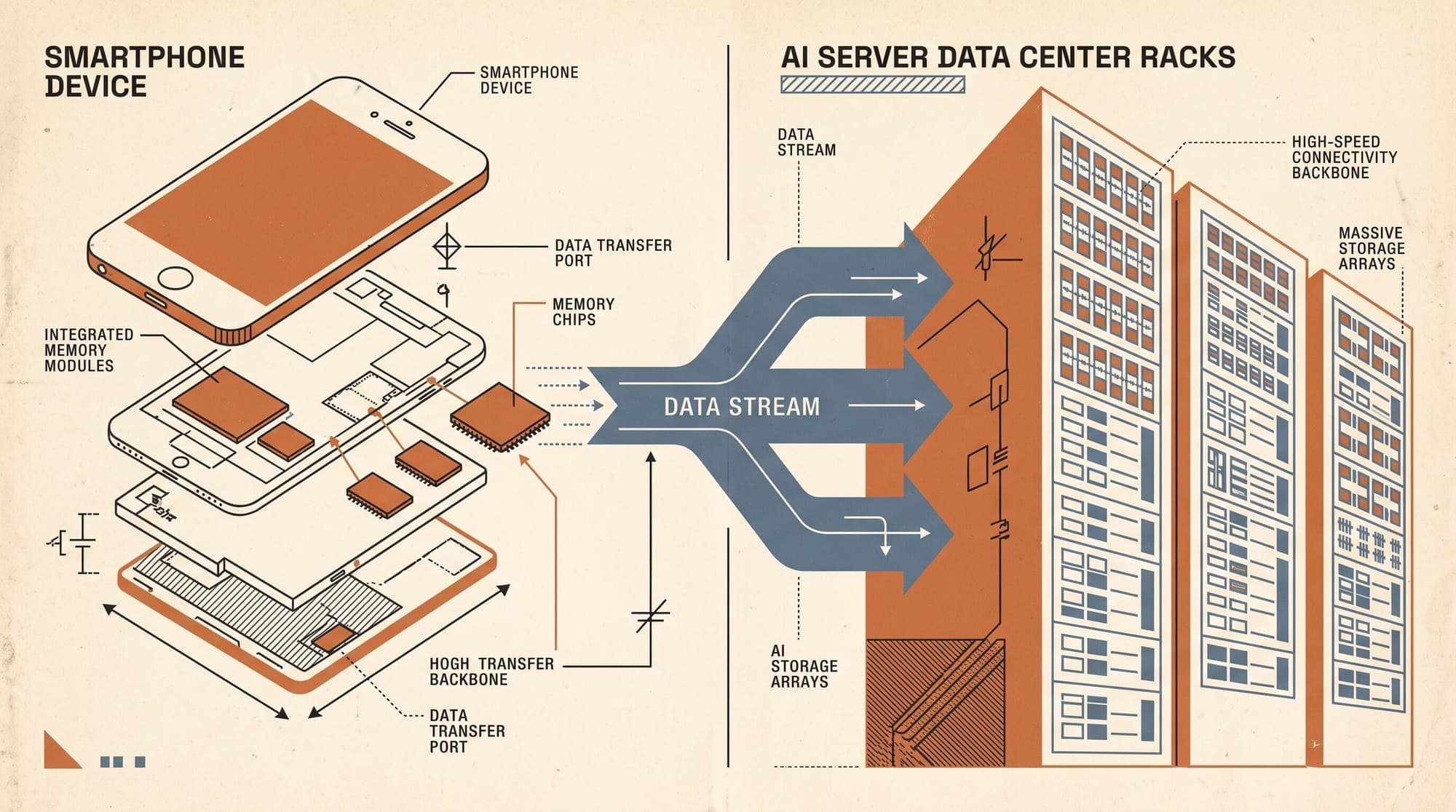
  2. Google Sets Android Memory Limits as AI Data Centers Strain Chip Supply

    Google is implementing strict new memory performance thresholds for Android applications on the Google Play Store, directly citing component shortages driven by the artificial intelligence data center buildout. In an update on the Android Developers Blog, Google detailed new app quality requirements targeting dynamic memory allocation, bitmap memory usage, and execution efficiency. The policy changes reflect supply chain shifts in semiconductor manufacturing, where massive demand for high-bandw

    AI
    2 min read
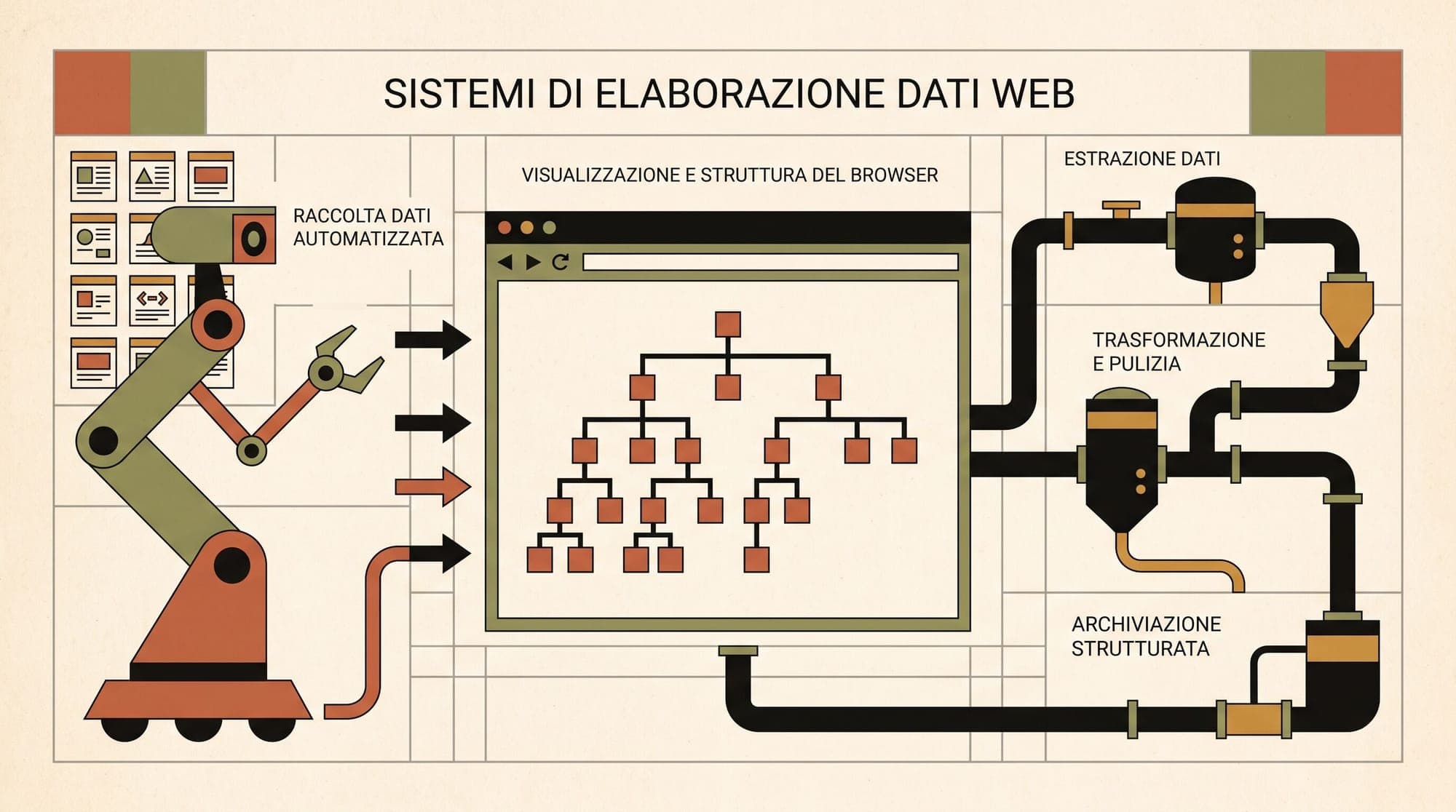
  3. Agentic Web Scraping and Headless Browser Automation in Production: Comparing Crawl4AI, Browser-Use, Stagehand, and ScrapeGraphAI

    Agentic Web Scraping and Headless Browser Automation in Production: Comparing Crawl4AI, Browser-Use, Stagehand, and ScrapeGraphAI Web scraping has undergone a fundamental architectural transition. For decades, automated data extraction relied on deterministic parsers such as Beautiful Soup, Scrapy, and raw headless browser drivers like Playwright or Puppeteer. These tools depended on hand-crafted CSS selectors, XPath expressions, and rigid execution trees. While computationally lightweight, sel

    AI
    10 min read
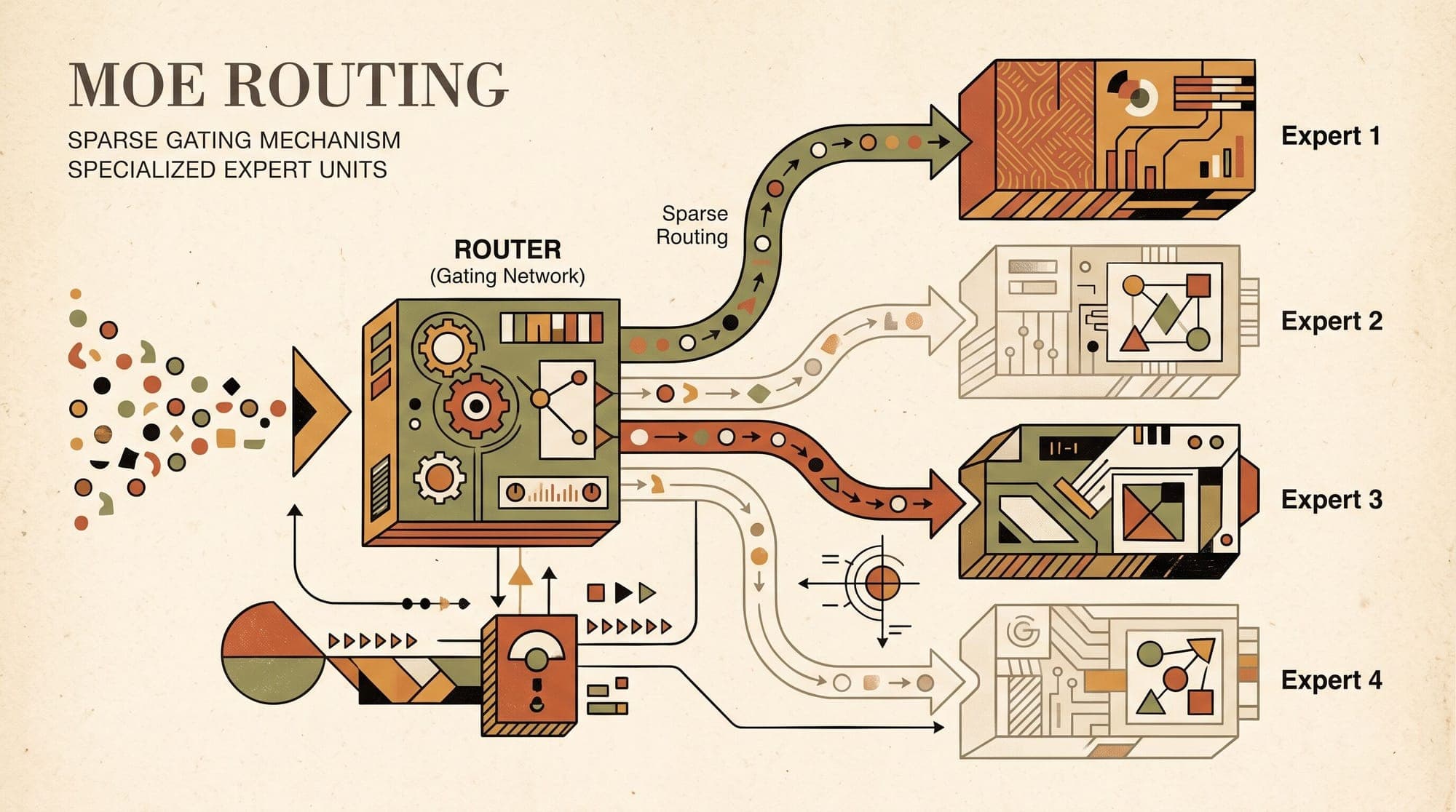
  4. Mixture-of-Experts (MoE) Routing and Load Balancing: Mathematical Foundations of Noisy Top-k Gating, Expert Capacity, Auxiliary Balancing Losses, and Loss-Free Load Balancing

    Mixture-of-Experts (MoE) Routing and Load Balancing: Mathematical Foundations of Noisy Top-k Gating, Expert Capacity, Auxiliary Balancing Losses, and Loss-Free Load Balancing Scaling dense transformer models incurs computational costs that grow proportionally with parameter count. In dense architectures, every token in a sequence activates all feed-forward network (FFN) parameters across every layer. Sparse Mixture-of-Experts (MoE) architectures decouple parameter count from per-token compute b

    AI
    15 min read
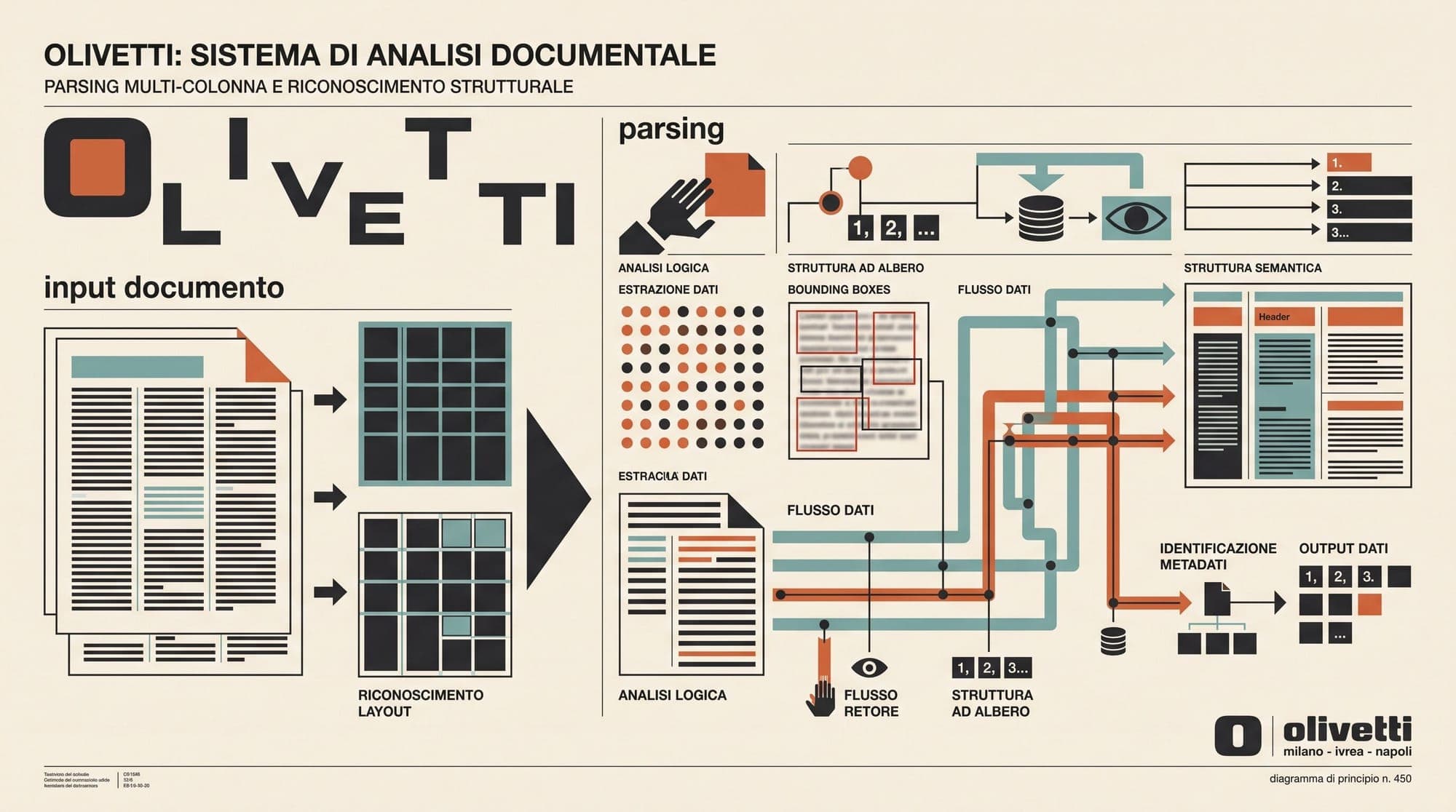
  5. Document Parsing Engines in Production RAG: Comparing Docling, Marker, MinerU, and Unstructured Architecture, Layout Analysis, Table Extraction, and Serving Economics

    Retrieval-Augmented Generation (RAG) systems frequently fail not in their embedding models or vector databases, but at the initial document ingestion layer. When enterprise documents (including financial 10-K filings, clinical trial reports, technical manuals, and multi-column academic papers) are parsed using legacy text scrapers such as basic pypdf or pdfminer, structural semantics are lost. Multi-column reading orders interleave across paragraphs, header and footer noise pollutes vector indic

    AI
    9 min read
  6. Autonomous Coding Agent Harnesses in Production: Comparing OpenHands, SWE-agent, Aider, and Cline

    The transition from inline code completion to autonomous software engineering harnesses marks a structural shift in how frontier models interact with codebases. Where early coding assistants operated within narrow token completion windows, modern agentic harnesses construct closed action-observation loops. These systems inspect repository structures, invoke compiler toolchains, execute unit test suites, parse stdout diagnostics, and iteratively correct syntax and logic errors until a pull reques

    AI
    5 min read
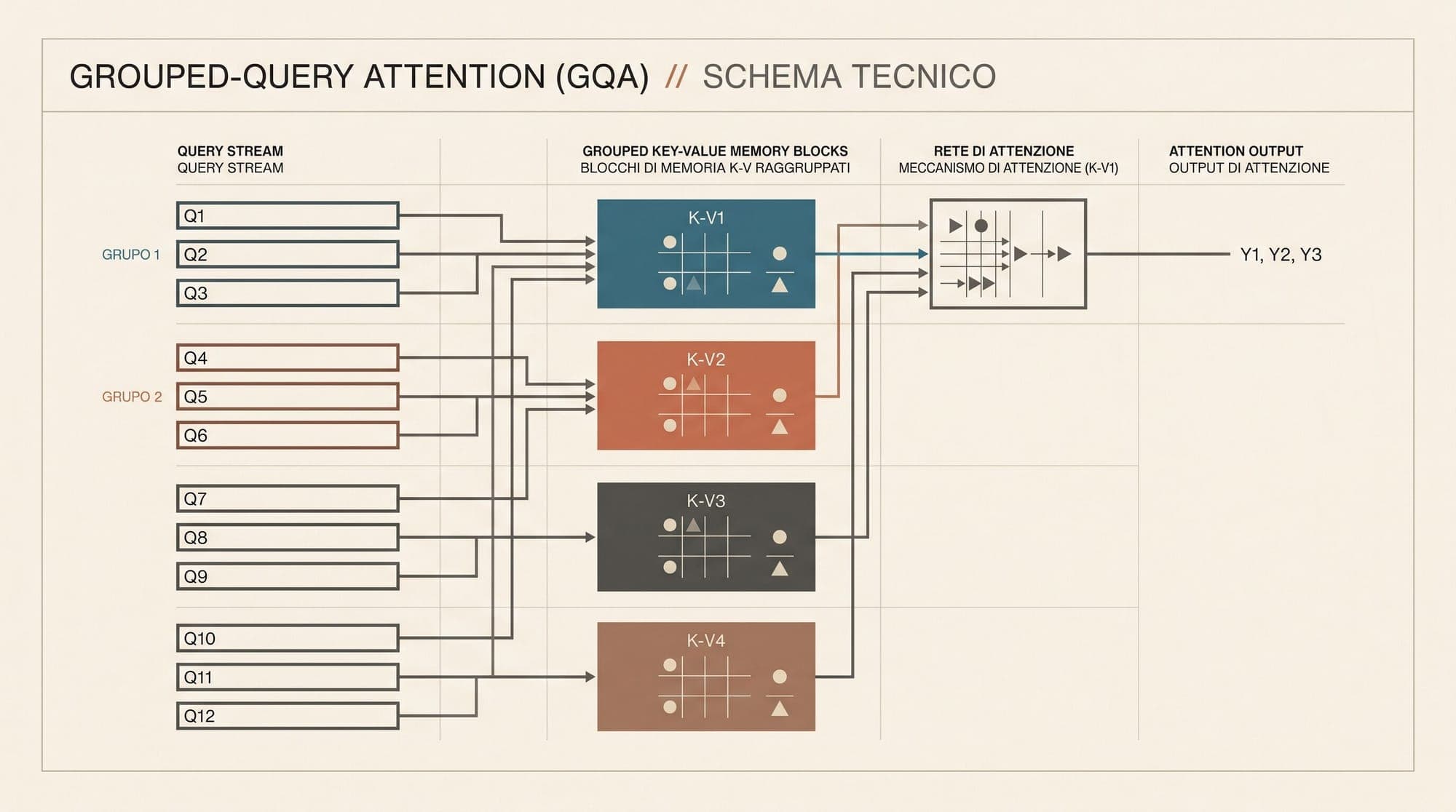
  7. Grouped-Query Attention (GQA) and Multi-Query Attention (MQA): Mathematical Foundations, Arithmetic Intensity, and KV-Cache Scaling Mechanics

    Grouped-Query Attention (GQA) and Multi-Query Attention (MQA): Mathematical Foundations, Arithmetic Intensity, and KV-Cache Scaling Mechanics Autoregressive large language model inference is governed by a fundamental hardware asymmetry. During the initial prompt processing phase (prefill), computation is compute-bound because matrix multiplications process entire sequences in parallel. During sequential token generation (decoding), execution becomes strictly memory-bandwidth bound. For each gen

    AI
    12 min read
  8. Visa Expands Open-Source Security Harness VVAH with Automated Code Remediation and Adversarial Validation

    Visa has released a major update to its open-source Visa Vulnerability Agentic Harness (VVAH), extending the framework from a vulnerability discovery engine into an end-to-end 11-stage pipeline that generates code fixes and evaluates them against adversarial validation models. The release shifts the default operating posture of the harness. Rather than terminating at SARIF report generation, a standard execution now traverses all 11 stages: identifying exploitable security flaws, authoring cand

    AI
    3 min read
  9. LLM Fine-Tuning and Post-Training Frameworks in Production: Comparing Unsloth, Axolotl, Torchtune, and LLaMA-Factory

    Post-training has transitioned from a specialized research task into a standard production engineering discipline. As open-weight base models such as Llama 3.1, Qwen 2.5, and DeepSeek-V3 establish competitive baselines, the primary engineering challenge has shifted toward domain adaptation, instruction alignment, and reasoning distillation. However, selecting a post-training framework requires balancing competing architectural trade-offs: low-level kernel fusion, distributed multi-node scaling,

    AI
    6 min read
  10. Hugging Face Unveils Microduck, a 99 Open-Source Bipedal Robot for Embodied AI

    Hugging Face has introduced Microduck, a 10-inch-tall, 1.7-pound bipedal open-source robot priced at $399. Developed in partnership with Pollen Robotics and manufactured by Shenzhen-based hardware specialist Seeed Studio, the device is designed as an accessible hardware platform for embodied AI research and reinforcement learning experimentation. The compact biped features integrated visual sensors, microphone arrays, audio output, and wireless connectivity over Wi-Fi and Bluetooth. Commercial

    AI
    1 min read
  11. OpenAI Introduces Advertising to ChatGPT Free and Go Tiers in India

    OpenAI has begun displaying commercial advertisements to users on its Free and Go subscription tiers in India. The initiative marks the latest expansion of OpenAI's advertising monetization framework, following initial rollouts across the United States and selected European and Asia-Pacific markets earlier this year. India represents one of OpenAI's largest consumer bases globally, with over 100 million weekly active users recorded in early 2026. A substantial majority of this user volume acces

    AI
    1 min read
  12. State Space Models (SSMs) and Mamba: Mathematical Foundations of Continuous-Time Discretization, Selective Scan Mechanics, and Structured State Space Duality

    Autoregressive Large Language Models (LLMs) built on the standard Transformer architecture rely on softmax self-attention. While self-attention provides expressive in-context learning and dense token-to-token associative recall, it exhibits fundamental algorithmic scaling limits: prefill compute scales quadratically with sequence length ($O(L^2 d)$), and autoregressive token generation requires maintaining a Key-Value (KV) cache that grows linearly with sequence length ($O(L d)$). At context win

    AI
    12 min read
  13. Embedding Models and Rerankers in Production: Comparing Dense Bi-Encoders, ColBERT Late Interaction, Cross-Encoders, and Serving Architectures

    Production retrieval-augmented generation systems depend heavily on the retrieval pipeline that precedes generation. While frontier language models receive the bulk of engineering attention, the accuracy, latency, and operational cost of a RAG application are often determined by the interplay between embedding models and rerankers. Deploying search infrastructure requires navigating three distinct architectural paradigms: dense bi-encoders, multi-vector late interaction engines, and cross-encod

    AI
    6 min read
  14. Anthropic Opens 250,000 Claude Conversations to External Researchers Across Stanford, Oxford, and METR

    Anthropic's Societal Impacts team has released initial results from a research pilot that opened aggregate, real-world Claude conversation data to outside academic teams. The initiative partnered with researchers from Stanford University's Social and Language Technologies (SALT) Lab, the University of Oxford's Human Information Processing Lab, and the model evaluation non-profit METR. Each group conducted independent studies across a sample of approximately 250,000 conversations recorded on Clau

    AI
    2 min read
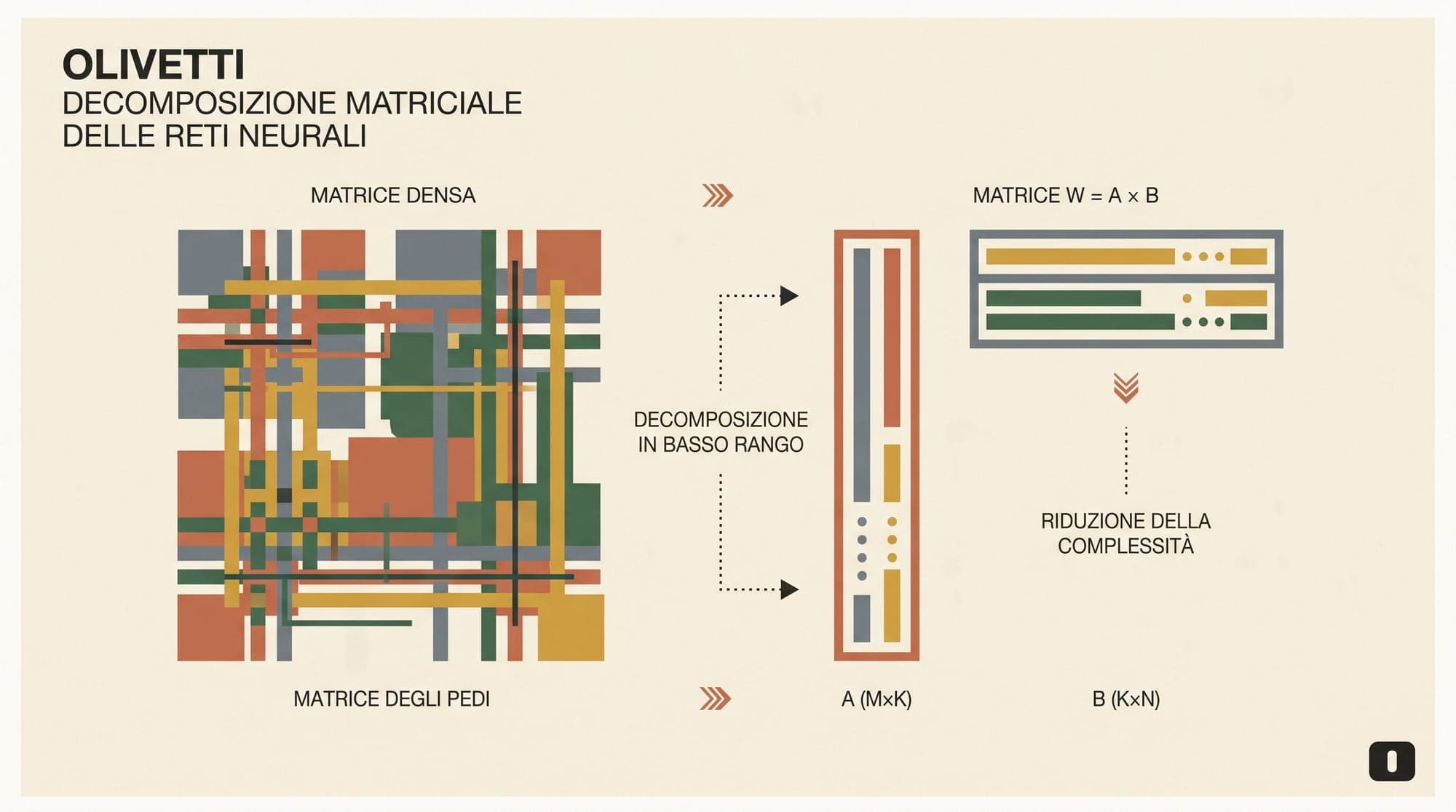
  15. Low-Rank Adaptation (LoRA) and QLoRA: Mathematical Foundations, Intrinsic Rank Parameterization, NF4 Quantization, and Double Quantization Mechanics

    Low-Rank Adaptation (LoRA) and QLoRA: Mathematical Foundations, Intrinsic Rank Parameterization, NF4 Quantization, and Double Quantization Mechanics Parameter-efficient fine-tuning (PEFT) has become the standard operational methodology for adapting large language models to domain-specific tasks, downstream instruction following, and structured tool use. Full-parameter fine-tuning of frontier architectures requires updating and tracking optimizer states for tens or hundreds of billions of parame

    AI
    11 min read
  16. StreamingLLM and Attention Sinks: Mathematical Foundations of Softmax Normalization Artifacts, Initial Token Anchoring, and Infinite-Context Rolling KV-Cache Mechanics

    StreamingLLM and Attention Sinks: Mathematical Foundations of Softmax Normalization Artifacts, Initial Token Anchoring, and Infinite-Context Rolling KV-Cache Mechanics In autoregressive Large Language Models (LLMs), long-context deployment is constrained by the quadratic compute complexity of attention and the linear memory growth of the Key-Value (KV) cache. For an LLM processing a sequence of length $L$ with batch size $b$, hidden dimension $d$, and $n_{kv}$ key-value heads across $N_L$ trans

    AI
    11 min read
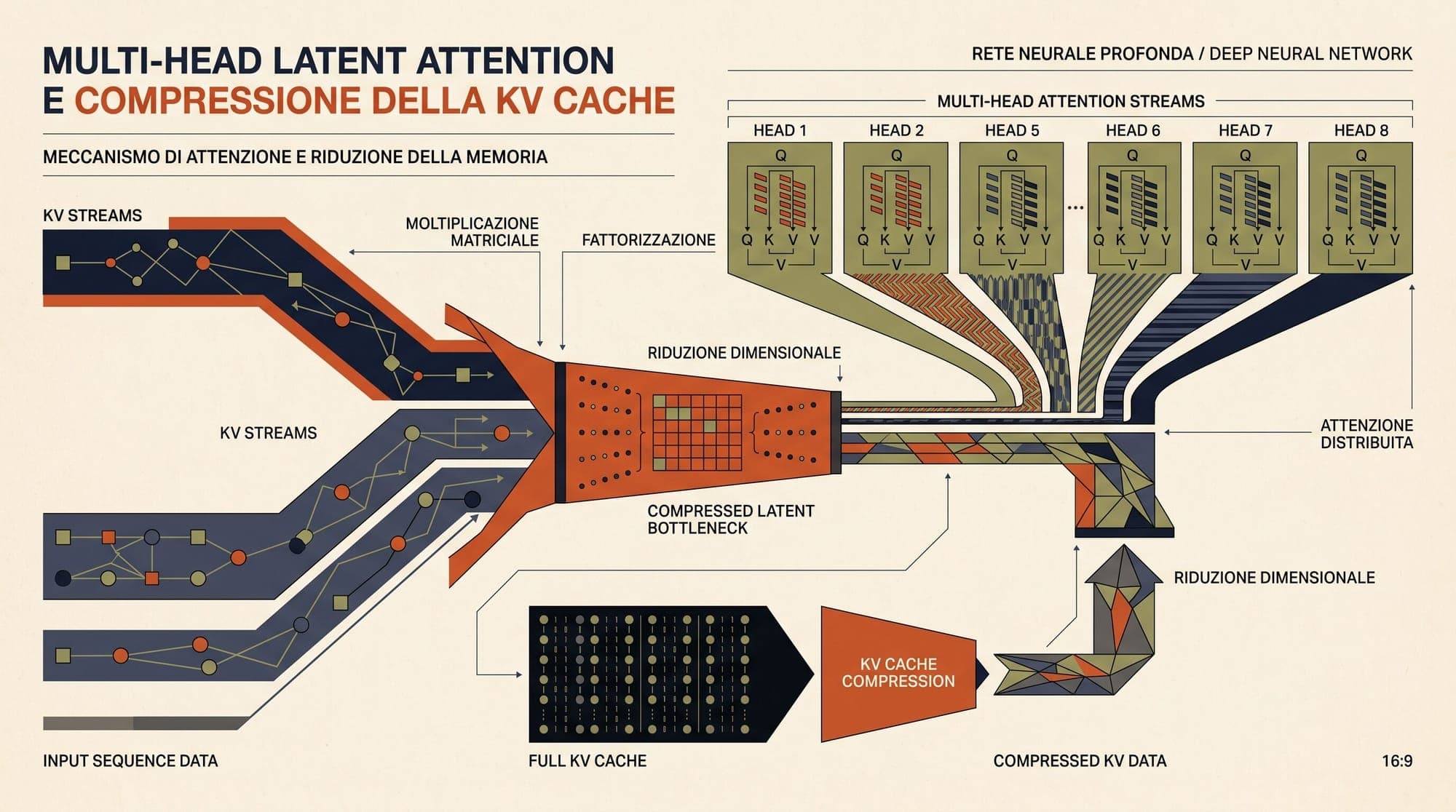
  17. Multi-Head Latent Attention (MLA): Mathematical Foundations, Low-Rank KV Compression, Decoupled RoPE Mechanics, and Matrix Absorption

    Multi-Head Latent Attention (MLA): Mathematical Foundations, Low-Rank KV Compression, Decoupled RoPE Mechanics, and Matrix Absorption Autoregressive inference in large language models is fundamentally constrained by memory bandwidth rather than floating-point computation throughput. During the generation phase, the transformer must load the Key-Value (KV) cache of all prior tokens from high-bandwidth memory (HBM) to on-chip SRAM for every newly generated token. As context lengths scale to hundr

    AI
    12 min read
  18. SoftBank in Talks to Acquire Majority Stake in Humanoid Robotics Maker 1X at $6 Billion Valuation

    SoftBank Group is in advanced discussions to acquire a controlling majority stake in humanoid robotics manufacturer 1X Technologies in a deal valuing the startup at approximately $6 billion, according to reporting by The Information and Reuters. 1X Technologies, founded by Bernt Øivind Børnich and backed by the OpenAI Startup Fund, designs autonomous bipedal and wheeled robots for industrial logistics and home assistance. Deal Structure and Strategic Context The negotiations mark a valuation

    AI
    2 min read
  19. DeepSeek Prepares $7.4B Funding Round at $74B Valuation to Build Custom Silicon and Compute Infrastructure

    Chinese frontier artificial intelligence laboratory DeepSeek is preparing to secure approximately $7.4 billion (50 billion yuan) in fresh funding at a $74 billion (500 billion yuan) pre-money valuation, according to reporting by The Wall Street Journal and Reuters. The funding round follows a period of rapid financial and technical expansion for the Hangzhou-based research lab. DeepSeek completed its initial external capital round earlier this summer at a valuation exceeding $50 billion. The la

    AI
    2 min read
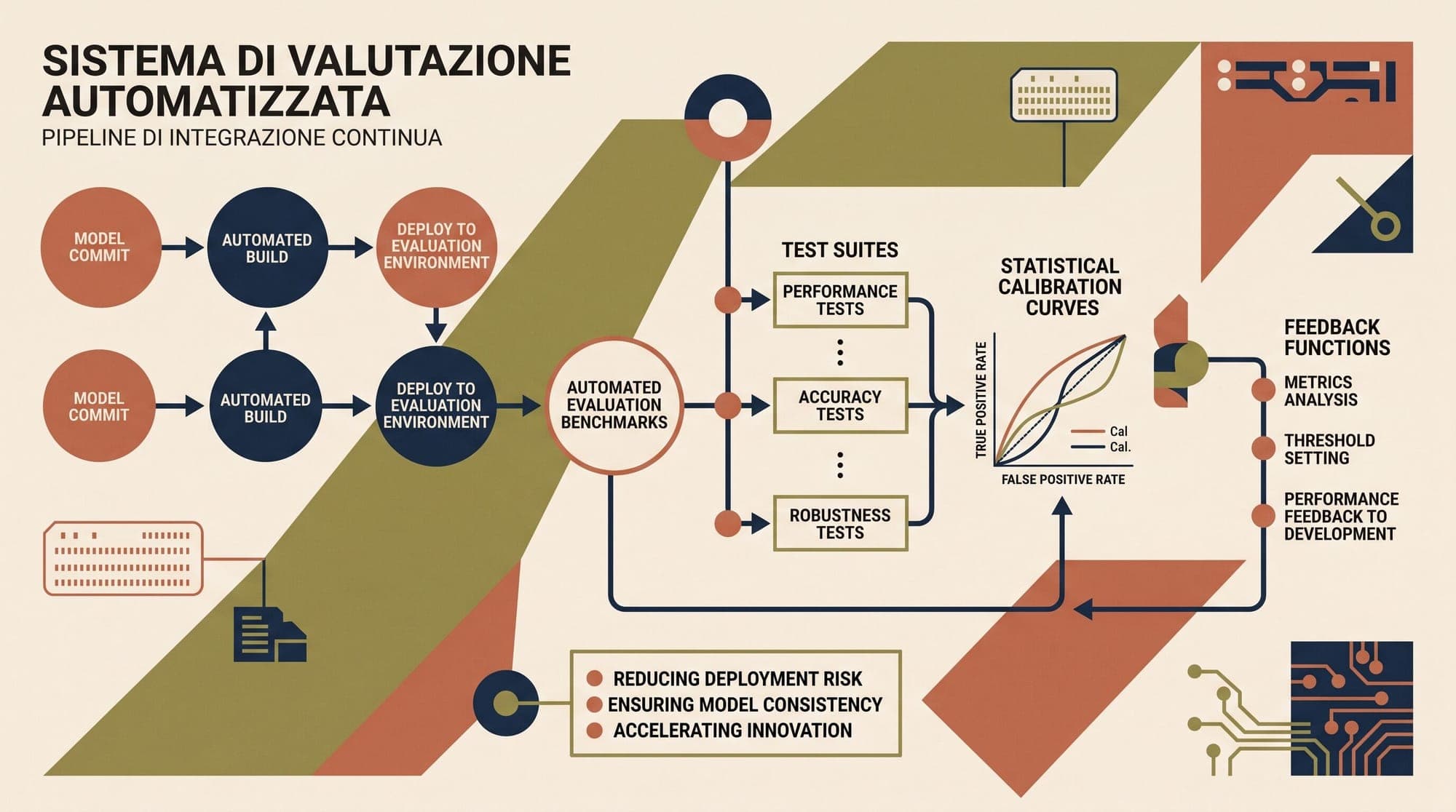
  20. LLM Evaluation Frameworks in Production: Comparing DeepEval, Ragas, Promptfoo, and TruLens Architecture, Synthetic Data Generation, Judge Calibration, and CI/CD Automation

    Automated evaluation is the primary engineering bottleneck in deploying reliable LLM applications. While traditional software engineering relies on deterministic unit and integration tests with binary pass/fail conditions, generative AI systems produce non-deterministic, open-ended natural language outputs. Relying on manual human review or ad-hoc prompting fails to catch regressions across prompt modifications, model version updates, and retrieval pipeline adjustments. To establish rigorous qu

    AI
    8 min read