
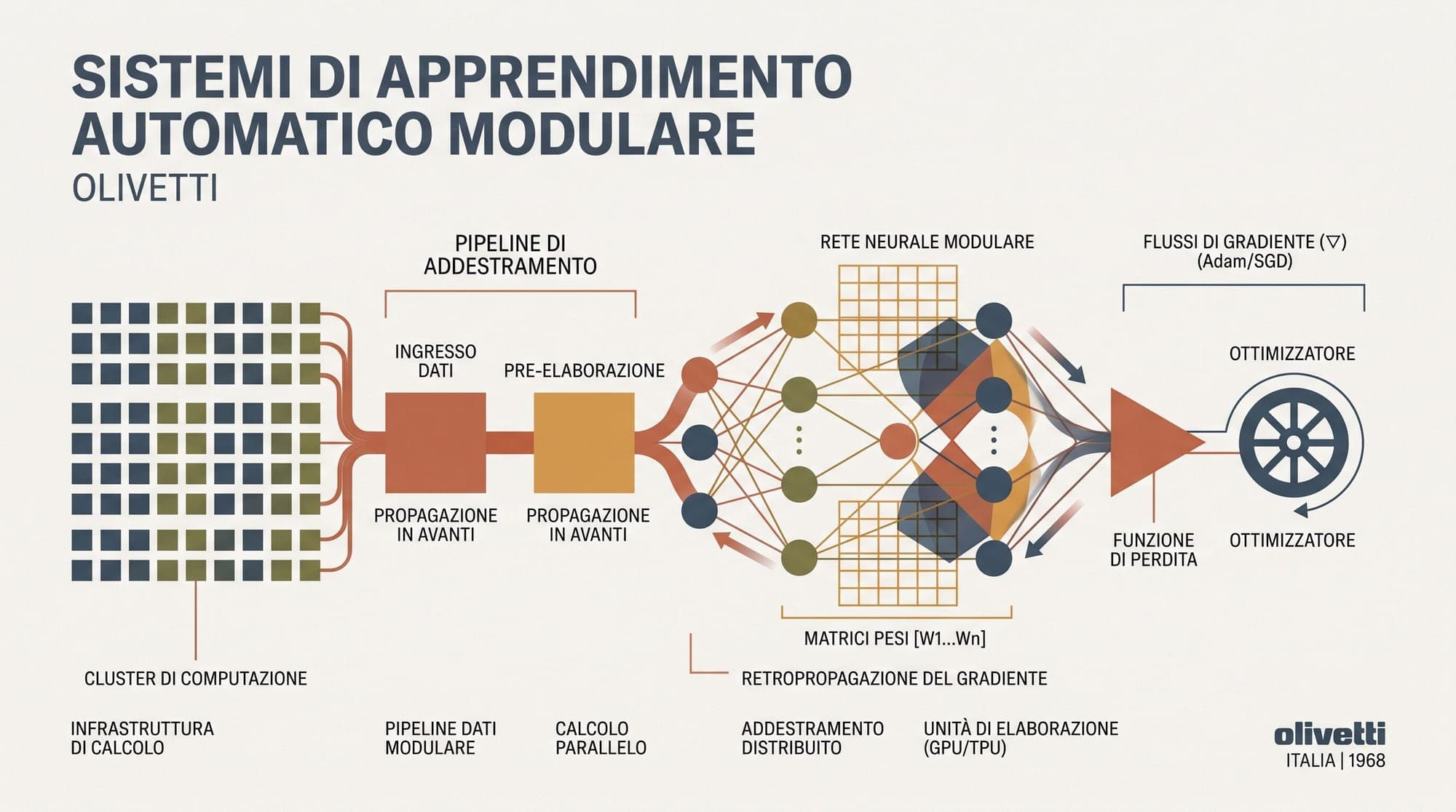
Post-training has transitioned from a specialized research task into a standard production engineering discipline. As open-weight base models such as Llama 3.1, Qwen 2.5, and DeepSeek-V3 establish competitive baselines, the primary engineering challenge has shifted toward domain adaptation, instruction alignment, and reasoning distillation.
However, selecting a post-training framework requires balancing competing architectural trade-offs: low-level kernel fusion, distributed multi-node scaling, ecosystem-native modularity, and rapid multi-objective experimentation. Four open-source frameworks dominate modern post-training workflows: Unsloth, Axolotl, Torchtune, and LLaMA-Factory.
Each framework approaches post-training from a distinct systems philosophy.

1. Unsloth: Kernel Fusion and Low-Level Hardware Optimization
Unsloth approaches fine-tuning through custom GPU kernel engineering. Rather than treating PyTorch autograd and Hugging Face PEFT as black boxes, Unsloth rewrites backpropagation passes directly in OpenAI Triton.
Core Architectural Mechanisms
- Manual Gradient Backpropagation: Unsloth bypasses PyTorch intermediate tensor caching by computing gradients analytically within fused Triton kernels. This eliminates redundant memory allocations during backward passes.
- Fused Operations: Critical transformer operations (Rotary Position Embedding, Cross-Entropy Loss, RMSNorm, and MLP activations) are compiled into single-pass GPU kernels, maximizing compute-to-memory bandwidth ratios.
- Exact Mathematical Computation: Unlike lossy approximation methods, Unsloth retains exact float16 and bfloat16 precision during gradient updates, ensuring zero accuracy degradation compared to standard Hugging Face implementations as documented in Hugging Face technical reports.
- Padding-Free Sequence Packing: Eliminates attention computation over padding tokens by packing multiple short sequences into a single contiguous context window using custom Triton attention kernels.
Systems Performance and Trade-offs
According to benchmarks compiled by Spheron and MarkTechPost, Unsloth achieves 2x to 5x higher training throughput and reduces VRAM consumption by 70% to 80% on single GPUs:
- Memory Footprint: Fine-tuning an 8-billion parameter model with 4-bit QLoRA requires approximately 6 GB to 8 GB of VRAM, making it executable on consumer GPUs such as an RTX 3080 or RTX 4090. A 70-billion parameter QLoRA run fits within 41 GB to 48 GB of VRAM.
- Alignment Support: Native support for Supervised Fine-Tuning (SFT), Direct Preference Optimization (DPO), and Group Relative Policy Optimization (GRPO).
- Primary Limitation: Historically prioritized single-GPU optimization. While multi-GPU support via Distributed Data Parallel (DDP) exists, complex multi-node distributed topologies and heterogeneous parallelisms are less mature compared to frameworks built explicitly for cluster orchestration.
2. Axolotl: Declarative Multi-GPU and Multi-Node Orchestration
Axolotl is designed for large-scale distributed training on cloud infrastructure. It provides a declarative YAML abstraction that orchestrates data preparation, tokenizer formatting, and distributed execution.
Core Architectural Mechanisms
- Deep Parallelism Stack: Axolotl natively integrates PyTorch Fully Sharded Data Parallel (FSDP and FSDP2), DeepSpeed (ZeRO-1, ZeRO-2, and ZeRO-3), and multi-dimensional parallelism (composing Tensor Parallelism, Context Parallelism, and FSDP across DeviceMesh).
- Advanced Sequence Packing: Implements Multipacking and Arctic Long Sequence Training (ALST) to eliminate wasted compute on padding tokens, packing variable-length sequences into contiguous blocks while masking cross-attention leakage.
- Kernel Ecosystem Integration: Incorporates external optimization libraries, including FlashAttention-2/3, Liger Kernel, Cut Cross Entropy, and SageAttention, allowing teams to swap compute kernels per layer.
- Multi-Cloud Data Ingestion: Supports automated loading and streaming from local storage, Hugging Face datasets, AWS S3, Google Cloud Storage, and Azure Blob Storage.
Systems Performance and Trade-offs
Axolotl serves as an industry standard for training 70B+ parameter models across multi-node A100 and H100 clusters:
- Memory Footprint: 8B QLoRA runs require approximately 16 GB of VRAM due to standard PyTorch buffer allocation, while 70B full bf16 fine-tuning scales across distributed nodes using FSDP2 or DeepSpeed ZeRO-3.
- Alignment Support: Supports SFT, DPO, Kahneman-Tversky Optimization (KTO), and Proximal Policy Optimization (PPO).
- Primary Limitation: Steep configuration learning curve. Debugging distributed state failures, FSDP wrap policies, or sharded gradient checkpointing errors requires deep operational expertise in distributed PyTorch internals.
3. Torchtune: PyTorch-Native Composable Recipes
Developed directly by Meta and the PyTorch team, Torchtune provides clean, modular recipes for LLM fine-tuning without third-party wrapper dependencies.
Core Architectural Mechanisms
- Zero-Bloat Modular Recipes: Torchtune rejects heavy abstraction layers. Each training recipe (such as full-finetune single device, distributed FSDP, or LoRA) is structured as an explicit, readable Python script.
- Deep PyTorch 2.x Integration: Torchtune leverages first-party PyTorch primitives, including
torch.compile,torchao(for native 4-bit and 8-bit low-precision quantization), and native distributed primitives without external middleware. - Explicit Memory Management: Utilizes memory-efficient cross-entropy and activation checkpointing built directly into core PyTorch components, avoiding dependency drift and version mismatches.
- Native Checkpointing: Directly exports standard PyTorch checkpoint formats and integrates with Hugging Face Hub, Ollama, and EleutherAI evaluation harnesses.
Systems Performance and Trade-offs
Torchtune is optimal for machine learning engineers who need granular control over the training loop, loss formulation, and gradient aggregation:
- Memory Footprint: 8B QLoRA consumes roughly 14 GB to 16 GB of VRAM on single devices, with PyTorch 2.5
torch.compilelowering step latencies. - Alignment Support: Supports SFT, DPO, and PPO with low-memory recipes.
- Primary Limitation: Requires hands-on Python development rather than declarative YAML or GUI setup. It maintains a smaller catalog of non-standard model architectures compared to Hugging Face-based ecosystems.
4. LLaMA-Factory: Broad Architecture Coverage and Unified Lifecycle Tooling
LLaMA-Factory is an all-in-one post-training framework that emphasizes wide model support and minimal onboarding friction. Documented in Zheng et al. (2024), it provides both a command-line interface and a web-based management console (LlamaBoard).
Core Architectural Mechanisms
- Broad Architecture Support: LLaMA-Factory unifies training pipelines for over 100 model architectures, including LLaMA, Mistral, Qwen, DeepSeek, Gemma, Phi, and Falcon.
- Comprehensive Alignment Suite: Beyond Supervised Fine-Tuning (SFT), the framework provides out-of-the-box implementations for Direct Preference Optimization (DPO), Group Relative Policy Optimization (GRPO), Odds Ratio Preference Optimization (ORPO), Kahneman-Tversky Optimization (KTO), and Proximal Policy Optimization (PPO).
- Extensive Optimizer and PEFT Methods: Includes native support for GaLore (Gradient Low-Rank Projection), DoRA, LoRA+, LoftQ, and dynamic RoPE scaling.
- Zero-Code Interface: The LlamaBoard web interface allows engineers to configure hyperparameters, preview tokenized datasets, track loss curves, and export quantized models directly from a browser.
Systems Performance and Trade-offs
LLaMA-Factory provides the fastest path to running preference alignment or instruction tuning across diverse model checkpoints:
- Memory Footprint: 8B QLoRA requires approximately 16 GB of VRAM, with optional Unsloth backend integration for single-GPU acceleration.
- Alignment Support: Broadest alignment objective coverage across open-source tools (SFT, DPO, GRPO, ORPO, KTO, PPO).
- Primary Limitation: Higher initialization overhead. Because it wraps multiple underlying libraries (TRL, PEFT, and Transformers), debugging complex distributed edge cases can involve deep dependency chains.
Framework Architectural Comparison
┌───────────────────┬──────────────────────────────────┬───────────────────────────────┬───────────────────────────────┬─────────────────────────────────┐
│ Feature           │ Unsloth                          │ Axolotl                       │ Torchtune                     │ LLaMA-Factory                   │
├───────────────────┼──────────────────────────────────┼───────────────────────────────┼───────────────────────────────┼─────────────────────────────────┤
│ Core Optimization │ Fused Triton kernels & backprop  │ Multi-GPU / multi-node scale  │ PyTorch-native modularity     │ Model breadth & web UI          │
│ Backend Engine    │ OpenAI Triton / PyTorch          │ PyTorch / DeepSpeed / FSDP2   │ PyTorch 2.x / torchao         │ Hugging Face TRL / PEFT         │
│ Config Paradigm   │ Python API / Scripting           │ Declarative YAML              │ Python Recipes / Configs      │ Web UI (LlamaBoard) & CLI       │
│ Multi-GPU Scaling │ DDP / Basic multi-GPU            │ FSDP2, DeepSpeed ZeRO-3, ND   │ Native PyTorch FSDP2          │ DeepSpeed, FSDP, Accelerate     │
│ 8B QLoRA VRAM     │ ~6 GB to 8 GB                    │ ~16 GB                        │ ~14 GB to 16 GB               │ ~16 GB                          │
│ Packing Technique │ Triton padding-free packing      │ Multipacking / ALST           │ Custom sequence packing       │ Standard sample packing         │
│ Alignment Methods │ SFT, DPO, GRPO                   │ SFT, DPO, KTO, PPO            │ SFT, DPO, PPO                 │ SFT, DPO, GRPO, ORPO, KTO, PPO  │
│ Best Production   │ Single-GPU / Edge fine-tuning    │ Large multi-node clusters     │ Custom PyTorch loop surgery   │ Rapid multi-model experiments   │
└───────────────────┴──────────────────────────────────┴───────────────────────────────┴───────────────────────────────┴─────────────────────────────────┘
Production Decision Framework
Selecting the optimal framework depends on your infrastructure constraints, team skillset, and production goals:
- Choose Unsloth when hardware resources are constrained (such as single-GPU instances or workstations) and maximizing token-per-second throughput with minimal VRAM is the primary bottleneck.
- Choose Axolotl when orchestrating large multi-GPU or multi-node training runs on 70B+ parameter models where DeepSpeed ZeRO-3, FSDP2, and multipacking efficiency dictate total compute costs.
- Choose Torchtune when building production pipelines deeply embedded in the PyTorch ecosystem that require zero third-party wrapper dependencies, explicit training loop customization, and first-party
torch.compileintegration. - Choose LLaMA-Factory when running rapid comparative evaluations across diverse open-weight model families and alignment paradigms (such as DPO, ORPO, and GRPO) with minimal boilerplate code.
Sources
- Unsloth AI GitHub Repository
- Axolotl GitHub Repository
- PyTorch Torchtune GitHub Repository
- LLaMA-Factory GitHub Repository
- LlamaFactory: Unified Efficient Fine-Tuning of 100+ Language Models (arXiv:2403.13372)
- MarkTechPost Framework Comparison: Unsloth, Axolotl, TRL, and LLaMA-Factory
- Spheron Engineering Guide: Axolotl vs Unsloth vs Torchtune
- Hugging Face Technical Report: Accelerating LLM Fine-Tuning with Unsloth and TRL



