
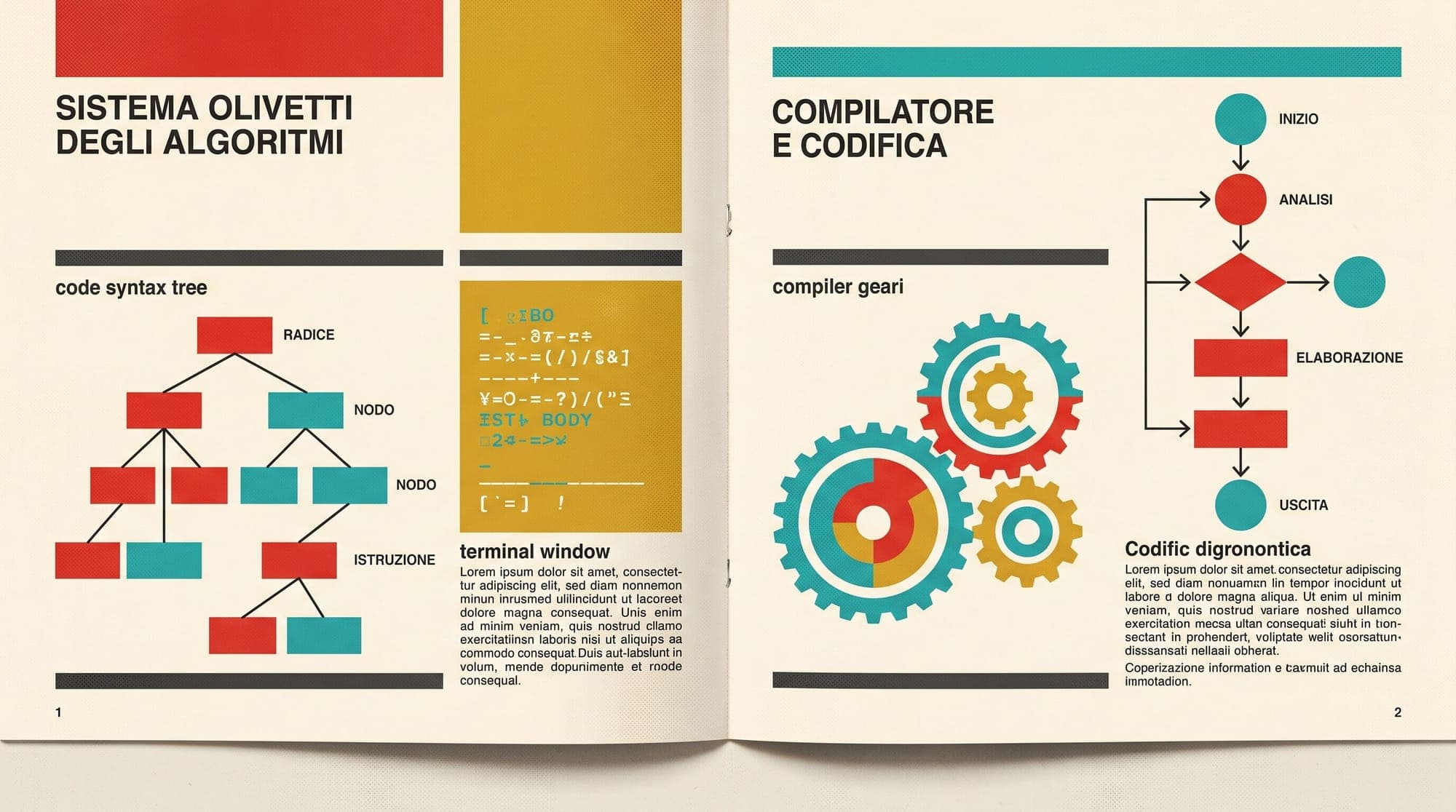
The transition from inline code completion to autonomous software engineering harnesses marks a structural shift in how frontier models interact with codebases. Where early coding assistants operated within narrow token completion windows, modern agentic harnesses construct closed action-observation loops. These systems inspect repository structures, invoke compiler toolchains, execute unit test suites, parse stdout diagnostics, and iteratively correct syntax and logic errors until a pull request passes verification.
Four open frameworks represent the primary architectural paradigms in production today: OpenHands, SWE-agent, Aider, and Cline. Each makes fundamentally different engineering trade-offs across execution sandboxing, context compaction, tool protocols, and developer interaction models.

Core Architectural Paradigms
OpenHands: CodeAct and Containerized Event Streams
Originally launched as OpenDevin, OpenHands by All Hands AI is architected as an event-driven platform for multi-agent software engineering. Its core execution model builds upon the CodeAct paradigm, where the language model emits executable Python code and bash commands directly rather than rigid JSON tool-calling schemas.
OpenHands structures its runtime around an append-only event stream. Actions (CmdRunAction, IPythonRunCellAction, BrowseURLAction) and Observations (CmdOutputObservation, BrowserOutputObservation) flow across a centralized controller. This decoupling allows OpenHands to maintain multi-agent hierarchies, where a primary planning agent delegates discrete subtasks to specialized code-editing or web-browsing micro-agents.
All execution occurs inside isolated Docker containers or ephemeral cloud VMs. This sandboxing enables arbitrary shell execution, dependency installation, and headless browser navigation without risking host environment corruption.
SWE-agent: Agent-Computer Interface (ACI) Design
Developed by researchers at Princeton NLP, SWE-agent centers on the hypothesis that standard Unix shells are poorly optimized for language model interaction. Raw bash prompts produce verbose error outputs, lack guardrails against catastrophic file overwrites, and require complex sed/awk invocations that trigger model hallucinations.
SWE-agent replaces the raw shell with a specialized Agent-Computer Interface (ACI). The ACI provides a compact set of domain-specific commands:
open_file <path> <line_number>: Opens a file with a 100-line viewing window centered on the target line.scroll_upandscroll_down: Shifts the file viewing viewport incrementally.search_dir <query>andsearch_file <query>: Regex-backed search tools tailored for code navigation.edit <start_line>:<end_line>: Controlled line replacement with automatic syntax validation and linter checks.
By constraining the action space and formatting environment feedback specifically for model consumption, SWE-agent reduces token overhead per turn and prevents command syntax degradation. Research on Mini-SWE-agent demonstrated that this disciplined ACI design allows minimal implementations to match complex orchestrators on benchmark evaluations.
Aider: Tree-Sitter ASTs and Git-Native Pair Programming
Created by Paul Gauthier, Aider is an interactive, terminal-native pair programming tool designed to run directly within a developer's local git workflow. Rather than pursuing unattended background execution, Aider optimizes for human-in-the-loop developer velocity.
Aider's defining technical contribution is its repository mapping engine (repomap.py). Using Tree-sitter grammars across dozens of programming languages, Aider parses the abstract syntax tree (AST) of every source file in the repository to extract function signatures, class definitions, and symbol references. It constructs a directed dependency graph and applies a personalized PageRank algorithm to rank the relevance of external files relative to the files currently mentioned in the active chat.
The highest-ranked definitions are packed into a strict token budget (typically 1,024 to 2,048 tokens). This provides the model with a globally coherent structural map of the codebase without flooding the context window with implementation bodies. Every code modification generated by Aider is automatically validated and committed as an atomic git commit with descriptive messages.
Cline: Model Context Protocol (MCP) in the IDE
Cline (and its ecosystem fork Roo Code) operates directly inside the developer IDE via the VS Code Extension API. It bridges local editor context with frontier model APIs through Anthropic's Model Context Protocol (MCP).
Unlike standalone CLI harnesses, Cline leverages native IDE capabilities, including Language Server Protocol (LSP) diagnostics, real-time file tree monitoring, and interactive visual diff viewers. When Cline proposes a code change, the developer sees a side-by-side split diff before approving the write.
Cline implements an explicit permission tier for terminal commands and file modifications. Its MCP client architecture allows developers to extend the agent with arbitrary external tools (such as database query servers, cloud logging endpoints, and browser test runners) using standardized JSON-RPC protocols over stdio or HTTP.
Context Management and Repository Traversal
Managing context window limits across multi-thousand-file repositories is the primary engineering bottleneck in autonomous coding. Each framework solves this differently:
- AST-Based Graph Traversal (Aider): Employs Tree-sitter symbol extraction and PageRank to select only the most relevant class and function signatures within a strict token envelope.
- Windowed Cursor Navigation (SWE-agent): Keeps the model focused on bounded 100-line viewing slices, requiring active scrolling and regex searching rather than ingesting entire files.
- Event-Stream Observation Compaction (OpenHands): Truncates terminal outputs, limits head/tail lengths on large files, and passes execution state across specialized planning steps.
- Workspace Introspection & MCP Federation (Cline): Combines workspace glob matching, AST symbol outlines, and external MCP tool schemas to query only what is needed per turn.
Execution Sandboxing and Blast Radius
Security and environment isolation dictate where these frameworks can be deployed:
- Containerized Ephemeral Runtimes: OpenHands and SWE-agent mandate container isolation (Docker/Podman/Kubernetes). This architecture is suited for automated GitHub Actions workflows, asynchronous PR triaging, and unattended CI/CD bot workers where arbitrary code execution is required.
- Local Workspace Execution with Approval Gates: Aider and Cline operate directly in the user's local operating system environment. Aider relies on git version control as an undo mechanism, while Cline enforces interactive UI confirmation dialogs for terminal commands and file writes.
Benchmark Dynamics and Token Economics
On SWE-bench and SWE-bench Verified (a curated subset of real-world GitHub issues), top harnesses pairing frontier reasoning models achieve resolution rates above 70%.
However, production deployment economics reveal significant trade-offs:
- Token Volume: Autonomous resolution of a complex multi-file bug often consumes between 300,000 and 2,000,000 tokens across planning, test execution, and repeated repair loops.
- Latency: Unattended runs on OpenHands or SWE-agent typically require 5 to 25 minutes per issue, depending on test suite execution times.
- Cost Efficiency: Interactive pair programming (Aider and Cline) consumes substantially fewer tokens per completed task (typically 20,000 to 150,000 tokens) because the developer steers context selection and intercepts unproductive model trajectories early.
Framework Selection Matrix
- OpenHands: Best suited for enterprise platform teams building autonomous backend agents, asynchronous issue-triage bots, and automated pull request pipelines requiring container isolation.
- SWE-agent: Best suited for academic benchmark evaluations, research on agent-computer interaction, and custom security/CTF agent experiments.
- Aider: Best suited for developers seeking a fast, keyboard-driven terminal companion that automates atomic git commits and leverages Tree-sitter repo mapping.
- Cline: Best suited for developers working inside VS Code who want visual split-diff reviews, MCP tool interoperability, and fine-grained execution approvals.
Sources
- SWE-agent: Agent-Computer Interfaces Enable Automated Software Engineering (arXiv:2405.15793)
- OpenHands: An Open Platform for AI Software Developers as Generalist Agents (arXiv:2407.16741)
- Aider: Building a Better Repository Map with Tree-Sitter
- Model Context Protocol (MCP) Specification (Anthropic)
- SWE-bench Benchmark Leaderboard



