Subscribe
Topic / page 6

Architecture

Articles, page 6

101-120
  1. Maximal Update Parametrization (muP): How Tensor Programs Enable Zero-Shot Hyperparameter Transfer in LLM Pre-Training

    Pre-training a frontier large language model requires hundreds of thousands of GPU hours and millions of dollars in compute. At that scale, traditional hyperparameter tuning is financially and operationally impossible: teams cannot sweep learning rates, weight initializations, or optimizer betas across multiple 70B parameter runs to find the loss minimum. Historically, practitioners relied on ad-hoc heuristic extrapolation or manual guesses from small runs, often leading to sub-optimal loss curv

    LLM
    7 min read
  2. Multi-Head Attention in Large Language Models: How Query, Key, and Value Projections Route Information Across Subspaces

    Multi-Head Attention in Large Language Models: How Query, Key, and Value Projections Route Information Across Subspaces The attention mechanism serves as the computational core of modern Transformer architectures, providing a mechanism for tokens to dynamically exchange information across arbitrary sequence positions without recurrent state transitions or fixed convolutional receptive fields. While single-head attention computes a single set of attention weights per token pair, modern large lan

    AI
    10 min read
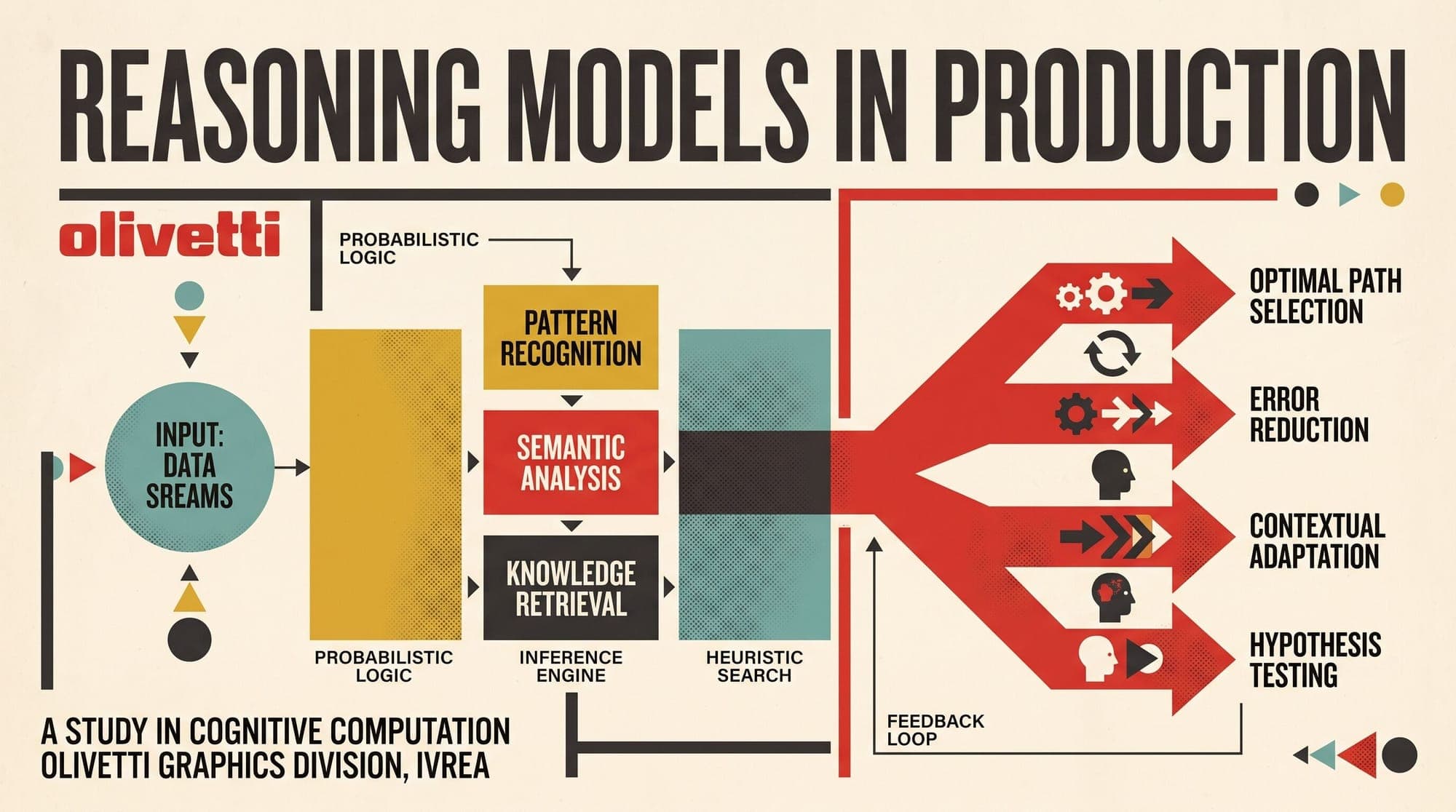
  3. Reasoning Models in Production: Architecture, Thinking-Token Management, Latency Budgets, and Downstream Agent Handoffs

    Reasoning Models in Production: Architecture, Thinking-Token Management, Latency Budgets, and Downstream Agent Handoffs The deployment of frontier reasoning models, including DeepSeek-R1, OpenAI o1 and o3, and Anthropic Claude Extended Thinking, marks a fundamental shift in how inference compute is allocated. Rather than generating immediate autoregressive token streams directly to the user or downstream caller, reasoning models dedicate hundreds or thousands of intermediate tokens to planning,

    AI
    7 min read
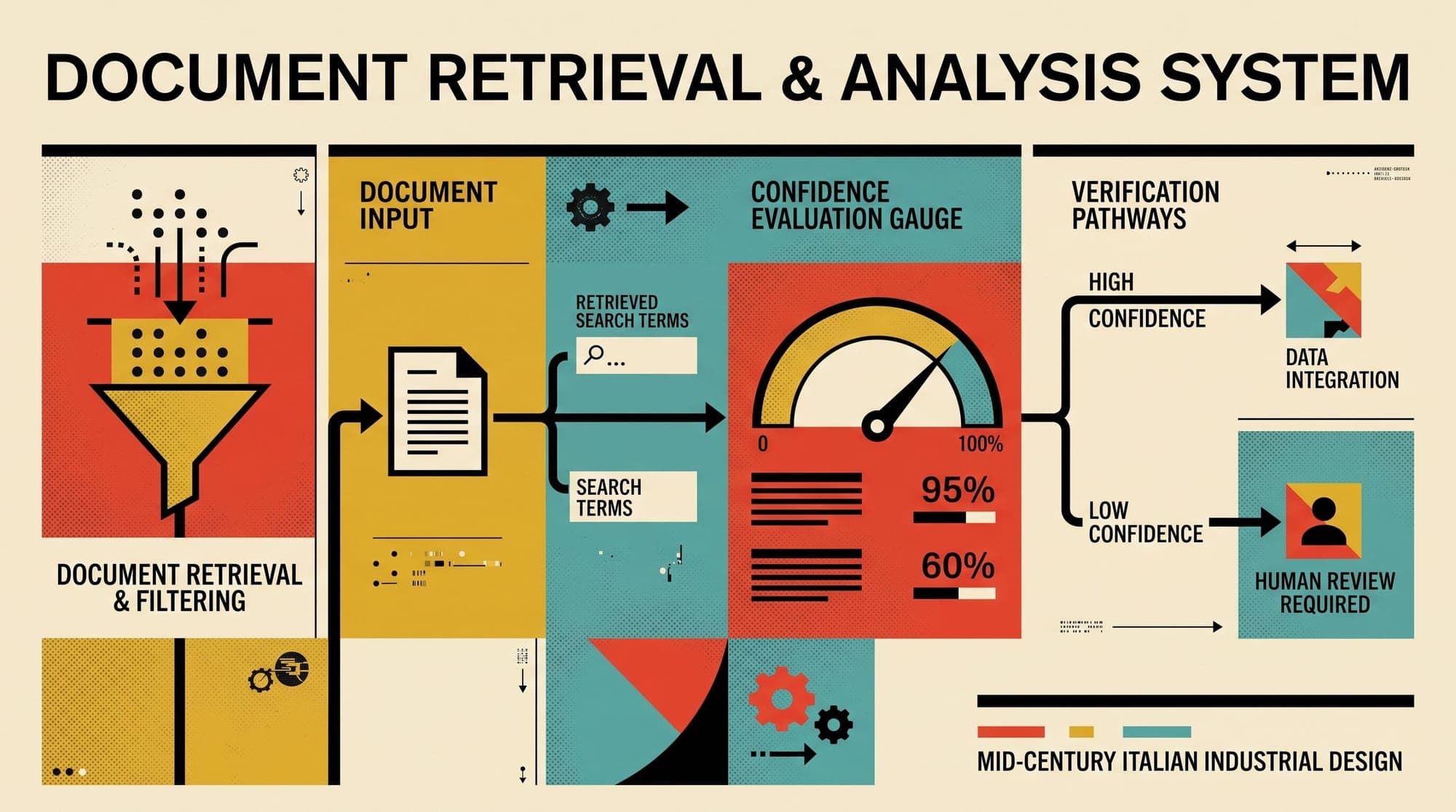
  4. Corrective RAG and Adaptive Retrieval in Production: Architecture, Confidence Scoring, and Web Fallback Loops

    Standard retrieval-augmented generation (RAG) pipelines follow a rigid, feed-forward paradigm: embed the query, fetch top-$k$ chunks via vector or hybrid search, inject the raw chunks into the prompt context, and sample a completion. While functional for homogeneous corpora with high semantic overlap, this naive retrieve-and-generate approach degrades rapidly in production environments. When a vector index returns irrelevant, noisy, or out-of-domain chunks, the generator inevitably suffers from

    RAG
    7 min read
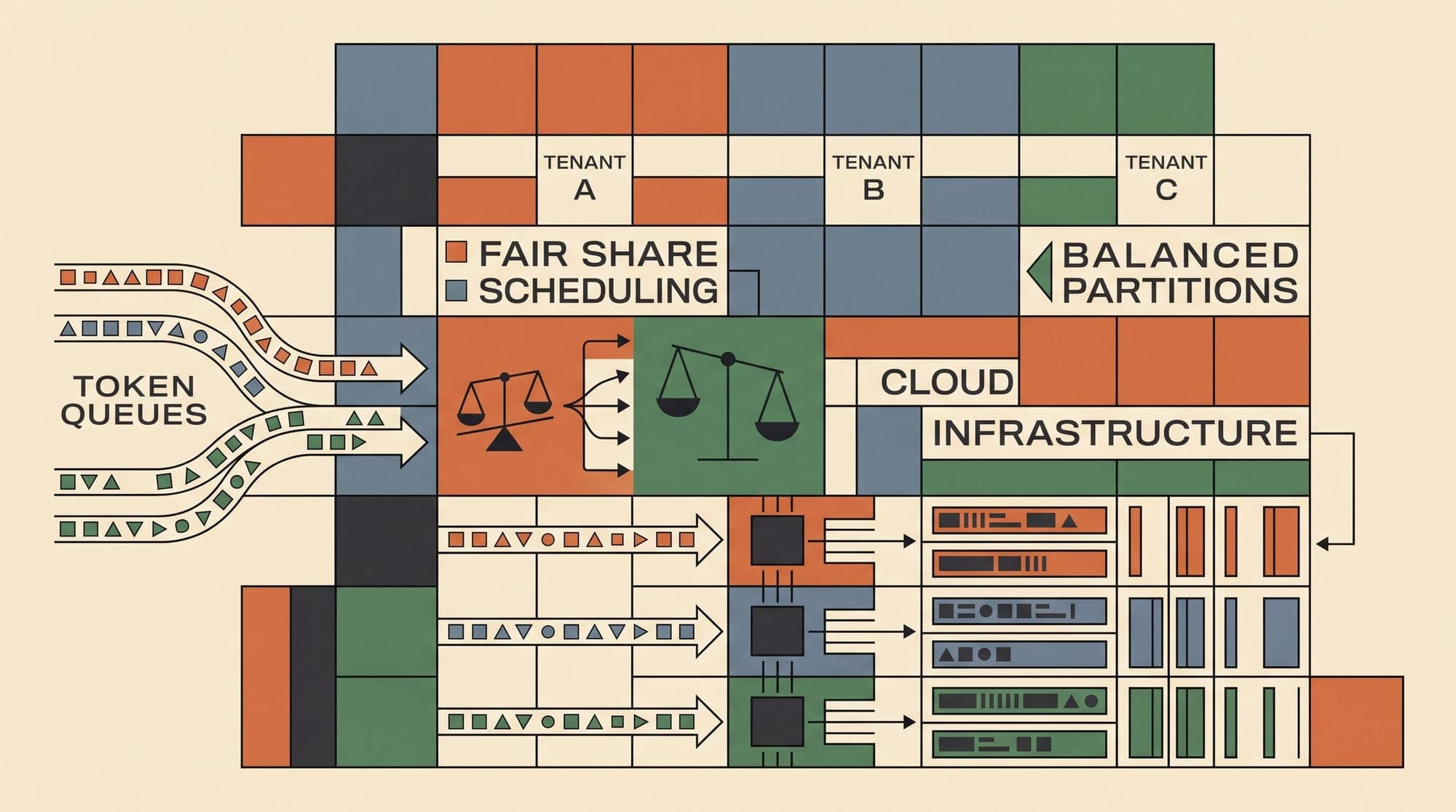
  5. Multi-Tenant LLM Serving in Production: Fair-Share Scheduling, Dynamic KV Cache Quotas, and Noisy Neighbor Isolation

    Operating a shared, multi-tenant large language model (LLM) serving cluster differs fundamentally from traditional stateless web tier hosting. In conventional microservices, tenants consume CPU cycles and static memory footprints in predictable, linear increments. In LLM serving, however, requests exhibit severe non-uniformity across multiple competing hardware dimensions: compute-bound prefill operations, memory-bandwidth-bound autoregressive decoding, and persistent High-Bandwidth Memory (HBM)

    Inference
    7 min read
  6. ReAct in Large Language Models: How Interleaving Reasoning and Action Traces Built the Foundation of AI Agents

    ReAct in Large Language Models: How Interleaving Reasoning and Action Traces Built the Foundation of AI Agents Before autonomous agents could interact reliably with APIs, search engines, and bash environments, large language models (LLMs) operated in one of two disconnected paradigms: internal reasoning without external interaction, or external action generation without internal deliberation. In pure reasoning paradigms such as Chain-of-Thought (CoT) prompting, models generate intermediate natu

    AI
    10 min read
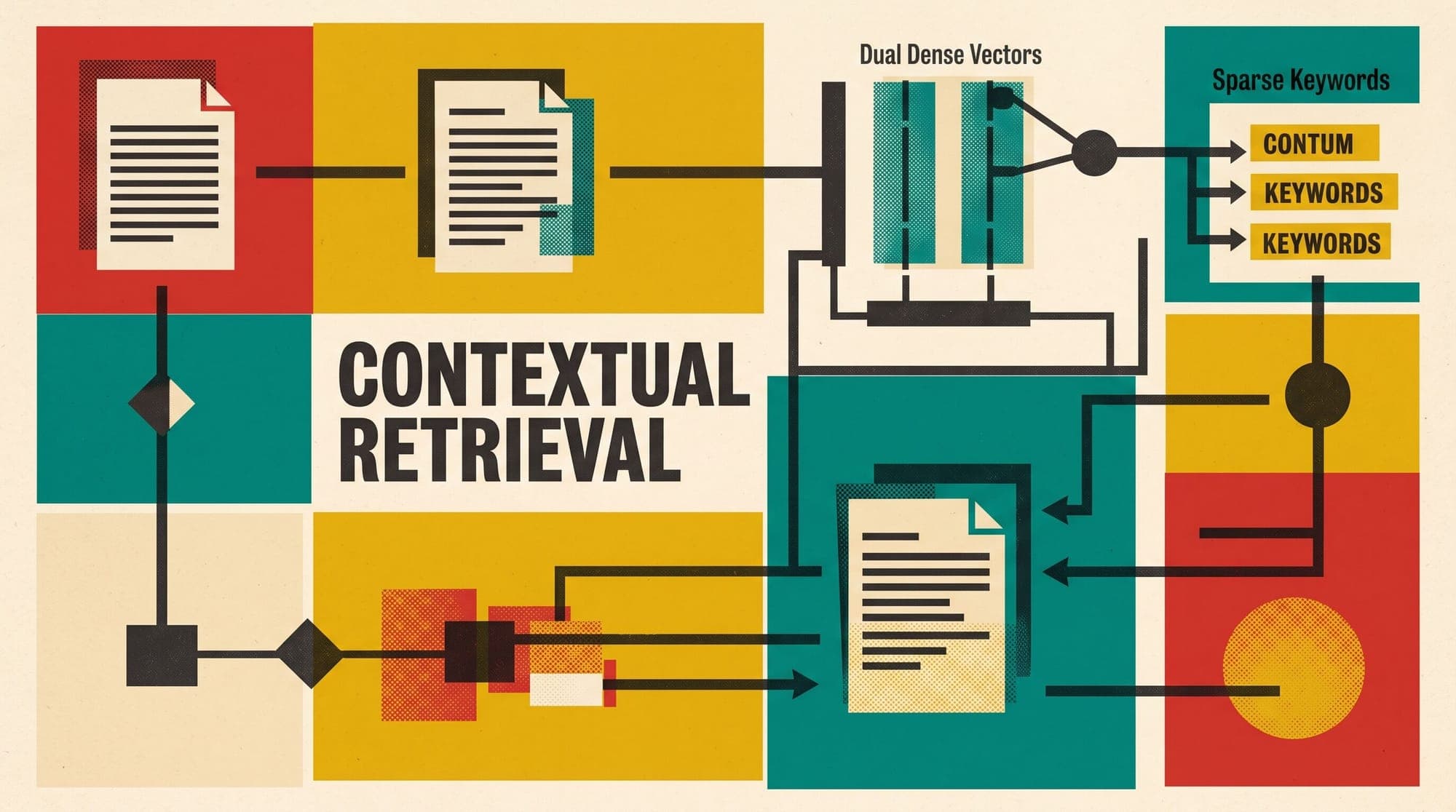
  7. Contextual Retrieval in Production RAG: Architecture, Prompt Caching Economics, Hybrid Fusion, and Reranking Pipelines

    Contextual Retrieval in Production RAG: Architecture, Prompt Caching Economics, Hybrid Fusion, and Reranking Pipelines Standard Retrieval-Augmented Generation (RAG) architectures suffer from an inherent design flaw at the preprocessing stage: chunking destroys document hierarchy. When a system divides a large document corpus into fixed-size passages (such as 300 to 800 tokens) or applies semantic boundaries, the resulting chunks lose their surrounding narrative, parent headings, entity definiti

    AI
    7 min read
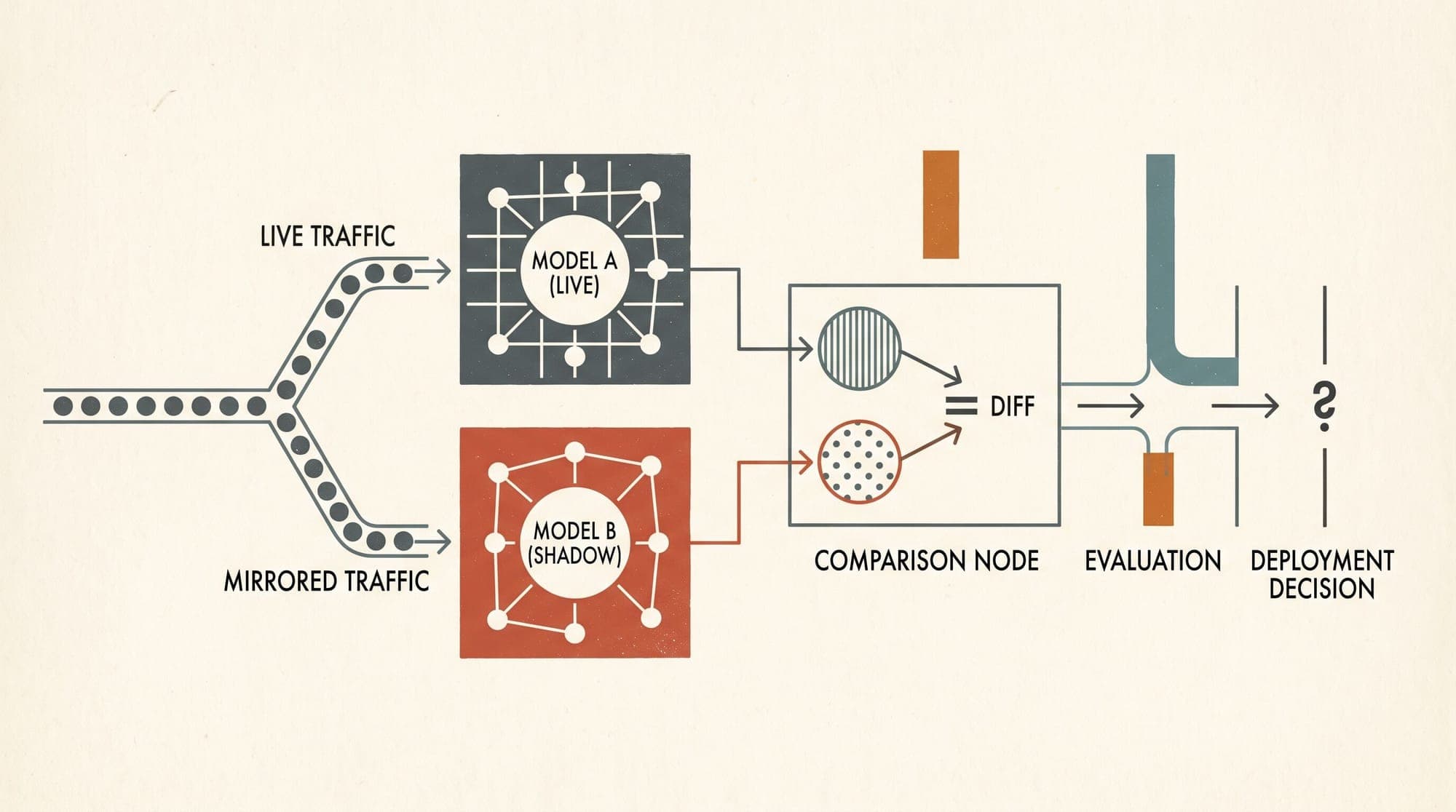
  8. Traffic Shadowing and Canary Deployments in Production: Architecture, Semantic Divergence, and Automated Rollbacks for LLM Upgrades

    Upgrading large language model pipelines in production presents an operational challenge distinct from traditional software deployments. In microservice architectures, canary deployments rely on deterministic signals: HTTP 5xx error rates, unhandled runtime exceptions, CPU saturation, and latency percentiles. When updating an LLM system (whether swapping a base model checkpoint, updating a system prompt, tweaking sampling hyperparameters, or attaching a newly fine-tuned LoRA adapter), the servic

    AI
    6 min read
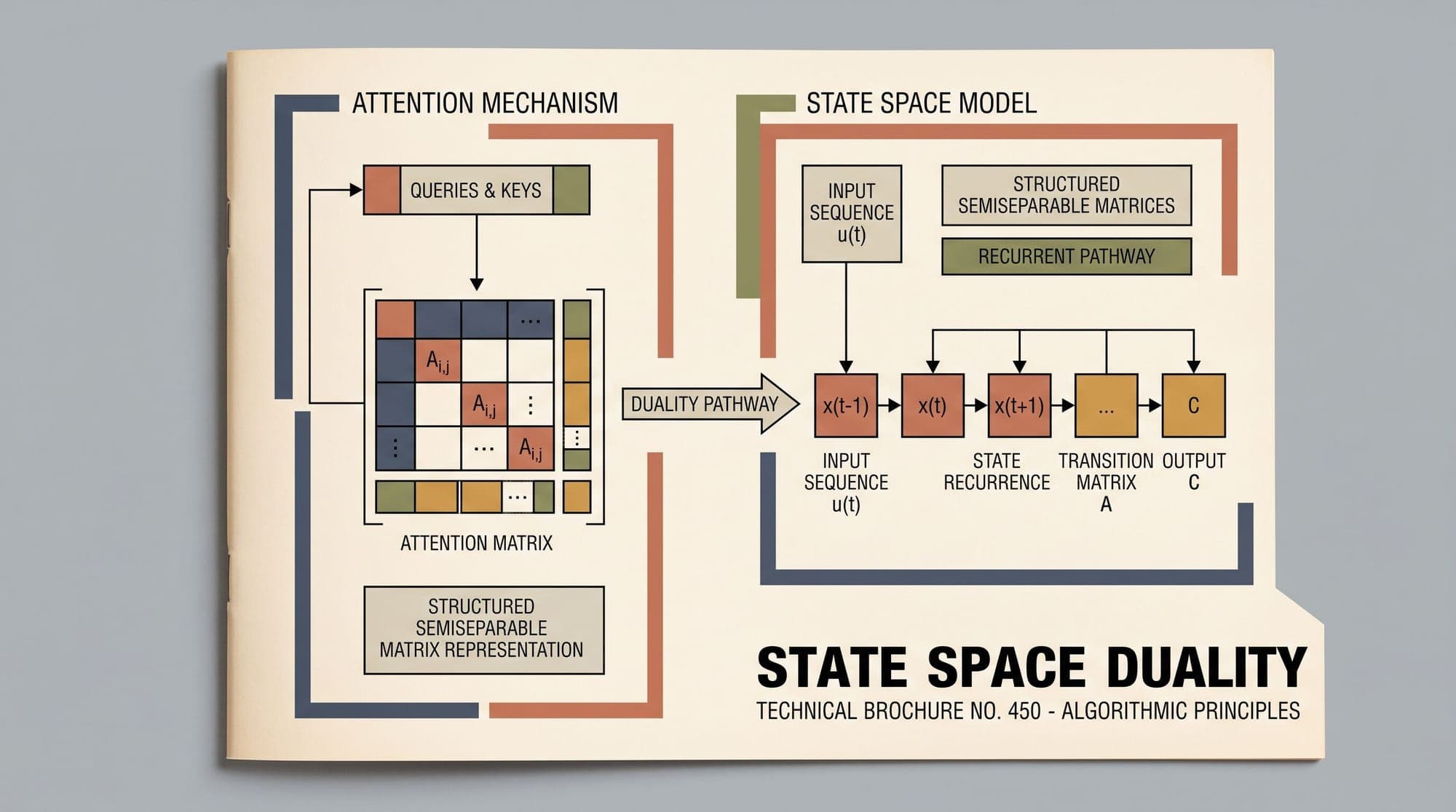
  9. State Space Duality and Mamba-2: How Semiseparable Matrices Unify Attention and SSMs

    For years, deep sequence modeling operated under a structural divide. On one side stood the Transformer architecture, anchored by softmax attention. Softmax attention scales quadratically in compute and memory with sequence length (O(T^2)), but its operations map cleanly to dense General Matrix Multiplications (GEMMs), maximizing utilization of GPU Tensor Cores. On the other side stood Structured State Space Models (SSMs), such as S4 and Mamba-1. Structured SSMs scale linearly in time (O(T · N))

    AI
    6 min read
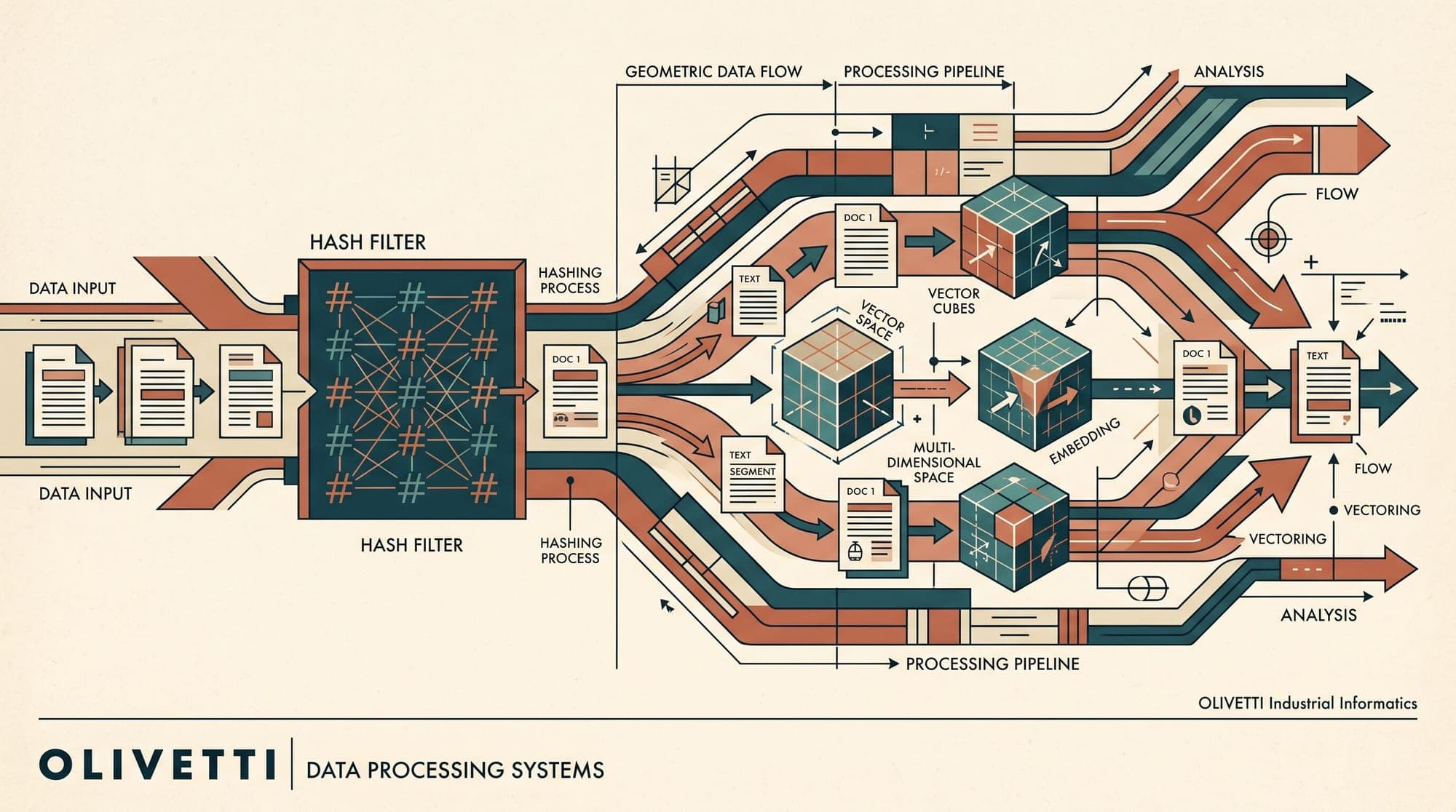
  10. Data Ingestion and Incremental Sync for Production RAG: CDC Streams, Content Hashing, Backpressure, and Zero-Downtime Indexing

    Maintaining retrieval-augmented generation (RAG) systems in production introduces a fundamental distributed systems challenge that rarely surfaces in proof-of-concept architectures: state synchronization. While initial ingestion across a static document corpus is straightforward, production data sources (PostgreSQL databases, transactional stores, object storage, and enterprise knowledge hubs) undergo continuous mutation. Records are inserted, updated, soft-deleted, and reassigned new access per

    RAG
    8 min read
  11. Sliding Window Attention in Large Language Models: How Bounded Receptive Fields, Interleaved Layers, and Rolling KV Buffers Scale Contexts

    Standard causal multi-head attention imposes two severe computational constraints as sequence lengths expand into tens or hundreds of thousands of tokens. First, calculating pairwise query-key dot products scales quadratically with sequence length, requiring $O(N^2)$ floating-point operations. Second, autoregressive generation requires caching key and value projections for all preceding tokens, causing the key-value (KV) cache to grow linearly with sequence length $O(N)$ across all layers and at

    AI
    8 min read
  12. Attention with Linear Biases (ALiBi): How Static Positional Slopes Enable Zero-Shot Context Extrapolation

    Large language models process sequences by transforming discrete tokens into continuous vector representations. Standard dot-product self-attention is permutation-invariant: without explicit positional information, the attention operation treats a sequence as an unordered bag of tokens. Early transformer architectures addressed this limitation using Absolute Positional Embeddings (APE), either through fixed sinusoidal functions or learned lookup tables added directly to token embeddings. While

    AI
    6 min read
  13. Small Language Models in Production: Task Specialization, Serving Economics, and the Frontier Offloading Pattern

    The default architecture for first-generation enterprise AI agents routed every prompt, tool selection, and intermediate evaluation step to a single frontier large language model. While this monolithic approach simplified initial orchestration, it introduced severe latency bottlenecks and unsustainable inference unit economics in high-throughput production environments. In production agentic loops, between 40% and 70% of model invocations are narrow, highly structured operations: classifying in

    AI
    6 min read
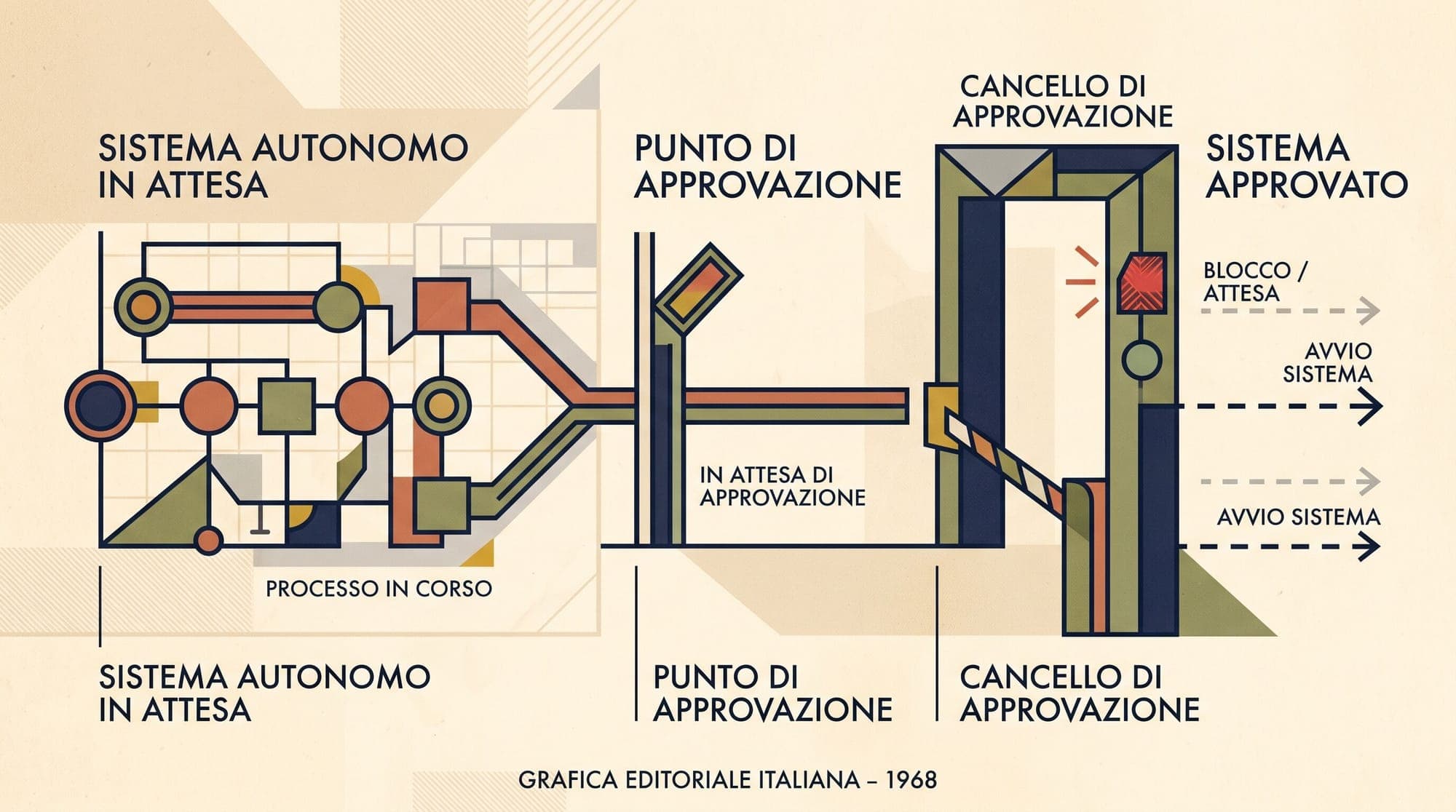
  14. Human-in-the-Loop Architectures for Production AI Agents: Interrupt Patterns, State Resumption, and Permission Escalation

    Deploying autonomous AI agents into production environments exposes a fundamental tension between system velocity and operational safety. While read-only tasks such as data extraction and document summarization carry minimal operational blast radius, agents equipped with write-access tools (database mutations, API transactions, cloud infrastructure provisioning, and outbound communications) introduce severe operational risks. Hallucinations, prompt injections, and logical drift can trigger irrev

    AI
    6 min read
  15. Semantic Routers in Production: Architecture, Embedding Classification vs. LLM Triage, and Cascade Topologies

    Routing user requests to specialized tools, APIs, or tiered foundation models is central to production AI architectures. However, relying on large language models (LLMs) or native JSON tool-calling mechanisms to perform initial intent classification introduces significant latency and cost overheads. A single LLM-based classification pass typically adds between 200 milliseconds and 1.5 seconds of time-to-first-token (TTFT) latency, alongside linear token billing for routine triage queries. To el

    AI
    5 min read
  16. Self-Correction and Reflection Loops in Production AI Agents: Architecture, Verification Oracles, and the Over-Correction Trap

    Autonomous AI agents frequently fail on initial generation when solving multi-step reasoning, code generation, and complex API orchestration tasks. To address initial execution failures, system architects widely deploy self-correction and reflection loops. However, the mechanism through which reflection operates determines whether a system converges on a valid solution or degrades into hallucinations and infinite loops. Recent research demonstrates a sharp division in reflection paradigms: whil

    AI
    6 min read
  17. LLM Streaming in Production: Server-Sent Events vs. WebSockets, Incomplete JSON Parsing, and Backpressure Architecture

    Token streaming is the primary user experience mechanism in generative AI applications. By piping generated tokens to the client as they leave the transformer layers rather than awaiting full sequence completion, systems dramatically reduce perceived latency from tens of seconds to sub-second time to first token (TTFT). However, moving from batch request-response models to long-lived streaming pipelines introduces brittle failure modes across the networking stack. In production, engineering tea

    AI
    7 min read
  18. Agentic Search and Multi-Hop Retrieval in Production: Query Decomposition, Evidence-Gap Loops, and Synthesis Architecture

    Standard retrieval-augmented generation (RAG) relies on a single-pass paradigm: an incoming prompt is embedded, matched against a vector or hybrid index, and the top-k passages are injected into the generator's context window. This linear workflow functions reliably for direct fact retrieval, but it breaks down on complex research tasks. When a query requires chained dependencies, comparative analysis across isolated documents, or multi-step reasoning, single-shot retrieval fails because the req

    AI
    5 min read
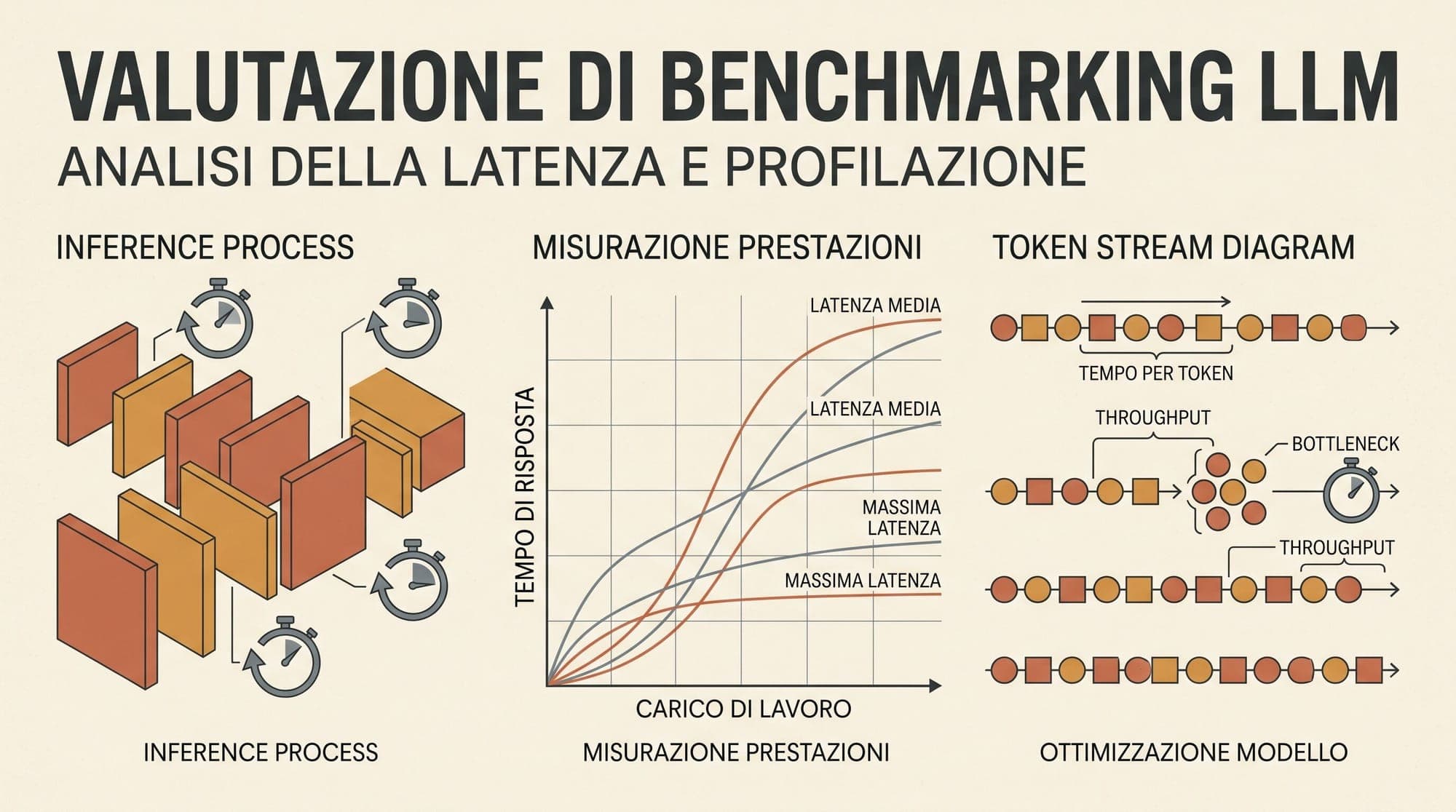
  19. Benchmarking LLM Inference in Production: Architecture, Metrics, and Tooling Across AIPerf, GuideLLM, and LLMPerf

    Traditional HTTP load-testing tools such as Apache Bench, wrk, and Locust evaluate systems using uniform request-response cycles. These tools send a payload, wait for the full response, and compute metrics such as requests per second (RPS) and round-trip latency percentiles. For stateless REST APIs, this model aligns directly with user experience. Large language model (LLM) serving fundamentally breaks this abstraction. An inference request is not an atomic computation. It consists of two disti

    AI
    7 min read
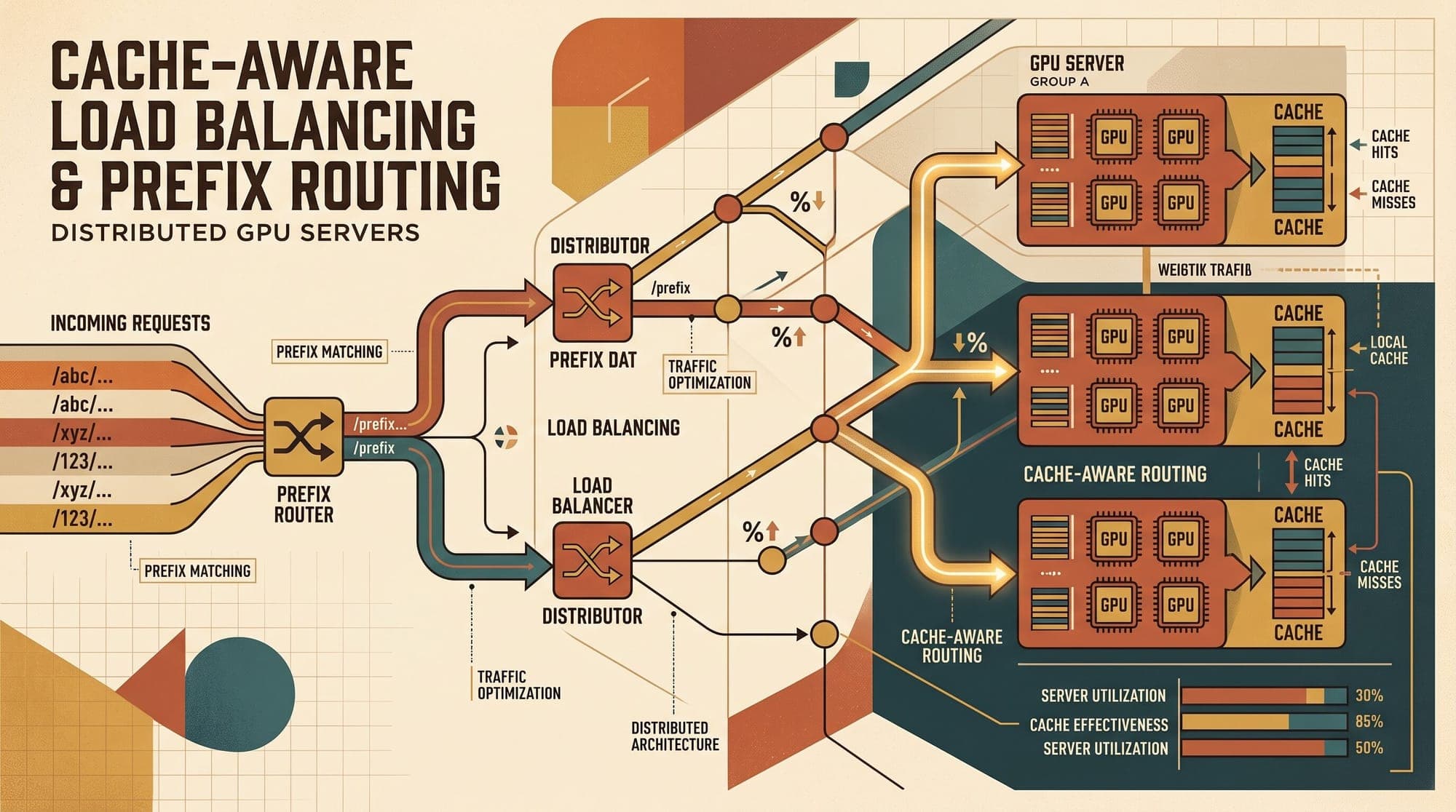
  20. Cache-Aware Load Balancing in Production LLM Serving: Architecture, Prefix Affinity, and Multi-Replica Routing Trade-Offs

    Cache-Aware Load Balancing in Production LLM Serving: Architecture, Prefix Affinity, and Multi-Replica Routing Trade-Offs When scaling large language model inference across multiple GPU worker nodes, standard Layer-4 and Layer-7 load balancing algorithms create an unseen performance cliff. Round-robin, least-connections, and random routing distribute HTTP/gRPC requests uniformly across compute replicas. However, modern LLM inference engines rely on prompt caching mechanisms, such as vLLM Automa

    AI
    6 min read