Subscribe
Topic / page 7

Architecture

Articles, page 7

121-140
  1. SwiGLU and Gated Linear Units: How Bilinear Gating Replaced Standard FFNs in Modern LLMs

    Every modern open-weight and frontier large language model, from Meta's LLaMA 3 and Mistral to Alibaba's Qwen 2.5 and DeepSeek-V3, has abandoned the standard two-layer Feed-Forward Network (FFN) originally introduced in the 2017 Transformer architecture. In its place, model architectures have converged almost universally on Gated Linear Units (GLU), specifically the Swish-Gated Linear Unit (SwiGLU). While the original Transformer relied on standard non-linear activations like ReLU or Gaussian E

    AI
    6 min read
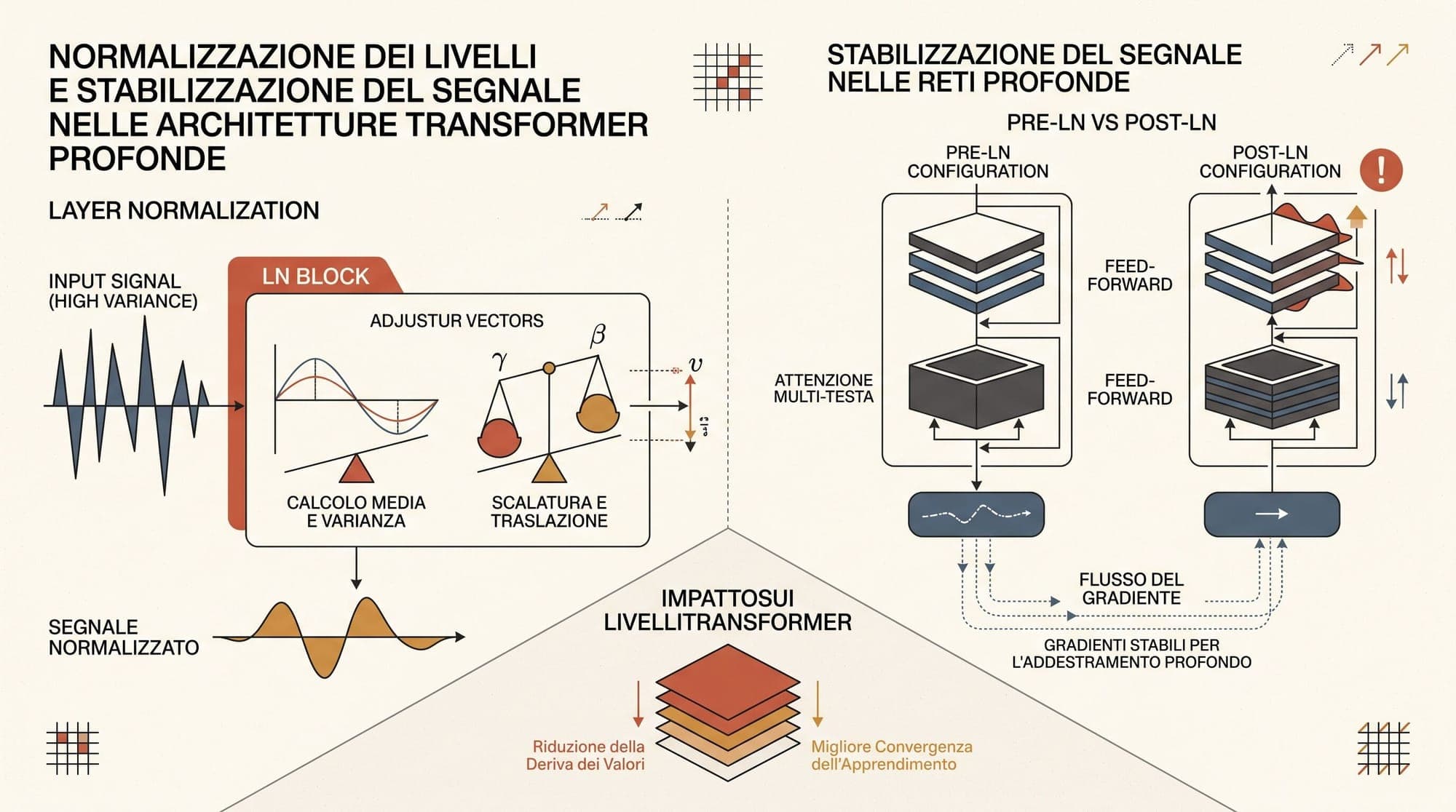
  2. Layer Normalization and RMSNorm in Large Language Models: How Pre-LN, Scaling Invariance, and QK-Norm Stabilize Deep Transformers

    Training deep autoregressive Transformers requires maintaining numerical stability across dozens or hundreds of stacked attention and feed-forward blocks. As models scale from 7 billion to hundreds of billions of parameters, uncontrolled variance growth along the residual stream or unbounded attention logits can trigger catastrophic loss spikes, gradient underflow, or numerical divergence. Normalization layers act as the primary stabilizing mechanism in modern Large Language Models (LLMs). Whil

    AI
    8 min read
  3. Long-Context LLMs vs. RAG in Production: Break-Even Economics, Attention Degradation, and Hybrid Architectures

    The emergence of production models supporting context windows of 1 million tokens or more, including Google Gemini 1.5 Pro, Anthropic Claude 3.5 Sonnet, and OpenAI GPT-4o, has disrupted conventional enterprise retrieval architectures. For several years, Retrieval-Augmented Generation (RAG) served as the mandatory workaround for strict context limits, forcing engineering teams to build chunking pipelines, embedding indices, and vector database infrastructures. With massive context windows and th

    AI
    6 min read
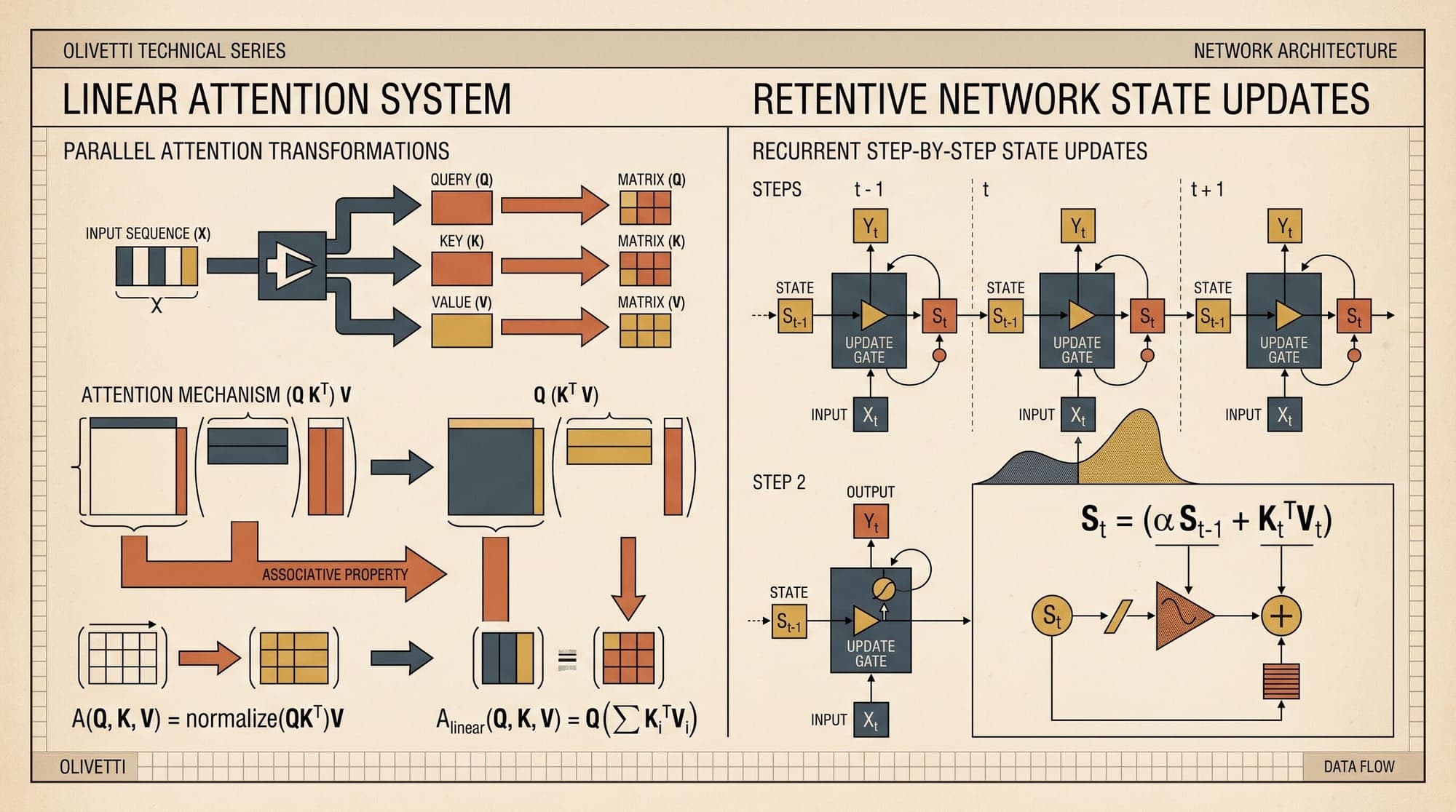
  4. Linear Attention and Retentive Networks: How Recurrent Duals and Chunkwise Tiling Eliminate the Quadratic Bottleneck

    Linear Attention and Retentive Networks: How Recurrent Duals and Chunkwise Tiling Eliminate the Quadratic Bottleneck Autoregressive large language models built on standard multi-head self-attention face two fundamental scaling ceilings: quadratic compute and memory complexity during pre-training, and linearly expanding key-value (KV) cache memory footprints during autoregressive generation. While optimizations such as FlashAttention reduce memory access overheads and Grouped-Query Attention (GQ

    Architecture
    8 min read
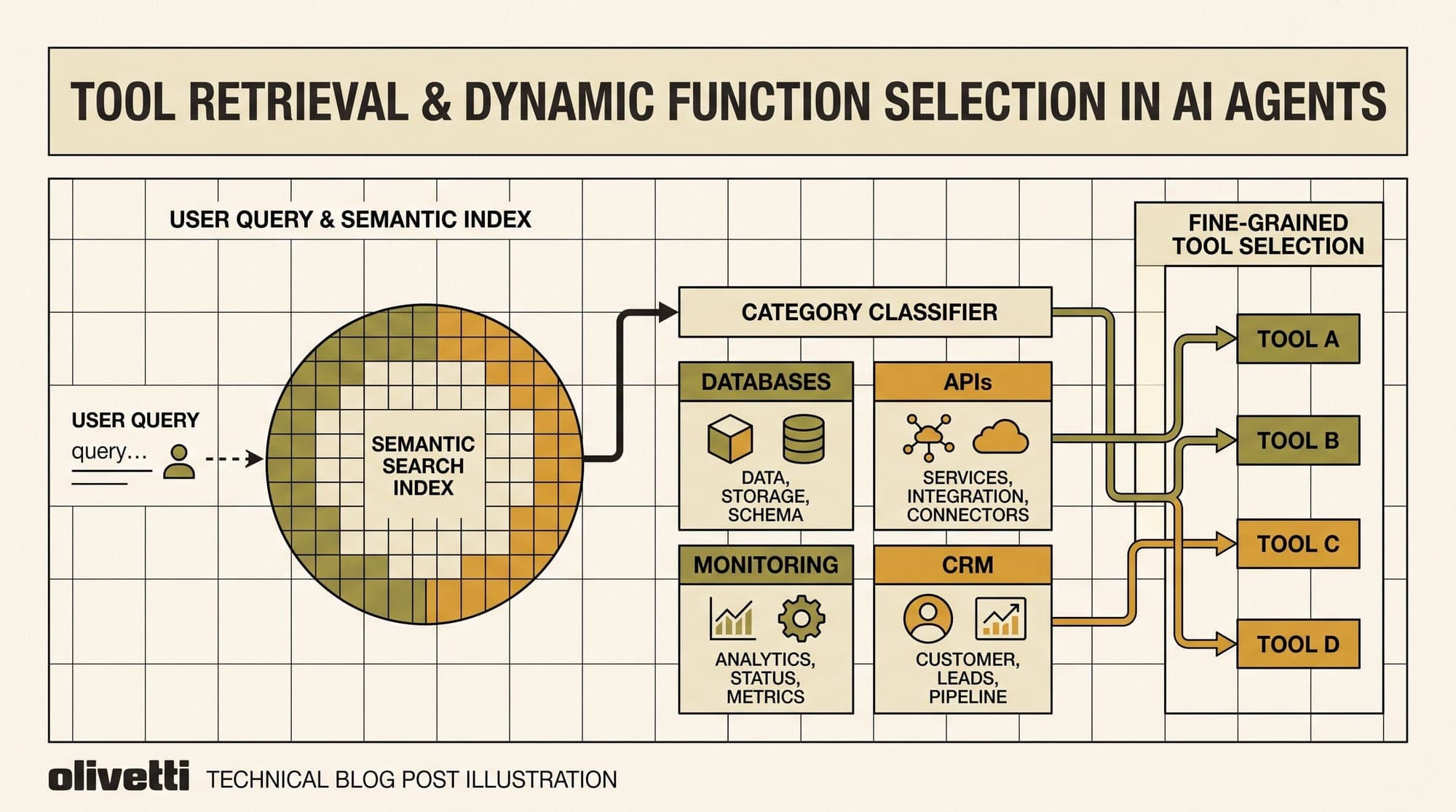
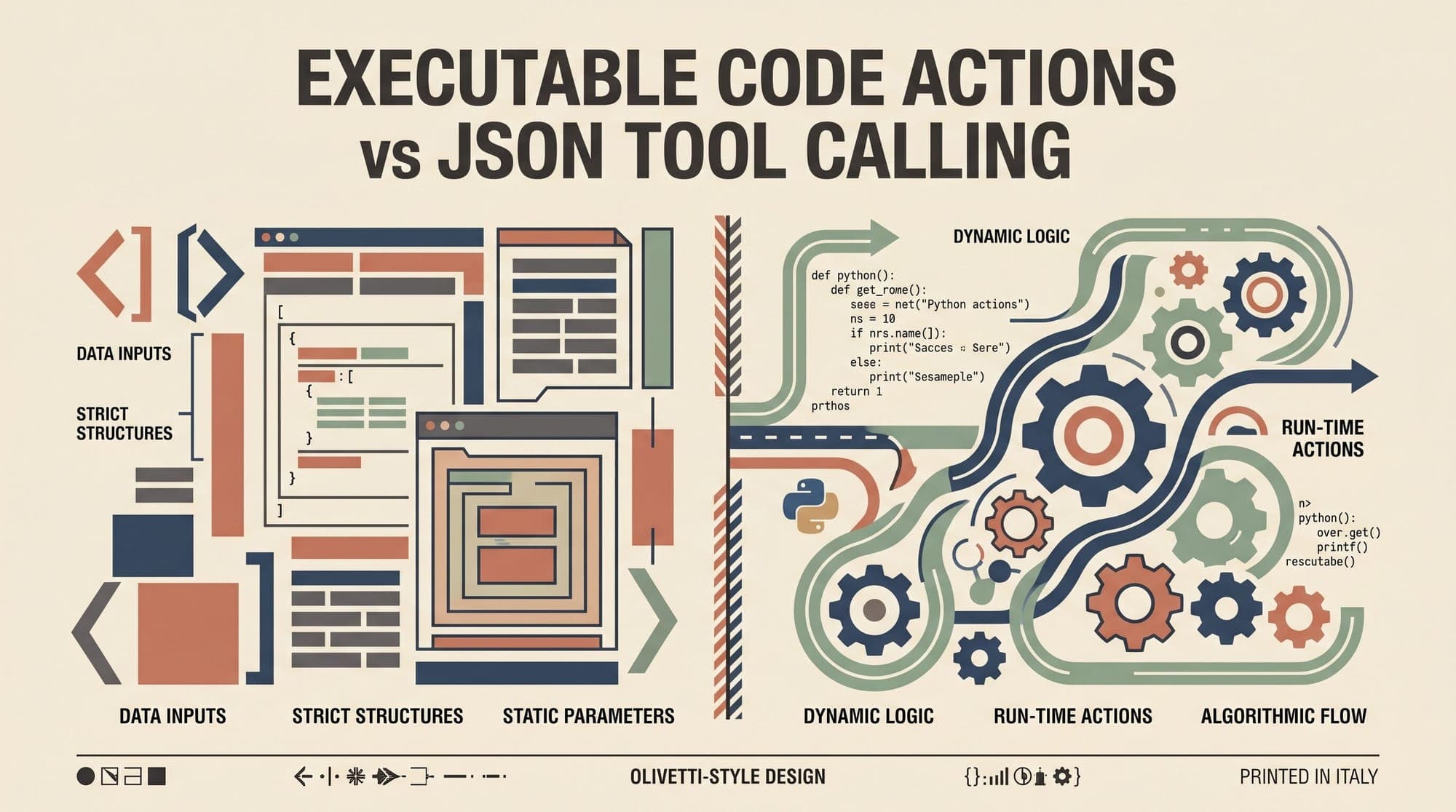
  5. Tool Retrieval and Dynamic Function Selection in Production AI Agents: Architecture, Semantic Indexing, and Serving Trade-Offs

    Tool Retrieval and Dynamic Function Selection in Production AI Agents: Architecture, Semantic Indexing, and Serving Trade-Offs The default approach to LLM tool calling—stuffing every function schema into the prompt—works for demos with a dozen tools. It fails in production where agents face hundreds or thousands of available functions. Context windows saturate, selection accuracy degrades, and latency grows linearly with registry size. This post surveys the architectural progression from stati

    AI
    6 min read
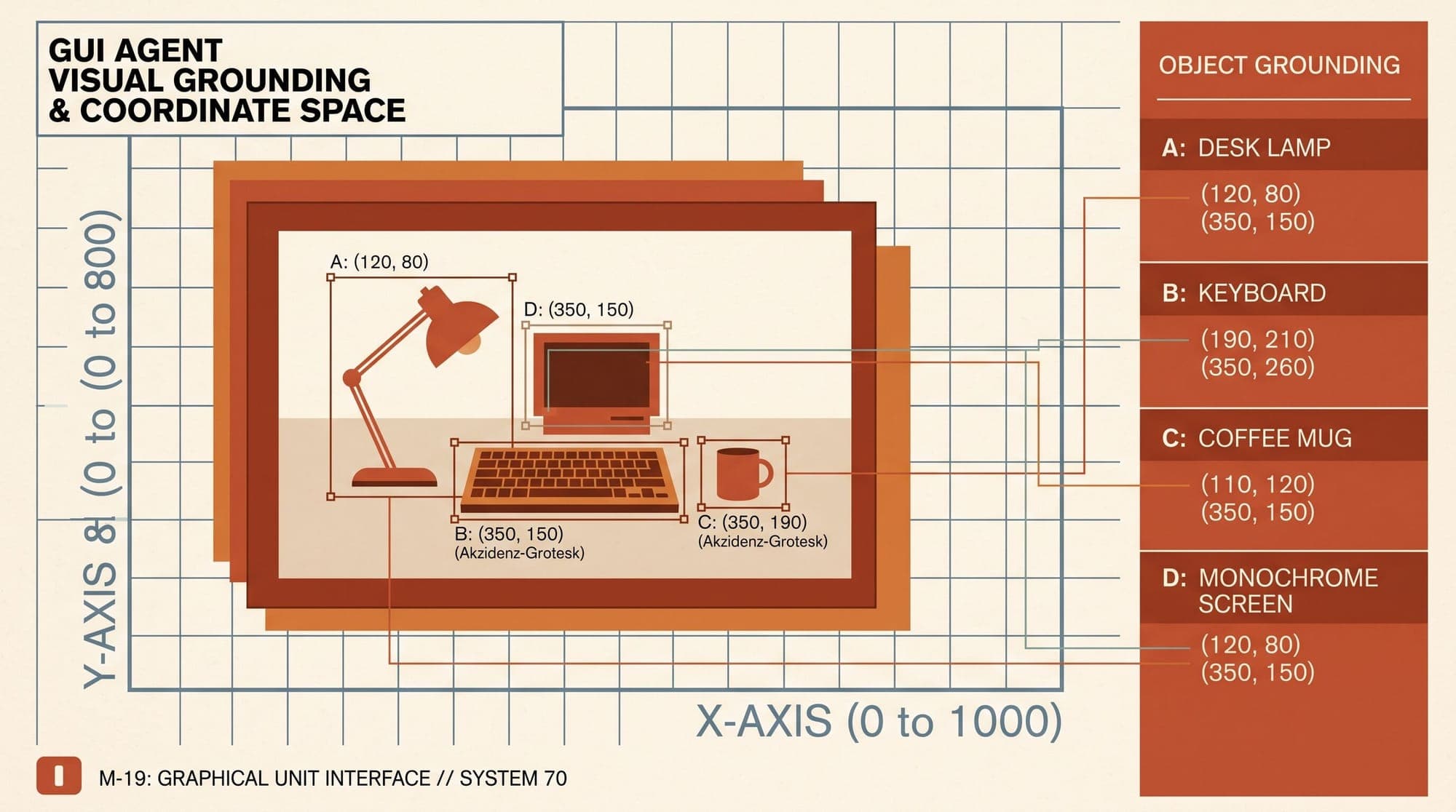
  6. GUI Agent Architectures in Production: Visual Grounding, DOM vs. Pixel Parsing, and Action Spaces

    Graphical user interface (GUI) automation has undergone a structural transition from programmatic DOM manipulation to vision-based foundation agents. Where earlier browser automation relied on CSS selectors, XPath expressions, and accessibility trees, modern desktop and cross-platform agents interact with operating systems through raw pixel observations and virtual input devices. Deploying GUI agents in production environments introduces distinct engineering constraints. Visual grounding precis

    AI
    6 min read
  7. Pathway Secures $30M Seed at $500M Valuation to Scale BDH Post-Transformer Architecture

    AI research company Pathway has secured additional capital at a $500 million valuation, bringing its total seed funding to $30 million. The company is developing a post-Transformer architecture dubbed Baby Dragon Hatchling (BDH) designed to combine continuous in-weights adaptation, long-horizon reasoning, and memory within neural representations without relying on expanding KV caches or external retrieval pipelines. The BDH Post-Transformer Architecture Standard Transformer architectures suff

    AI
    2 min read
  8. Web Extraction and Retrieval Architectures for Production AI Agents: Comparing Tavily, Exa, Firecrawl, Jina Reader, and Crawl4AI

    Autonomous AI agents and Retrieval-Augmented Generation (RAG) systems require live web access to ground answers, verify facts, and execute multi-step research workflows. However, feeding raw web data directly into large language models creates severe performance and economic bottlenecks. A standard web page contains between 50 KB and 500 KB of Document Object Model (DOM) data, cascading stylesheets (CSS), JavaScript bundles, SVG icons, tracking scripts, and boilerplate navigation headers. Inges

    Architecture
    6 min read
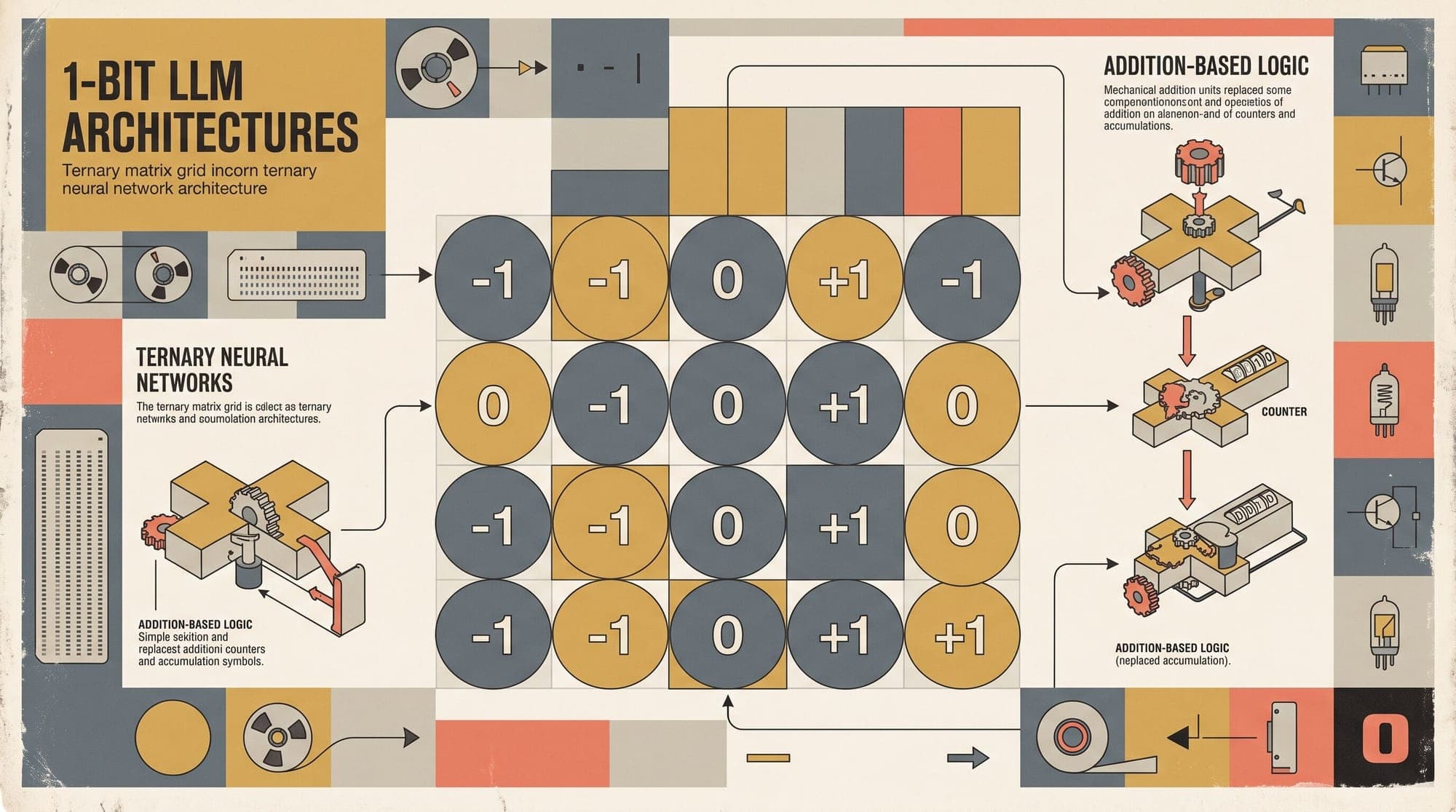
  9. 1-Bit Large Language Models and BitNet b1.58: How Ternary Weights and Additive Kernels Eliminate Matrix Multiplications

    Standard large language model architectures run on high-precision floating-point arithmetic. Foundation models are typically pre-trained in 16-bit bfloat16 or 8-bit FP8 formats, requiring compute-heavy Multiply-Accumulate (MAC) units inside GPU Tensor Cores. During autoregressive decoding, these models face a severe memory-bandwidth bottleneck: every generated token requires streaming gigabytes of model weights from high-bandwidth memory (HBM) into on-chip cache and registers. The 1-bit model p

    AI
    6 min read
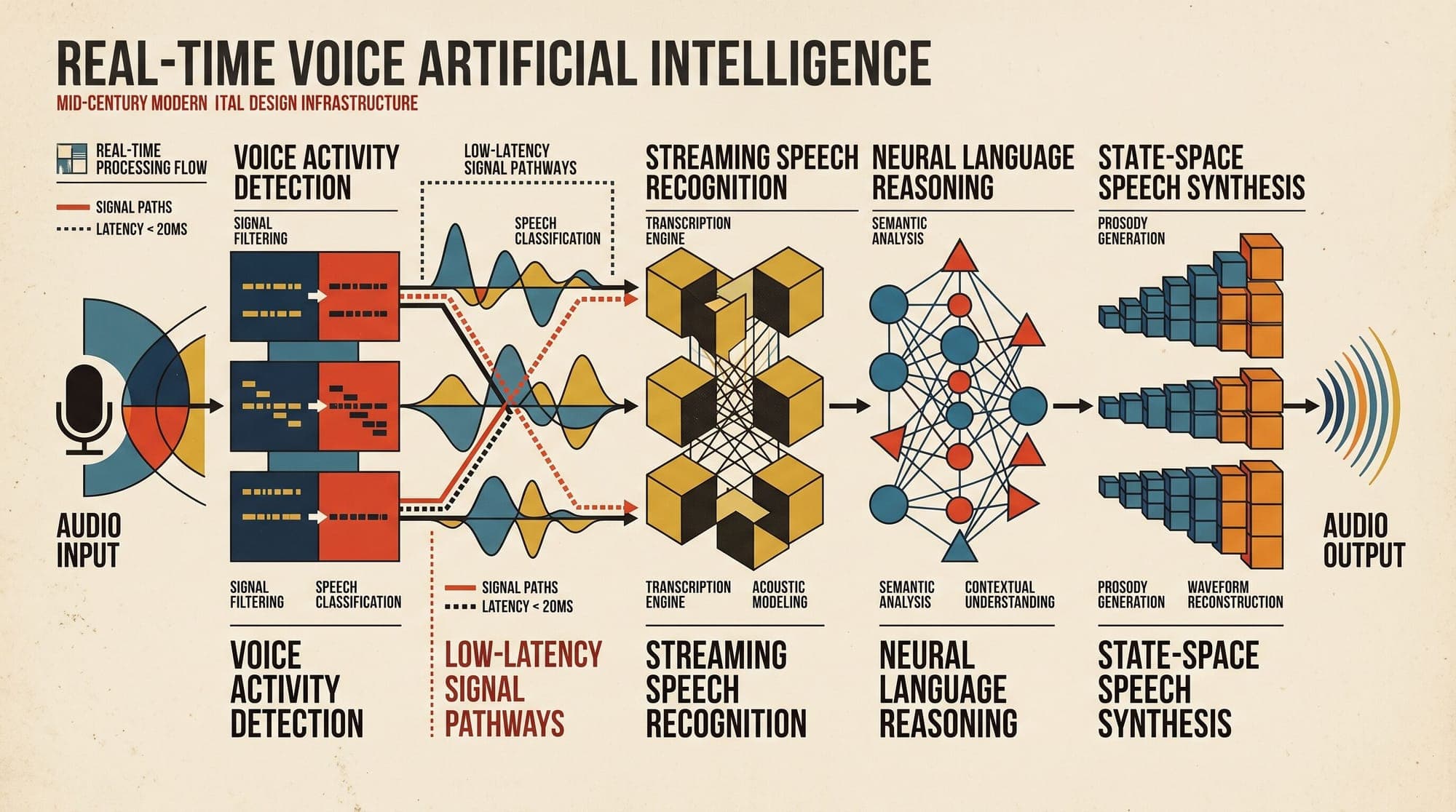
  10. Real-Time Voice Agent Architecture: WebRTC, Cascaded Pipelines vs. Native Speech-to-Speech, and Sub-500ms Latency Budgets

    Building production-grade real-time voice AI systems requires engineering around a strict physical constraint: human conversational cadence. In natural human dialogue, the typical gap between turns ranges from 200 to 300 milliseconds. When an interactive voice agent incurs a total round-trip latency above 700 milliseconds, users perceive the interaction as sluggish. When latency exceeds 1,000 milliseconds, conversational dynamics collapse into frequent interruptions, speech collisions, and awkwa

    AI
    6 min read
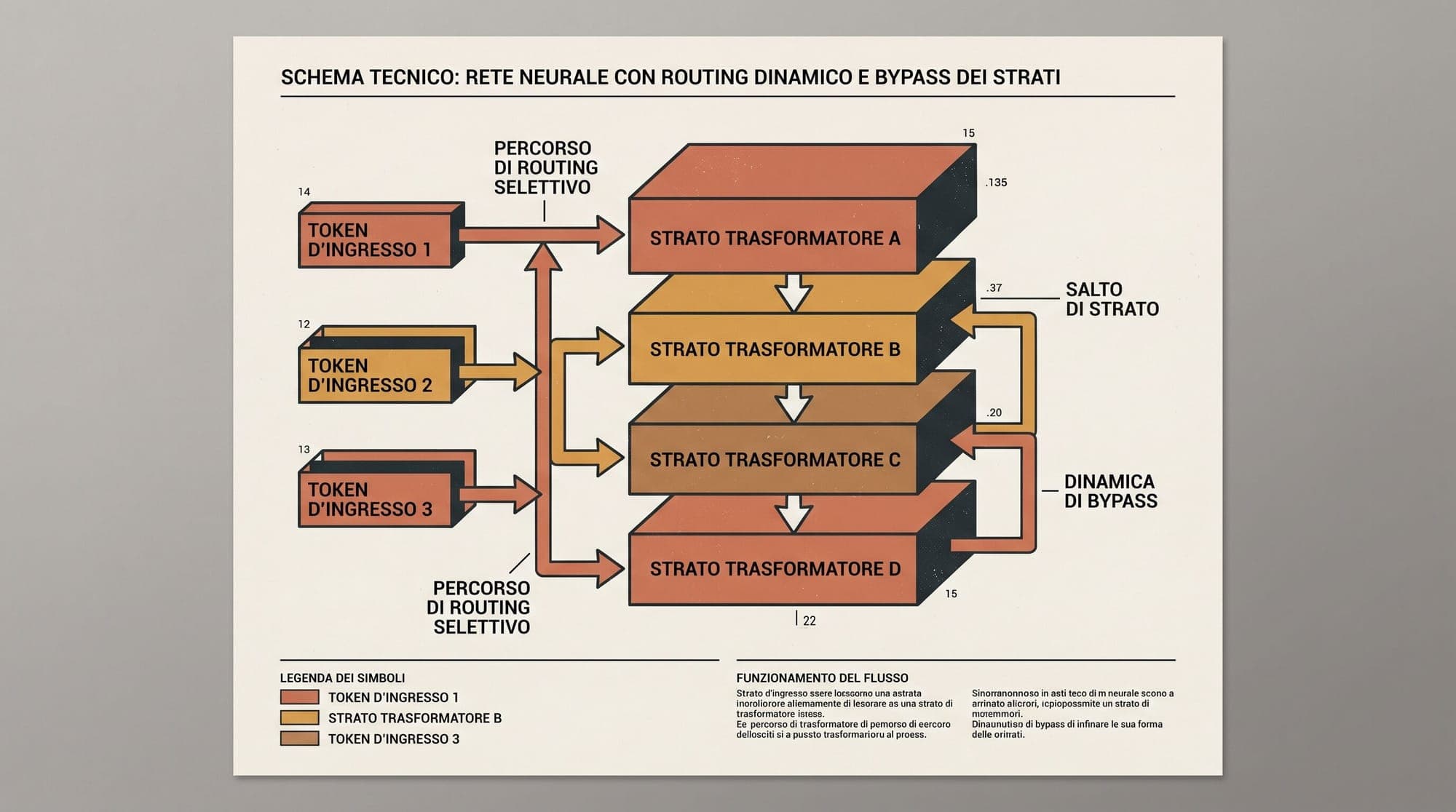
  11. Mixture-of-Depths: How Dynamic Compute Allocation and Layer Skipping Scale LLM Efficiency

    Standard transformer architectures allocate a uniform computational budget to every token in a sequence. Regardless of whether a model is processing a predictable punctuation mark, a common grammatical connective, or a mathematically dense reasoning step, every token undergoes an identical sequence of matrix multiplications across every multi-head attention and multilayer perceptron (MLP) block throughout the network's depth. This static compute distribution is computationally inefficient. Whil

    AI
    6 min read
  12. Durable Execution for AI Agents: Architecture, State Checkpointing, and Failure Recovery

    Autonomous AI agents deployed in production environments frequently fail due to infrastructural instability rather than model reasoning flaws. Standard agent control loops, often structured as in-memory while-loops operating on transient servers or containerized pods, lack persistence across network blips, pod evictions, process restarts, or rate-limit timeouts. When an unhandled process failure occurs mid-task, standard agent architectures restart from scratch. This introduces three severe oper

    AI
    6 min read
  13. FlashDecoding: How Sequence Partitioning Solved the Memory Bandwidth Bottleneck in LLM Generation

    FlashDecoding: How Sequence Partitioning Solved the Memory Bandwidth Bottleneck in LLM Generation In large language model serving, execution divides into two distinct operational regimes: prompt prefill and autoregressive token generation (decoding). While FlashAttention transformed prefill throughput by eliminating High Bandwidth Memory (HBM) round-trips for intermediate attention matrices, standard FlashAttention algorithms encounter a severe hardware utilization bottleneck during decoding.

    AI
    7 min read
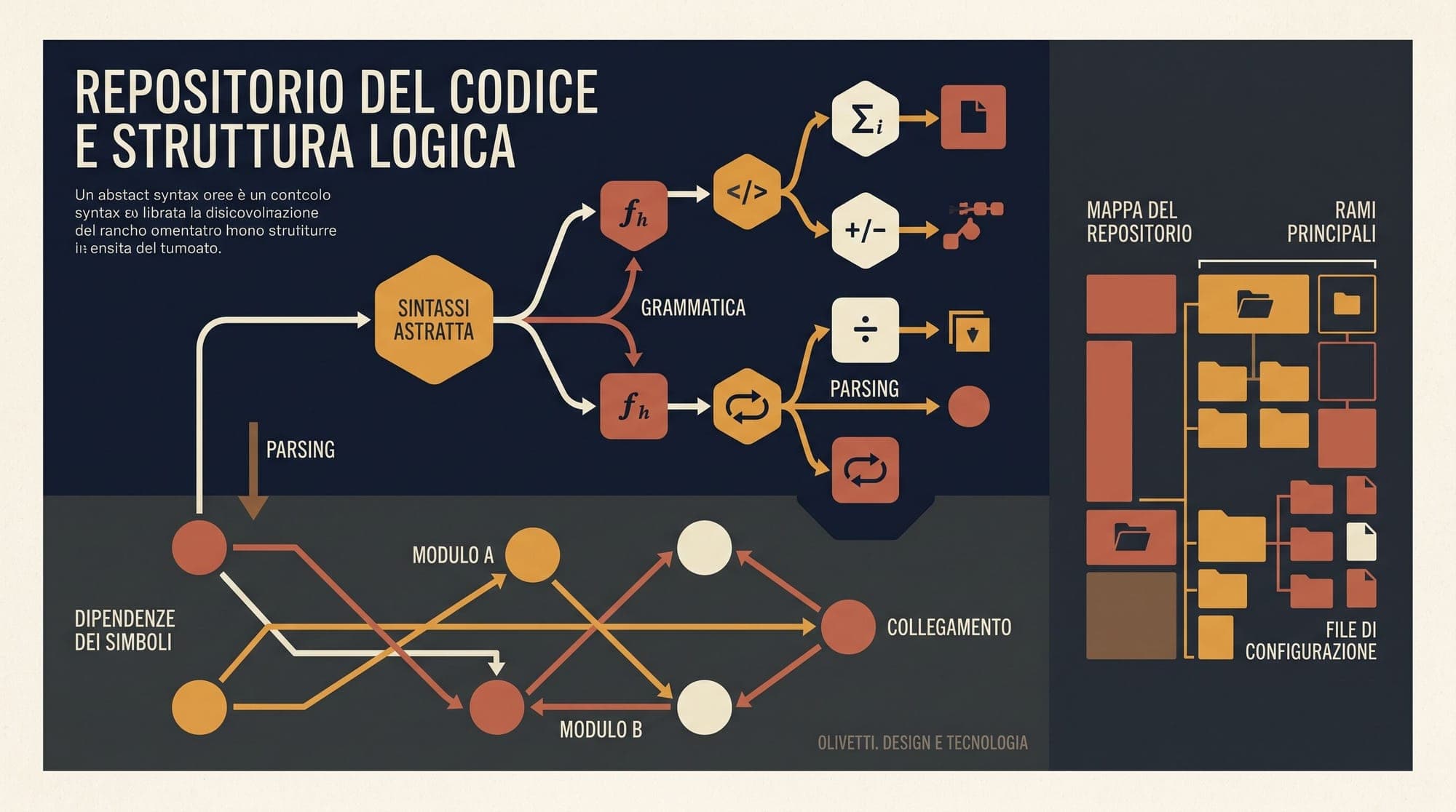
  14. Codebase Context Engineering for AI Agents: Repo Maps, AST Indexing, and Retrieval Architectures

    Modern software repositories routinely contain hundreds of thousands or millions of lines of source code. A medium-sized production project with 500 files and 100,000 lines of code typically spans 3 million to 5 million tokens. While frontier models have expanded context windows to 200,000 tokens or more, stuffing an entire repository into a prompt remains fundamentally impractical. Beyond exponential inference costs and KV cache memory bloat, long-context attention suffers from severe retrieval

    AI
    6 min read
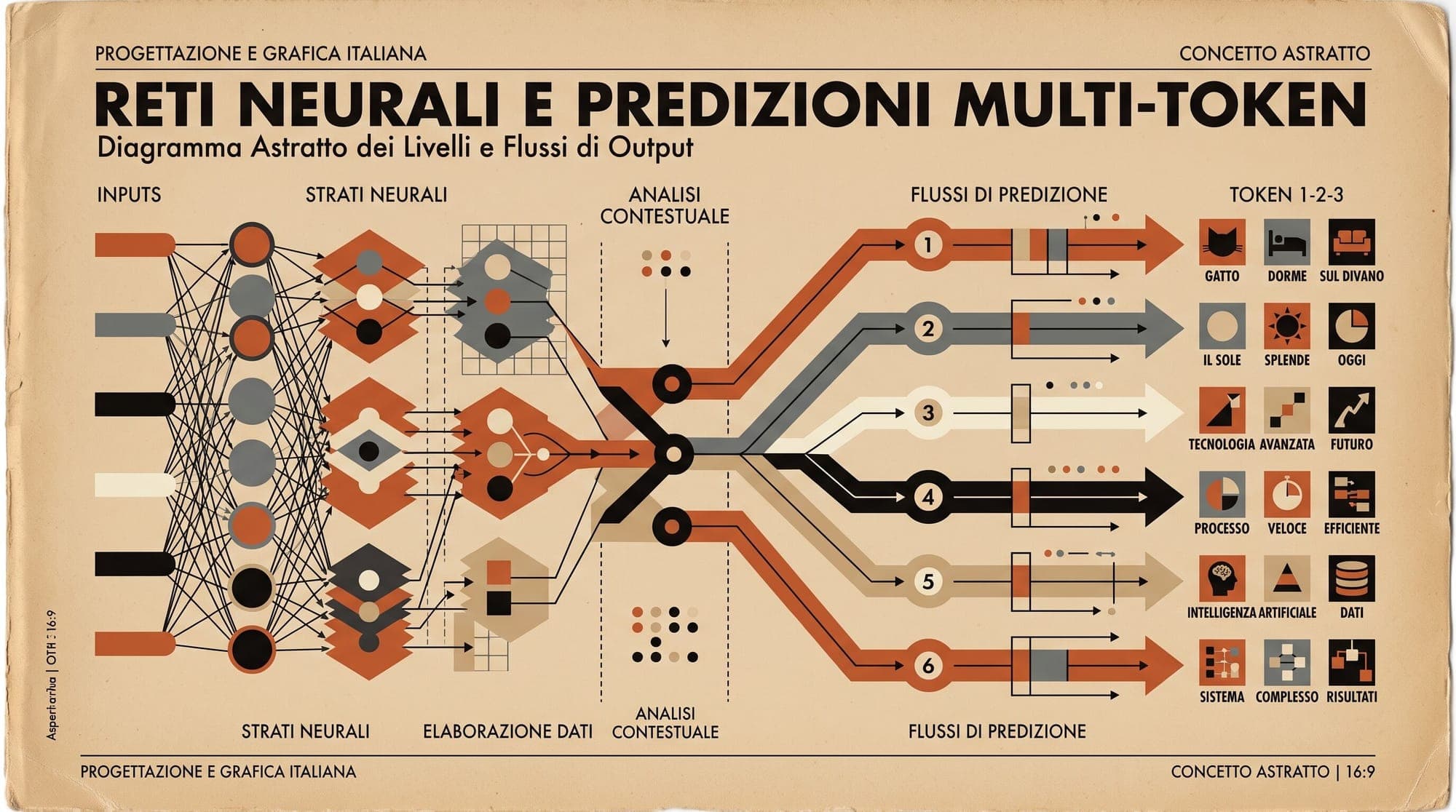
  15. Multi-Token Prediction: How Future Token Supervision Densifies Representations and Speeds Up LLM Serving

    Standard autoregressive language models are trained under a strict next-token prediction objective. At every sequence position, the model consumes a prefix of tokens and predicts the single immediate successor token using a cross-entropy loss. While this paradigm has scaled language modeling across orders of magnitude, it suffers from an architectural limitation: myopic optimization. By evaluating loss exclusively on the immediate next step, standard training fails to reward representations that

    AI
    6 min read
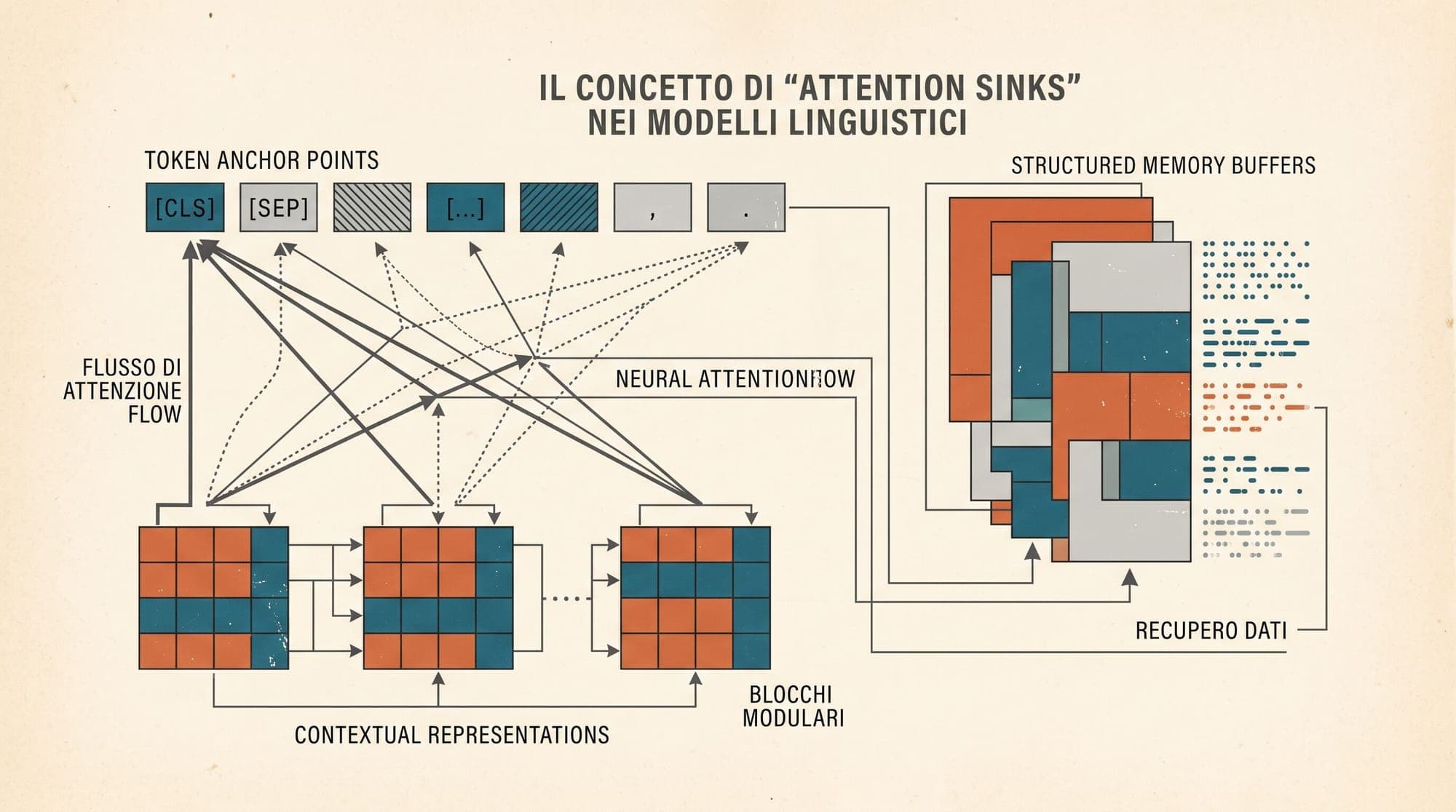
  16. Attention Sinks in Large Language Models: How StreamingLLM Prevents Perplexity Explosion in Infinite Sequences

    Autoregressive large language models are trained on fixed context windows, yet real-world applications (such as continuous coding agents, live conversation servers, and document streaming pipelines) require models to process unbounded token sequences. When standard LLMs operate on sequences longer than their pre-training context length, computational complexity and key-value (KV) cache memory scale quadratically and linearly, respectively. A seemingly natural workaround is sliding window attent

    AI
    5 min read
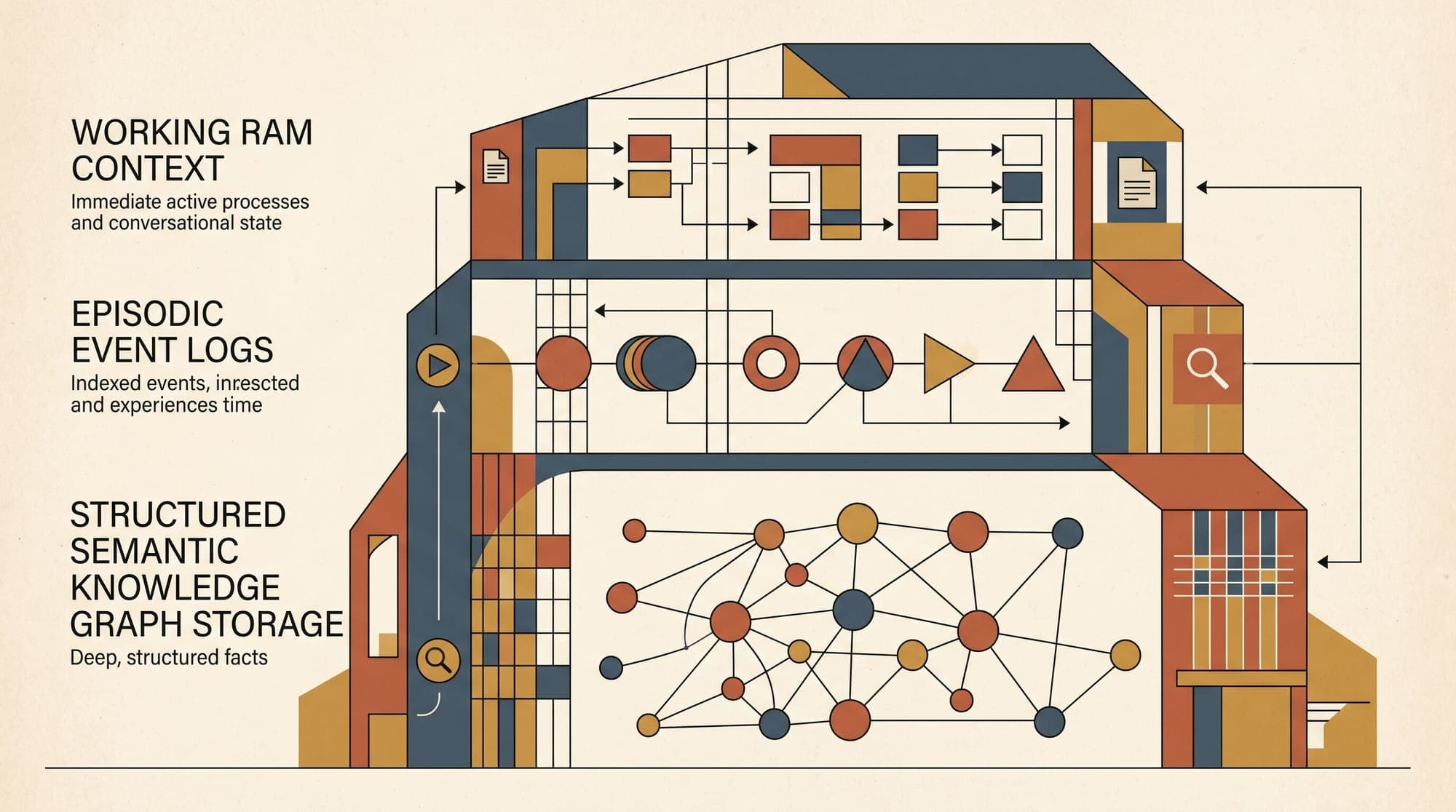
  17. Agent Memory Architectures in Production: Working Context, Episodic Buffers, Semantic Graphs, and State Serialization

    Large Language Models operate as stateless prediction engines: every API call processes an input prompt independently, without retaining memory of previous turns, decisions, or external interactions. While extending context windows to 1 million or 2 million tokens provides temporary capacity for long transcripts, treating raw context windows as long-term memory introduces severe engineering bottlenecks. Unbounded context growth dramatically inflates time-to-first-token (TTFT) latency, increases

    AI
    6 min read
  18. GraphRAG vs. Vector RAG in Production: Architecture, Community Summaries, and Cost-Latency Trade-Offs

    Retrieval-Augmented Generation (RAG) has become the standard architecture for grounding Large Language Models in external knowledge bases. However, production implementations frequently encounter structural limits when relying entirely on naive vector search. Standard Vector RAG fragments documents into arbitrary chunks and retrieves top-k passages via cosine similarity in embedding space. While effective for localized fact retrieval, this approach struggles with global, corpus-wide synthesis an

    AI
    5 min read