
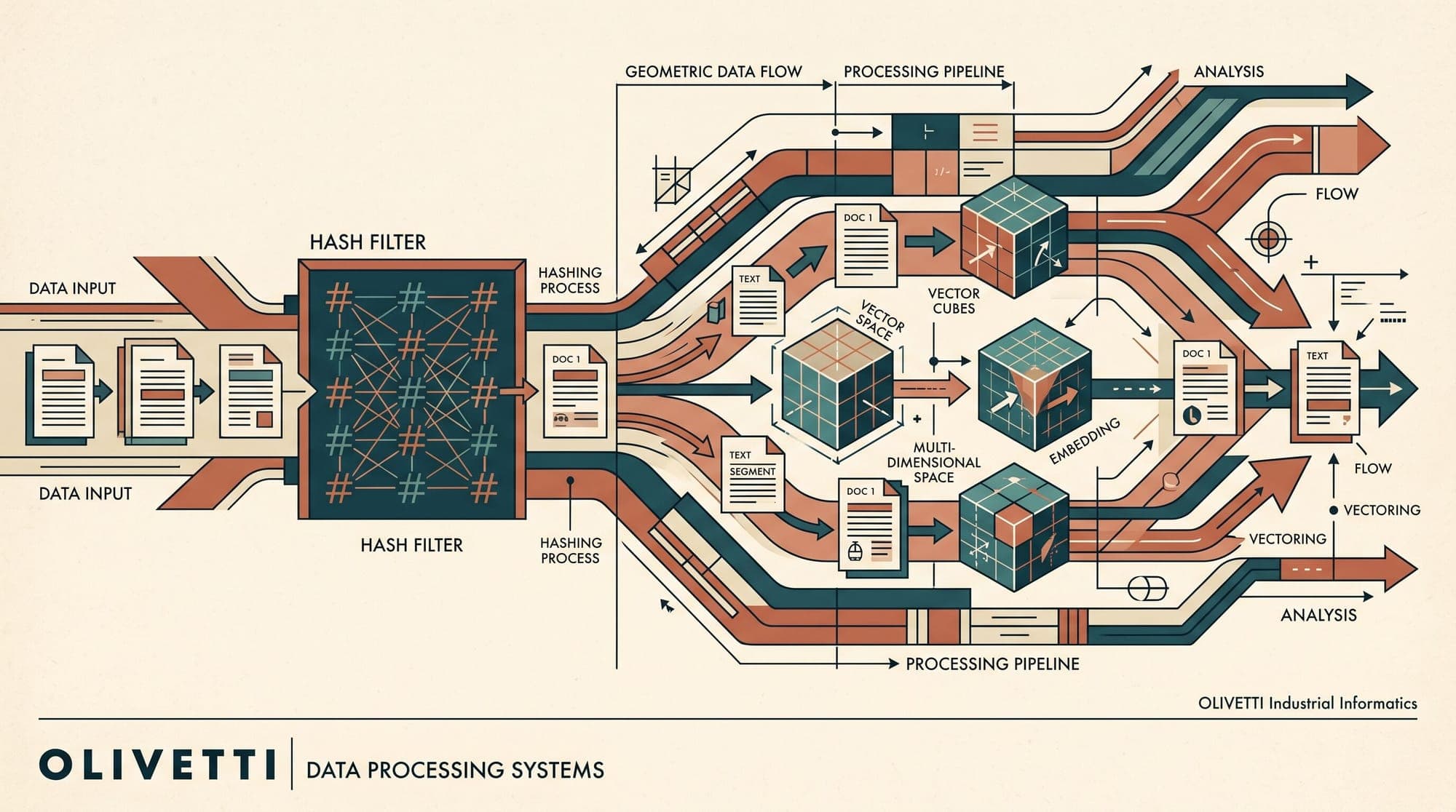
Maintaining retrieval-augmented generation (RAG) systems in production introduces a fundamental distributed systems challenge that rarely surfaces in proof-of-concept architectures: state synchronization. While initial ingestion across a static document corpus is straightforward, production data sources (PostgreSQL databases, transactional stores, object storage, and enterprise knowledge hubs) undergo continuous mutation. Records are inserted, updated, soft-deleted, and reassigned new access permissions across thousands of transactions per minute.
Naive RAG pipelines rely on periodic full-corpus batch rebuilds. At enterprise scale, this approach collapses. Re-embedding millions of document chunks daily incurs unsustainable API costs, saturates embedding provider rate limits, and creates hours of retrieval staleness. Conversely, naive real-time in-place mutation against vector databases degrades graph-based approximate nearest neighbor (ANN) indexes, causes memory fragmentation, and introduces race conditions.
Building a resilient, cost-effective data ingestion pipeline requires treating RAG indexing as a stream-processing discipline. This requires Change Data Capture (CDC), content-hash differential ledgers, adaptive embedding backpressure, and hybrid blue-green index management.

The Failure Modes of Batch and Naive In-Place Sync
When RAG systems scale past several hundred thousand documents, two opposing architectural anti-patterns typically emerge:
1. The Batch Re-indexing Trap
Periodic batch scripts crawl primary data stores, chunk every document, generate embeddings, and construct fresh vector indexes. While computationally simple, batching introduces three severe bottlenecks:
- Linear Cost Scaling: Embedding costs scale with total corpus size () rather than the rate of daily change (). Re-embedding a 500,000-document corpus daily where only 2% of documents change burns 98% of embedding spend on redundant vector transformations.
- Freshness Lag: Updates remain invisible to downstream LLM agents until the next batch execution completes, creating an unacceptable replication lag for time-sensitive business data.
- Provider Throttling: Massive batch jobs trigger API concurrency limits (HTTP 429 Too Many Requests) and consume large portions of token-per-minute (TPM) quotas, starving real-time query vectorization.
2. The In-Place Mutation Trap
The alternative naive approach performs synchronous embedding generation and direct vector database upserts inside the transactional write path of web applications. This introduces severe operational issues:
- Graph Index Degradation: Most production vector databases utilize Hierarchical Navigable Small World (HNSW) graphs. Frequent in-place deletions and updates mark nodes as tombstones. Over time, uncleared tombstones degrade graph connectivity, increase search latency, and reduce recall accuracy.
- Write Amplification and Latency Spikes: Synchronous calls to external embedding APIs within application request cycles introduce high tail latencies (p99 > 800ms) and expose core transactional workflows to third-party outages.
- Loss of Ordering Guarantees: Concurrent asynchronous workers modifying overlapping documents can write out of order, overwriting newer document versions with stale state.
Architecture: Event-Driven Change Data Capture (CDC)
Production ingestion pipelines decouple transactional storage from search indexes using asynchronous Change Data Capture (CDC) streams.
[Primary Database (PostgreSQL / DynamoDB)]
         │ (WAL / Change Streams)
         ▼
[Debezium CDC Connector / Kafka Connect]
         │ (Partition Key: document_id)
         ▼
[Message Broker (Apache Kafka / Redpanda)]
         │
         ▼
[Stream Consumer & Differential Ledger (Postgres/Redis)]
  ├── SHA-256 Content & Chunk Hashing
  ├── Metadata Change Detection
  └── Diff Generation (Insert, Update, Delete, Metadata-Only)
         │
         ▼
[Embedding Worker Pool (Dynamic Micro-Batching + Token Bucket)]
         │
         ▼
[Vector / Hybrid Search Store (In-Place Upsert + Blue-Green Alias)]
Capturing the Mutation Stream
Rather than querying databases with polling intervals, CDC platforms such as Debezium tap directly into the database transaction log (such as the PostgreSQL Write-Ahead Log via the pgoutput logical replication plugin or AWS DynamoDB Streams).
Every database commit generates a standardized JSON/Avro event containing:
op: The operation type (cfor create,ufor update,dfor delete).before: The state of the record prior to the transaction.after: The state of the record following the transaction.source: Transaction timestamp, log sequence number (LSN), and schema metadata.
Preserving Sequential Consistency
To prevent race conditions where an earlier update overwrites a later one, CDC events must be partitioned on the message bus using the root document_id as the message key. Kafka and Redpanda guarantee strict per-partition ordering, ensuring that all mutations for a specific document are processed sequentially by the downstream indexing consumer.
Differential Ingestion and Two-Tier Content Hashing
Not every row update requires parsing, chunking, and embedding. Production ingestion engines employ two-tier cryptographic content hashing backed by an indexing ledger (implemented in a relational store like PostgreSQL or an embedded store like SQLite/RocksDB).
CREATE TABLE rag_indexing_ledger (
    document_id VARCHAR(255) NOT NULL,
    chunk_index INT NOT NULL,
    chunk_id VARCHAR(255) NOT NULL,
    content_hash CHAR(64) NOT NULL,
    vector_id VARCHAR(255) NOT NULL,
    acl_fingerprint CHAR(64) NOT NULL,
    updated_at TIMESTAMP WITH TIME ZONE DEFAULT NOW(),
    PRIMARY KEY (document_id, chunk_index)
);
The Two-Tier Hash Evaluation Pipeline
Incoming CDC Update Event (document_id, text, metadata)
                        │
                        ▼
            Compute doc_hash = SHA256(text)
                        │
        ┌───────────────┴───────────────┐
   doc_hash unchanged              doc_hash changed
        │                               │
Check acl_hash / metadata               ▼
        │                       Execute Chunking Strategy
 ┌──────┴──────┐                        │
Unchanged  Metadata Changed             ▼
 │             │                For each chunk i:
NO-OP    Update Vector Metadata   Compute chunk_hash = SHA256(chunk_i)
         (Skip Re-embedding)            │
                                        ▼
                               Compare against Ledger
                                ┌───────┴───────┐
                           chunk_hash matches  chunk_hash differs
                                │                       │
                            Retain Vector       Generate New Embedding
(Skip API Call) Update Ledger & Vector DB- Document-Level Evaluation: The consumer computes
doc_hash = SHA256(raw_text). Ifdoc_hashmatches the previously recorded document hash, the text has not changed. - Metadata-Only Fast Path: If
doc_hashis unchanged but permission attributes, routing tags, or URL links have shifted, the pipeline executes a lightweight metadata payload update directly in the vector database without dispatching requests to embedding models. - Chunk-Level Differential Sync: If
doc_hashdiffers, the document is split using the system's chunking strategy (such as semantic chunking or recursive character splitting). For each generated chunk , the worker computeschunk_hash = SHA256(chunk_text).
- Unmodified Chunks: If
chunk_hashmatchesrag_indexing_ledgerfor(document_id, chunk_index), the existingvector_idis preserved and no embedding API call is made. - Modified/New Chunks: If
chunk_hashis new, the chunk is dispatched to the embedding queue. - Orphaned Chunks: If the updated document yields fewer total chunks than the previous version, surplus chunk IDs are removed from the vector database and purged from the ledger.
This dual-tier diffing pattern routinely eliminates 85% to 95% of unnecessary embedding computations during incremental updates to large manuals, legal contracts, and documentation pages where edits are localized to specific sections.
Managing Embedding Backpressure and Rate Limits
Embedding APIs (such as OpenAI text-embedding-3, Cohere Embed v3, Voyage AI, or self-hosted vLLM/TEI clusters) impose strict operational limits on Requests Per Minute (RPM), Tokens Per Minute (TPM), and GPU memory capacity. A sudden database migration or bulk update event can flood the CDC topic with hundreds of thousands of modified chunks within seconds.
Without backpressure management, downstream workers encounter cascading HTTP 429 errors, dropped connections, and thread exhaustion.
1. Dynamic Token-Aware Micro-Batching
Embedding endpoints achieve maximum throughput and cost efficiency when requests are batched. However, batching solely by chunk count (such as fixed batches of 32 chunks) is inefficient because chunk lengths vary.
Workers should implement token-aware micro-batching:
- Chunks enter an in-memory queue.
- A batch is dispatched when either the accumulated token count reaches a safe ceiling (such as 8,192 tokens for OpenAI endpoints or 4,096 tokens for HuggingFace TEI) or a maximum time window (such as 50ms) elapses.
- This maximizes hardware utilization on local embedding models and minimizes HTTP overhead on remote APIs.
2. Leaky Bucket Rate Limiting and Stream Pausing
To prevent API rate-limit exhaustion, consumer worker pools must be throttled via distributed token bucket algorithms (using Redis or in-process rate limiters).
When token consumption approaches 90% of provisioned TPM:
- The worker pool invokes Kafka's
consumer.pause(topic_partitions). - Ingestion from the message broker halts cleanly without dropping messages or overflowing memory.
- Once the rate-limit window resets,
consumer.resume(topic_partitions)re-enables message consumption.
3. Dead-Letter Queues (DLQ) and Exponential Jitter
If an embedding request encounters persistent failures (due to invalid Unicode sequences, context length exceedance, or prolonged downstream outages), the failed items must be routed to a Dead-Letter Queue (DLQ) alongside the error payload. The worker advances the CDC stream offset to prevent entire partition blockages while alert mechanisms notify operations.
Vector Index Lifecycle: In-Place Upsert vs. Blue-Green Swapping
A critical architectural decision in production RAG systems is balancing real-time query freshness against the long-term health of the vector index structure.
Three primary strategies govern index maintenance:
- Pure In-Place Upserts: Delivers sub-second write freshness. However, search latency and recall degrade over time as tombstones accumulate and increase graph traversal hops. Suitable primarily for low-churn systems (under 5% mutation per day).
- Scheduled Blue-Green Rebuilds: Maximizes search performance and guarantees zero graph fragmentation. However, freshness is bounded by multi-hour batch intervals and incurs significant rebuild compute costs.
- Hybrid In-Place Upserts with Periodic Alias Swapping: Ingests live mutations into an active collection for real-time visibility while periodically building an unfragmented shadow index from the ledger and atomically swapping aliases. This represents the enterprise production standard.
Query Router (Points to Alias: production_rag_active)
                   │
         ┌─────────┴─────────┐
         ▼                   ▼
[Collection: index_v1]  [Collection: index_v2 (Shadow Rebuild)]
   (Active Searches)       (Clean HNSW Graph Construction)
   (Receives Real-Time     (Reads from Ledger in Background)
    CDC Incremental Upserts)
         │
         ▼ (Upon Rebuild Completion)
Atomic Alias Switch: production_rag_active -> index_v2
Drop / Archive index_v1
The Hybrid Alias Architecture
To maintain sub-second write freshness without suffering from long-term HNSW graph degradation:
- Operational Writes: Real-time CDC workers write incremental updates and deletes directly into the currently active collection (such as
index_v1), which is referenced by the search gateway via an aliasproduction_rag_active. - Periodic Shadow Rebuild: On a weekly or bi-weekly schedule, an asynchronous compaction job builds a shadow index (
index_v2). Because therag_indexing_ledgeralready contains all precomputed vector IDs and embeddings, the shadow rebuild does not need to call external embedding models. It merely reads existing vectors from disk/storage and constructs a fresh, perfectly balanced HNSW graph with zero tombstone nodes. - Atomic Swap: Once
index_v2catches up to the latest CDC log sequence number, the search gateway atomically updates the collection alias fromindex_v1toindex_v2with zero read downtime.
Access Control (ACL) Synchronization
In enterprise RAG deployments, data access permissions mutate independently of document content. A document made private or restricted to a specific Active Directory / Okta group must immediately be shielded from unauthorized user queries.
Engineers generally select between three ACL enforcement patterns:
1. In-Payload Metadata Filtering
User IDs and Access Control Lists (such as allowed_groups: ["finance", "executives"]) are stored directly in the vector metadata payload. At search time, the user's validated authorization claims are passed as pre-filters into the vector similarity query:
{
  "vector": [0.014, -0.082, 0.045, ...],
  "filter": {
    "allowed_groups": { "$in": ["finance", "all_employees"] }
  },
  "top_k": 10
}- Pros: Strict guarantees that unauthorized document chunks never enter the context window.
- Cons: High update frequency. If group permissions on a folder containing 10,000 documents are modified, the ingestion pipeline must execute 10,000 metadata updates in the vector database.
2. Post-Retrieval Authorization Filtering
The vector engine executes a broad similarity search across all documents without ACL filters (requesting a larger candidate pool, such as top_k: 50). An intermediary authorization proxy checks each retrieved document ID against a centralized permission cache (such as Open Policy Agent or Redis ACL store) and discards unauthorized results before passing the top 5 valid candidates to the LLM.
- Pros: Zero metadata synchronization overhead when access rules change.
- Cons: Security filter starvation. If the top 50 semantic matches all belong to restricted documents the user cannot view, the filter discards all candidates, returning an empty context window despite relevant public documents existing further down the index.
3. Hierarchical Group Token Pre-Filtering
The optimal balance for enterprise systems involves indexing hierarchical security tokens (such as organization IDs and department role IDs) into vector metadata while leaving transient individual user permissions to the post-retrieval layer. This bounds metadata updates to coarse organizational shifts while preventing filter starvation.
Production Operational Runbook and Key Metrics
To ensure synchronization reliability, platform engineering teams must monitor four primary metrics across the RAG ingestion pipeline:
- Ingestion Replication Lag (): The duration between a database transaction commit () and the vector becoming searchable in the index (). Production SLA target: .
- Redundant Embedding Ratio (): The percentage of processed document mutations that resulted in identical content hashes and were skipped. A healthy differential pipeline maintains during routine application updates.
- Vector Tombstone Density (): The ratio of deleted/soft-deleted nodes to active nodes in the HNSW index. When , automated background shadow index rebuilding should be triggered.
- Token Consumption Goodput: The ratio of tokens converted into searchable new embeddings versus tokens burned on failed API retries or discarded out-of-order batches.
By treating RAG data ingestion as an event-driven distributed system rather than a static batch script, organizations can maintain sub-second retrieval freshness, reduce embedding API expenditures by over 80%, and eliminate vector index degradation.
Sources
- Debezium Project: Debezium Architecture and Real-Time AI Workflows
- AWS Database Blog: Implementing Real-Time Change Data Capture with Debezium for PostgreSQL
- Hualin Luan: RAG System Architecture: Edge Runtime, Hybrid Retrieval, and Incremental Indexing
- NStarX Engineering: Building Incremental Embedding Pipelines for Production RAG
- Apache Kafka Documentation: Kafka Connect and Distributed Stream Processing Guarantees



