Best AI Voice Generators for Text to Speech
ElevenLabs, Speechify, Amazon Polly, Google Cloud, OpenAI, Murf, Cartesia and Kokoro compared by job, with plan prices and API rates from $4 per 1M characters.
ElevenLabs, Speechify, Amazon Polly, Google Cloud, OpenAI, Murf, Cartesia and Kokoro compared by job, with plan prices and API rates from $4 per 1M characters.
Seven AI receptionists for small business compared: Goodcall, Smith.ai, Rosie, Frontdesk, Dialzara, Quo and RingCentral, with prices from vendor pages.
Ten AI transcription tools compared as of October 2026, from Otter.ai, Rev and Descript to on-device MacWhisper and APIs from $0.15 an hour.
ElevenLabs Cue times every character in an audio file. What forced alignment is, how Cue follows Scribe, the numbers ElevenLabs reports and their limits.
Eight AI lip sync tools compared: HeyGen, Synthesia, Rask AI, sync.so, ElevenLabs, LatentSync, Kling and Runway, with limits and prices as of October 2026.
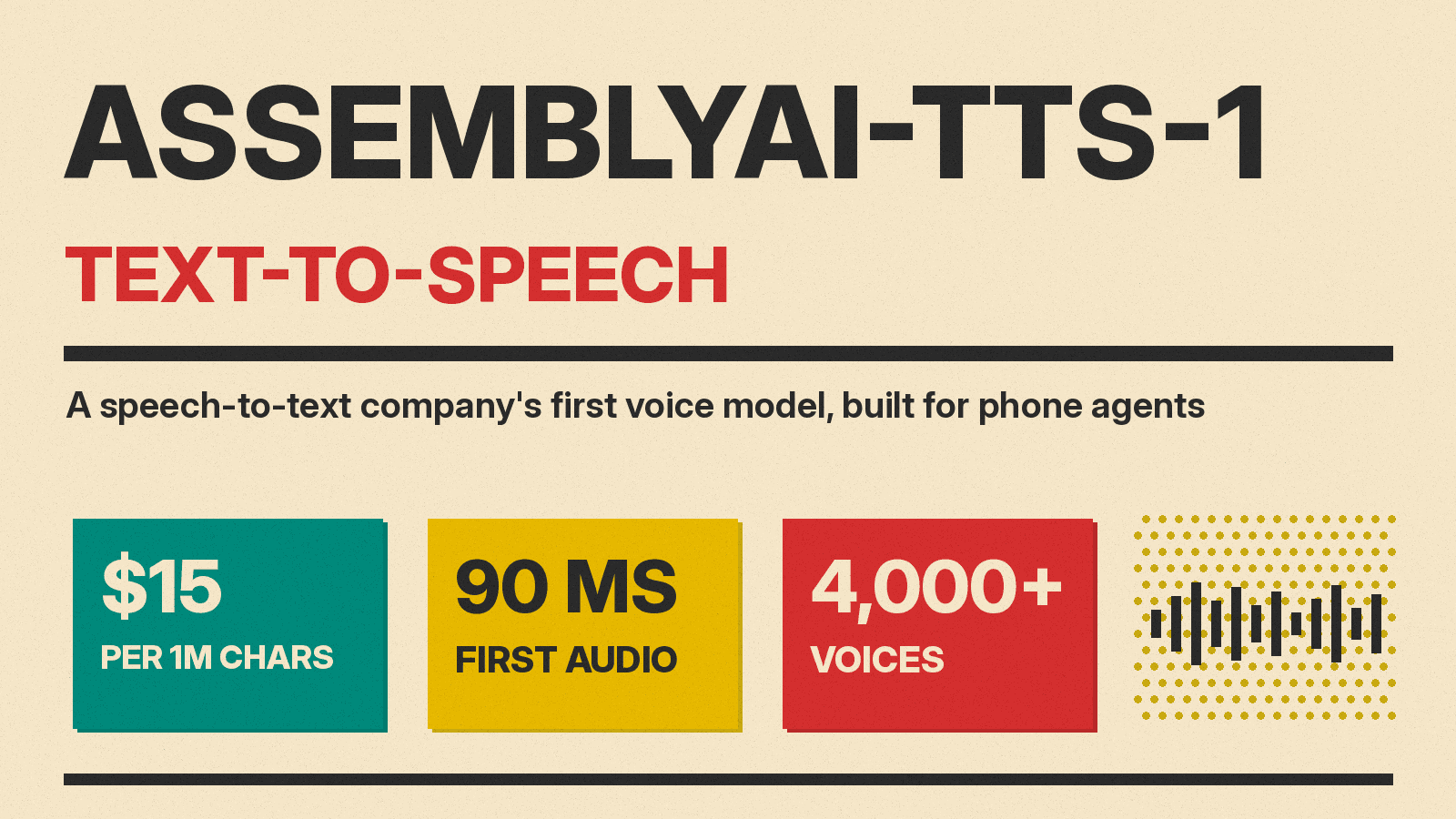
AssemblyAI-TTS-1 is AssemblyAI's first text-to-speech model, built for phone voice agents: $15 per 1M characters, 90 ms to first audio, six languages.
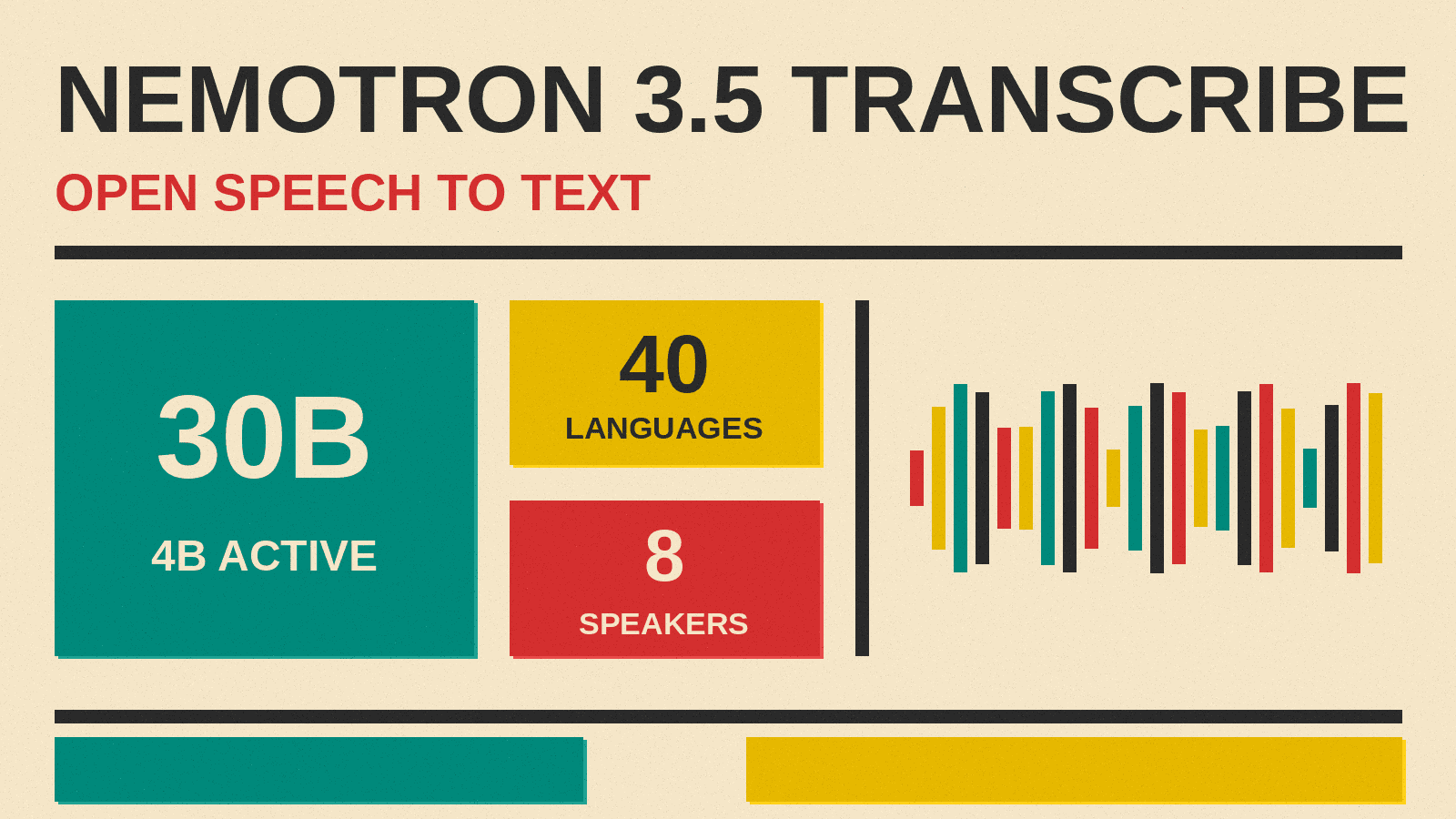
NVIDIA's open-weight Nemotron 3.5 Transcribe transcribes 40 languages, labels speakers and translates. NVIDIA also opened Granary v2, the data behind it.
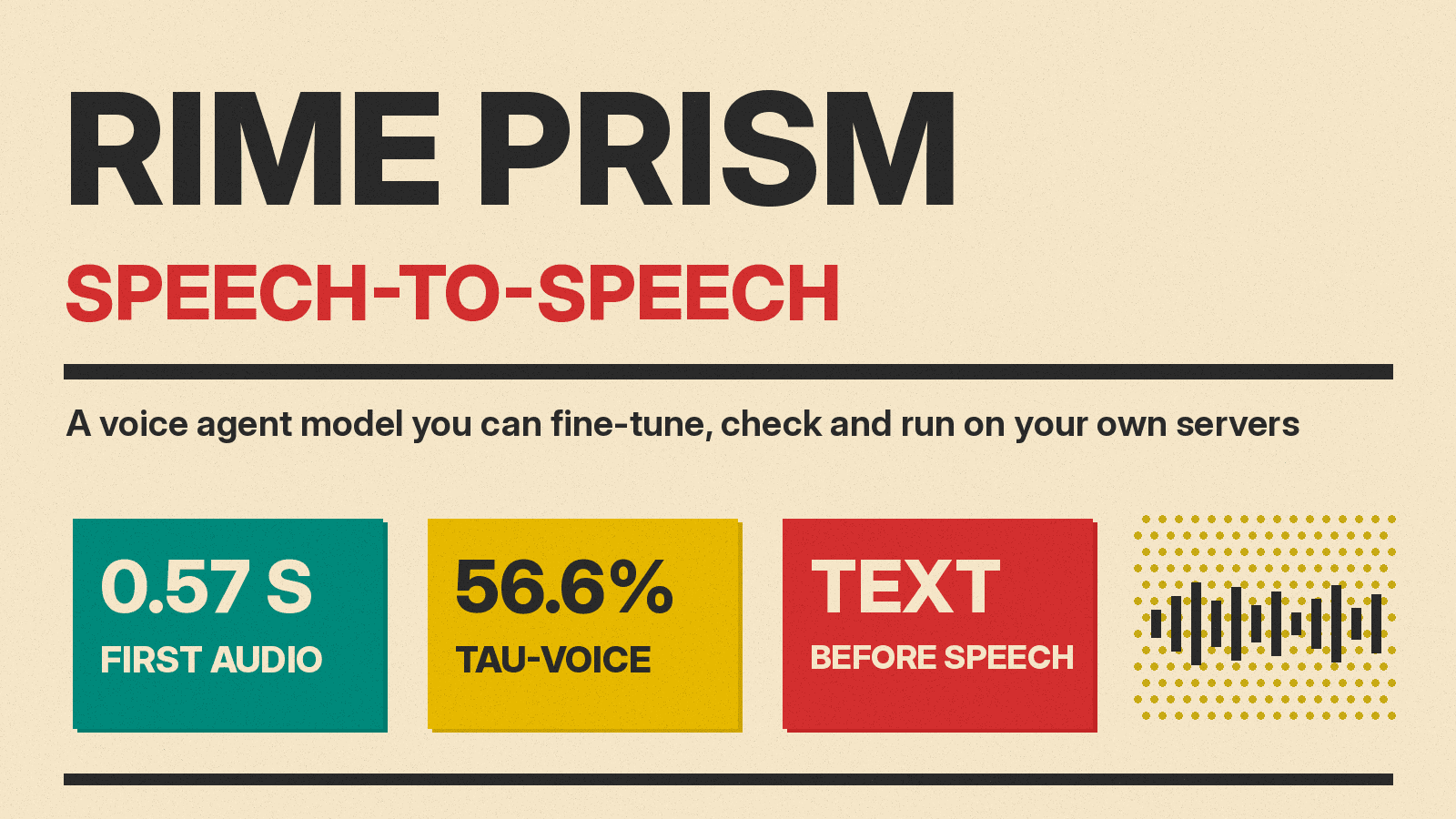
Rime's Prism is a speech-to-speech model for voice agents that writes its reply as text before it speaks. How it works, Rime's numbers and the price.
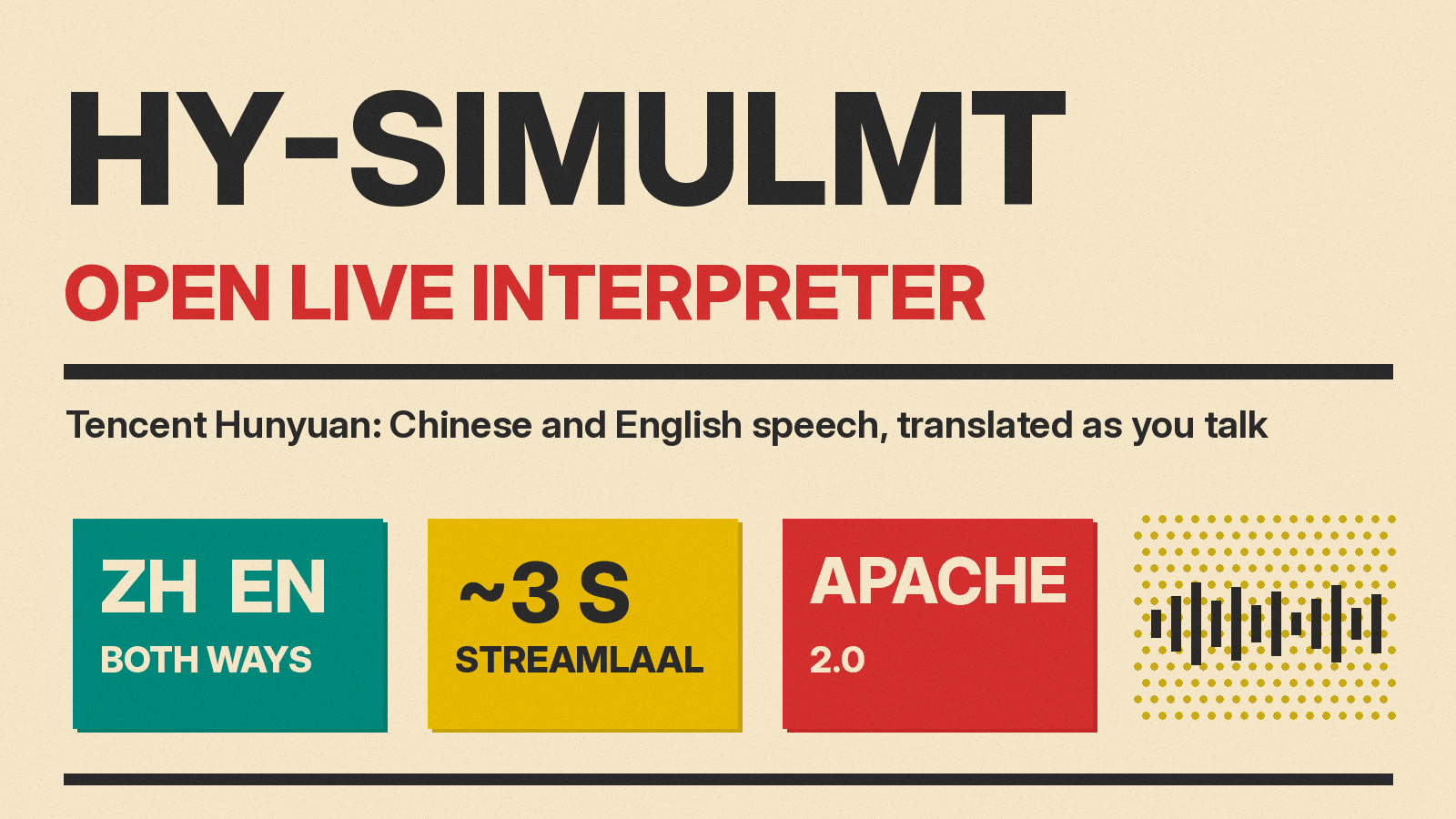
Tencent's open Apache-2.0 Hy-SimulMT translates Chinese and English speech as the speaker talks. Its benchmarks, what it needs to run and its limits.
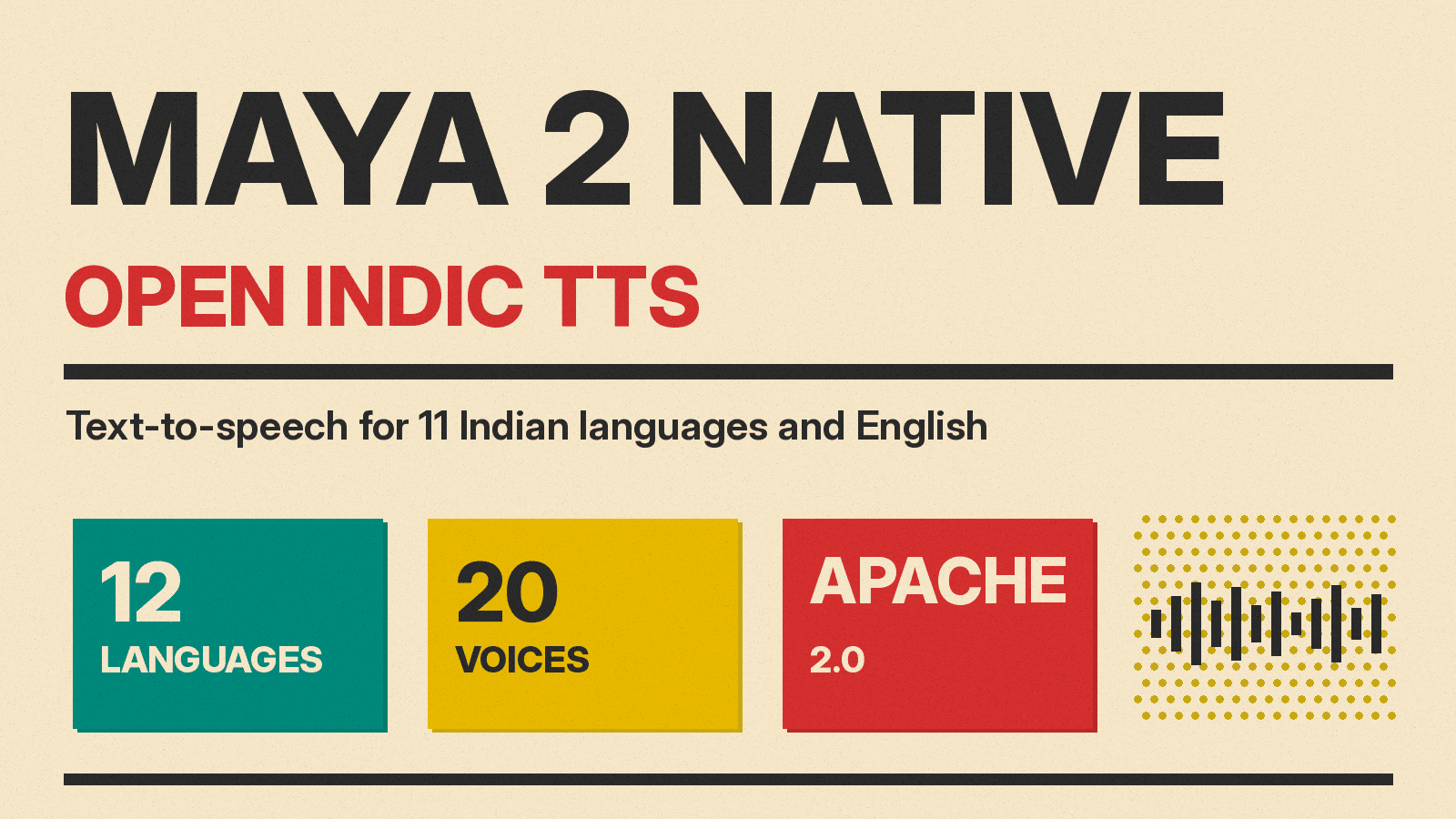
Maya Research released open Apache-2.0 weights for Maya 2 Native, a streaming TTS model for 11 Indian languages and English with 20 voices and cloning.
Mistral's Voxtral 3 adds transcription models, expressive text-to-speech with voice cloning, and a LiveKit-based voice agent SDK. Parts, prices and limits.
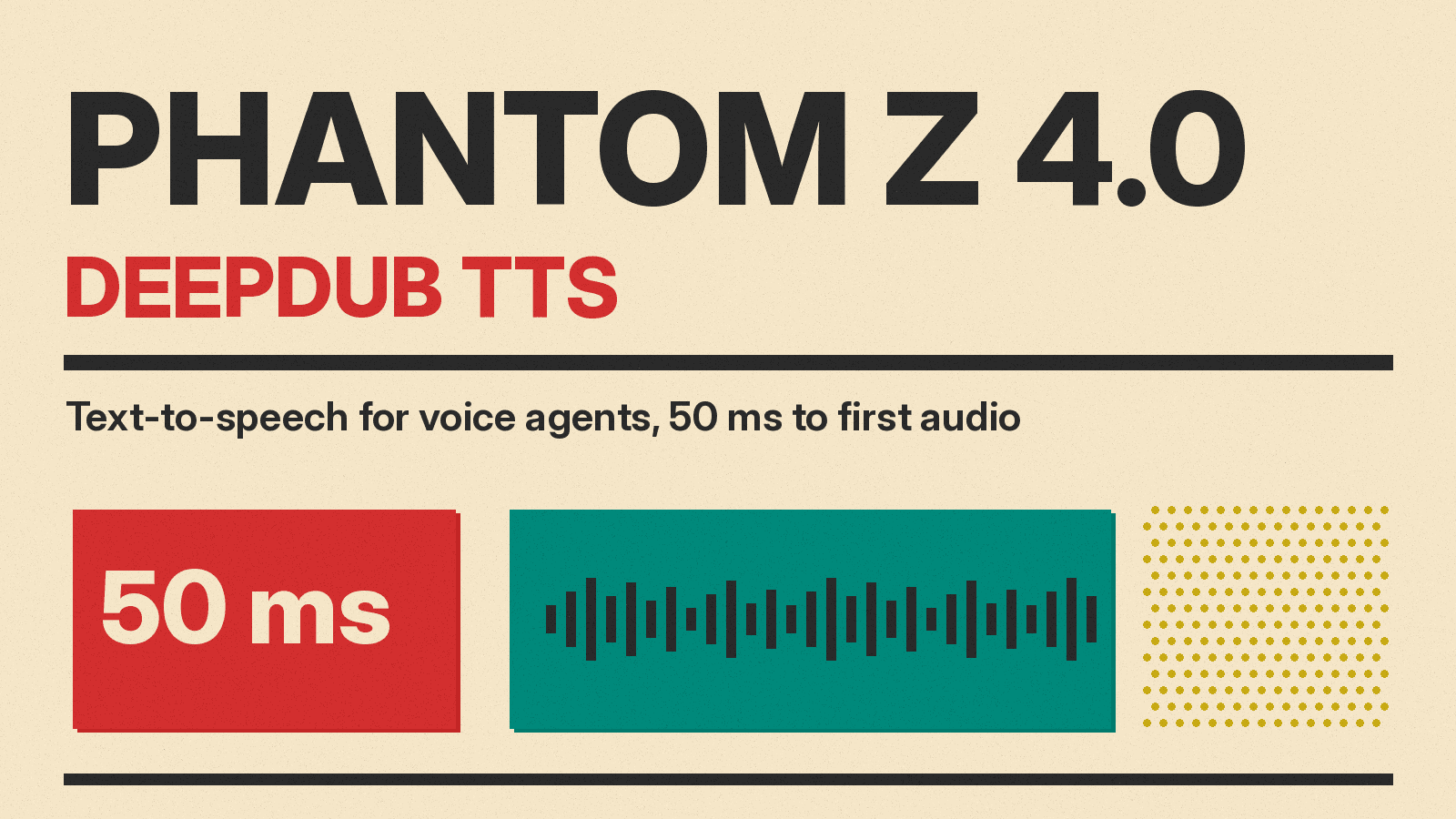
Deepdub says Phantom Z 4.0 starts speaking in a 50 ms median with a 1.2% word error rate on Coval's benchmark. What the numbers mean and who can try it.
Destined AI's Hurston-1 is an open Apache-2.0 text-to-speech model for Southern American and African English accents, with an 8 kHz phone mode, tested by its maker.
Block's Dessa is a full-duplex speech-to-speech model trained on human conversation with no text and no pretrained model. What Block says it does, how it differs from cascaded voice assistants and Moshi, what the demos show, and who can get access.
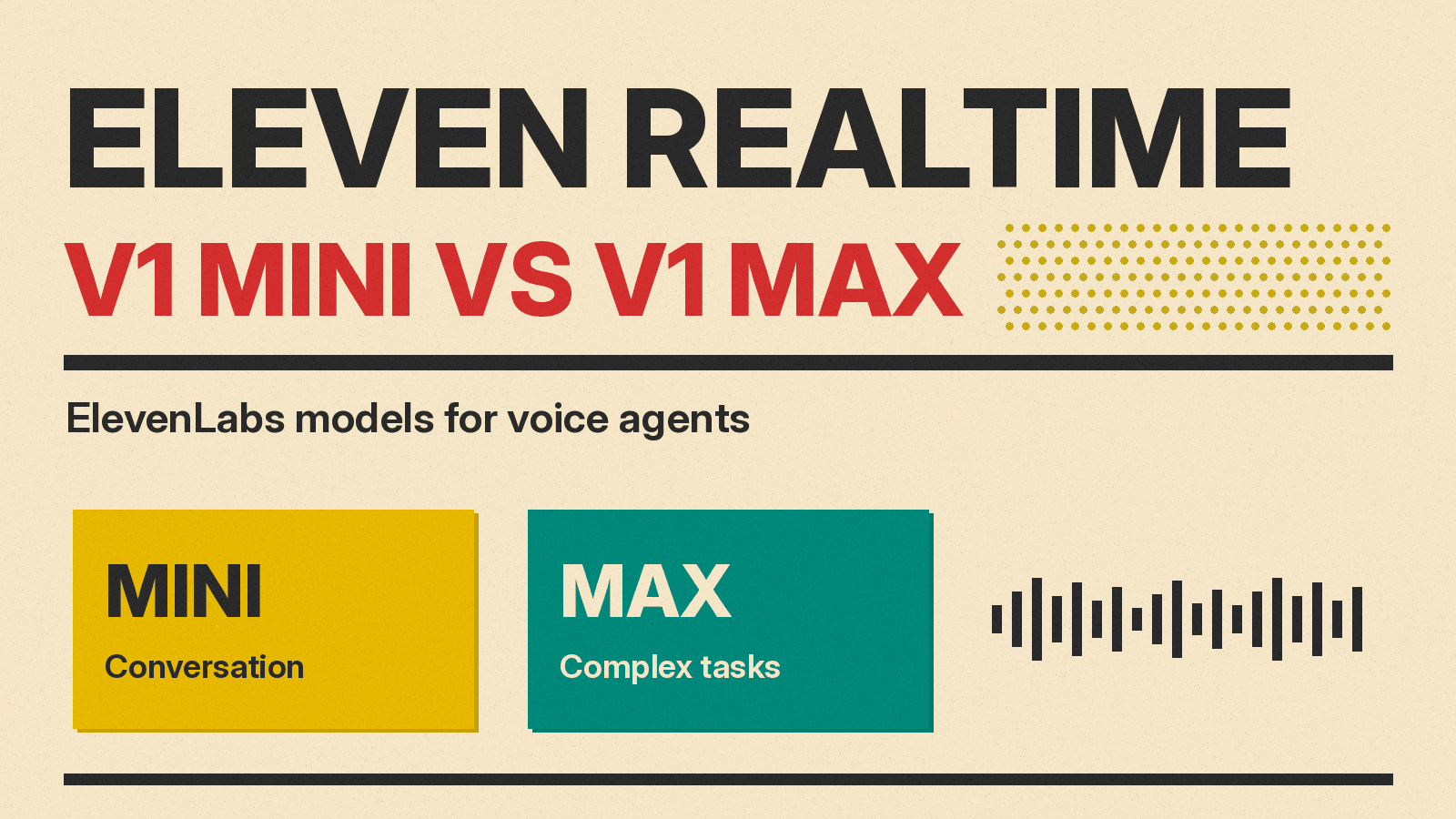
ElevenLabs launched Eleven Realtime v1 Mini and v1 Max for voice agents. What each model is for, the published benchmarks, the OpenAI-compatible API, token prices from $0.20 per 1M input, the compliance limits, and why the docs call it cascaded.
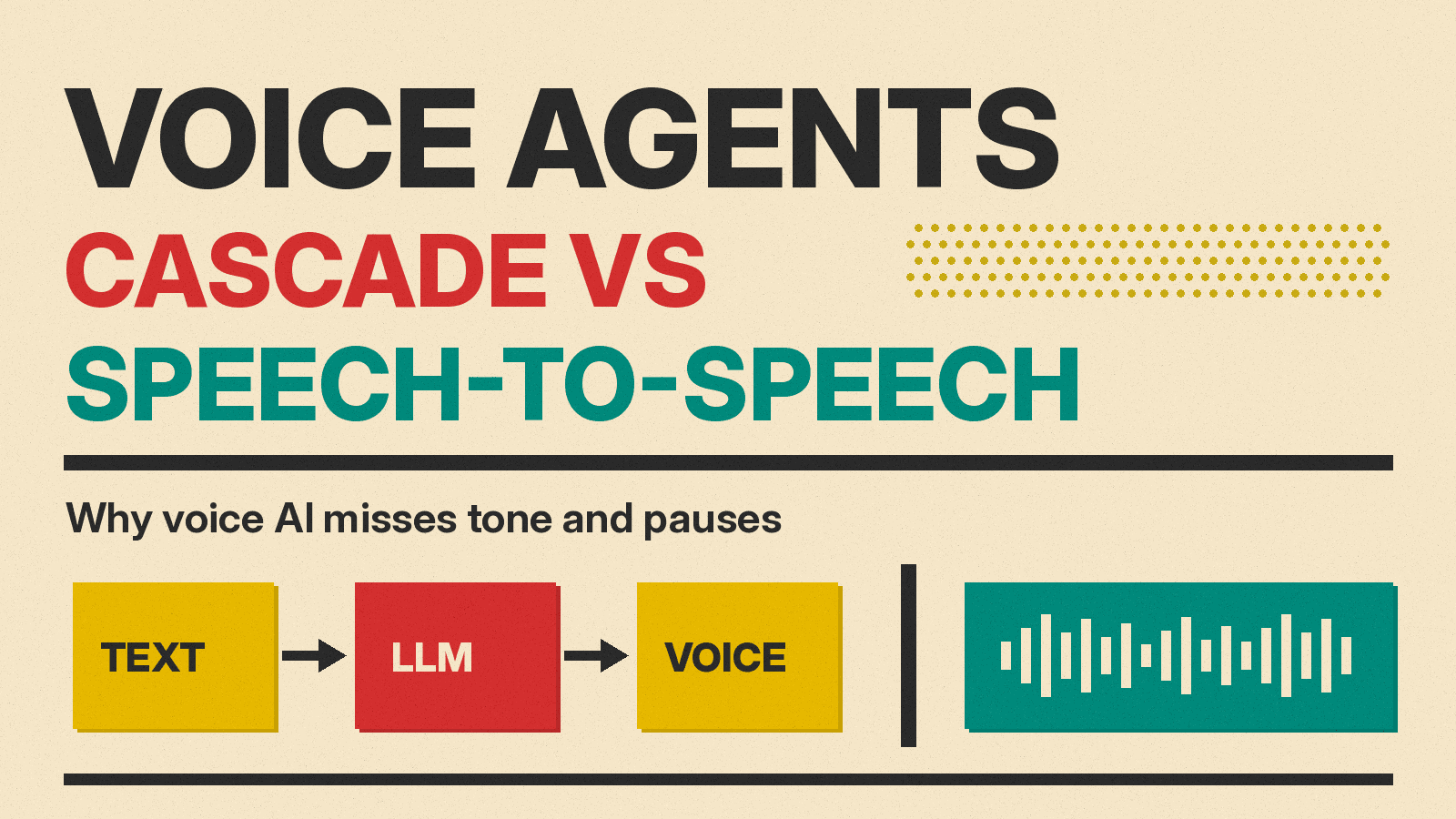
Chained voice agents decide from a transcript, not the audio. How chained pipelines, speech-to-speech models and full-duplex GPT-Live differ, what a transcript leaves out, why chains still give more control, and what GPT-Live costs at $0.05 per minute.
Official October 2026 prices for ElevenLabs, OpenAI TTS, Google Cloud TTS, WellSaid, Murf, Suno, Udio, Stable Audio, Soundraw and AIVA, with monthly and yearly billing called out for each plan.
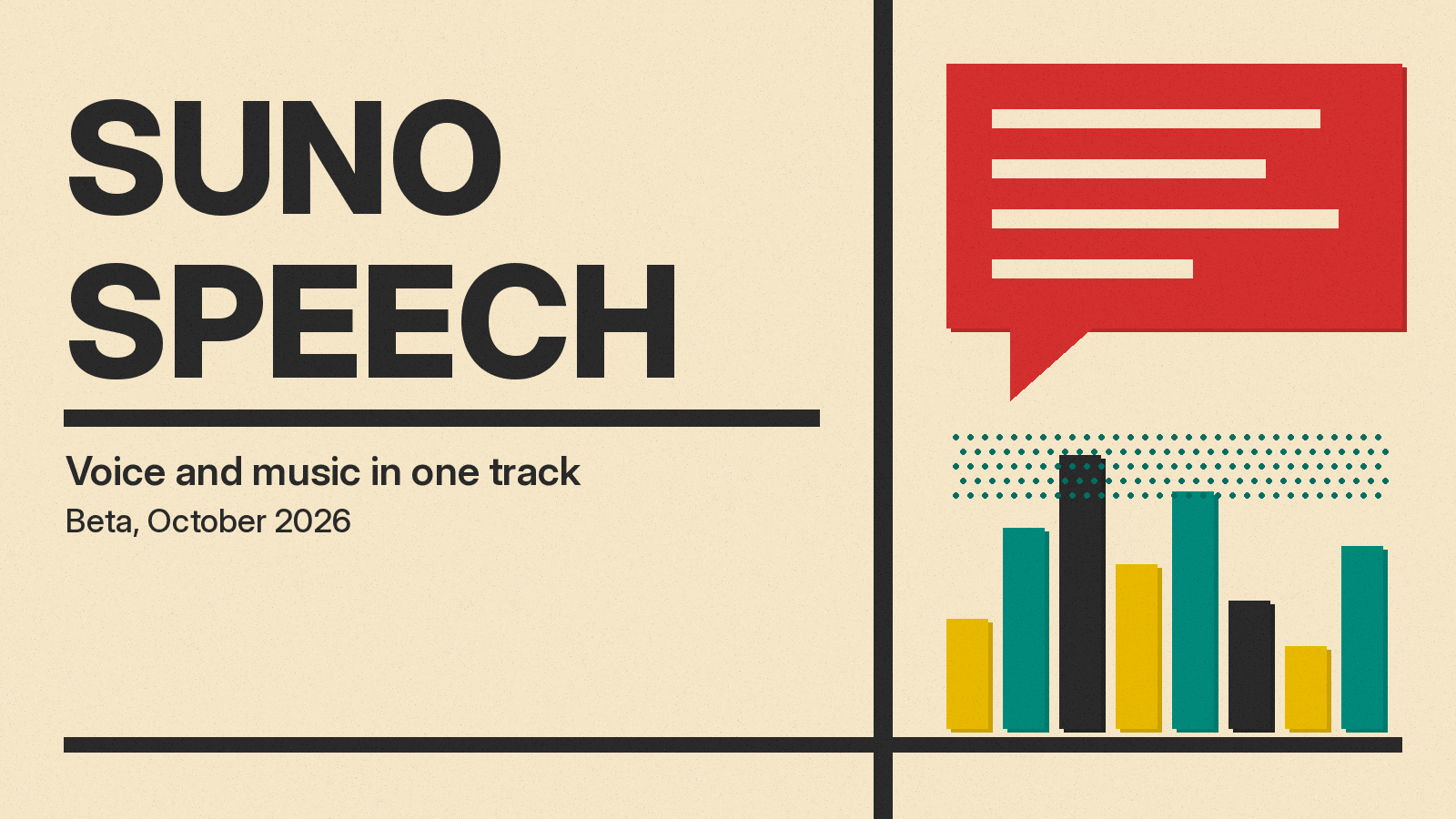
Suno Speech (beta) generates a spoken voice and original background music as one track. How Simple and Advanced modes work, the music toggle, the roughly eight-minute limit, and what Suno has not said about plans, credits, and rights.
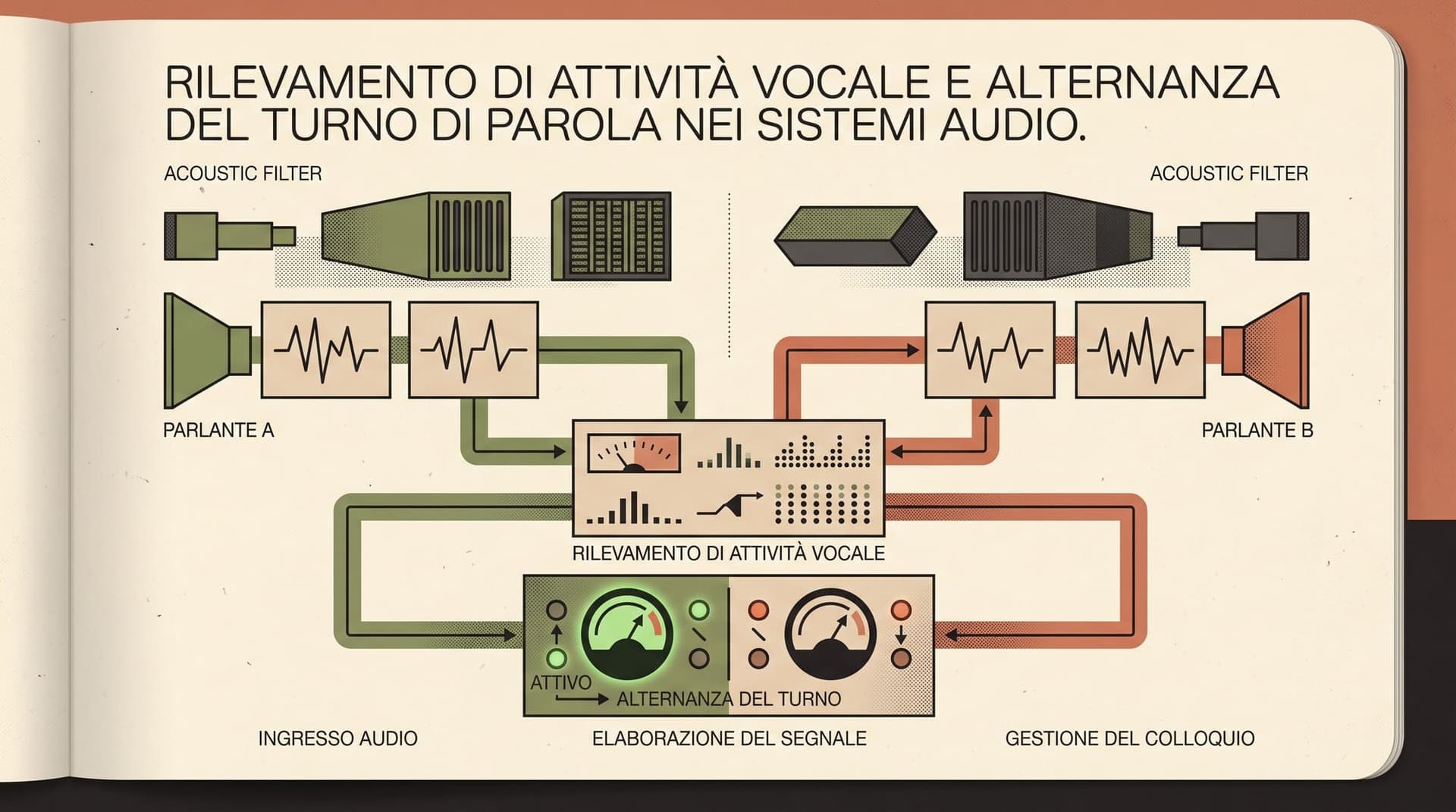
Real-time voice AI agents depend on two sequential decisions: identifying when a user is speaking, and predicting when they have finished their conversational turn. Acoustic Voice Activity Detection (VAD) handles the first problem at the audio frame level, while turn-taking endpointing manages dialogue state transitions. Mistakes in either layer degrade conversational flow. Inaccurate VAD causes false interruptions from background noise or misses quiet speech onsets. Naive silence-based endpoin
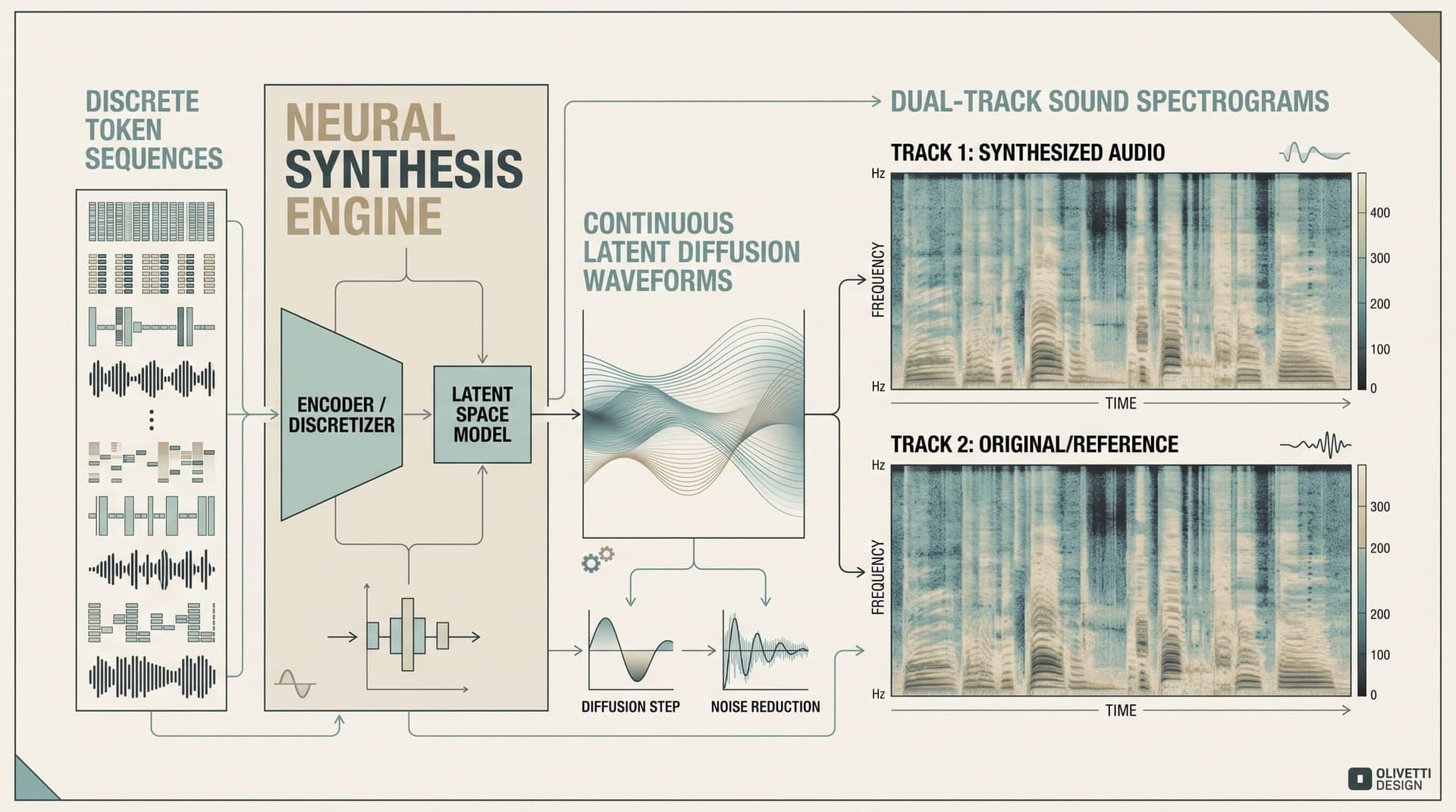
Neural music and sound generation architectures in production have diverged into two competing paradigms: discrete autoregressive sequence modeling and continuous latent diffusion. While early research relied on cascaded pipelines with separate acoustic and semantic models, modern open-source systems unify generation into single-stage or dual-stage foundations capable of synthesizing high-fidelity instrumentals, sound effects, and full polyphonic songs with vocals. Deploying generative audio in