Subscribe
Topic / page 5

Inference

Articles, page 5

81-100
  1. FlashAttention-3: How Warp Specialization, Asynchronous TMA Tiling, and FP8 Hardware Acceleration Scale Attention on Hopper GPUs

    The emergence of Transformer architectures scaled deep learning across language, vision, and multimodal domains, but standard exact attention has historically imposed severe compute and memory bandwidth bottlenecks. The standard multi-head self-attention operation computes: $$\text{Attention}(Q, K, V) = \text{softmax}\left(\frac{QK^T}{\sqrt{d}}\right)V$$ For a sequence length $N$ and head dimension $d$, calculating the intermediate attention score matrix $S = QK^T \in \mathbb{R}^{N \times N}$


    AI
    10 min read
  2. Arithmetic Intensity and the Roofline Model: Why LLM Generation Is Memory-Bound and Prefill Is Compute-Bound

    Arithmetic Intensity and the Roofline Model in Large Language Models: Why Generation Is Memory-Bound and Prefill Is Compute-Bound Every optimization in modern large language model (LLM) serving exists to solve a single hardware reality: running a Transformer model is not one computational problem, but two completely distinct workloads operating on opposite sides of a physical performance barrier. When an LLM processes a prompt during the prefill phase, it saturates modern GPU Tensor Cores, ope

    AI
    9 min read
  3. NVIDIA Researchers Map Cross-Model KV Caches via Linear Ridge Regression to Accelerate Model Cascading Up to 25x

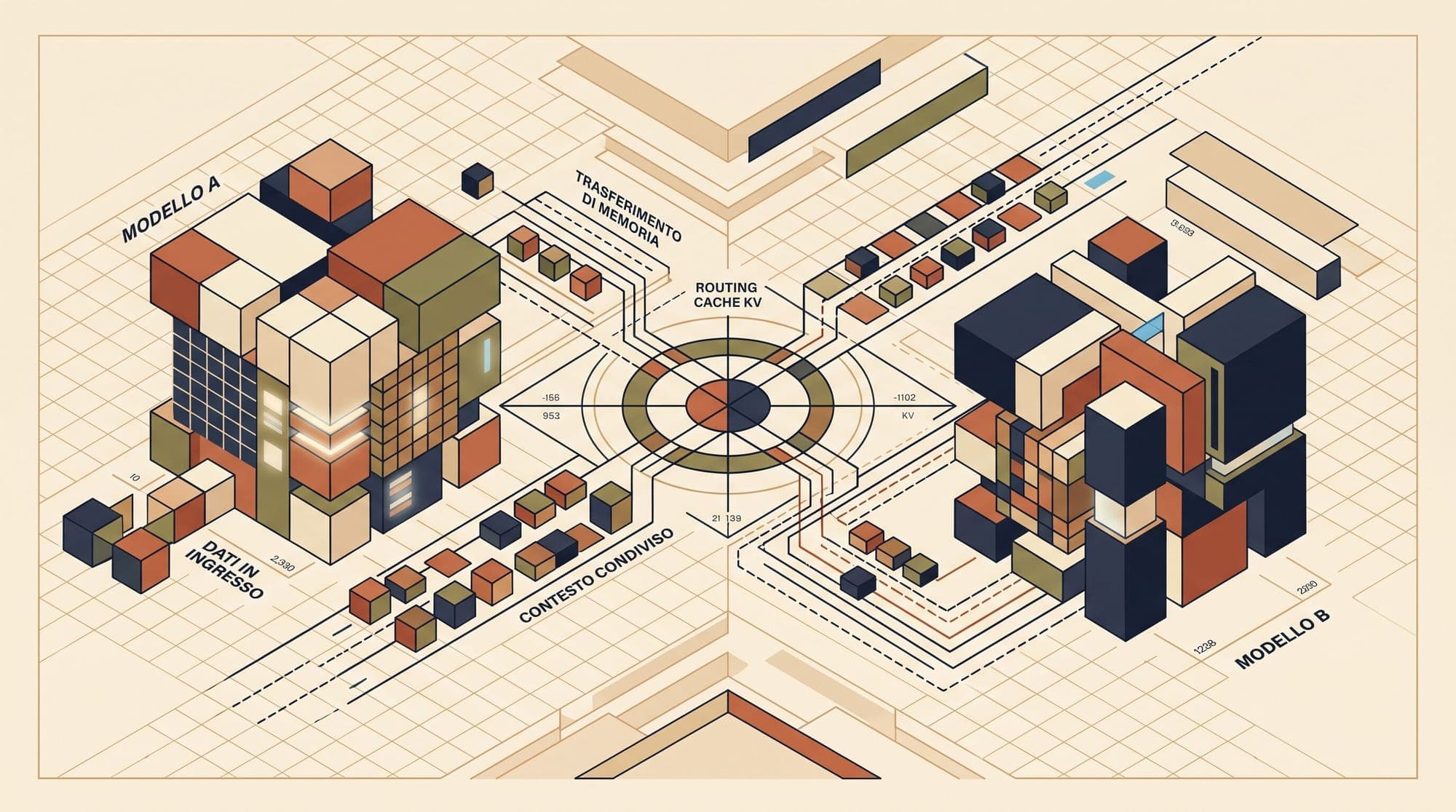
    In multi-agent systems and tiered model cascades, routing requests across different model sizes is a standard architecture for balancing inference cost and generation quality. However, switching models mid-session has historically imposed a severe compute tax: because each neural architecture maintains its own distinct internal representations, the receiving model cannot read the key-value (KV) states generated by the previous model. The target model must recompute the entire conversation histor

    AI
    4 min read
  4. Asynchronous Batch Inference in Production: Architecture, Queue Scheduling, and Cost Arbitrage

    Asynchronous Batch Inference in Production: Architecture, Queue Scheduling, and Cost Arbitrage Interactive AI applications require low Time-to-First-Token (TTFT) and high inter-token generation speed to maintain responsive user experiences. Achieving sub-second latency targets forces infrastructure teams to overprovision GPU capacity to absorb peak demand spikes. However, non-interactive production workloads (such as historical document processing, embedding generation, nightly model evaluation

    LLM
    7 min read
  5. Emergent Outlier Features in Large Language Models: Why Hidden Dimension Spikes Arise at Scale and How They Reshape Quantization

    Emergent Outlier Features in Large Language Models: Why Hidden Dimension Spikes Arise at Scale and How They Reshape Quantization When language models scale past approximately 6.7 billion parameters, their internal representations undergo a sharp qualitative phase transition. In smaller models (125M to 2.7B parameters), hidden state activations remain relatively compact, bounded within predictable normal distributions across all embedding dimensions. However, as demonstrated by Dettmers et al. (

    AI
    8 min read
  6. Vision-Language Model Serving in Production: Visual Token Pruning, Encoder Caching, Dynamic Resolution, and Inference Economics

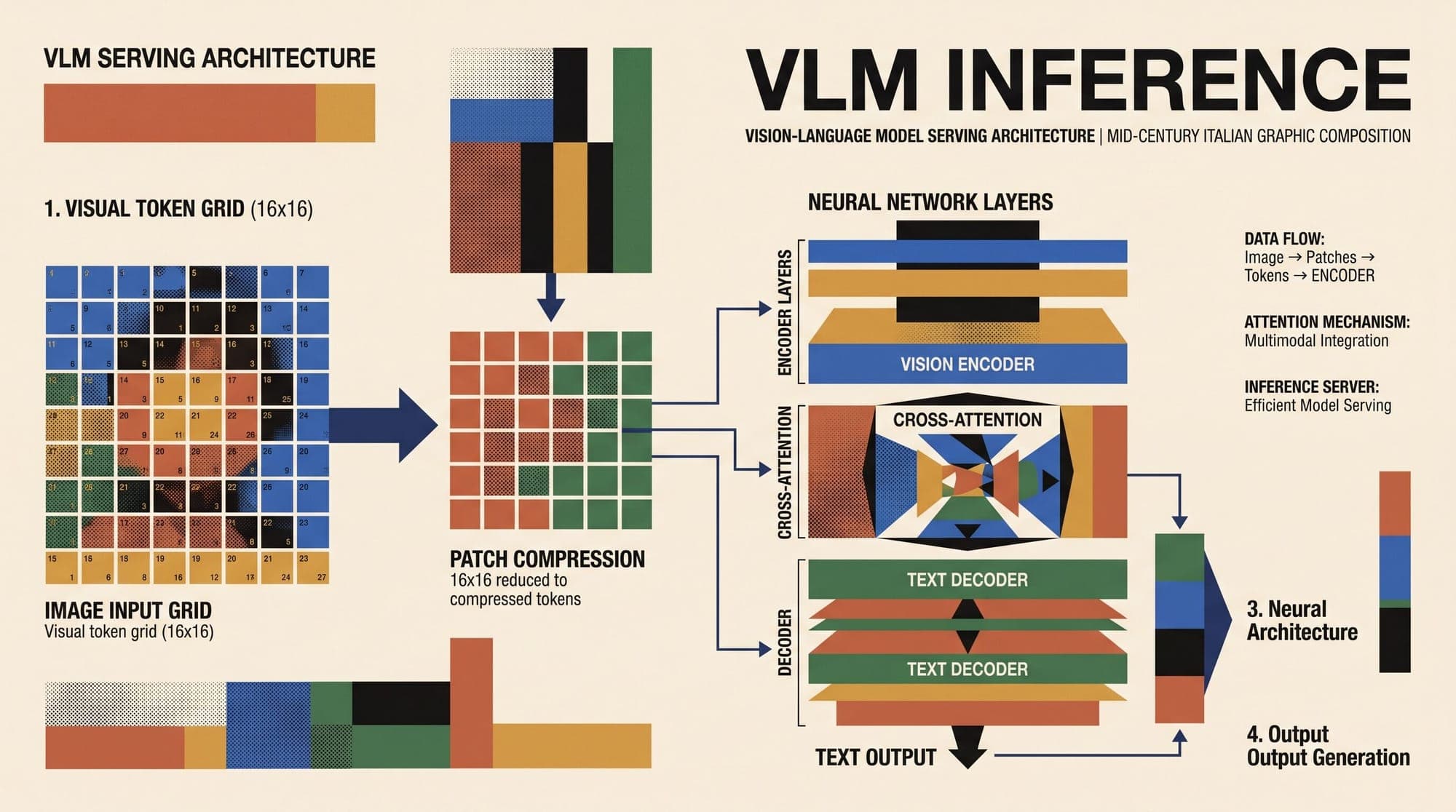
    Deploying Vision-Language Models (VLMs) into high-concurrency production environments introduces a distinct set of systems bottlenecks that text-only large language models do not exhibit. While text models ingest prompts with compact token densities, visual inputs require processing high-dimensional pixel arrays through vision encoders, expanding a single image into hundreds or thousands of visual tokens before autoregressive generation begins. In production architectures running models such as

    AI
    8 min read
  7. Confidential LLM Inference in Production: Hardware TEEs, GPU Enclaves, Attestation, and Serving Performance Trade-Offs

    Deploying large language models in multi-tenant cloud environments introduces a fundamental security boundary problem. Standard transport encryption (TLS) secures prompts in transit, and encryption-at-rest protects checkpoints on disk, but model weights, prompt tokens, and key-value (KV) caches exist in plaintext within system memory during active inference. For organizations processing protected health information (PHI), proprietary intellectual property, or regulated financial records, host op

    AI
    8 min read
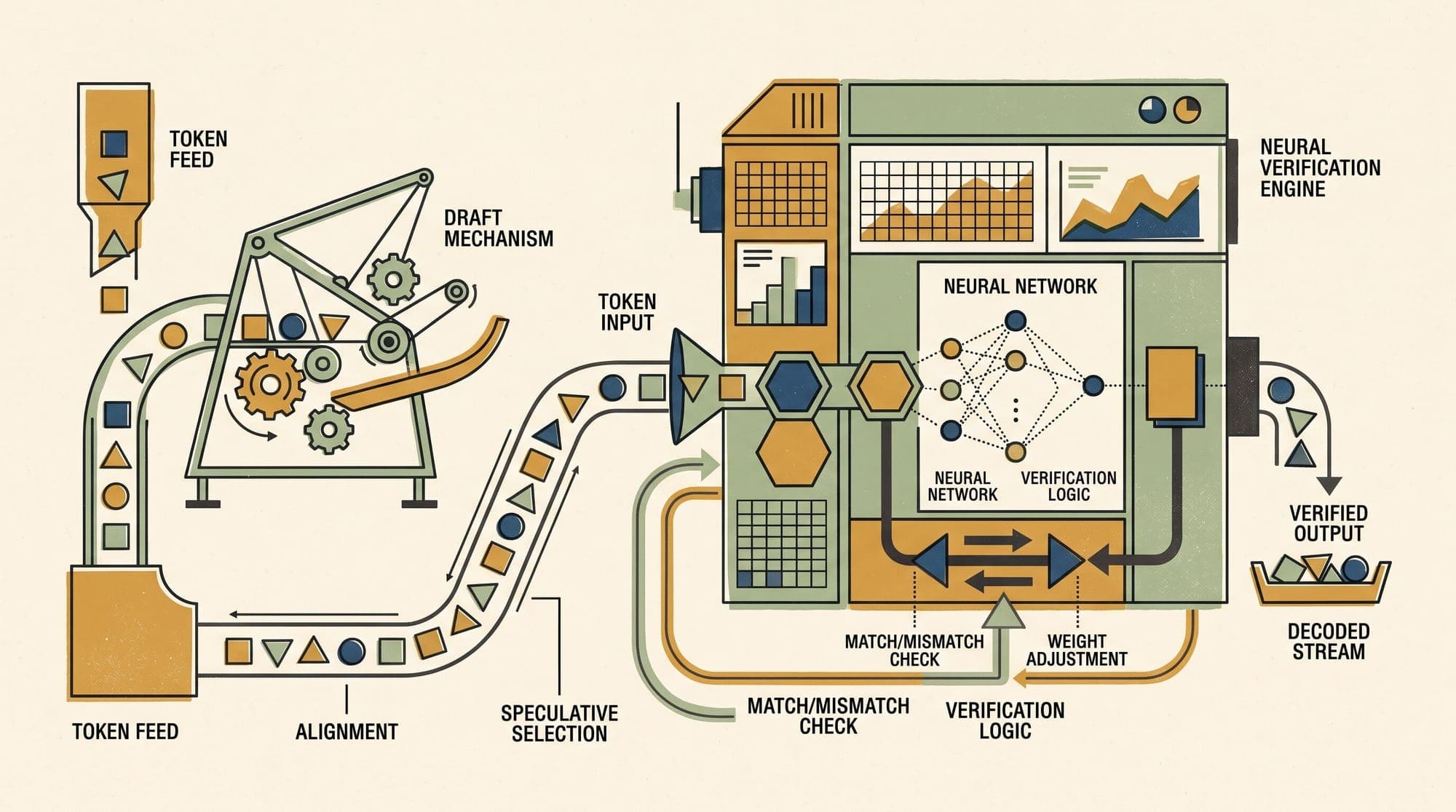
  8. Speculative RAG in Production: Architecture, Multi-Perspective Sampling, and Draft Verification Trade-Offs

    Standard Retrieval-Augmented Generation (RAG) pipelines face an escalating trade-off between retrieval recall and inference latency. To ensure sufficient coverage for ambiguous or complex knowledge-intensive queries, production systems commonly ingest between 10 and 20 candidate passages per query. However, concatenating large document sets directly into the prompt context of a large language model introduces severe bottlenecks: quadratic attention scaling during the prefill phase, elevated Time

    Architecture
    7 min read
  9. Jacobi and Lookahead Decoding: How Parallel Fixed-Point Iteration Accelerates Autoregressive Inference Without Draft Models

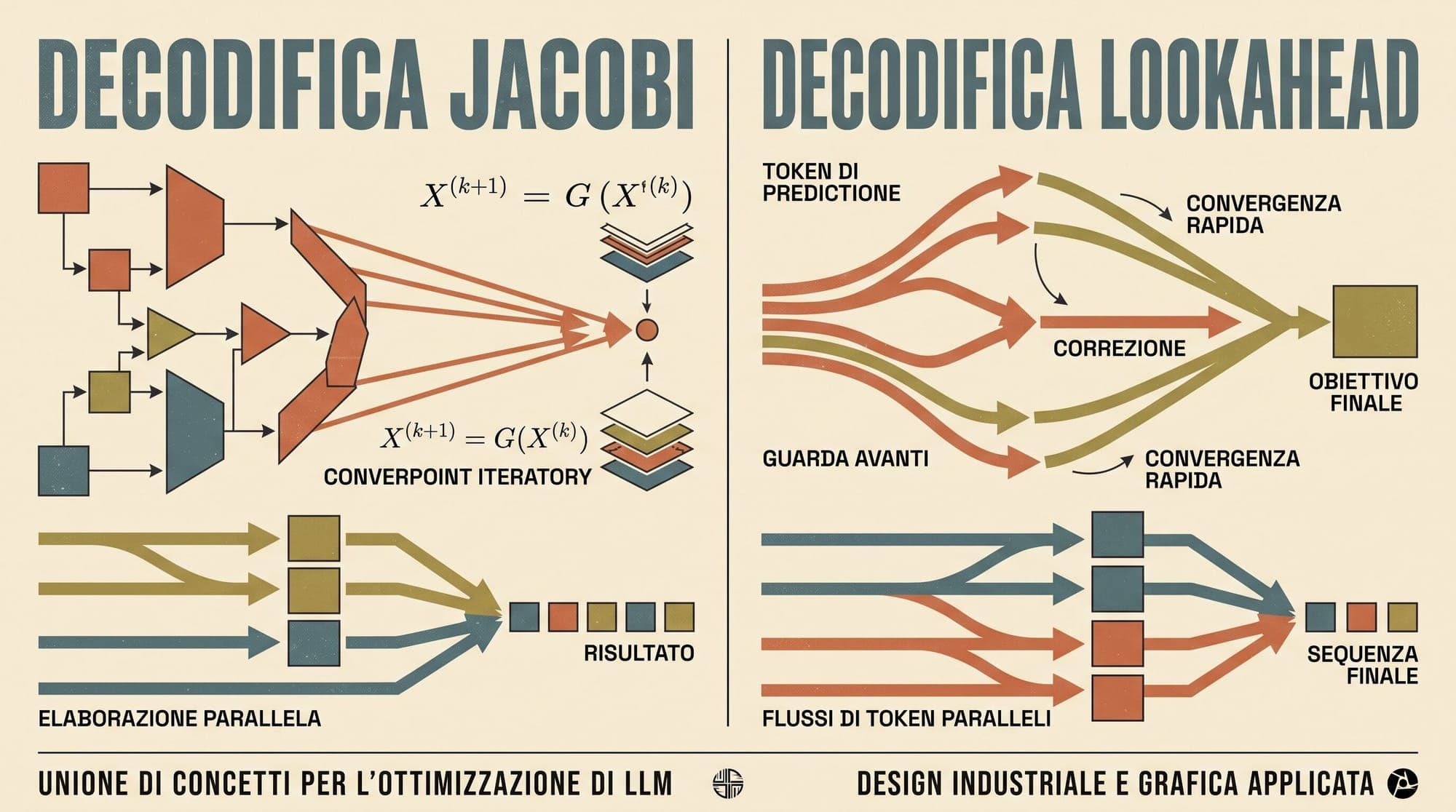
    Standard autoregressive generation in large language models operates as a strictly sequential process. To generate a sequence of $K$ tokens, an inference engine must execute $K$ successive forward passes through the network. In single-request serving regimes (batch size 1), each forward pass is heavily memory-bandwidth bound: the GPU must stream billions of model parameters from High Bandwidth Memory (HBM) into on-chip SRAM to process a single token, leaving tensor compute cores severely underut

    AI
    7 min read
  10. LLM Output Calibration and Uncertainty Estimation in Production: Token Entropy, Semantic Clustering, and Risk-Controlled Abstention

    Production deployments of large language models frequently fail not because models lack capability, but because they lack reliable uncertainty estimation. Autoregressive language models generate hallucinations with the exact same fluent, assertive cadence as verified ground truth. When an enterprise application relies on downstream actions, database writes, or customer-facing advice, uncalibrated generations introduce severe operational risk. Treating raw token probabilities as calibrated confi

    AI
    6 min read
  11. Multi-Query Attention: How Single Key-Value Head Sharing Slashed Transformer Serving Bottlenecks

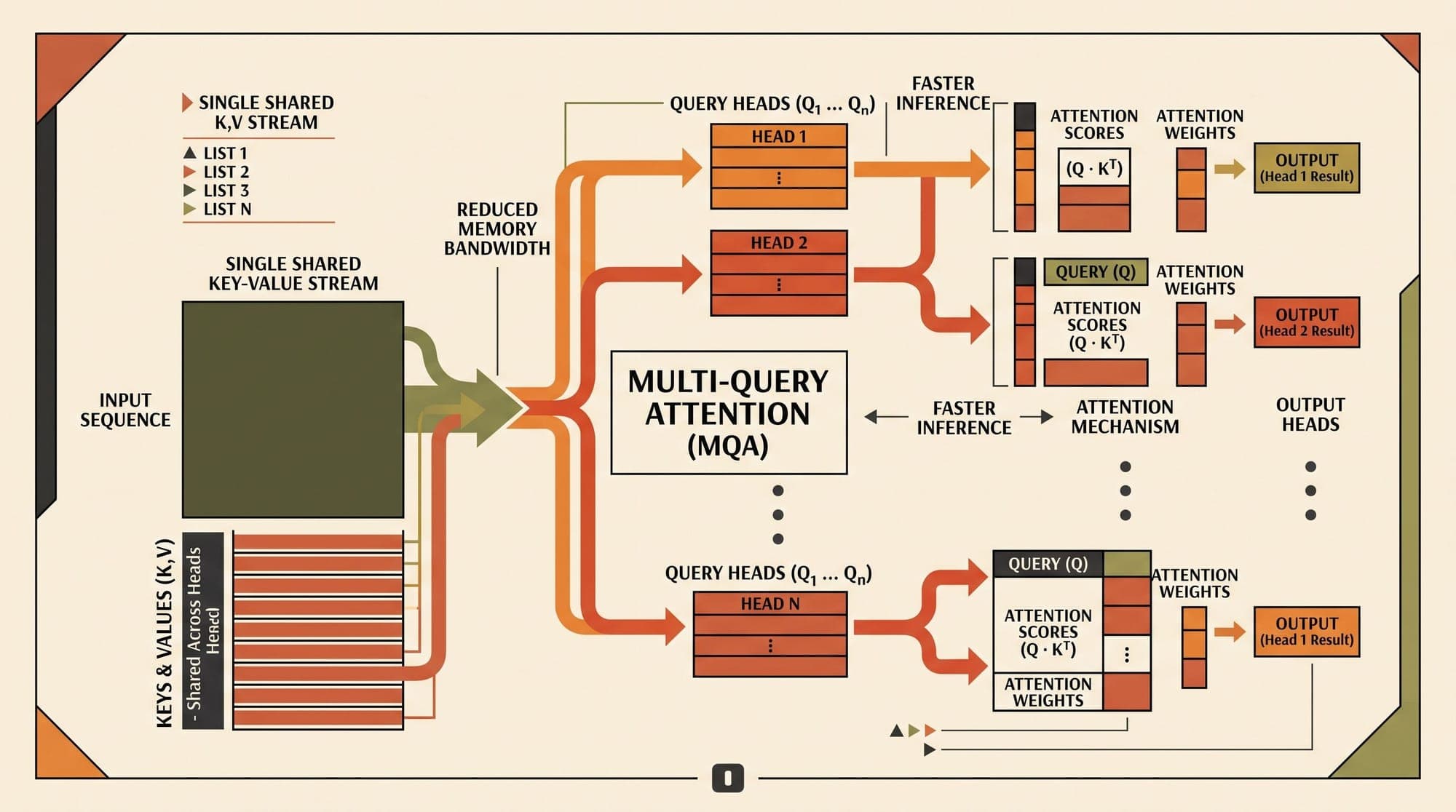
    Multi-query attention (MQA) is an architectural modification to the Transformer attention mechanism designed to resolve the memory bandwidth bottleneck during autoregressive token generation. First proposed by Noam Shazeer in the 2019 paper Fast Transformer Decoding: One Write-Head is All You Need, MQA alters the ratio of query, key, and value heads by sharing a single key head and a single value head across all query heads in each Transformer layer. While standard multi-head attention (MHA) pr

    AI
    7 min read
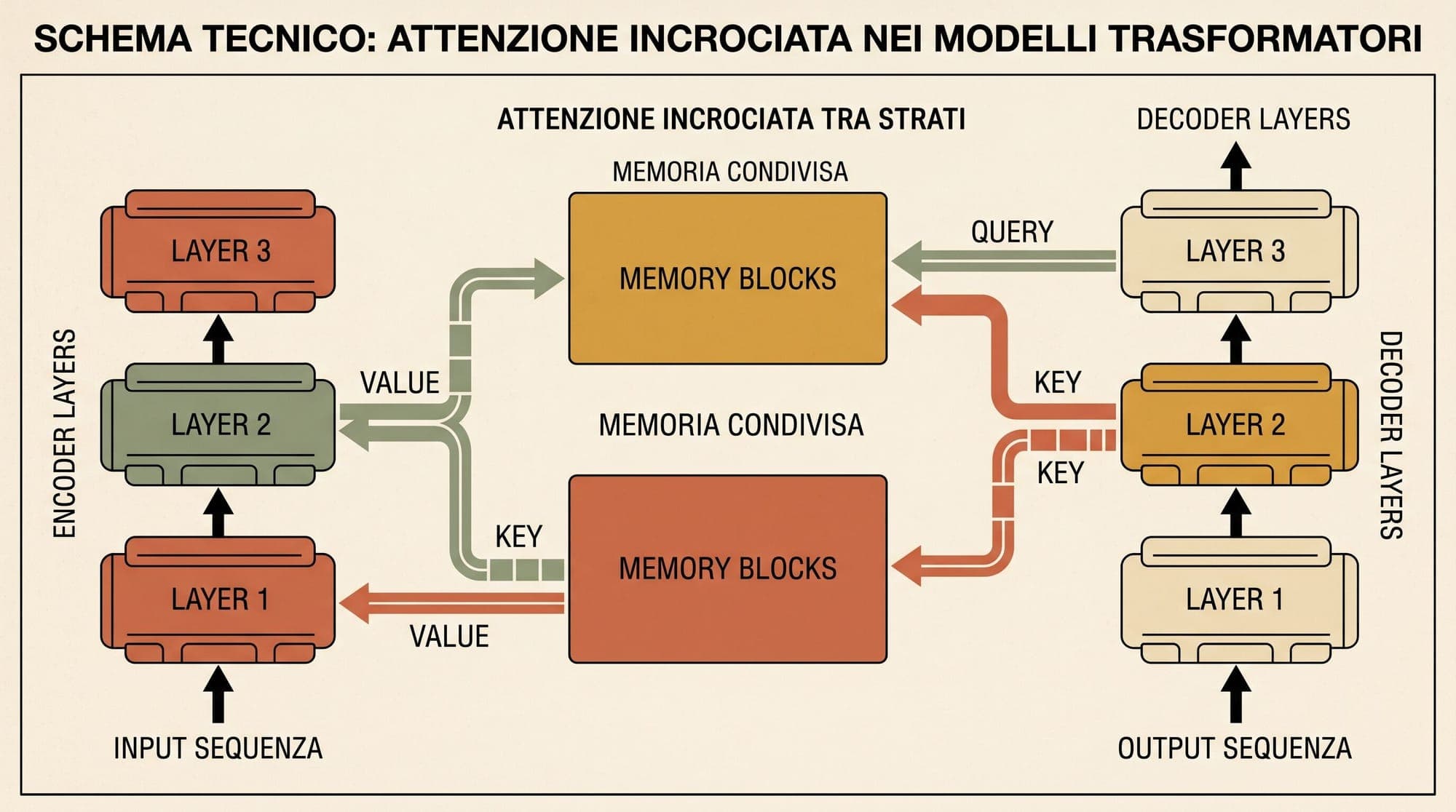
  12. Cross-Layer Attention: How Sharing Key-Value Tensors Across Transformer Layers Slashes KV Cache Memory

    In autoregressive large language models, the primary operational ceiling for serving long sequences and high batch concurrency is the Key-Value (KV) cache. During standard generation, every transformer layer computes and stores key and value activations for every token in the sequence to prevent quadratic recomputation during subsequent autoregressive decoding steps. While this mechanism transforms inference time complexity from $O(N^2)$ to $O(N)$ per generated token, it introduces a massive me

    AI
    9 min read
  13. Fast Model Weight Loading in Production: Safetensors, Tensorizer, and Direct GPU Deserialization

    Fast Model Weight Loading in Production: Safetensors, Tensorizer, and Direct GPU Deserialization In modern large language model inference clusters, cold start latency is rarely bounded by GPU compute allocation. Instead, the operational bottleneck centers on storage I/O and weight deserialization. As foundation models scale from 70 billion to 405 billion parameters, raw weight footprints range from 140 GB to over 800 GB in standard 16-bit precision. On naive serving stacks, deserializing these

    AI
    6 min read
  14. Meta Emerges as Major Microsoft Azure AI Customer with Multi-Hundred-Million-Dollar Spend

    Meta Platforms has emerged as one of Microsoft Azure's largest artificial intelligence customers, spending hundreds of millions of dollars annually to access hosted AI models and inference compute, according to reporting by Bloomberg. The multi-hundred-million-dollar commitment underscores how current commercial demand for large-scale AI infrastructure remains intensely concentrated among frontier technology companies themselves. Bridging Internal Compute Gaps with Third-Party Infrastructure

    Meta
    2 min read
  15. Liquid AI Ships LFM2.5-DSpark Draft Models for Up to 3.2x Faster Inference

    Liquid AI has released speculative decoding draft checkpoints for three models across its LFM2.5 series: LFM2.5-1.2B-Instruct, LFM2.5-2.6B, and the mixture-of-experts model LFM2.5-8B-A1B. The release introduces small companion models designed to accelerate auto-regressive generation without altering final token distributions. The draft models are available in Safetensors and GGUF formats on Hugging Face, with immediate support implemented for SGLang and llama.cpp. Architecture and Draft Desig

    AI
    2 min read
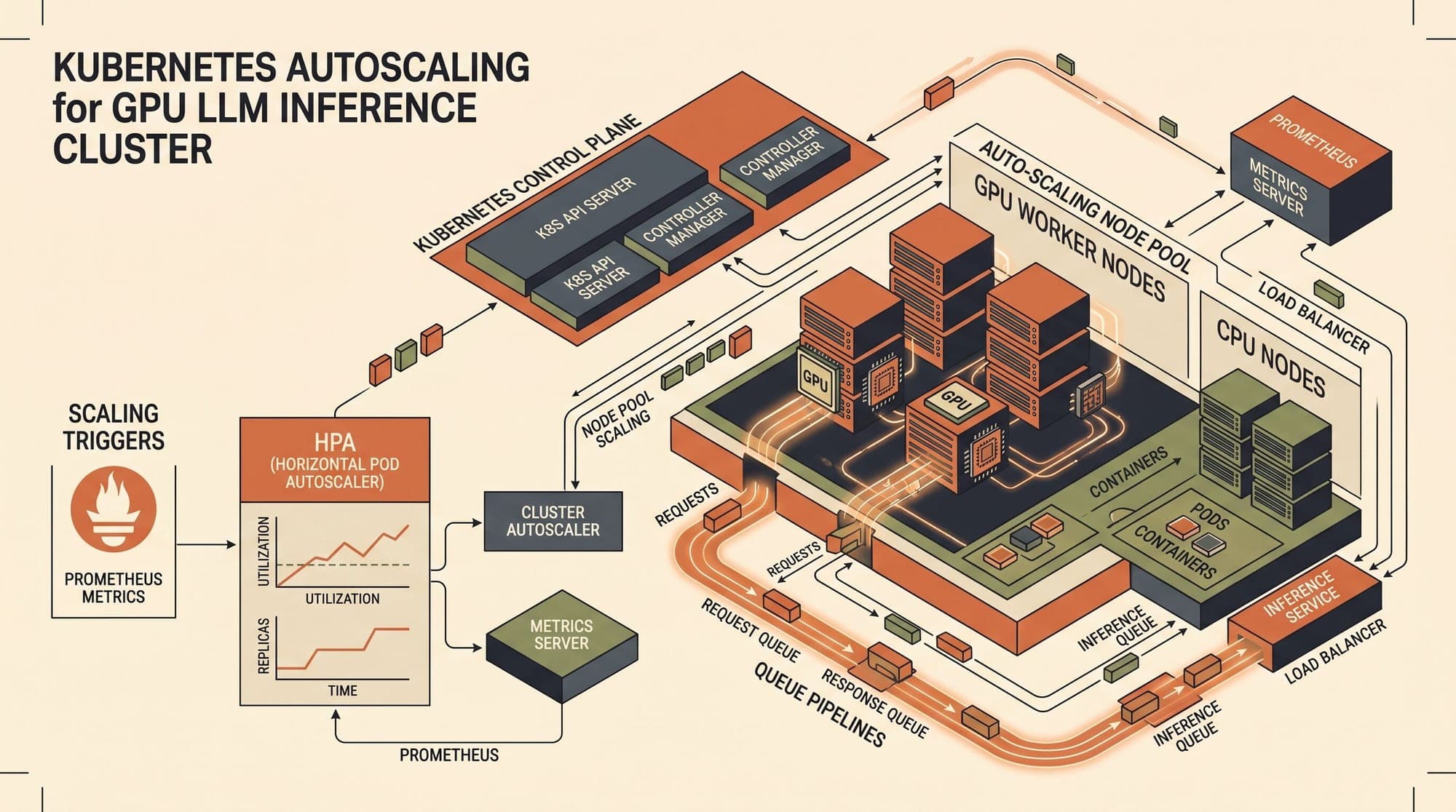
  16. LLM Autoscaling and Cold Starts in Kubernetes: Architecture, KEDA Metrics, Model Weight Caching, and Ephemeral GPU Provisioning

    Autoscaling large language model workloads on Kubernetes presents a fundamentally different engineering problem than traditional stateless microservices. While web APIs scale on CPU utilization or request rate within seconds, LLM inference instances require specialized GPU accelerators, massive container images, multi-gigabyte weight tensors, and intensive runtime compilation before serving a single token. Without proactive architectural design, a cold-starting LLM pod on Kubernetes often requi

    Kubernetes
    6 min read
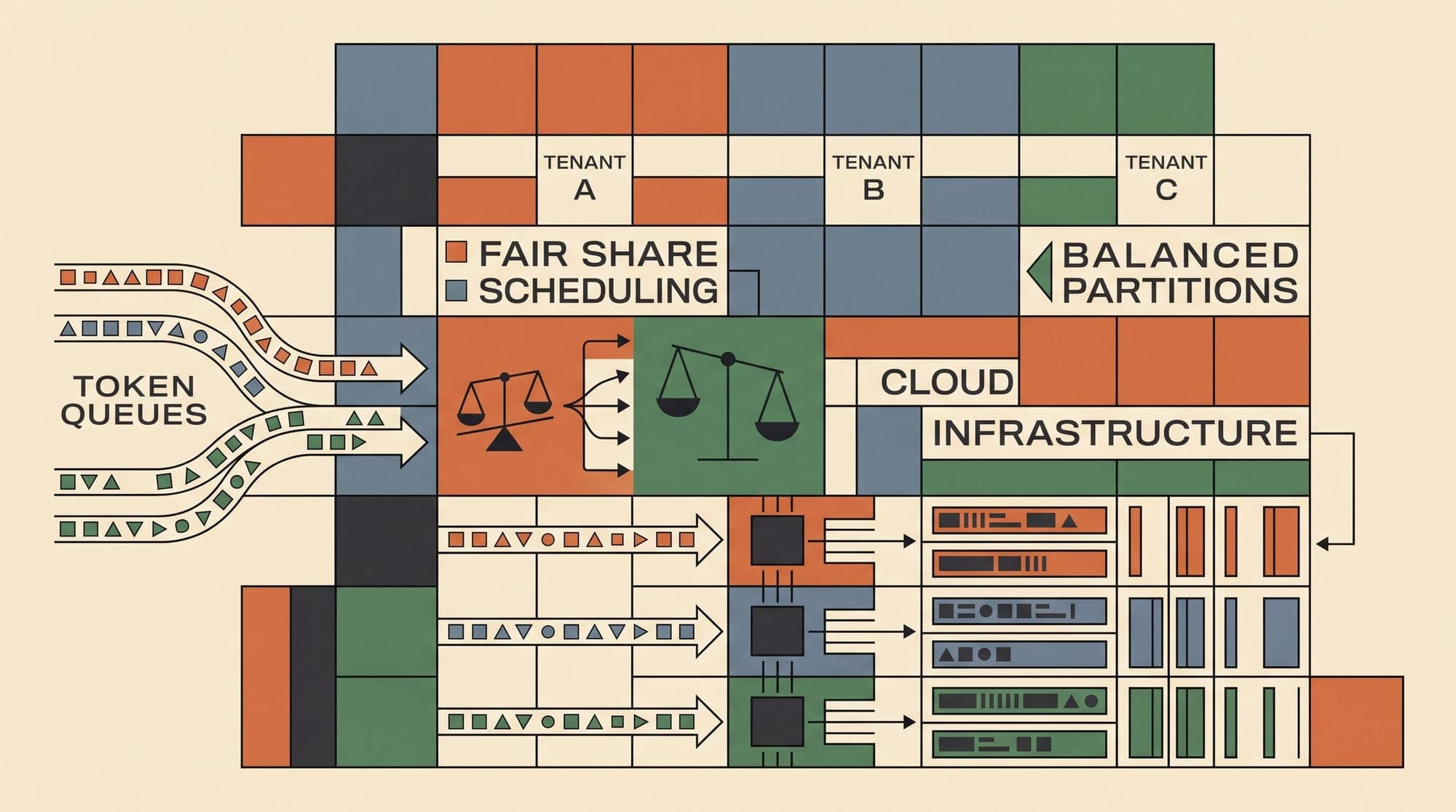
  17. Multi-Tenant LLM Serving in Production: Fair-Share Scheduling, Dynamic KV Cache Quotas, and Noisy Neighbor Isolation

    Operating a shared, multi-tenant large language model (LLM) serving cluster differs fundamentally from traditional stateless web tier hosting. In conventional microservices, tenants consume CPU cycles and static memory footprints in predictable, linear increments. In LLM serving, however, requests exhibit severe non-uniformity across multiple competing hardware dimensions: compute-bound prefill operations, memory-bandwidth-bound autoregressive decoding, and persistent High-Bandwidth Memory (HBM)

    Inference
    7 min read
  18. Self-Consistency Decoding: How Sampling Diverse Reasoning Paths Eliminates Single-Trajectory Fragility in LLMs

    Self-Consistency Decoding: How Sampling Diverse Reasoning Paths Eliminates Single-Trajectory Fragility in LLMs Standard inference pipelines in large language models rely on greedy decoding or low-temperature sampling to generate answers. For tasks requiring direct factual recall or basic classification, greedy token selection generates fluent and accurate outputs. However, when large models are tasked with complex multi-step reasoning, greedy generation exhibits severe structural fragility. In

    AI
    6 min read
  19. Data Ingestion and Incremental Sync for Production RAG: CDC Streams, Content Hashing, Backpressure, and Zero-Downtime Indexing

    Maintaining retrieval-augmented generation (RAG) systems in production introduces a fundamental distributed systems challenge that rarely surfaces in proof-of-concept architectures: state synchronization. While initial ingestion across a static document corpus is straightforward, production data sources (PostgreSQL databases, transactional stores, object storage, and enterprise knowledge hubs) undergo continuous mutation. Records are inserted, updated, soft-deleted, and reassigned new access per

    RAG
    8 min read
  20. Unsloth Releases Dynamic V3.0 GGUFs for Qwen 3.8 27B with 1-Bit Mode and MTP

    Unsloth AI has published its Dynamic V3.0 quantization suite for Alibaba's Qwen 3.8 27B model family, releasing optimized GGUF and NVFP4 checkpoints alongside public calibration matrices. The release claims a greater than 10 percent increase in top-1 percent accuracy at identical file sizes compared to standard baseline quantizations, while introducing an ultra-low-bit dynamic tier that operates within 8GB of memory. Qwen 3.8 27B is a dense vision-language model utilizing hybrid attention layer

    Open Weights
    2 min read