Subscribe
Topic

Kubernetes

Running AI workloads on Kubernetes and other cluster schedulers. Posts compare Slurm, Ray and Kubernetes with Kueue or Volcano for GPU scheduling, explain GPU slicing with MIG and MPS, and cover LLM autoscaling and cold starts with KEDA.

Articles

1-3
  1. GPU Cluster Scheduling in Production: Slurm vs. Kubernetes (Kueue/Volcano) vs. Ray

    Modern AI infrastructure represents a radical departure from traditional cloud computing. Standard cloud workloads (such as stateless microservices, web applications, and independent batch jobs) rely on fine-grained elasticity, independent container scheduling, and horizontal autoscaling. In contrast, distributed large language model (LLM) training and high-throughput inference pipelines violate virtually every assumption built into general-purpose cloud schedulers. A distributed 70B+ parameter
    AI
    9 min read
  2. GPU Slicing in Production AI Systems: Comparing MIG, MPS, Time-Slicing, and Dynamic Partitioning

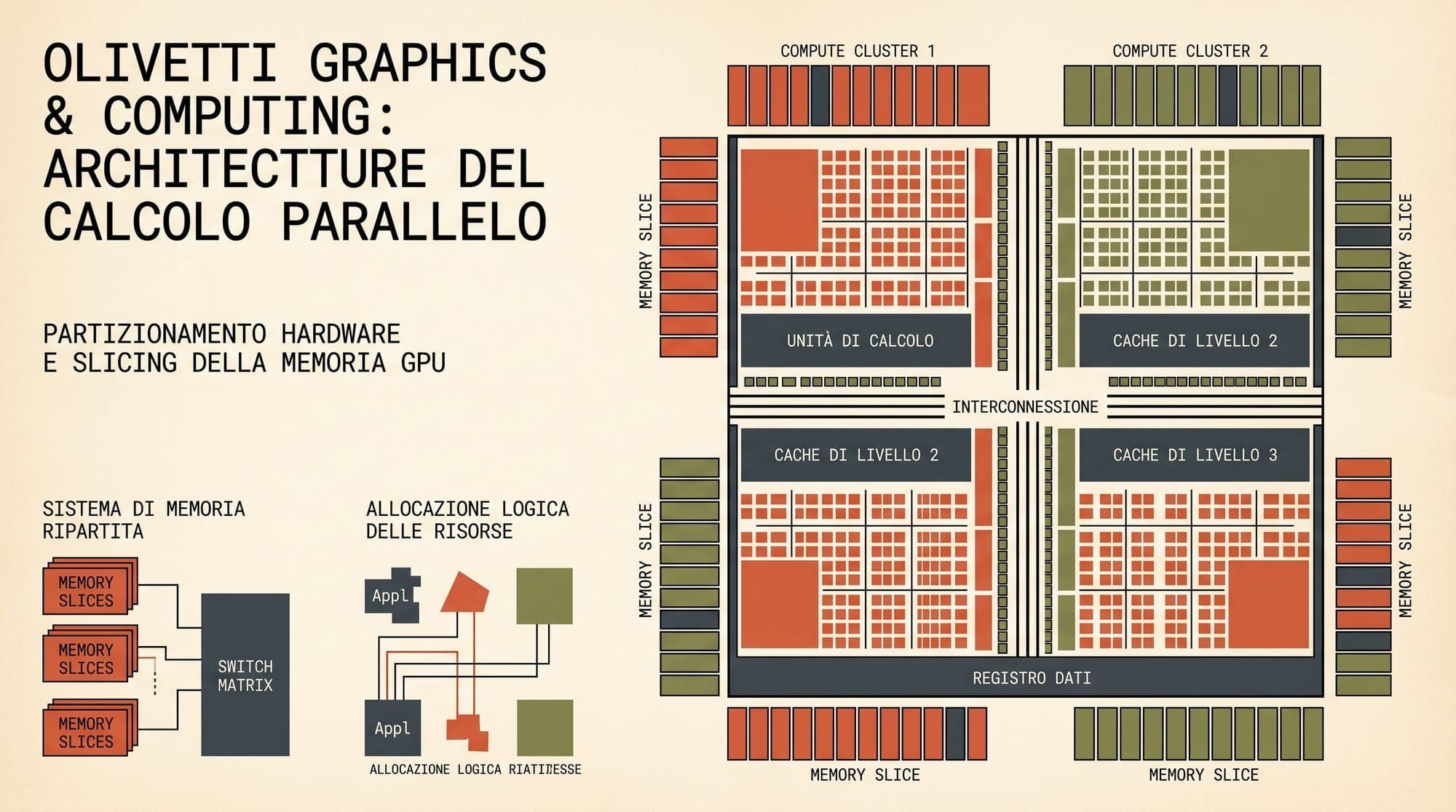
    GPU Slicing in Production AI Systems: Comparing MIG, MPS, Time-Slicing, and Dynamic Partitioning Modern production AI systems rarely deploy a single standalone large language model. Contemporary compound AI architectures rely on heterogeneous pipelines comprising embedding models (such as BGE or E5), cross-encoder rerankers, safety classifiers (such as Llama Guard), speculative decoding draft models, and vision-language encoders. While primary generation models typically require dedicated multi

    AI
    7 min read
  3. LLM Autoscaling and Cold Starts in Kubernetes: Architecture, KEDA Metrics, Model Weight Caching, and Ephemeral GPU Provisioning

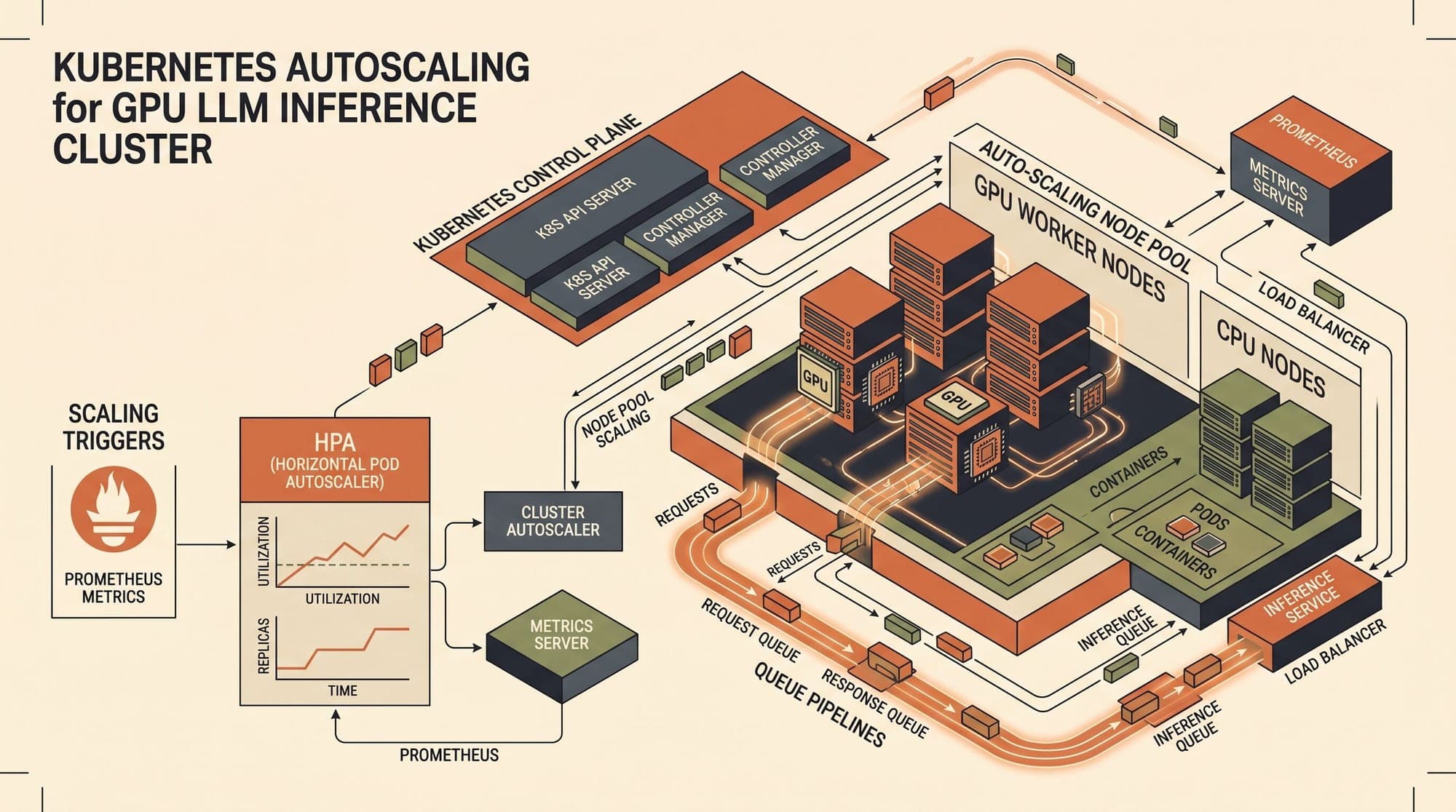
    Autoscaling large language model workloads on Kubernetes presents a fundamentally different engineering problem than traditional stateless microservices. While web APIs scale on CPU utilization or request rate within seconds, LLM inference instances require specialized GPU accelerators, massive container images, multi-gigabyte weight tensors, and intensive runtime compilation before serving a single token. Without proactive architectural design, a cold-starting LLM pod on Kubernetes often requi

    Kubernetes
    6 min read