Subscribe
Topic / page 4

Inference

Articles, page 4

61-80
  1. Context Structuring and Attention Placement in Long-Context LLMs: Mitigating Position Bias, Attention Dispersion, and Information Loss in Production

    Context Structuring and Attention Placement in Long-Context LLMs: Mitigating Position Bias, Attention Dispersion, and Information Loss in Production Modern foundation models support context windows ranging from 128,000 to over 2,000,000 tokens. Serving runtimes and API gateways routinely process entire codebases, multi-year financial statements, and sprawling legal filings in a single inference call. However, supporting a nominal sequence length does not guarantee that a transformer can effecti


    Architecture
    8 min read
  2. Serving Mixture-of-Experts Models in Production: Architecture, Distributed Parallelism, All-to-All Bottlenecks, and Serving Economics

    Serving Mixture-of-Experts Models in Production: Architecture, Distributed Parallelism, All-to-All Bottlenecks, and Serving Economics Mixture-of-Experts (MoE) architectures have become the standard structural paradigm for frontier open-weight and proprietary large language models. Architectures such as DeepSeek-V3, Mixtral 8x22B, and GLM-5 deliver frontier-grade reasoning and generation by activating only a fraction of their total parameter count on any given token. For example, DeepSeek-V3 rou

    AI
    8 min read
  3. SGLang v0.5.18 Cuts LLM Cold Starts by 2.4x with Overlapped Weight Loading and CUDA Graph Capture

    The open-source LLM serving engine SGLang has released version 0.5.18, introducing an overlapped startup engine that significantly reduces cold-start latency for large language models, alongside communication kernel optimizations and expanded architecture support. Comprising 710 pull requests from 212 contributors, the release addresses operational overheads in LLM infrastructure where autoscaling, rolling cluster deployments, and worker node recovery frequently pay steep restart penalties. O

    AI
    4 min read
  4. Microscaling Formats in Production LLM Inference: NVFP4 vs. MXFP4 Architecture, Block Quantization, Kernel Scaling, and Perplexity Degradation

    As frontier language models scale into hundreds of billions of parameters, memory bandwidth and VRAM capacity remain the primary bottlenecks in production inference serving. While 8-bit floating-point formats (FP8 E4M3 and E5M2) achieved mainstream adoption across Hopper and Ada generation hardware, the industry is transitioning to 4-bit floating-point (FP4) arithmetic to double inference throughput and halve memory footprints. Directly quantizing deep transformer weights and activations into 4

    AI
    7 min read
  5. Fill-in-the-Middle (FIM) and Inline Code Completion in Production: Architecture, Prefix-Suffix Context Windows, Speculative Decoding, and Sub-50ms Serving Latencies

    Fill-in-the-Middle (FIM) and Inline Code Completion in Production: Architecture, Prefix-Suffix Context Windows, Speculative Decoding, and Sub-50ms Serving Latencies Inline code completion is the most latency-sensitive deployment of large language models in production software engineering. Unlike conversational assistants or background agentic batch jobs, inline code completion operates directly inside an active editor typing loop. Developers type at speeds ranging from 40 to 120 words per minut

    AI
    7 min read
  6. Predictive KV Cache Warming in Production LLM Serving: Architecture, Session Prefetching, and TTFT Latency Shaving

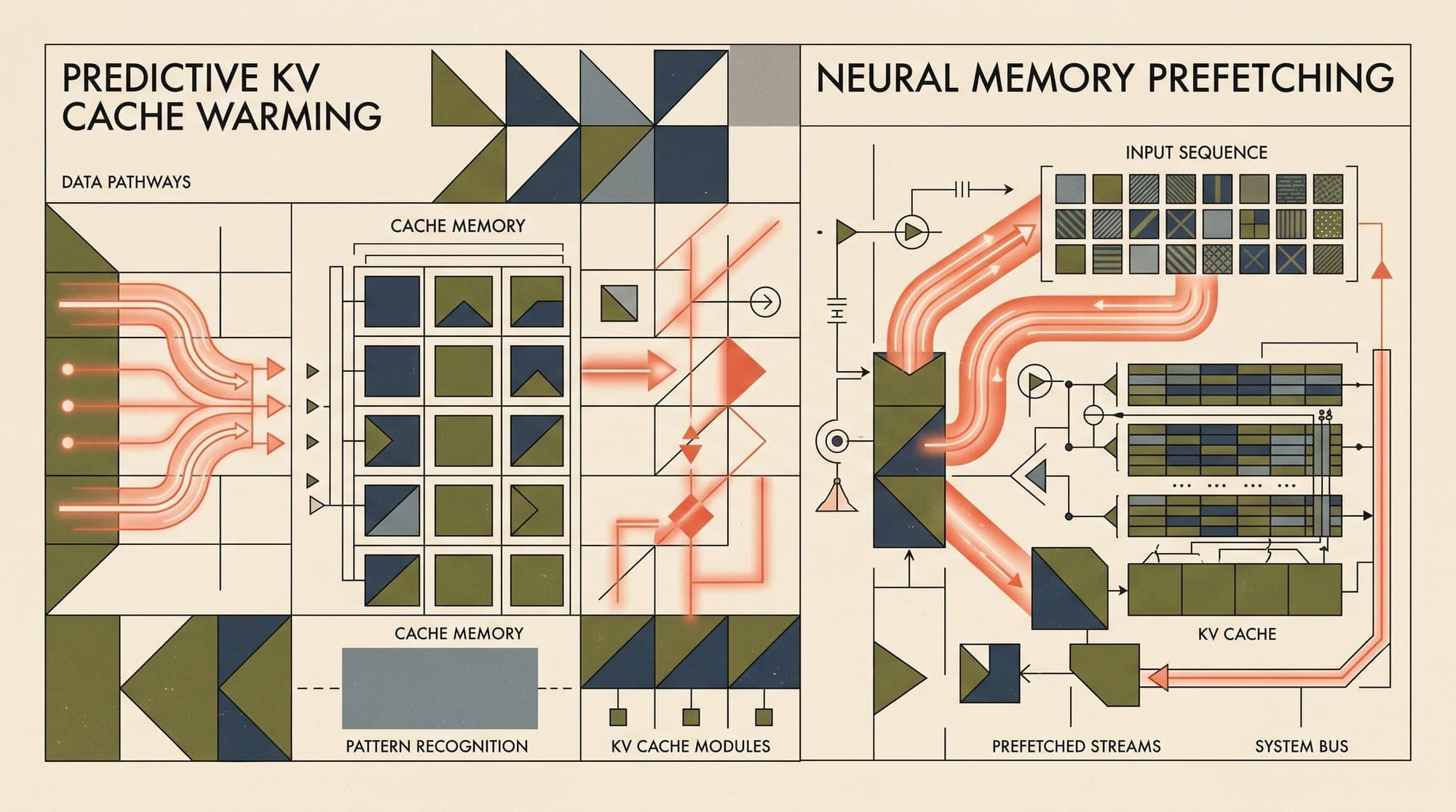
    Predictive KV Cache Warming in Production LLM Serving: Architecture, Session Prefetching, and TTFT Latency Shaving In long-context large language model (LLM) deployments, Time-to-First-Token (TTFT) represents the primary latency bottleneck. As input prompts scale from 8,000 tokens to 128,000 tokens in multi-turn coding agents, legal document analysis, and enterprise retrieval pipelines, prefill execution consumes between 85% and 95% of total GPU compute time per request. Standard optimization

    AI
    5 min read
  7. Decentralized and Peer-to-Peer LLM Inference in Production: Architecture, Ring Memory Partitioning, and Network Latency

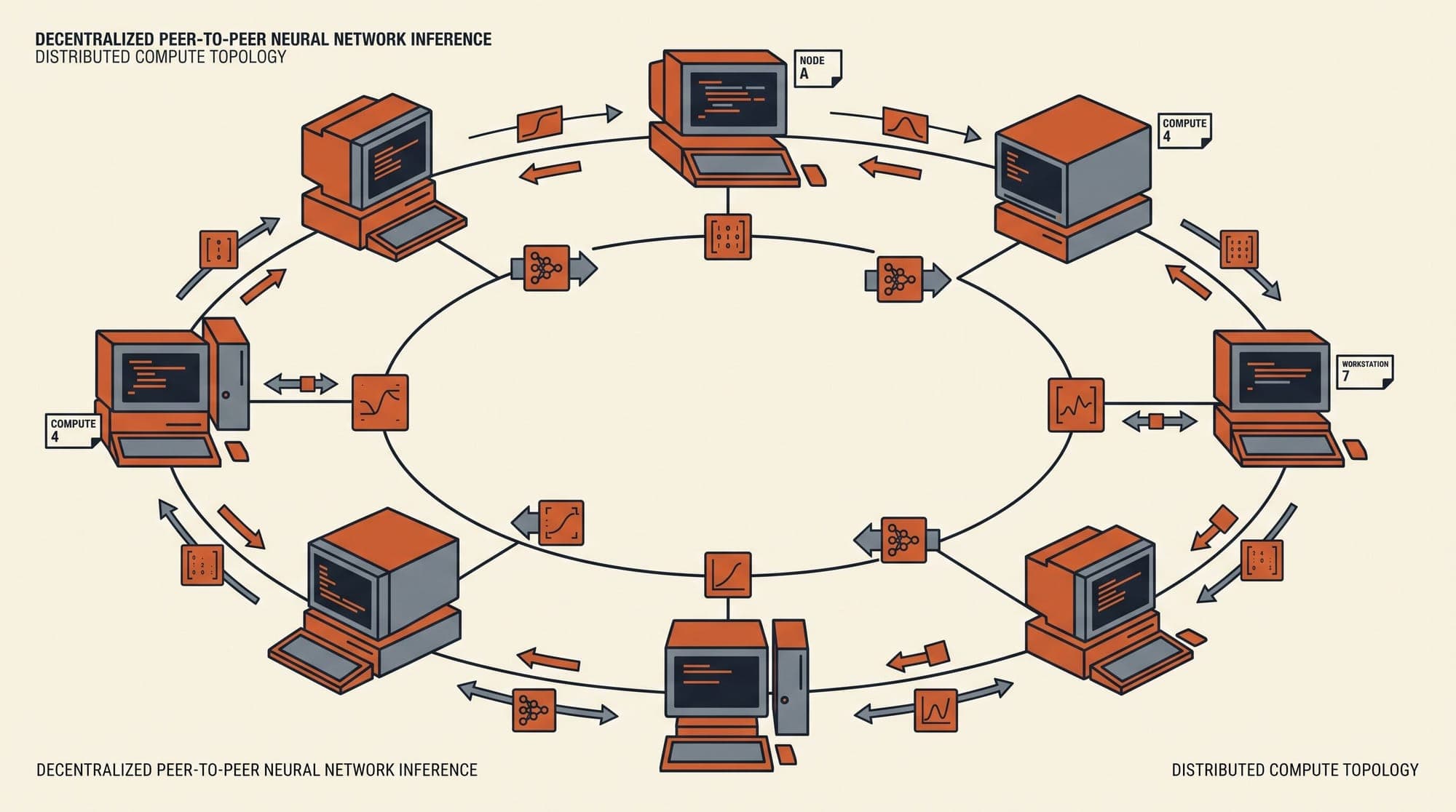
    Decentralized and Peer-to-Peer LLM Inference in Production: Architecture, Ring Memory Partitioning, and Network Latency Frontier open-weight models such as Llama 3.1 405B, DeepSeek-V3, and Command R+ have expanded model capabilities, but their parameter scales exceed the physical memory limits of individual consumer and edge workstations. Running a 405-billion parameter model in 16-bit precision requires over 810 GB of memory, and even 4-bit quantized variants require roughly 230 GB of contiguo

    AI
    7 min read
  8. Low-Precision Quantization Kernels in Production: Comparing Marlin, ExLlamaV2, FlashInfer, and BitBLAS

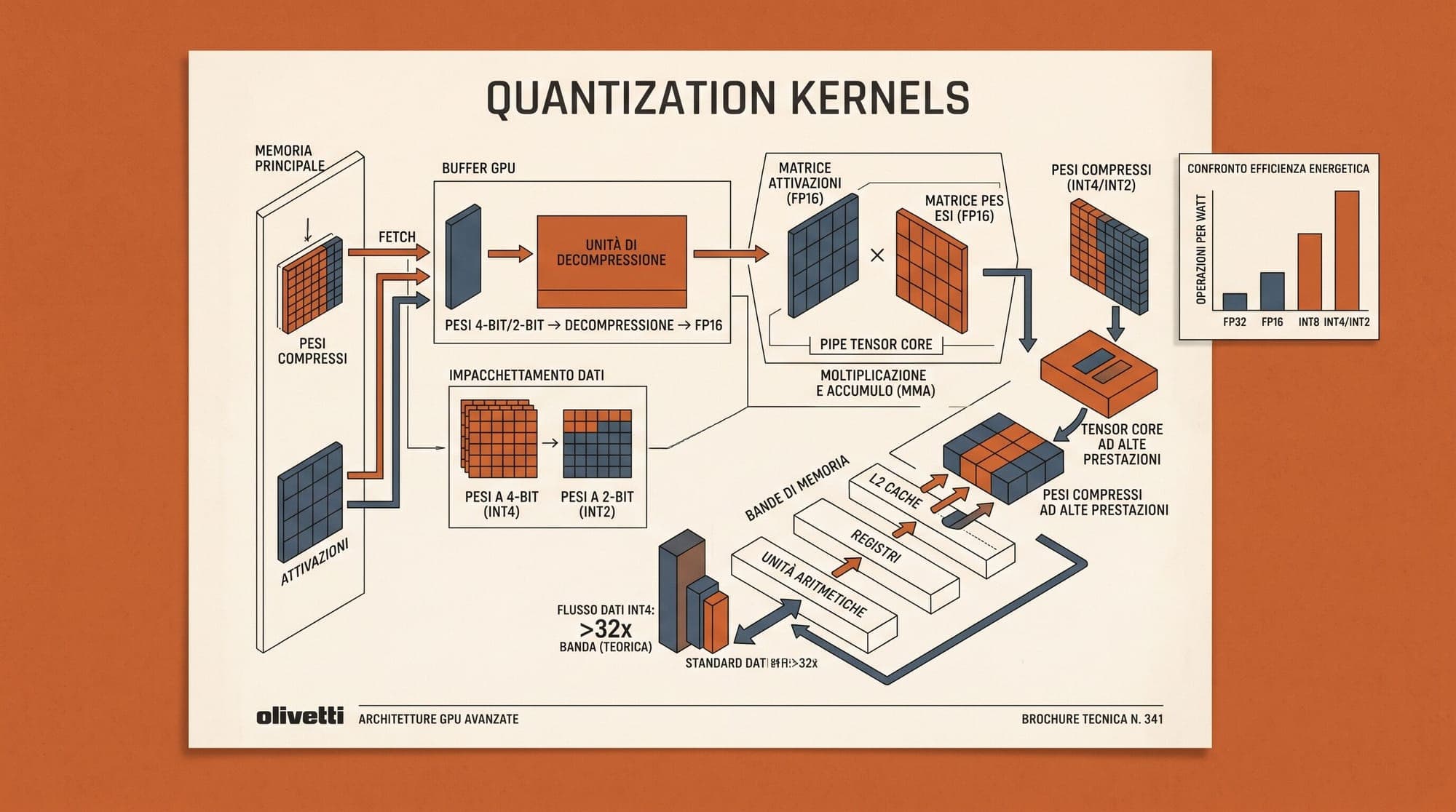
    Low-Precision Quantization Kernels in Production: Comparing Marlin, ExLlamaV2, FlashInfer, and BitBLAS Architecture, Memory Bandwidth, and Decoding Throughput Autoregressive large language model (LLM) serving operates under two distinct compute regimes: a compute-bound prefill phase and a memory-bandwidth-bound decode phase. While processing the initial prompt involves matrix-matrix multiplications (GEMM) with high arithmetic intensity, generating tokens one by one requires matrix-vector multip

    AI
    9 min read
  9. LLM Inference on AMD ROCm in Production: MI300X Architecture, Triton Kernel Parity, and vLLM Serving Benchmarks

    LLM Inference on AMD ROCm in Production: MI300X Architecture, Triton Kernel Parity, and vLLM Serving Benchmarks Serving frontier large language models in enterprise production has historically been synonymous with NVIDIA CUDA infrastructure. However, the deployment of AMD Instinct MI300X accelerators across tier-one hyperscalers and neoclouds has established a viable alternative for high-throughput inference fleets. With 192 GB of high-bandwidth memory (HBM3) and 5.3 TB/s of peak theoretical m

    Inference
    5 min read
  10. Token Healing and Partial Token Alignment in Production LLM Serving: Architecture, Prefix Trie Rollback, and Serving Trade-Offs

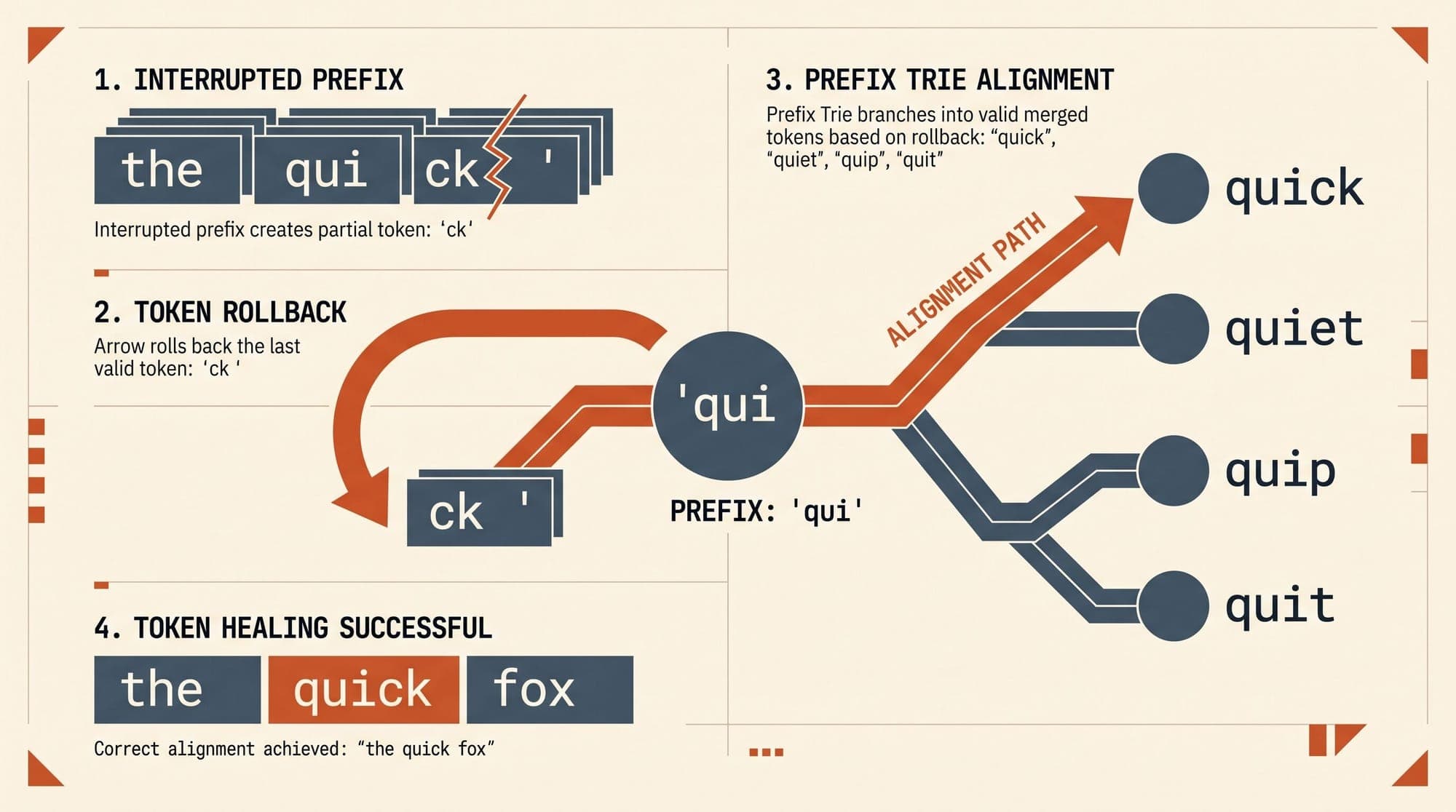
    Modern large language models operate on discrete subword tokens generated by greedy compression algorithms like Byte-Pair Encoding (BPE), WordPiece, or Unigram. While subword tokenization enables high compression rates and fixed vocabulary sizes, it introduces a structural defect at the interface between raw user text and autoregressive inference: the partial token problem, commonly known as the prompt boundary problem. When a user prompt terminates mid-token or at a punctuation boundary that c

    LLM
    7 min read
  11. Prefix-Tree KV Cache Management in Production: RadixAttention, Tree-Structured LRU Eviction, and Token-Level Sharing in SGLang and vLLM

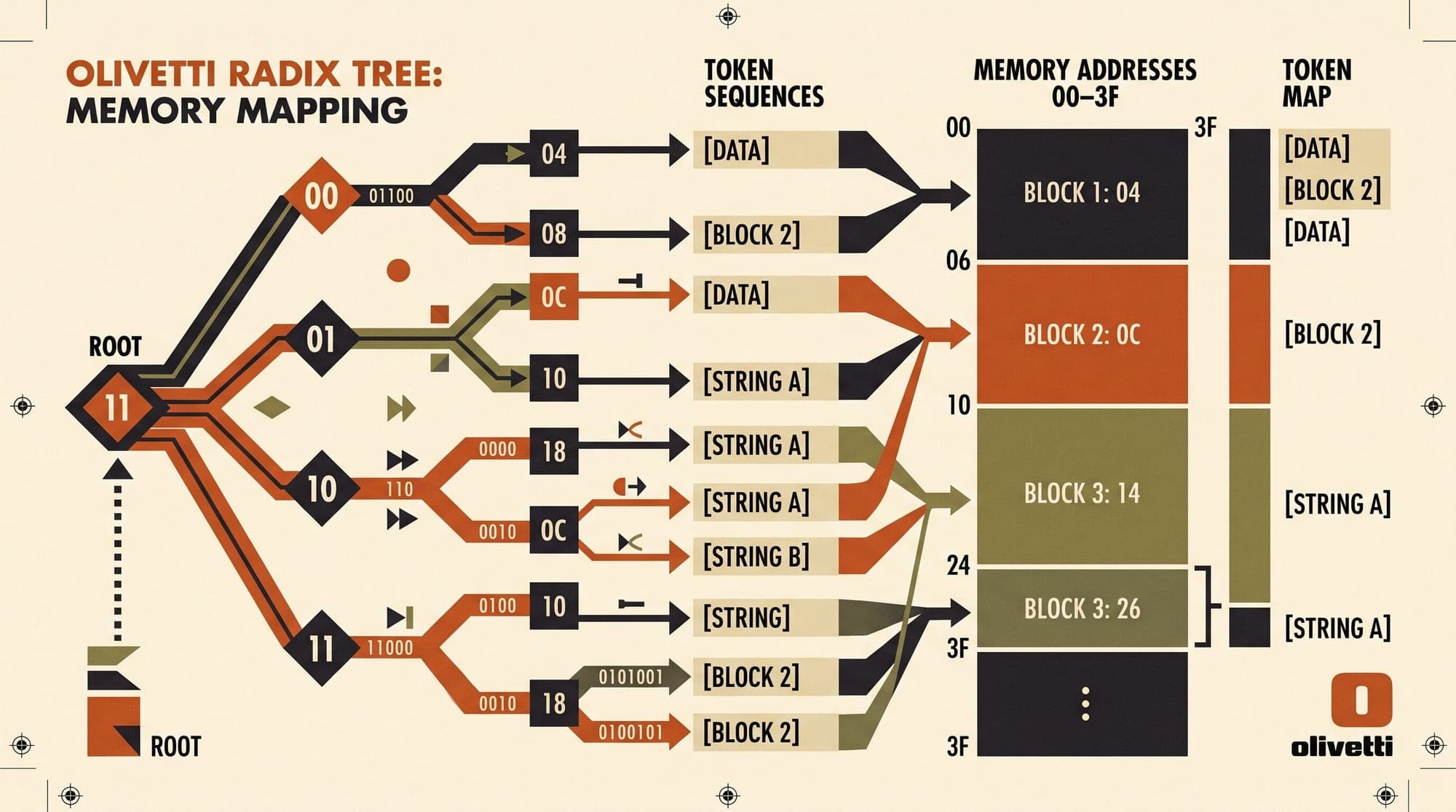
    Prefix-Tree KV Cache Management in Production: RadixAttention, Tree-Structured LRU Eviction, and Token-Level Sharing in SGLang and vLLM Autoregressive large language model inference is heavily constrained by memory bandwidth and the computational overhead of the prefill phase. For workloads such as multi-turn conversations, autonomous agent tool loops, few-shot prompt evaluations, and tree-search decoding, consecutive requests often share substantial token prefixes. In a standard multi-turn ses

    AI
    7 min read
  12. CUDA Graph Capture in Production LLM Serving: Dynamic Batch Bucketing, Static Memory Pooling, and Kernel Launch Elimination

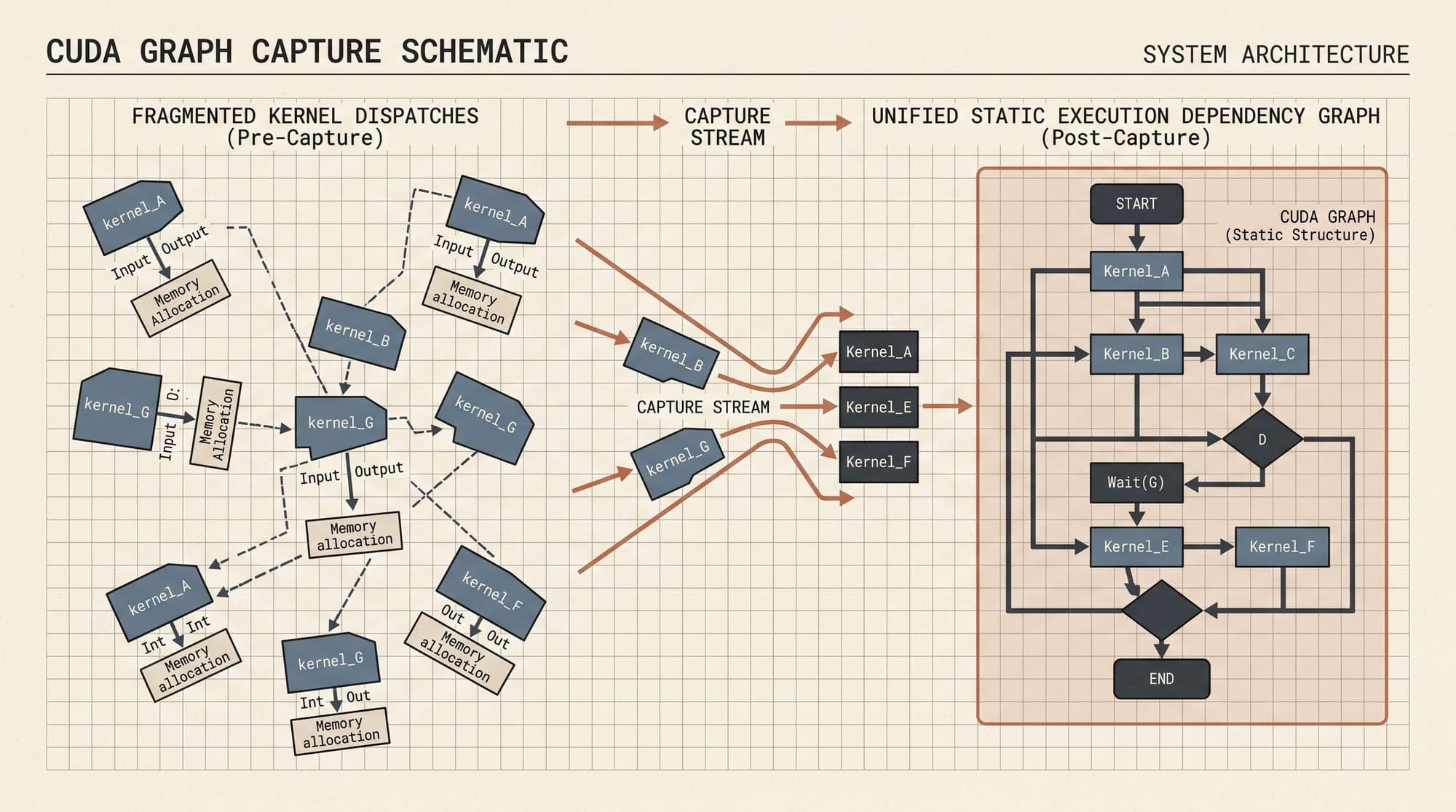
    CUDA Graph Capture in Production LLM Serving: Dynamic Batch Bucketing, Static Memory Pooling, and Kernel Launch Elimination In high-throughput large language model serving, the autoregressive generation (decode) phase presents an operational bottleneck distinct from prefill processing. While prefill computation is dominated by compute-bound General Matrix Multiplications (GEMMs) operating across extended sequence lengths, autoregressive decoding processes a single token per sequence at each ite

    Inference
    8 min read
  13. Request Hedging in Production LLM Serving: Architecture, Tail-Latency Mitigation, and Cancellation Protocols

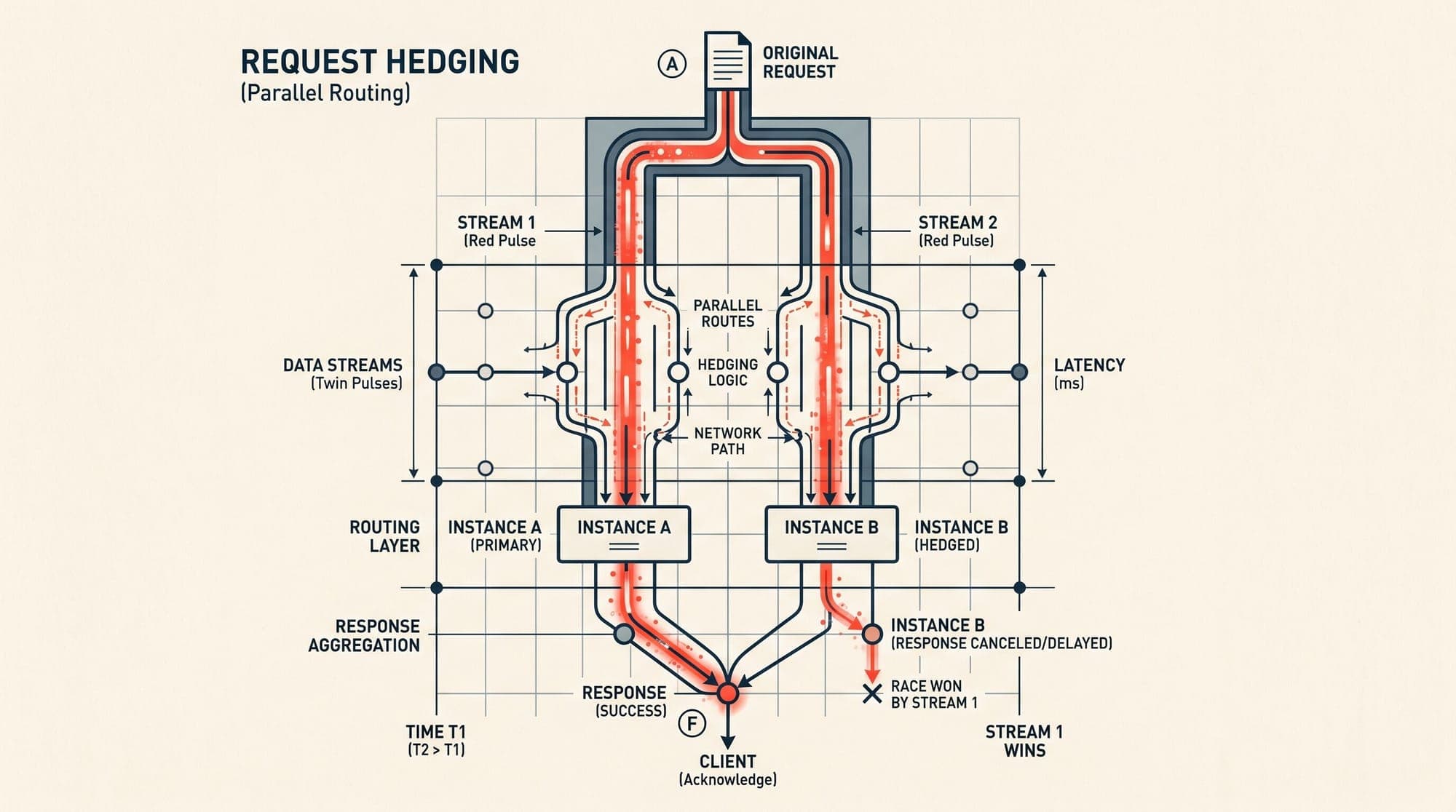
    In distributed computing, tail latency—the 95th, 99th, and 99.9th percentiles—dictates overall user experience, service-level agreements (SLAs), and multi-step agent execution reliability. While median response times (P50) in large language model (LLM) serving often appear acceptable, tail latencies frequently degrade by 4x to 10x. In multi-turn chat applications, real-time voice agents, and multi-agent DAG pipelines, a single straggler request stalls entire execution chains. Request hedging, a

    LLM
    8 min read
  14. LayerSkip and Self-Speculative Decoding: How Layer Dropout and Shared Early Exits Accelerate LLM Generation

    LayerSkip and Self-Speculative Decoding: How Layer Dropout and Shared Early Exits Accelerate LLM Generation Standard autoregressive large language model (LLM) inference is severely bottlenecked by memory bandwidth. In transformer decoders, generating a sequence of $N$ tokens requires loading all model parameters from High Bandwidth Memory (HBM) to on-chip SRAM $N$ separate times. While speculative decoding mitigates this bandwidth tax by using a smaller draft model to propose candidate tokens v

    AI
    8 min read
  15. Zero-Downtime Model Updates in Production LLM Serving: In-Place Weight Transfer, CUDA IPC vs. NCCL Syncing, and Traffic Draining Architectures

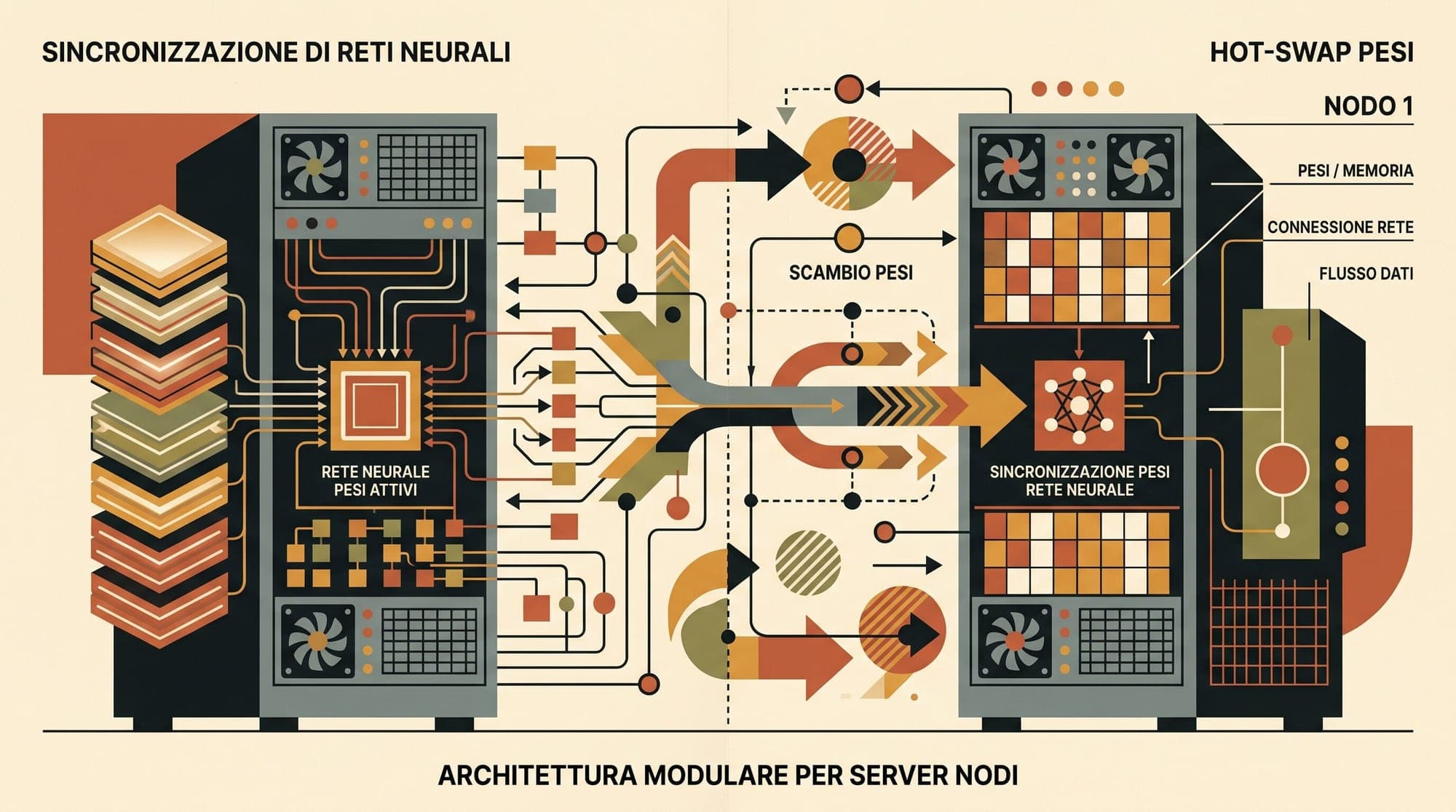
    Zero-Downtime Model Updates in Production LLM Serving: In-Place Weight Transfer, CUDA IPC vs. NCCL Syncing, and Traffic Draining Architectures In high-throughput LLM serving infrastructure, updating model checkpoints presents a severe operational dilemma. Traditional microservice deployment patterns such as blue-green deployments or rolling pod restarts fail to scale economically when applied to multi-GPU LLM clusters. Tearing down a serving instance to load a newly fine-tuned checkpoint or pol

    AI
    6 min read
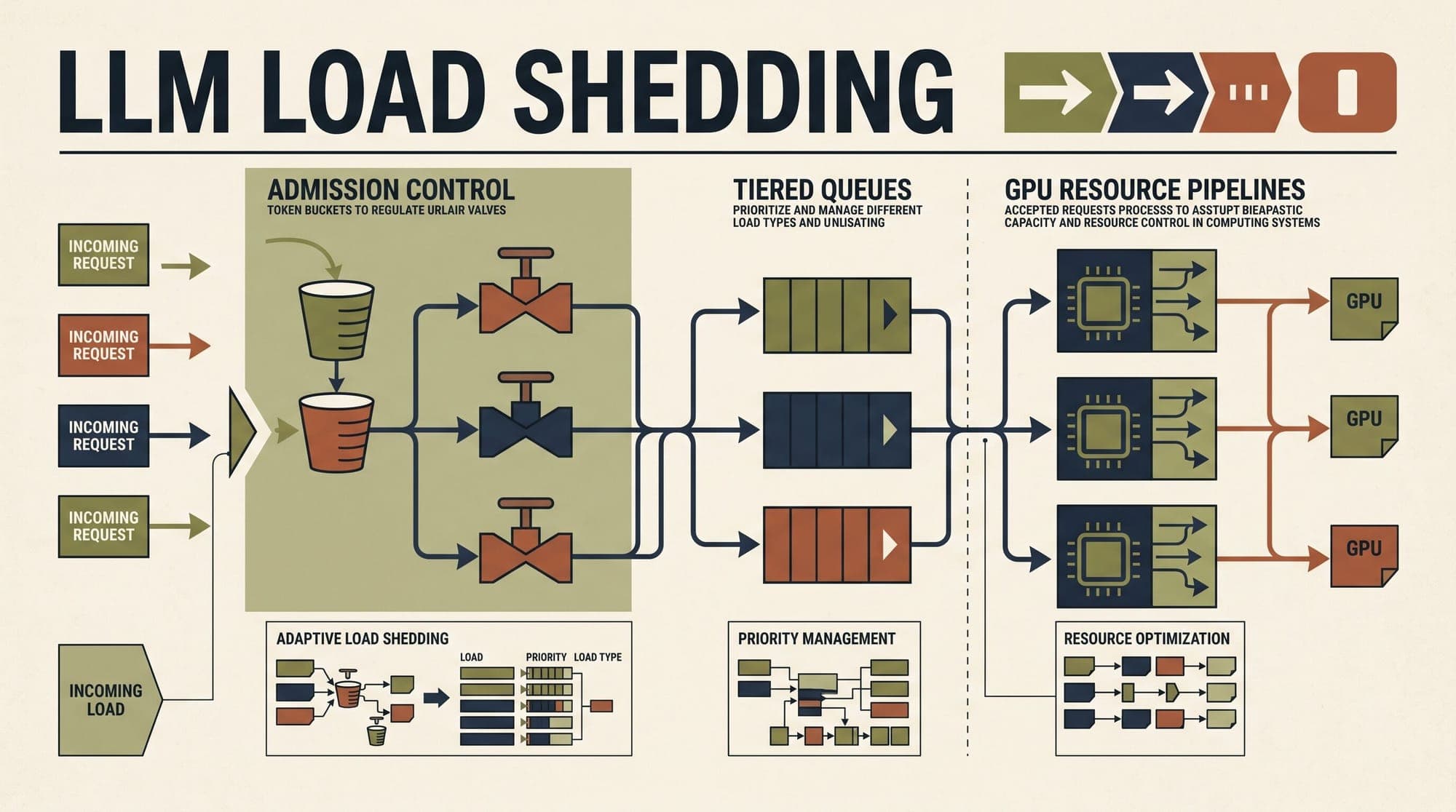
  16. LLM Load Shedding and Overload Control in Production: Adaptive Admission, Preemption Economics, and Graceful Degradation

    LLM Load Shedding and Overload Control in Production: Adaptive Admission, Preemption Economics, and Graceful Degradation Standard web services rely on well-established overload protection patterns: reverse proxies monitor CPU utilization, memory thresholds, or static queue depths and reject excess HTTP requests with 429 Too Many Requests or 503 Service Unavailable status codes. When applied naively to Large Language Model (LLM) serving infrastructure, these conventional heuristics fail catastro

    LLM
    9 min read
  17. Geo-Distributed LLM Inference in Production: Cross-Region Routing, Wide-Area KV Cache Dynamics, and Data Residency Architecture

    Serving large language models at enterprise scale quickly encounters geographic constraints. When users, microservices, and autonomous agents are distributed across North America, Europe, and Asia-Pacific, routing all traffic to a single centralized GPU cluster introduces significant wide-area network (WAN) round-trip times (RTT). An interactive request from Singapore to a US-East data center carries 180ms to 240ms of baseline network latency before the GPU executes a single token. However, dis

    AI
    7 min read
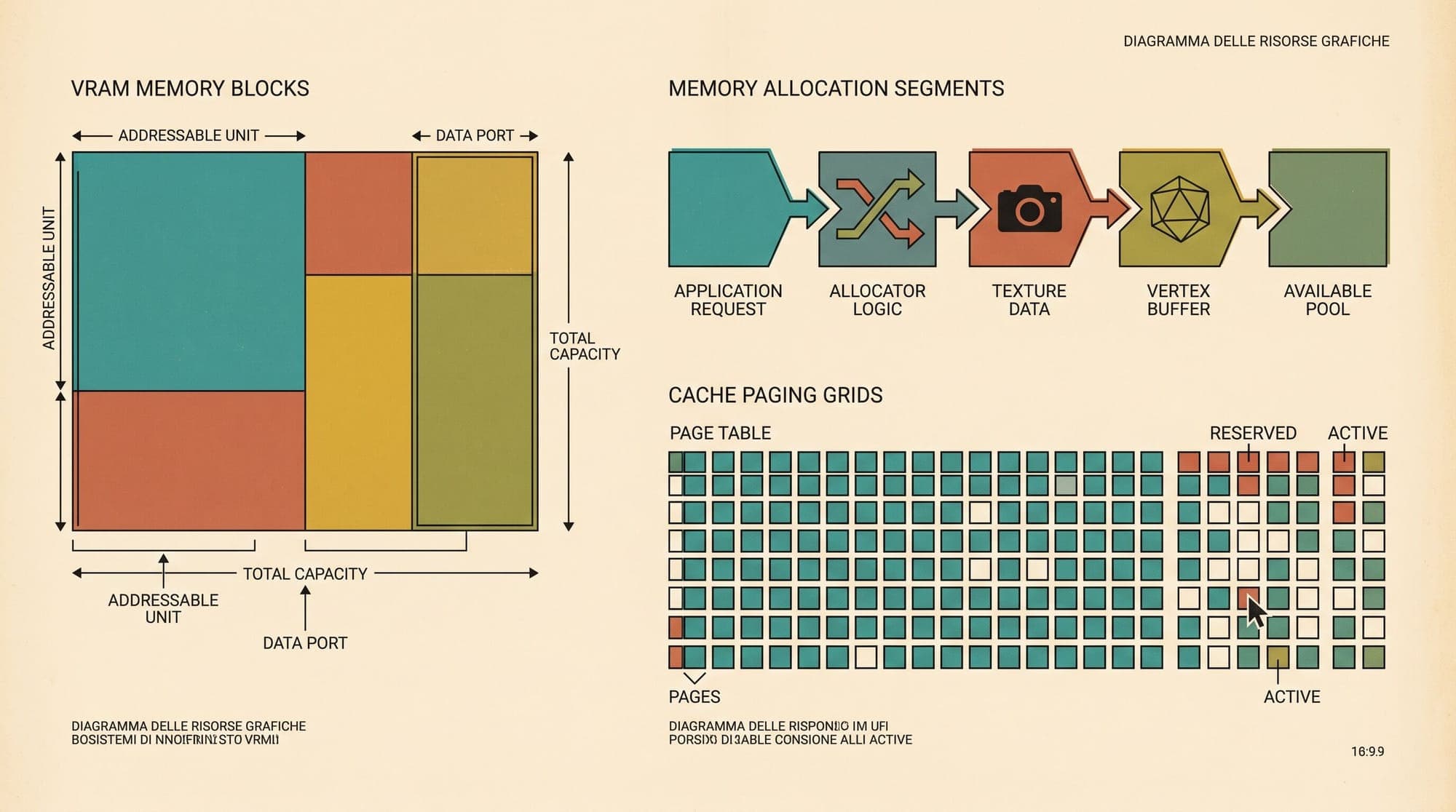
  18. GPU Memory Profiling in Production LLM Serving: CUDA Allocator Internals, PyTorch Snapshots, and VRAM Optimization

    In high-throughput large language model serving, memory is the primary constraint governing latency, batch concurrency, and context length. While model parameter footprints are static and easily calculated, runtime GPU memory (VRAM) dynamics are governed by low-level caching allocators, dynamic key-value (KV) cache allocation pools, transient activation spikes, and memory fragmentation. When an inference worker crashes with torch.cuda.OutOfMemoryError, default system diagnostics such as nvidia-

    LLM
    6 min read
  19. Serverless GPU Inference in Production: Cold Starts, GPU Memory Snapshotting, and Weight Paging Architectures

    Serverless GPU Inference in Production: Cold Starts, GPU Memory Snapshotting, and Weight Paging Architectures Deploying large language models on dedicated cloud GPUs creates an uncomfortable financial trade-off: keeping enterprise accelerators such as NVIDIA H100s or A100s warm 24/7 costs thousands of dollars per instance each month, yet scaling instances to zero introduces severe latency penalties. When traffic arrives at a dormant node, a standard inference server cold start can take anywhere

    Infrastructure
    7 min read
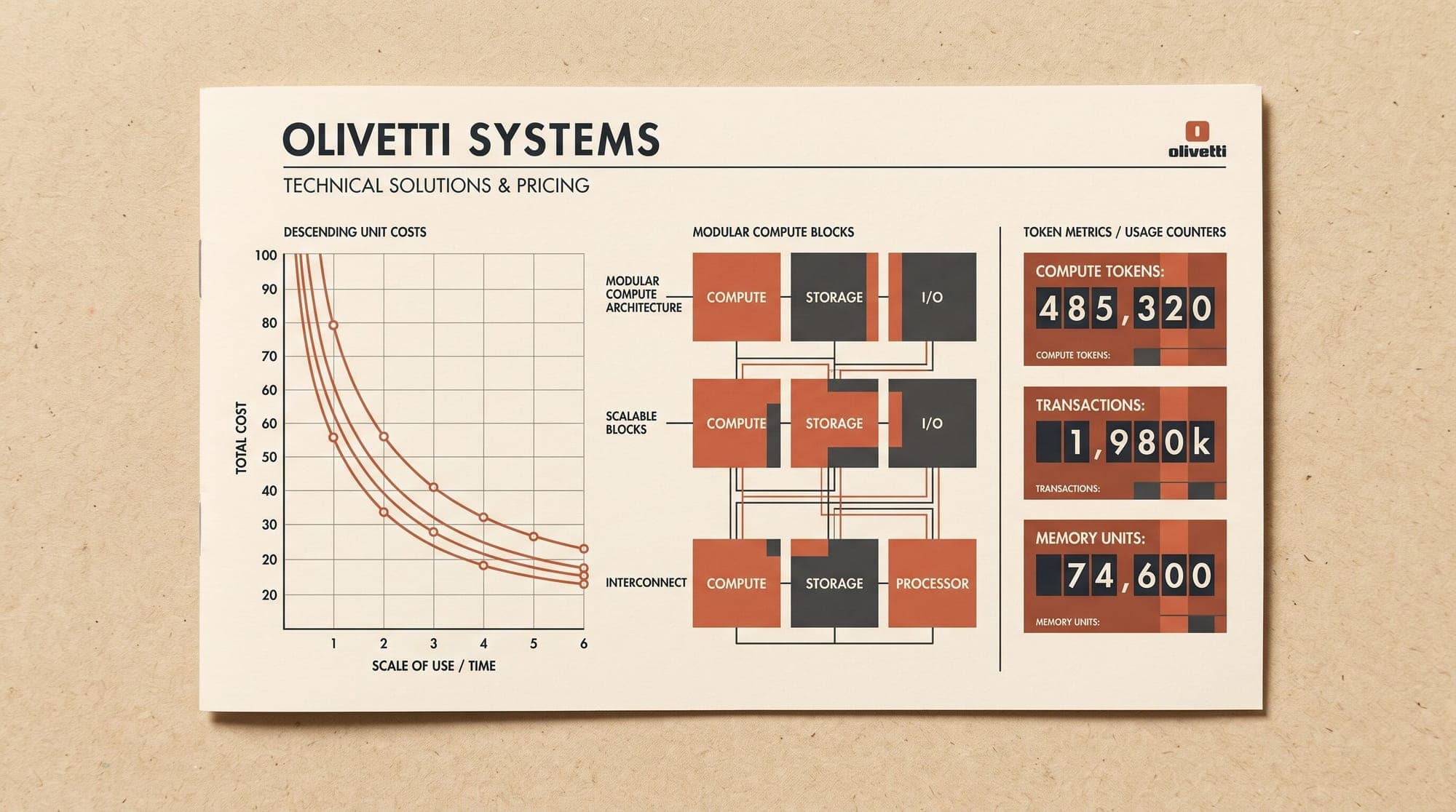
  20. OpenAI Cuts GPT-5.6 Sol API and Coding Tool Pricing by Over 20%

    OpenAI has lowered developer pricing for its flagship GPT-5.6 Sol model across its API and developer toolchain for a three-month promotional window. The rate adjustment reduces input token costs by 20% and output token costs by 33.3%, bringing standard short-context inference to $4.00 per million input tokens and $20.00 per million output tokens. The revision comes amid intensified developer pricing pressure across the frontier model ecosystem, particularly following aggressive pricing from com

    OpenAI
    2 min read