Subscribe
Topic / page 10

AI

Articles, page 10

181-200
  1. Open-Source Code Generation Models in Production: Comparing Qwen2.5-Coder, DeepSeek-Coder-V2, Codestral, and StarCoder2

    Selecting an open-source code generation model for production environments requires balancing task-specific accuracy, context window length, inference latency, memory footprint, and licensing terms. While general-purpose frontier models handle code generation reasonably well, dedicated code models optimize parameter density and token economics for developer workflows such as real-time autocomplete, fill-in-the-middle (FIM) editing, repository-wide reasoning, and automated test generation. Four

    AI
    5 min read
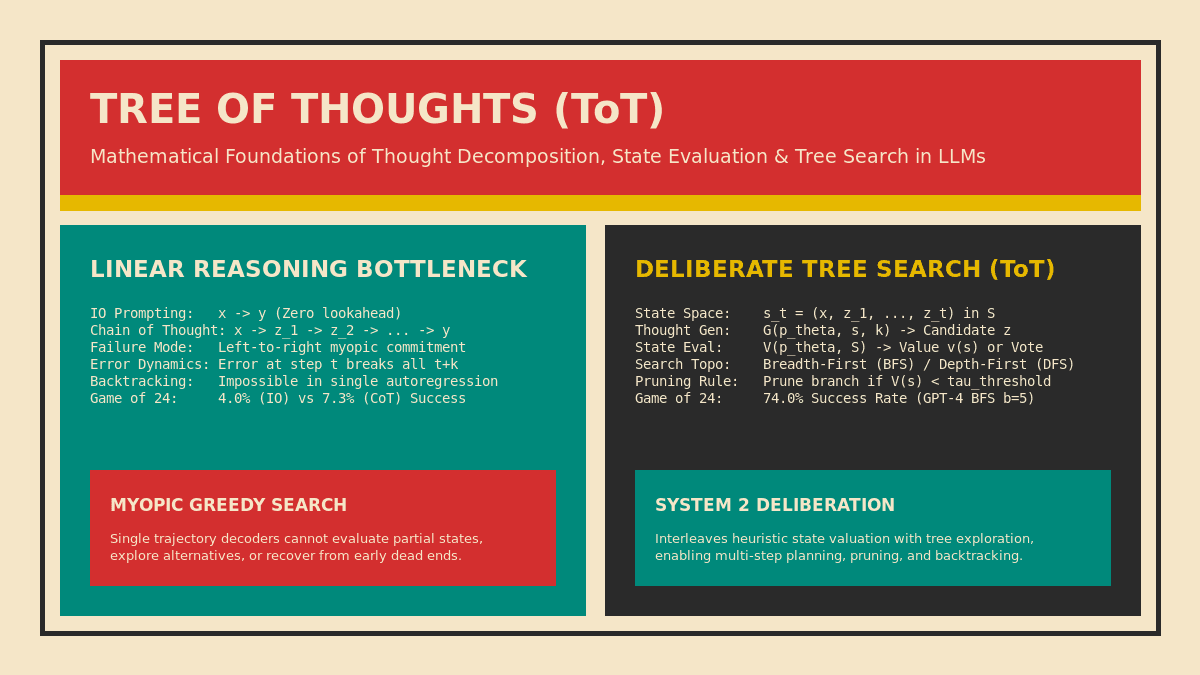
  2. Tree of Thoughts (ToT): Mathematical Foundations, Thought Decomposition, State Evaluation, and Tree Search Algorithms in Large Language Models

    Autoregressive large language models generate text left-to-right via token-level greedy or stochastic decoding. While Chain-of-Thought (CoT) prompting enables models to generate intermediate reasoning steps, standard inference remains constrained to a single linear trajectory. In complex problem-solving environments requiring combinatorial planning, heuristic evaluation, and lookahead, single-trajectory generation suffers from compounding errors and an inability to backtrack from early dead ends

    AI
    6 min read
  3. Open-Source LLM Benchmark Evaluation Harnesses in Production: Comparing LM Evaluation Harness, Lighteval, AlpacaEval 2, and Arena-Hard-Auto

    Standardized evaluation is the bedrock of LLM development, yet production evaluation pipelines face a split between two distinct paradigms: static, deterministic multi-task benchmarks evaluated via log-likelihood or exact string matching, and dynamic, open-ended instruction-following benchmarks evaluated via LLM-as-a-Judge pairwise win rates. Engineering teams building pre-training runs, fine-tuning recipes, and model alignment loops require distinct tooling for each paradigm. Four open-source

    AI
    5 min read
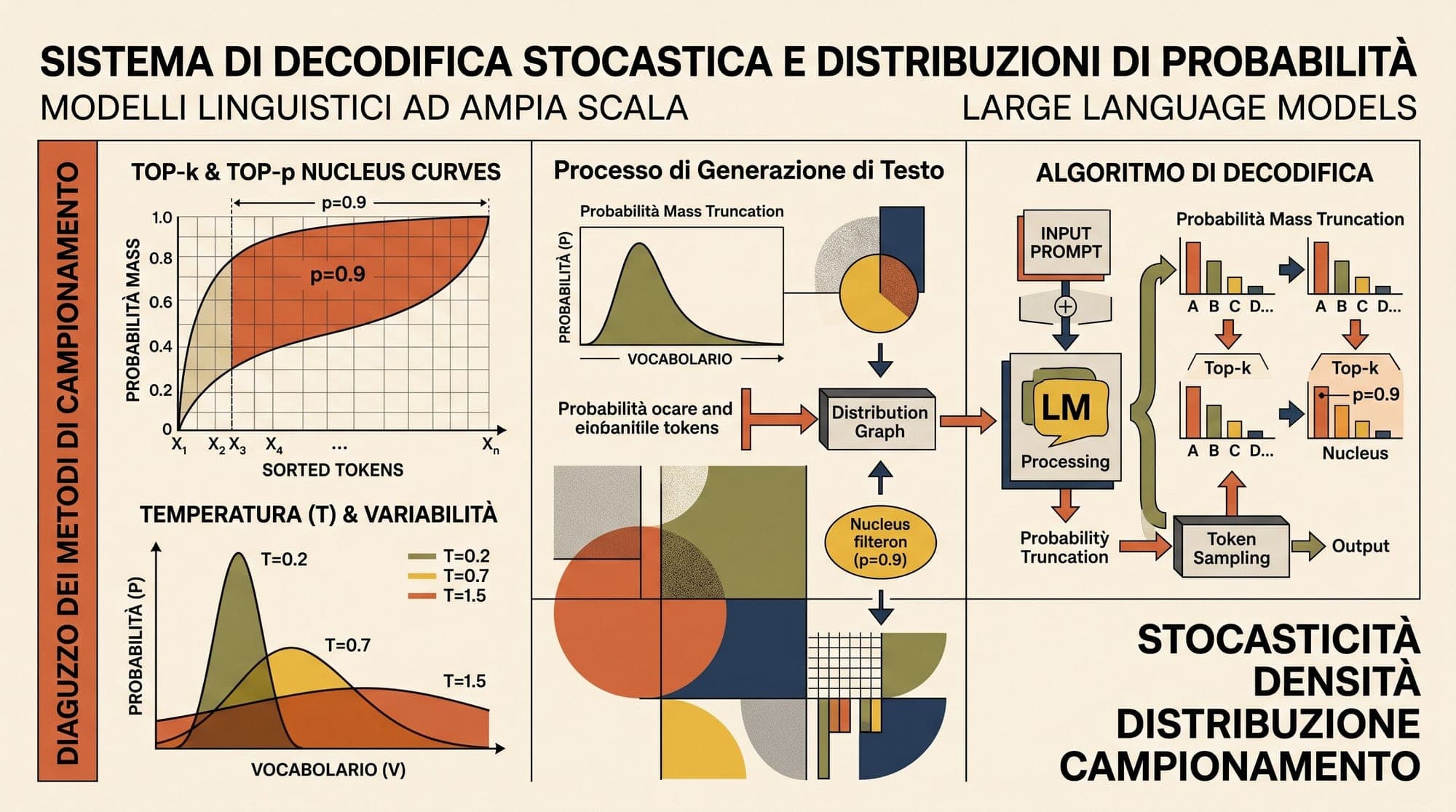
  4. Stochastic Decoding Strategies in Large Language Models: Mathematical Foundations of Temperature Scaling, Top-k, Nucleus (Top-p), Typical Sampling, and Min-p

    Autoregressive language models generate text sequentially by estimating a conditional probability distribution over a vocabulary at each decoding step. While model training optimizes cross-entropy loss over large corpora, the quality, diversity, and coherence of generated sequences depend directly on the decoding strategy used to select tokens from the output logits. Deterministic algorithms such as greedy search and beam search systematically fail in open-ended generation tasks, collapsing int

    AI
    8 min read
  5. Open-Source Sub-3B Small Language Models in Production: Comparing SmolLM2, Qwen2.5, Llama 3.2, and Gemma 2

    Deploying language models directly on client hardware, edge gateways, and low-latency routing layers requires balancing parameter count, memory footprint, and task-specific reasoning capability. The sub-3B parameter class has shifted from stripped-down toy models to highly capable engines trained on tens of trillions of tokens or distilled from frontier teachers. In production architectures, models in the 1B to 3B range serve three primary roles: speculative decoding draft models that accelerat

    AI
    6 min read
  6. Machine Unlearning in Large Language Models: Mathematical Foundations of Gradient Ascent, Negative Preference Optimization, and Representation Misdirection

    Machine Unlearning in Large Language Models: Mathematical Foundations of Gradient Ascent, Negative Preference Optimization, and Representation Misdirection Machine unlearning in large language models (LLMs) addresses the challenge of removing specific training data, copyrighted material, private identifiers, or hazardous capabilities from a pre-trained model without retraining the network from scratch. Because training frontier language models requires millions of GPU-hours and petabyte-scale c

    AI
    8 min read
  7. Open-Source Vector Search Indexing Libraries in Production: Comparing Faiss, HNSWLib, ScaNN, and USearch Architecture, Quantization Schemes, SIMD Vectorization, and Memory Economics

    Vector retrieval systems across modern retrieval-augmented generation (RAG) pipelines, multimodal search engines, and recommendation systems depend on low-level Approximate Nearest Neighbor (ANN) search libraries. While production systems often wrap these engines inside managed vector databases such as Qdrant, Milvus, Weaviate, or ClickHouse, the fundamental compute bottlenecks, memory limits, and latency profiles are dictated by the underlying C++ vector indexing libraries. Four open-source li

    AI
    8 min read
  8. The Logit Lens and Tuned Lens: Mathematical Foundations, Residual Stream Projections, and Representation Dynamics in Transformers

    Large language models based on decoder-only transformer architectures process information through a sequence of stacked attention and multi-layer perceptron (MLP) blocks connected by a residual stream. While the final output distribution over the vocabulary is produced by projecting the final hidden state through an unembedding matrix, understanding how intermediate representations evolve across depth remains a central problem in mechanistic interpretability. The logit lens and the tuned lens p

    AI
    5 min read
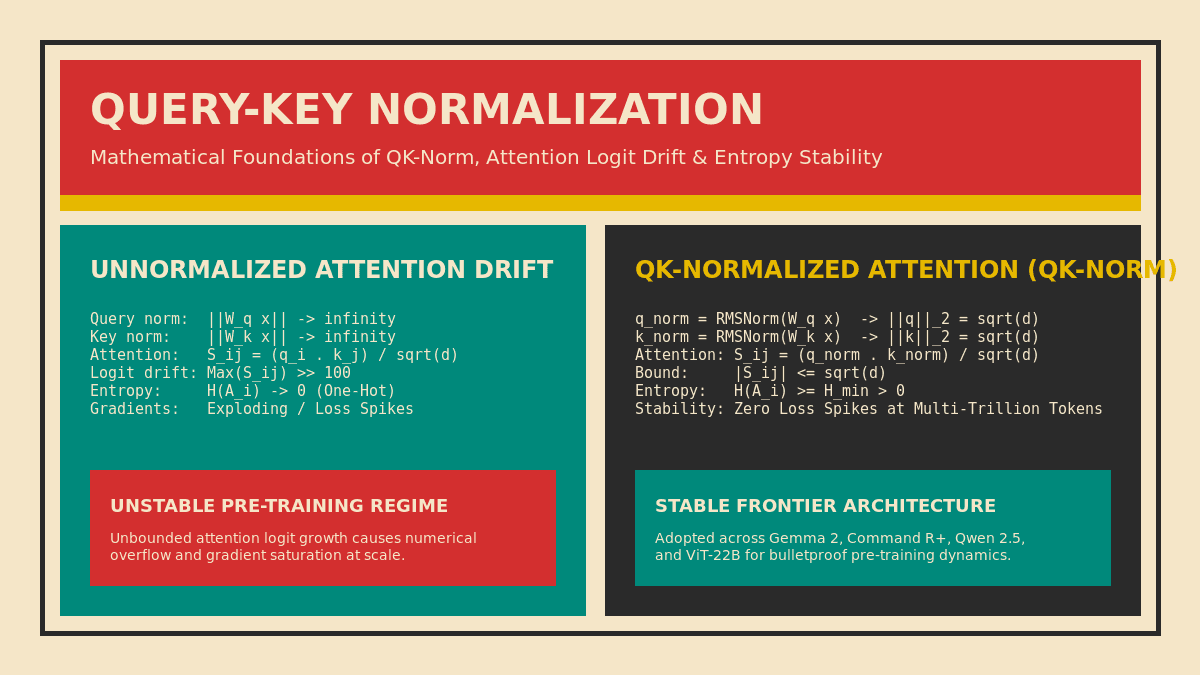
  9. Query-Key Normalization (QK-Norm): Mathematical Foundations, Attention Logit Drift, Entropy Collapse, and Large-Scale Transformer Training Stability

    Large-scale Transformer pre-training at trillion-token scale frequently encounters sudden, irrecoverable training instabilities, often manifesting as gradient norm spikes and divergence in training loss. While gradient clipping, learning rate warmups, and pre-layer normalization (Pre-LN) mitigate optimization bottlenecks in shallow architectures, deeper and wider models exhibit an intrinsic failure mode in the standard scaled dot-product attention mechanism: unconstrained attention logit growth.

    AI
    6 min read
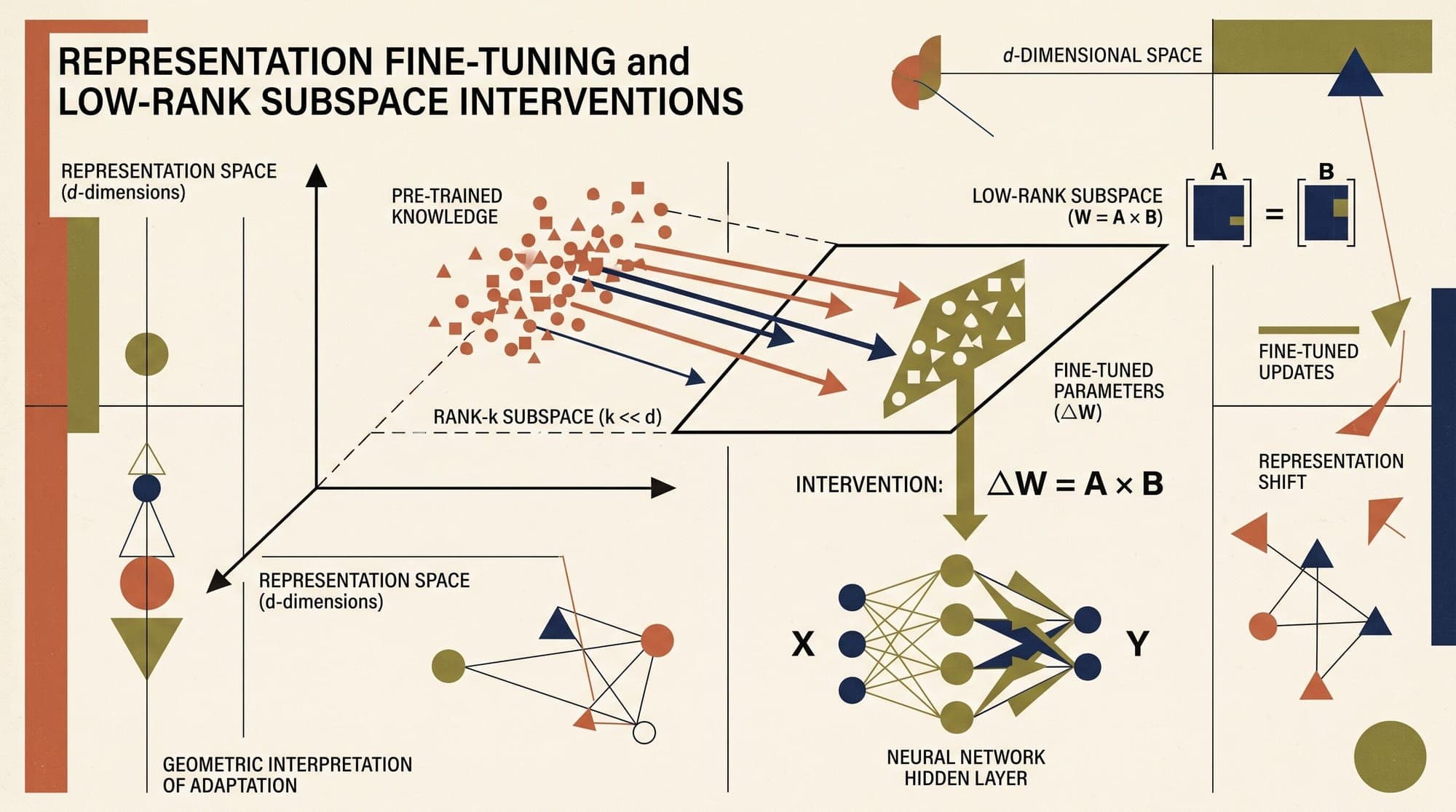
  10. Representation Fine-Tuning (ReFT): Mathematical Foundations, Low-Rank Linear Subspaces, Intervention Operations, and Parameter-Efficient Representation Editing in Large Language Models

    Representation Fine-Tuning (ReFT) introduces a parameter-efficient adaptation paradigm that operates directly on the hidden representations of frozen language models rather than updating or augmenting model weight matrices. Developed by researchers at Stanford University (Wu et al., 2024), ReFT leverages insights from mechanistic interpretability and causal abstraction to steer model behavior through learned low-rank subspace interventions. By editing internal activations at targeted sequence po

    AI
    6 min read
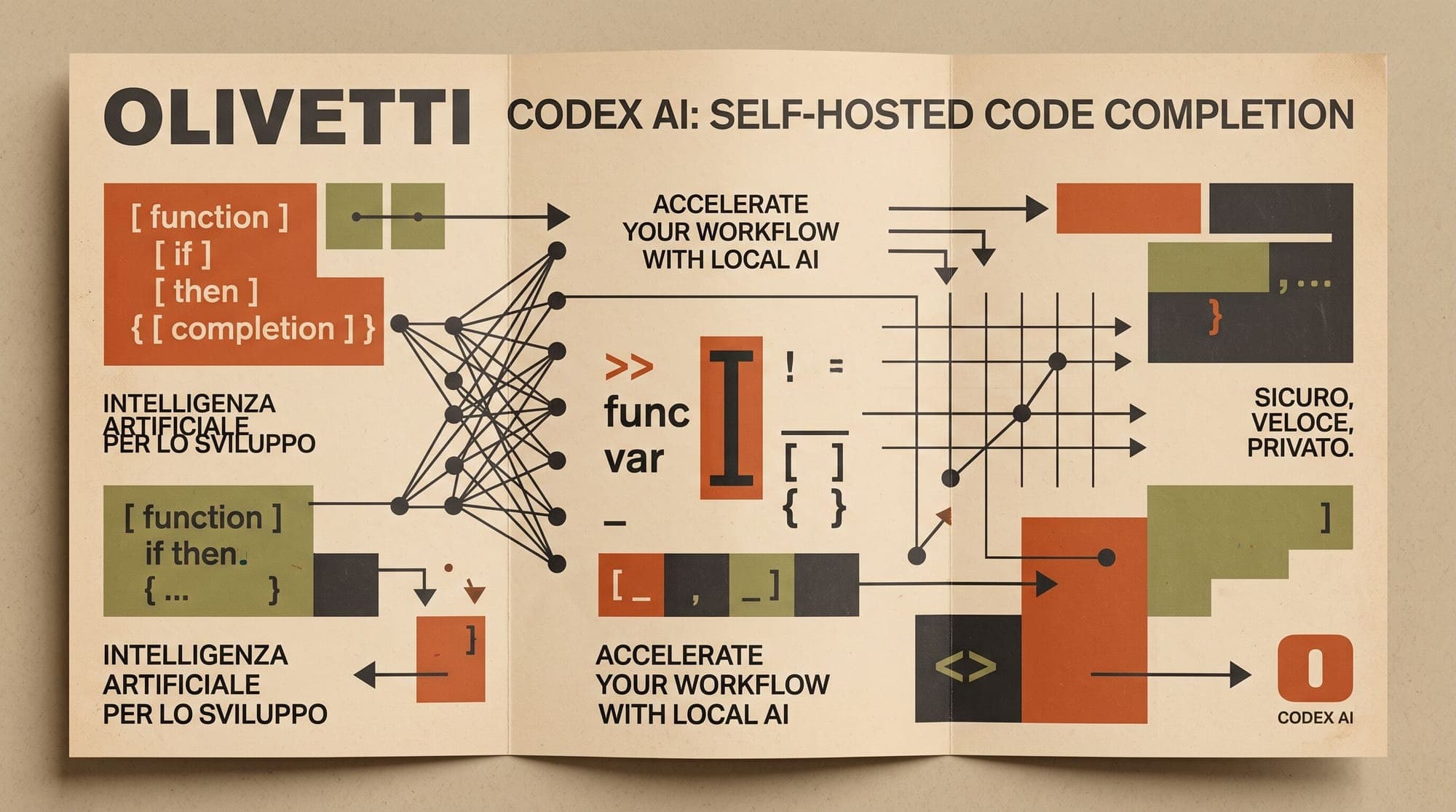
  11. Self-Hosted AI Code Completion Engines in Production: Comparing Tabby, Continue, Refact.ai, and Twinny Architecture, Fill-in-the-Middle Pipelines, AST Context Retrieval, and Serving Latency

    Deploying AI-assisted code completion within air-gapped environments, regulated enterprises, and privacy-conscious engineering teams requires decoupling developer tooling from third-party cloud APIs. While agentic coding systems focus on multi-turn planning and repository-wide refactoring with relaxed latency budgets, inline code completion operates under strict real-time constraints. Developers expect ghost-text suggestions to appear within 100 to 200 milliseconds of pausing keystrokes. Delive

    AI
    7 min read
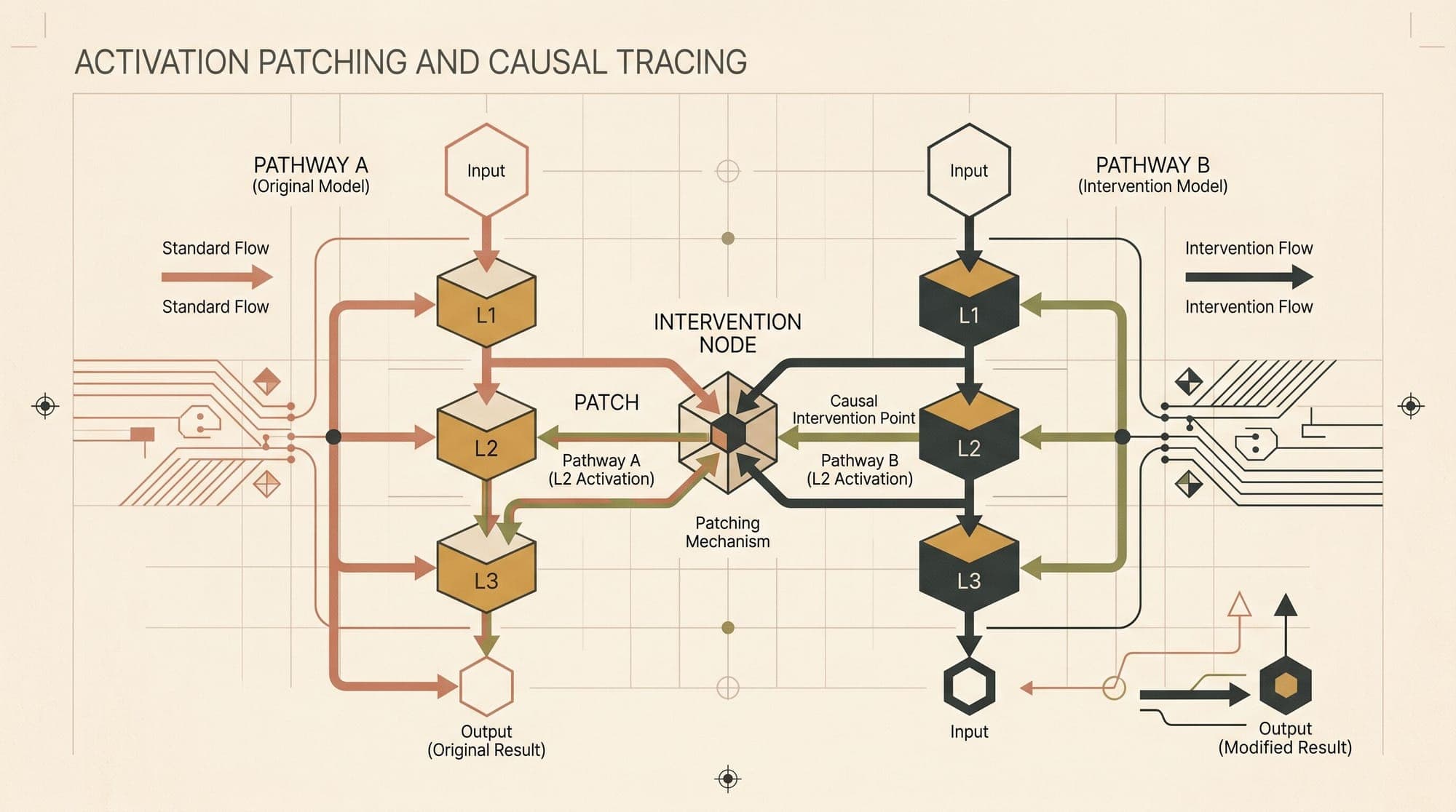
  12. Activation Patching and Causal Tracing: Mathematical Foundations, Counterfactual Interventions, and Circuit Discovery in Large Language Models

    Activation Patching and Causal Tracing: Mathematical Foundations, Counterfactual Interventions, and Circuit Discovery in Large Language Models Mechanistic interpretability aims to reverse-engineer the computational graphs implemented by trained neural networks into human-understandable algorithms. In autoregressive Transformer models, standard observational tools such as attention map visualization and linear probing often fail to distinguish between active computational paths and passive corre

    Education
    8 min read
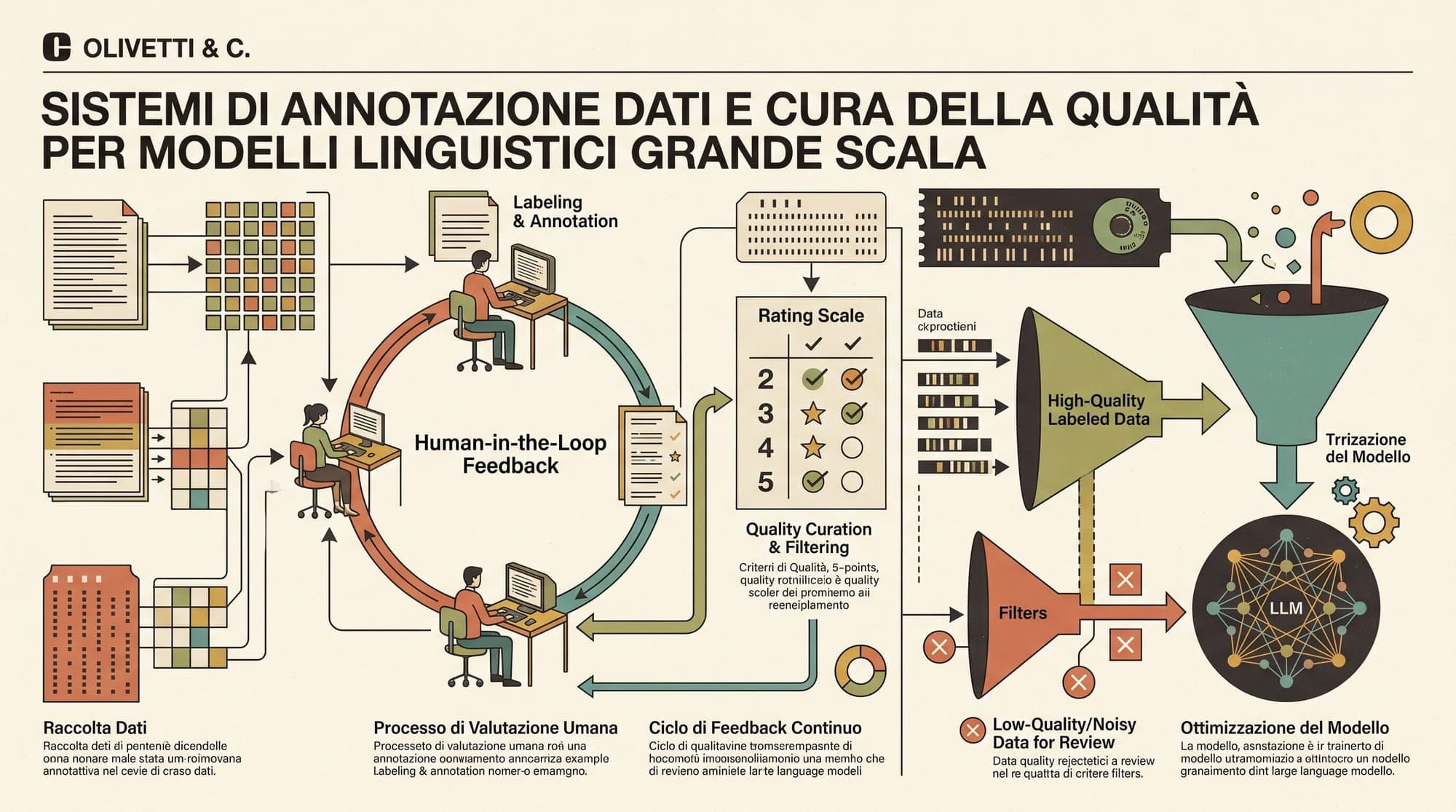
  13. Data Annotation and Preference Labeling Frameworks in Production: Comparing Argilla, Label Studio, Prodigy, and Cleanlab

    Modern frontier and open-weight large language models rely heavily on curated data pipelines across Supervised Fine-Tuning (SFT), Reinforcement Learning from Human Feedback (RLHF), and Direct Preference Optimization (DPO). While pre-training ingests trillions of uncurated tokens from the public web, post-training alignment requires high-precision preference rankings, instruction demonstrations, and safety boundary evaluations. Empirical research demonstrates that a few thousand meticulously cura

    AI
    6 min read
  14. Self-Play Fine-Tuning (SPIN): Mathematical Foundations, Two-Player Minimax Games, and Iterative Distribution Alignment

    Self-Play Fine-Tuning (SPIN): Mathematical Foundations, Two-Player Minimax Games, and Iterative Distribution Alignment Supervised Fine-Tuning (SFT) has served as the baseline method for converting pre-trained foundation models into instruction-following assistants. By training on curated prompt-response pairs $(x, y)$ via Maximum Likelihood Estimation (MLE), SFT aligns the model's next-token distributions with human demonstrations. However, standard SFT exhibits fundamental theoretical limitat

    AI
    10 min read
  15. Embedding and Reranker Serving Engines in Production: Comparing Hugging Face TEI, Infinity, FastEmbed, and vLLM

    Serving dense embedding and reranking models in production involves fundamentally different hardware and execution bottlenecks than autoregressive LLM text generation. While generative decoder models are memory-bandwidth-bound during single-token autoregressive decoding, embedding models (such as BGE-M3, ModernBERT, GTE-Qwen2, and Snowflake Arctic) and cross-encoder rerankers operate purely in encoder or forward-pass pooling mode. They are compute-bound and latency-critical. In retrieval-augmen

    AI
    6 min read
  16. Identity Preference Optimization (IPO): Mathematical Foundations, Overfitting in DPO, and Non-Parametric Preference Alignment

    Identity Preference Optimization (IPO) is a closed-form preference alignment algorithm for large language models developed by researchers at Google DeepMind. Introduced by Azar et al. (2023) in A General Theoretical Paradigm to Understand Learning from Human Preferences, IPO addresses a fundamental failure mode in Direct Preference Optimization (DPO): empirical and theoretical overfitting caused by unbounded surrogate losses and rigid Bradley-Terry preference assumptions. While DPO recasts rein

    AI
    8 min read
  17. Open-Source Text-to-Speech (TTS) Serving in Production: Comparing Kokoro-82M, F5-TTS, StyleTTS 2, and Fish Speech

    Deploying open-source text-to-speech (TTS) in production has shifted rapidly over the past year. Where teams previously defaulted to managed cloud APIs like ElevenLabs or OpenAI Audio due to the complexity and computational weight of self-hosted acoustic models, modern open-weight architectures offer distinct trade-offs across latency, zero-shot cloning fidelity, and inference cost. Selecting a self-hosted TTS engine requires navigating four fundamentally different architectural paradigms: ligh

    AI Voice
    6 min read
  18. Flash-Decoding: Mathematical Foundations, Split-KV Parallelism, Online Softmax Reduction, and Serving Latency Optimization

    Large language model inference consists of two distinct computational regimes: the compute-bound prefill phase and the memory-bandwidth-bound autoregressive decoding phase. While the prefill phase processes prompt tokens in parallel across dense matrix multiplication units, generation proceeds token by token. At each generation step, a single newly generated query vector must attend to the entire historical Key-Value (KV) cache stored in High-Bandwidth Memory (HBM). As context windows scale fro

    AI
    8 min read
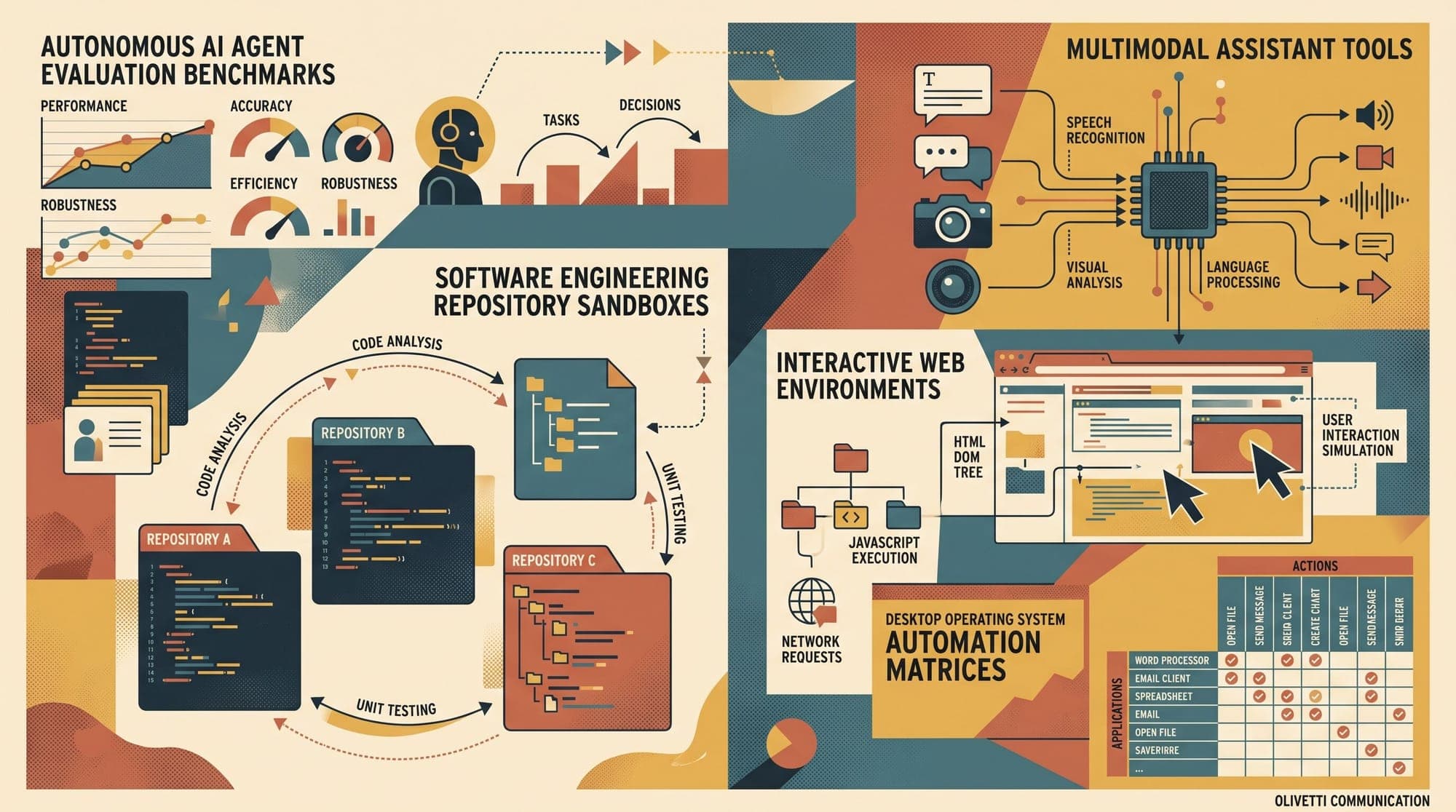
  19. Agent Evaluation Benchmarks in Production: Comparing SWE-bench, GAIA, WebArena, and OSWorld

    Evaluating autonomous AI agents requires a fundamental departure from static language model evaluation. While benchmarks like MMLU, GSM8K, and HumanEval measure single-turn next-token prediction on fixed prompts, they fail to evaluate the closed-loop failure modes of autonomous agents. Real-world agents must formulate multi-step plans, execute tool calls, ingest dynamic environment feedback, recover from syntax and runtime errors, and mutate external state across long interaction trajectories.

    AI
    7 min read
  20. Maximal Update Parametrization (muP): Mathematical Foundations, Infinite-Width Scaling Limits, and Zero-Shot Hyperparameter Transfer in LLM Pre-Training

    Pre-training large language models requires optimizing sensitive hyperparameters, including learning rate, weight initialization variance, Adam momentum coefficients, and learning rate schedules. In standard neural network implementations, optimal hyperparameters change whenever model dimensions expand. A learning rate tuned on a 125-million parameter model frequently destabilizes or underperforms when applied directly to a 13-billion or 70-billion parameter architecture. Because grid-searching

    AI
    5 min read