Machine Learning8 articles

Machine Learning

Articles

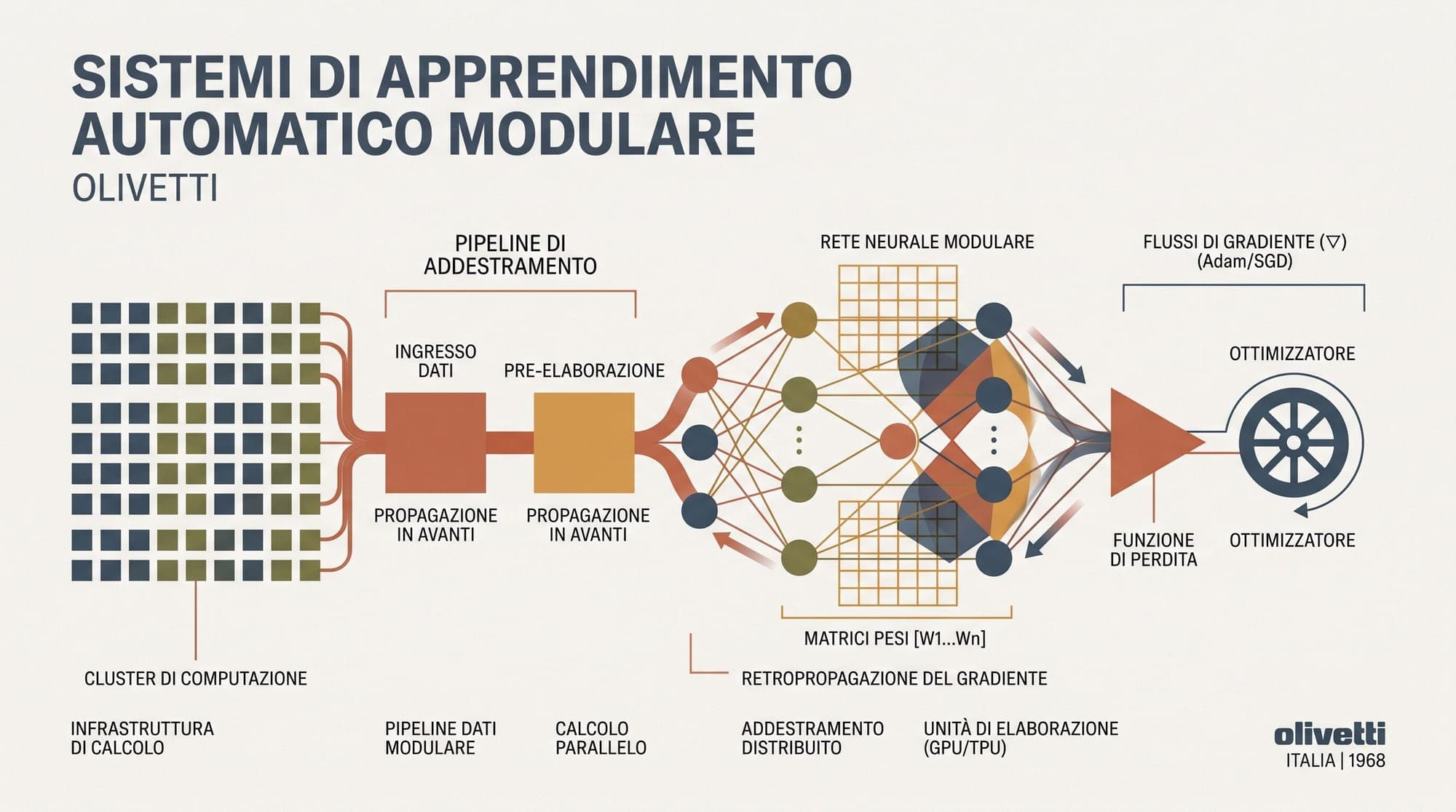
  • LLM Fine-Tuning Frameworks in Production: Unsloth vs. Axolotl vs. LLaMA-Factory vs. Torchtune Architecture, Throughput, and Distributed Scaling

    Modern post-training pipelines have moved beyond basic training scripts. As model parameter counts, context windows, and alignment techniques expand, the choice of fine-tuning framework directly dictates GPU memory overhead, token throughput, and developer iteration speed. Four open-source frameworks dominate the enterprise fine-tuning landscape: Unsloth, Axolotl, LLaMA-Factory, and Meta's Torchtune. While all four orchestrate parameter-efficient fine-tuning (PEFT) and full parameter adaptation

    1 min
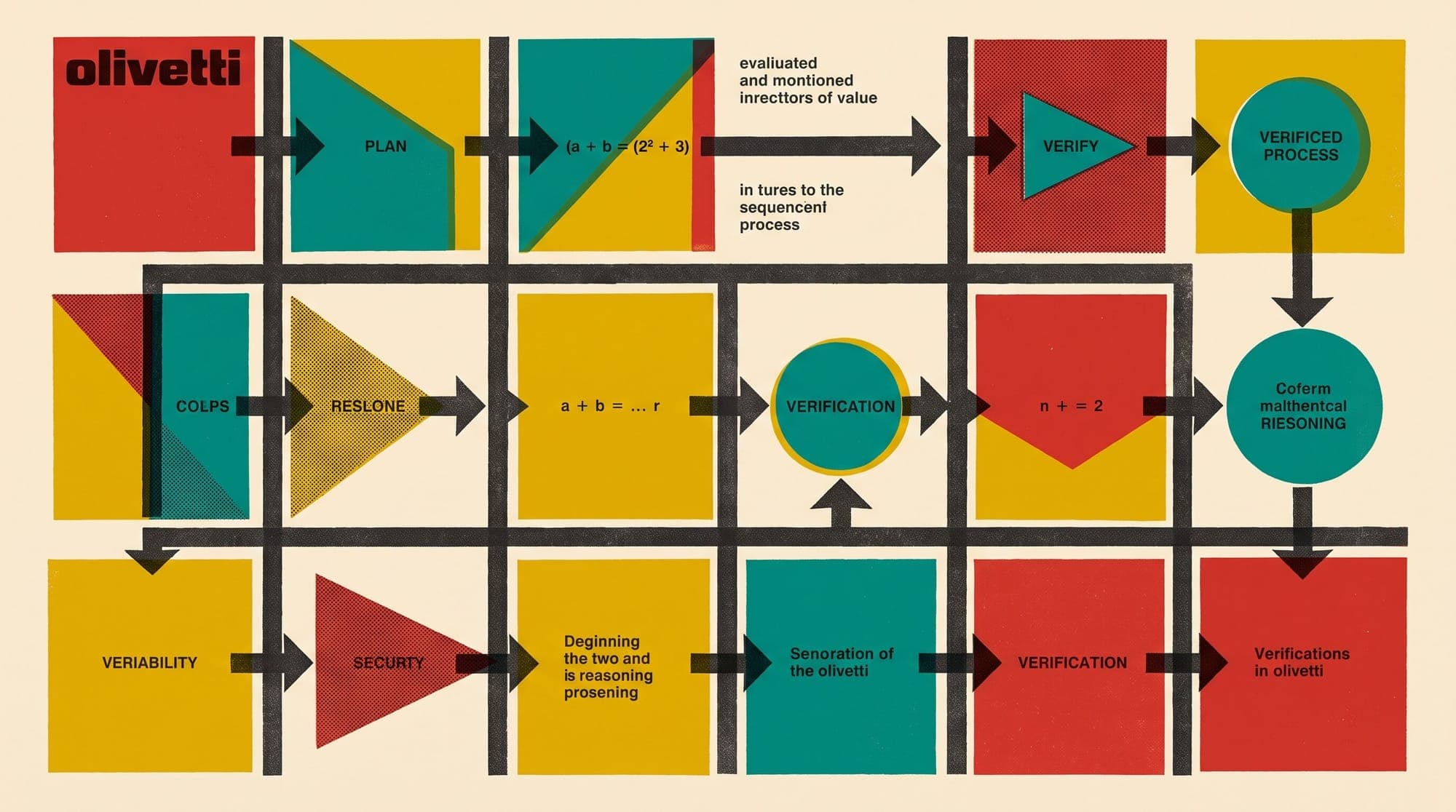
  • Process Reward Models: How Step-by-Step Supervision and Search Drive LLM Reasoning

    When large language models tackle complex multi-step reasoning (such as formal mathematics, algorithm synthesis, or multi-hop logic), evaluating only the final answer creates a severe credit assignment bottleneck. An outcome-based verifier can confirm whether a final numerical result is correct, but it cannot determine whether the underlying derivation was logically sound or reached the right answer through compounding hallucinations and lucky cancellations. Process Reward Models (PRMs) resolve

    1 min
  • Synthetic Data Pipelines for LLM Post-Training: Generation, Quality Filtering, Deduplication, and Contamination Auditing

    As frontier model post-training expands beyond the limits of human-annotated datasets, synthetic data generation (SDG) has become the core driver of alignment. Public disclosures from major research labs confirm that synthetic data now comprises the vast majority of tokens used in supervised fine-tuning (SFT) and preference alignment. For example, NVIDIA reported that over 98% of the data used in the alignment pipeline for Nemotron-4 340B was synthetically generated. Similarly, models across the

    1 min
  • Group Relative Policy Optimization (GRPO): How Eliminating Value Models Scaled LLM Reasoning

    Post-training reinforcement learning (RL) has become the primary mechanism for scaling reasoning capabilities in large language models. While early reinforcement learning from human feedback (RLHF) focused on conversational style and safety alignment, extending RL to multi-step reasoning domains such as mathematics, algorithmic coding, and formal logic exposed critical limitations in classical algorithms. Standard Proximal Policy Optimization (PPO), long the foundational algorithm for instructi

    1 min
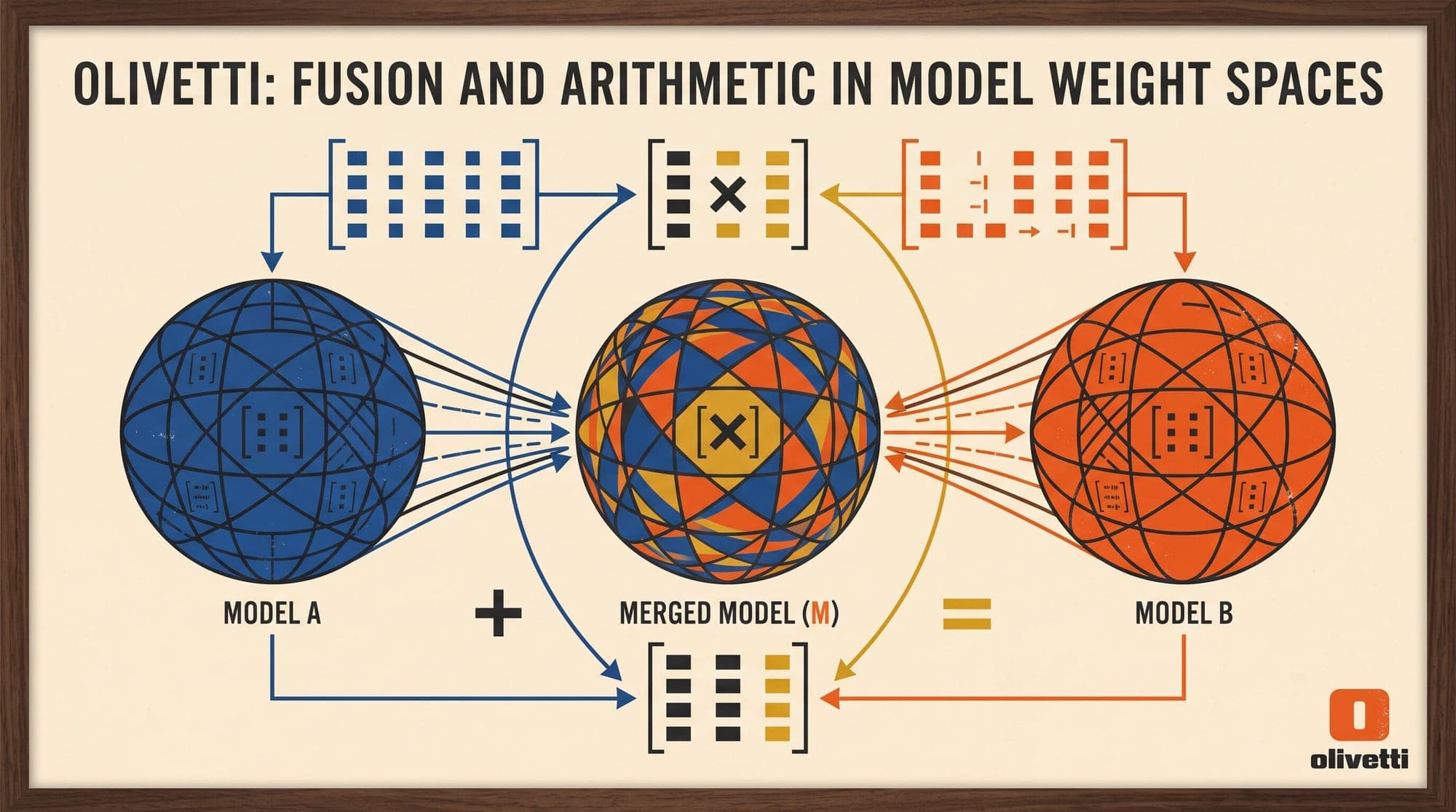
  • Model Merging in Large Language Models: How Task Arithmetic, TIES, and DARE Combine Checkpoints Without Training

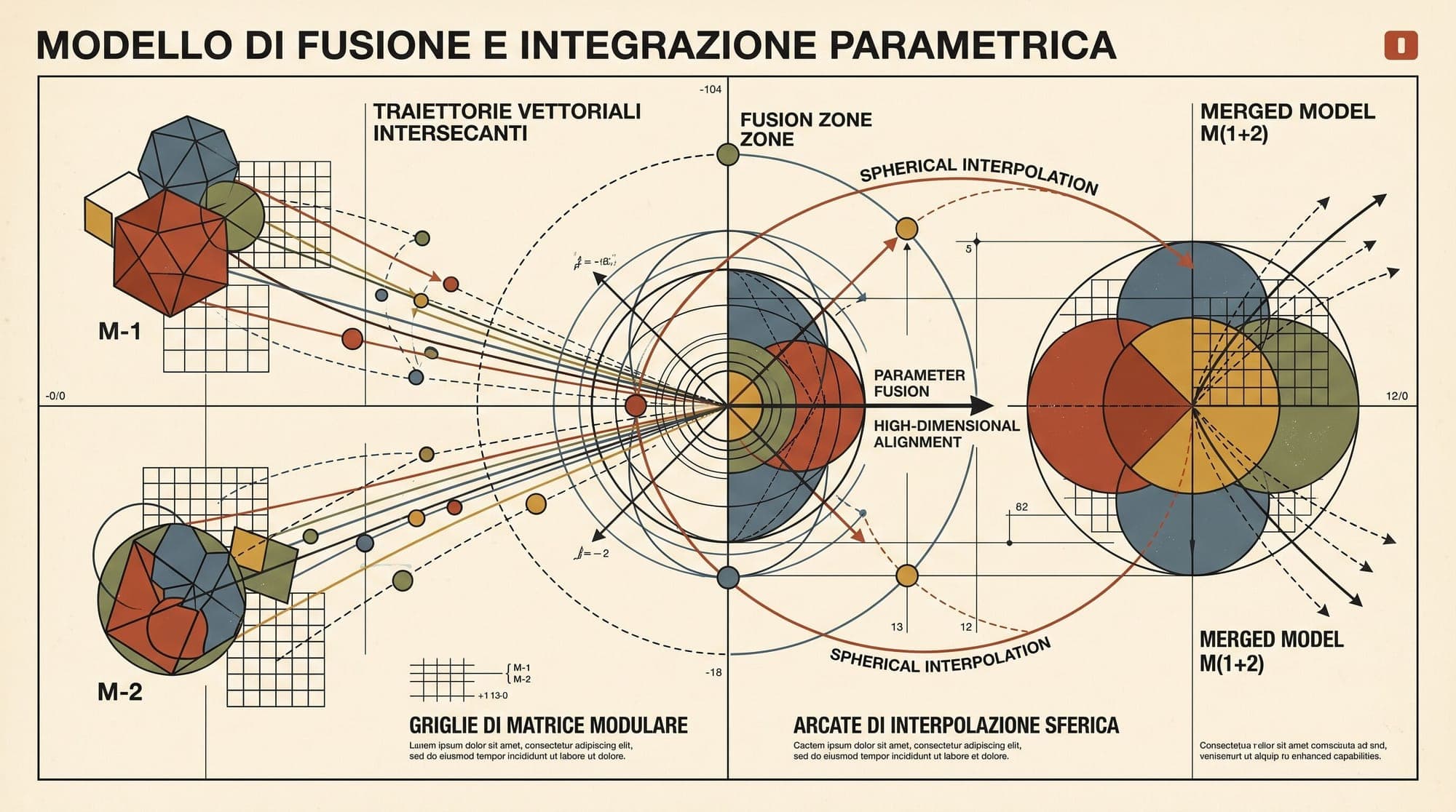
    Fine-tuning foundation models for specialized tasks typically produces isolated checkpoints. A model adapted for mathematical reasoning retains high numerical precision but often degrades in general dialogue or code generation. Traditionally, unifying these capabilities required multi-task training: gathering mixed datasets, re-running optimization across multiple GPUs, and managing gradient conflicts during backpropagation. Model merging provides an alternative paradigm. By operating directly

    1 min
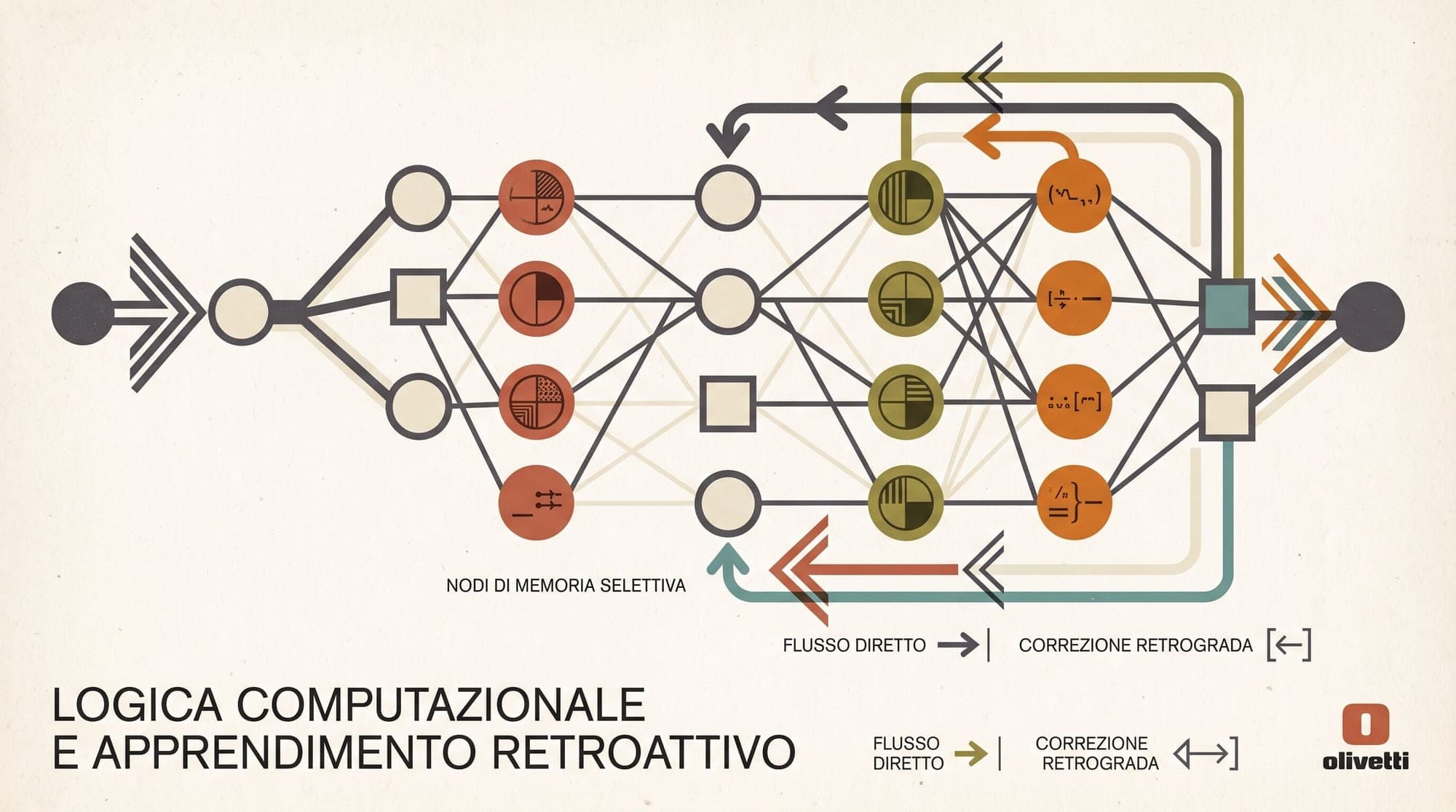
  • Reinforcement Learning from Human Feedback (RLHF): How Reward Models, PPO, and KL Penalties Align LLMs

    Pre-training large language models on internet-scale text corpora equips them with general linguistic patterns, world knowledge, and broad reasoning heuristics. However, pre-training optimizes next-token prediction: $\mathbb{E}_{x \sim \mathcal{D}} [\log P_\theta(x_t \mid x_{<t})]$. A base model trained purely on next-token prediction reflects the entirety of its web corpus, reproducing hallucinations, toxic phrasing, incorrect code, and unhelpful conversational patterns. To transform an uncons

    1 min
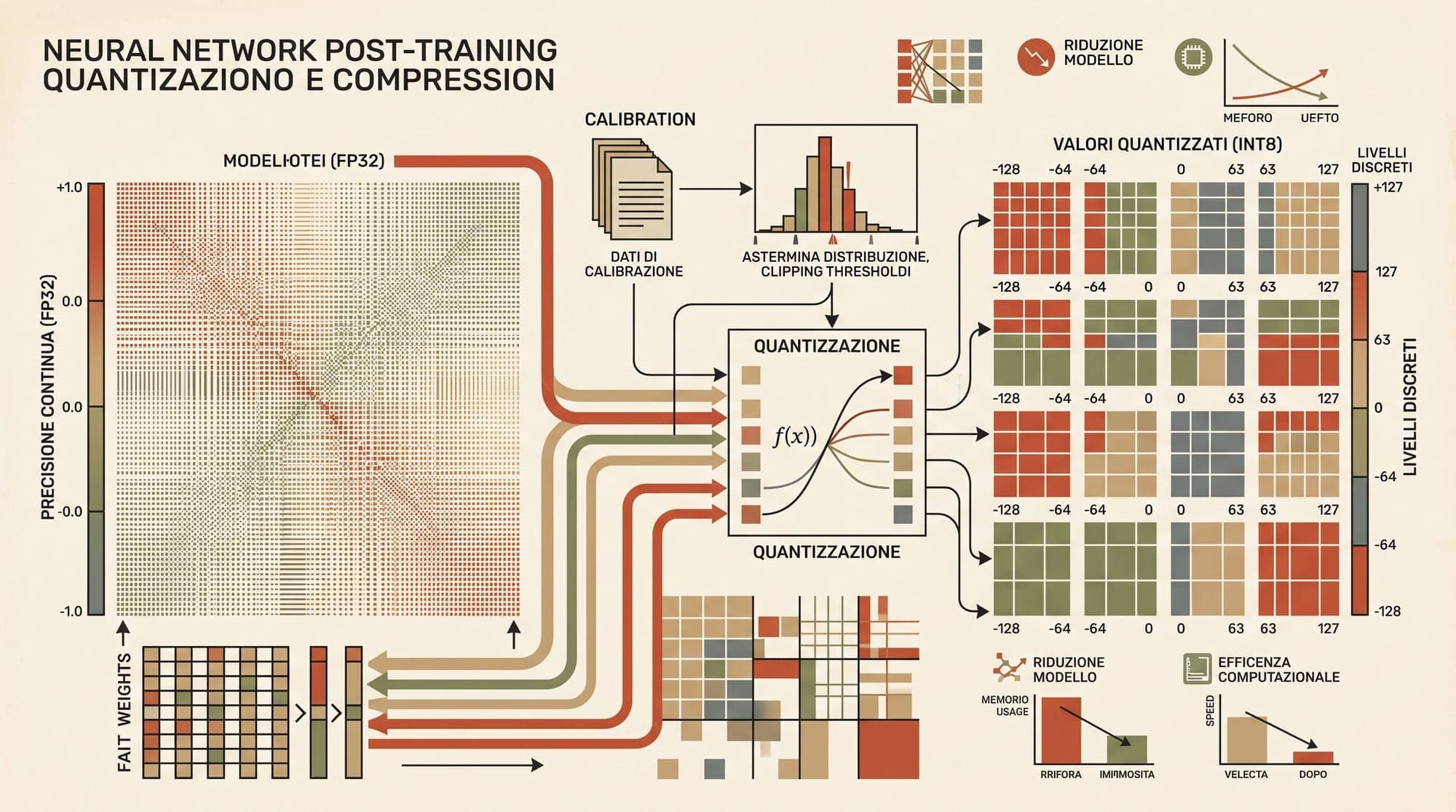
  • Weight Quantization in Large Language Models: How GPTQ, AWQ, and SmoothQuant Compress Neural Networks

    Weight Quantization in Large Language Models: How GPTQ, AWQ, and SmoothQuant Compress Neural Networks Serving large language models in production requires balancing GPU memory footprint, memory bandwidth limits, and computational throughput. A standard 70-billion parameter transformer stored in 16-bit floating-point (FP16 or BF16) requires roughly 140 gigabytes of high-bandwidth memory (HBM) merely to hold its parameters. This memory footprint exceeds the capacity of a single 80GB GPU before ac

    1 min
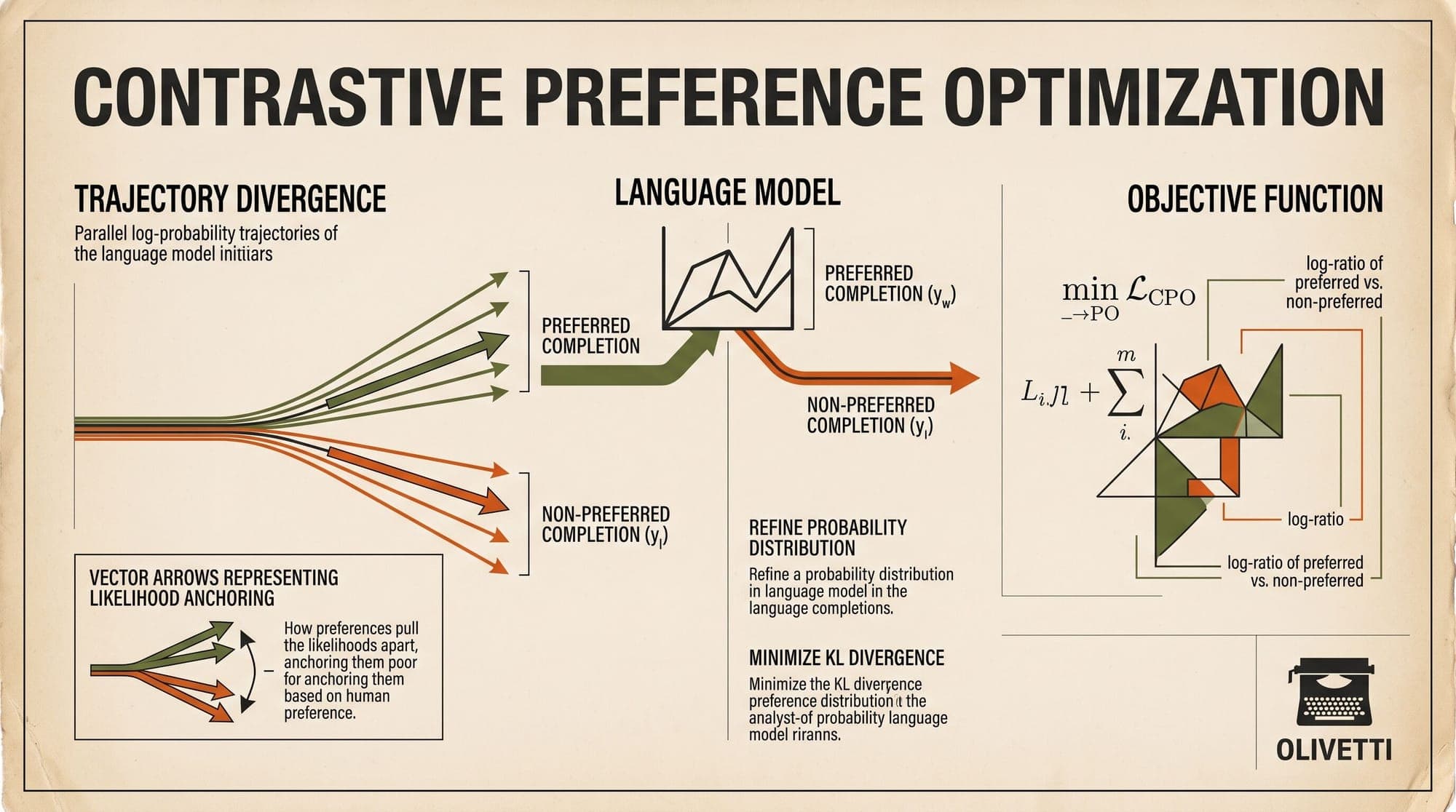
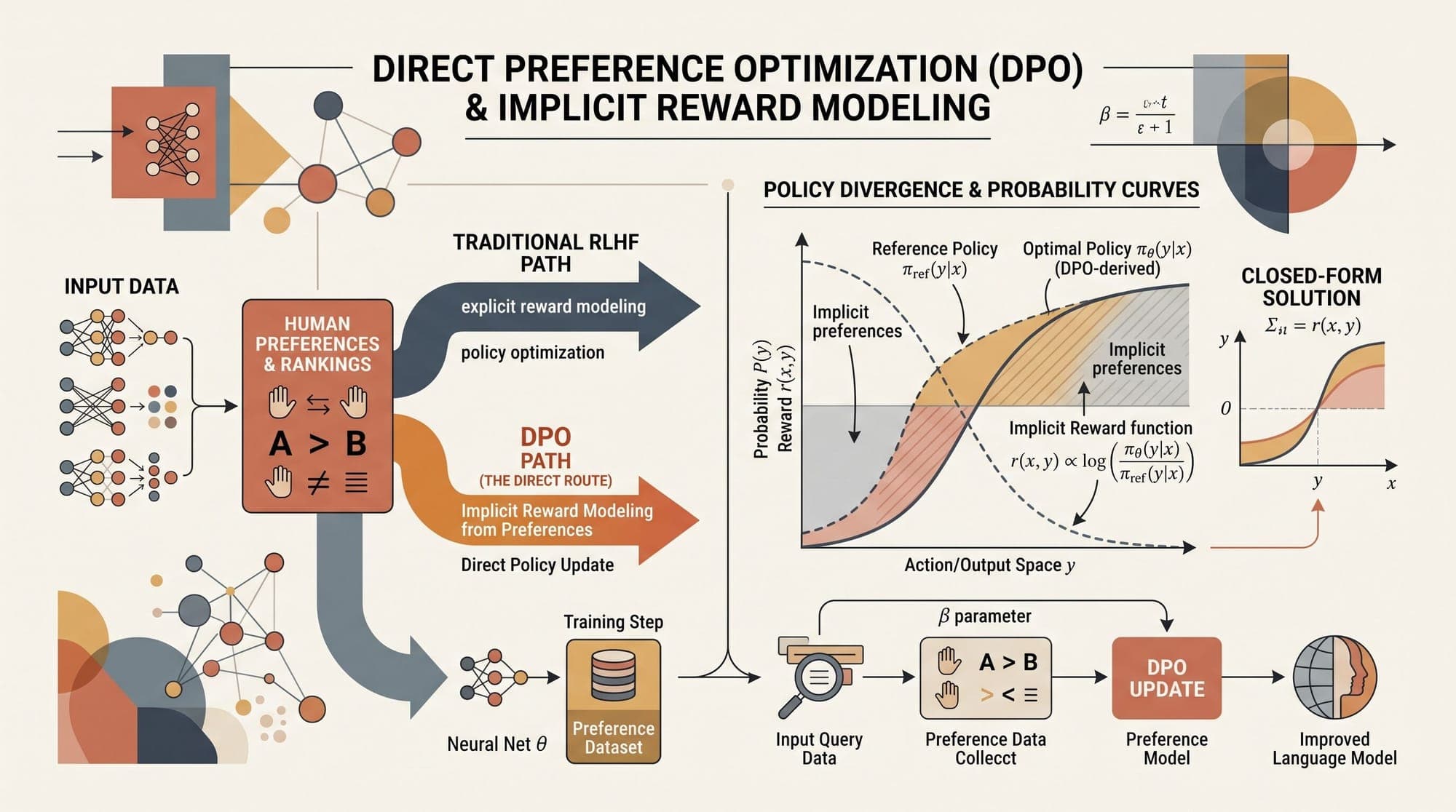
  • Direct Preference Optimization: How Implicit Reward Modeling Simplified LLM Alignment

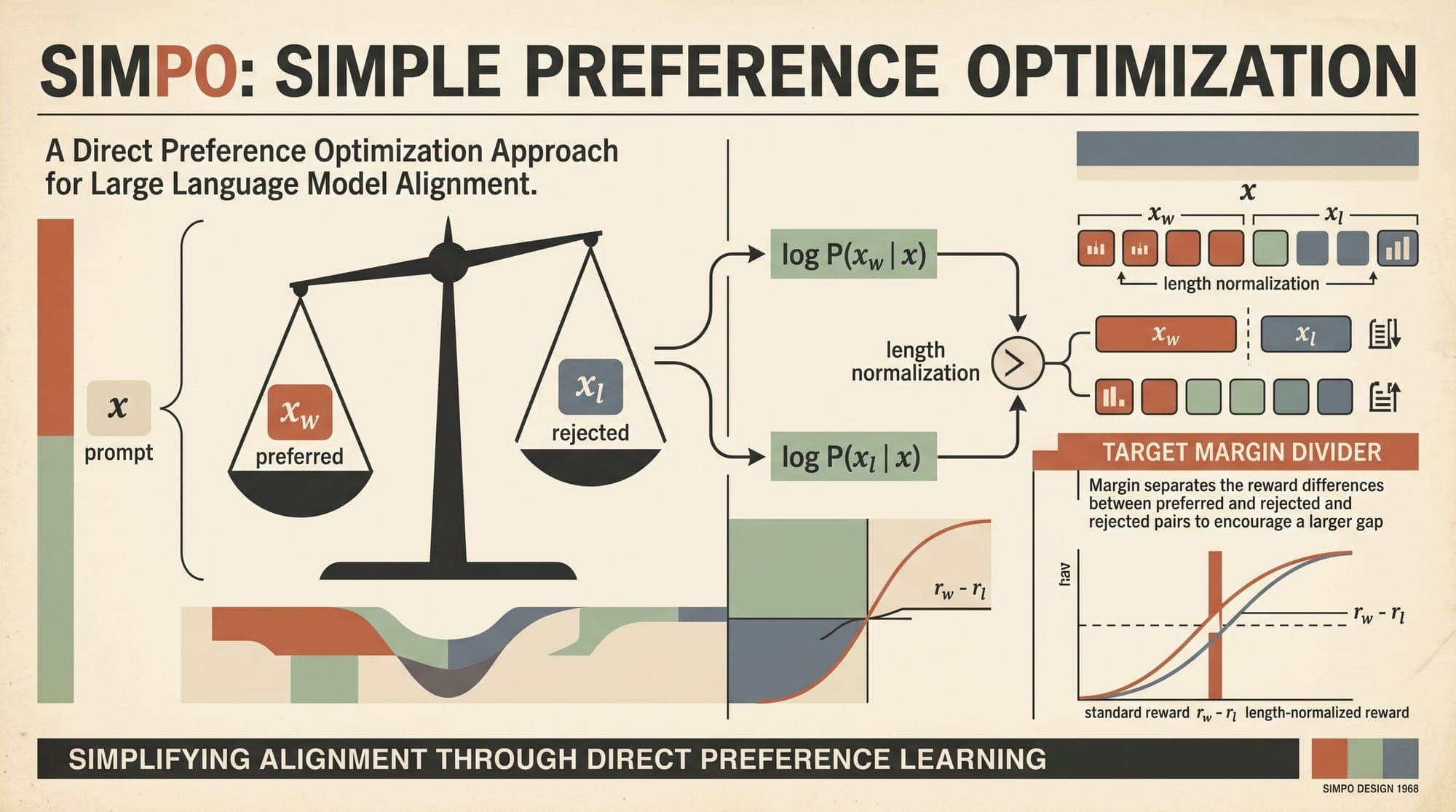
    Direct Preference Optimization (DPO) has emerged as a cornerstone of post-training alignment across modern open and proprietary language models, including Meta's Llama series, Mistral, and Qwen. While early alignment pipelines relied on complex reinforcement learning loops with separate reward models, DPO reformulates the preference optimization problem into a single, closed-form classification objective. By demonstrating that a language model implicitly defines its own reward function, DPO eli

    1 min