Subscribe
Topic / page 11

LLM

Articles, page 11

201-220
  1. Agentic Web Search and Retrieval APIs in Production: Comparing Tavily, Exa, Brave Search API, and Firecrawl Architecture, Neural Reranking, Markdown Extraction, and Serving Economics

    Autonomous artificial intelligence agents and retrieval-augmented generation (RAG) pipelines rely on live web data to ground their reasoning, verify factual assertions, and inspect external systems. However, traditional human-oriented search APIs such as Google Custom Search or Bing Web Search were engineered for browser display rather than direct language model consumption. They return paginated link lists, raw HTML payloads laden with boilerplate, tracking scripts, navigation bars, and cookie

    AI
    6 min read
  2. Anthropic Rolls Out Claude for Teachers to K-12 Schools and Districts with Free Enterprise Tier and FERPA Compliance

    Anthropic has expanded its Claude for Teachers program from individual educator access to a centralized, district-wide Enterprise offering for K-12 public and private schools. Qualifying educational organizations that enroll before June 30, 2027 receive one year of free enterprise access across their instructional and administrative staff. The update introduces centralized administrative controls, domain capture, single sign-on (SSO), role-based access control, and dedicated K-12 terms aligned

    AI
    2 min read
  3. Reranking Models and Late-Interaction Frameworks in Production RAG: Comparing Cohere Rerank 3.5, BGE-Reranker-v2, FlashRank, and ColBERTv2 Architecture, Cross-Encoder Latency, MaxSim Compression, and Retrieval Economics

    In production Retrieval-Augmented Generation (RAG), relying solely on first-stage bi-encoder dense embeddings or lexical BM25 search creates a structural information bottleneck. First-stage retrieval compresses an entire document passage into a single fixed-dimensional vector (such as 768, 1024, or 1536 dimensions) or an inverted term index. This independent encoding decouples the query from the passage during indexing, eliminating token-level cross-attention and causing subtle semantic nuances,

    AI
    11 min read
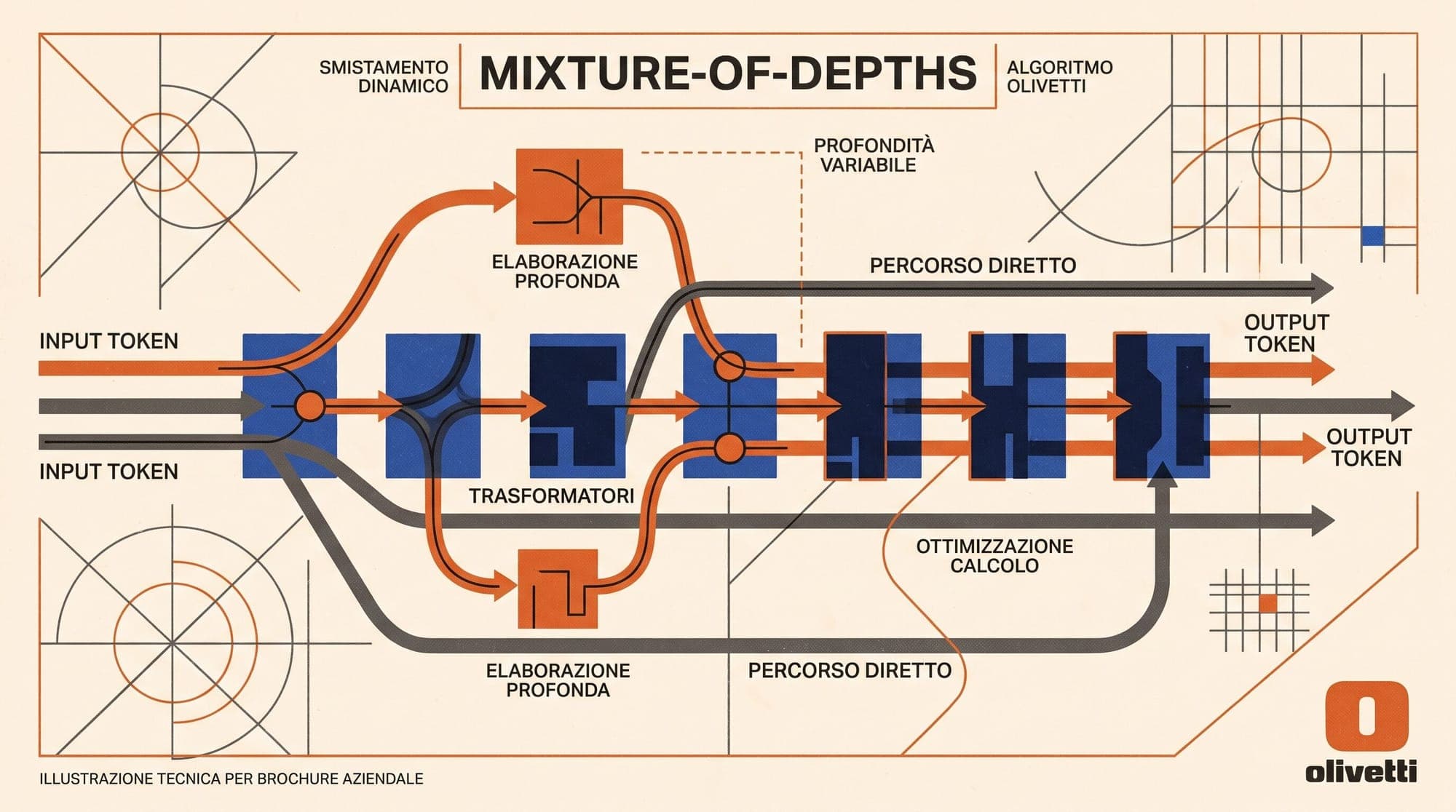
  4. Mixture-of-Depths (MoD): Mathematical Foundations, Dynamic Token-Level Compute Routing, Top-k Capacity Budgeting, and FLOP-Optimal Transformer Architectures

    Standard autoregressive Transformers allocate an identical compute budget to every token in a sequence. Regardless of whether a token represents a trivial punctuation mark, a common grammatical function word, or a complex semantic reasoning step, the model applies the exact same sequence of multi-head self-attention and multilayer perceptron (MLP) operations across all $L$ layers. In Mixture-of-Depths: Dynamically allocating compute in transformer-based language models, researchers at Google De

    AI
    6 min read
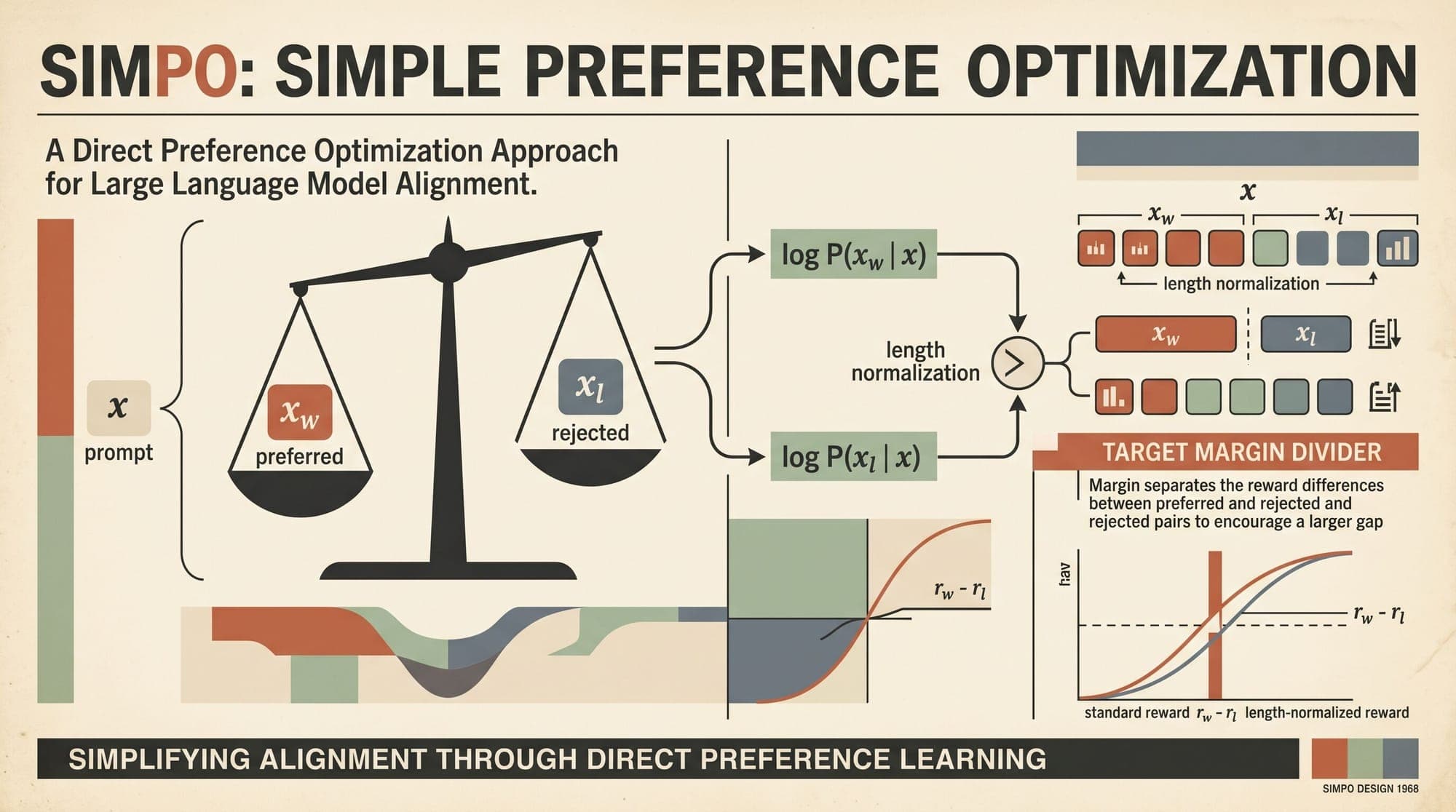
  5. Simple Preference Optimization (SimPO): Mathematical Foundations, Reference-Free Implicit Reward, Length Normalization, and Target Margin Dynamics

    Simple Preference Optimization (SimPO): Mathematical Foundations, Reference-Free Implicit Reward, Length Normalization, and Target Margin Dynamics Post-training preference alignment has become the definitive step in transforming raw pretrained large language models into instruction-following assistants. While Reinforcement Learning from Human Feedback (RLHF) via Proximal Policy Optimization (PPO) established the initial standard, its requirement to maintain actor, critic, reference, and reward

    AI
    11 min read
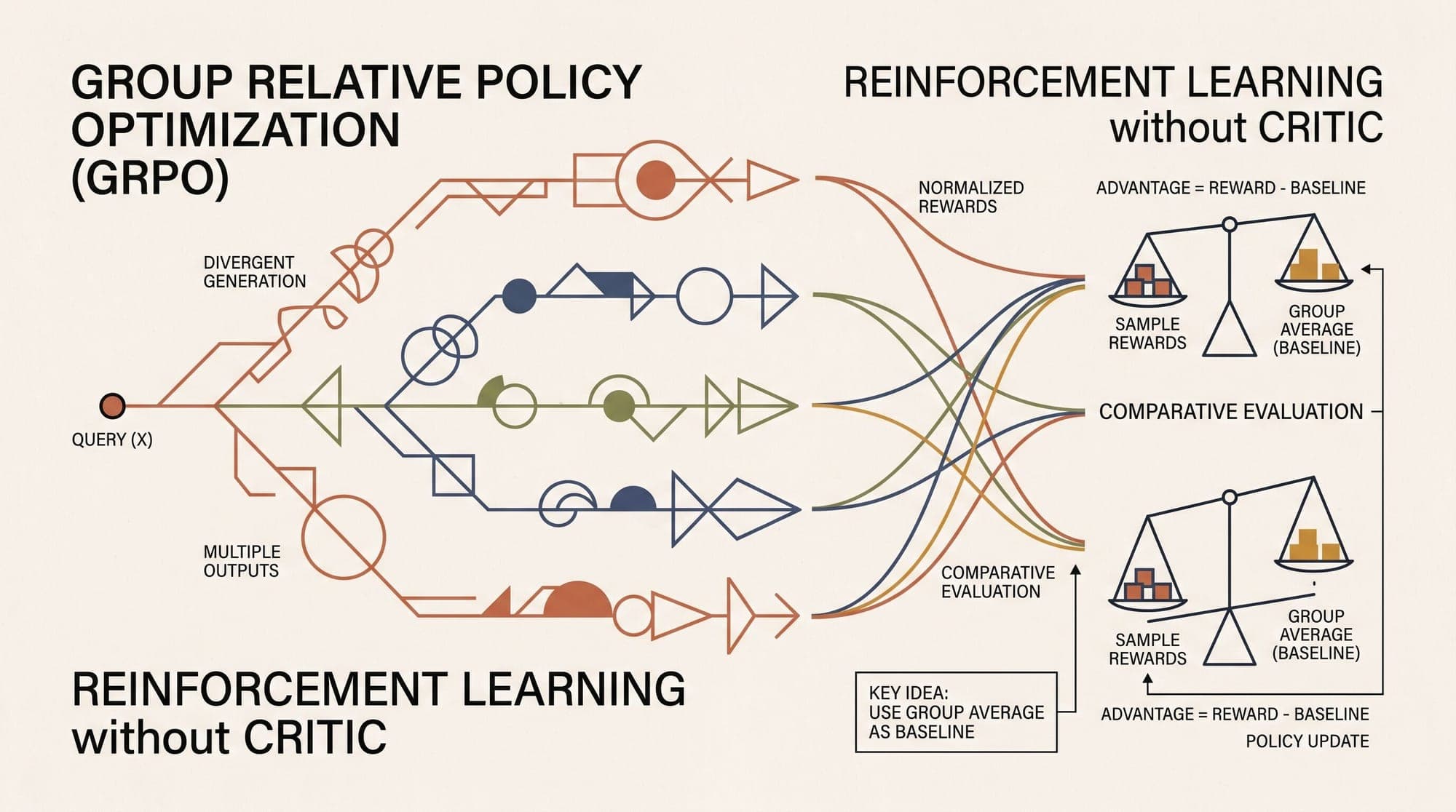
  6. Group Relative Policy Optimization (GRPO): Mathematical Foundations, Critic-Free Advantage Estimation, Group Reward Normalization, and Reinforcement Learning with Verifiable Rewards

    Reinforcement learning from human and verifiable feedback has become the central paradigm for unlocking complex reasoning, mathematical problem solving, and autonomous code synthesis in frontier large language models. While early post-training pipelines relied heavily on Proximal Policy Optimization (PPO) or offline preference algorithms like Direct Preference Optimization (DPO), both methodologies present structural bottlenecks when scaling to long-horizon reasoning. PPO requires maintaining a

    AI
    11 min read
  7. Tencent Open-Sources Hy4-Preview: 770B MoE Architecture with 1M Context

    Tencent has released the open-weights preview of its next-generation foundation model, Hy4-preview, under the Apache 2.0 license. The release scales the organization's Mixture-of-Experts (MoE) line to 770 billion total parameters, activating 49 billion parameters per token across a native 1-million-token context window. Weights have been published across Hugging Face, ModelScope, GitCode, and GitHub, alongside managed API availability on Tencent Cloud TokenHub and OpenRouter. Update, October 2

    AI
    2 min read
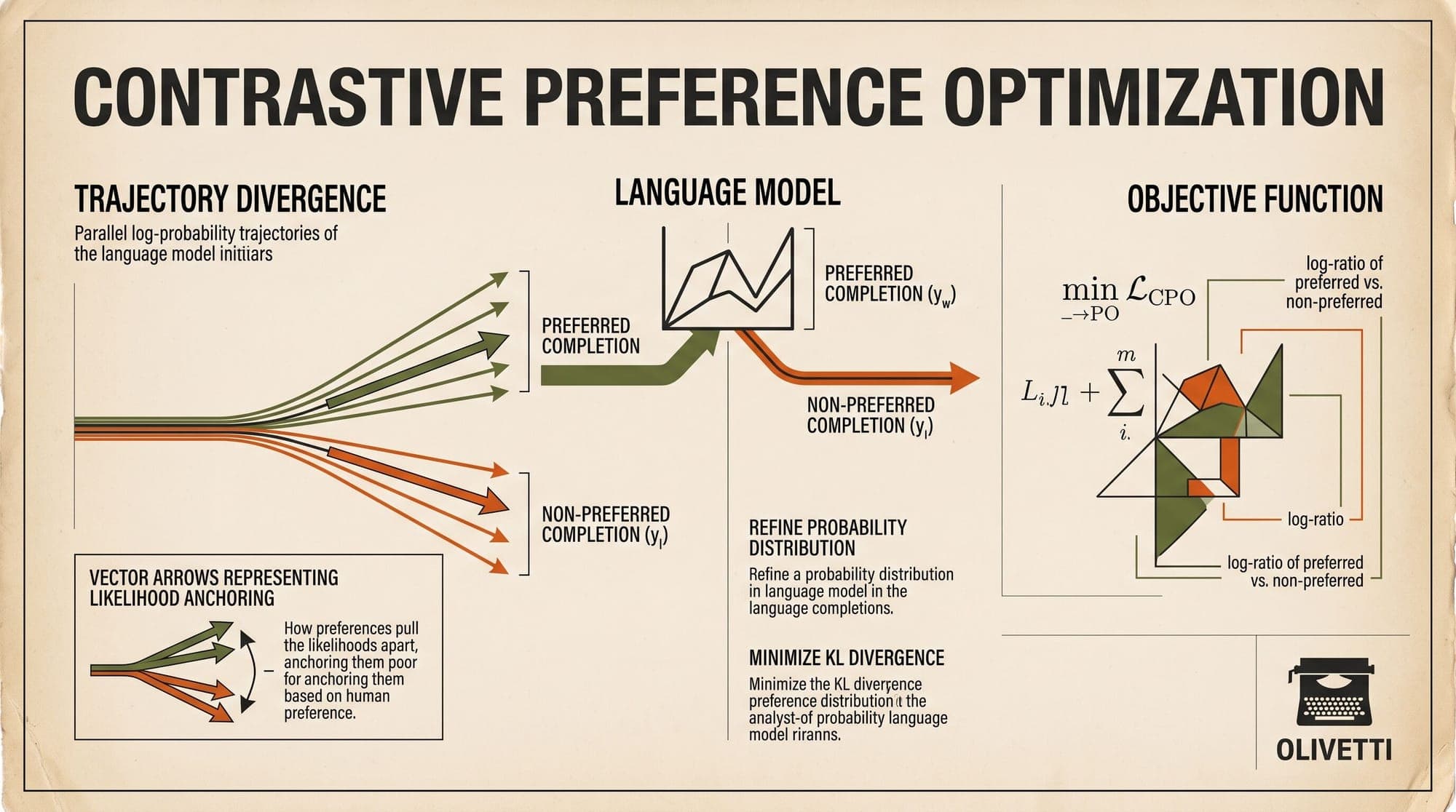
  8. Contrastive Preference Optimization (CPO): Mathematical Foundations, Direct Likelihood Regularization, Out-of-Distribution Error Bounds, and Non-Degenerate Policy Alignment

    Supervised fine-tuning (SFT) and preference alignment represent the standard two-stage training paradigm for post-training large language models. While SFT establishes foundational task adherence by minimizing cross-entropy loss against target references, it suffers from two structural limitations: it cannot surpass the quality ceiling of its training demonstrations, and it lacks an explicit mechanism to penalize near-correct outputs that contain subtle hallucinations or omissions. Direct Prefe

    AI
    11 min read
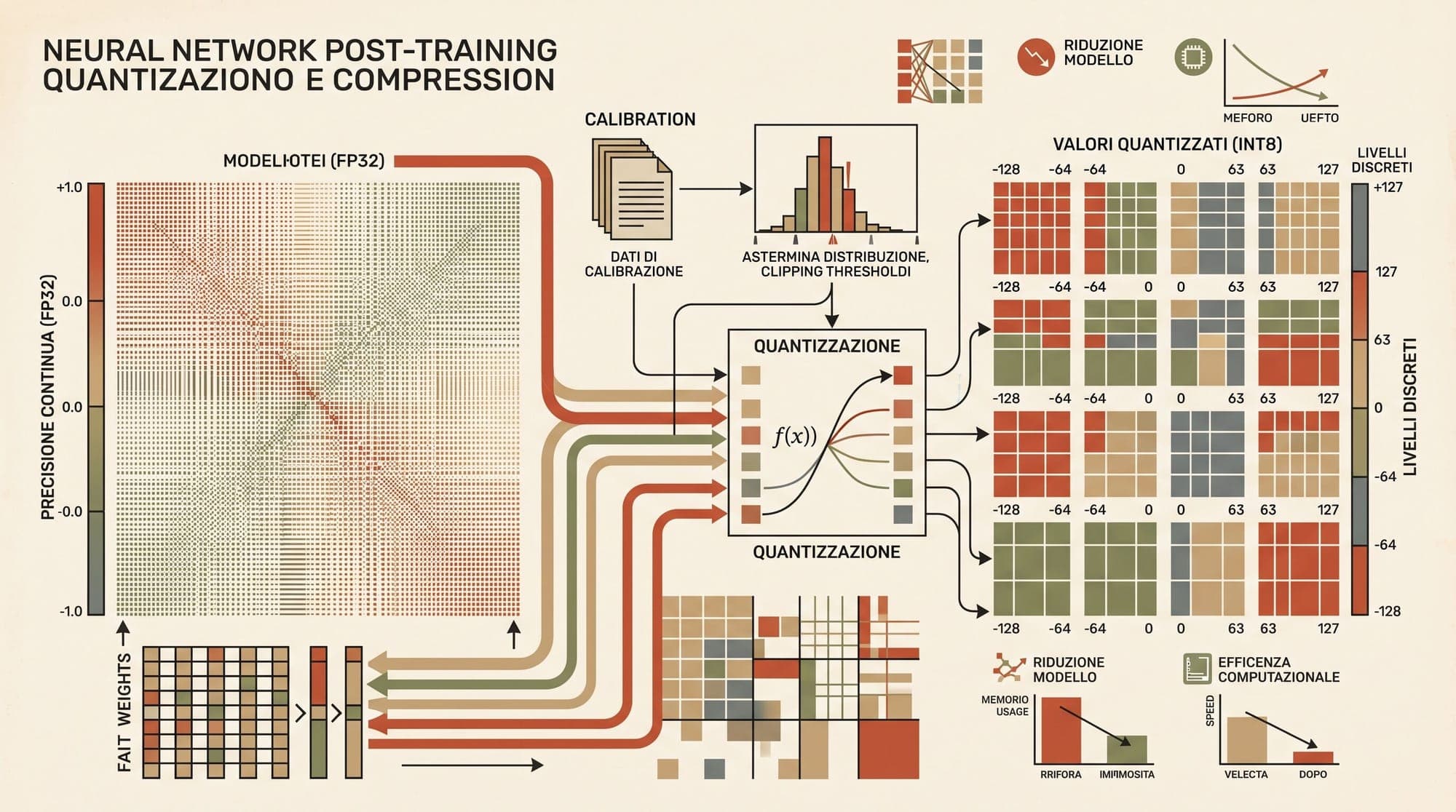
  9. Post-Training Quantization Toolkits in Production: Comparing AutoAWQ, AutoGPTQ, bitsandbytes, and llm-compressor Architecture, Calibration Profiling, Kernel Execution, and Serving Economics

    Large language model deployment in high-concurrency production environments is governed primarily by memory bandwidth and hardware economics. In standard autoregressive decoding, memory traffic dominates computation: for every token generated, every parameter of the model must be loaded from GPU High Bandwidth Memory (HBM) into SRAM and tensor cores. Serving a 70-billion parameter model in 16-bit precision requires at least 140 GB of VRAM solely for model weights, necessitating multi-GPU tensor

    LLM
    9 min read
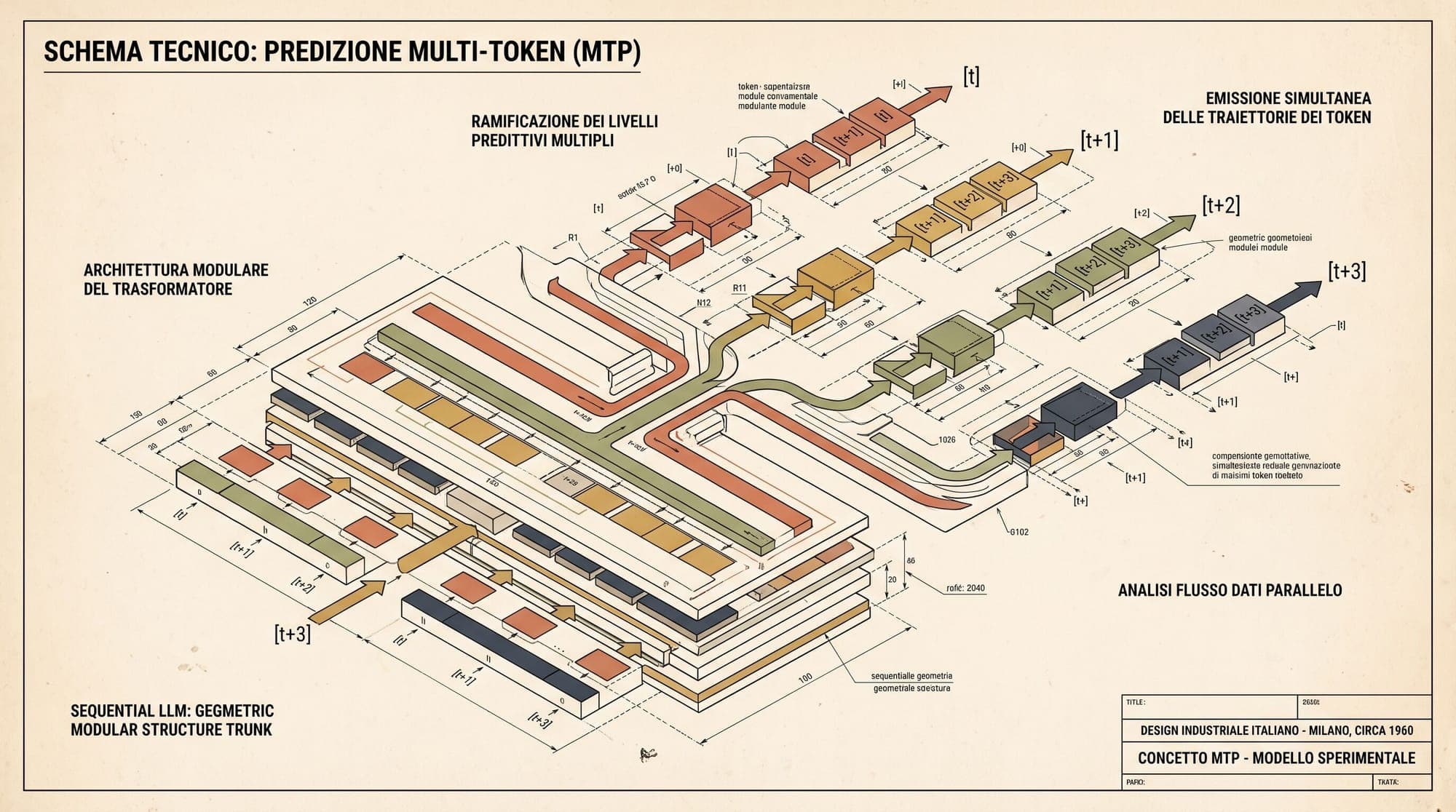
  10. Multi-Token Prediction (MTP): Mathematical Foundations, Sequential Latent Stacking, Auxiliary Loss Schedules, and Speculative Inference Acceleration

    Multi-Token Prediction (MTP): Mathematical Foundations, Sequential Latent Stacking, Auxiliary Loss Schedules, and Speculative Inference Acceleration Autoregressive language models have traditionally been trained under a single-token objective: predicting the immediate next token $x_{t+1}$ given the causal context $x_{1:t}$. While this next-token prediction (NTP) paradigm scales predictably with parameter count and dataset volume, it suffers from severe structural limitations. NTP optimizes excl

    AI
    13 min read
  11. Activation Checkpointing and Selective Rematerialization: Mathematical Foundations, Sub-Linear Memory Scaling, Recomputation Trade-Offs, and Megatron-LM Attention Partitioning

    Activation Checkpointing and Selective Rematerialization: Mathematical Foundations, Sub-Linear Memory Scaling, Recomputation Trade-Offs, and Megatron-LM Attention Partitioning Training modern large language models requires orchestrating hundreds of billions of parameters across distributed GPU clusters. While parameter counts and optimizer states are fixed for a given model architecture, the activation memory generated during forward passes scales directly with sequence length, batch size, and

    AI
    10 min read
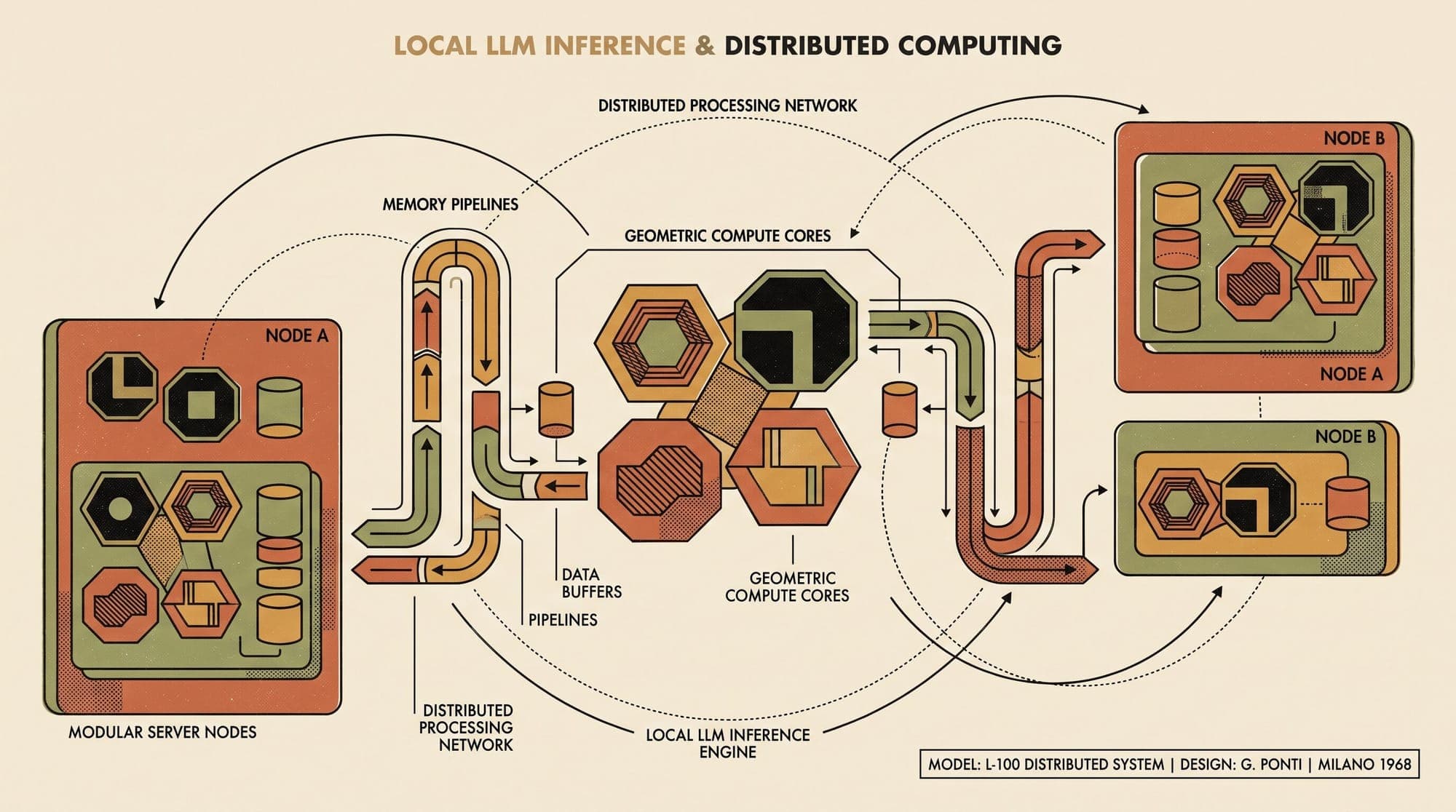
  12. Local LLM Inference Frameworks in Production: Comparing llama.cpp, Ollama, Apple MLX, and Exo Distributed Clusters

    The deployment landscape for large language models is bifurcating. While datacenter workloads rely on high-throughput continuous batching engines such as vLLM and TensorRT-LLM, local and edge deployments operate under fundamentally different physical constraints. On developer workstations, embedded hardware, and private office clusters, inference is rarely bound by compute saturation across thousands of concurrent requests. Instead, it is constrained by memory bandwidth, local VRAM capacity, hos

    AI
    6 min read
  13. Salesforce and Anthropic Launch Claudeforce with 37 Prebuilt Enterprise CRM Skills in Claude

    Salesforce and Anthropic have expanded their strategic partnership with the release of Claudeforce, an integration layer designed to connect Anthropic's Claude models directly with Salesforce enterprise data, workflow engines, and governance frameworks. The initiative introduces native CRM capabilities inside Claude while embedding Anthropic reasoning models across Salesforce's Agentforce platform and Slack workspace ecosystem. Salesforce in Claude Plugin and AIforce Harness The primary clie

    AI
    2 min read
  14. Anthropic Previews Model Hardware Standard for AI Agent Control of Physical and Lab Equipment

    Anthropic has introduced the Model Hardware Standard (MHS), an open interface specification intended to let AI agents control physical machinery and scientific instrumentation. Released in a research preview on August 27, 2026, the standard extends the design principles of the Model Context Protocol (MCP) to physical actuators, automated laboratory equipment, and industrial hardware. Connecting autonomous software agents to physical hardware has historically required custom integration code for

    AI
    3 min read
  15. Chinchilla Scaling Laws: Mathematical Foundations of Compute-Optimal Pre-Training, IsoFLOP Loss Profiles, Parametric Power Laws, and Data-Compute Allocation

    Chinchilla Scaling Laws: Mathematical Foundations of Compute-Optimal Pre-Training, IsoFLOP Loss Profiles, Parametric Power Laws, and Data-Compute Allocation When allocating a fixed computational budget to train an autoregressive Transformer, engineers face a fundamental trade-off: should FLOPs be spent increasing the model parameter count ($N$), or should they be spent streaming a larger volume of training tokens ($D$)? For several years, frontier AI development followed the empirical scaling

    AI
    14 min read
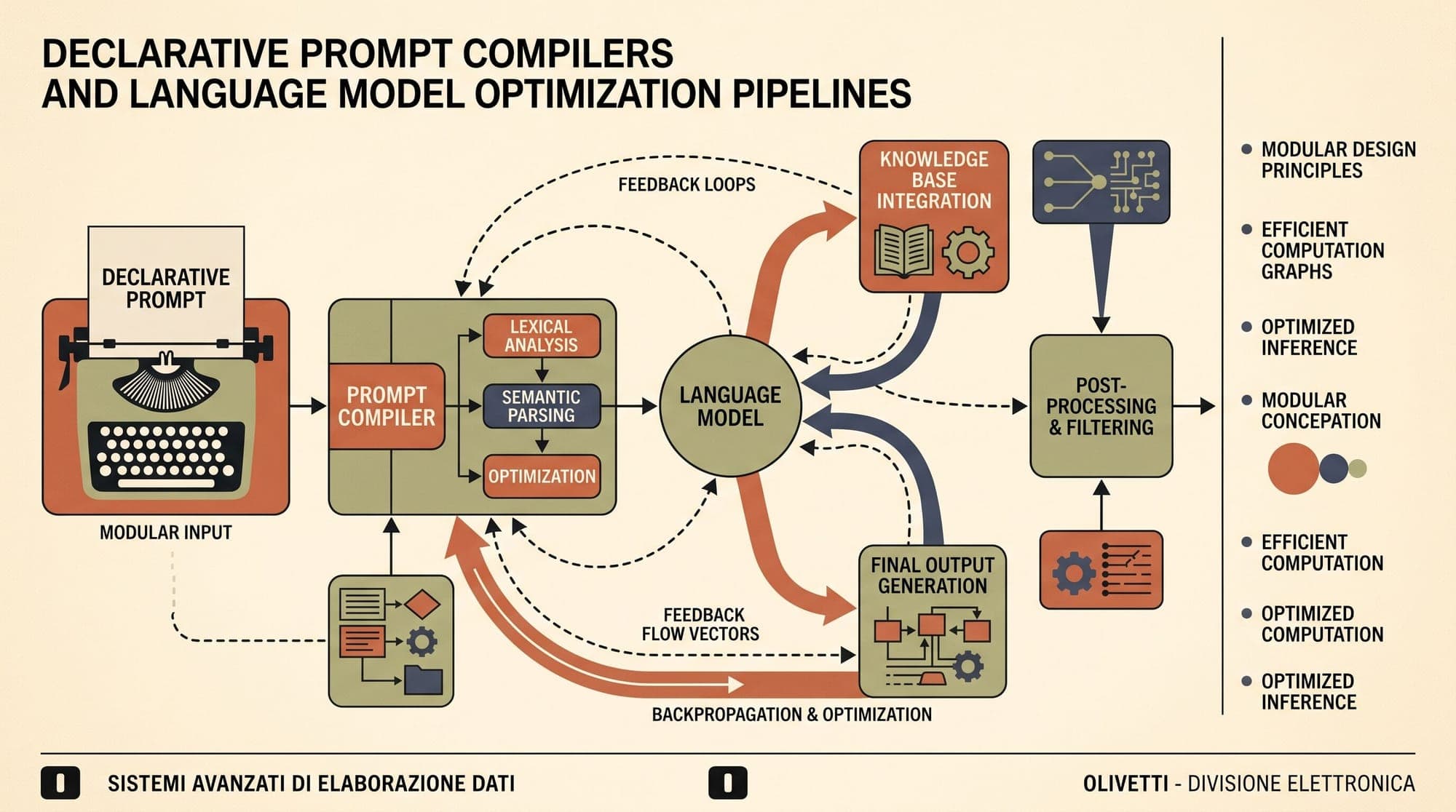
  16. Declarative Prompt Optimization and LLM Compilers in Production: Comparing DSPy, TextGrad, SAMMO, and AdalFlow

    Production AI applications are rapidly moving away from hardcoded prompt strings and manual trial-and-error tweaking. As language model systems expand into multi-stage pipelines, retrieval-augmented generation (RAG) graphs, and multi-agent loops, manual prompt adjustments fail to scale. Changing a system prompt or upstream retrieval format frequently degrades downstream extraction, reasoning, or tool-calling performance. To resolve this fragility, the industry is adopting declarative prompt opt

    AI
    7 min read
  17. Cognition Reaches $900M Annualized Revenue on Enterprise Devin Adoption

    Cognition AI, the startup behind autonomous software engineering agent Devin, has reached approximately $900 million in annualized revenue, according to financial data reported by The Information. The figure represents a more than threefold increase since the start of 2026, driven by accelerating enterprise adoption of autonomous developer workflows. Internal executive projections cited in the report indicate the company expects to finish 2026 with more than $1.5 billion in annualized run-rate

    AI
    2 min read
  18. Reference-Free Preference Optimization: Mathematical Foundations of SimPO and ORPO, Length-Normalized Implicit Rewards, Target Margins, and Monolithic Alignment

    Reference-Free Preference Optimization: Mathematical Foundations of SimPO and ORPO, Length-Normalized Implicit Rewards, Target Margins, and Monolithic Alignment Post-training alignment has shifted from complex multi-stage reinforcement learning pipelines toward direct preference optimization paradigms. While Proximal Policy Optimization (PPO) requires maintaining four concurrent models in memory (policy, value, reference, and reward networks), Direct Preference Optimization (DPO) reduced this f

    AI
    13 min read
  19. Real-Time Voice AI Agent Frameworks in Production: Comparing LiveKit Agents, Pipecat, OpenAI Realtime API, and Ultravox

    Deploying conversational voice agents in production requires solving a fundamental physics and networking problem: human conversational turn-taking occurs within an average gap of 200 to 300 milliseconds. When an artificial conversational agent exceeds 600 to 800 milliseconds of round-trip latency, users perceive the interaction as sluggish, talk over the assistant, or experience severe turn collisions. Historically, conversational voice systems relied on sequential request-response architectur

    AI
    10 min read