
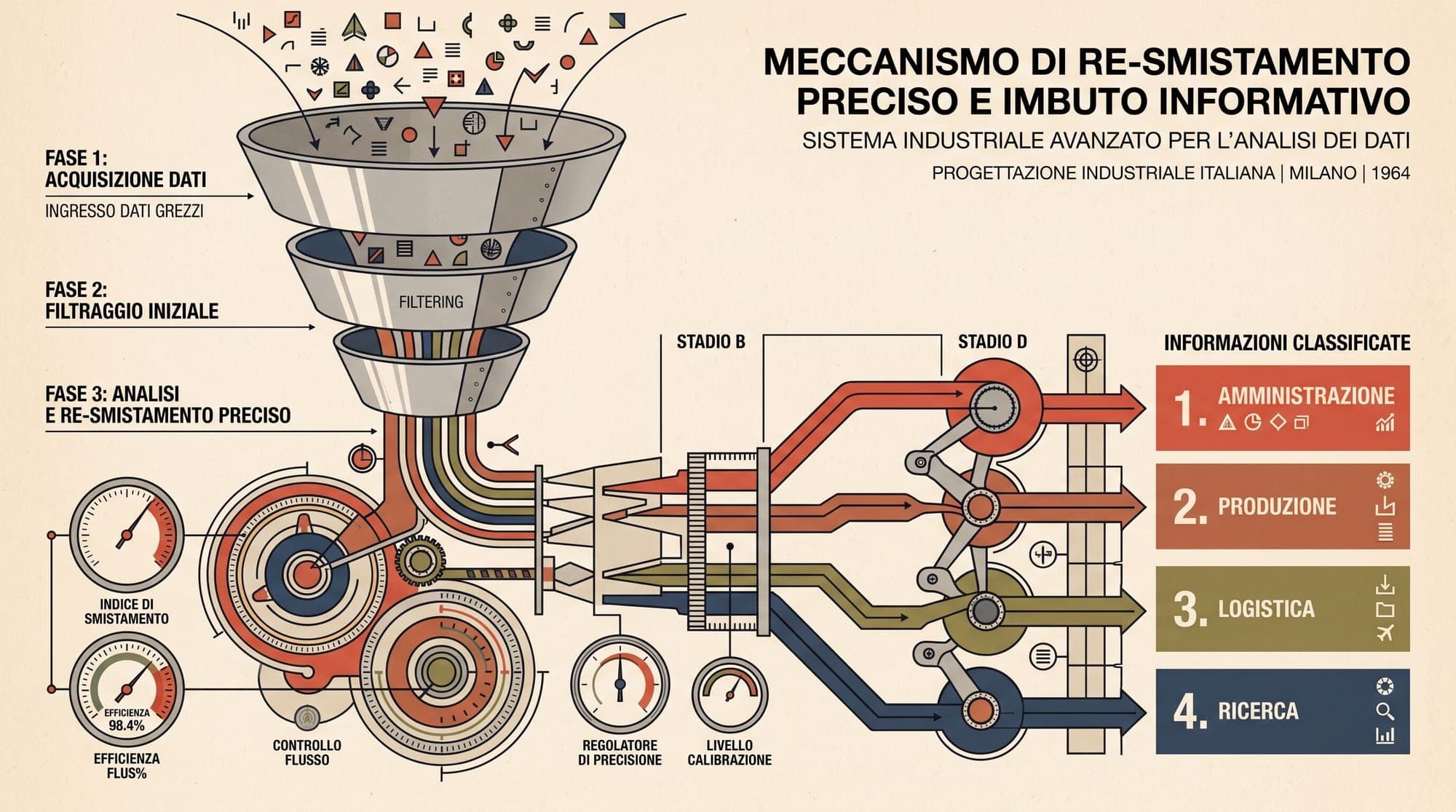
Reranking Models and Late-Interaction Frameworks in Production RAG: Comparing Cohere Rerank 3.5, BGE-Reranker-v2, FlashRank, and ColBERTv2 Architecture, Cross-Encoder Latency, MaxSim Compression, and Retrieval Economics
In production Retrieval-Augmented Generation (RAG), relying solely on first-stage bi-encoder dense embeddings or lexical BM25 search creates a structural information bottleneck. First-stage retrieval compresses an entire document passage into a single fixed-dimensional vector (such as 768, 1024, or 1536 dimensions) or an inverted term index. This independent encoding decouples the query from the passage during indexing, eliminating token-level cross-attention and causing subtle semantic nuances, complex constraints, and keyword-context alignments to be lost.
Adding a dedicated second-stage reranker transforms retrieval accuracy. On standard benchmarks such as BEIR (Benchmark for Information Retrieval) and MS MARCO, introducing a neural reranker typically yields an immediate gain of +5 to +18 points in NDCG@10. Furthermore, placing the most relevant passages at the very beginning of the context window mitigates the "lost-in-the-middle" attention degradation observed in large language models.
However, second-stage reranking introduces critical latency, compute, and architectural trade-offs. Cross-encoders require quadratic compute over concatenated query-document sequences, late-interaction models demand substantial token-vector index storage, and API-based rerankers add external network round trips. This guide examines the four dominant production reranking architectures: Cohere Rerank 3.5, BGE-Reranker-v2 (BAAI), FlashRank, and ColBERTv2 (Late Interaction), evaluating their internal mechanics, latency profiles, throughput under load, and serving economics.
1. The Multi-Stage Retrieval Architecture
Production search and RAG systems operate in multiple distinct stages to balance corpus scale against computational latency:
[ User Query ]
      |
      v
+-------------------------------------------------------------+
| Stage 1: Candidate Generation (Bi-Encoder / Hybrid BM25)    |
| - Corpus Scale: 100,000 to 50,000,000+ chunks               |
| - Speed: 5 to 20 ms via HNSW / IVF / Inverted Index         |
| - Output: Top-K candidates (typically K = 50 to 200)        |
+-------------------------------------------------------------+
      |
      v
+-------------------------------------------------------------+
| Stage 2: Neural Reranking (Cross-Encoder / Late-Interaction)|
| - Input: Top-K candidate passages                           |
| - Mechanics: Full cross-attention or MaxSim alignment       |
| - Output: Top-N high-precision chunks (N = 3 to 10)         |
+-------------------------------------------------------------+
      |
      v
+-------------------------------------------------------------+
| Stage 3: LLM Context Assembly & Generation                  |
| - Generator receives tightly filtered, ranked context       |
| - Reduced prompt token cost & minimal hallucination risk    |
+-------------------------------------------------------------+
Why Bi-Encoders Fail at Fine-Grained Ranking
Bi-encoders (such as text-embedding-3-large, bge-en-v1.5, or NV-Embed-v2) generate document embeddings offline:
Similarity is calculated via a single dot product or cosine distance:
Because has no knowledge of during index construction, the vector must represent every conceivable semantic aspect of the passage simultaneously. When a query contains negative constraints (for example, "open source models excluding Apache 2.0"), temporal predicates, or multi-attribute dependencies, the single-vector representation fails to isolate the relevant sub-structure.
The Reranker Remedy
Rerankers operate strictly on the top- candidates retrieved by Stage 1. By deferring scoring to query time over a small candidate subset (), rerankers can execute compute-intensive operations that model the direct interaction between individual query tokens and document tokens.
2. Architectural Paradigms: Cross-Encoders vs Late Interaction
Understanding the mathematical and computational distinction between reranking architectures is essential for designing low-latency inference pipelines.

Cross-Encoder Architecture (Full All-to-All Attention)
A cross-encoder passes the query and document concatenated together through every layer of a Transformer backbone:
Every token in the query attends to every token in the candidate document at every transformer layer across all attention heads. The final similarity score is extracted via a classification head over the token representation:
- Advantages: Maximum semantic expressivity. Captures complex negations, syntactic nuances, and inter-token dependencies.
- Disadvantages: Quadratic compute complexity . Reranking 100 documents requires 100 independent forward passes (or batched forward passes) at query time. Document representations cannot be precomputed.
Late-Interaction Architecture (ColBERT & MaxSim)
Introduced by Khattab and Zaharia in ColBERT and refined in ColBERTv2, late interaction preserves token-level embeddings while keeping query and document encodings structurally separated until the final layer.
The model maps the query into a sequence of low-dimensional vectors $\mathbf{E}_q = \{\mathbf{v}_{q_1}, \mathbf{v}_{q_2}, \dots, \mathbf{v}_{q_m}\} \subset \mathbb{R}^{128}$ and the document into $\mathbf{E}_d = \{\mathbf{v}_{d_1}, \mathbf{v}_{d_2}, \dots, \mathbf{v}_{d_n}\} \subset \mathbb{R}^{128}$.
The interaction is computed using the MaxSim (Maximum Similarity) operator:
For every query token vector , MaxSim finds the single highest cosine alignment across all document token vectors , and sums these maximum alignments across the query.
- Advantages: Document token representations are precomputed and indexed offline. At query time, only the query tokens are encoded through the Transformer. Scoring is reduced to highly parallelizable matrix multiplication and max-pooling, achieving sub-30ms latency for hundreds of passages.
- Disadvantages: Index footprint. Storing 128-dimensional vectors for every token in every document inflates vector database storage by to compared to single-vector indices (partially mitigated by ColBERTv2 residual quantization and the PLAID search engine).
Quantized Pointwise Cross-Encoders (CPU ONNX)
Models like FlashRank take lightweight pre-trained cross-encoders (such as ms-marco-MiniLM-L-12-v2 or ms-marco-TinyBERT-L-2-v2), quantize their weights to 8-bit integers (INT8) or 4-bit formats, and execute them on host CPUs via the ONNX Runtime engine.
- Advantages: Zero GPU dependency, near-zero startup cold start (<10ms), tiny disk and memory footprint (<40MB RAM), and zero network egress.
- Disadvantages: Moderate drop in NDCG@10 on out-of-domain technical text compared to 500M+ parameter cross-encoders; constrained context windows (128 to 512 tokens).
3. Comprehensive Model Comparison
The table below summarizes the core technical specifications of the four leading production reranking frameworks:
| Feature / Metric | Cohere Rerank 3.5 | BGE-Reranker-v2-m3 | FlashRank (MiniLM-L12) | ColBERTv2 (PLAID / RAGatouille) | | :--- | :--- | :--- | :--- | :--- | | Architectural Family | Proprietary Cross-Encoder | Open-Weights Cross-Encoder | Quantized Pointwise Cross-Encoder | Late-Interaction Multi-Vector | | Base Model / Params | Undisclosed LLM Backbone | XLM-RoBERTa (568M params) | MiniLM-L12 (33M params INT8) | BERT-base (110M params + 128d proj) | | Max Context Window | 4,096 tokens | 1,024 tokens | 512 tokens | 512 tokens per passage | | Supported Languages | 100+ languages | 100+ languages | Primarily English (multilingual variants available) | 100+ (via mColBERT) | | P50 Latency (100 pairs) | 180 - 350 ms (API network bound) | 40 - 90 ms (NVIDIA L4 / A10) | 25 - 45 ms (4-core CPU) | 15 - 30 ms (GPU / PLAID CPU) | | P95 Latency (100 pairs) | 400 - 650 ms | 75 - 150 ms | 50 - 80 ms | 35 - 60 ms | | Index Storage Footprint | None (computed on-the-fly) | None (computed on-the-fly) | None (computed on-the-fly) | High (15 KB - 40 KB per document chunk) | | Execution Environment | Managed SaaS (Cohere, Bedrock, Azure) | Self-hosted (vLLM, TEI, Triton, PyTorch) | In-process Python / ONNX (CPU/Edge) | Self-hosted (PLAID C++, RAGatouille, Vespa) | | Semi-Structured Support | Native JSON, Code, & Key-Value | Plain Text & Markdown | Plain Text | Plain Text & Segmented Fields | | Cost Model | $1.00 to $2.00 per 1,000 queries | GPU server amortization (~$0.70/hr per L4) | $0.00 (embedded in host CPU budget) | Storage infrastructure + GPU/CPU serving |
4. Deep-Dive: Production Framework Evaluation
1. Cohere Rerank 3.5
Cohere Rerank 3.5 is the market-leading managed cross-encoder API. Unlike traditional 512-token BERT cross-encoders, Cohere Rerank 3.5 supports document context lengths up to 4,096 tokens per candidate chunk.
Key Architectural Capabilities
- Semi-Structured and Multi-Aspect Data: Native optimization for structured JSON payloads, email threads, invoices, code snippets, and table schemas. The model evaluates key-value hierarchies without requiring flattening into synthetic prose.
- Dynamic Context Handling: When a candidate document exceeds the context length, the endpoint automatically manages internal chunking and returns a calibrated score based on the highest-scoring passage span.
- Enterprise Integration: Available as a managed serverless API across AWS Bedrock, Microsoft Azure AI, and Oracle Cloud Infrastructure (OCI).
Operational Trade-Offs
Because scoring requires external HTTP round trips, latency is bounded by network egress. P50 response times typically range from 200ms to 350ms for 100 candidate passages. At high transaction volumes (for example, 50 queries per second), API costs scale to $4,320 per day ($1.00 per 1,000 searches), making self-hosted alternatives economically attractive at scale.
2. BGE-Reranker-v2-m3 (BAAI)
Developed by the Beijing Academy of Artificial Intelligence (BAAI), BGE-Reranker-v2-m3 is the reference open-source cross-encoder for production RAG pipelines.
Key Architectural Capabilities
- 568M Parameter XLM-RoBERTa Backbone: Pre-trained on diverse multilingual text and fine-tuned on mined hard negatives across dozens of domain-specific datasets.
- 1,024 Token Context Window: Provides double the context capacity of standard BERT cross-encoders, accommodating dense technical documentation and multi-paragraph retrieval chunks.
- High GPU Throughput: When deployed via optimized inference runtimes such as Hugging Face Text Embeddings Inference (TEI) with FlashAttention-2 and dynamic sequence batching, BGE-Reranker-v2-m3 processes over 1,100 query-document pairs per second on a single NVIDIA H100 GPU (or ~450 pairs/sec on an NVIDIA L4).
Integration Pattern with Text Embeddings Inference (TEI)
# Launching BGE-Reranker-v2-m3 with Hugging Face TEI on a single GPU
docker run --gpus all -p 8080:80 \
  -v /data/models:/data \
  ghcr.io/huggingface/text-embeddings-inference:1.5 \
  --model-id BAAI/bge-reranker-v2-m3 \
  --max-client-batch-size 128 \
  --max-batch-tokens 16384
Python client query example:
import httpx

async def rerank_passages(query: str, texts: list[str]) -> list[dict]:
    url = "http://localhost:8080/rerank"
    payload = {
        "query": query,
        "texts": texts,
        "truncate": True
    }
    async with httpx.AsyncClient(timeout=2.0) as client:
        response = await client.post(url, json=payload)
        response.raise_for_status()
        return response.json()
3. FlashRank (Quantized CPU-First Reranker)
Created by Prithiviraj Damodaran, FlashRank is designed specifically for resource-constrained architectures, serverless runtimes (AWS Lambda, Cloudflare Workers), and edge microservices where GPU allocation is infeasible.
Key Architectural Capabilities
- Zero-PyTorch Runtime: Operates entirely on the lightweight ONNX Runtime execution engine. Total package installation footprint is under 50MB.
- Pre-Quantized Models: Ships with INT8 quantized checkpoints, including
ms-marco-MiniLM-L-12-v2(34MB) andms-marco-TinyBERT-L-2-v2(4MB). - Sub-30ms CPU Execution: Reranking 25 to 50 candidate passages on a standard 4-core virtual CPU completes in 15 to 35 milliseconds.
Python Implementation
from flashrank import Ranker, RerankRequest

# Load the lightweight 8-bit quantized MiniLM model into memory (<40MB RAM)
ranker = Ranker(model_name="ms-marco-MiniLM-L-12-v2", cache_dir="/tmp/models")

passages = [
    {"id": "doc1", "text": "HNSW graphs provide sub-linear ANN search with O(log N) complexity."},
    {"id": "doc2", "text": "Post-training quantization reduces FP16 weights to INT4 using calibration sets."},
    {"id": "doc3", "text": "Cross-encoders compute full all-to-all attention between query and candidate."}
]

request = RerankRequest(query="How does cross-encoder attention work?", passages=passages)
results = ranker.rerank(request)

# Output is sorted by descending score with normalized probabilities
for item in results:
    print(f"Doc ID: {item['id']} | Score: {item['score']:.4f}")
4. ColBERTv2 and Late Interaction (PLAID)
ColBERTv2 resolves the trade-off between bi-encoder speed and cross-encoder accuracy. By pre-indexing token vectors and using the MaxSim operator, ColBERTv2 delivers retrieval precision comparable to cross-encoders while maintaining bi-encoder throughput.
Residual Compression and PLAID Engine
The primary bottleneck of original ColBERT was storage: storing 128-dimensional FP16 vectors for every token in a 10-million-document corpus required terabytes of memory. ColBERTv2 resolves this through:
- Centroid-Based Residual Quantization: Token vectors are clustered around centroids. The system stores the 16-bit centroid index plus a quantized 1-bit or 2-bit residual vector, reducing storage overhead from 256 bytes per token down to 20 bytes per token.
- PLAID (Performance-optimized Late Interaction for Asymmetric Information Distribution): Prunes non-promising candidate documents using fast centroid filtering before evaluating the full MaxSim dot products, reducing search latency to sub-15ms.
Concurrency and Queue Debt: Why ColBERT Wins Under High QPS
In high-throughput production environments, cross-encoders suffer from severe queueing degradation. Consider an enterprise RAG service handling 30 to 40 queries per second (QPS):
- Cross-Encoder Queue Saturation: If a cross-encoder requires 45ms of GPU compute to score 100 passages, a single GPU can process a maximum of 22 requests per second. At 35 QPS, GPU utilization hits 100%, and incoming requests queue up rapidly. Within seconds, P99 latency escalates from 90ms to over 10,000ms (10+ seconds).
- ColBERT Late-Interaction Resilience: Because document tokens are already vectorized, computing MaxSim across 100 candidate documents consumes minimal FLOPs. At 40 QPS, ColBERT maintains GPU utilization below 70%, keeping P50 latency at ~22ms and P99 latency under 85ms.
5. Latency, Throughput, and Serving Economics
Evaluating total cost of ownership (TCO) requires modeling compute resources, memory footprints, and per-query operational costs.
+-----------------------------------------------------------------------------+
|               Annual Serving Cost Comparison (10M Queries/Month)            |
+-----------------------------------------------------------------------------+
| 1. Cohere Rerank 3.5 (API):                                                 |
|    10,000,000 queries / 1,000 * $1.50 = $15,000 / month ($180,000 / year)   |
|                                                                             |
| 2. BGE-Reranker-v2-m3 (Self-Hosted on 2x NVIDIA L4 GPUs):                   |
|    2 x $0.70/hr * 730 hrs/month = $1,022 / month ($12,264 / year)           |
|                                                                             |
| 3. FlashRank (Embedded in existing CPU Application Pods):                   |
|    Incremental CPU overhead = ~$0.00 / month ($0 extra infrastructure)      |
|                                                                             |
| 4. ColBERTv2 (PLAID Index + Dedicated Microservice):                        |
|    1x NVIDIA L4 GPU + 100GB SSD NVMe = ~$650 / month ($7,800 / year)        |
+-----------------------------------------------------------------------------+
Candidate Pool Sizing () Dynamics
A frequent production failure mode is configuring the first-stage candidate pool () too large:
- to : Optimal for latency-critical interactive applications (such as real-time user-facing chatbots). Captures 85-90% of the possible NDCG lift while keeping cross-encoder latency under 40ms.
- : The standard enterprise default. Provides the best balance between candidate recall and cross-encoder compute budget on GPU instances.
- : Diminishing returns. First-stage retrievers rarely surface relevant documents between rank 100 and 200 that were not already captured, while doubling cross-encoder inference latency and GPU memory requirements.
6. Architectural Decision Matrix
To select the appropriate reranking engine for a production system, evaluate against the following operational criteria:
Select Cohere Rerank 3.5 when:
- Your corpus contains long, semi-structured documents, JSON structures, code, or tables exceeding 1,000 tokens per chunk.
- You operate in a multi-cloud environment (AWS Bedrock, Azure, OCI) and prioritize zero infrastructure maintenance over per-call API cost.
- Your query volume is moderate (<500,000 queries per month) or your application SLA accommodates 200-400ms network round trips.
Select BGE-Reranker-v2-m3 when:
- You have dedicated GPU infrastructure and require strict data residency (such as on-premises or VPC-isolated environments).
- You need high multilingual accuracy across dozens of non-English languages with passage chunks under 1,024 tokens.
- Query volume is high (millions of requests monthly), where self-hosting on NVIDIA L4 or A10 GPUs amortizes to a fraction of SaaS API pricing.
Select FlashRank when:
- You run serverless functions (AWS Lambda, GCP Cloud Functions) or containerized microservices without GPU access.
- You require absolute lowest cold-start latency (<10ms) and minimal memory footprints (<50MB RAM).
- Your application requires local, embedded ranking for 20 to 50 candidate passages where a 2-3 point NDCG delta is acceptable.
Select ColBERTv2 (via PLAID or RAGatouille) when:
- Your system faces high concurrency (>30 QPS) where cross-encoder forward passes cause severe queue debt.
- You want the precision of token-level interaction across large candidate pools ( to ) within a strict sub-30ms P95 latency SLA.
- Your infrastructure can accommodate the to vector storage footprint required for token-level index representations.
Sources
- Santhanam, K., Khattab, O., Saad-Falcon, J., Potts, C., & Zaharia, M. (2022). ColBERTv2: Effective and Efficient Retrieval via Lightweight Late Interaction. arXiv:2112.01488.
- Khattab, O., & Zaharia, M. (2020). ColBERT: Efficient and Effective Passage Search via Contextualized Late Interaction over BERT. arXiv:2004.12832.
- Thakur, N., Reimers, N., Rücklé, A., Srivastava, A., & Gurevych, I. (2021). BEIR: A Heterogeneous Benchmark for Zero-shot Evaluation of Information Retrieval Models. arXiv:2104.08663.
- BAAI. (2024). BGE-Reranker-v2-m3 Model Repository and Technical Specifications. Hugging Face BAAI/bge-reranker-v2-m3.
- Damodaran, P. (2023). FlashRank: Light and Super-fast 2nd Stage Reranker for Search and Retrieval Pipelines. GitHub PrithivirajDamodaran/FlashRank.
- Cohere. (2024). Cohere Rerank 3.5 Documentation and API Reference. Cohere Documentation.
- Hugging Face. (2024). Text Embeddings Inference (TEI) High-Throughput Serving Engine. GitHub huggingface/text-embeddings-inference.
- Santhanam, K., Khattab, O., Potts, C., & Zaharia, M. (2022). PLAID: An Efficient Engine for Late Interaction Retrieval. arXiv:2205.09707.



