Subscribe
Topic / page 8

Architecture

Articles, page 8

141-150
  1. AI Guardrails in Production: Multi-Stage Filtering, Classification Models, and the Latency Tax

    AI Guardrails in Production: Multi-Stage Filtering, Classification Models, and the Latency Tax Production deployments of large language models cannot rely solely on system prompt instructions to maintain safety, prevent prompt injection, or restrict domain scope. System prompt alignment is inherently susceptible to adversarial bypasses, context dilution, and non-deterministic instruction following. To enforce strict security, compliance, and topic boundaries, engineering teams increasingly depl


    AI
    4 min read
  2. Multi-Head Latent Attention: How Low-Rank KV Compression Scales LLM Serving

    Autoregressive transformer inference faces a fundamental hardware constraint during text generation: memory bandwidth saturation. While prefill (processing prompt tokens) is compute-bound and saturates GPU tensor cores, token-by-token generation is memory-bandwidth bound. To generate each subsequent token, the inference engine must load all prior Key and Value vectors from High Bandwidth Memory (HBM) into SRAM. As sequence lengths reach 32k, 64k, or 128k tokens and batch sizes scale, the Key-Va

    AI
    6 min read
  3. LLM Gateways in Production: Multi-Provider Failover, Rate Limiting, and Spend Governance

    LLM Gateways in Production: Multi-Provider Failover, Rate Limiting, and Spend Governance As generative AI workloads transition from experimental prototypes to mission-critical infrastructure, direct client-to-provider API calls introduce substantial operational risk. Relying on hardcoded SDK connections to a single model provider exposes production services to unexpected rate limits, regional outages, silent breaking changes, and uncontrolled token costs. To solve these reliability and governa

    AI
    5 min read
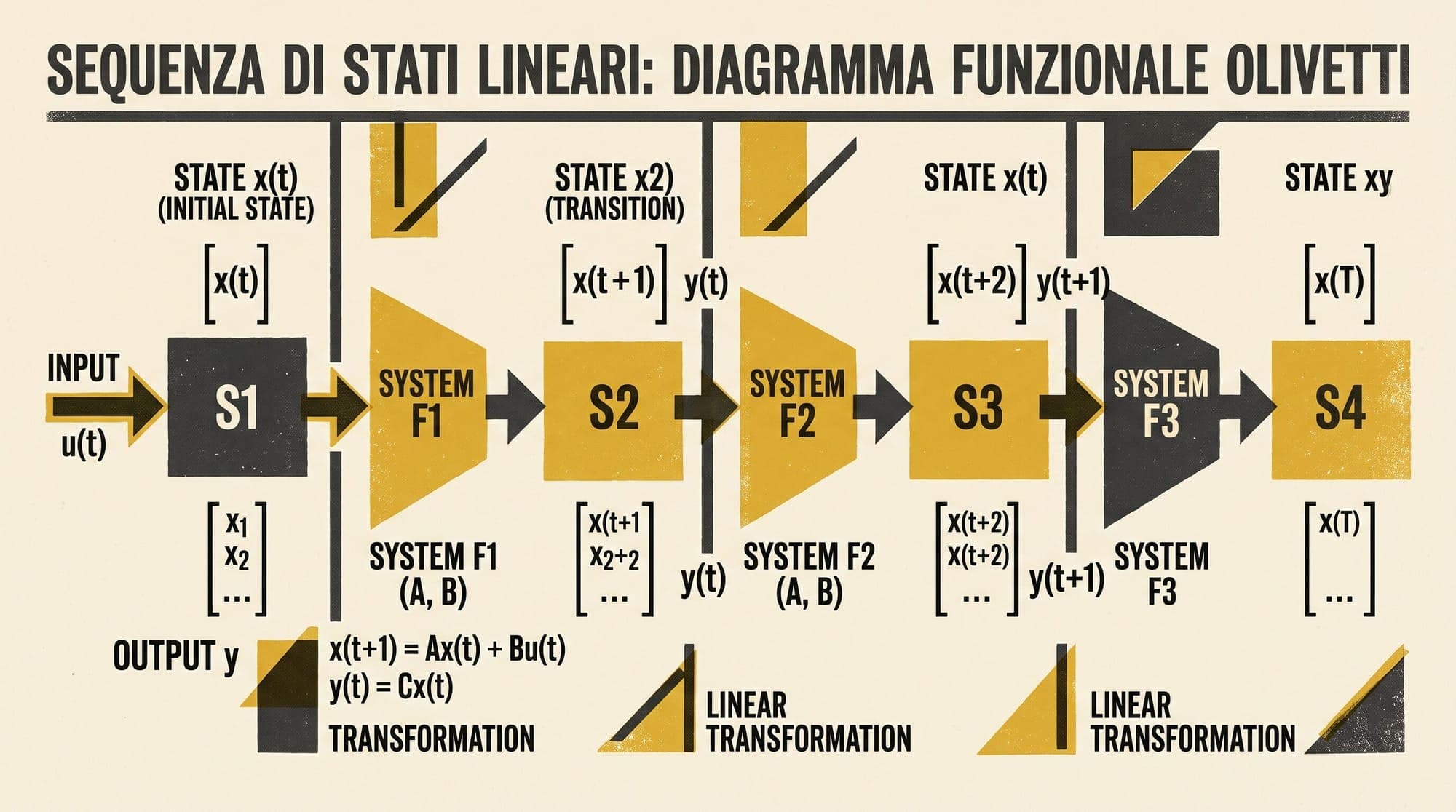
  4. State Space Models in Large Language Models: How Mamba, S4, and Selective Recurrence Challenge Transformer Attention

    Modern large language models rely almost universally on the Transformer architecture. However, the core mechanism powering Transformers, softmax multi-head self-attention, exhibits fundamental scaling limitations. Specifically, standard self-attention requires quadratic time and memory complexity relative to sequence length during prefilling, alongside a linear memory expansion for the key-value (KV) cache during autoregressive token generation. To circumvent these computational bottlenecks, re

    AI
    6 min read
  5. Continuous Batching in Production LLM Serving: Iteration-Level Scheduling, Chunked Prefills, and Throughput Trade-Offs

    Static batching served as the standard execution paradigm for deep learning inference across computer vision and traditional natural language processing for years. In those domains, incoming requests typically feature fixed input dimensions and deterministic execution graphs. Autoregressive large language model serving breaks every assumption underlying static batching. Input prompts vary widely in token length, output generations terminate nondeterministically upon emitting an end-of-sequence t

    LLM
    6 min read
  6. Byte-Pair Encoding in Large Language Models: How Tokenizers Compress Text, Shape Context, and Fail

    Large language models do not process strings directly. Before a single attention weight or linear projection executes, incoming text is converted into a sequence of discrete integers known as tokens. The choice and implementation of the tokenization algorithm establish the model's fundamental vocabulary, define the boundaries of its context window, dictate inference speed, and introduce unique behavioral quirks. Across modern transformer architectures, subword tokenization via Byte-Pair Encodin

    AI
    8 min read
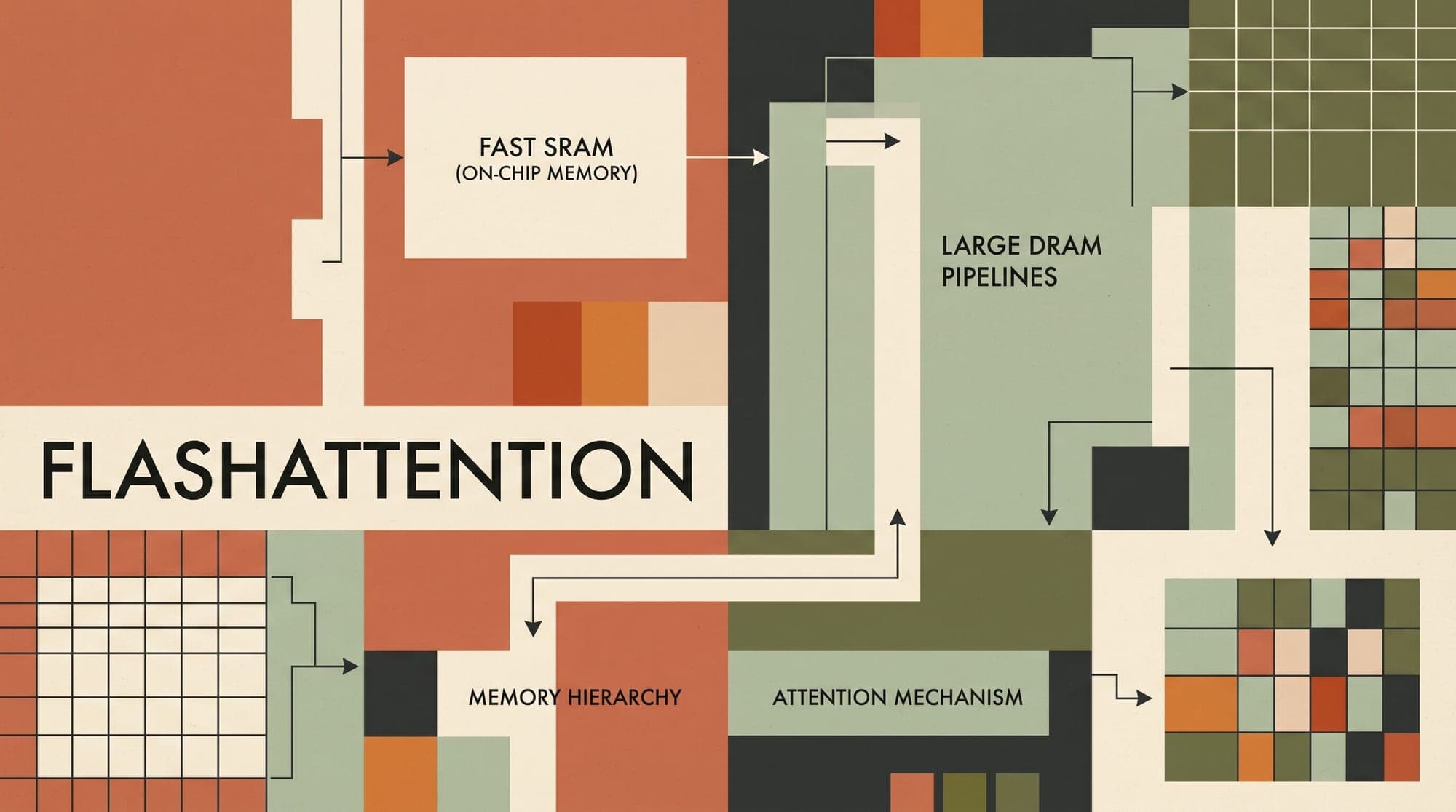
  7. FlashAttention: How IO-Aware Tiling and Online Softmax Solved Transformer Memory Bottlenecks

    Standard multi-head attention is the fundamental computational primitive of modern autoregressive language models. While mathematically straightforward, the operation introduces a severe operational bottleneck as context windows scale. Naive implementations of scaled dot-product attention exhibit quadratic memory complexity $O(N^2)$ and quadratic memory access costs, bounding sequence lengths and leaving modern GPU tensor cores severely underutilized. FlashAttention, introduced by Tri Dao, Dani

    AI
    7 min read
  8. LLM Model Routing and Cascades: Architecture, Economics, and Quality Trade-Offs

    In modern enterprise AI systems, uniform model dispatch, sending all incoming user traffic to a single frontier large language model, is one of the most common architectural inefficiencies. Frontier models like GPT-4o and Claude 3.5 Sonnet provide industry-leading reasoning and code generation capabilities, but their inference costs range between $2.50 and $15.00 per million tokens. Conversely, smaller open-weights or distilled models, such as Llama 3.1 8B or GPT-4o-mini, execute at a fraction o

    AI
    6 min read
  9. Rotary Position Embeddings: How Geometry Solved Long Context in Modern LLMs

    Rotary Position Embedding (RoPE) has become the standard positional encoding mechanism across modern large language models, including Meta's Llama series, Mistral, Qwen, and DeepSeek. Unlike earlier techniques that added positional vectors directly to token representations or modified attention matrices with relative distance penalties, RoPE encodes position through geometric rotations in the complex plane. This design enables models to compute relative token distances while processing individu

    AI
    6 min read
  10. How Mixture of Experts Works: Sparse Gating, Token Routing, and Load Balancing

    Large language models face a fundamental scaling trade-off: as parameter counts grow to absorb more world knowledge, the floating-point operations (FLOPs) required per token increase proportionally. In a standard dense Transformer, every single parameter participates in processing every incoming token. Mixture of Experts (MoE) decouples total model capacity from per-token compute cost. By replacing dense feed-forward layers with a dynamic pool of specialized sub-networks ("experts") and routing

    AI
    6 min read