Subscribe
Topic / page 34

AI

Articles, page 34

661-680
  1. DeepReinforce Releases Ornith-1.5: MIT-Licensed 9B, 35B, and 397B Open Weights Trained on Autonomous Self-Improvement Loops

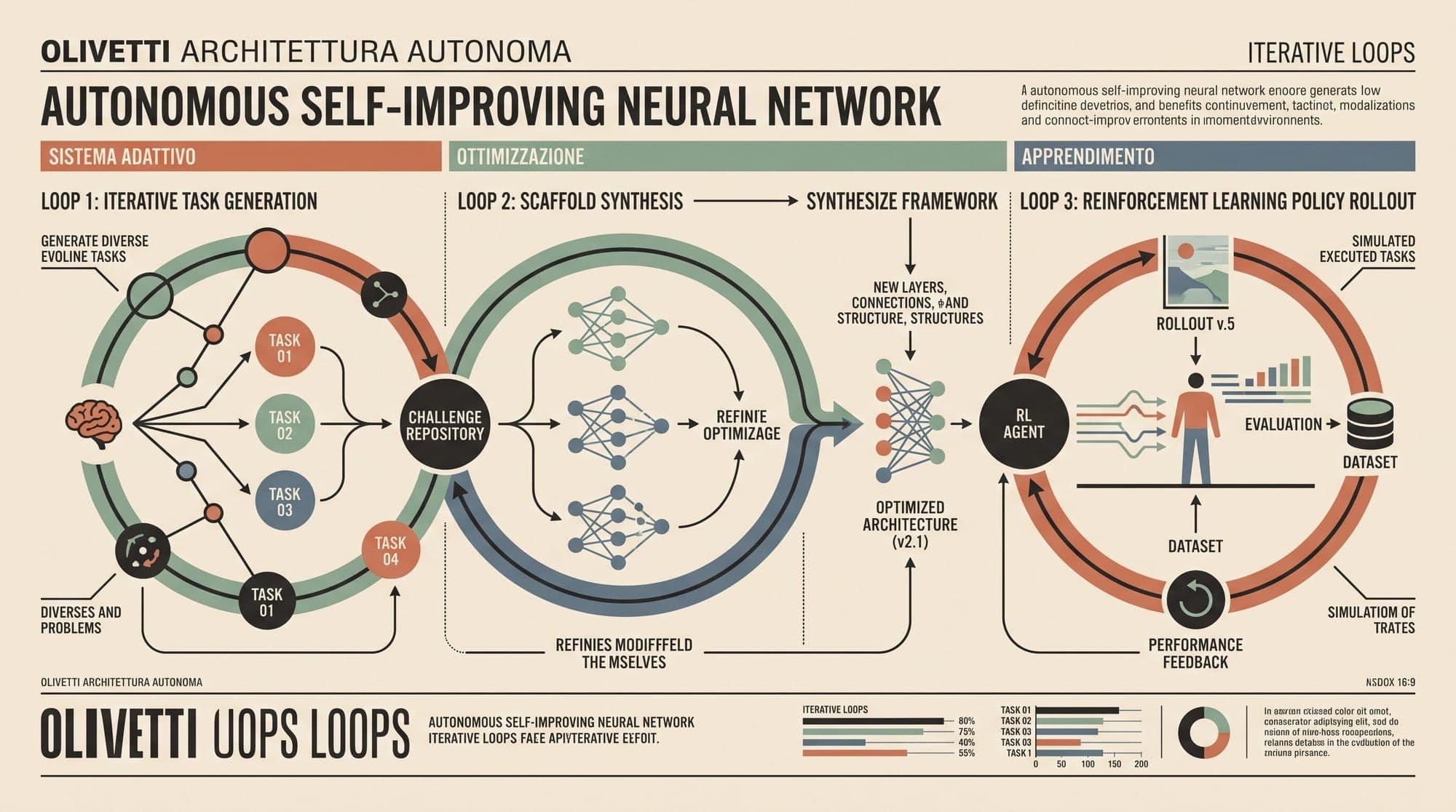
    DeepReinforce and the Ornith team have released Ornith-1.5, a family of open-weight foundation models trained using autonomous self-improvement loops. Released under the permissive MIT license, the model family spans three architectures: a 9B dense model, a 35B mixture-of-experts model activating approximately 3B parameters per token (35B-A3B), and a flagship 397B mixture-of-experts model. The release expands on the team's earlier Ornith-1.0 release by automating the entire post-training optimi
    AI
    2 min read
  2. GPU Cluster Networking in Production: InfiniBand vs. RoCEv2 vs. Ultra Ethernet Architecture, Congestion Control, and NCCL Collective Latency

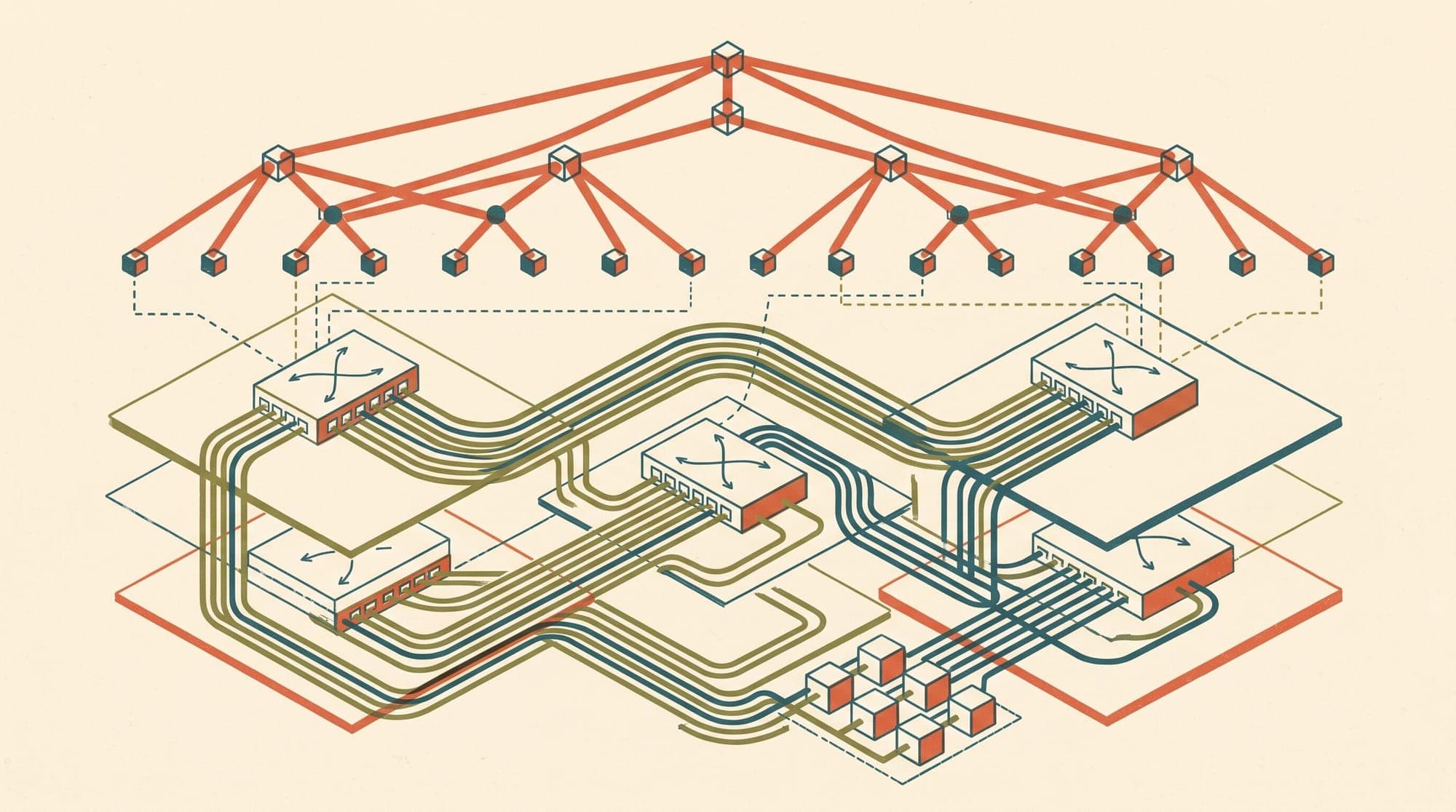
    Distributed training and high-throughput inference workloads are fundamentally bound by the network fabric. While traditional cloud applications rely on asynchronous request-response cycles that absorb latency jitter, distributed deep learning relies on synchronous collective communication. Operations such as All-Reduce, All-Gather, and All-to-All require hundreds or thousands of GPUs to exchange tensors and synchronize at strict barrier points before execution can proceed. In this execution mo

    AI
    8 min read
  3. Vector Indexing in Production: HNSW vs. DiskANN vs. IVF-PQ Architecture, Memory Footprint, and Search Economics

    Vector Indexing in Production: HNSW vs. DiskANN vs. IVF-PQ Architecture, Memory Footprint, and Search Economics Scaling vector search beyond prototype deployments exposes a fundamental tension across three competing constraints: retrieval recall, query latency, and memory footprint. In high-dimensional representation spaces, exact k-nearest neighbor search via brute-force flat scans requires $O(N \cdot d)$ floating-point operations per query. For a corpus of 100 million 1536-dimensional FP32 em

    AI
    7 min read
  4. Rotational Quantization: How Orthogonal Transforms and Hadamard Incoherence Enable Outlier-Free Low-Bit Inference

    Large language model serving is governed by two physical bottlenecks: memory bandwidth during autoregressive decoding and compute throughput during prompt prefill. While weight-only post-training quantization (such as GPTQ or AWQ) reduces parameter footprint to 4 bits, it leaves activations in 16-bit floating-point formats. As a result, inference engines cannot utilize high-throughput INT4 tensor cores, and the key-value (KV) cache continues to consume massive memory pools. Attempting to quanti

    AI
    8 min read
  5. Anthropic Eyes $10B+ Credit Line Ahead of Planned Public Listing

    Anthropic is working to expand its revolving credit facility beyond an initial $10 billion target as it prepares for a planned initial public offering, according to reporting from Bloomberg. Wall Street investment banks are actively competing for lending allocations in the facility to improve their positioning for underwriting mandates on the eventual share sale. Under the framework currently under discussion, Anthropic has asked lead banks to commit approximately $1.25 billion each. Secondary

    Anthropic
    1 min read
  6. Multi-LoRA Serving in Production: Architecture, Dynamic Adapter Swapping, and GPU Memory Management

    Deploying hundreds or thousands of fine-tuned language models across enterprise workflows presents a fundamental infrastructure dilemma. While parameter-efficient fine-tuning (PEFT) methods like Low-Rank Adaptation (LoRA) reduce training compute by freezing base model weights and training compact low-rank matrices, naive deployment strategies fail at scale. Merging adapter weights directly into the base model creates a distinct 7B to 70B parameter checkpoint for every specialized task, requiring

    AI
    8 min read
  7. Weight-Decomposed Low-Rank Adaptation (DoRA): How Decoupling Magnitude and Direction Closes the LoRA Gap

    Weight-Decomposed Low-Rank Adaptation (DoRA): How Decoupling Magnitude and Direction Closes the LoRA Gap Parameter-efficient fine-tuning (PEFT) has become the standard operational paradigm for adapting large language models to domain-specific downstream tasks. Among existing PEFT methodologies, Low-Rank Adaptation (LoRA) remains the default implementation across industry and academia due to its minimal parameter footprint and zero inference overhead. However, empirical studies consistently reve

    AI
    8 min read
  8. Attention with Linear Biases (ALiBi): How Static Positional Slopes Enable Zero-Shot Context Extrapolation

    Large language models process sequences by transforming discrete tokens into continuous vector representations. Standard dot-product self-attention is permutation-invariant: without explicit positional information, the attention operation treats a sequence as an unordered bag of tokens. Early transformer architectures addressed this limitation using Absolute Positional Embeddings (APE), either through fixed sinusoidal functions or learned lookup tables added directly to token embeddings. While

    AI
    6 min read
  9. Vals AI Raises $40M Series A at $400M Valuation Led by a16z to Build Real-World AI Benchmarks

    San Francisco evaluation startup Vals AI announced a $40 million Series A funding round at a $400 million post-money valuation, led by Andreessen Horowitz. The round included participation from existing seed backers 8VC, Pear VC, and Bloomberg Beta, alongside new institutional investors HRT Ventures and Next Ladder Ventures. The financing brings total capital raised by the company to $45 million, following a $5 million seed round. Founded by Stanford computer science graduates Rayan Krishnan a

    AI
    2 min read
  10. Small Language Models in Production: Task Specialization, Serving Economics, and the Frontier Offloading Pattern

    The default architecture for first-generation enterprise AI agents routed every prompt, tool selection, and intermediate evaluation step to a single frontier large language model. While this monolithic approach simplified initial orchestration, it introduced severe latency bottlenecks and unsustainable inference unit economics in high-throughput production environments. In production agentic loops, between 40% and 70% of model invocations are narrow, highly structured operations: classifying in

    AI
    6 min read
  11. Contrastive Decoding in Large Language Models: How Comparing Expert and Amateur Logits Suppresses Hallucination and Reasoning Errors

    Contrastive Decoding in Large Language Models: How Comparing Expert and Amateur Logits Suppresses Hallucination and Reasoning Errors Autoregressive large language models operate by predicting the conditional probability distribution of the next token given a sequence of preceding tokens. However, translating these continuous probability vectors into coherent, factual, and logically sound sequences remains one of the fundamental challenges of modern natural language processing. Traditional deco

    AI
    6 min read
  12. TrueFoundry Open-Sources TrueForge Agent Harness to Cut Managed Inference Spend

    Enterprise ML infrastructure platform TrueFoundry has open-sourced its custom agent runtime, TrueForge, under the permissive MIT license. The framework is designed to orchestrate autonomous reasoning loops, tool interactions, and long-running execution across vendor-neutral LLM backends while systematically reducing token overhead and operational compute costs. According to benchmark data published by TrueFoundry, pairing TrueForge with the open-weight GLM-5.2 model completed 11 of 14 enterpris

    AI
    2 min read
  13. Reinforcement Learning with Verifiable Rewards: How Programmatic Oracles Eliminate Reward Hacking in LLM Reasoning

    Post-training paradigms for large language models have undergone a fundamental architectural shift. While the initial wave of alignment relied on Reinforcement Learning from Human Feedback (RLHF) and direct preference optimization (DPO), frontier reasoning systems increasingly depend on Reinforcement Learning with Verifiable Rewards (RLVR). Traditional RLHF relies on neural reward models trained on human pairwise comparisons. These neural proxies suffer from reward overoptimization, vulnerabili

    AI
    6 min read
  14. WhiteFiber Proposes $250M Convertible Debt Offering to Expand AI Data Center Capacity

    AI infrastructure provider WhiteFiber announced a proposed private placement of $250 million in convertible senior notes due 2032, with an option for initial purchasers to acquire up to an additional $37.5 million in notes. The proceeds are designated to fund data center campus acquisitions, facility buildouts, utility interconnection agreements, and hardware procurement for the company's AI cloud business. The financing coincides with WhiteFiber's agreement to acquire two industrial sites in Y

    AI
    2 min read
  15. Hyve Solutions Selects Nevada for Dual AI Server Manufacturing Campuses

    Hyve Solutions, the rack-scale server design and manufacturing subsidiary of TD SYNNEX, announced plans to construct two advanced manufacturing facilities in Nevada to expand domestic production of compute, storage, and networking systems for AI data centers. The development encompasses a 624,000-square-foot flagship campus in Reno alongside a secondary facility in North Las Vegas, with the combined projects projected to create approximately 3,000 jobs. The project follows formal approval of ta

    AI
    2 min read
  16. Human-in-the-Loop Architectures for Production AI Agents: Interrupt Patterns, State Resumption, and Permission Escalation

    Deploying autonomous AI agents into production environments exposes a fundamental tension between system velocity and operational safety. While read-only tasks such as data extraction and document summarization carry minimal operational blast radius, agents equipped with write-access tools (database mutations, API transactions, cloud infrastructure provisioning, and outbound communications) introduce severe operational risks. Hallucinations, prompt injections, and logical drift can trigger irrev

    AI
    6 min read
  17. Machine Unlearning in Large Language Models: How Gradient Ascent, Representation Misdirection, and Negative Alignment Purge Neural Memory

    Large language models memorize massive amounts of training data, including copyrighted literature, personally identifiable information (PII), proprietary codebases, and dual-use knowledge spanning cyber exploits and biological hazards. When copyright holders, regulators, or safety researchers demand the removal of specific data, complete retraining from scratch is economically infeasible, often costing tens of millions of dollars in compute. Machine unlearning aims to remove the influence of ta

    AI
    7 min read
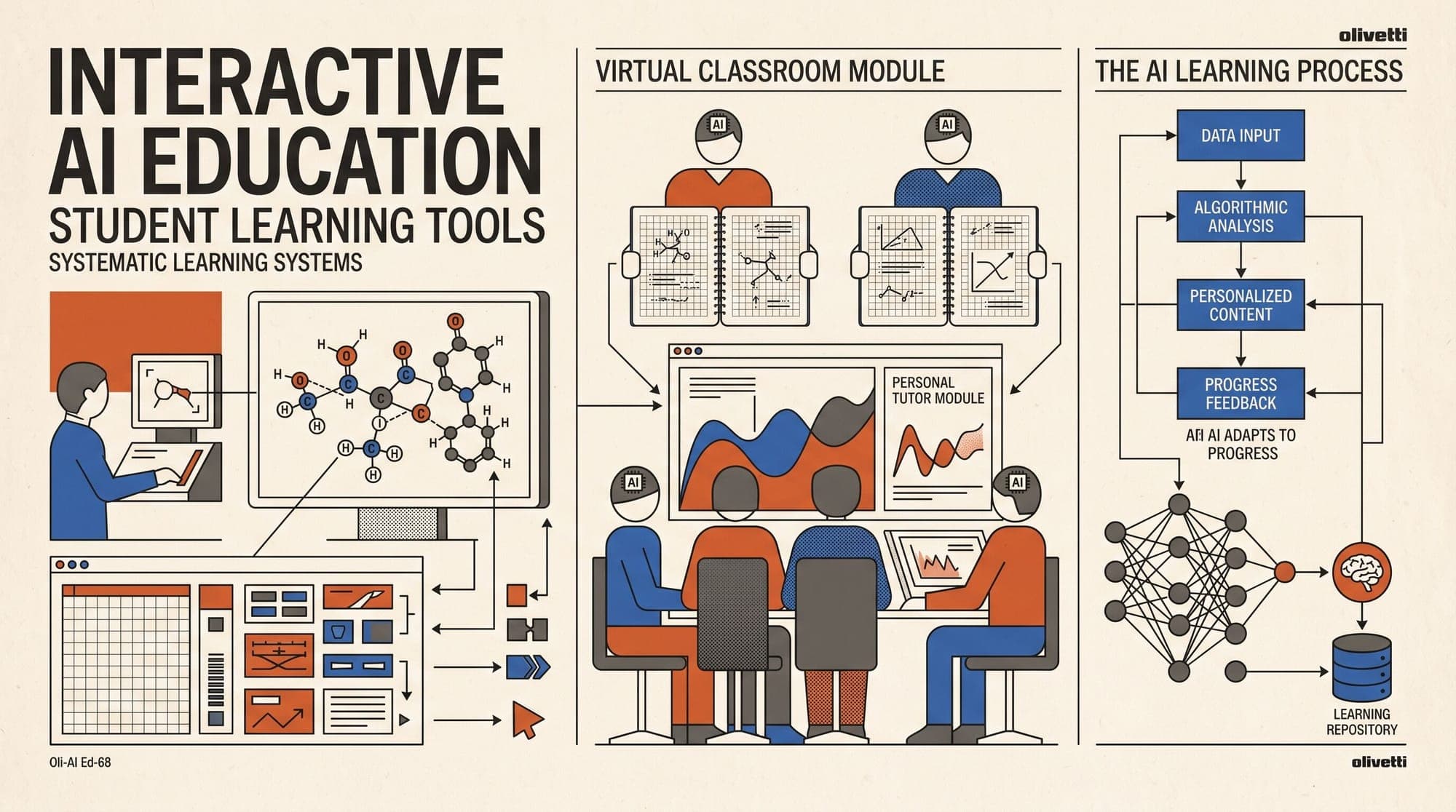
  18. Google Launches Gemini Student Hub with Interactive 3D Simulations and Background Research

    Google has launched a dedicated suite of education tools across Google Search and the Gemini assistant, introducing an integrated student hub, interactive 3D simulations, multi-document synthesis, and asynchronous background research. The rollout is designed to centralize study workflows within Google's ecosystem while expanding the modal capabilities of Gemini for scientific and conceptual analysis. Integrated Student Hub and Study Notebooks The core of the update is a specialized hub withi

    Google
    2 min read
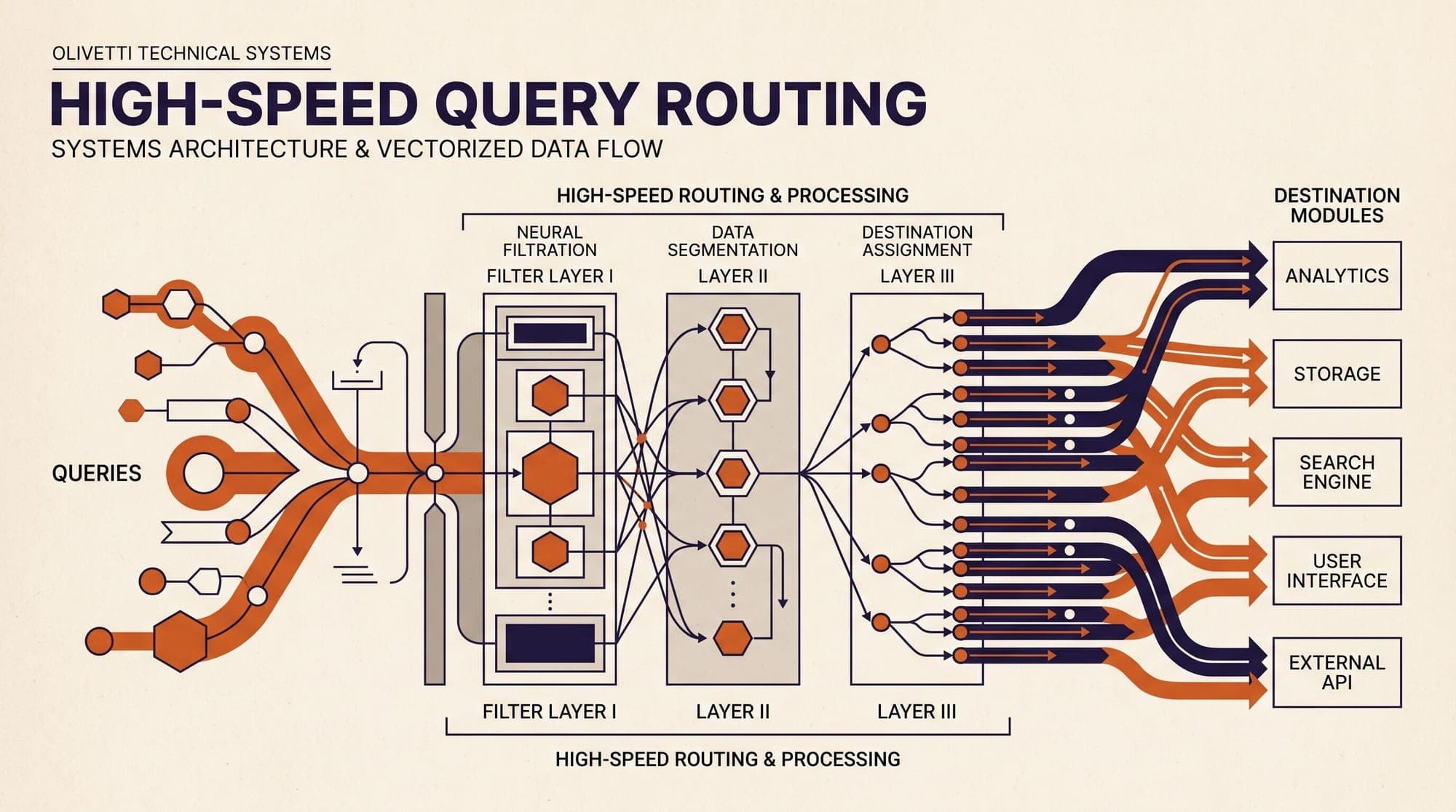
  19. Semantic Routers in Production: Architecture, Embedding Classification vs. LLM Triage, and Cascade Topologies

    Routing user requests to specialized tools, APIs, or tiered foundation models is central to production AI architectures. However, relying on large language models (LLMs) or native JSON tool-calling mechanisms to perform initial intent classification introduces significant latency and cost overheads. A single LLM-based classification pass typically adds between 200 milliseconds and 1.5 seconds of time-to-first-token (TTFT) latency, alongside linear token billing for routine triage queries. To el

    AI
    5 min read
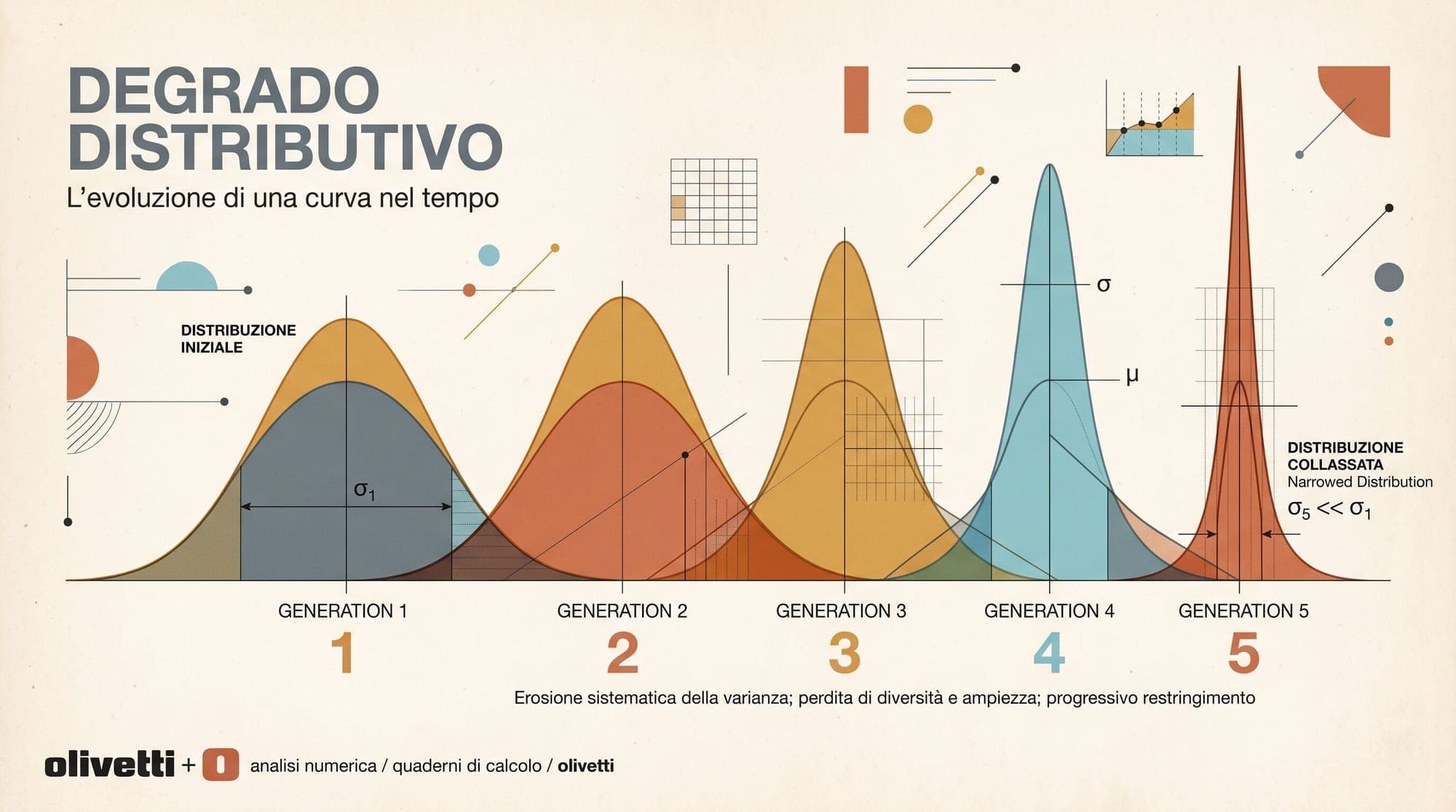
  20. Model Collapse in Large Language Models: How Recursive Training on Synthetic Data Degrades Neural Distributions

    As large language models scale and generate a growing share of digital text, code, and media, the web datasets used to train next-generation models increasingly consist of machine-generated outputs. When generative models are trained recursively on data produced by earlier model generations without sufficient ground-truth anchoring, they undergo a systematic degradation process known as model collapse. First formalized in foundational statistical literature and demonstrated across modern deep l

    AI
    7 min read