DeepReinforce Releases Ornith-1.5: MIT-Licensed 9B, 35B, and 397B Open Weights Trained on Autonomous Self-Improvement Loops

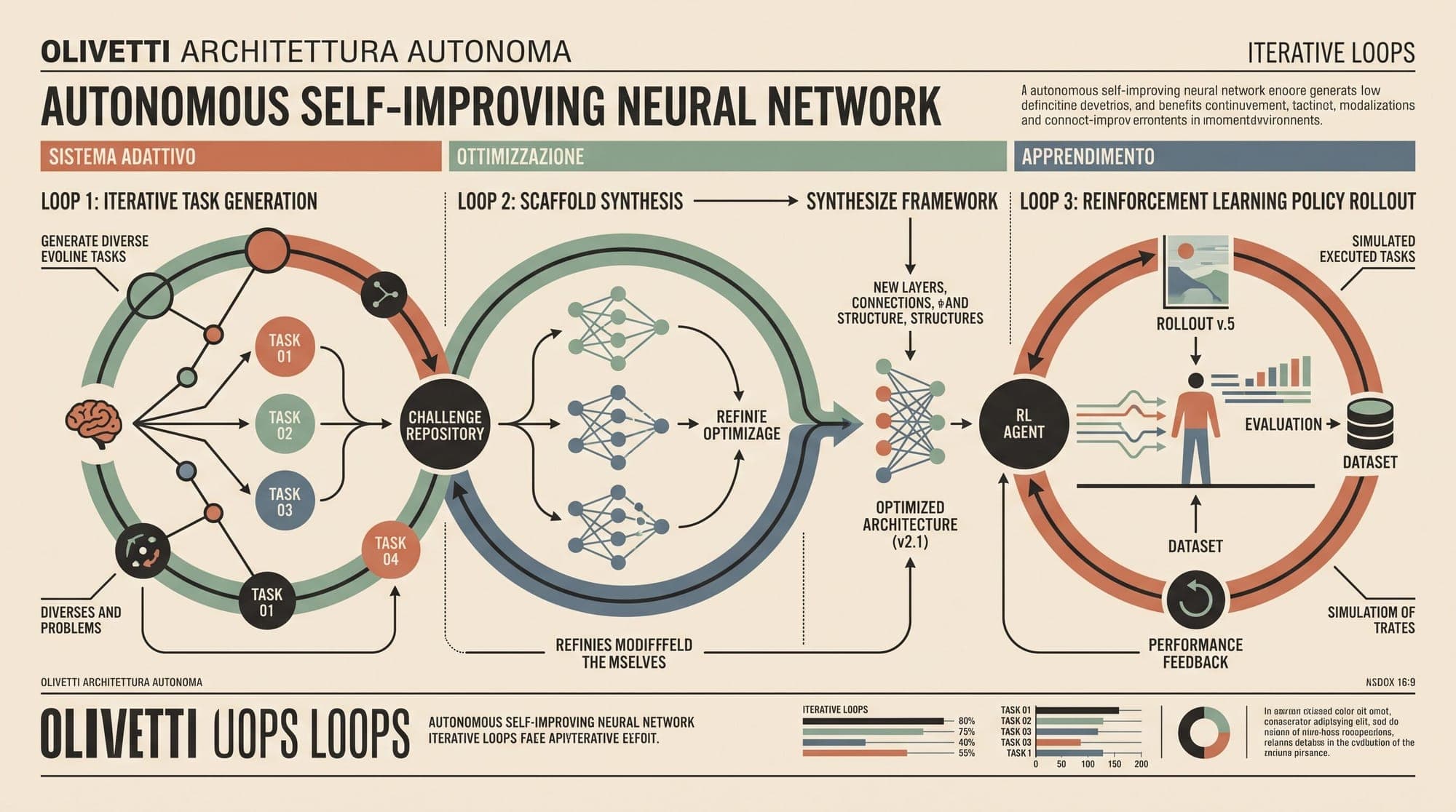
DeepReinforce and the Ornith team have released Ornith-1.5, a family of open-weight foundation models trained using autonomous self-improvement loops. Released under the permissive MIT license, the model family spans three architectures: a 9B dense model, a 35B mixture-of-experts model activating approximately 3B parameters per token (35B-A3B), and a flagship 397B mixture-of-experts model. The release expands on the team's earlier Ornith-1.0 release by automating the entire post-training optimi

2 min
DeepReinforce Releases Ornith-1.5: MIT-Licensed 9B, 35B, and 397B Open Weights Trained on Autonomous Self-Improvement Loops

DeepReinforce and the Ornith team have released Ornith-1.5, a family of open-weight foundation models trained using autonomous self-improvement loops. Released under the permissive MIT license, the model family spans three architectures: a 9B dense model, a 35B mixture-of-experts model activating approximately 3B parameters per token (35B-A3B), and a flagship 397B mixture-of-experts model.

The release expands on the team's earlier Ornith-1.0 release by automating the entire post-training optimization cycle. While earlier iterations focused on optimizing scaffolds and solution rollouts on curated tasks, Ornith-1.5 jointly automates synthetic task generation, environment scaffold construction, and reinforcement learning policy rollouts without relying on human task curation.
Ornith-1.5 Evaluation and Benchmark Architecture

Benchmark Results and Autonomous Performance

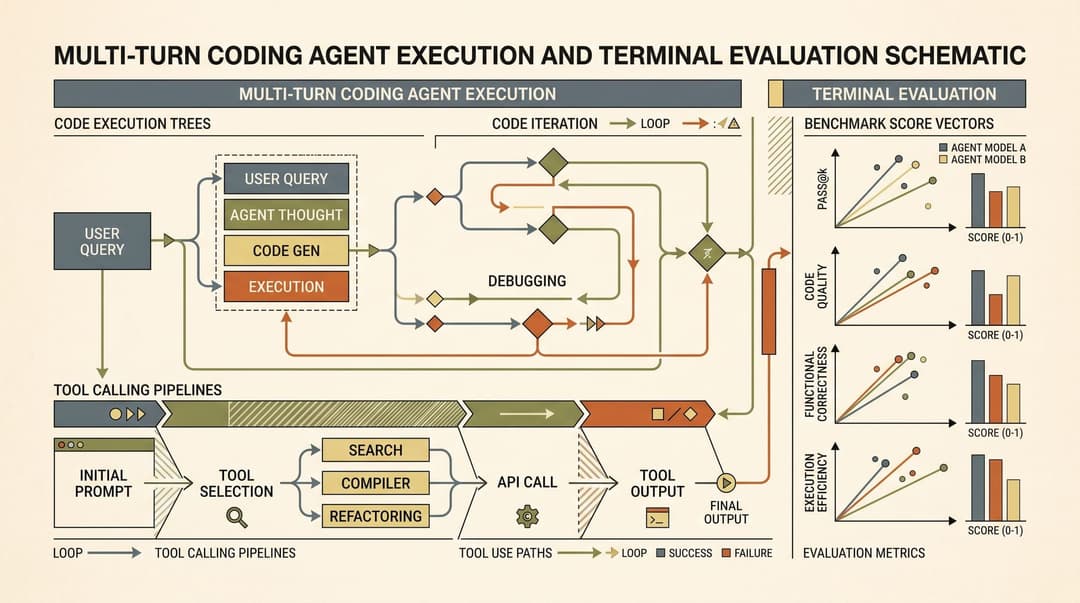
The flagship Ornith-1.5-397B model targets frontier coding and complex agentic tasks. On standardized evaluations, the model achieves:

  • Terminal-Bench 2.1 (Terminus-2): 86.1%, outperforming DeepSeek-V4-Flash-0731 (82.7%) and GLM-5.2 (81.0%), while matching Claude Opus 4.8 (85.0%).
  • SWE-bench Verified: 86.0%, compared to 85.8% for Claude Opus 4.8 and 86.2% for Kimi K3.
  • DeepSWE: 56.0%, up from 8.0% in Ornith-1.0-397B and approaching Claude Opus 4.8 (59.0%).
  • GPQA Diamond: 92.8%, showing competitive scientific reasoning against frontier proprietary models.
  • Agentic Workloads: 80.0% on MCP-Atlas, 71.2% on Toolathlon-Verified, and 86.6% on BrowseComp.

The mid-size Ornith-1.5-35B-A3B variant activates roughly 3B parameters per token during inference. It delivers 67.8% on Terminal-Bench 2.1 and 79.0% on SWE-bench Verified, exceeding denser competitors including Gemma-4-31B (42.1% and 52.0% respectively) and Qwen3.6-35B-A3B (52.5% and 73.4%).

Architecture, Context Windows, and Serving Support

All Ornith-1.5 models are native reasoning models that generate explicit <think> scratchpads before producing final answers and OpenAI-compatible structured tool calls. Key architectural specifications include:

  • Native Context: 262,144 tokens (256K) natively supported across the family.
  • Context Scaling: Extendable to 1,000,000 tokens using YaRN RoPE interpolation at a 4.0x scaling factor.
  • Ecosystem Integration: Checkpoints are available in BF16, FP8, and GGUF formats on Hugging Face, with immediate day-one serving support across vLLM, SGLang, Ollama, llama.cpp, Unsloth, OpenCode, and Hermes Agent.

The Ornith team has released model weights, calibration matrices, and evaluation configurations openly on Hugging Face under the MIT license.

Sources

Written by

More to read

  • Data Ingestion and Incremental Sync for Production RAG: CDC Streams, Content Hashing, Backpressure, and Zero-Downtime Indexing

    Maintaining retrieval-augmented generation (RAG) systems in production introduces a fundamental distributed systems challenge that rarely surfaces in proof-of-concept architectures: state synchronization. While initial ingestion across a static document corpus is straightforward, production data sources (PostgreSQL databases, transactional stores, object storage, and enterprise knowledge hubs) undergo continuous mutation. Records are inserted, updated, soft-deleted, and reassigned new access per

    1 min
  • Unsloth Releases Dynamic V3.0 GGUFs for Qwen 3.8 27B with 1-Bit Mode and MTP

    Unsloth AI has published its Dynamic V3.0 quantization suite for Alibaba's Qwen 3.8 27B model family, releasing optimized GGUF and NVFP4 checkpoints alongside public calibration matrices. The release claims a greater than 10 percent increase in top-1 percent accuracy at identical file sizes compared to standard baseline quantizations, while introducing an ultra-low-bit dynamic tier that operates within 8GB of memory. Qwen 3.8 27B is a dense vision-language model utilizing hybrid attention layer

    1 min
  • HoneyBook Launches Claude MCP Connector for Autonomous Small Business CRM

    Small-business CRM platform HoneyBook has rolled out an official integration for Anthropic's Claude built on the Model Context Protocol (MCP). The connector exposes structured customer records, project timelines, and billing systems to conversational AI agents, allowing service professionals to run client workflows through natural language interfaces. While large enterprises have increasingly deployed autonomous AI agents into core enterprise resource planning systems, smaller operators face st

    1 min