
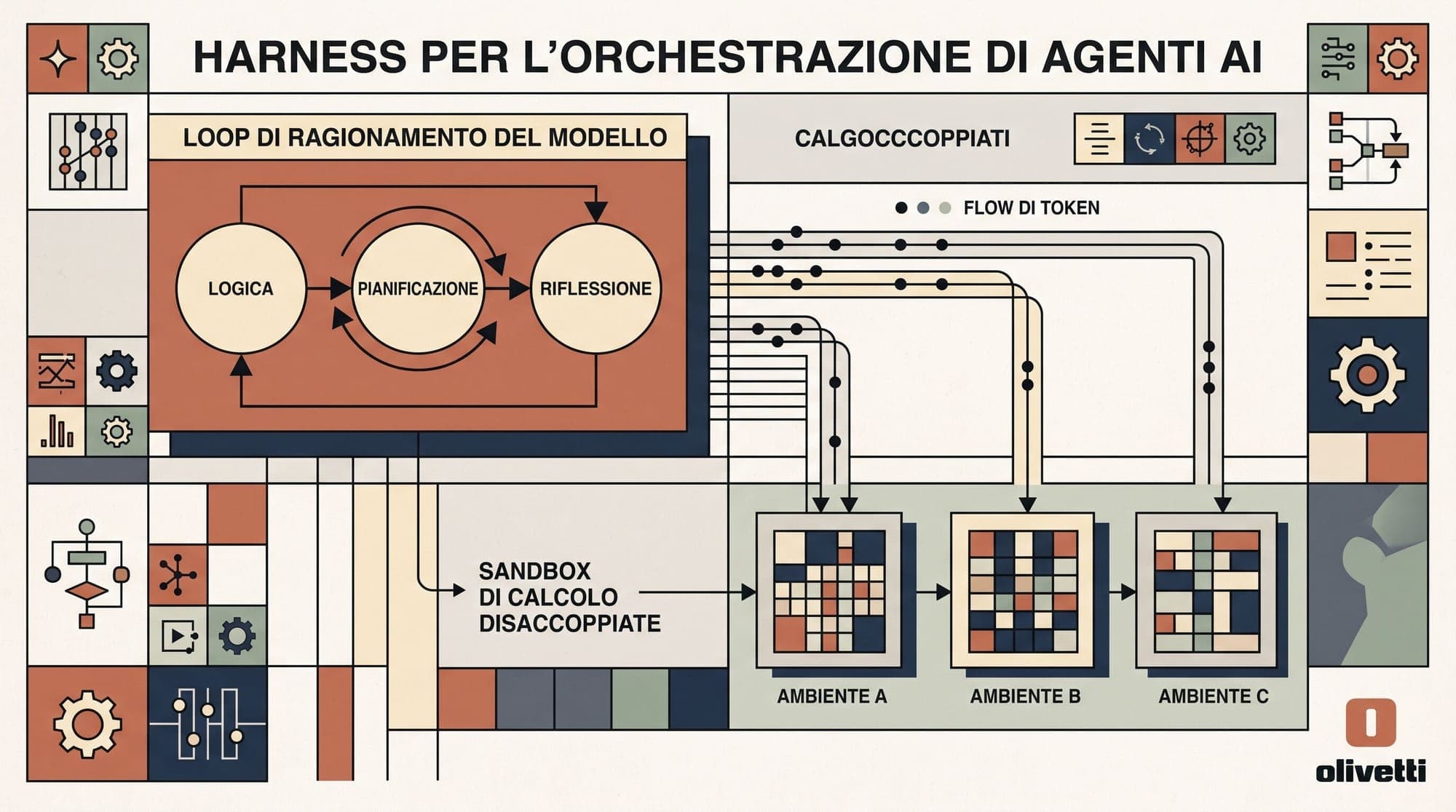
Enterprise ML infrastructure platform TrueFoundry has open-sourced its custom agent runtime, TrueForge, under the permissive MIT license. The framework is designed to orchestrate autonomous reasoning loops, tool interactions, and long-running execution across vendor-neutral LLM backends while systematically reducing token overhead and operational compute costs.
According to benchmark data published by TrueFoundry, pairing TrueForge with the open-weight GLM-5.2 model completed 11 of 14 enterprise tasks on DevRev's Enterprise-Bench at a total cost of $2.90. The identical benchmark run on Anthropic's proprietary Claude Managed Agents harness powered by Claude Opus 4.8 cost $11.80, representing a 75 percent cost reduction. When holding the model constant by executing Claude Opus 4.8 inside TrueForge, the open-source harness still reduced total spending by approximately 30 percent ($8.50 compared to $11.80).
Context Engineering and Sandbox-as-a-Tool Architecture
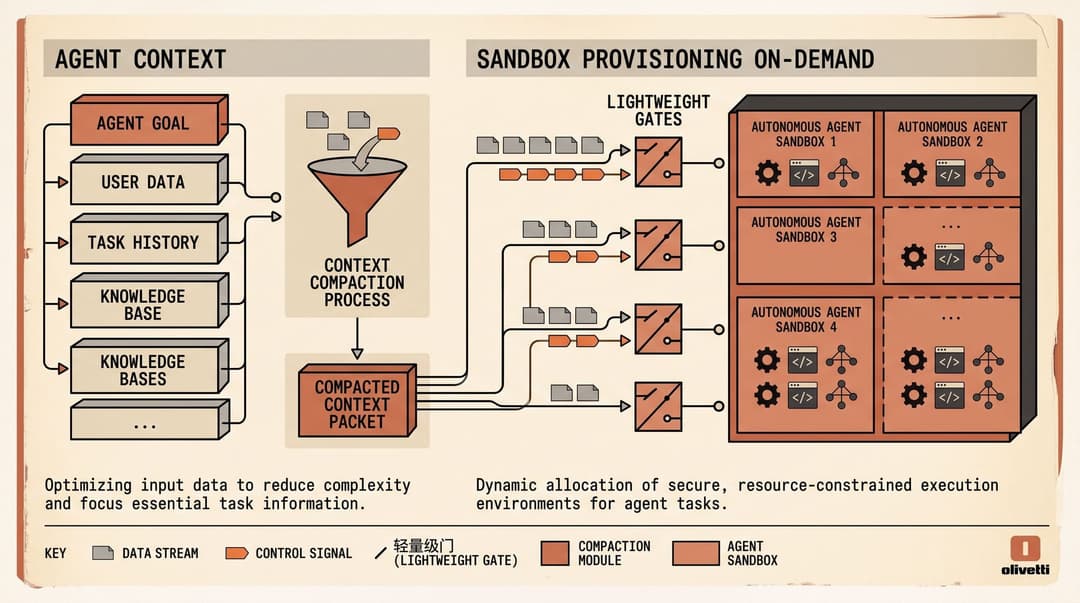
TrueForge achieves token efficiency primarily through aggressive context engineering. Traditional agent harnesses frequently saturate active context windows by injecting full Model Context Protocol (MCP) tool schemas upfront and returning verbatim command outputs into subsequent reasoning steps. TrueForge mitigates this through several structural mechanisms:
- Deferred Schema Loading: MCP tool definitions and schemas are retrieved and loaded dynamically when referenced, avoiding persistent token consumption in early reasoning phases.
- Offloading Large Tool Outputs: Oversized tool responses and raw logs are routed directly to filesystem storage, passing only compact references or summaries back to the model context.
- Subagent Delegation: Complex multi-step operations are partitioned into isolated child subagents with dedicated contexts, preventing context pollution in the root orchestrator.
- Automated Compaction: Long-running conversation histories are compacted automatically once session token counts hit a configurable threshold (defaulting to 50,000 tokens).
In addition to context reduction, TrueForge alters compute resource allocation by decoupling code execution environments from the main agent loop. Instead of maintaining persistent, dedicated virtual machines throughout an agent's entire operational lifecycle, TrueForge hosts the primary reasoning loop on the central server. Isolated sandboxes are provisioned strictly on demand as callable tools when an agent executes shell commands, runs scripts, or modifies files.
Deployment Topologies and Enterprise Governance
TrueForge is structured for progressive deployment. Developers can run a single-process local instance backed by SQLite for prototyping, and transition the same configuration to clustered production deployments using Docker Compose or Kubernetes Helm charts backed by PostgreSQL and Redis.
While the core TrueForge harness is fully open source and vendor-neutral, organizations requiring strict governance can pair the runtime with TrueFoundry's commercial AI Gateway. The gateway layer provides enterprise single sign-on (SSO), centralized access controls across models and MCP endpoints, budget enforcement, and distributed tracing.
Founded in 2021 by Nikunj Bajaj, Abhishek Choudhary, and Anuraag Gutgutia, TrueFoundry has raised approximately $21 million in venture financing, including a $19 million Series A led by Intel Capital in 2025. Following its acquisition of MLOps vendor Seldon AI in June 2026, TrueFoundry reports processing more than 10 billion requests monthly through its gateway for enterprise clients including NetApp, Siemens Healthineers, Synopsys, and Automation Anywhere.
