Subscribe
Topic / page 5

Machine Learning

Articles, page 5

81-100
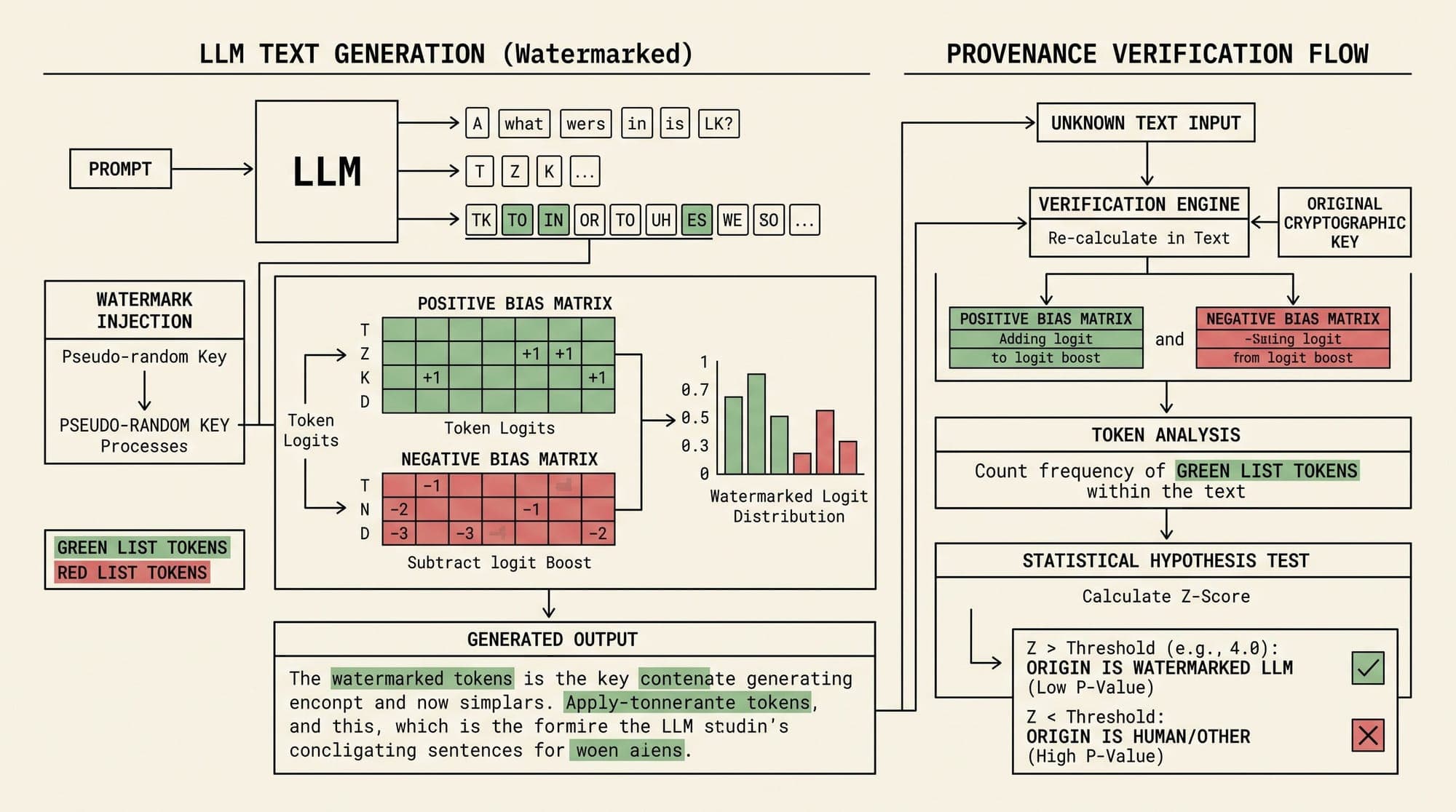
  1. LLM Text Watermarking in Production: Statistical Logit Biasing, Cryptographic Signatures, and Evasion Vectors

    As regulatory frameworks such as Article 50 of the EU AI Act enforce machine-generated content provenance, text watermarking has transitioned from academic theory to a core component of production LLM serving stacks. Unlike post-hoc classifiers that evaluate perplexity or burstiness and suffer from high false-positive rates on formal or non-native writing, generation-time watermarks embed imperceptible statistical or cryptographic signals directly into the token sampling process. For how those

    AI
    5 min read
  2. Grokking in Large Language Models: How Weight Decay and Circuit Efficiency Drive Delayed Generalization

    In standard machine learning paradigms, model generalization closely tracks training loss: as an optimizer minimizes loss on training data, performance on held-out validation data improves in tandem until the model begins to overfit. In 2022, researchers at OpenAI observed a phenomenon that inverted this assumption: small neural networks trained on algorithmic tasks achieved near-zero training error within hundreds of steps, lingered in an apparent state of complete overfitting for tens of thous

    AI
    7 min read
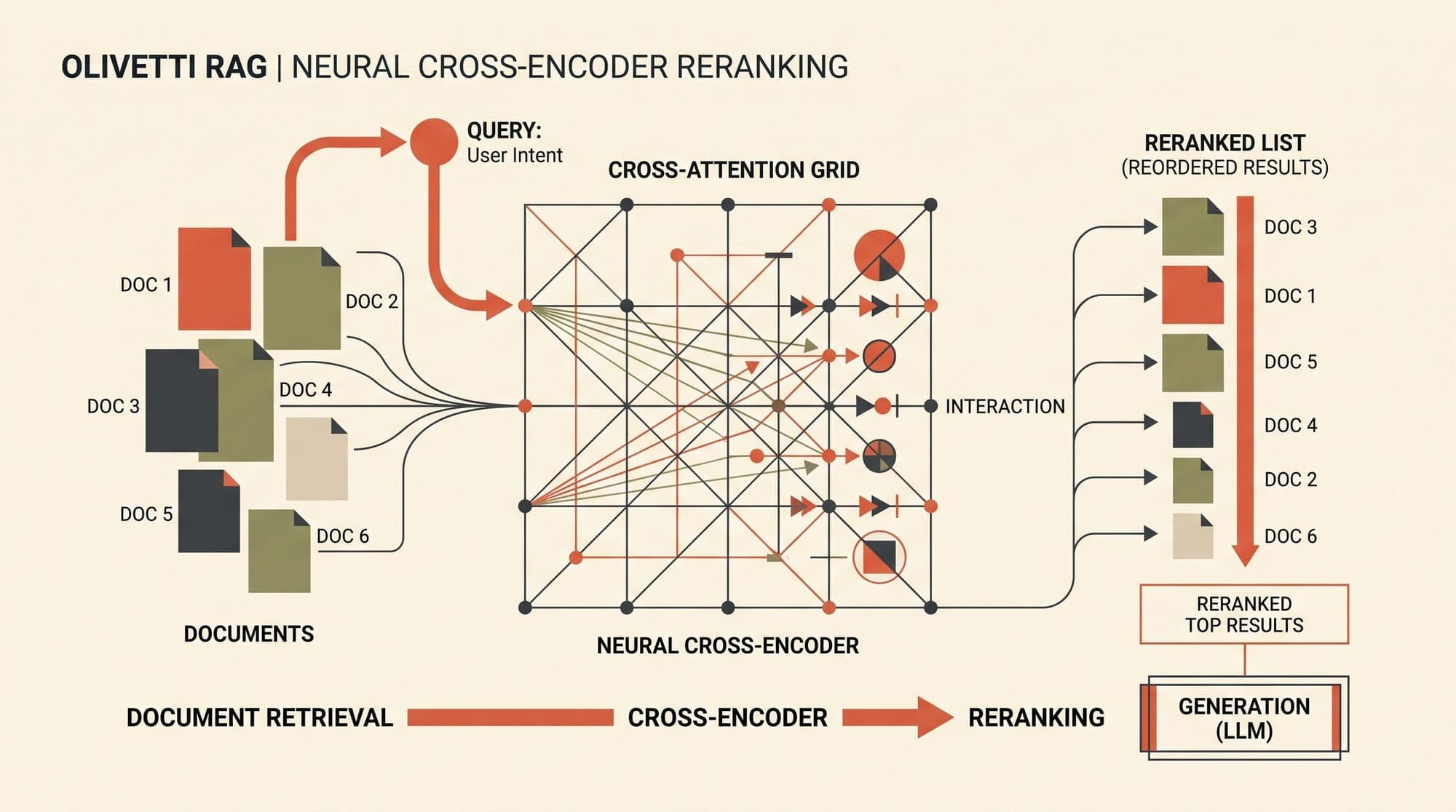
  3. Cross-Encoder Rerankers in Production RAG: Architecture, Score Calibration, Latency Budgets, and Model Trade-Offs

    Retrieval-Augmented Generation (RAG) systems in production frequently suffer from a fundamental precision failure: vector search surfaces the correct chunk somewhere in the top 50 candidates, but fails to place it in the top 3 positions required for high-fidelity LLM synthesis. When irrelevant or tangential chunks lead the context window, generation quality degrades through hallucinations, lost-in-the-middle context neglect, and inflated inference costs. Cross-encoder rerankers serve as the sta

    RAG
    9 min read
  4. Representation Degeneration and Anisotropy in Large Language Models: Why Embeddings Collapse into Narrow Cones

    In neural language modeling, high-dimensional vector spaces are expected to distribute token and sequence representations uniformly across their ambient dimensions. A space that utilizes all available geometric directions provides maximal representational capacity, allowing subtle semantic and syntactic differences between tokens to be resolved cleanly. Empirical analysis across architectures from BERT and GPT-2 to modern frontier foundation models reveals the opposite behavior: learned token a

    AI
    9 min read
  5. Perplexity and Bits-Per-Byte in Large Language Models: Mathematical Foundations, Tokenizer Dependency, and Compression Benchmarks

    Perplexity and Bits-Per-Byte in Large Language Models: Mathematical Foundations, Tokenizer Dependency, and Compression Benchmarks Evaluating autoregressive large language models requires metrics that quantify predictive confidence across text sequences. The standard objective during pre-training is the minimization of empirical risk under a cross-entropy loss function. Exponentiating this loss yields Perplexity (PPL), a foundational metric dating back to statistical speech recognition and n-gra

    AI
    9 min read
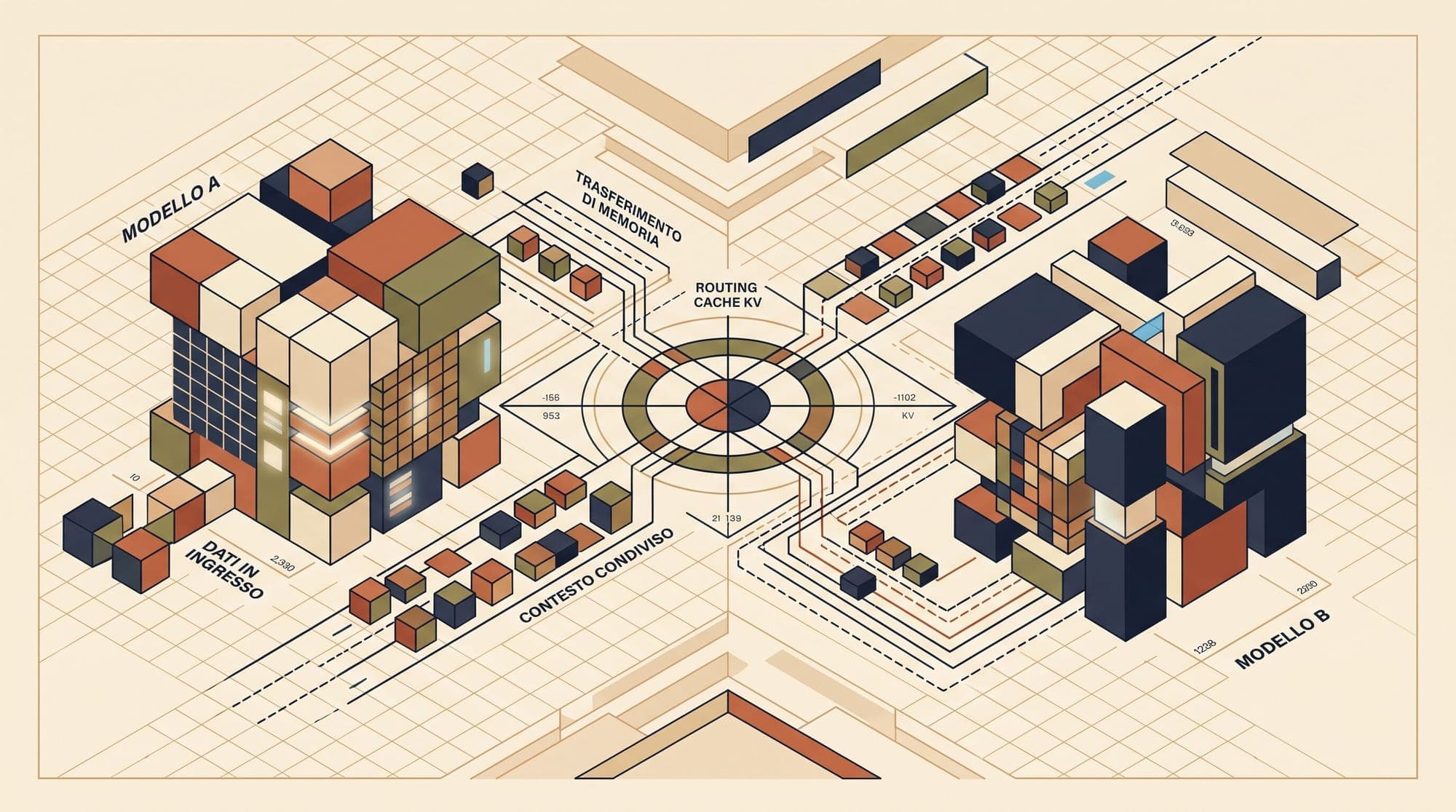
  6. NVIDIA Researchers Map Cross-Model KV Caches via Linear Ridge Regression to Accelerate Model Cascading Up to 25x

    In multi-agent systems and tiered model cascades, routing requests across different model sizes is a standard architecture for balancing inference cost and generation quality. However, switching models mid-session has historically imposed a severe compute tax: because each neural architecture maintains its own distinct internal representations, the receiving model cannot read the key-value (KV) states generated by the previous model. The target model must recompute the entire conversation histor

    AI
    4 min read
  7. Weight Initialization in Large Language Models: How Variance Scaling, Residual Multipliers, and DeepNorm Stabilize Deep Transformer Pre-Training

    Weight Initialization in Large Language Models: How Variance Scaling, Residual Multipliers, and DeepNorm Stabilize Deep Transformer Pre-Training In deep transformer architectures, weight initialization is the primary determinant of whether a trillion-token pre-training run converges smoothly or diverges during the first thousand steps. When training networks with 80 to 120 layers (such as Llama 3 70B, GPT-4, or deep mixture-of-experts models), naive application of classical Gaussian or uniform

    AI
    10 min read
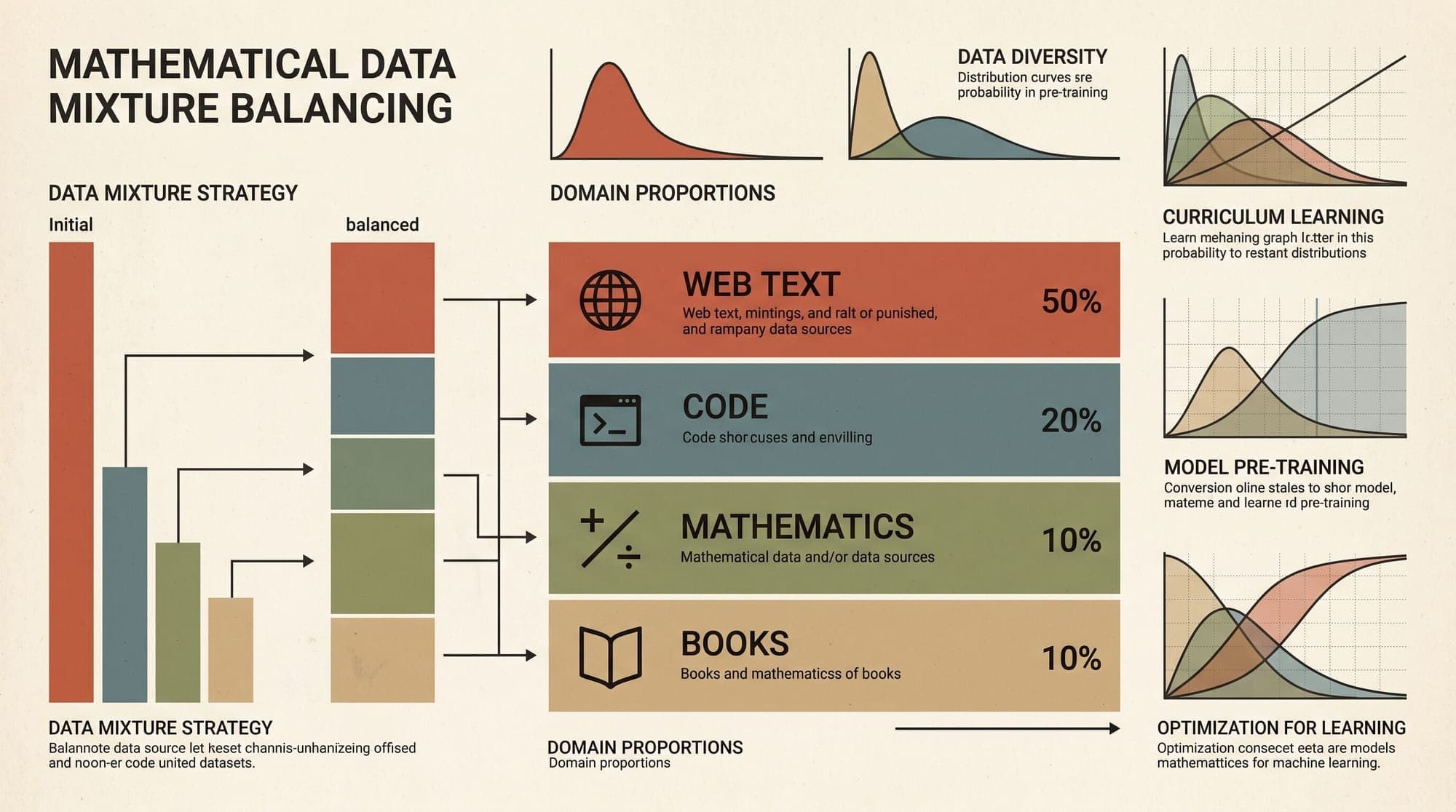
  8. Data Mixing and Domain Scheduling in Large Language Models: How DoReMi, RegMix, and Multi-Stage Annealing Shape Pre-Training Dynamics

    Data Mixing and Domain Scheduling in Large Language Models: How DoReMi, RegMix, and Multi-Stage Annealing Shape Pre-Training Dynamics In large language model pre-training, data composition is as consequential as parameter count and compute budget. While early foundation models relied on raw natural frequencies or manual heuristic filtering to construct training corpora, empirical scaling laws have shown that arbitrary domain ratios cause severe compute inefficiencies. Over-sampling redundant te

    AI
    6 min read
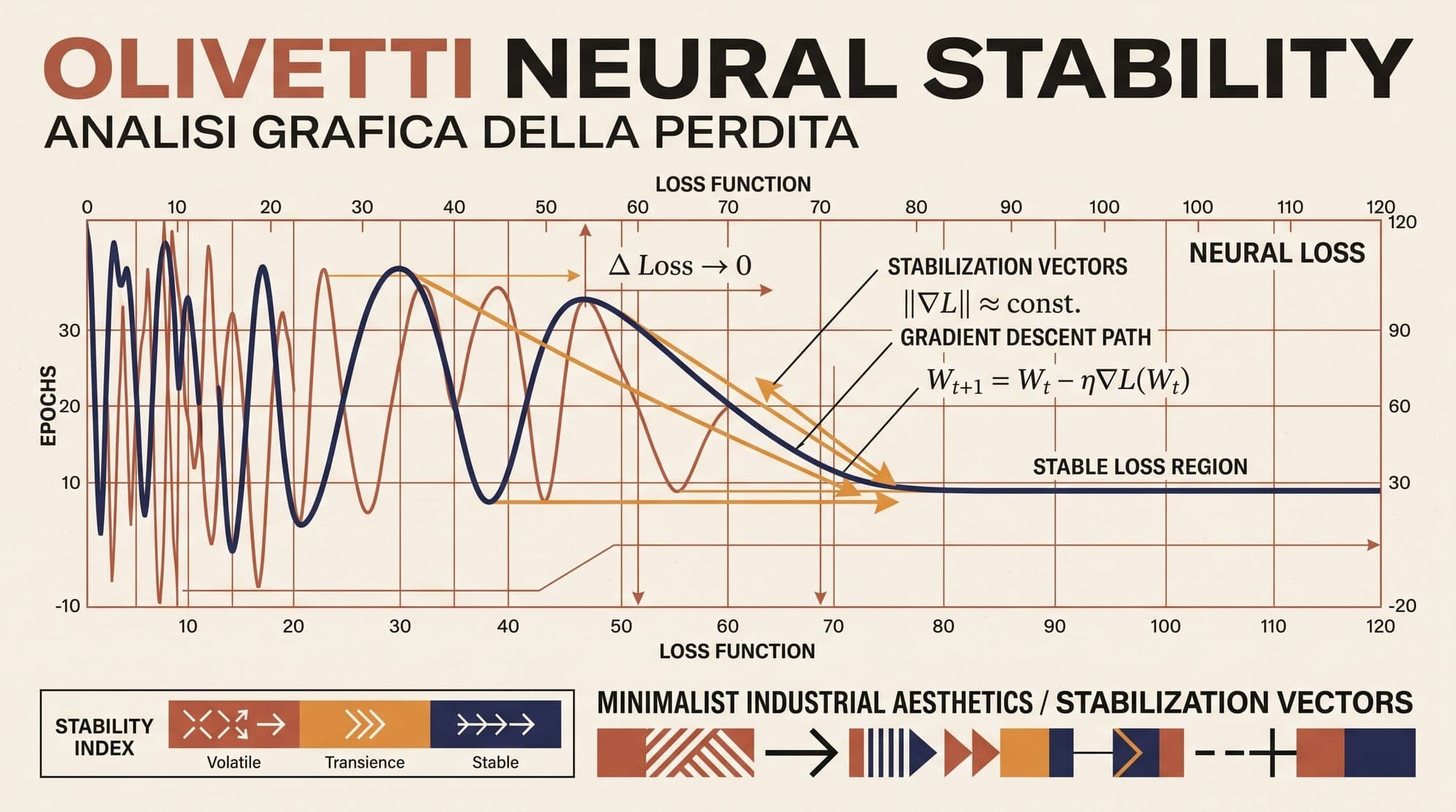
  9. Loss Spikes and Training Stability in Large Language Models: How Attention Logit Drift, z-loss, and QK-Norm Prevent Gradient Explosions

    During the pre-training of modern large language models, few operational failures are as costly as loss spikes. When training clusters containing thousands of GPUs run for weeks across trillions of tokens, a sudden, discontinuous surge in cross-entropy loss can corrupt optimizer momentum buffers, induce numerical overflow in half-precision representations, and permanently degrade downstream model capabilities. In severe cases, models experience catastrophic divergence, forcing engineering teams

    AI
    11 min read
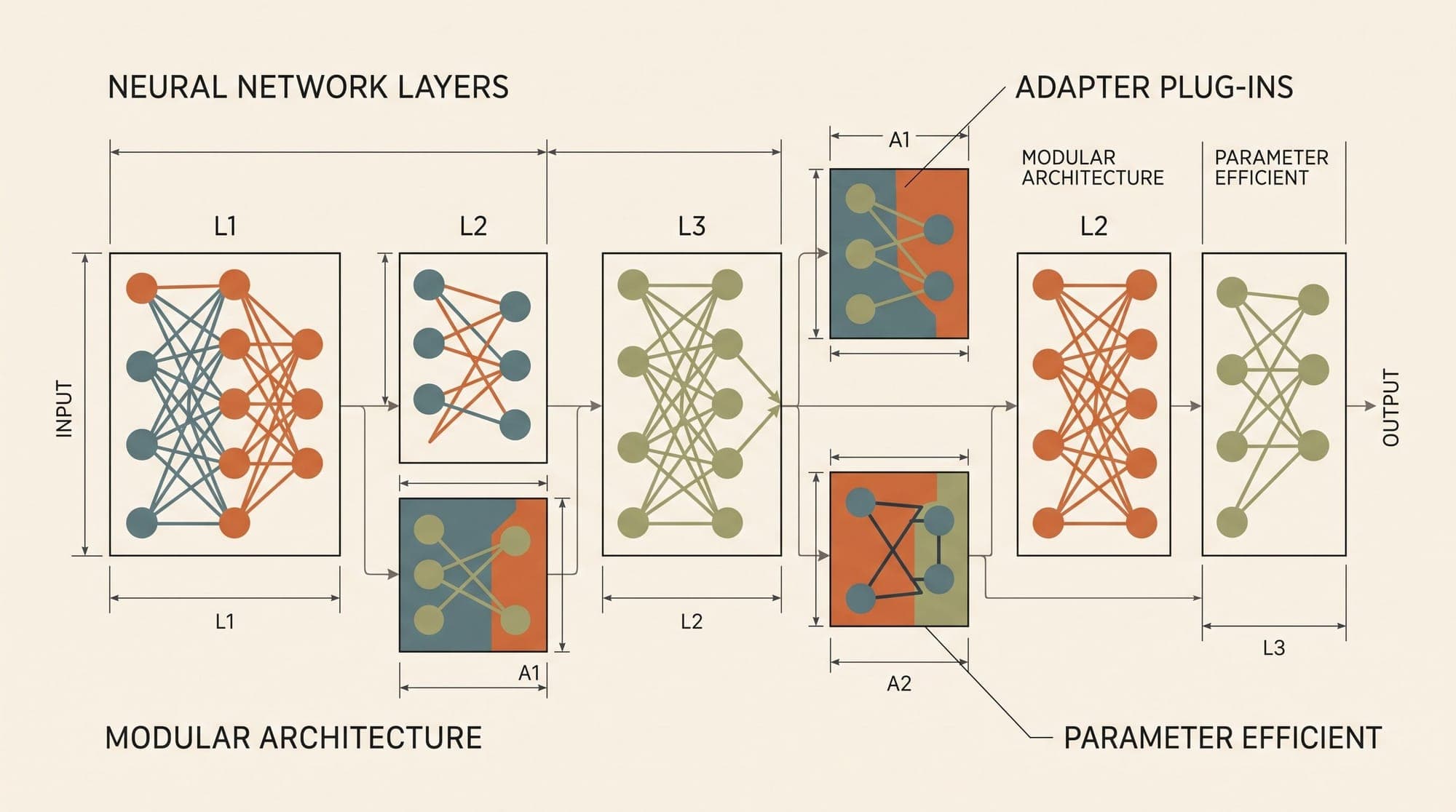
  10. Parameter-Efficient Fine-Tuning Beyond LoRA: How Adapters, Prefix Tuning, Prompt Tuning, and (IA)3 Adapt Frozen LLMs

    Parameter-Efficient Fine-Tuning Beyond LoRA: How Adapters, Prefix Tuning, Prompt Tuning, and (IA)3 Adapt Frozen LLMs While Low-Rank Adaptation (LoRA) and its weight-decomposed variant (DoRA) serve as the prevailing standard for adapting large language models, parameter-efficient fine-tuning (PEFT) encompasses a broader taxonomy of mathematical approaches. The core objective of PEFT is to adapt multi-billion-parameter foundation models to specialized downstream tasks while updating only a fracti

    AI
    8 min read
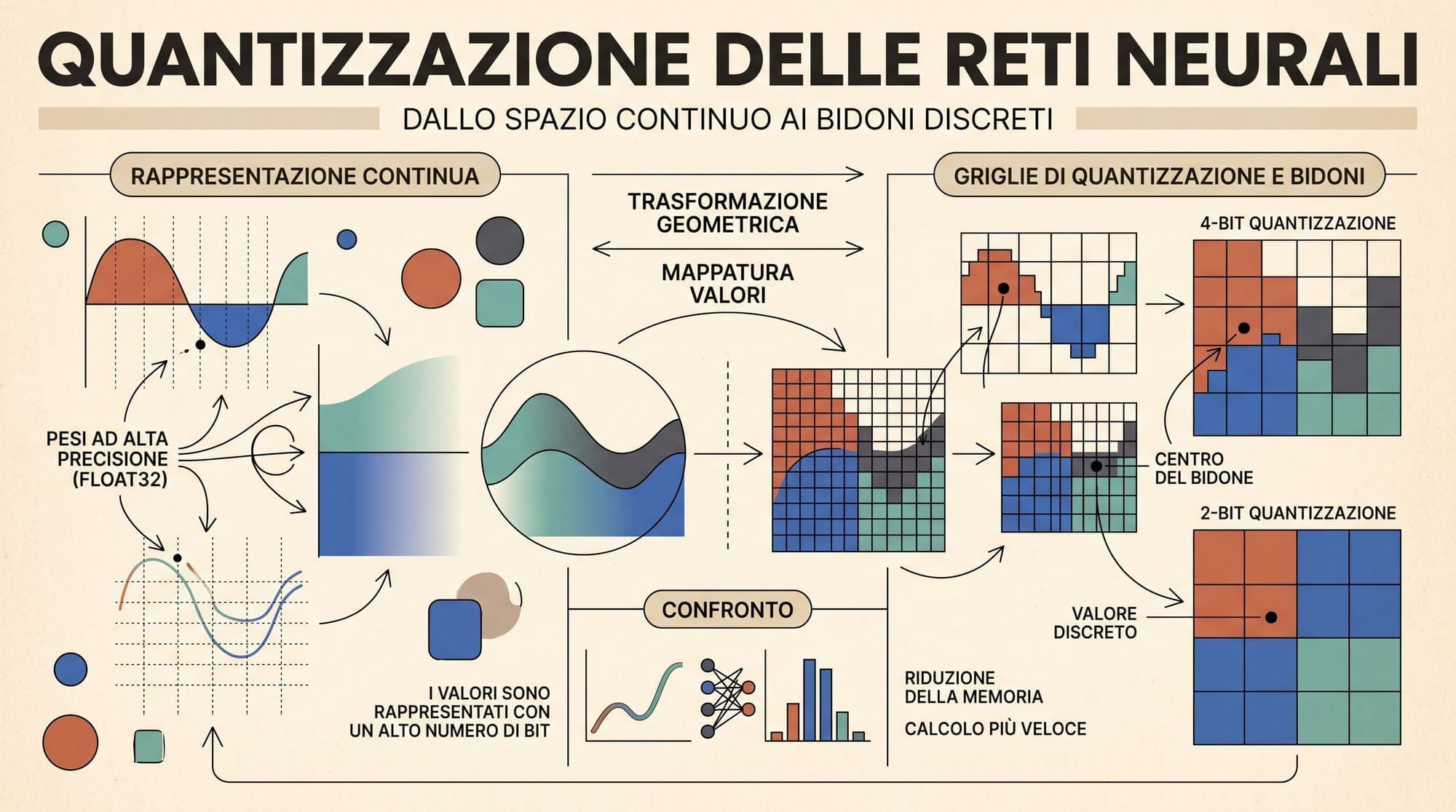
  11. Quantization-Aware Training in Large Language Models: How Fake Quantization, STE, and Learned Step Sizes Preserve Low-Bit Accuracy

    Quantization-Aware Training (QAT) is a model compression paradigm that integrates precision loss directly into the training or fine-tuning graph. While Post-Training Quantization (PTQ) calibrates fixed floating-point weights without updating underlying network parameters, QAT simulates the numerical discretization of weights, activations, and key-value (KV) caches during both forward and backward passes. This closed-loop optimization forces neural network weights to co-adapt to discrete integer

    AI
    9 min read
  12. Tree of Thoughts in Large Language Models: How Search Trees, State Evaluation, and Backtracking Expand Deliberate Reasoning

    Standard autoregressive large language models generate text sequentially from left to right. At each step $t$, the network samples the next token according to a conditional probability distribution over the vocabulary: P(w_t | w_1, w_2, ..., w_{t-1}) While Chain-of-Thought (CoT) prompting (Wei et al., 2022) encourages models to output intermediate reasoning steps, the underlying computational process remains a linear path through token space. If the model makes an early logical error or choose

    AI
    6 min read
  13. Classifier-Free Guidance: How Score Extrapolation and Implicit Classification Steer Generative Models

    Conditional generative models face an inherent tension between mode coverage and prompt adherence. When a model is trained to maximize data log-likelihood, its learned distribution matches the broad, messy variety of the underlying dataset. In unconditional generation, this diversity is desirable. In conditional generation, however, unconditional priors dilute the prompt: models generate generic, average samples that only weakly align with nuanced text descriptions, spatial layouts, or class lab

    AI
    9 min read
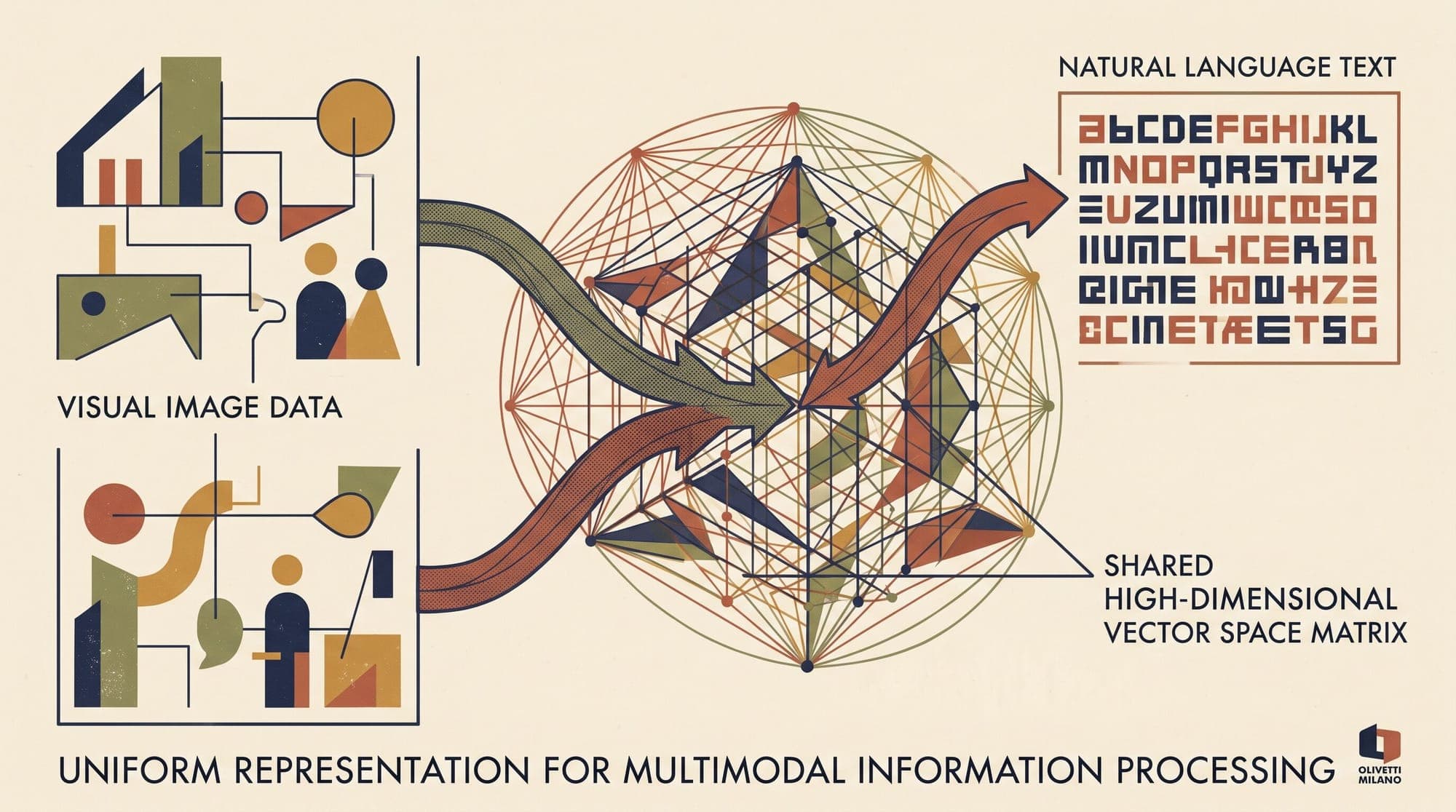
  14. Contrastive Language-Image Pre-Training (CLIP): How Joint Multi-Modal Embeddings Bridge Vision and Language

    Before 2021, computer vision models were largely constrained by closed-set supervised classification. Deep convolutional networks like ResNet were trained to predict one of exactly 1,000 discrete categories on ImageNet via a final linear layer and a softmax cross-entropy objective. This setup created rigid models: classifying an unencountered category or adapting to downstream domain shifts required throwing away the classification head, collecting thousands of labeled samples, and retraining or

    AI
    8 min read
  15. Machine Unlearning in Large Language Models: How Gradient Ascent, Representation Misdirection, and Negative Alignment Purge Neural Memory

    Large language models memorize massive amounts of training data, including copyrighted literature, personally identifiable information (PII), proprietary codebases, and dual-use knowledge spanning cyber exploits and biological hazards. When copyright holders, regulators, or safety researchers demand the removal of specific data, complete retraining from scratch is economically infeasible, often costing tens of millions of dollars in compute. Machine unlearning aims to remove the influence of ta

    AI
    7 min read
  16. Model Collapse in Large Language Models: How Recursive Training on Synthetic Data Degrades Neural Distributions

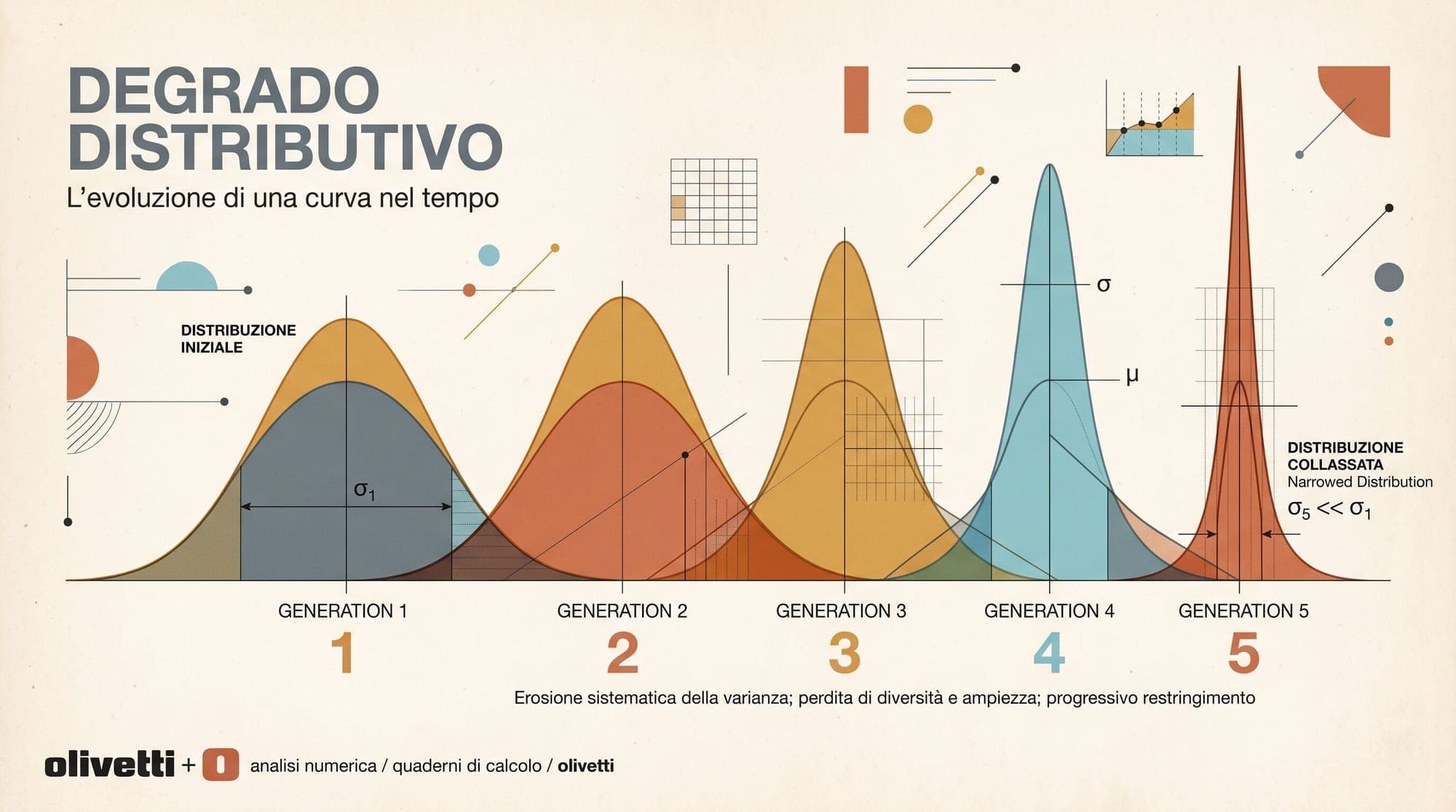
    As large language models scale and generate a growing share of digital text, code, and media, the web datasets used to train next-generation models increasingly consist of machine-generated outputs. When generative models are trained recursively on data produced by earlier model generations without sufficient ground-truth anchoring, they undergo a systematic degradation process known as model collapse. First formalized in foundational statistical literature and demonstrated across modern deep l

    AI
    7 min read
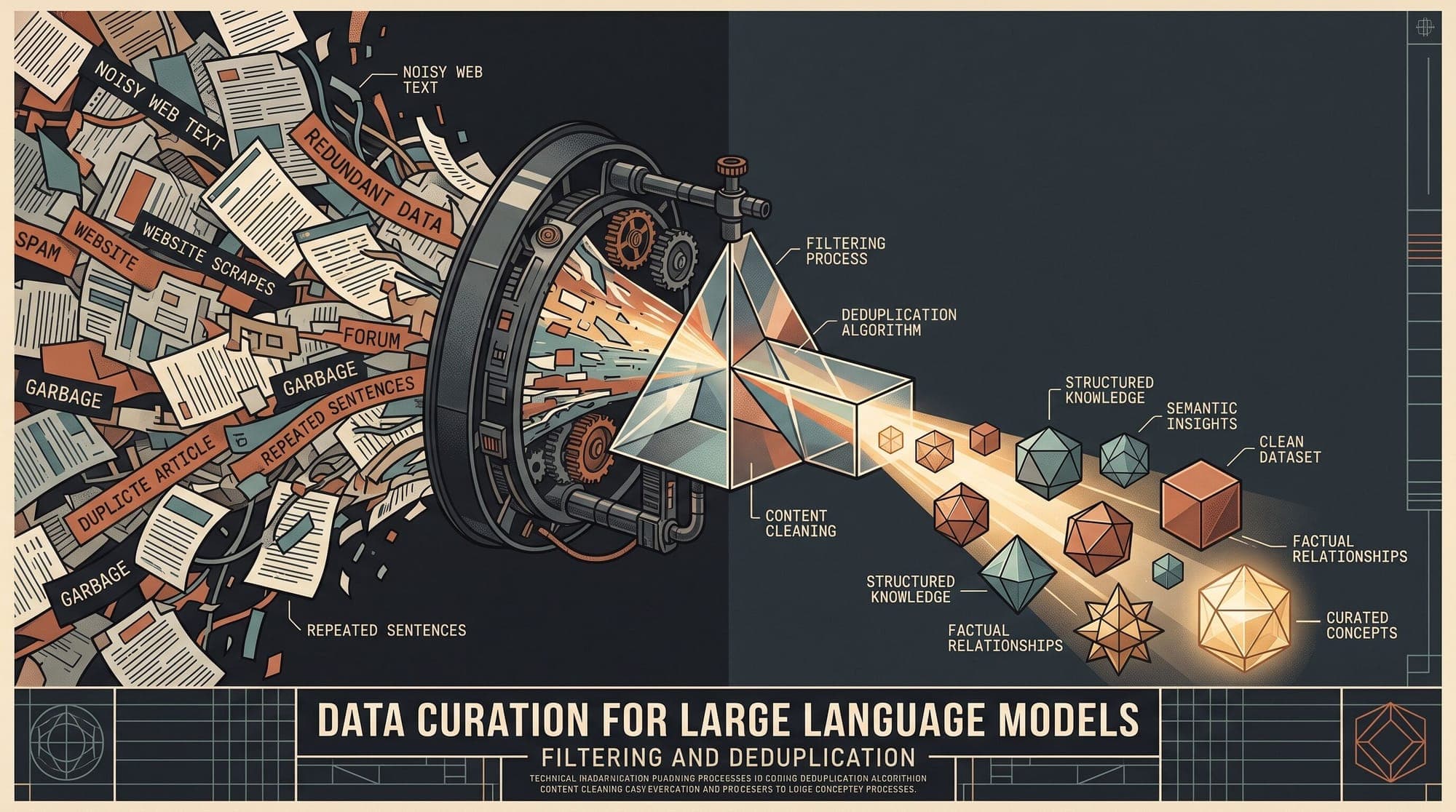
  17. Data Filtering and Deduplication in Large Language Models: How Heuristics, MinHash LSH, SemDeDup, and Quality Classifiers Curate Pre-Training Corpora

    Data Filtering and Deduplication in Large Language Models: How Heuristics, MinHash LSH, SemDeDup, and Quality Classifiers Curate Pre-Training Corpora Pre-training data quality governs the downstream reasoning, factual accuracy, and sample efficiency of foundation large language models (LLMs). While early pre-training efforts relied on uncurated or lightly processed dumps from web repositories like Common Crawl, modern state-of-the-art models depend on multi-stage data curation pipelines that fi

    AI
    10 min read
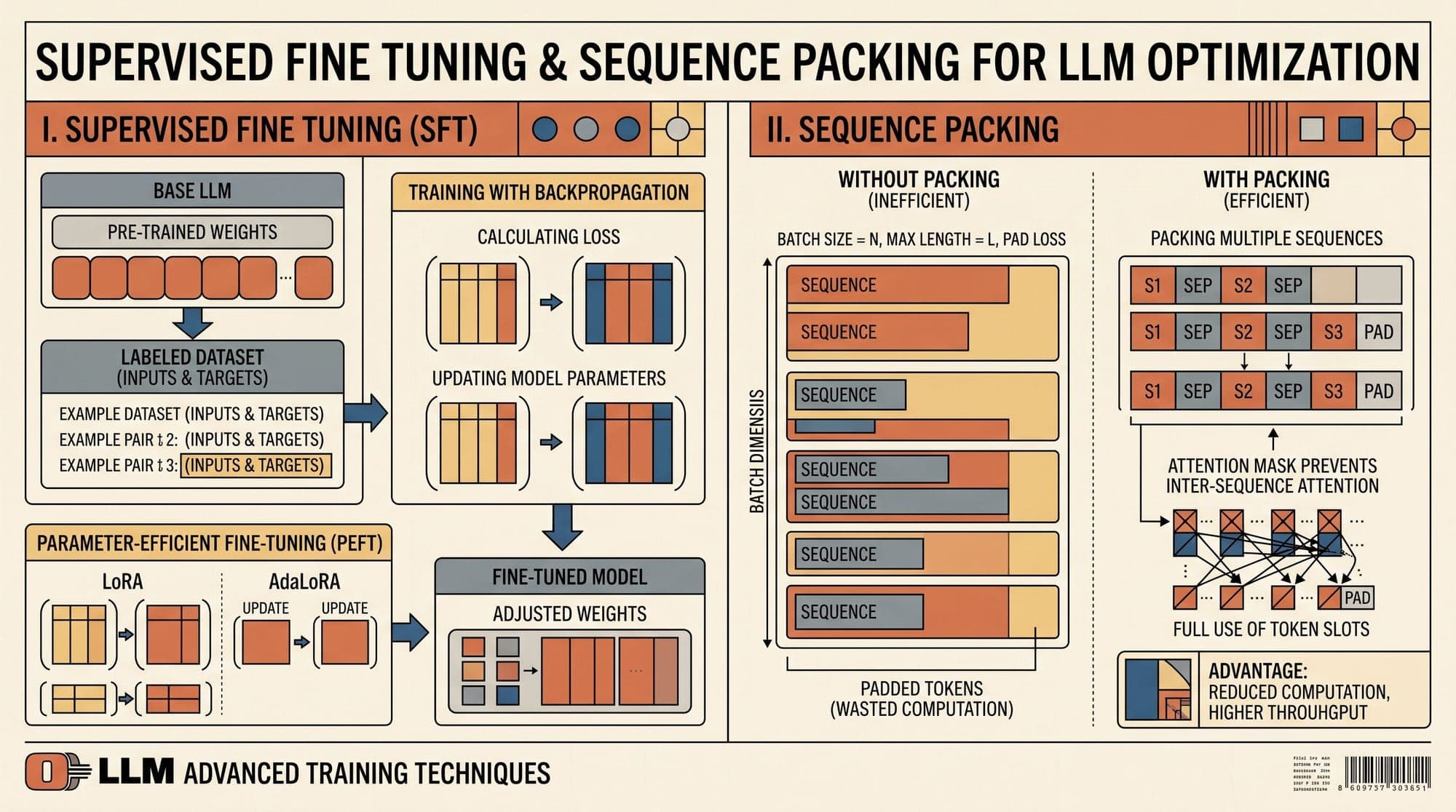
  18. Supervised Fine-Tuning in Large Language Models: Loss Masking, Sequence Packing, and Alignment Dynamics

    Pre-training endows a large language model with broad linguistic patterns, world knowledge, and reasoning primitives by predicting the next token across trillions of uncurated web tokens. However, a raw base model remains a document completer rather than an interactive assistant. Given a prompt such as "Explain how a compiler works," a base model is as likely to generate additional exam questions or web navigation headers as it is to answer the query. Supervised Fine-Tuning (SFT), frequently te

    AI
    7 min read