Subscribe
Topic / page 30

LLM

Articles, page 30

581-600
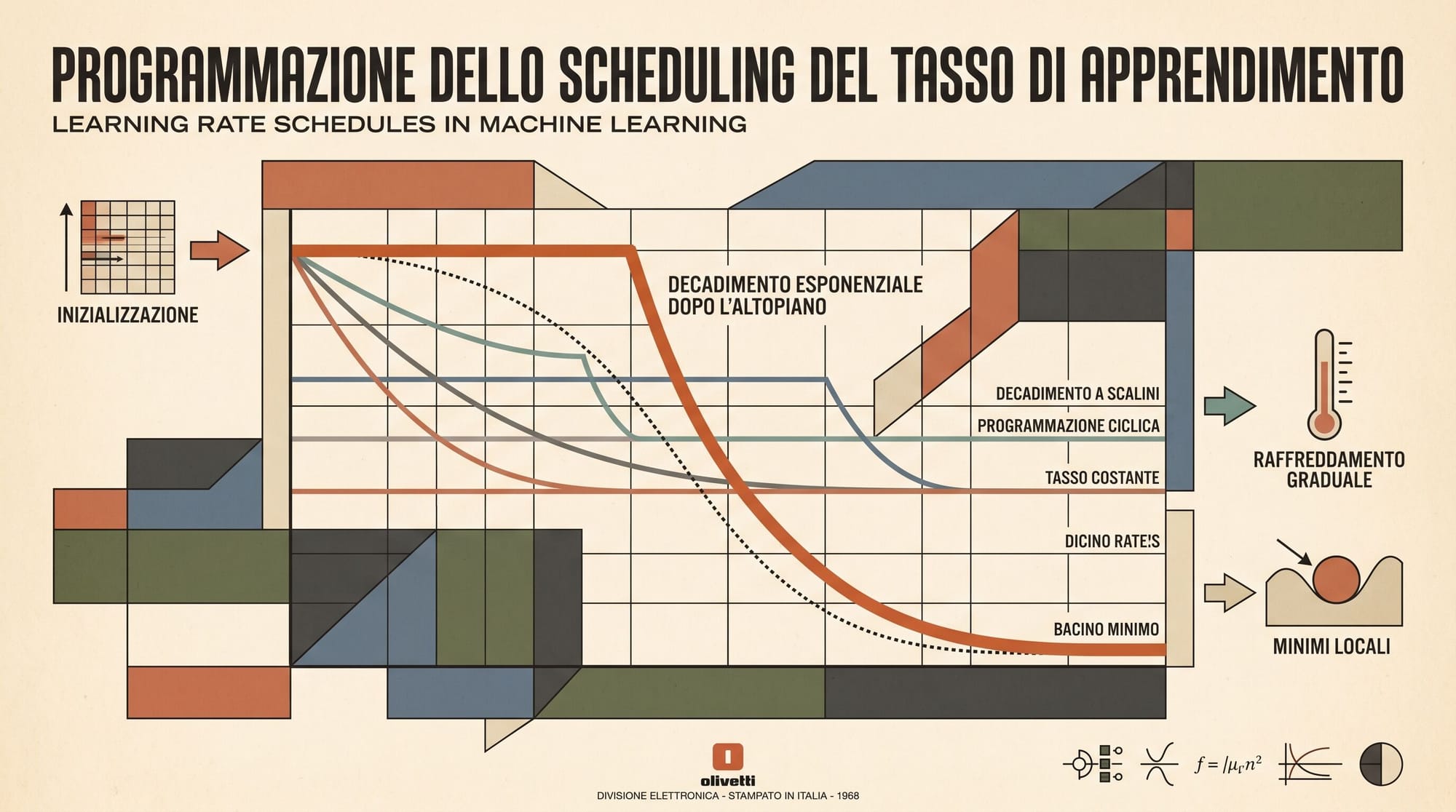
  1. Warmup-Stable-Decay (WSD): How Decoupled Annealing Replaced Cosine Decay in Modern LLM Pre-Training

    For years, foundation model pre-training adhered to a standard optimization convention: linear learning rate warmup followed by a full-horizon cosine decay. Adopted across GPT-3, PaLM, Chinchilla, and LLaMA, cosine annealing provided stable convergence across diverse parameter scales. However, it introduced a severe structural limitation: the learning rate schedule is rigidly tied to a fixed, upfront token budget. If a team decides to extend pre-training mid-run, branch into domain-specific vari
    AI
    6 min read
  2. Grok 4.6 Launches on Amazon Bedrock with 500K Context and Cross-Region Routing

    xAI's flagship reasoning model, Grok 4.6, is now generally available across Amazon Web Services through Amazon Bedrock. Released on August 19, 2026 under the model ID xai.grok-4.6, the deployment gives enterprise AWS customers managed API access to xAI's frontier model alongside existing foundational offerings from Anthropic, Meta, and Mistral. The integration comes one week after xAI initially launched Grok 4.6 on August 12, marking a significantly faster enterprise cloud deployment than its p

    AI
    2 min read
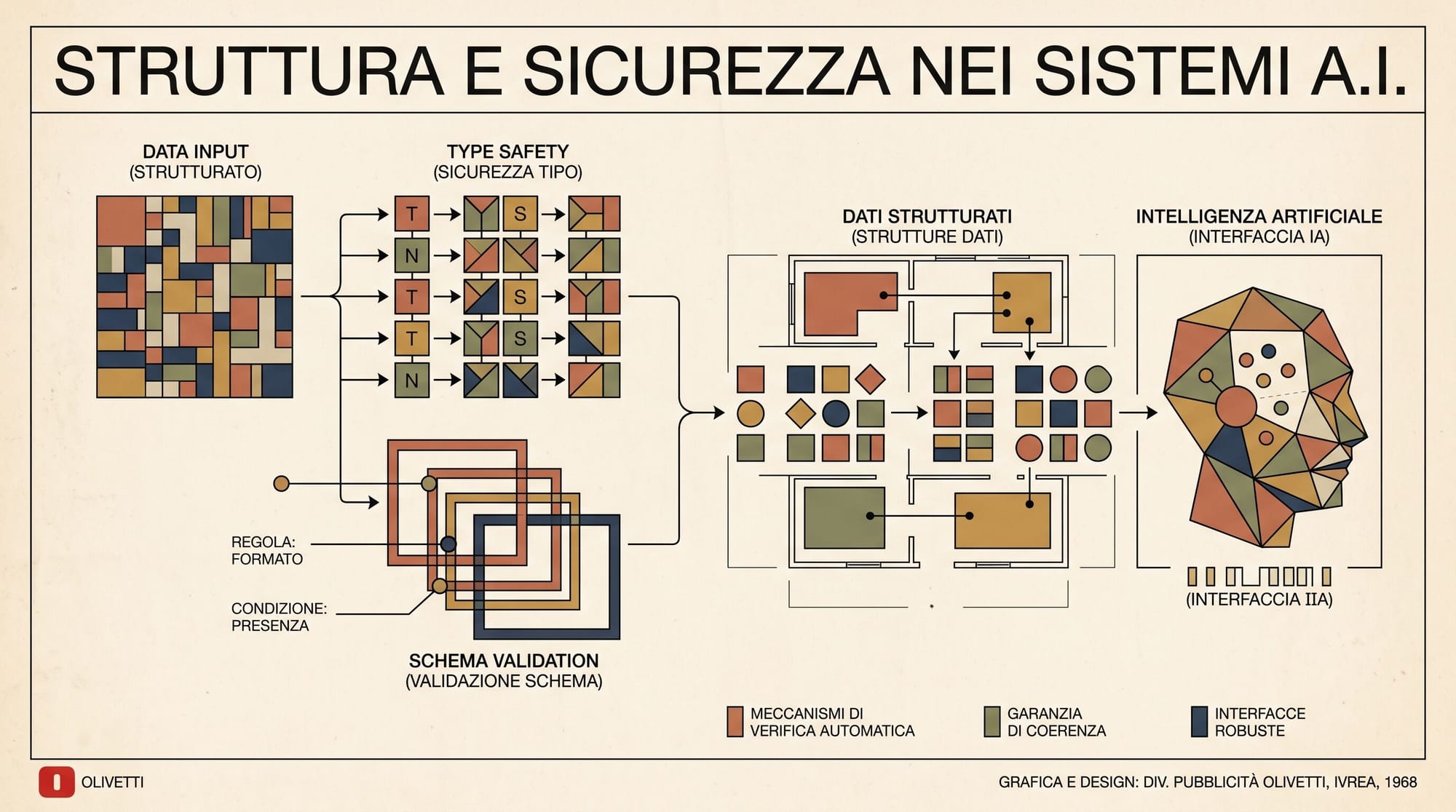
  3. Type-Safe LLM Interfaces in Production: Comparing BAML, Instructor, and PydanticAI

    Converting non-deterministic natural language into deterministic, typed data structures is a fundamental requirement of production AI engineering. While early implementations relied on string manipulation, regular expressions, or basic json.loads calls, modern production systems require strict type guarantees, schema validation, and predictable failure modes. Today, engineering teams face three distinct architectural paradigms for enforcing type safety across large language model (LLM) interfac

    AI
    7 min read
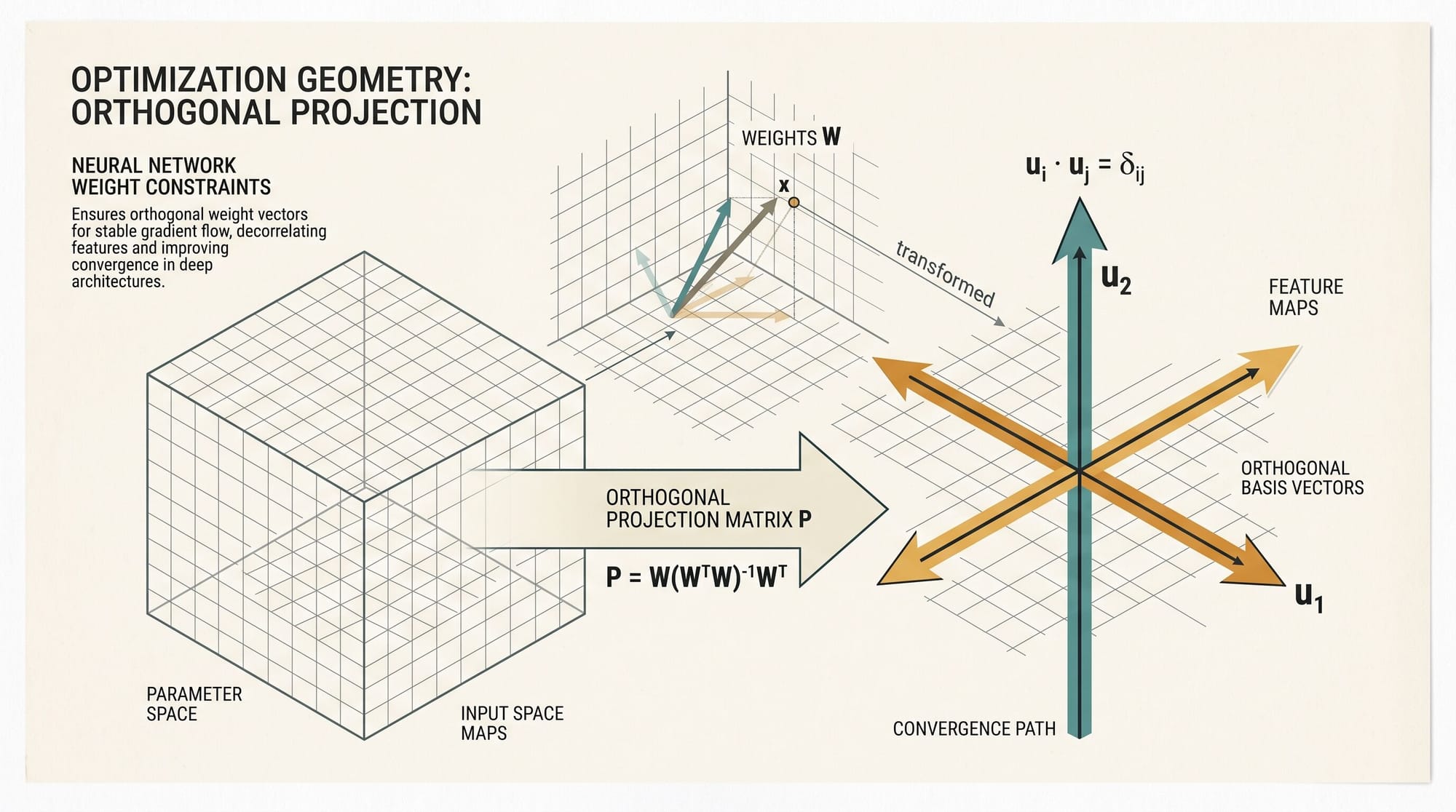
  4. Muon Optimizer: How Matrix Orthogonalization and Newton-Schulz Iterations Accelerate LLM Training

    Modern large language model pre-training has relied on AdamW as its default optimizer for nearly a decade. While AdamW provides robust convergence across varied architectures, its fundamental formulation treats neural network weights as flat collections of independent scalar parameters. For the 2D weight matrices that dominate Transformer architectures—including attention projections and feed-forward linear layers—this coordinate-wise treatment ignores the underlying matrix geometry and singular

    AI
    5 min read
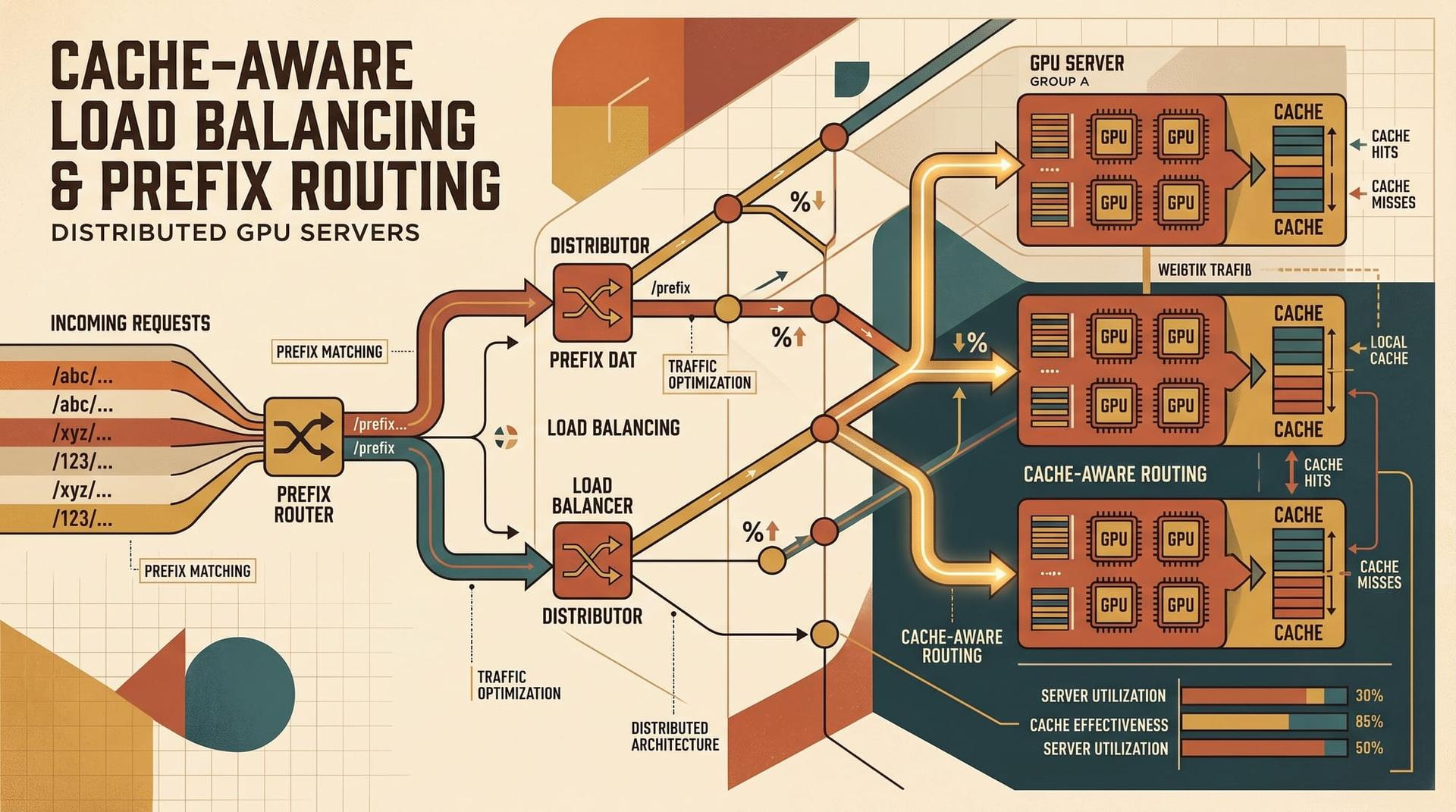
  5. Cache-Aware Load Balancing in Production LLM Serving: Architecture, Prefix Affinity, and Multi-Replica Routing Trade-Offs

    Cache-Aware Load Balancing in Production LLM Serving: Architecture, Prefix Affinity, and Multi-Replica Routing Trade-Offs When scaling large language model inference across multiple GPU worker nodes, standard Layer-4 and Layer-7 load balancing algorithms create an unseen performance cliff. Round-robin, least-connections, and random routing distribute HTTP/gRPC requests uniformly across compute replicas. However, modern LLM inference engines rely on prompt caching mechanisms, such as vLLM Automa

    AI
    6 min read
  6. SwiGLU and Gated Linear Units: How Bilinear Gating Replaced Standard FFNs in Modern LLMs

    Every modern open-weight and frontier large language model, from Meta's LLaMA 3 and Mistral to Alibaba's Qwen 2.5 and DeepSeek-V3, has abandoned the standard two-layer Feed-Forward Network (FFN) originally introduced in the 2017 Transformer architecture. In its place, model architectures have converged almost universally on Gated Linear Units (GLU), specifically the Swish-Gated Linear Unit (SwiGLU). While the original Transformer relied on standard non-linear activations like ReLU or Gaussian E

    AI
    6 min read
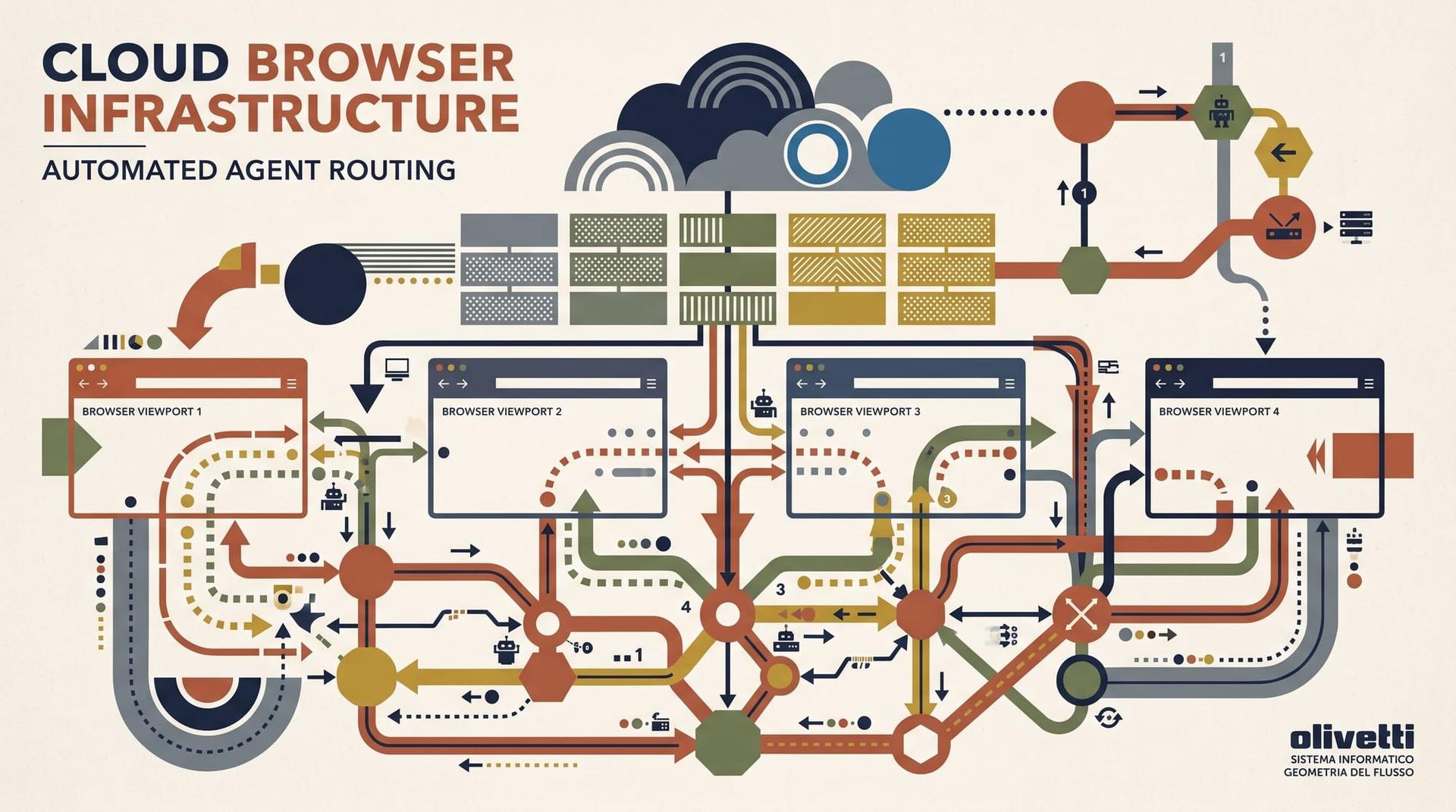
  7. Cloud Browser Infrastructure for AI Agents: Architecture, Anti-Bot Bypassing, Session State, and Fleet Scaling

    Autonomous AI agents require interactive web environments to navigate single-page applications, authenticate across complex portals, fill multi-step forms, and extract dynamic client-rendered data. However, running headless browsers at scale introduces severe operational bottlenecks. Ephemeral container instances (such as Docker containers or AWS Lambda functions) frequently suffer from cold starts, memory leaks, fingerprint leakage, and instant IP blacklisting by bot-detection networks. To sol

    AI
    6 min read
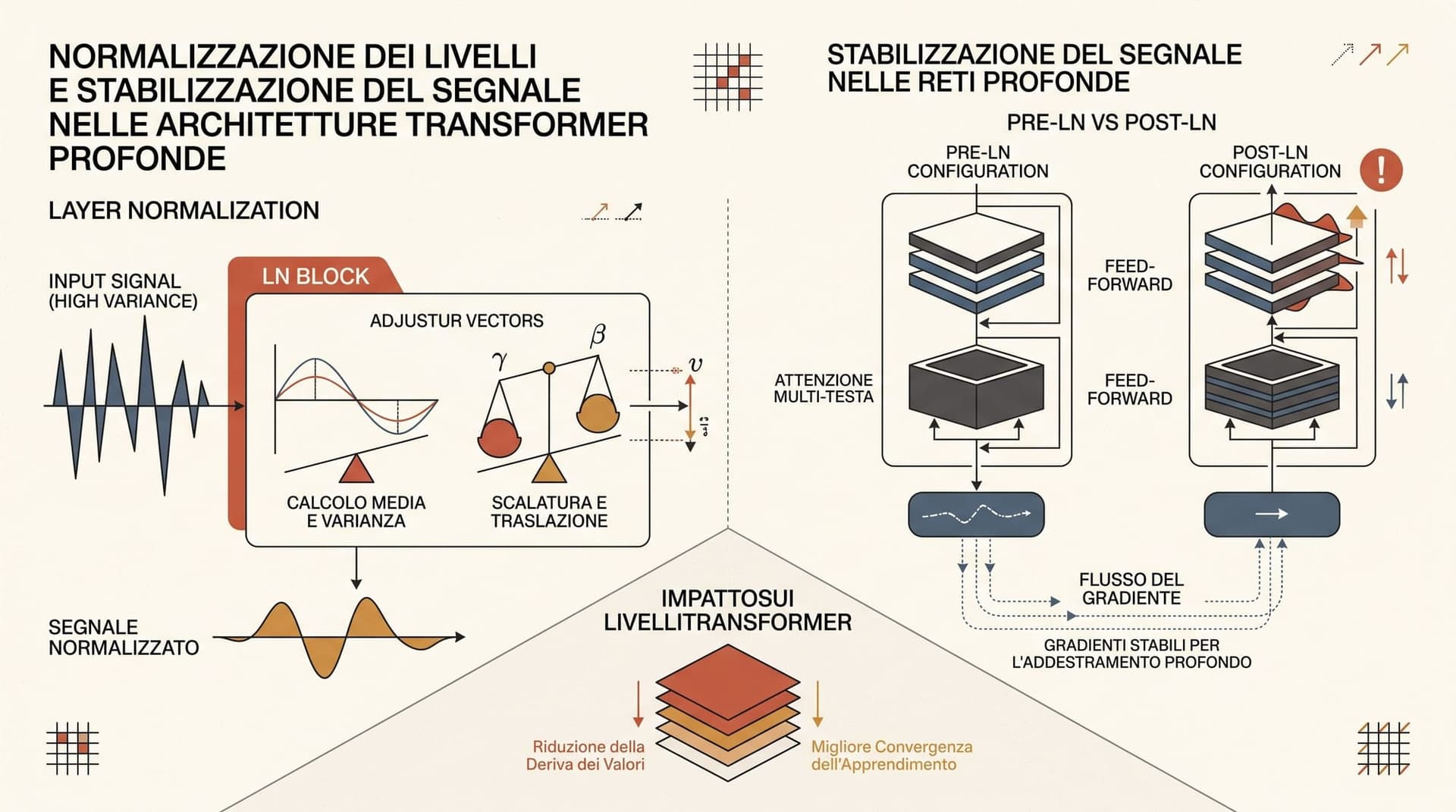
  8. Layer Normalization and RMSNorm in Large Language Models: How Pre-LN, Scaling Invariance, and QK-Norm Stabilize Deep Transformers

    Training deep autoregressive Transformers requires maintaining numerical stability across dozens or hundreds of stacked attention and feed-forward blocks. As models scale from 7 billion to hundreds of billions of parameters, uncontrolled variance growth along the residual stream or unbounded attention logits can trigger catastrophic loss spikes, gradient underflow, or numerical divergence. Normalization layers act as the primary stabilizing mechanism in modern Large Language Models (LLMs). Whil

    AI
    8 min read
  9. Long-Context LLMs vs. RAG in Production: Break-Even Economics, Attention Degradation, and Hybrid Architectures

    The emergence of production models supporting context windows of 1 million tokens or more, including Google Gemini 1.5 Pro, Anthropic Claude 3.5 Sonnet, and OpenAI GPT-4o, has disrupted conventional enterprise retrieval architectures. For several years, Retrieval-Augmented Generation (RAG) served as the mandatory workaround for strict context limits, forcing engineering teams to build chunking pipelines, embedding indices, and vector database infrastructures. With massive context windows and th

    AI
    6 min read
  10. Oracle Health Adds Automated Coding, Dictation, and Chart Review to Clinical AI Agent

    Oracle Health has expanded the capabilities of its Clinical AI Agent in the United States, introducing automated professional fee coding, real-time clinician-controlled dictation, and AI-assisted chart review. The release marks a deliberate expansion beyond ambient clinical documentation into revenue cycle workflows and structured electronic health record retrieval. The update builds on Oracle's ambient listening platform, which transcribes patient encounters and synthesizes clinical notes. By

    AI
    2 min read
  11. On-Device LLM Inference in Production: Architecture, Runtimes, and Hardware Constraints

    Deploying generative language models directly onto edge devices such as smartphones, laptops, embedded systems, and browser sandboxes marks a fundamental shift in AI systems engineering. Moving inference from centralized GPU clusters to client silicon eliminates cloud API costs, cuts network latency to zero, guarantees data privacy by keeping user inputs local, and enables offline functionality. However, executing modern autoregressive models on resource-constrained client hardware presents str

    AI
    7 min read
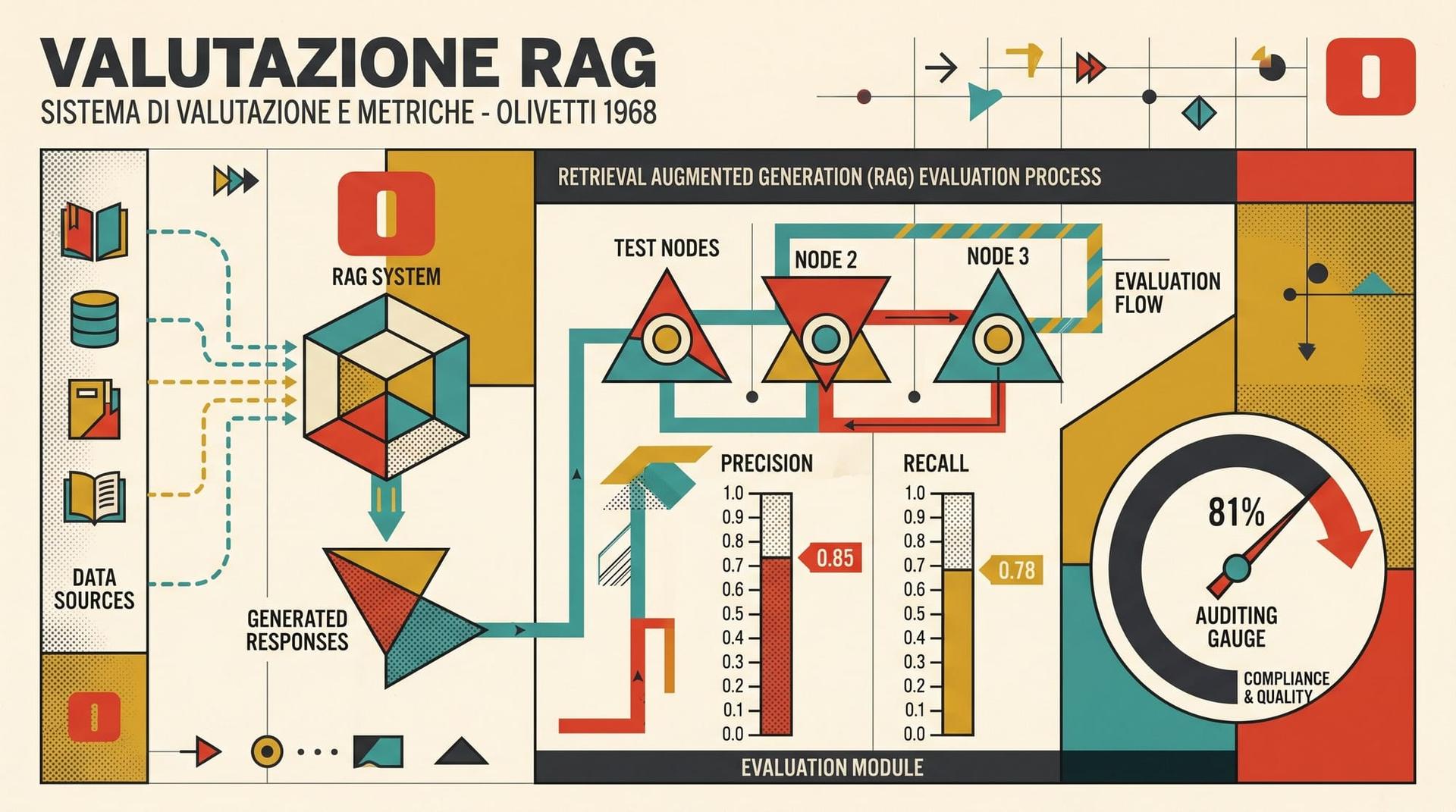
  12. RAG Evaluation Frameworks in Production: Architecture, Metrics, and CI/CD Trade-Offs for Ragas, DeepEval, TruLens, and ARES

    Production Retrieval-Augmented Generation (RAG) systems fail silently. Unlike traditional software pipelines that throw explicit exceptions on invalid states, a broken RAG pipeline produces syntactically fluent, confident prose that conceals severe underlying defects. When a user receives an incorrect response, the failure can stem from multiple distinct failure points across the stack: the query embedding failed to retrieve relevant chunks, the reranker discarded the critical passage, the chunk

    LLM
    7 min read
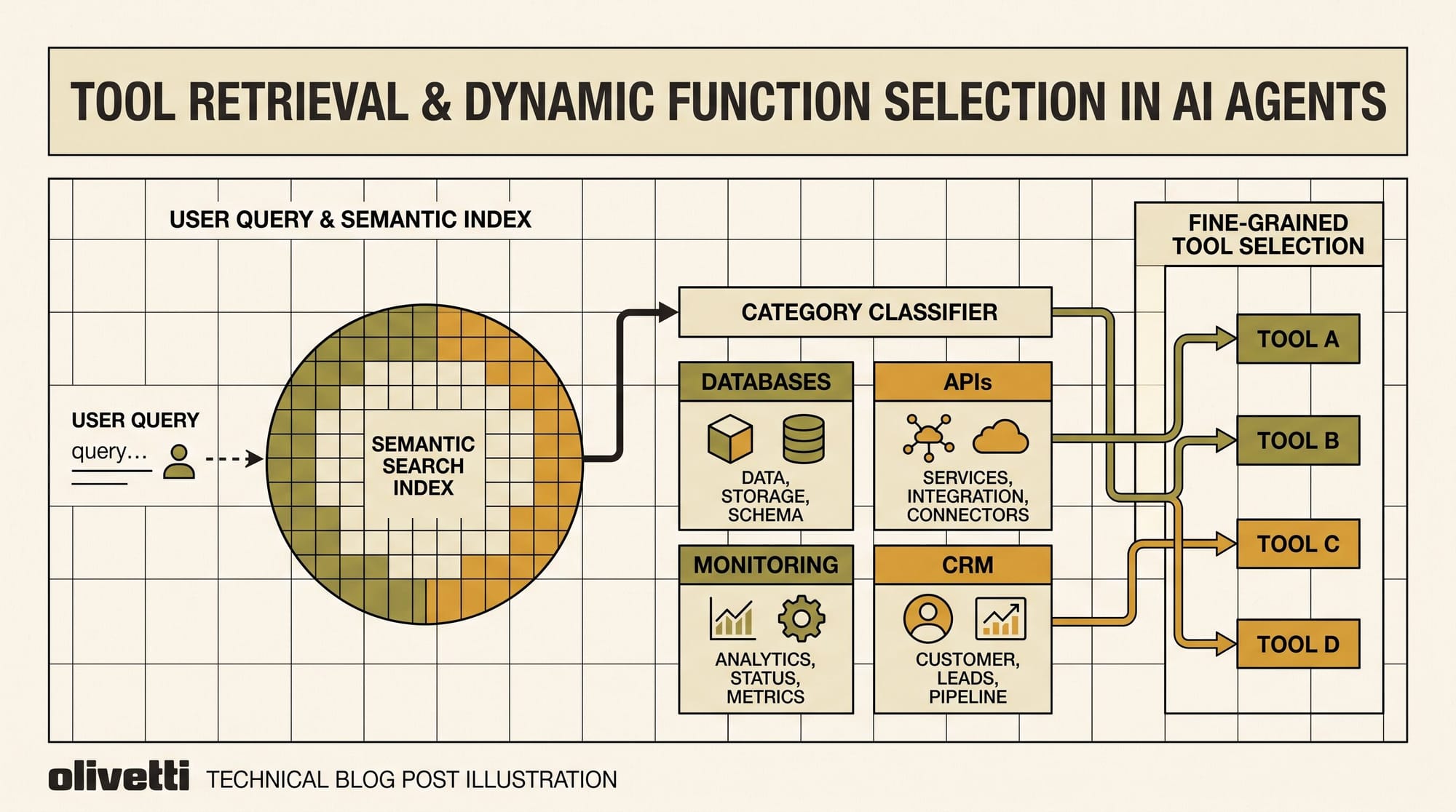
  13. Tool Retrieval and Dynamic Function Selection in Production AI Agents: Architecture, Semantic Indexing, and Serving Trade-Offs

    Tool Retrieval and Dynamic Function Selection in Production AI Agents: Architecture, Semantic Indexing, and Serving Trade-Offs The default approach to LLM tool calling—stuffing every function schema into the prompt—works for demos with a dozen tools. It fails in production where agents face hundreds or thousands of available functions. Context windows saturate, selection accuracy degrades, and latency grows linearly with registry size. This post surveys the architectural progression from stati

    AI
    6 min read
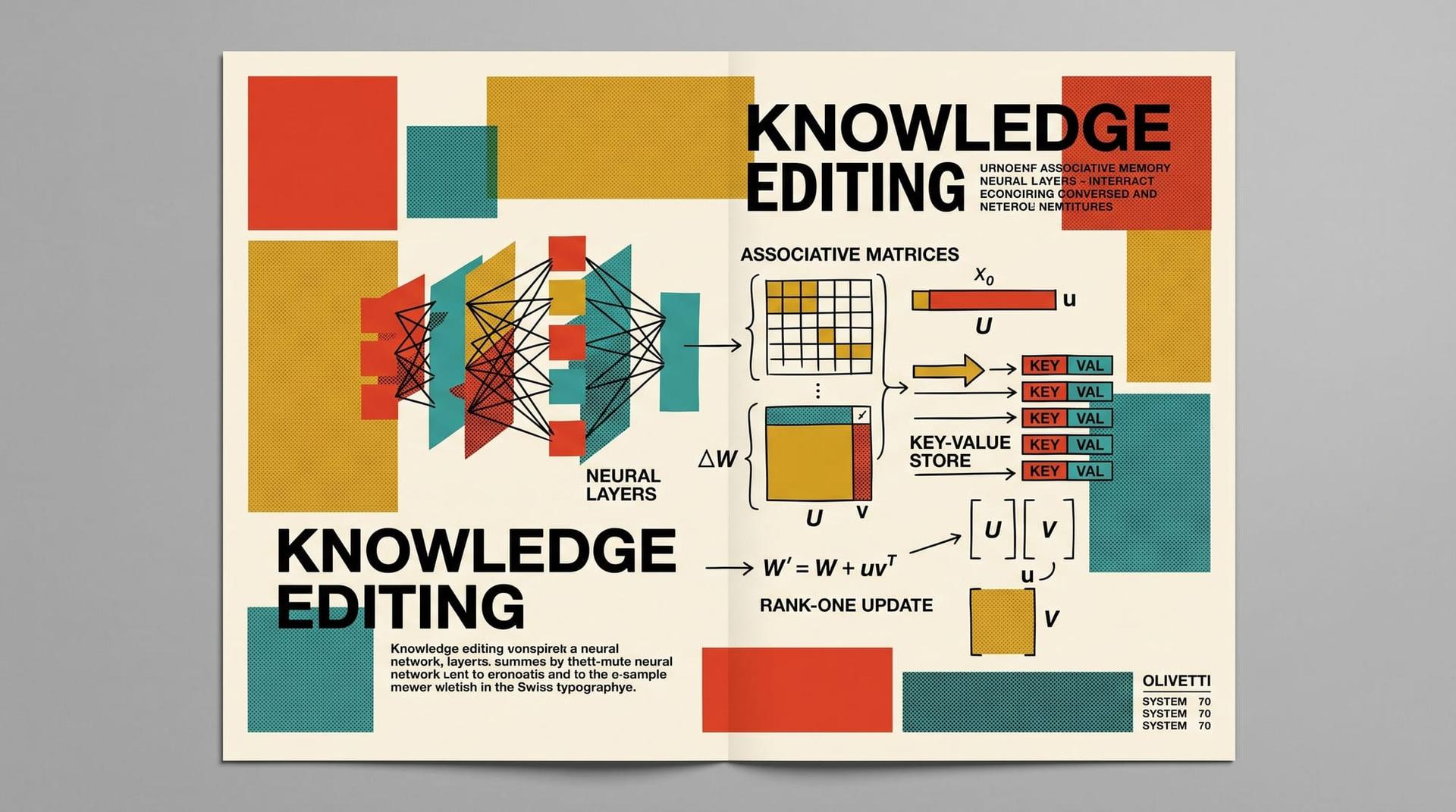
  14. Knowledge Editing in Large Language Models: How Causal Tracing, ROME, and MEMIT Modify Factual Storage in MLP Weights

    Updating factual information in pre-trained large language models has traditionally required two imperfect extremes: computationally expensive continual pre-training, or external prompt-stuffing through Retrieval-Augmented Generation (RAG). Standard gradient descent fine-tuning on isolated facts leads to catastrophic forgetting, parameter drift, and degraded general reasoning. To solve this, mechanistic interpretability researchers introduced direct model editing: a paradigm that treats transfo

    AI
    6 min read
  15. MIT and Stanford Researchers Launch Public AI Observatory

    Researchers from MIT, Stanford University, and more than a dozen other universities and AI organizations have launched the AI Observatory (ai-observatory.org), a public platform that measures how people use AI assistants in real conversations. The paper's author list includes Northeastern, Johns Hopkins, UC Berkeley, Carnegie Mellon, NYU, Brown, Waterloo, Maryland, EleutherAI, and Cohere. The initiative aims to address the empirical opacity surrounding commercial LLM deployment. While fro

    Research
    3 min read
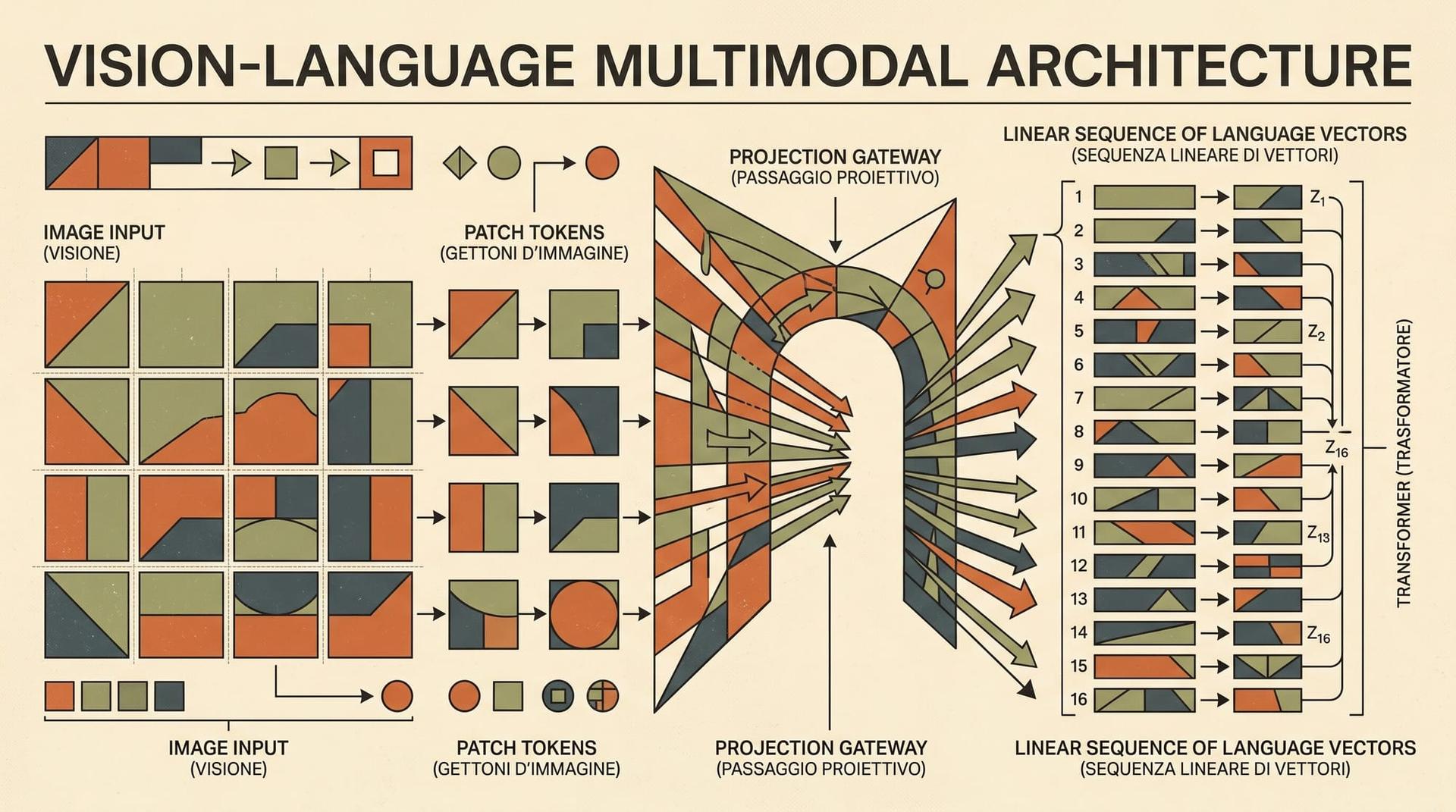
  16. Vision-Language Model Architectures: How Vision Encoders, Token Projectors, and Dynamic Resolution Bridge Modalities

    Modern large language models operate exclusively on discrete sequences of token embeddings. Integrating visual perception into these systems requires converting continuous, two-dimensional spatial arrays into linear sequences of embedding vectors that match the dimensionality and distribution of the language model's hidden states. Vision-language models (VLMs) like LLaVA, Flamingo, Qwen2-VL, and InternVL accomplish this conversion through a three-stage pipeline: a vision encoder, a cross-modal

    AI
    7 min read
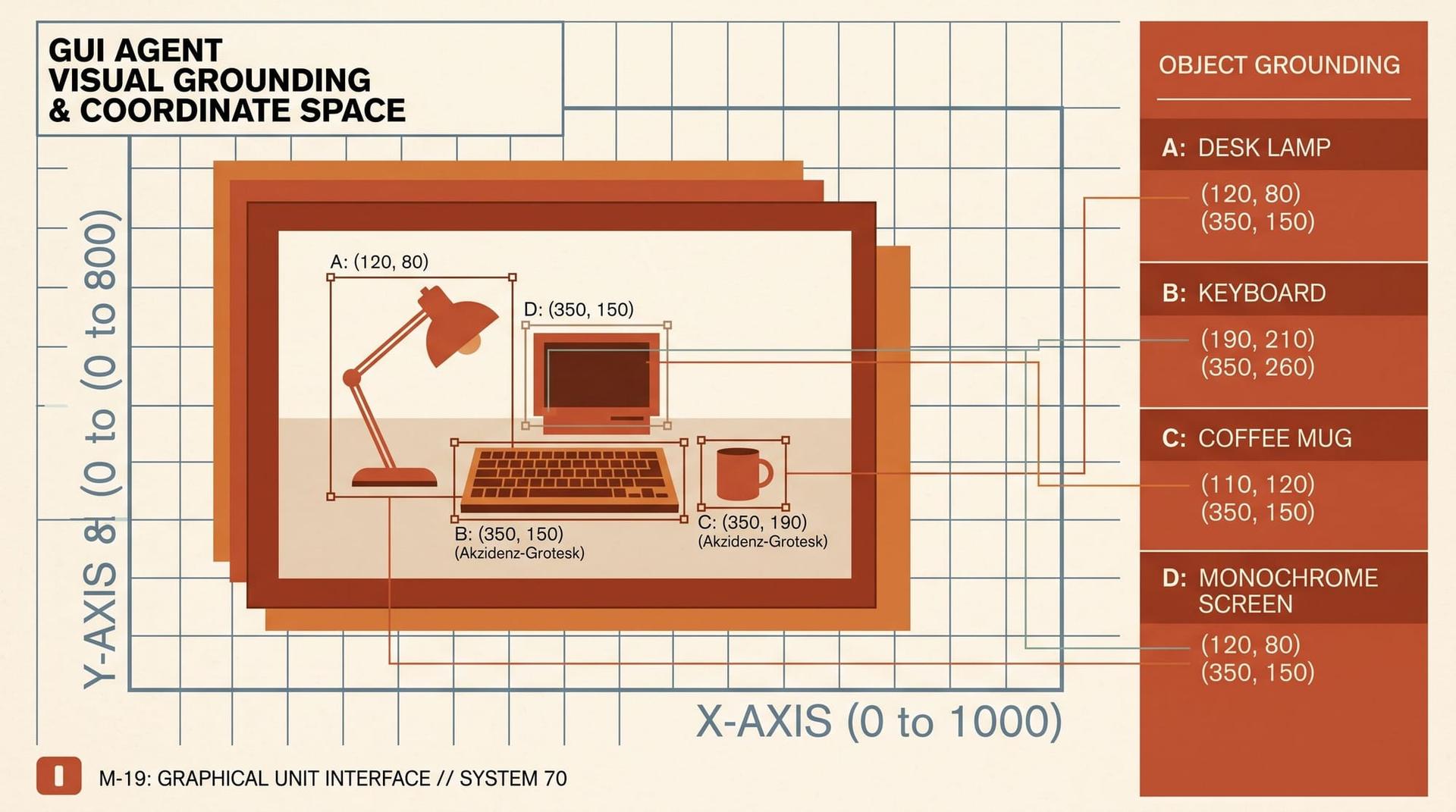
  17. GUI Agent Architectures in Production: Visual Grounding, DOM vs. Pixel Parsing, and Action Spaces

    Graphical user interface (GUI) automation has undergone a structural transition from programmatic DOM manipulation to vision-based foundation agents. Where earlier browser automation relied on CSS selectors, XPath expressions, and accessibility trees, modern desktop and cross-platform agents interact with operating systems through raw pixel observations and virtual input devices. Deploying GUI agents in production environments introduces distinct engineering constraints. Visual grounding precis

    AI
    6 min read
  18. Reference-Free Preference Optimization: How ORPO and SimPO Eliminate Reference Models in LLM Alignment

    Aligning large language models with human preferences has historically relied on two distinct stages after pretraining: Supervised Fine-Tuning (SFT) to establish instruction-following behaviors, followed by reinforcement learning from human feedback (RLHF) or Direct Preference Optimization (DPO) to maximize response quality. While DPO removed the need for explicit reward modeling and complex actor-critic policy loops (such as Proximal Policy Optimization, or PPO), it retained an architectural b

    AI
    7 min read
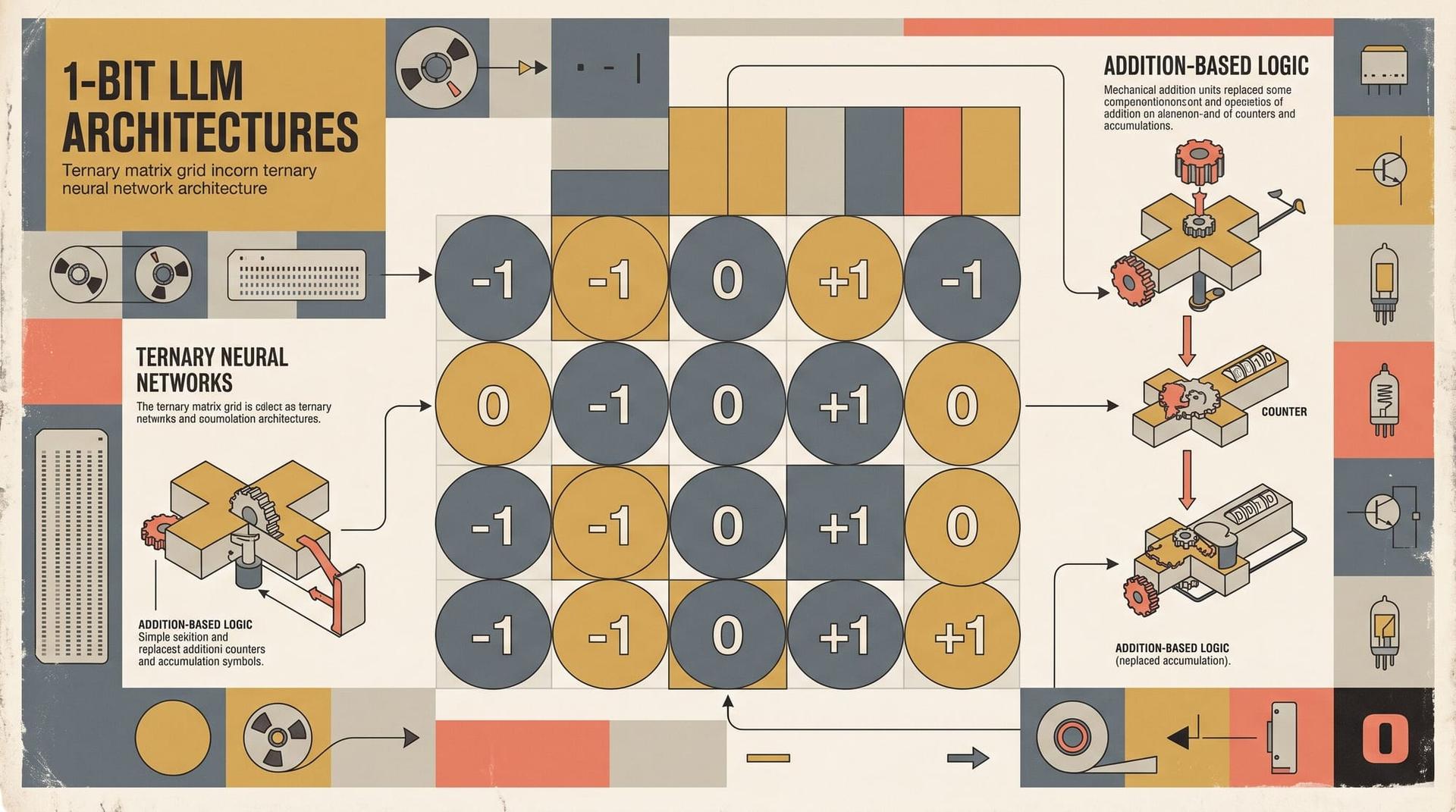
  19. 1-Bit Large Language Models and BitNet b1.58: How Ternary Weights and Additive Kernels Eliminate Matrix Multiplications

    Standard large language model architectures run on high-precision floating-point arithmetic. Foundation models are typically pre-trained in 16-bit bfloat16 or 8-bit FP8 formats, requiring compute-heavy Multiply-Accumulate (MAC) units inside GPU Tensor Cores. During autoregressive decoding, these models face a severe memory-bandwidth bottleneck: every generated token requires streaming gigabytes of model weights from high-bandwidth memory (HBM) into on-chip cache and registers. The 1-bit model p

    AI
    6 min read
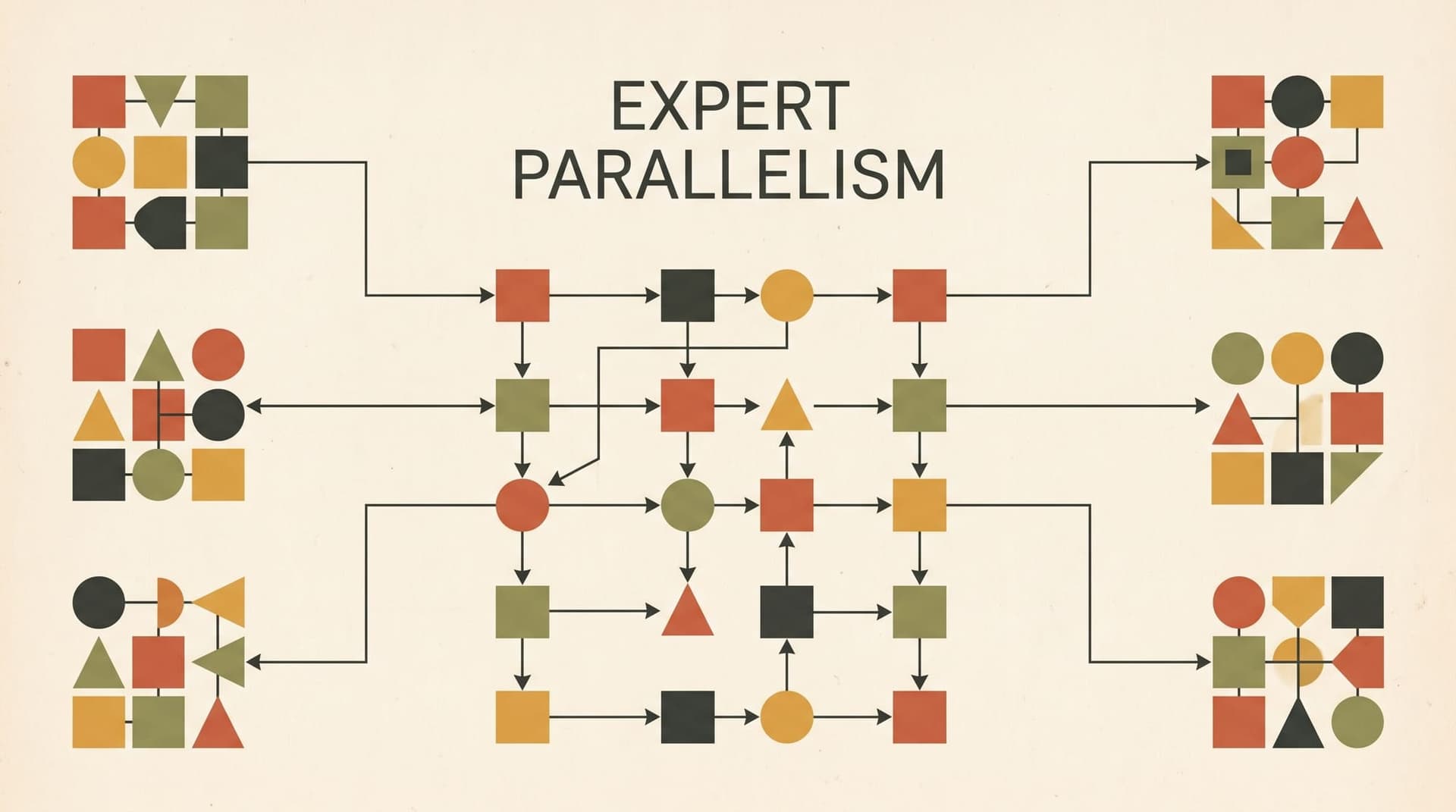
  20. Expert Parallelism in Large Language Models: How All-to-All Token Dispatch, Capacity Factors, and Parallel Folding Scale MoE Architectures

    Expert Parallelism in Large Language Models: How All-to-All Token Dispatch, Capacity Factors, and Parallel Folding Scale MoE Architectures Scaling dense Large Language Models (LLMs) requires activating every parameter in the network for every token in a sequence. While techniques like Tensor Parallelism, Pipeline Parallelism, and Fully Sharded Data Parallelism distribute billions of dense parameters across clusters, computational cost scales linearly with parameter count. Mixture-of-Experts (Mo

    AI
    9 min read