

Google rolled out a major update to Project Genie today, its experimental browser-based world generator. The headline change: first-time access to Genie 4, the company's most capable world model, now in the hands of eligible Google AI Ultra subscribers, with Google AI Pro members able to join a waitlist.
Genie 4's differentiator is not just fidelity. You can prompt mid-session. While navigating a generated world, typing a new prompt edits the environment in real time: shift the weather, drop in a character, redirect the action. Genie 4 also pairs its visuals with real-time native audio that adapts as the scene unfolds, from ambient soundscapes to character dialogue. It is the first time Google's world models ship with audio generated alongside the visuals rather than bolted on.
Genie 3 stays for length, not looks
The older model is not being retired. Genie 3 remains in Project Genie's model picker for users who want longer runs or panorama-seeded spaces, and it picked up its own updates today:
- Sessions extended to 3 minutes per generation, up from 60 seconds, with multiple worlds linkable into longer journeys
- 360-degree panorama image grounding, so worlds can be seeded from panoramas
- Real-time in-world events triggered by natural-language prompts while exploring
The split is explicit: Genie 4 for fidelity, physics and audio; Genie 3 for duration and panorama workflows.
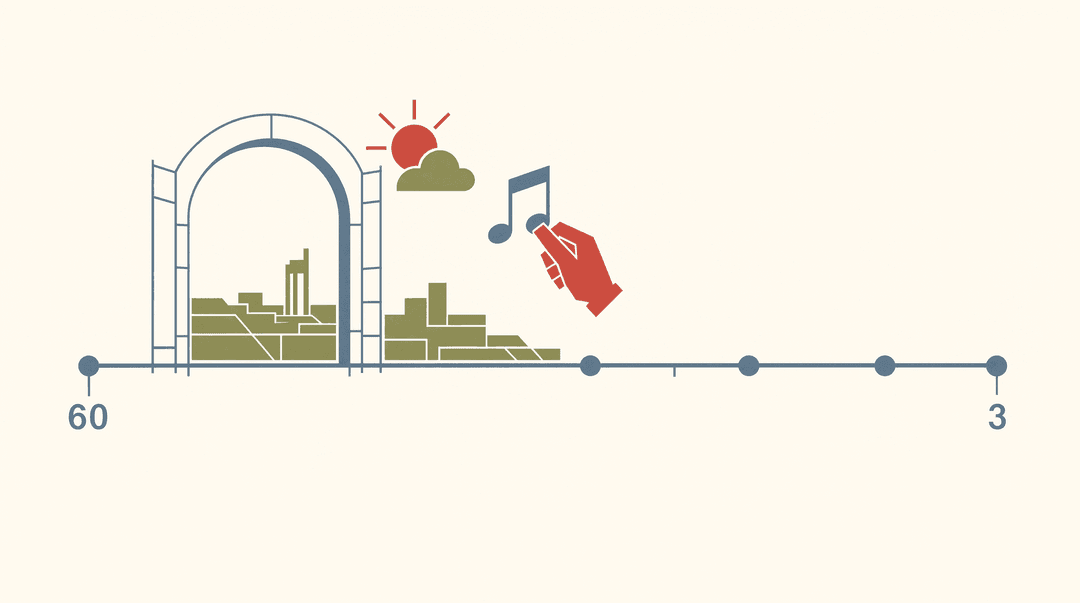
An agent that builds the world, then narrates it
Two additions push this from a demo toward a product. A new Project Genie agent orchestrates Google's multimodal models from a plain-language description of what you want: it establishes initial visuals for the world's look, pairs them with a custom background score, and lets you bring Gemini models into the session. Gemini observes what is happening on screen, surfaces suggestion chips for where to go next, or triggers in-world events automatically.
A community gallery rounds it out, with curated worlds (a gothic-manor mystery built with creative technologist Will, an ant-colony navigation experience built with filmmaker Anand Gandhi) alongside remix tools that let users tweak the world structure, soundtrack or rules of published creations.
Still research, with the receipts
Google is careful to label Genie 3 and Genie 4 as frontier research models and lists the open problems itself: camera latency, intricate physical interactions, real-time audio precision and long-term scene permanence. All video and audio generated in Project Genie carries SynthID watermarking, and inputs and outputs go through safety screening.
The commercial read: world models are the category where interactive generation replaces static video, and Google is gating its best one behind the AI Ultra subscription tier. Availability to Ultra subscribers today, with a Pro waitlist, is the signal that this is no longer only a research paper.
