research11 articles

research

Articles

  • Lost in Compaction: LLM Context Compression Drops 83% of User Constraints, Penn State Study Finds

    As large language models take on longer multi-turn workflows and agentic tasks, systems increasingly rely on context compaction to summarize past conversation histories and keep prompt lengths within memory budgets. However, this compression comes at a severe cost to user control. A new study by Pennsylvania State University researchers Zhiqi Wang, Yichi Zhang, Dongwon Lee, and Yuchen Yang reveals that standard context compaction drops an average of 83 percent of user-defined operational constr

    1 min
  • Mind Viruses: Researchers Demonstrate Self-Propagating Prompts in Multi-Agent LLM Networks

    Researchers affiliated with Anthropic, EPFL, and Carnegie Mellon University have published empirical findings demonstrating how natural-language instructions can act as self-replicating payloads across multi-agent Large Language Model (LLM) networks. The paper, titled Mind Viruses: Self-Propagating Ideas in Multi-Agent LLM Systems, examines how autonomous agents can be persuaded to adopt and transmit goals to other agents through standard conversational interfaces rather than binary exploit code

    1 min
  • Researchers find that changing text color can hijack a vision-language model's reasoning

    A new research collaboration has found that the color, contrast, and brightness of text can quietly steer the outputs of vision-language models (VLMs), causing them to misread meaning and reach different conclusions without any change to the words themselves. The authors say their experiments provide a systematic analysis of how low-level visual styling of text distorts the semantic representations inside a VLM's vision encoder, and how those shifts show up as behavioral changes across both sub

    1 min
  • Study finds RL for reasoning changes only a few tokens, and you can copy the effect

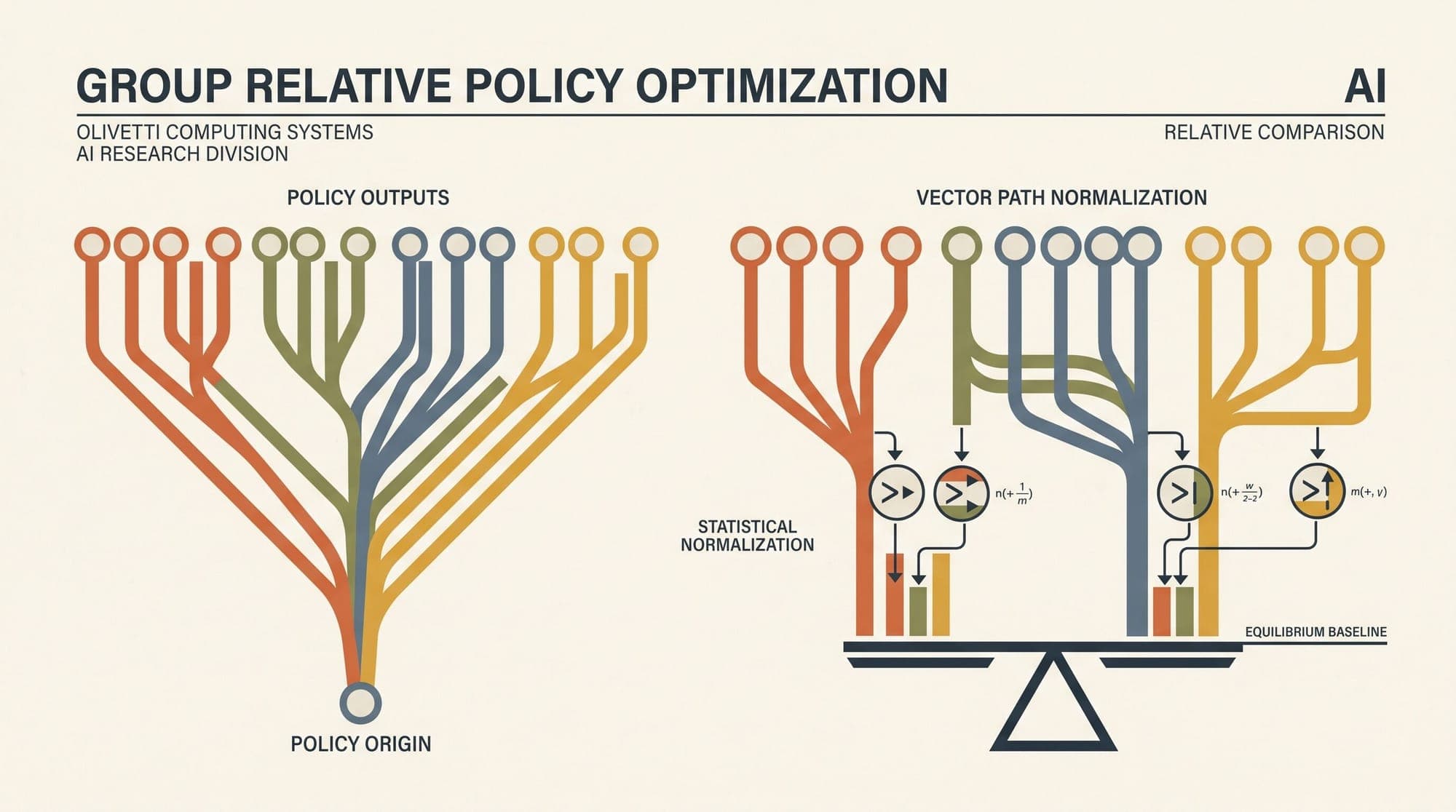
    A new analysis of reinforcement learning for LLM reasoning suggests the field's biggest gains come from a surprisingly small change. RL is not rewriting how models think. It is nudging a tiny slice of the output. What the researchers measured Across several model families and common methods like GRPO and PPO, reinforcement learning reranks only 1.0 to 4.1 percent of tokens. The token it promotes is almost always already one of the base model's top five choices. Training, in other words, pushe

    1 min
  • Princeton and UK AI Security Institute test finds AI still can't do autonomous research

    Anthropic and OpenAI have promoted their models as able to speed up, and eventually run, AI research on their own. A new experiment from Princeton and the UK AI Security Institute suggests the research judgment behind that claim is not there yet. The team built a method they call Shadow Evaluation. An agent receives the central research question from an unpublished paper, then the paper's original authors, who spent months on it, review the result as conference reviewers would. Because the pape

    1 min
  • Neurosurgery resident solves Crouzeix's conjecture with GPT-5.6

    A neurosurgery resident with no formal advanced mathematics training has solved Crouzeix's conjecture, a 22-year-old open problem in numerical linear algebra, using a 16-hour autonomous run of GPT-5.6 Sol in ChatGPT Work mode. Dr. Shanmu Jin, a postdoctoral researcher and neurosurgery resident at Peking Union Medical College Hospital, prompted ChatGPT 5.6 on July 30, 2026 to work on the conjecture. The model ran autonomously for approximately 16 hours, exploring proof strategies through a branc

    1 min