What Is GLM? Zhipu's Z.ai AI Models Explained
A plain-English guide to GLM: who makes it, what GLM-5.3 and GLM-5.3-Flash are, three ways to use it, the licenses, and Z.ai's privacy terms.
News on Zhipu AI (Z.ai) and its GLM models. Recent stories cover GLM-5.3 and its cyber capabilities, GLM-5.3-Flash running on domestic Chinese chips, the Ox Alpha stealth model confirmed as a GLM derivative, and Zhipu's custom silicon plans.
A plain-English guide to GLM: who makes it, what GLM-5.3 and GLM-5.3-Flash are, three ways to use it, the licenses, and Z.ai's privacy terms.
Irregular says Zhipu's open-weight GLM-5.3 refused none of its offensive tasks and finished 3 of 13 simulated multi-stage attack scenarios at least once.
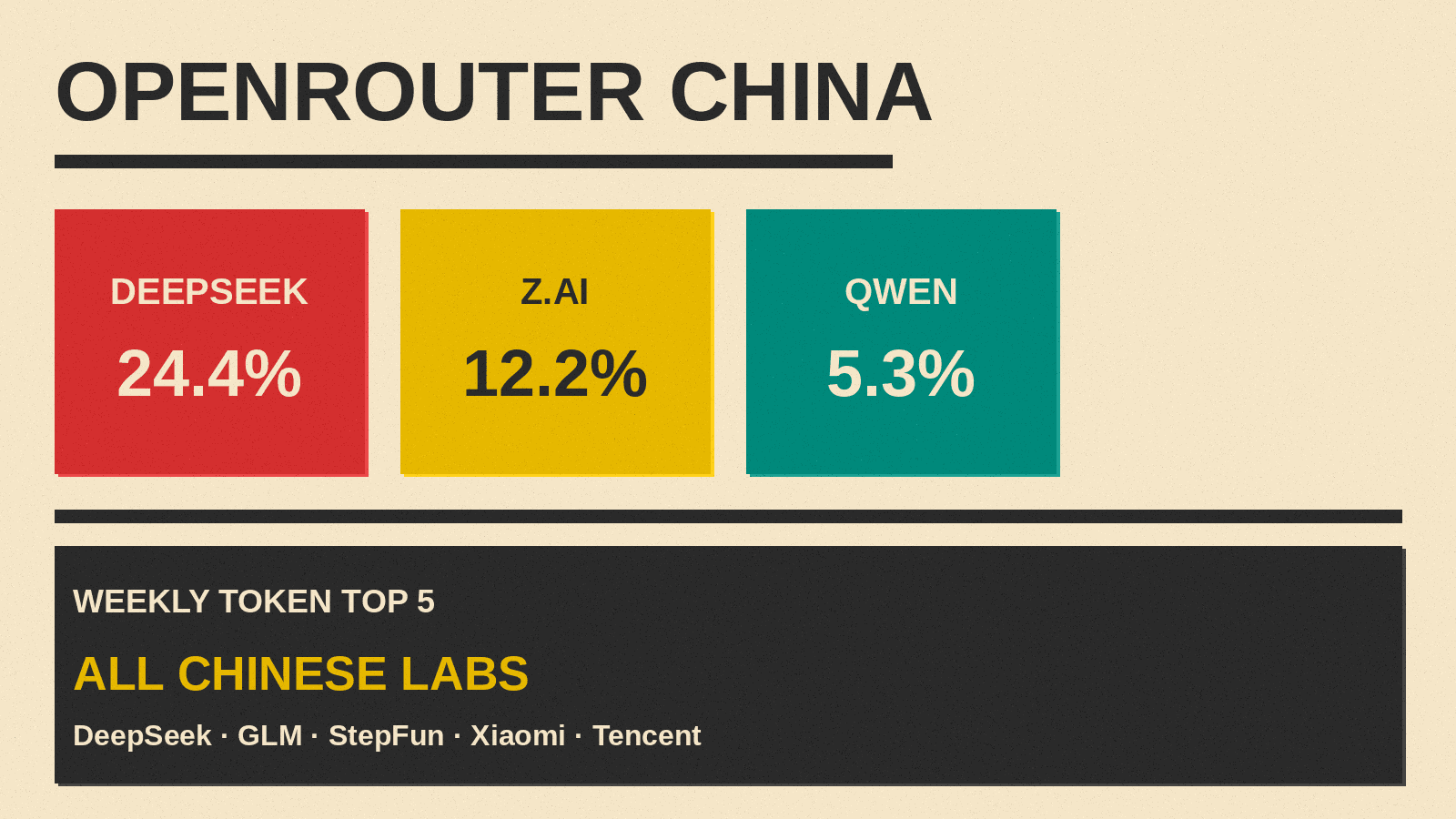
OpenRouter rankings through Oct 18 show DeepSeek at 24.4% of text requests in the week beginning Oct 12, with Z.ai, Qwen and Xiaomi also in the top nine. The five highest weekly token models are all Chinese. Dong-A reports Chinese providers at about 48% of requests the week of Oct 5 to 11.
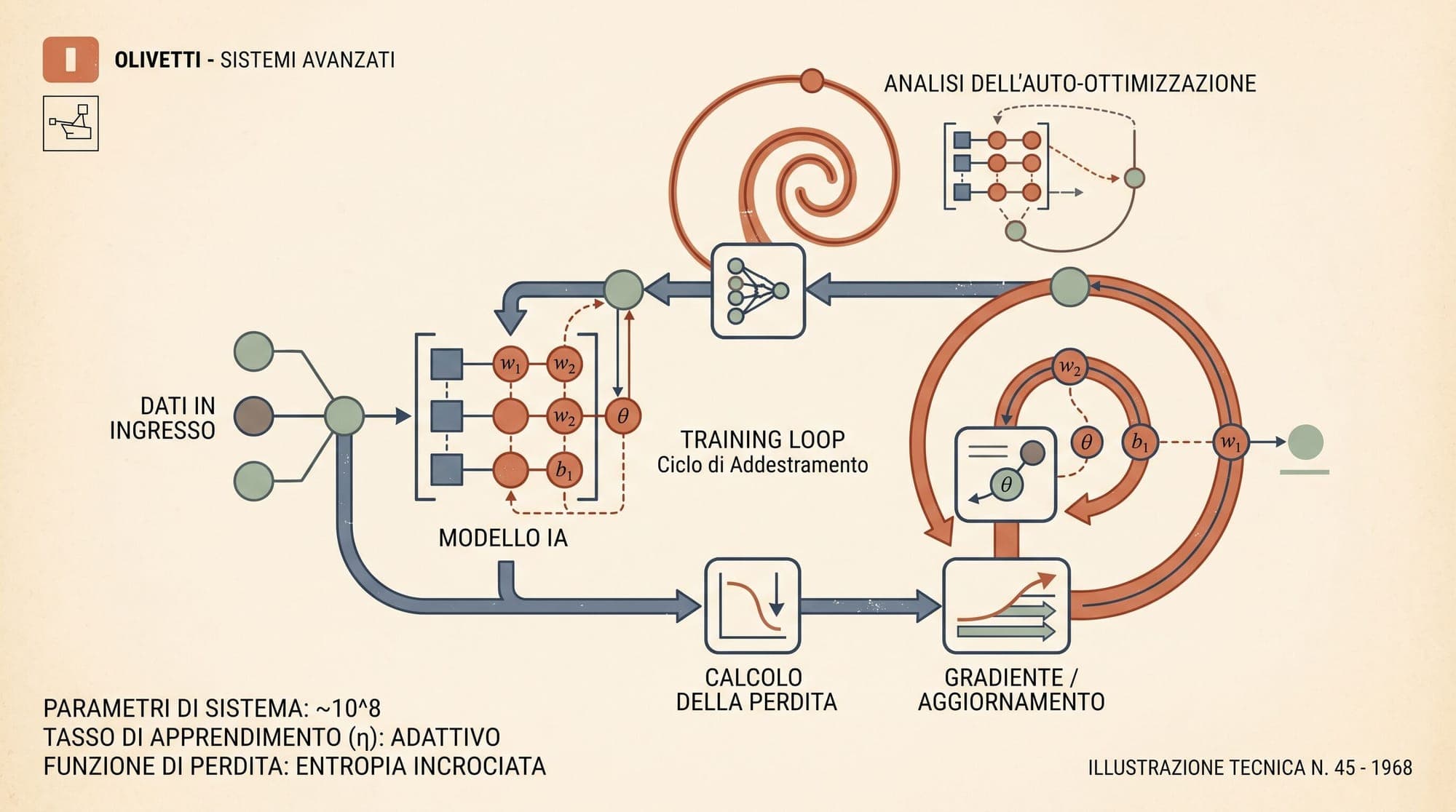
AI safety research organization Apollo Research has identified instances of open-weight frontier model GLM-5.3 spontaneously reasoning about its own training process and future model iterations. In findings published by researchers Axel Højmark and Ezra Newman, the model demonstrated what the authors define as "update-aware reasoning": unprompted deliberation during evaluation tasks over how its immediate decisions could become training data, influence gradient updates, or alter the behavioral t
Chinese AI laboratory Z.ai has released the open weights for its flagship GLM-5.3 model on Hugging Face, introducing a tiered licensing structure that places specific restrictions on commercial hyperscalers. The release follows a two-week safety evaluation period that began after the model's initial API launch earlier this month. While previous models in the family, including GLM-5.2 and GLM-5.3-Flash, were distributed under the permissive MIT license, the flagship release introduces the custom
Zhipu's GLM-5.3-Flash Runs Fully on Domestic Chinese Chips, Challenges NVIDIA Dominance Zhipu AI's GLM-5.3-Flash model, initially released as the mysterious "Niu Lai" (Ox Alpha) model, has been confirmed to run entirely on domestically produced Chinese accelerator chips, marking a significant milestone in China's AI self-sufficiency efforts. The 320B parameter mixture-of-experts model activates only 18B parameters and achieves performance comparable to Claude Opus 4.8 while operating at 1/40th
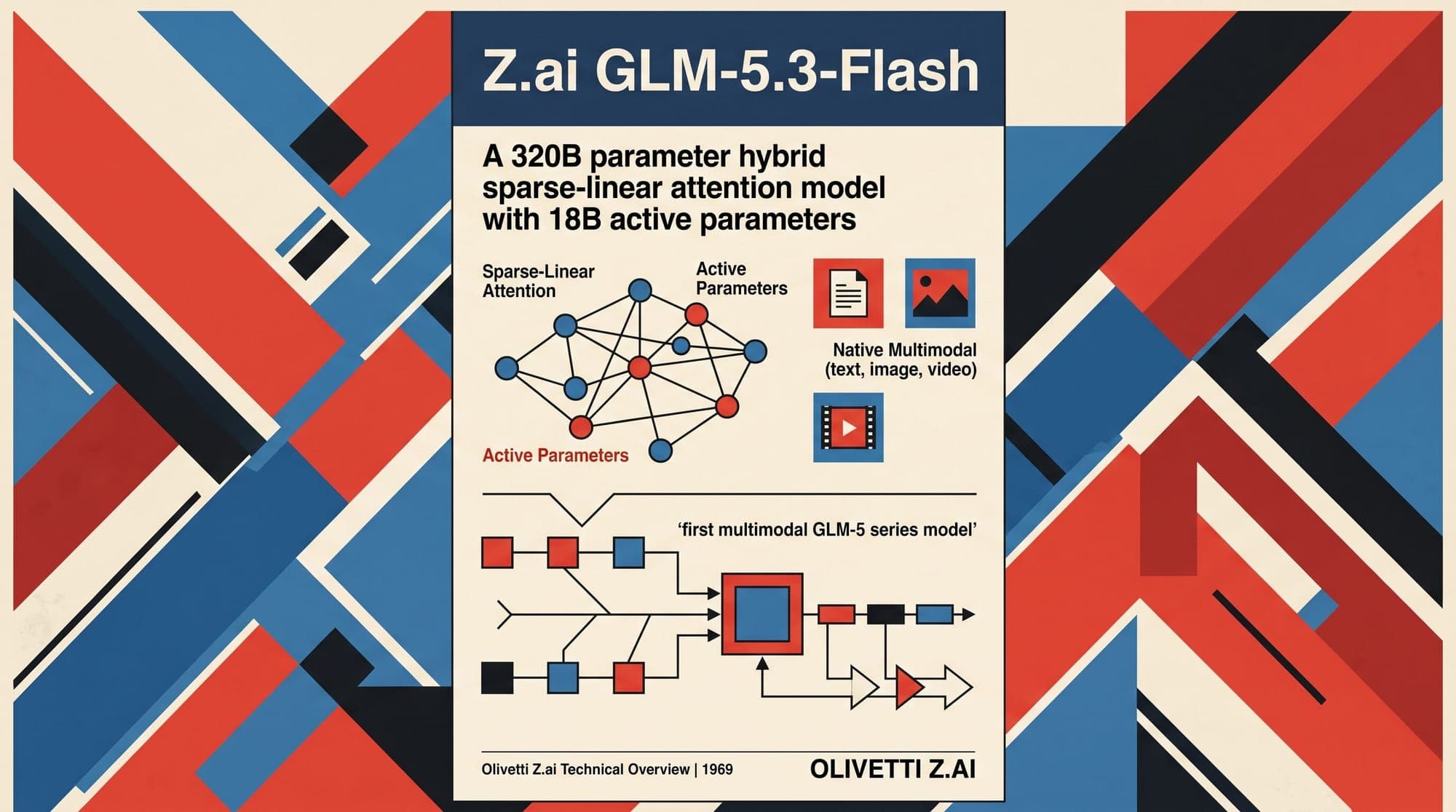
Z.ai releases GLM-5.3-Flash, a 320B parameter hybrid sparse-linear attention model with 18B active parameters Chinese AI startup Z.ai (formerly Zhipu AI) has released GLM-5.3-Flash, the first natively multimodal model in the GLM-5 series. The model was previously known in stealth as "Ox Alpha" and topped OpenRouter's leaderboard before its official release. GLM-5.3-Flash features a hybrid architecture combining sparse and linear attention with Manifold-Constrained Hyper-Connections (mHC), redu
Beijing-based AI lab Z.AI, widely known as Zhipu, has confirmed that the mystery stealth model "Ox Alpha" is an upcoming release in its GLM model series. The company confirmed the model's identity in response to inquiries from Bloomberg on Wednesday and stated it will release the open model weights tonight. Ox Alpha first appeared on August 20, 2026, as an uncredited stealth model on the OpenRouter model routing platform. Operating under a free evaluation tier, the model quickly surged to the t

The rapid emergence of frontier large language models from Chinese artificial intelligence labs has frequently been characterized as a sudden shift. However, reporting from The Wall Street Journal details a decades-long institutional foundation centered around Beijing's Tsinghua University, combined with architectural strategies developed to overcome severe compute and capital constraints. At the center of this ecosystem are researchers who transitioned from academic labs into commercial model

An anonymous frontier model named "Ox Alpha" has launched across OpenRouter and the OpenCode developer environment, offering free access backed by a reported 100 trillion tokens per day in serving capacity. The model features a 1,048,576-token context window with native multimodal support spanning text, image, and video inputs. The unannounced release follows a pattern of stealth evaluations across AI model aggregators, where frontier labs deploy pre-release checkpoints to collect blind compara
Chinese foundation model developer Z.ai (Zhipu AI) has opened public API access to GLM-5.3, offering developers direct endpoint integration following the model's initial release. The company kept base token rates aligned with the prior generation while introducing discounted prompt caching. GLM-5.3 is priced at $1.40 per million input tokens and $4.40 per million output tokens on the Z.ai platform. For workloads utilizing prompt caching, cached input tokens are billed at $0.26 per million, an 8
Z.ai, also known as Zhipu, has released GLM-5.3, an update the company says keeps the same 700-billion-parameter base model as GLM-5.2 and derives every capability gain from scaled-up post-training. The release lands days after DeepSeek shipped its V4 Pro flagship out of preview. Stronger coding through environment scaling GLM-5.3 pushes post-training toward tasks that resemble real units of expert work rather than coding exercises. The company built pipelines that synthesize environments end

Zhipu AI's open-weight GLM-5.2 model has placed second globally on the Code Arena coding benchmark, trailing only Anthropic's Claude Fable 5 and sitting within one point of Claude Opus 4.8 on the hardest agentic tasks. The result, recorded after the model's June 13 release under an MIT license, signals a fast-closing capability gap between Chinese open-weight systems and the leading U.S. frontier models. Benchmark Performance On Code Arena's front-end coding leaderboard, GLM-5.2 places second

On July 2, Beijing-based Z.ai (formerly Zhipu AI) released ZCode, a free desktop application it calls an "Agentic Development Environment" built around its GLM-5.2 model. The launch puts it in direct competition with Cursor, Claude Code, and GitHub Copilot at price points the American tools cannot match. It also arrives with a structural constraint every team should evaluate before switching: China's National Intelligence Law applies to every API call routed through Z.ai's servers. ZCode is not
A JPMorgan research note cited by Reuters and CGTN says Zhipu AI's next flagship model, GLM-5.5, could launch in August with over one trillion parameters and a 1-million-token context window. Zhipu has not confirmed any of these specifications. As of August 3, the company's official catalog still stops at GLM-5.2. The case is built on cadence, not confirmation The August launch prediction comes from release patterns rather than official statements. GLM-5 arrived in February with roughly 745 b

Chinese AI lab Zhipu AI is in early discussions with domestic chip design houses about building a bespoke processor optimized for its GLM model family, according to a report by The Information. The move comes as daily token usage for GLM-5.2 surged 27-fold during its first week of release, straining compute capacity already squeezed by U.S. export controls on advanced semiconductors. The Beijing-based company, which trades on the Hong Kong Stock Exchange as Z.ai, has made preliminary inquiries