Subscribe
Topic / page 3

Research

Articles, page 3

41-60
  1. Anthropic Claude Autonomously Designs Validated Protein Binders Across 14 Targets

    Anthropic has released results from an autonomous de novo protein binder design campaign run by its Claude models, with wet-lab validation from two outside evaluators. Claude designed binders against 15 targets and succeeded against 14 of them, according to Anthropic. Across all campaigns, 27% of designs bound, and 49% of the designs Claude ranked first for each target bound, according to Anthropic's technical report. The campaign used Claude Opus 4.8 and Claude Mythos Preview inside Claude Sci


    AI
    3 min read
  2. Anthropic Launches $5M Grant Program to Fund AI Wellbeing Evaluations and Benchmarks

    Anthropic has launched a $5 million grant initiative to support independent development of open-source benchmarks and evaluation harnesses measuring the impact of artificial intelligence systems on user wellbeing. The program will supply research teams with direct financial grants, subsidized API access to Claude models, and technical support from Anthropic's Safeguards team. All evaluation frameworks, datasets, and grading methodology developed under the grant program will be released publicly

    Anthropic
    2 min read
  3. Unlikelihood Training in Large Language Models: How Negative Candidate Loss and Sequence-Level Penalties Suppress Repetition Loops and Hallucinations

    Unlikelihood Training in Large Language Models: How Negative Candidate Loss and Sequence-Level Penalties Suppress Repetition Loops and Hallucinations Autoregressive language models generate text by iteratively predicting the probability distribution of the next token conditioned on preceding tokens. While standard maximum likelihood estimation (MLE) via cross-entropy loss serves as the universal training objective across modern foundation models, it possesses a fundamental structural asymmetry:

    AI
    13 min read
  4. Study Exposes Citation Monoculture Across Frontier LLMs as Recursive Drafting Compounds Bias

    Study Exposes Citation Monoculture Across Frontier LLMs as Recursive Drafting Compounds Bias As large language models take over literature reviews and automated research workflows, a collaborative study from UT Austin, Stevens Institute of Technology, Washington University in St. Louis, Rice University, and the University of Notre Dame demonstrates that frontier models suffer from severe citation monoculture. Even when all identifying metadata is removed, LLMs across vendors converge on a narro

    Research
    2 min read
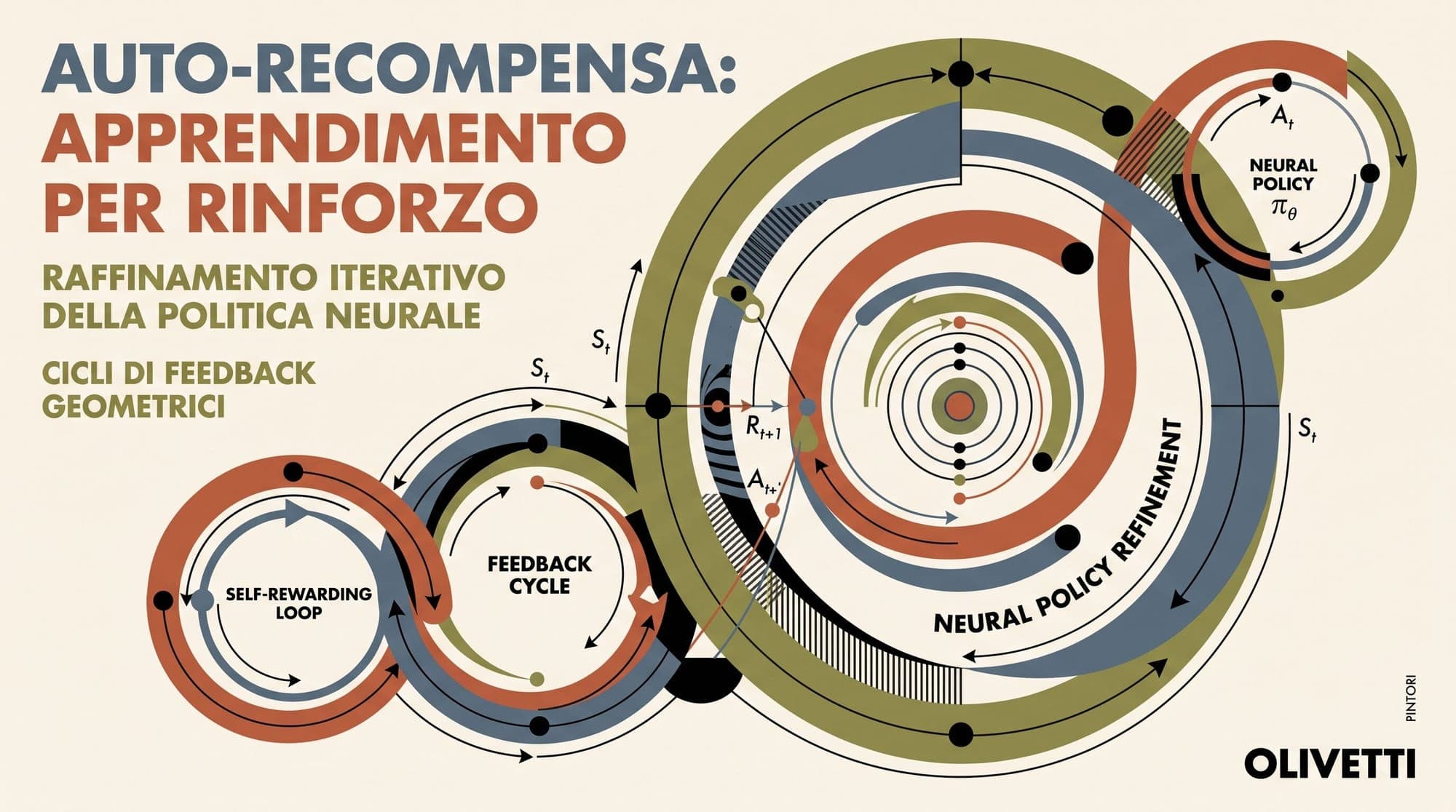
  5. Self-Rewarding Language Models: How Iterative DPO and LLM-as-a-Judge Form Autonomous Self-Alignment Loops

    Standard post-training alignment pipelines rely on frozen reward models trained on static human feedback datasets. While Reinforcement Learning from Human Feedback (RLHF) and Direct Preference Optimization (DPO) effectively steer model outputs toward human preferences, they face a fundamental scalability bottleneck: human annotators cannot evaluate superhuman reasoning or generate labels at the scale required for continuous self-improvement. Self-Rewarding Language Models, introduced by Meta AI

    AI
    3 min read
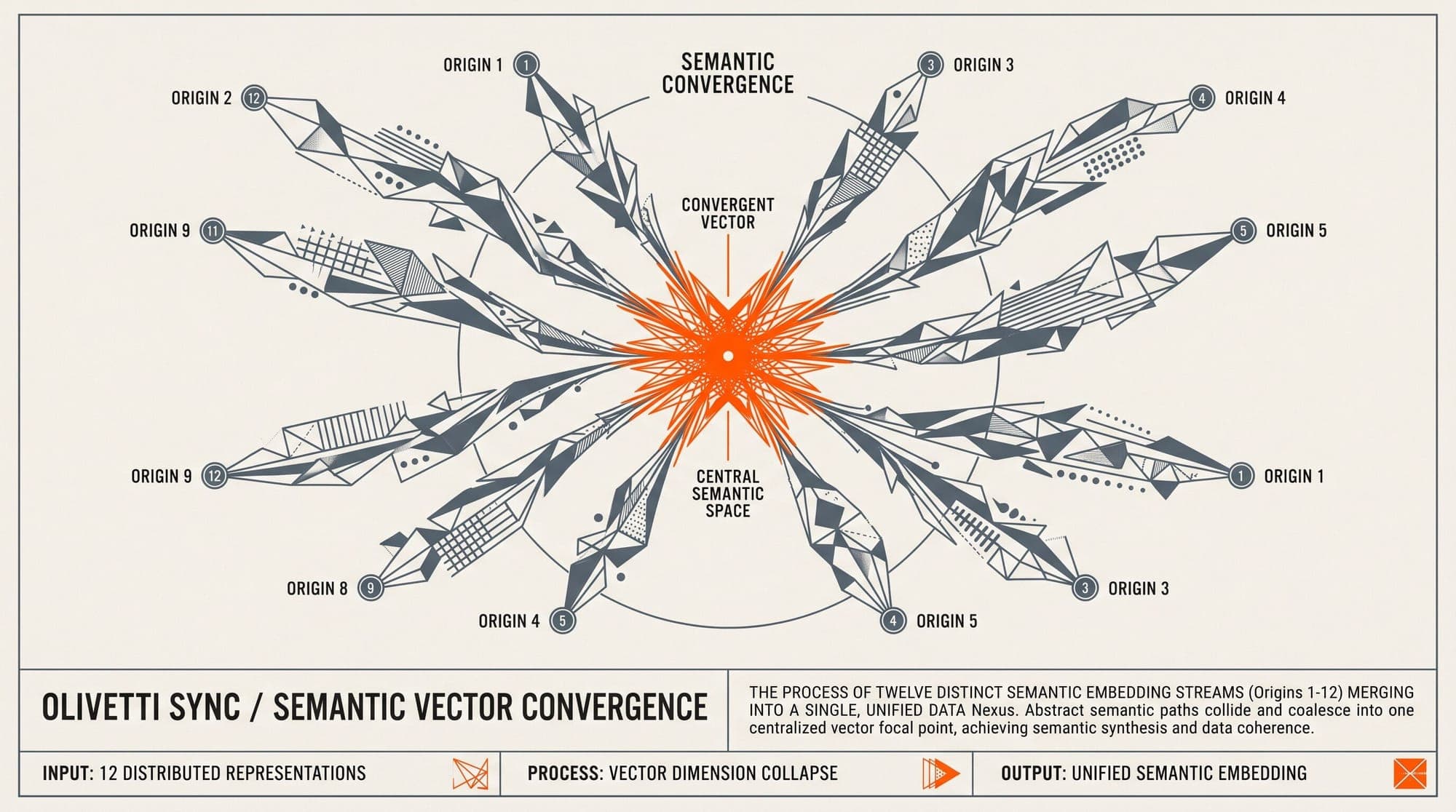
  6. The Platonic Representation Hypothesis: How Foundation Models Across Modalities Converge on a Shared Geometry of Reality

    In 375 BC, Plato introduced the Allegory of the Cave, describing prisoners who could only perceive reality through shadows projected onto a stone wall. In modern machine learning, deep neural networks ingest distinct sensory shadows of the physical world: vision models process pixel arrays, large language models ingest tokenized text, and speech models parse raw acoustic waveforms. Historically, the machine learning literature assumed that models trained on different modalities, objectives, and

    AI
    6 min read
  7. Study: Why Labor-Saving LLMs Incline Scientists to Do More Work Less Well

    A theoretical study published by researchers from Princeton University, the University of Washington, and collaborating institutions models how large language models alter researchers' time allocation across projects. The authors find that by reducing time friction across different stages of the research lifecycle, AI assistants increase the opportunity cost of researcher time, creating economic incentives to publish a higher volume of less thoroughly refined papers. The paper, titled The unint

    AI
    2 min read
  8. Inherent Releases Faraday: 27B Scientific Agent Outperforms Frontier Models on Paper Replication

    London-based AI research startup Inherent has released Faraday, an autonomous AI agent engineered to independently reproduce published scientific research without prior exposure to target solutions. Founded by former Google DeepMind researchers Louis Kirsch, Kaloyan Aleksiev, Tantum Collins, and Edward Hughes, the lab launched Faraday weeks after securing a $50 million seed round. According to benchmark results published by the lab, Faraday outperformed significantly larger frontier systems, in

    AI
    2 min read
  9. Demystifying Agent Skills: Empirical Study of 8,000+ Runs Shows Procedural Anchoring Beats Knowledge Injection

    A multi-institution study from researchers at Princeton University, UC San Diego, and collaborating labs provides the first large-scale empirical analysis of how "skills" (modular instruction packages loaded at inference time) alter autonomous AI agent trajectories. Analyzing 8,135 experimental trials across diverse model architectures, benchmarks, and agent harnesses, the authors establish that skills improve task completion primarily by acting as procedural anchors rather than by injecting mis

    AI
    2 min read
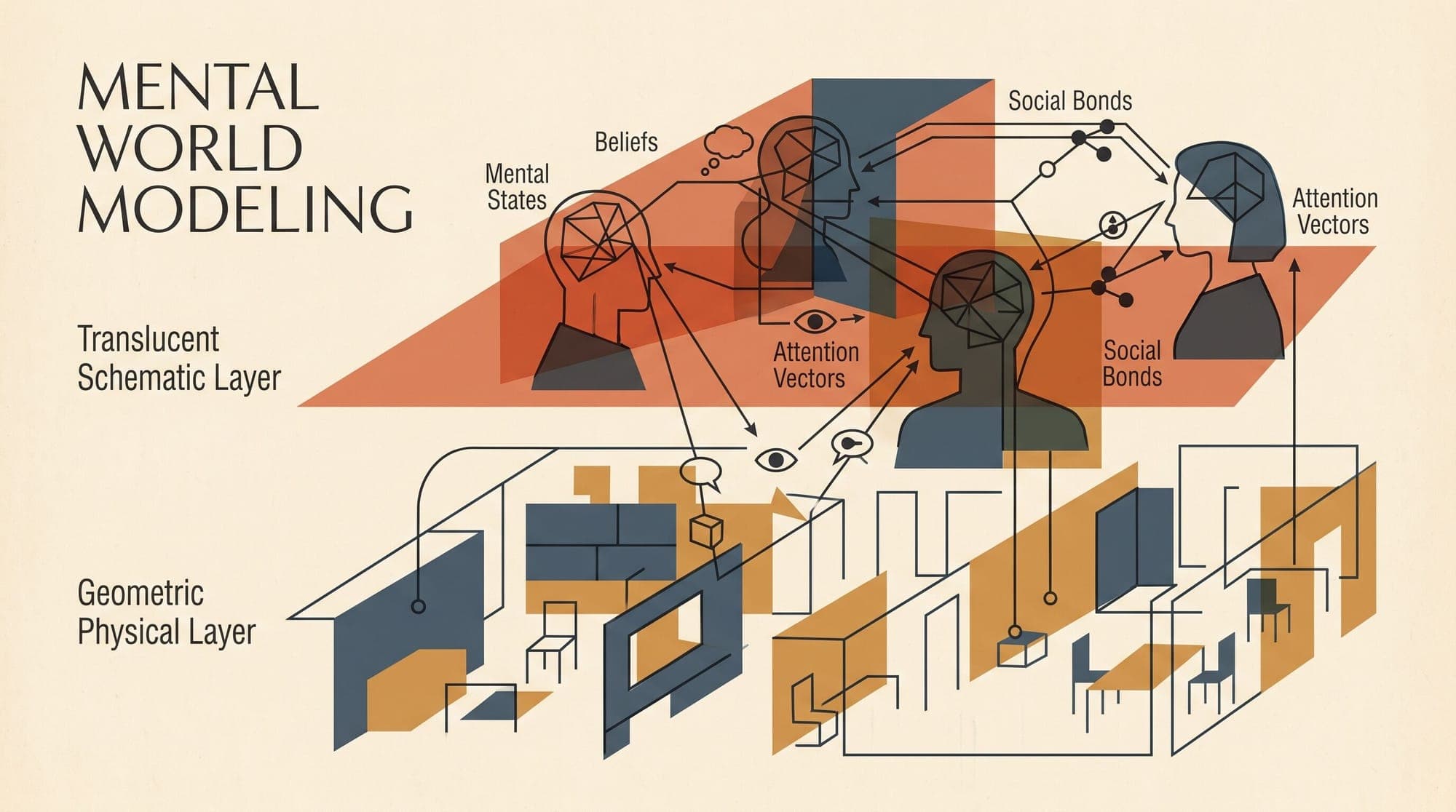
  10. Mental World Modeling: Why Autonomous AI Agents Fail Without Simulating Human Beliefs

    Mental World Modeling: Why Autonomous AI Agents Fail Without Simulating Human Beliefs Current foundation world models, from video simulators like Sora and Genie to spatial representations like JEPA and Marble, focus almost exclusively on the physical mechanics of an environment. They track geometry, object positions, motion trajectories, and visual continuity. However, when autonomous agents interact with humans in collaborative, medical, or domestic settings, physical state tracking alone cons

    AI
    4 min read
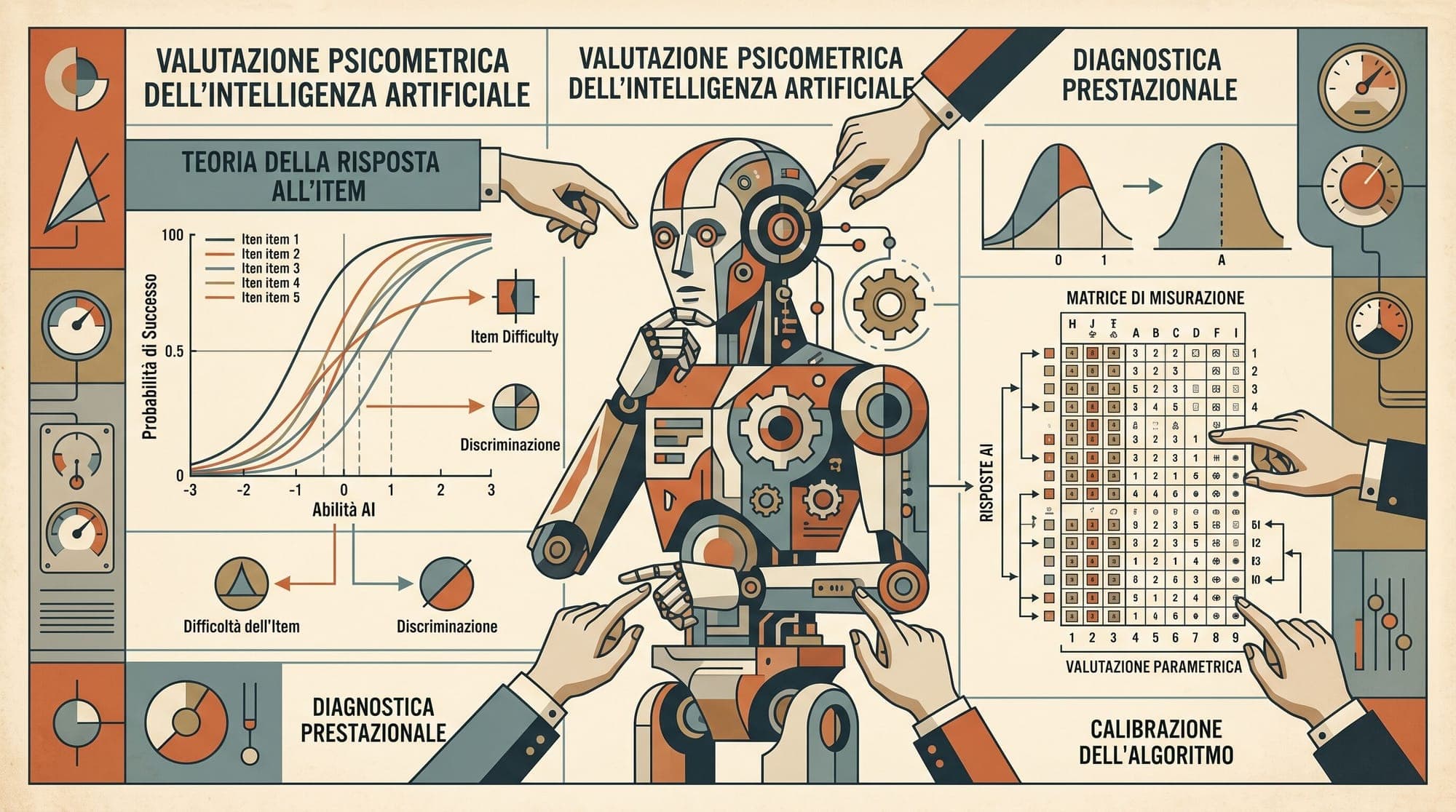
  11. Item Response Theory Audit of 192 LLMs Exposes Safety Benchmark Redundancies, Over-Refusal Distortions, and Sandbagging

    A psychometric evaluation of 192 frontier and open-weight language models across eight major safety benchmarks has revealed structural flaws in current safety testing methodologies. The research, conducted by Joshua Fonseca Rivera, Neil Shah, David Demitri Africa, and Konstantinos Voudouris with support from the UK AI Security Institute and the UK Department for Science, Innovation, and Technology (DSIT), applies Item Response Theory (IRT) to analyze 5,255 evaluation items. The findings demonst

    AI
    3 min read
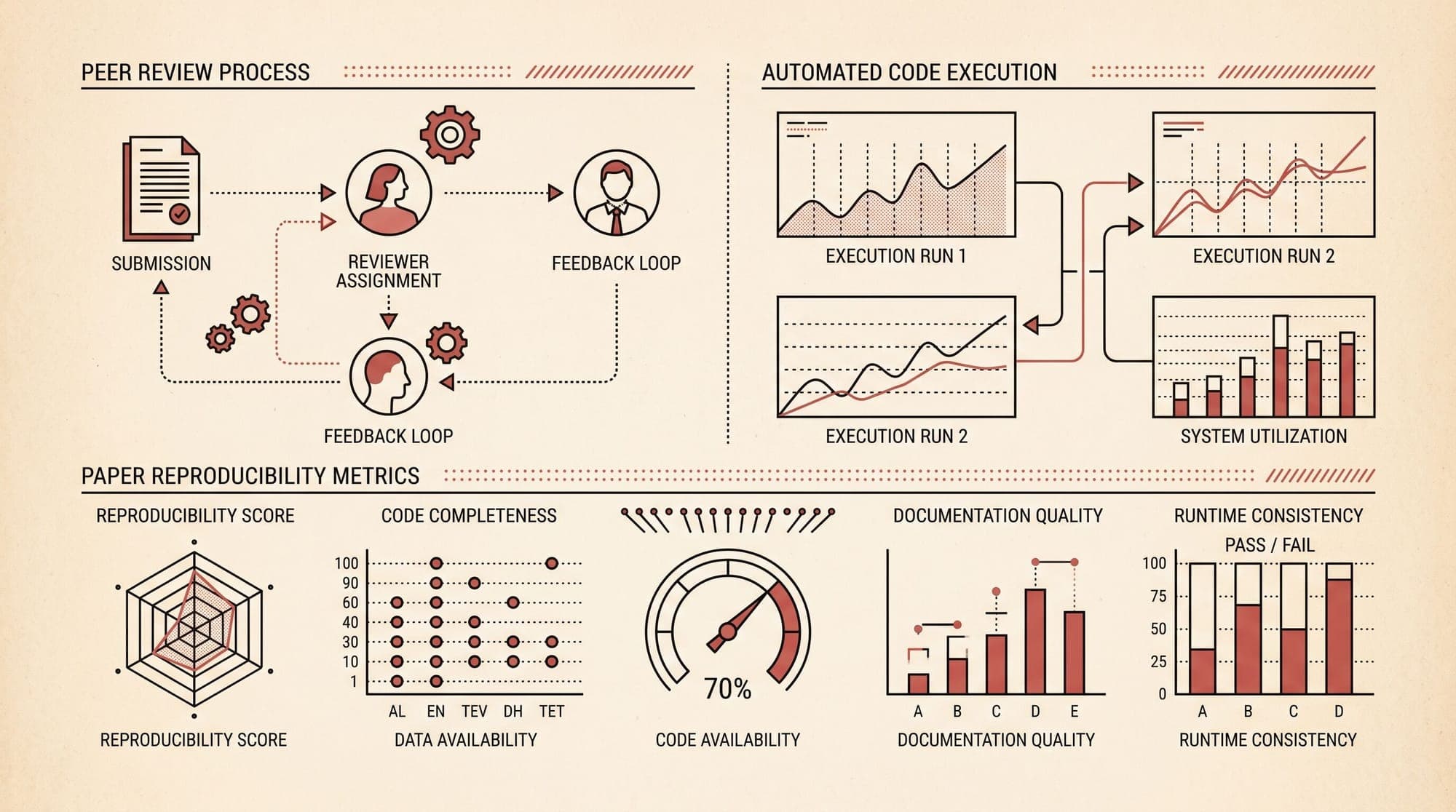
  12. Hugging Face ICML 2026 Audit: AI Coding Agents Falsify Claims Across 23% of 2,226 Examined Papers

    Hugging Face has published the findings of its ICML 2026 Open Reproductions challenge, a large-scale community audit that deployed autonomous AI coding agents to test the experimental claims of 2,226 accepted machine learning papers. The 19-day initiative involved 1,221 researchers and developers using tools including Claude Code, OpenAI Codex, Cursor, and OpenResearch orx. Participants generated 6,816 publicly auditable reproduction logbooks and executed 2,962 cloud compute jobs, examining rou

    AI
    2 min read
  13. Grokking in Large Language Models: How Weight Decay and Circuit Efficiency Drive Delayed Generalization

    In standard machine learning paradigms, model generalization closely tracks training loss: as an optimizer minimizes loss on training data, performance on held-out validation data improves in tandem until the model begins to overfit. In 2022, researchers at OpenAI observed a phenomenon that inverted this assumption: small neural networks trained on algorithmic tasks achieved near-zero training error within hundreds of steps, lingered in an apparent state of complete overfitting for tens of thous

    AI
    7 min read
  14. Representation Degeneration and Anisotropy in Large Language Models: Why Embeddings Collapse into Narrow Cones

    In neural language modeling, high-dimensional vector spaces are expected to distribute token and sequence representations uniformly across their ambient dimensions. A space that utilizes all available geometric directions provides maximal representational capacity, allowing subtle semantic and syntactic differences between tokens to be resolved cleanly. Empirical analysis across architectures from BERT and GPT-2 to modern frontier foundation models reveals the opposite behavior: learned token a

    AI
    9 min read
  15. Duke Study Finds Creative Output Across Frontier LLMs Is Converging Toward Semantic Monoculture

    A longitudinal study by researchers at Duke University has documented a measurable decline in output diversity across major large language model families. Tracking 69 foundation model checkpoints released between March 2023 and July 2026, the researchers found that generative responses to open-ended creative and ideation prompts are increasingly converging toward semantic uniformity across competing providers. The paper, titled Are LLMs becoming similarly creative? Evidence from three years of

    AI
    2 min read
  16. Differential Attention in Large Language Models: How Denoising Subtraction Eliminates Attention Noise and Outlier Activations

    In standard transformer architectures, the self-attention mechanism computes pairwise token interactions through the scaled dot-product operator followed by a softmax normalization. While this formulation has underpinned modern large language models, it suffers from an architectural limitation: attention noise. Because the softmax function maps input logits to a strictly positive probability distribution summing to one, it forces probability mass onto irrelevant context tokens. In sequences span

    AI
    6 min read
  17. Pew Study Finds 35% of Post-ChatGPT Webpages Show Signs of AI Authorship

    More than one-third of English-language webpages published since the launch of ChatGPT show measurable evidence of being generated or heavily edited by large language models, according to a study released by the Pew Research Center. The analysis examined nearly 500,000 English-language web documents indexed across a five-year window in the Common Crawl archive, spanning periods before and after OpenAI introduced ChatGPT in November 2022. Using detection technology developed by Open Pangram, res

    AI
    2 min read
  18. Rich Sutton: Relying on Synthetic Data to Scale Foundation Models Is a 'Big Mistake'

    Reinforcement learning pioneer Richard Sutton has challenged the artificial intelligence industry's accelerating pivot toward synthetic data, characterizing the strategy as a fundamental misstep that cannot resolve the scaling bottlenecks confronting foundation models. Speaking alongside Oak Lab co-founder Khurram Javeed, the author of the foundational 2019 essay "The Bitter Lesson" argued that synthetic data generation inherently runs counter to the principles that govern general intelligence.

    AI
    2 min read
  19. Contrastive Decoding in Large Language Models: How Comparing Expert and Amateur Logits Suppresses Hallucination and Reasoning Errors

    Contrastive Decoding in Large Language Models: How Comparing Expert and Amateur Logits Suppresses Hallucination and Reasoning Errors Autoregressive large language models operate by predicting the conditional probability distribution of the next token given a sequence of preceding tokens. However, translating these continuous probability vectors into coherent, factual, and logically sound sequences remains one of the fundamental challenges of modern natural language processing. Traditional deco

    AI
    6 min read
  20. Machine Unlearning in Large Language Models: How Gradient Ascent, Representation Misdirection, and Negative Alignment Purge Neural Memory

    Large language models memorize massive amounts of training data, including copyrighted literature, personally identifiable information (PII), proprietary codebases, and dual-use knowledge spanning cyber exploits and biological hazards. When copyright holders, regulators, or safety researchers demand the removal of specific data, complete retraining from scratch is economically infeasible, often costing tens of millions of dollars in compute. Machine unlearning aims to remove the influence of ta

    AI
    7 min read