
Reinforcement learning pioneer Richard Sutton has challenged the artificial intelligence industry's accelerating pivot toward synthetic data, characterizing the strategy as a fundamental misstep that cannot resolve the scaling bottlenecks confronting foundation models. Speaking alongside Oak Lab co-founder Khurram Javeed, the author of the foundational 2019 essay "The Bitter Lesson" argued that synthetic data generation inherently runs counter to the principles that govern general intelligence.
While frontier AI developers increasingly manufacture synthetic conversations, automated reasoning chains, and simulated environments to bypass the exhaustion of high-quality human text, Sutton asserts that artificial datasets merely reintroduce human bias and structural ceilings under a different guise.

The Big World Hypothesis and Simulation Ceilings
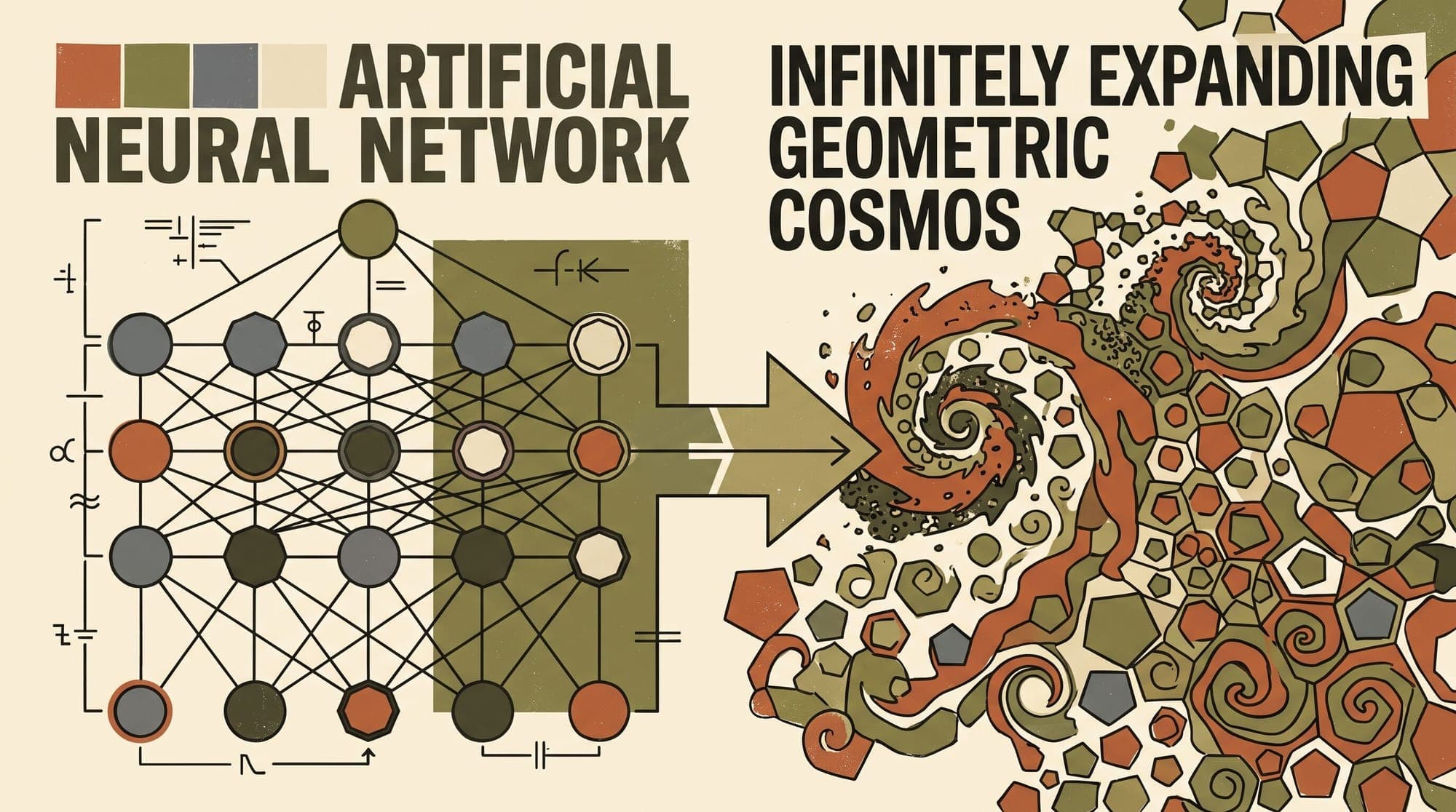
Sutton and Javeed ground their critique in the "Big World Hypothesis," an epistemic framework developed during their research at the University of Alberta. The principle posits that the physical reality an agent must navigate is infinitely complex and orders of magnitude larger than the representational capacity of any single agent, model, or simulator.
According to Sutton, synthetic generation suffers from two critical architectural constraints:
- Microscopic simulation fidelity: Any synthetic generator or physical simulator is bounded by the simplified mathematical assumptions of its human designers. Small software simulations inevitably produce inaccurate dynamics (such as imprecise friction or material properties) and cannot realistically model the internal states and behaviors of other independent agents.
- The human evaluation bottleneck: Scaling synthetic data requires discriminating between high-value and low-value generated samples. Because this filtering process ultimately relies on human-crafted heuristics, domain experts, or reward models trained on human preferences, the entire pipeline remains constrained by human knowledge, violating the core tenet of compute-driven scaling.
Continual Experiential Learning vs. Static Architectures
Sutton views modern large language models as a partial demonstration of the Bitter Lesson: they successfully leveraged raw compute to absorb the finite corpus of the public internet, but now face diminishing returns because the web represents only a tiny fraction of total real-world interaction.
Furthermore, Sutton pointed out a structural deficiency in contemporary LLM deployment: current foundation models stop learning once their pre-training phase concludes. Because model parameters remain frozen during inference, systems cannot adapt in real time to evolving environments.
Instead of recycling synthetic data through closed model-to-model distillation loops, Sutton advocates for autonomous agents that learn directly from ongoing environmental interaction. Under this paradigm, agents construct, test, and update their own internal world models through continuous trial and error. To overcome catastrophic forgetting without halting gradient updates, Sutton pointed to recent architectural methods such as Continual Backpropagation, maintaining that true intelligence requires models capable of perpetual weight adaptation rather than static post-training checkpoints.



