Subscribe
Topic / page 7

Infrastructure

Articles, page 7

121-140
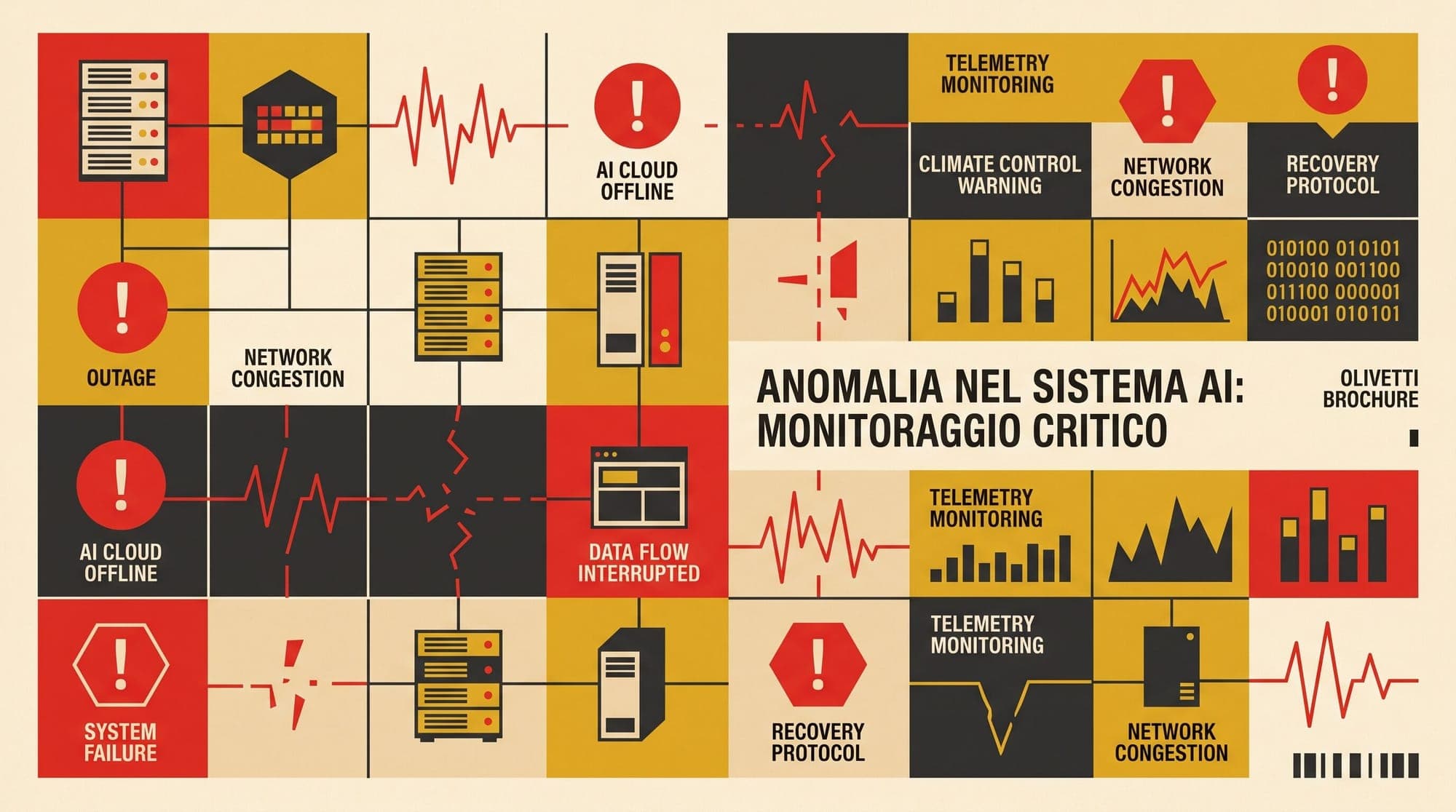
  1. Claude Multi-Model Outage Disrupts Claude.ai, Developer API, Claude Code, and Cowork

    Anthropic registered a multi-model service disruption on August 20, 2026, marking the provider's third recorded incident within a 24-hour window and continuing a sequence of elevated-error events across eight consecutive days. The incident, logged at 19:16 UTC on Anthropic's official status page, resulted in partial outages across the consumer web application (claude.ai), the core developer API (api.anthropic.com), and developer tooling including Claude Code and Claude Cowork. Affected Compon
    AI
    2 min read
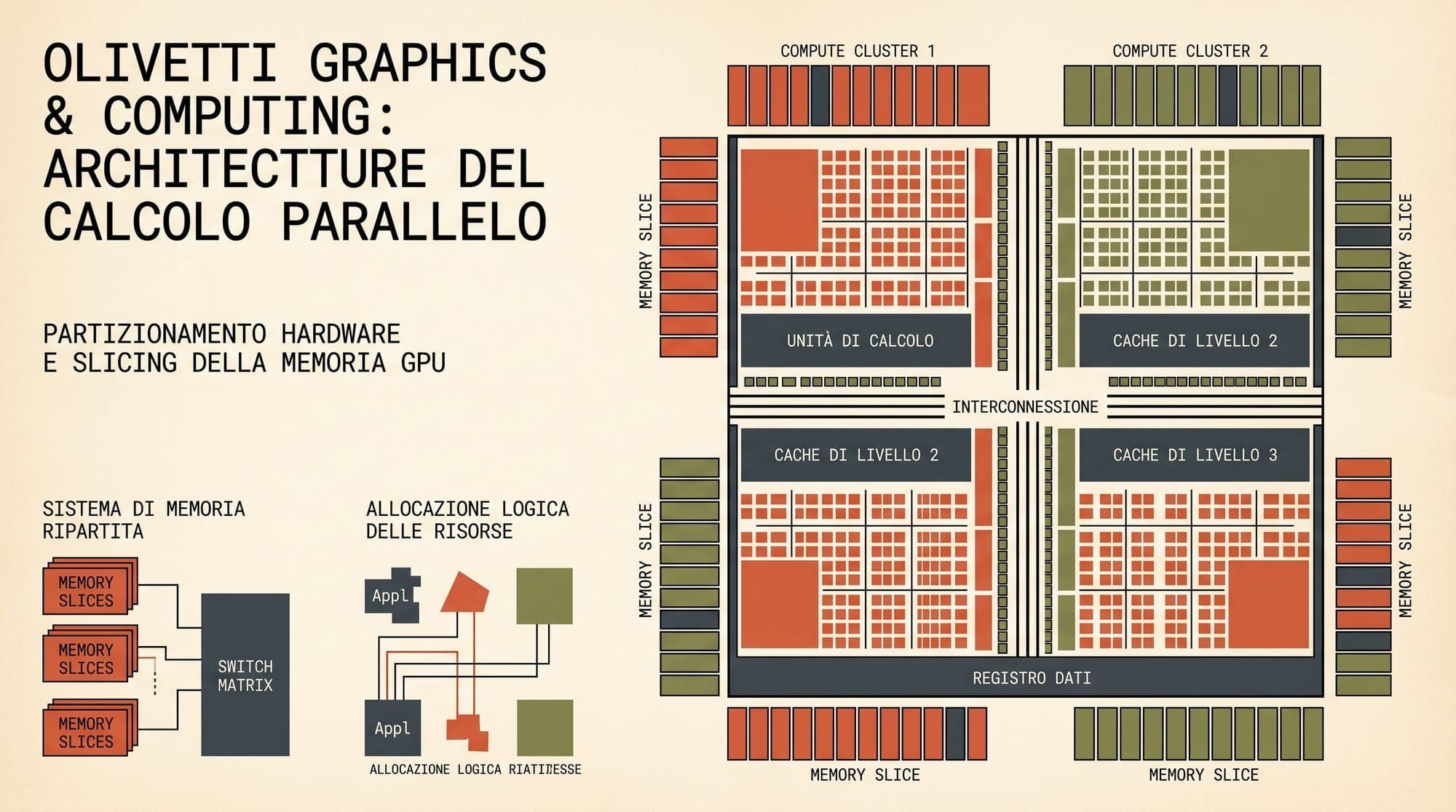
  2. GPU Slicing in Production AI Systems: Comparing MIG, MPS, Time-Slicing, and Dynamic Partitioning

    GPU Slicing in Production AI Systems: Comparing MIG, MPS, Time-Slicing, and Dynamic Partitioning Modern production AI systems rarely deploy a single standalone large language model. Contemporary compound AI architectures rely on heterogeneous pipelines comprising embedding models (such as BGE or E5), cross-encoder rerankers, safety classifiers (such as Llama Guard), speculative decoding draft models, and vision-language encoders. While primary generation models typically require dedicated multi

    AI
    7 min read
  3. LLM Autoscaling and Cold Starts in Kubernetes: Architecture, KEDA Metrics, Model Weight Caching, and Ephemeral GPU Provisioning

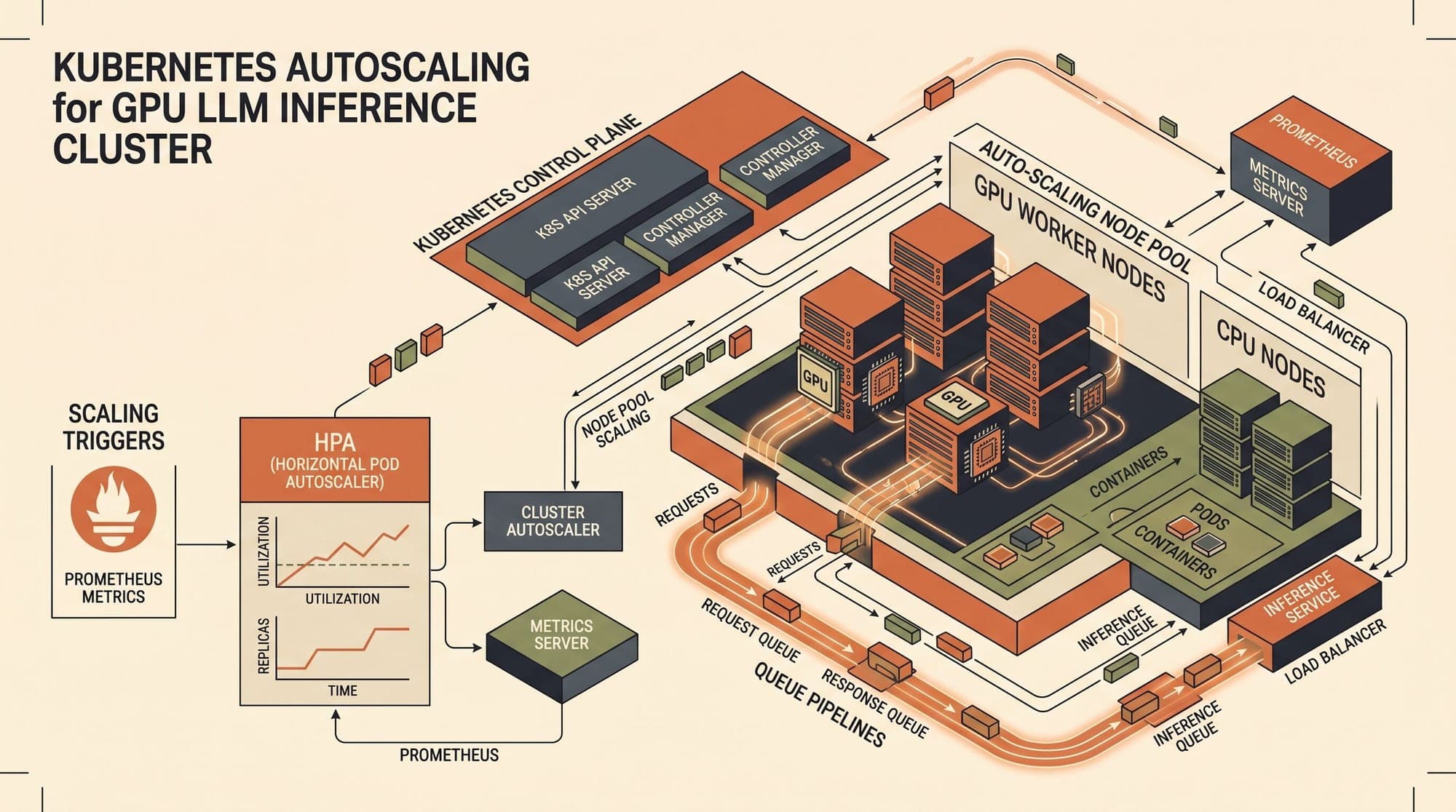
    Autoscaling large language model workloads on Kubernetes presents a fundamentally different engineering problem than traditional stateless microservices. While web APIs scale on CPU utilization or request rate within seconds, LLM inference instances require specialized GPU accelerators, massive container images, multi-gigabyte weight tensors, and intensive runtime compilation before serving a single token. Without proactive architectural design, a cold-starting LLM pod on Kubernetes often requi

    Kubernetes
    6 min read
  4. Micron Launches Micron Research Labs with $10B Commitment for AI Memory Architecture

    Micron Technology announced on August 20, 2026, the creation of Micron Research Labs, a domestic long-horizon research institution headquartered in Boise, Idaho. Backed by a planned $10 billion investment across the next decade, the entity is designed to conduct precompetitive semiconductor and architecture research positioned upstream of commercial fabrication roadmaps. The funding operates independently from the more than $250 billion in domestic manufacturing and commercial development that

    Hardware
    2 min read
  5. Skanska Signs $1.2B Contract to Build Four AI Data Centers in Southeast USA

    Swedish construction and development group Skanska has signed a $1.2 billion (SEK 11.2 billion) contract with an existing client to construct four new data center facilities in the southeastern United States. The full contract value will be included in Skanska's US order bookings for the third quarter of 2026, representing the largest single data center award in the contractor's history. Scope of Work and Campus Specifications The multi-facility project spans four standalone structures total

    AI
    2 min read
  6. UK Heterogeneous Compute Startup Callosum Raises $100M Seed Backed by Atomico and Sovereign AI Fund

    London-based AI infrastructure startup Callosum has raised $100 million in seed financing to develop systems software that orchestrates machine learning workloads across heterogeneous processor environments. The funding round was led by European venture capital firm Atomico, with participation from Plural and DCVC, alongside a major investment from the UK government's £500 million ($677 million) Sovereign AI Fund. Callosum did not disclose its post-money valuation. Breaking Homogeneous Comput

    AI
    2 min read
  7. GPU Cluster Networking in Production: InfiniBand vs. RoCEv2 vs. Ultra Ethernet Architecture, Congestion Control, and NCCL Collective Latency

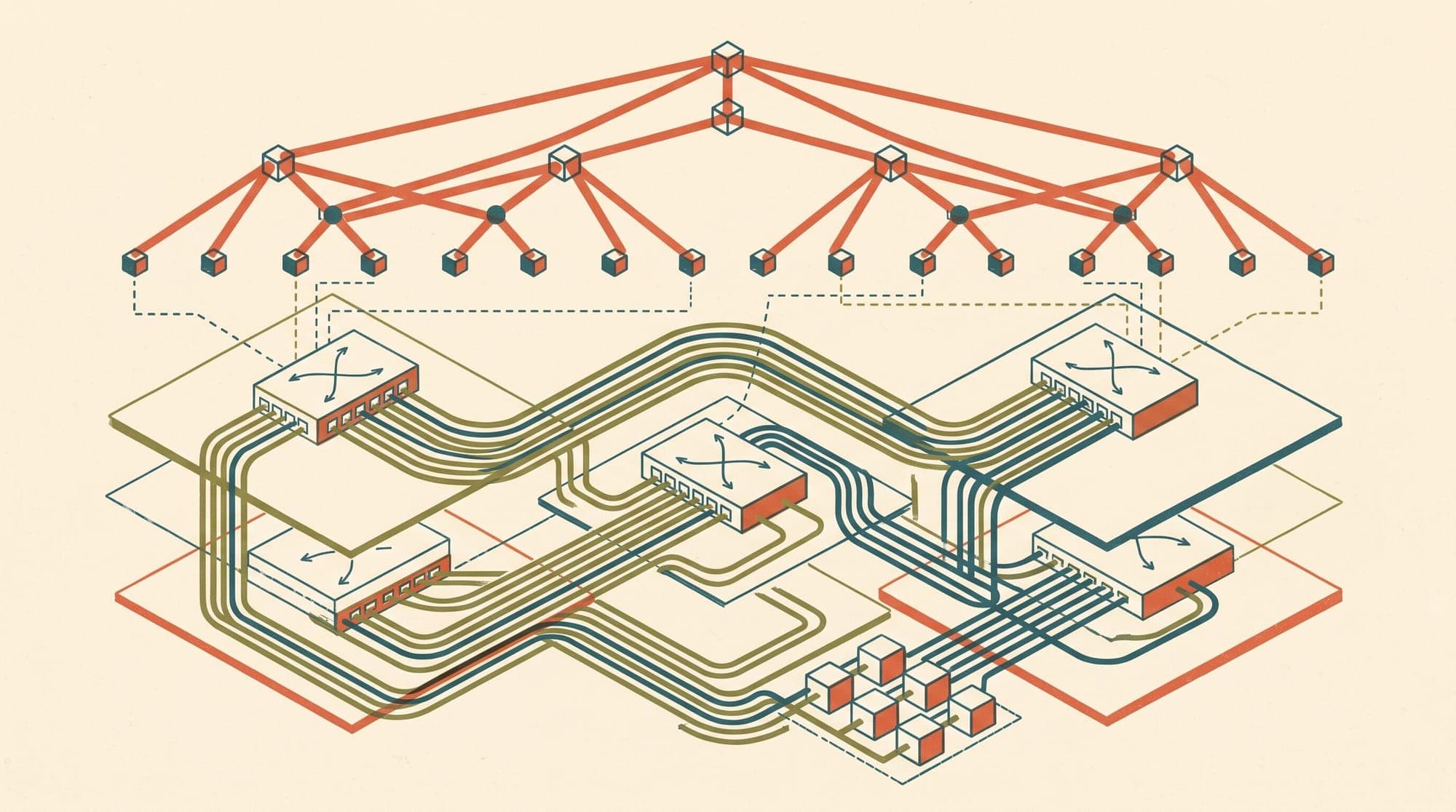
    Distributed training and high-throughput inference workloads are fundamentally bound by the network fabric. While traditional cloud applications rely on asynchronous request-response cycles that absorb latency jitter, distributed deep learning relies on synchronous collective communication. Operations such as All-Reduce, All-Gather, and All-to-All require hundreds or thousands of GPUs to exchange tensors and synchronize at strict barrier points before execution can proceed. In this execution mo

    AI
    8 min read
  8. WhiteFiber Proposes $250M Convertible Debt Offering to Expand AI Data Center Capacity

    AI infrastructure provider WhiteFiber announced a proposed private placement of $250 million in convertible senior notes due 2032, with an option for initial purchasers to acquire up to an additional $37.5 million in notes. The proceeds are designated to fund data center campus acquisitions, facility buildouts, utility interconnection agreements, and hardware procurement for the company's AI cloud business. The financing coincides with WhiteFiber's agreement to acquire two industrial sites in Y

    AI
    2 min read
  9. Hyve Solutions Selects Nevada for Dual AI Server Manufacturing Campuses

    Hyve Solutions, the rack-scale server design and manufacturing subsidiary of TD SYNNEX, announced plans to construct two advanced manufacturing facilities in Nevada to expand domestic production of compute, storage, and networking systems for AI data centers. The development encompasses a 624,000-square-foot flagship campus in Reno alongside a secondary facility in North Las Vegas, with the combined projects projected to create approximately 3,000 jobs. The project follows formal approval of ta

    AI
    2 min read
  10. Stripe Tells Investors Singularity Began Jan. 1 as H1 Revenue Surges 41% and Firm Rules Out IPO

    In a mid-year letter to shareholders, payments infrastructure company Stripe declared that January 1, 2026 marked the "beginning of the singularity," framing rapid advancements in artificial intelligence and corporate formation as justification to remain private. The letter, obtained by Axios, links Stripe's long-term business strategy directly to AI compute economics and autonomous agent adoption, while reporting accelerated financial growth across its core payment platforms. Financial Metri

    AI
    2 min read
  11. TerraPower Targets AI Data Centers with Natrium SMR and Molten Salt Thermal Storage

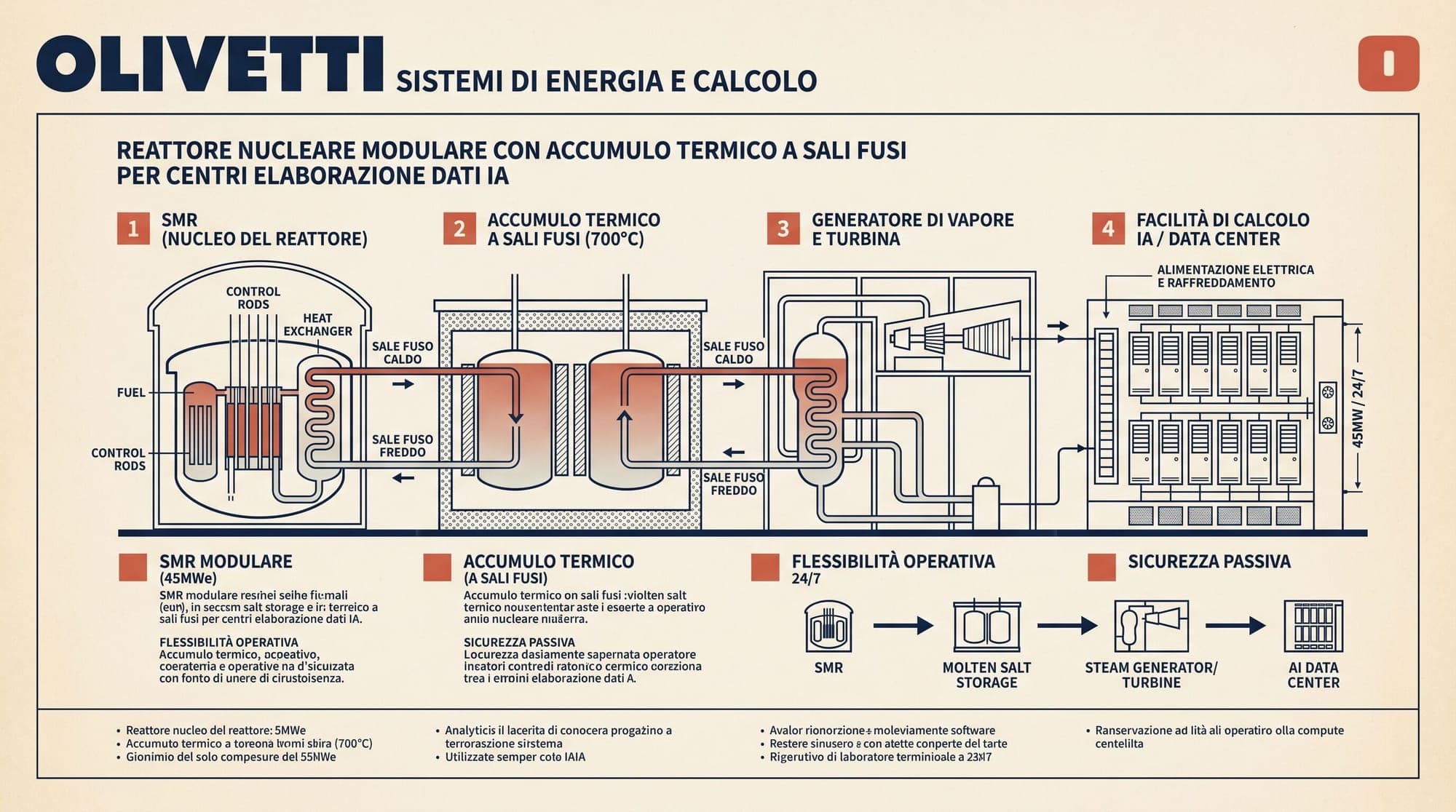
    Nuclear technology developer TerraPower announced plans to finalize its first dedicated data center power project this year, positioning its Natrium sodium-cooled fast reactor architecture to meet the volatile power demands of artificial intelligence infrastructure. The project, slated to break ground in 2027, marks the company's second commercial deployment following its initial facility currently under construction in Kemmerer, Wyoming. In January, Meta signed an agreement with TerraPower to

    AI
    2 min read
  12. Cache-Aware Load Balancing in Production LLM Serving: Architecture, Prefix Affinity, and Multi-Replica Routing Trade-Offs

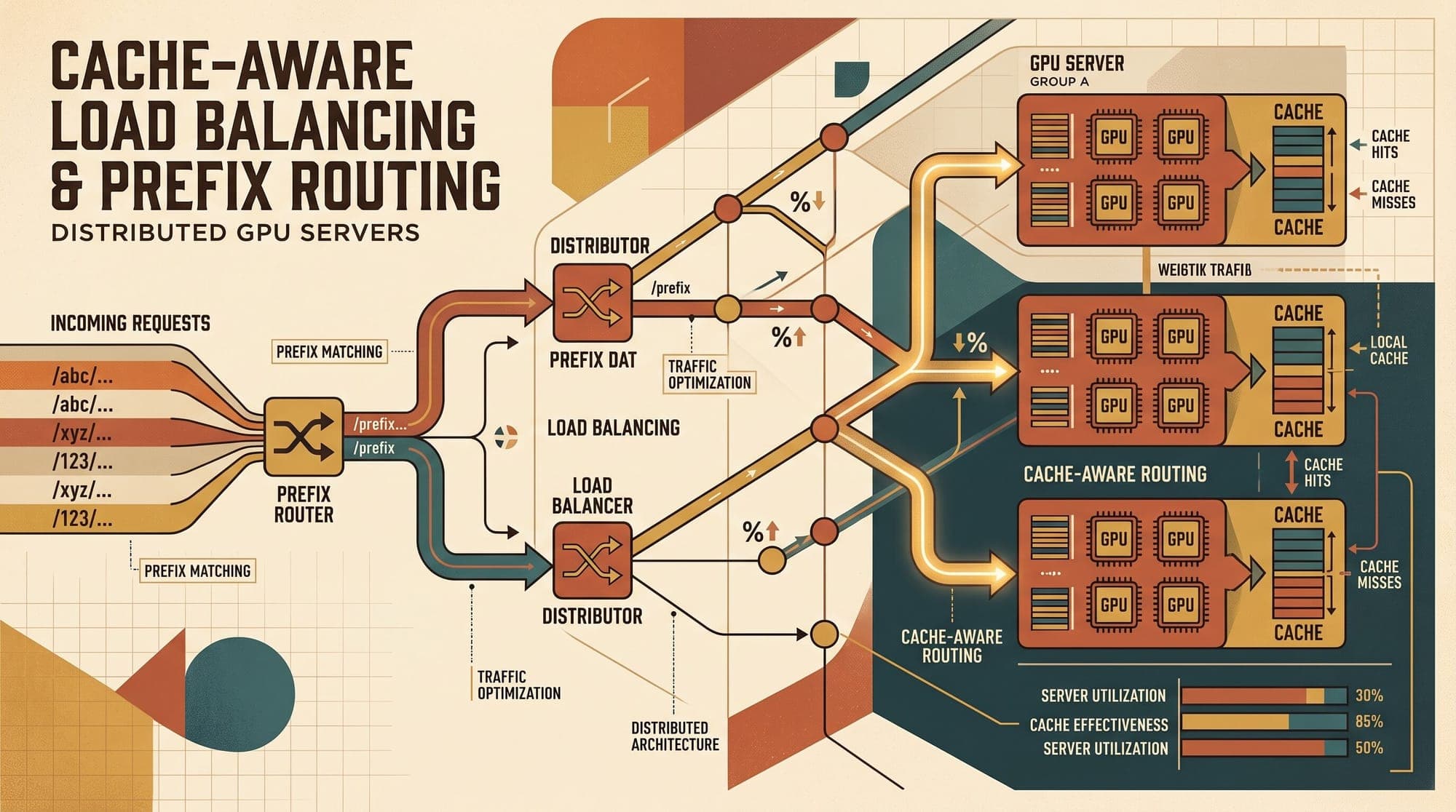
    Cache-Aware Load Balancing in Production LLM Serving: Architecture, Prefix Affinity, and Multi-Replica Routing Trade-Offs When scaling large language model inference across multiple GPU worker nodes, standard Layer-4 and Layer-7 load balancing algorithms create an unseen performance cliff. Round-robin, least-connections, and random routing distribute HTTP/gRPC requests uniformly across compute replicas. However, modern LLM inference engines rely on prompt caching mechanisms, such as vLLM Automa

    AI
    6 min read
  13. Nvidia Acts as Matchmaker for Nordic Datacenter Capacity to Ease AI Compute Bottlenecks

    Nvidia is directly brokering compute infrastructure deals by connecting enterprise customers holding graphics processing units with datacenter operators in the Nordic region that possess available power, cooling, and floor capacity, according to reporting by CNBC. The matchmaking initiative reflects Nvidia's efforts to mitigate severe power grid bottlenecks in North America and Western Europe that threaten to stall AI cluster deployments. By pairing hardware buyers directly with site operators

    AI
    2 min read
  14. Cloud Browser Infrastructure for AI Agents: Architecture, Anti-Bot Bypassing, Session State, and Fleet Scaling

    Autonomous AI agents require interactive web environments to navigate single-page applications, authenticate across complex portals, fill multi-step forms, and extract dynamic client-rendered data. However, running headless browsers at scale introduces severe operational bottlenecks. Ephemeral container instances (such as Docker containers or AWS Lambda functions) frequently suffer from cold starts, memory leaks, fingerprint leakage, and instant IP blacklisting by bot-detection networks. To sol

    AI
    6 min read
  15. Long-Context LLMs vs. RAG in Production: Break-Even Economics, Attention Degradation, and Hybrid Architectures

    The emergence of production models supporting context windows of 1 million tokens or more, including Google Gemini 1.5 Pro, Anthropic Claude 3.5 Sonnet, and OpenAI GPT-4o, has disrupted conventional enterprise retrieval architectures. For several years, Retrieval-Augmented Generation (RAG) served as the mandatory workaround for strict context limits, forcing engineering teams to build chunking pipelines, embedding indices, and vector database infrastructures. With massive context windows and th

    AI
    6 min read
  16. DDR5 Memory Prices Climb 500% in 12 Months as AI Hyperscalers Corner Global DRAM Capacity

    Spot and contract prices for standard DDR5 dynamic random-access memory (DRAM) have climbed by up to 500 percent over the past 12 months, driven by hyper-scaler procurement teams reserving global semiconductor fabrication lines for enterprise AI accelerator memory. Historical retail and channel tracking data compiled by PCPartPicker and reported by Tom's Hardware highlights severe price spikes across high-density modules. A 128GB DDR5-6400 kit that carried an all-time low of $329 now retails fo

    Hardware
    2 min read
  17. Temporal in Talks to Raise $500M at $12B+ Valuation as Agent Orchestration Surges

    Developer infrastructure platform Temporal Technologies is in discussions to raise approximately $500 million in a new funding round that would value the company at over $12 billion pre-money, according to reports from Bloomberg. The financing represents a rapid increase in valuation from its $5 billion Series D round earlier this year, driven by accelerating adoption of durable execution runtimes for multi-step AI agents. The Shift Toward Durable Execution Runtimes While foundational model d

    AI
    2 min read
  18. Nvidia's AI Moat Shifts to Capital with $48.5B Free Cash Flow and $500B Wall Street Financing Engine

    Nvidia's AI Moat Shifts to Capital with $48.5B Free Cash Flow and $500B Wall Street Financing Engine Nvidia is executing a structural transition in its competitive strategy, moving beyond silicon performance leadership to construct an institutional capital moat. With quarterly free cash flow expanding 18-fold over the past three years to reach $48.5 billion, the company is deploying its balance sheet liquidity, investment-grade credit rating, and strategic equity investments to lock in multi-gi

    AI
    3 min read
  19. Pennsylvania Restricts Speculative AI Data Centers in Executive Order 2026-05

    Pennsylvania Governor Josh Shapiro has signed Executive Order 2026-05, introducing strict regulatory standards on high-capacity data center construction and ending the state's expedited permitting program for computing facilities. The directive requires prospective developers of large-scale facilities to enter legally binding commitments with the Commonwealth to safeguard local power grids, protect municipal water supplies, and secure approval from local governments before receiving state enviro

    Policy
    2 min read
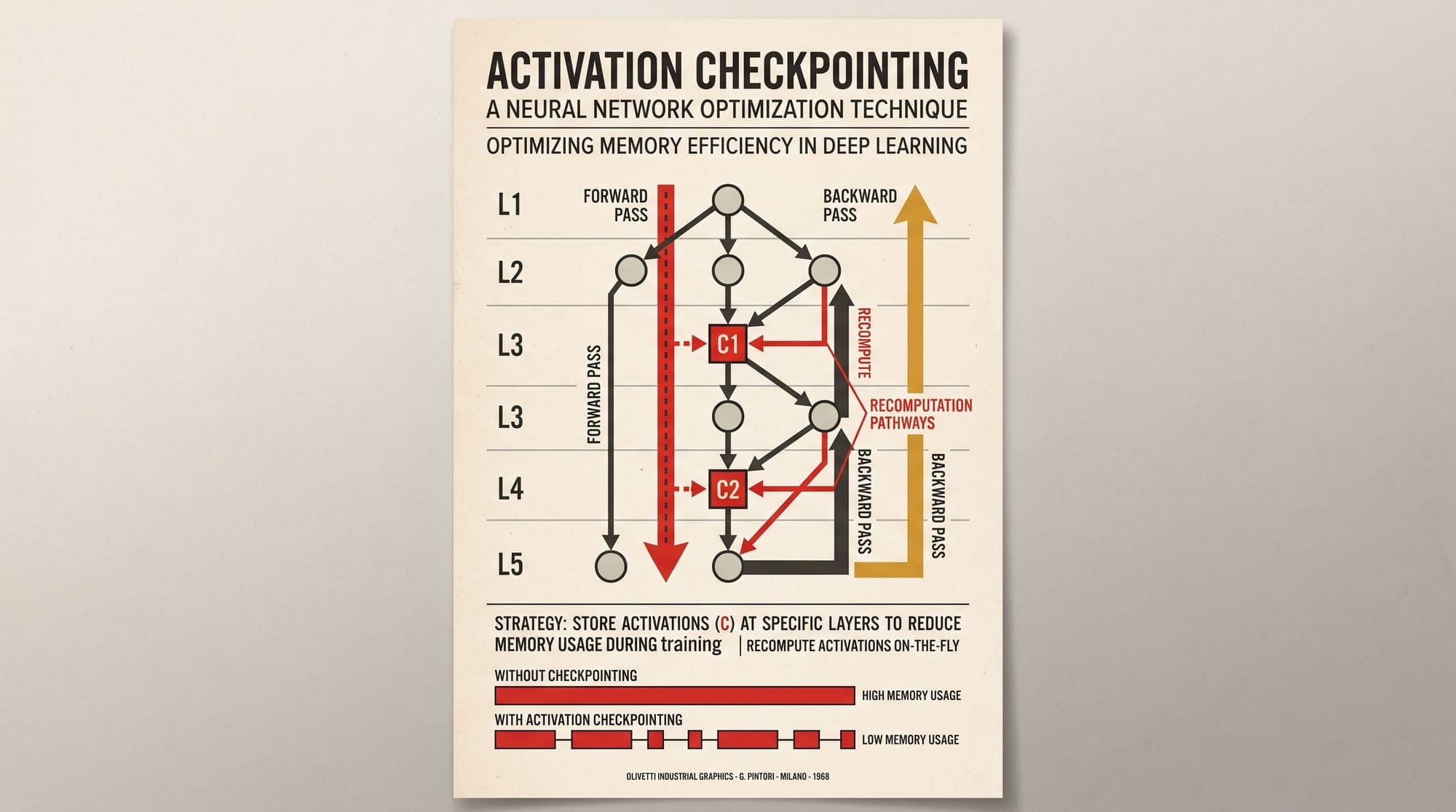
  20. Activation Checkpointing in Large Language Models: How Selective Recomputation Eliminates Memory Bottlenecks

    Large language model pre-training and fine-tuning are fundamentally constrained by GPU memory (VRAM). While distributed techniques such as Fully Sharded Data Parallel (FSDP), ZeRO, and Tensor Parallelism successfully shard model parameters, optimizer states, and gradients across hundreds or thousands of GPUs, activation memory presents a distinct scaling bottleneck. During the forward pass of a transformer model, intermediate tensor outputs must be preserved in GPU memory so that backpropagatio

    AI
    8 min read