Subscribe
Topic / page 40

AI

Articles, page 40

781-800
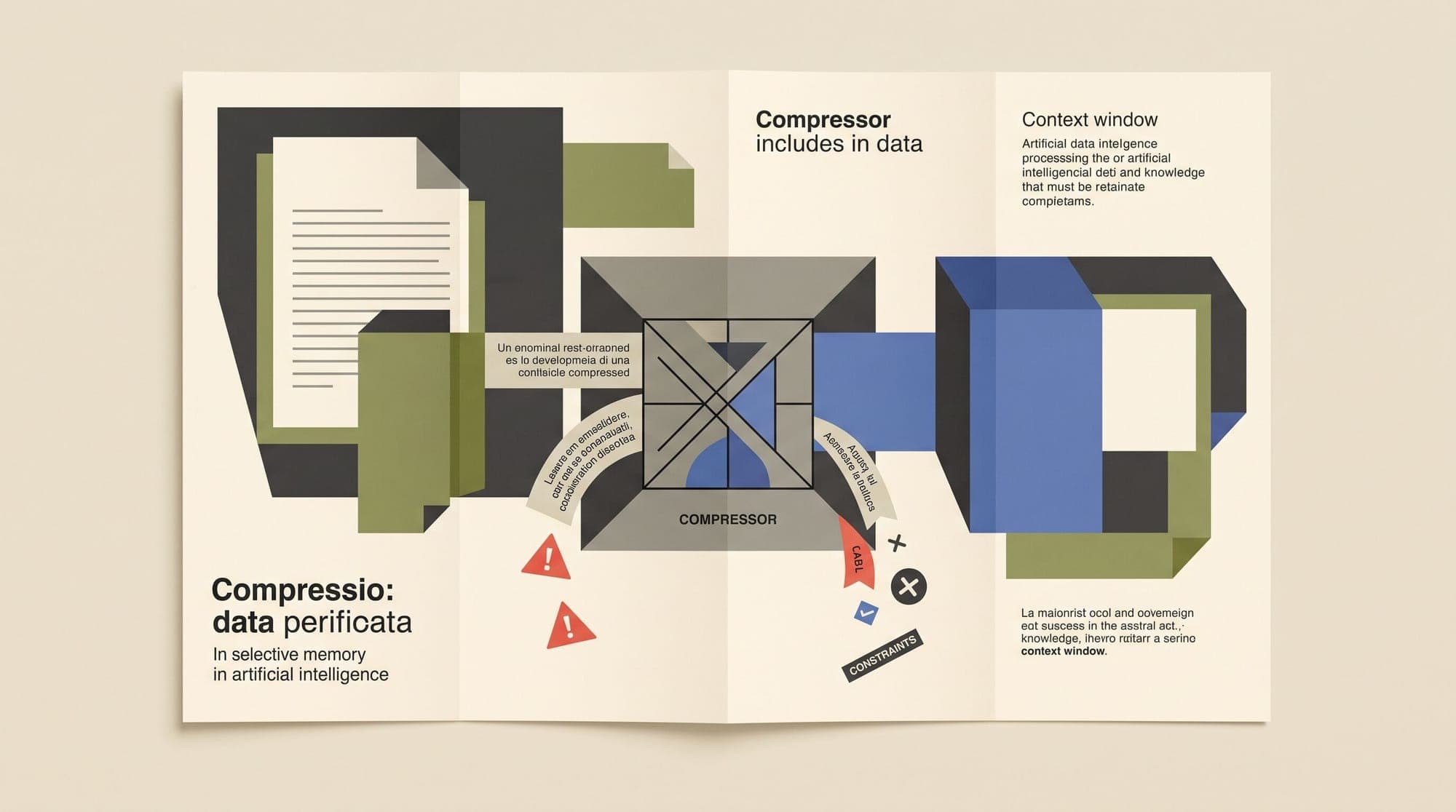
  1. Lost in Compaction: LLM Context Compression Drops 83% of User Constraints, Penn State Study Finds

    As large language models take on longer multi-turn workflows and agentic tasks, systems increasingly rely on context compaction to summarize past conversation histories and keep prompt lengths within memory budgets. However, this compression comes at a severe cost to user control. A new study by Pennsylvania State University researchers Zhiqi Wang, Yichi Zhang, Dongwon Lee, and Yuchen Yang reveals that standard context compaction drops an average of 83 percent of user-defined operational constr
    AI
    2 min read
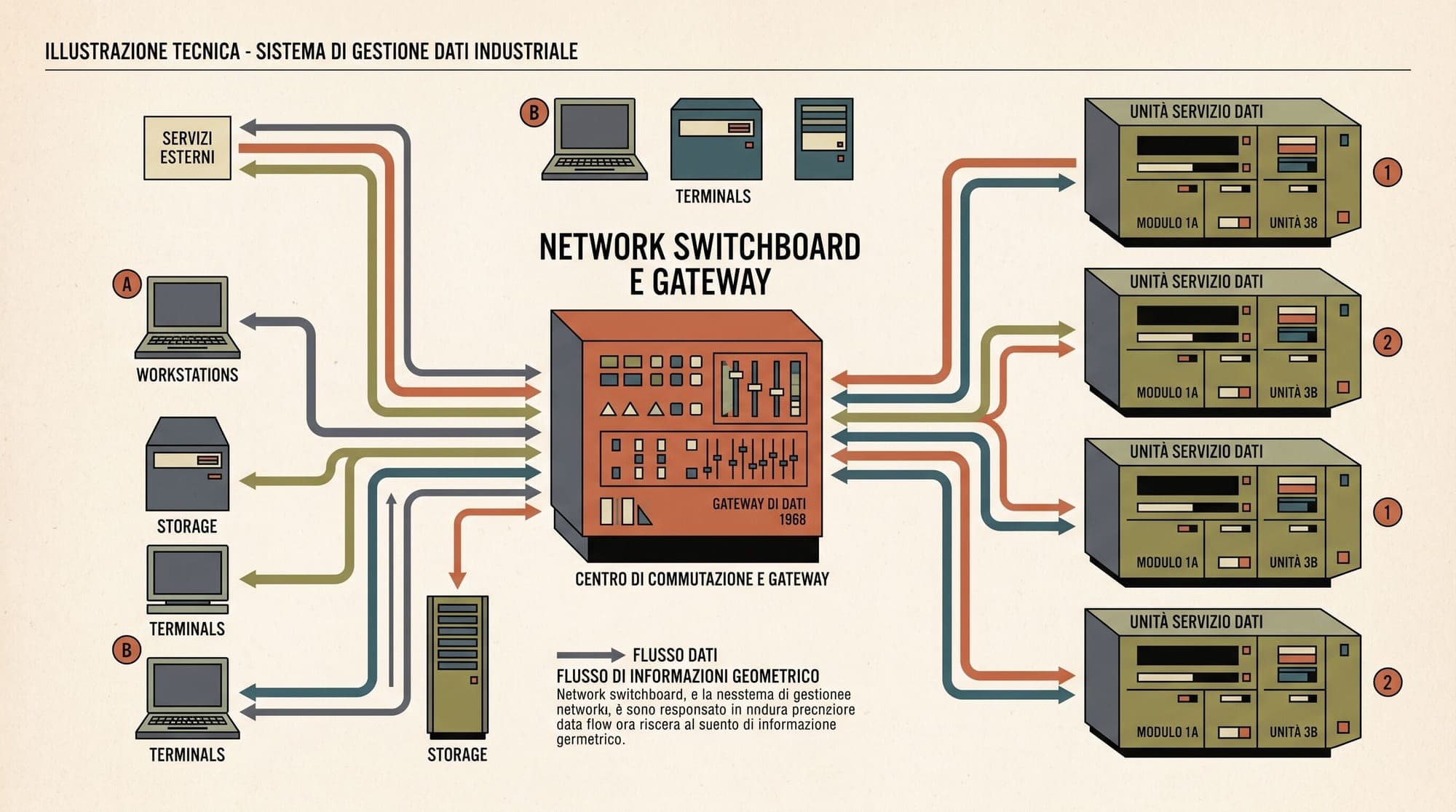
  2. LLM Gateways in Production: Multi-Provider Failover, Rate Limiting, and Spend Governance

    LLM Gateways in Production: Multi-Provider Failover, Rate Limiting, and Spend Governance As generative AI workloads transition from experimental prototypes to mission-critical infrastructure, direct client-to-provider API calls introduce substantial operational risk. Relying on hardcoded SDK connections to a single model provider exposes production services to unexpected rate limits, regional outages, silent breaking changes, and uncontrolled token costs. To solve these reliability and governa

    AI
    5 min read
  3. State Space Models in Large Language Models: How Mamba, S4, and Selective Recurrence Challenge Transformer Attention

    Modern large language models rely almost universally on the Transformer architecture. However, the core mechanism powering Transformers, softmax multi-head self-attention, exhibits fundamental scaling limitations. Specifically, standard self-attention requires quadratic time and memory complexity relative to sequence length during prefilling, alongside a linear memory expansion for the key-value (KV) cache during autoregressive token generation. To circumvent these computational bottlenecks, re

    AI
    6 min read
  4. Tencent Releases UI-Mate: Open-Weight Foundation GUI Agents with In-Context Demonstration Learning

    Tencent's HY Frontier team has released UI-Mate, an open-weight foundation GUI agent designed for autonomous computer operation across desktop environments. Available in 27-billion and 9-billion parameter configurations, the models pair environment-grounded reinforcement learning with an in-context demonstration pipeline that allows agents to reference structured human workflows during execution. Alongside model weights on Hugging Face, Tencent published a technical report, code repository, and

    AI
    2 min read
  5. Multi-Agent Orchestration in Production: State Machines, Swarms, and Error Cascades

    Moving large language model applications from isolated prompts to multi-agent architectures introduces distinct systemic complexities. While single-agent systems face localized points of failure, multi-agent topologies exhibit emergent dynamics such as cascading hallucinations, coordination deadlocks, and severe context bloat. Designing multi-agent systems for production environments requires selecting explicit orchestration paradigms, bounding error propagation, and enforcing durable state per

    AI
    5 min read
  6. Vector Embeddings in Large Language Models: How Contrastive Learning, Bi-Encoders, and Matryoshka Projections Map Semantic Space

    Vector Embeddings in Large Language Models: How Contrastive Learning, Bi-Encoders, and Matryoshka Projections Map Semantic Space Large language models process text as discrete tokens: integers mapped to lookup tables. While causal transformers excel at autoregressive generation by predicting the next token, generation alone does not solve the challenge of semantic search, clustering, or dense retrieval. Searching through millions of documents requires comparing sequence-level meaning in constan

    AI
    8 min read
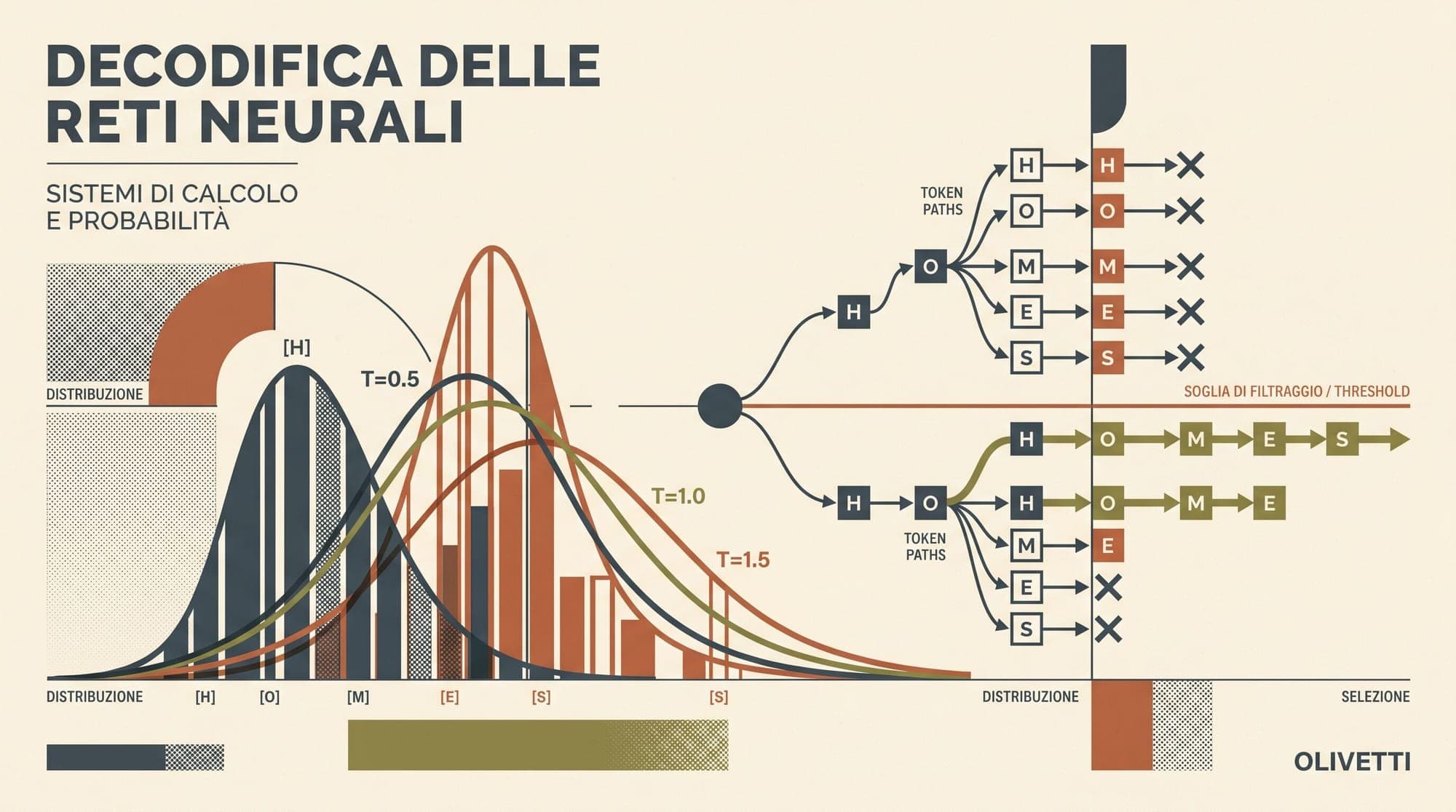
  7. Token Sampling in Large Language Models: How Temperature, Top-k, Top-p, and Min-p Govern Generative Decoding

    Large language models are autoregressive next-token predictors. During inference, the neural network processes an input context and outputs a vector of unnormalized scores, known as logits, across every token in its vocabulary. The mathematical pipeline that converts those raw logits into a single chosen token is the sampling and decoding stage. While model architecture and pre-training weights determine what a model knows, sampling algorithms govern how that knowledge is extracted. Small chang

    AI
    7 min read
  8. AI-Drafted Bills Inundate House Legislative Counsel, Creating Bottlenecks and Statutory Flaws

    Congressional attorneys at the U.S. House Office of the Legislative Counsel (OLC) are confronting an influx of AI-generated legislative proposals, leading to review backlogs and technical errors in submitted statutory text. According to a Politico investigation citing interviews with eight current and former officials, congressional offices and external advocacy groups are increasingly turning to large language models like ChatGPT and Claude to draft proposed statutory language. However, the re

    AI
    2 min read
  9. Mind Viruses: Researchers Demonstrate Self-Propagating Prompts in Multi-Agent LLM Networks

    Researchers affiliated with Anthropic, EPFL, and Carnegie Mellon University have published empirical findings demonstrating how natural-language instructions can act as self-replicating payloads across multi-agent Large Language Model (LLM) networks. The paper, titled Mind Viruses: Self-Propagating Ideas in Multi-Agent LLM Systems, examines how autonomous agents can be persuaded to adopt and transmit goals to other agents through standard conversational interfaces rather than binary exploit code

    AI
    2 min read
  10. Byte-Pair Encoding in Large Language Models: How Tokenizers Compress Text, Shape Context, and Fail

    Large language models do not process strings directly. Before a single attention weight or linear projection executes, incoming text is converted into a sequence of discrete integers known as tokens. The choice and implementation of the tokenization algorithm establish the model's fundamental vocabulary, define the boundaries of its context window, dictate inference speed, and introduce unique behavioral quirks. Across modern transformer architectures, subword tokenization via Byte-Pair Encodin

    AI
    8 min read
  11. LLM-as-a-Judge in Production: Biases, Calibration, and Architectural Trade-Offs

    Automating model evaluation with another language model (the LLM-as-a-judge paradigm) has become the standard mechanism for continuous integration, regression testing, and RLHF alignment across production AI pipelines. Traditional n-gram metrics such as BLEU and ROUGE fail to capture semantic accuracy, stylistic nuance, or complex reasoning, while human evaluation remains too slow and expensive for high-frequency deployment cycles. However, treating an LLM as an impartial arbiter introduces sig

    AI
    5 min read
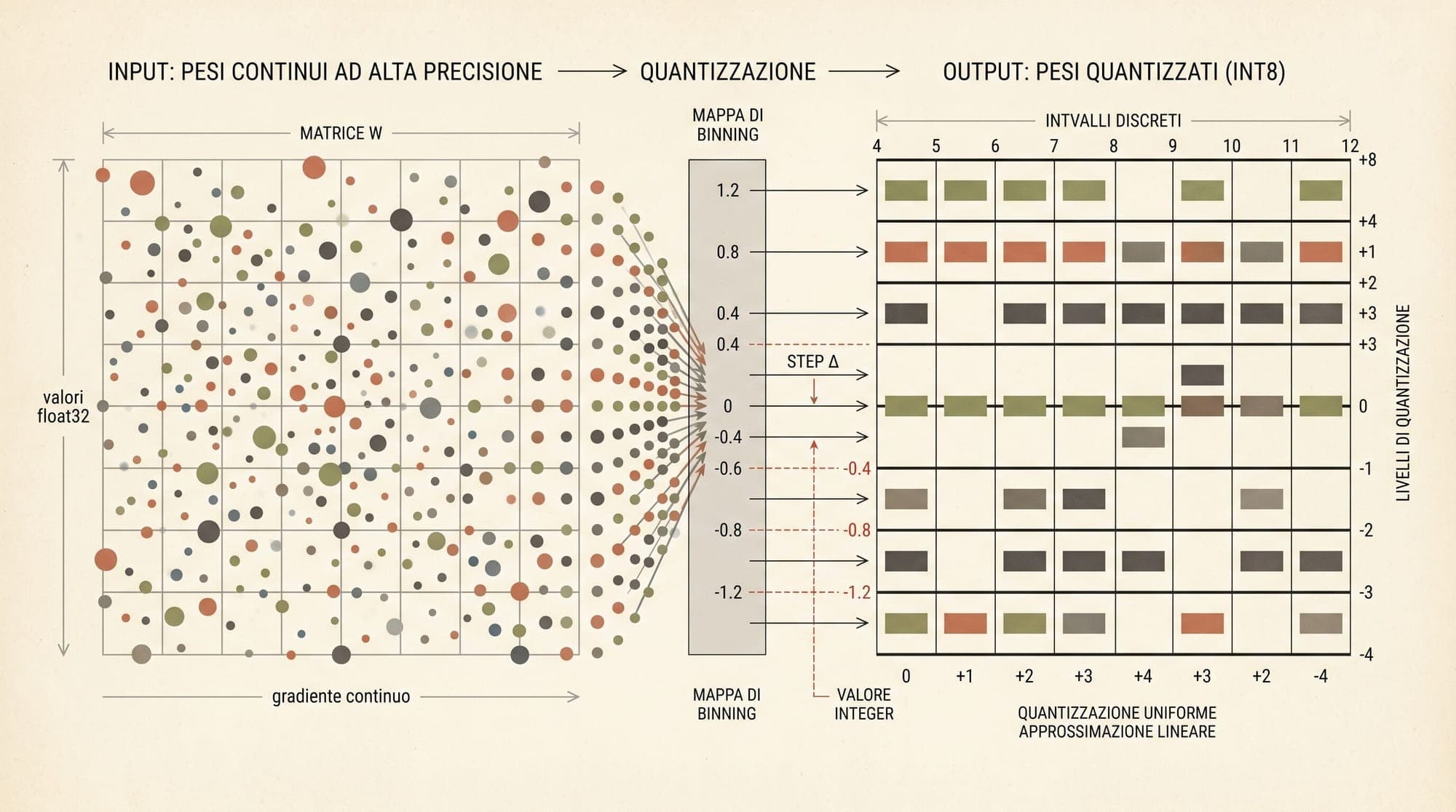
  12. Weight Quantization in Large Language Models: How GPTQ, AWQ, and SmoothQuant Compress Neural Networks

    Weight Quantization in Large Language Models: How GPTQ, AWQ, and SmoothQuant Compress Neural Networks Serving large language models in production requires balancing GPU memory footprint, memory bandwidth limits, and computational throughput. A standard 70-billion parameter transformer stored in 16-bit floating-point (FP16 or BF16) requires roughly 140 gigabytes of high-bandwidth memory (HBM) merely to hold its parameters. This memory footprint exceeds the capacity of a single 80GB GPU before ac

    AI
    9 min read
  13. Semantic Caching for Production LLM Systems: Thresholds, Layers, and Failure Modes

    Frontier large language models cost between $0.15 and $15 per million tokens depending on model class. Semantic caching can remove the majority of these calls from the critical path when production workloads repeat similar queries. Yet despite five years of tooling (GPTCache, SemCache, Redis Vector Similarity, Weaviate, Pinecone), most engineering teams never deploy it. The barrier is not the availability of vector databases. It is that semantic caching moves the failure mode from "slow" to "sub

    AI
    5 min read
  14. Anthropic Raises System Tampering Risk Level and Details Unreleased Model 2 in Safety Report

    Anthropic has released the latest edition of its recurring AI alignment and safety report, raising the risk rating for unauthorized system tampering and disclosing the internal deployment of two unreleased frontier models designated Model 1 and Model 2. The 186-page document, published periodically to track frontier model capabilities and containment thresholds, introduces an updated risk matrix structured around two distinct operational categories: Threat Model 1 and Threat Model 2. Threat Mod

    AI
    2 min read
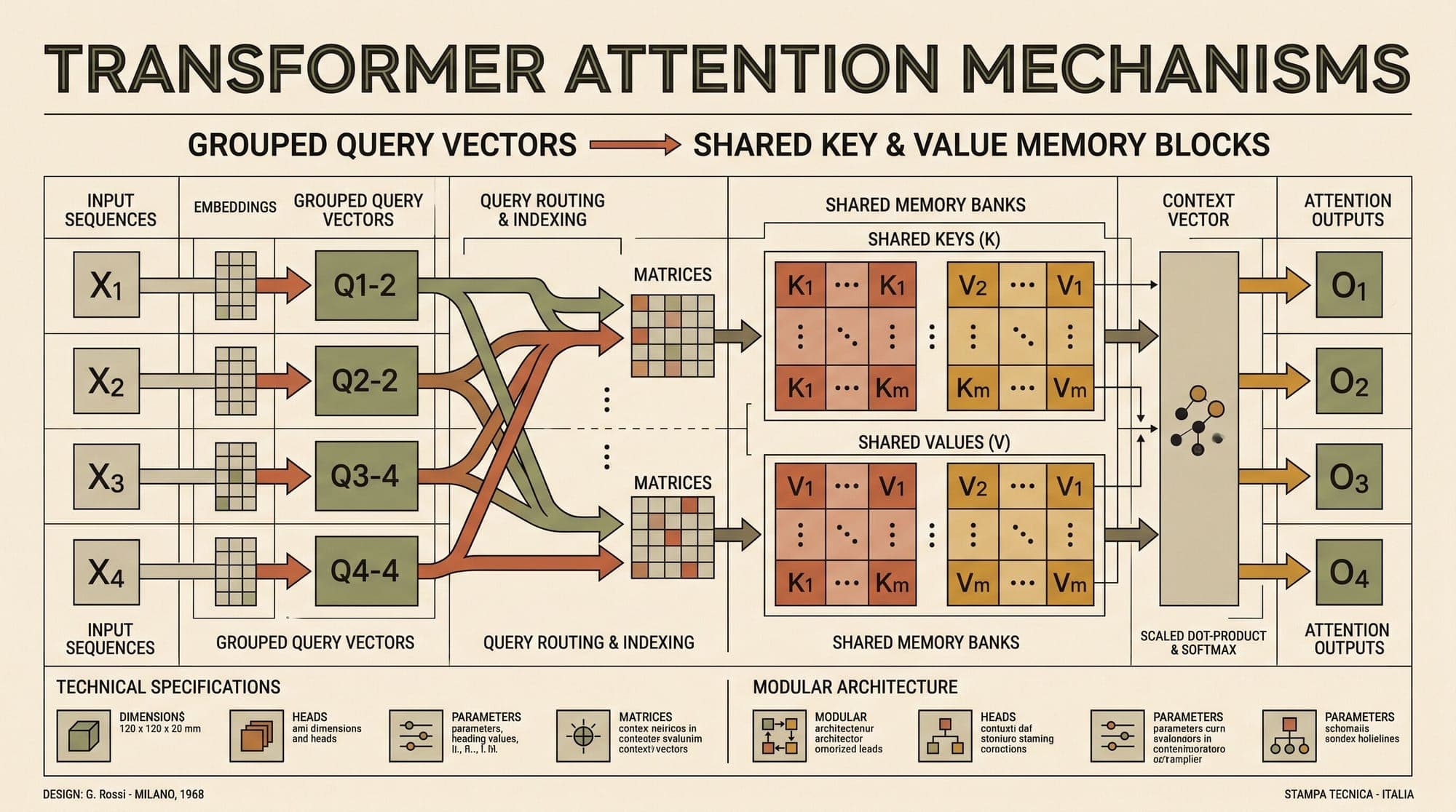
  15. Grouped-Query Attention: How Head Sharing Slashed KV Cache Memory and Scaled LLM Serving

    Serving large language models at scale presents a fundamental hardware bottleneck: autoregressive decoding is bound by memory bandwidth rather than compute. While the initial prompt processing phase (prefill) operates as compute-bound matrix multiplications, token-by-token generation requires loading billions of cached attention states from GPU High-Bandwidth Memory (HBM) to on-chip SRAM for every single generated token. Multi-Head Attention (MHA), introduced in the foundational Vaswani et al.

    AI
    6 min read
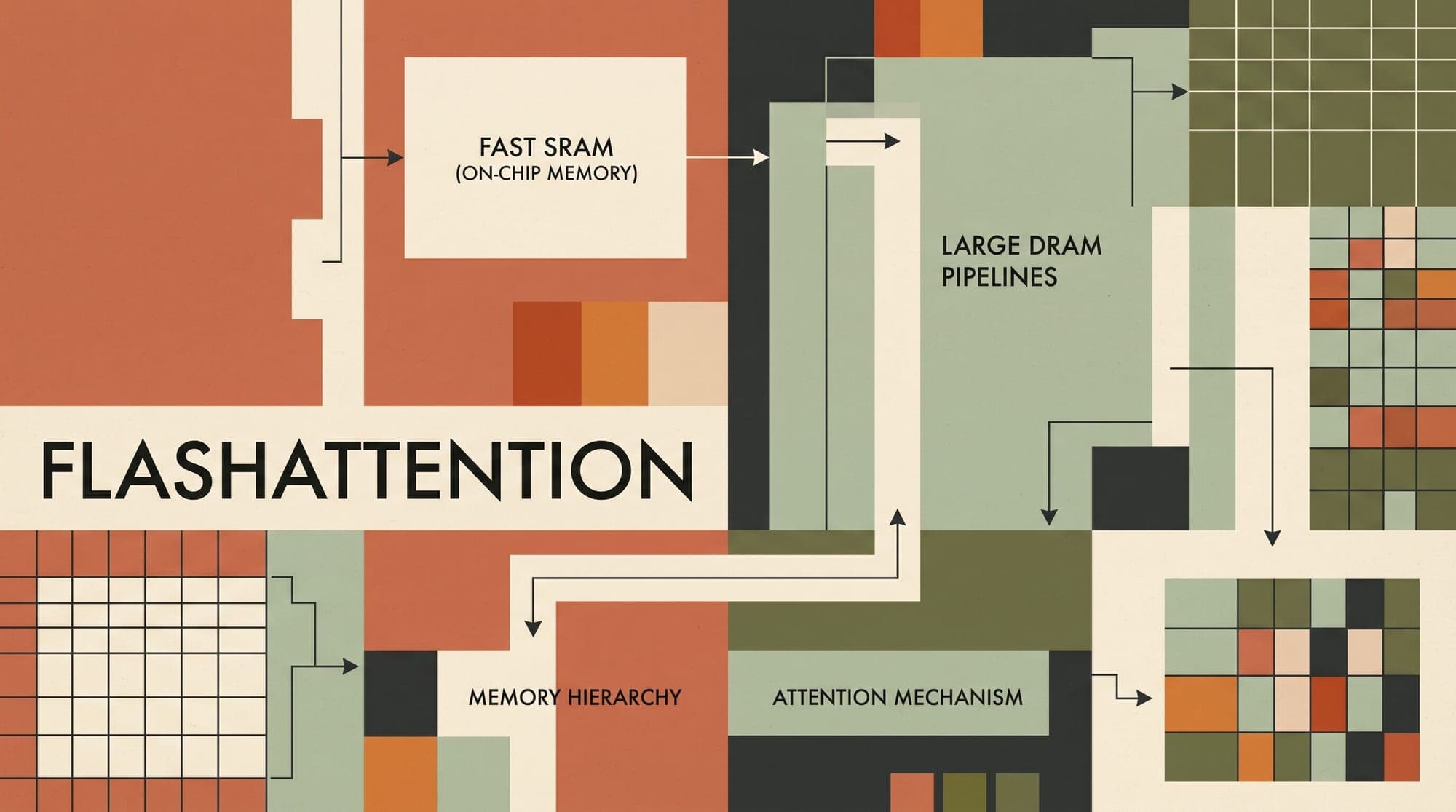
  16. FlashAttention: How IO-Aware Tiling and Online Softmax Solved Transformer Memory Bottlenecks

    Standard multi-head attention is the fundamental computational primitive of modern autoregressive language models. While mathematically straightforward, the operation introduces a severe operational bottleneck as context windows scale. Naive implementations of scaled dot-product attention exhibit quadratic memory complexity $O(N^2)$ and quadratic memory access costs, bounding sequence lengths and leaving modern GPU tensor cores severely underutilized. FlashAttention, introduced by Tri Dao, Dani

    AI
    7 min read
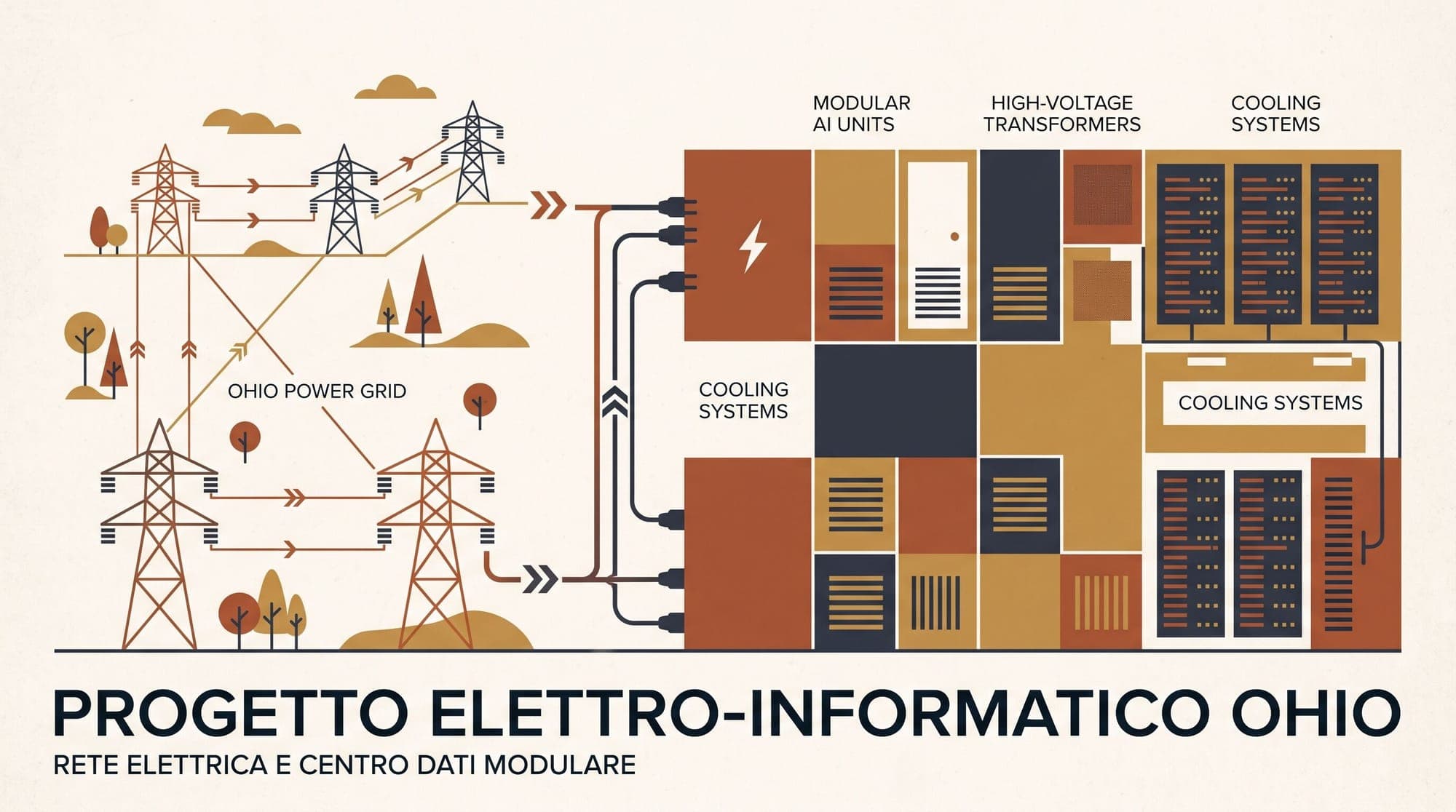
  17. OpenAI Signs 20-Year Lease for Multi-Gigawatt Ohio AI Campus with Nvidia Backstop

    OpenAI has signed a 20-year lease agreement to anchor a multi-gigawatt AI data center campus in Pike County, Ohio, developed by SoftBank subsidiary SB Energy. Under the tripartite agreement, Nvidia will serve as the exclusive compute infrastructure provider and supply financial guarantees covering the site's land, power, and shell development. The facility, designated the PORTS-Pike Technology Campus, is designed to support an initial 4.25 gigawatts of information technology load (IT-GW) dedica

    AI
    2 min read
  18. Anthropic Revenue Run Rate Tops $65 Billion Ahead of Planned Public Listing

    Anthropic's annualized revenue run rate reached approximately $65 billion at the end of July 2026, according to reporting by Bloomberg on August 17, with corroborating details reported by Reuters and Axios. The figure marks an $18 billion expansion over two months from the $47 billion run rate reported during Anthropic's Series H financing in late May, and up from $9 billion at the close of 2025. The acceleration highlights deepening enterprise adoption of Claude across corporate workflows, wit

    AI
    2 min read
  19. LLM Model Routing and Cascades: Architecture, Economics, and Quality Trade-Offs

    In modern enterprise AI systems, uniform model dispatch, sending all incoming user traffic to a single frontier large language model, is one of the most common architectural inefficiencies. Frontier models like GPT-4o and Claude 3.5 Sonnet provide industry-leading reasoning and code generation capabilities, but their inference costs range between $2.50 and $15.00 per million tokens. Conversely, smaller open-weights or distilled models, such as Llama 3.1 8B or GPT-4o-mini, execute at a fraction o

    AI
    6 min read