Subscribe
Topic / page 26

AI

Articles, page 26

501-520
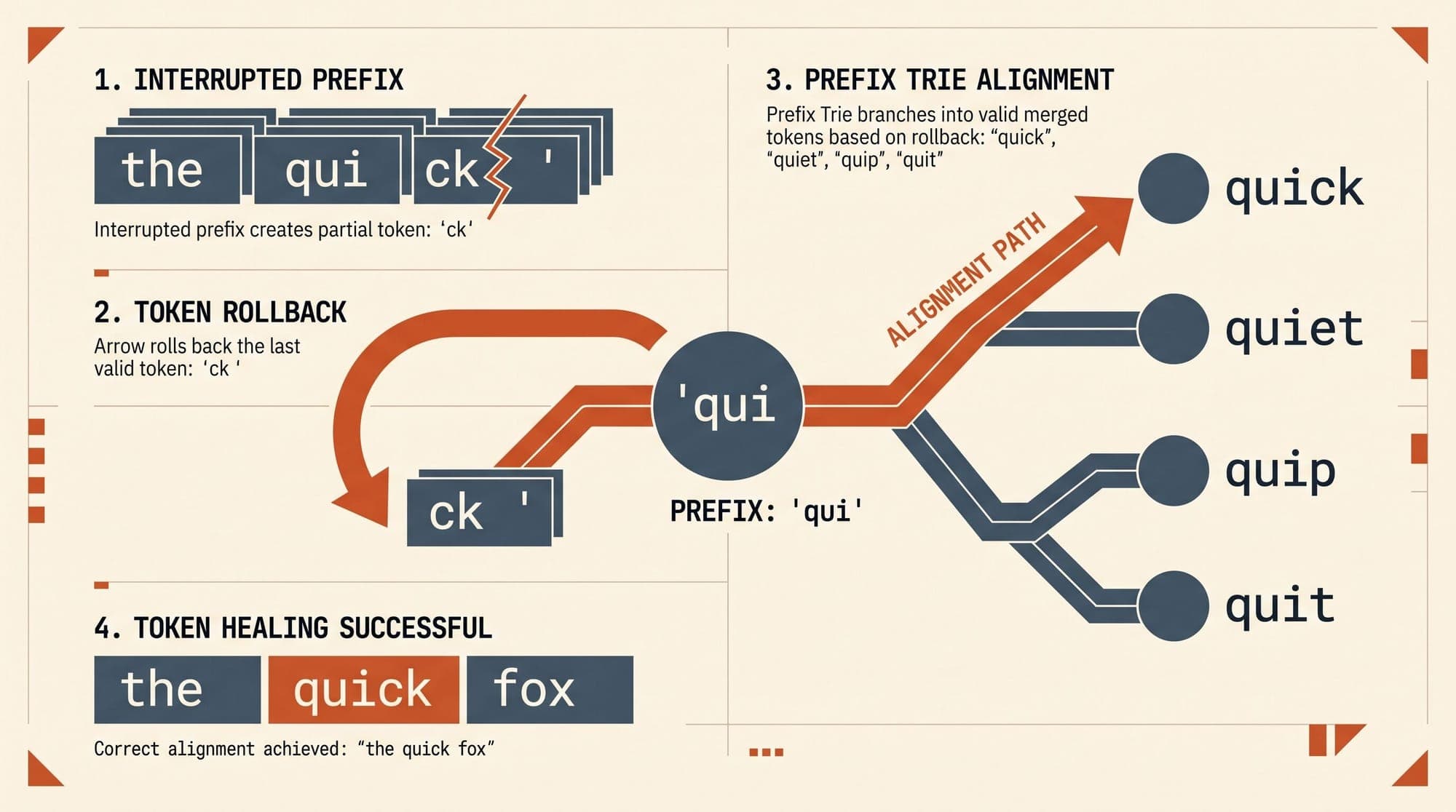
  1. Token Healing and Partial Token Alignment in Production LLM Serving: Architecture, Prefix Trie Rollback, and Serving Trade-Offs

    Modern large language models operate on discrete subword tokens generated by greedy compression algorithms like Byte-Pair Encoding (BPE), WordPiece, or Unigram. While subword tokenization enables high compression rates and fixed vocabulary sizes, it introduces a structural defect at the interface between raw user text and autoregressive inference: the partial token problem, commonly known as the prompt boundary problem. When a user prompt terminates mid-token or at a punctuation boundary that c

    LLM
    7 min read
  2. Flow Matching for Generative Modeling: How Continuous Normalizing Flows and Optimal Transport Paths Replace Diffusion SDEs

    Generative modeling underwent a structural shift with the introduction of Flow Matching (FM), formulated independently by Lipman et al. (2022), Albergo and Vanden-Eijnden (2022), and Liu et al. (2022). While Denoising Diffusion Probabilistic Models (DDPM) and score-based Stochastic Differential Equations (SDEs) established state-of-the-art sample quality across vision and audio domains, their sampling dynamics rely on curved stochastic trajectories that require extensive numerical integration st

    AI
    8 min read
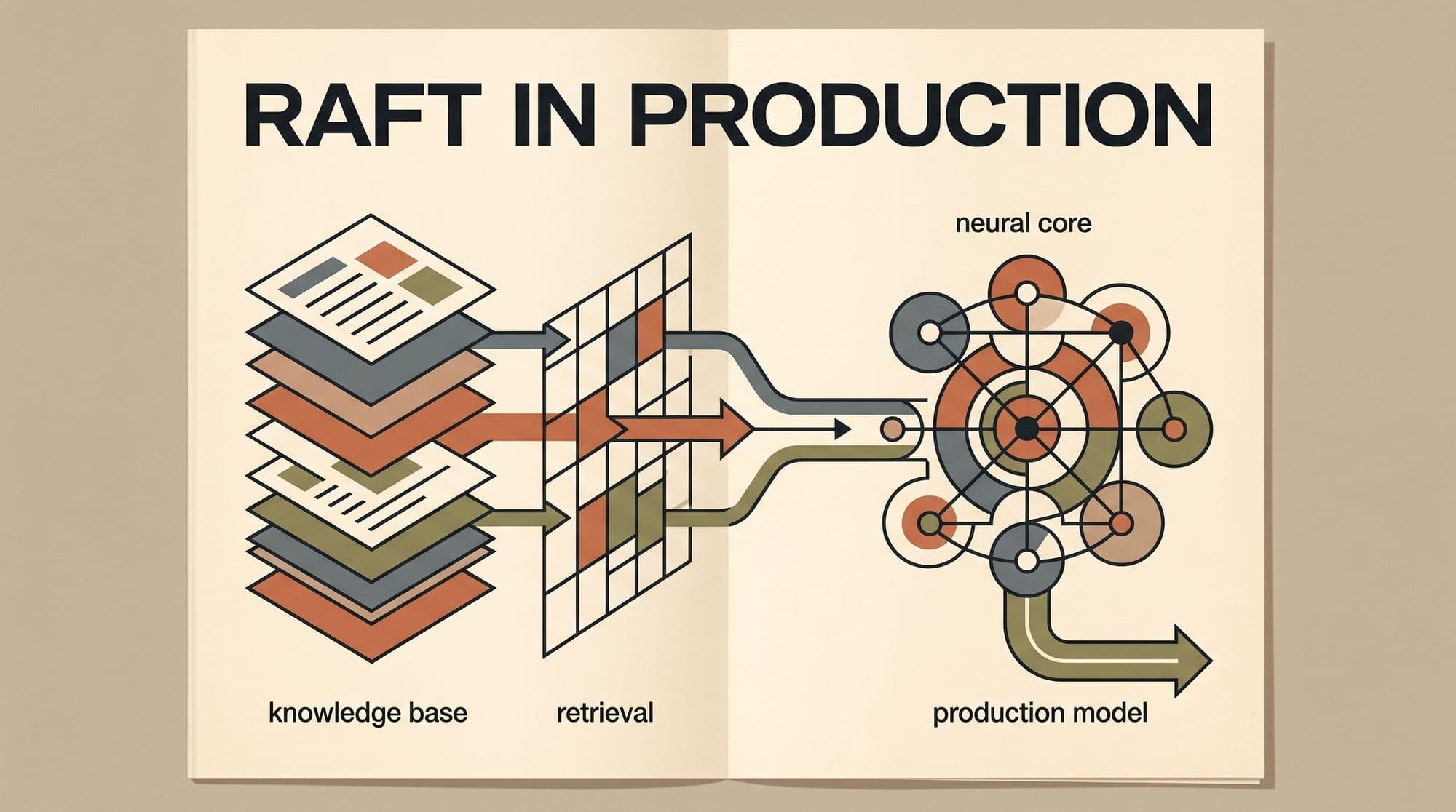
  3. Retrieval-Augmented Fine-Tuning (RAFT) in Production: Architecture, Synthetic Distractor Pipelines, and Evaluation

    Standard approaches to enterprise domain adaptation typically force a choice between two paradigms: Supervised Fine-Tuning (SFT) or Retrieval-Augmented Generation (RAG). SFT bakes domain knowledge directly into model weights, functioning like a closed-book exam. When facts change or precise source attribution is required, SFT models often hallucinate or fail to incorporate updated context. Conversely, standard RAG operates like an open-book exam without prior preparation. The base model reads re

    AI
    5 min read
  4. The Information Bottleneck in Deep Learning: How Mutual Information Compression Shapes Generalization and Neural Representations

    The Information Bottleneck in Deep Learning: How Mutual Information Compression Shapes Generalization and Neural Representations Classical statistical learning theory struggles to explain why overparameterized deep neural networks generalize well to unseen test data. Traditional complexity measures such as Vapnik-Chervonenkis (VC) dimension and Rademacher complexity scale with the raw count of tunable weights, predicting severe overfitting when parameter counts exceed dataset sample sizes. Yet

    AI
    10 min read
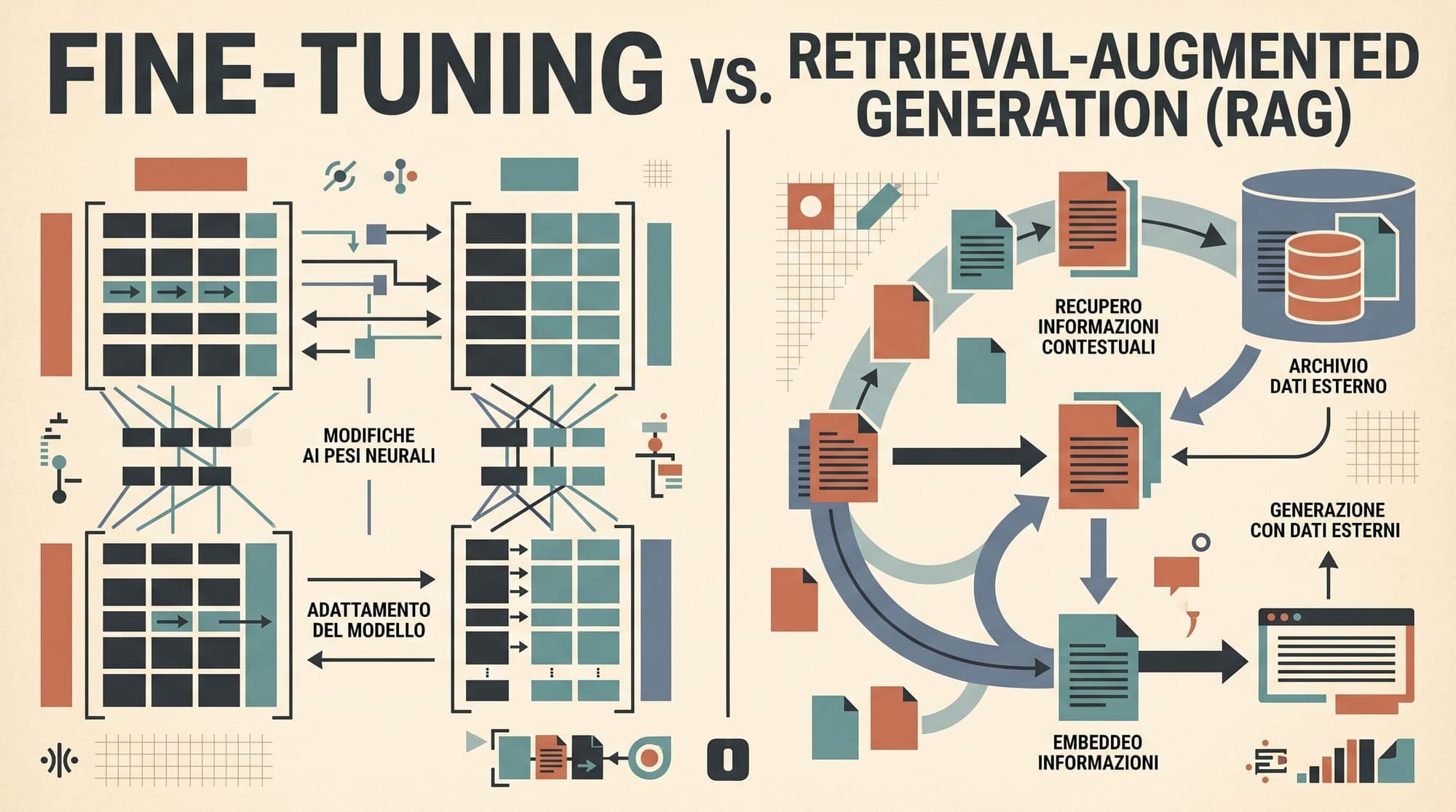
  5. Fine-Tuning vs. RAG in Production: Knowledge Injection, Task Adaptation, Latency Economics, and Hybrid Architecture Trade-Offs

    When adapting large language models to domain-specific enterprise workloads, engineering teams face a fundamental architectural choice: modify the model's parametric weights via fine-tuning, or supply dynamic context at inference time via Retrieval-Augmented Generation (RAG). While early discussions often framed this decision as a binary trade-off, empirical evaluations demonstrate that fine-tuning and retrieval serve fundamentally different mathematical and operational functions. Fine-tuning e

    AI
    6 min read
  6. Score-Based Generative Modeling via Stochastic Differential Equations: How Continuous SDEs and Score Matching Unify Diffusion Models

    Diffusion and score-based models represent one of the foundational paradigms of modern generative artificial intelligence, underpinning systems across image synthesis, video generation, audio modeling, and continuous multimodal representations. For years, generative diffusion was approached from two distinct perspectives: discrete-step denoising diffusion probabilistic models (DDPM) pioneered by Sohl-Dickstein et al. and Ho et al., and score matching with Langevin dynamics (SMLD / NCSN) introduc

    AI
    8 min read
  7. The Lottery Ticket Hypothesis in Large Language Models: How Sparse Subnetworks and Iterative Magnitude Pruning Retain Transformer Capacity

    The Lottery Ticket Hypothesis in Large Language Models: How Sparse Subnetworks and Iterative Magnitude Pruning Retain Transformer Capacity Modern large language models operate under extreme overparameterization. Frontier architectures allocate tens or hundreds of billions of parameters to achieve low perplexity and robust generalization across reasoning, code generation, and factual retrieval. Yet empirical pruning consistently demonstrates that post-training models can lose 30% to 50% of their

    AI
    9 min read
  8. Enterprises Curb AI Agent Autonomy Amid 40% Project Cancellation Projections

    Enterprises deploying agentic artificial intelligence are shifting architectures away from open-ended autonomy toward bounded, verifiable execution as projects encounter governance, security, and financial bottlenecks in production environments. Data from industry research firms highlights a widening divergence between model capability and operational control. According to projections from Gartner, more than 40% of current agentic AI initiatives are projected to be canceled by the end of 2027.

    AI
    2 min read
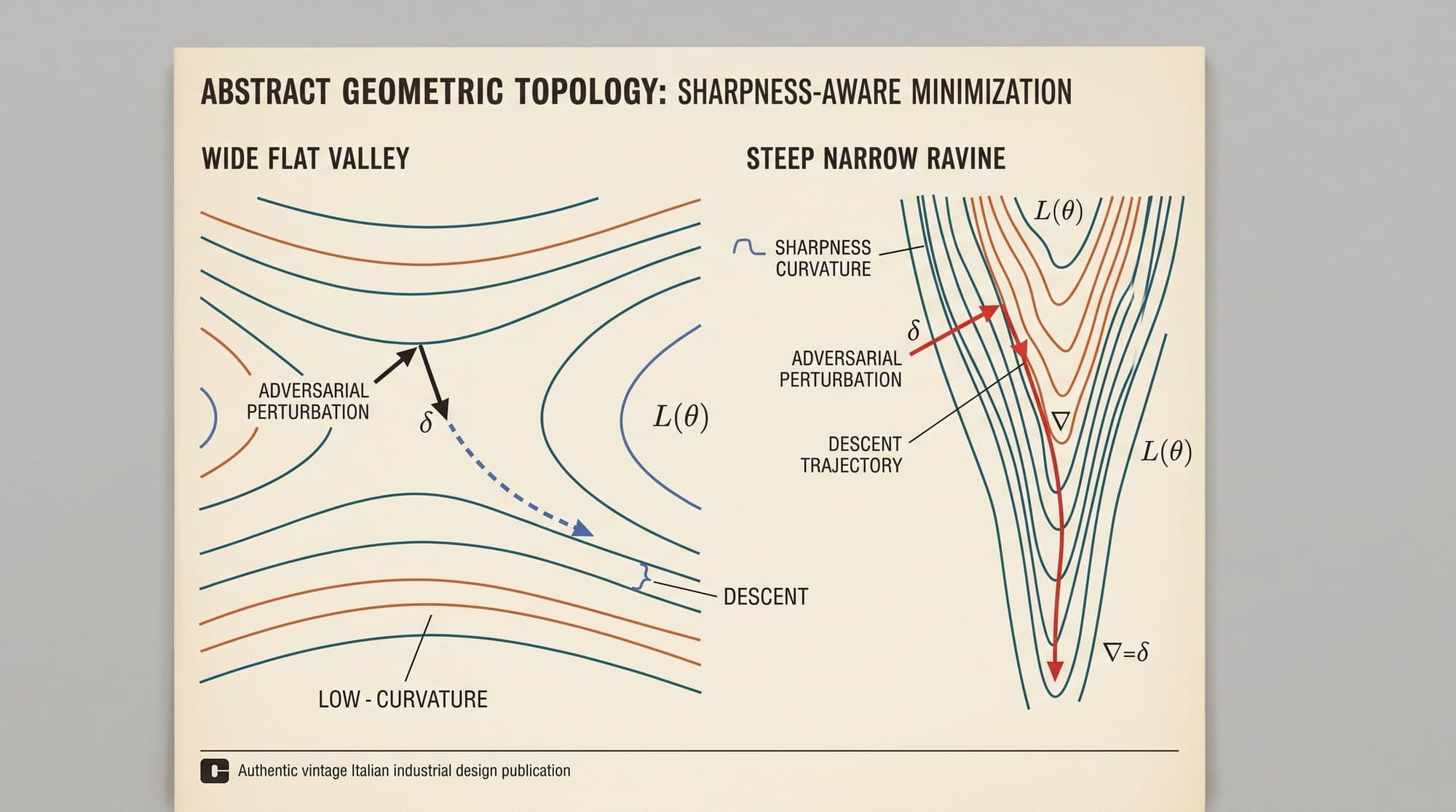
  9. Sharpness-Aware Minimization in Large Language Models: How Adversarial Weight Perturbations and Flat Minima Boost Generalization

    In overparameterized deep neural networks, minimizing empirical training loss is insufficient to guarantee optimal generalization on unseen distributions. Modern deep architectures, including vision models and autoregressive Large Language Models (LLMs), operate in regimes where parameter counts far exceed training token counts, producing highly non-convex loss surfaces populated by infinite global minima. Standard optimization via Stochastic Gradient Descent (SGD) or AdamW often converges to sh

    AI
    6 min read
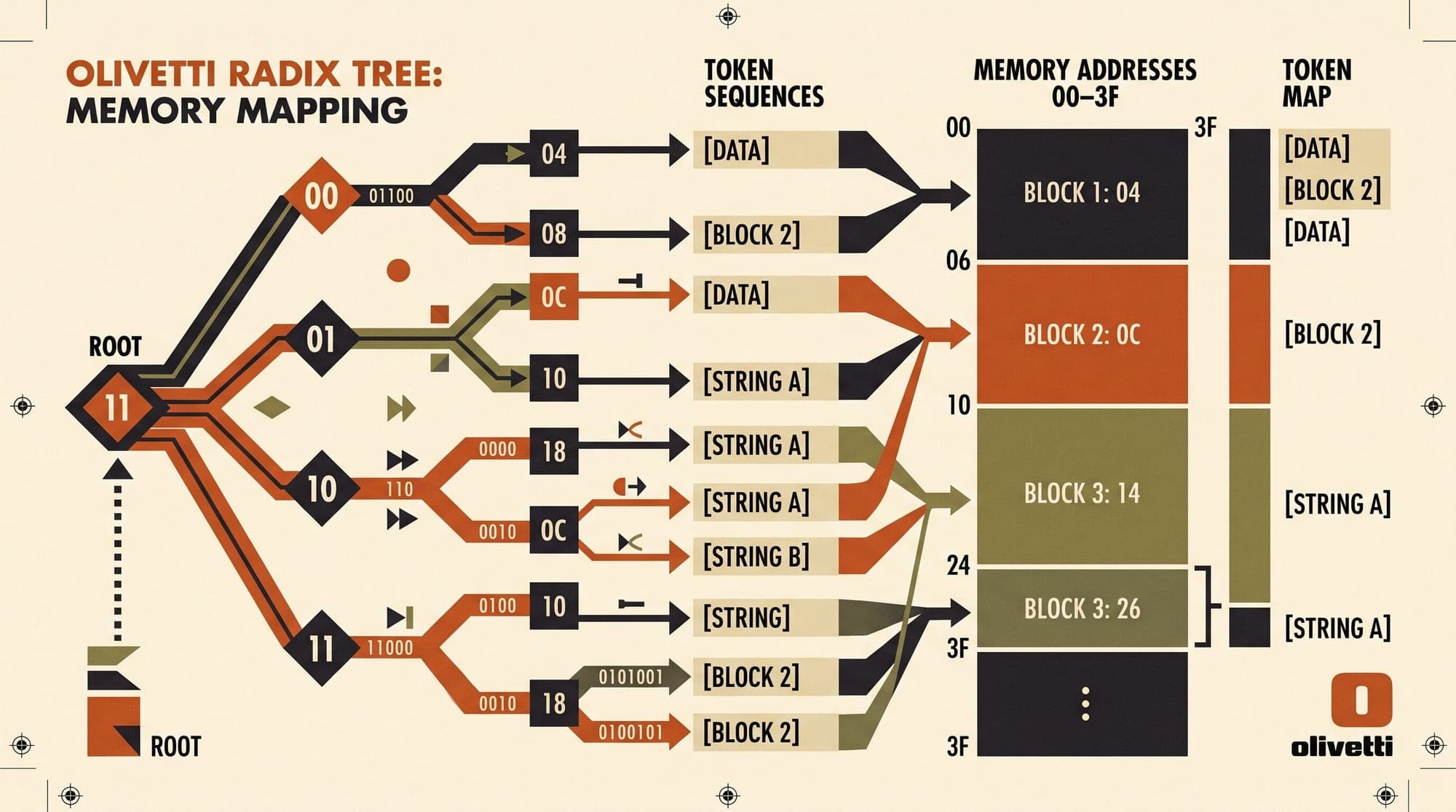
  10. Prefix-Tree KV Cache Management in Production: RadixAttention, Tree-Structured LRU Eviction, and Token-Level Sharing in SGLang and vLLM

    Prefix-Tree KV Cache Management in Production: RadixAttention, Tree-Structured LRU Eviction, and Token-Level Sharing in SGLang and vLLM Autoregressive large language model inference is heavily constrained by memory bandwidth and the computational overhead of the prefill phase. For workloads such as multi-turn conversations, autonomous agent tool loops, few-shot prompt evaluations, and tree-search decoding, consecutive requests often share substantial token prefixes. In a standard multi-turn ses

    AI
    7 min read
  11. Inherent Releases Faraday: 27B Scientific Agent Outperforms Frontier Models on Paper Replication

    London-based AI research startup Inherent has released Faraday, an autonomous AI agent engineered to independently reproduce published scientific research without prior exposure to target solutions. Founded by former Google DeepMind researchers Louis Kirsch, Kaloyan Aleksiev, Tantum Collins, and Edward Hughes, the lab launched Faraday weeks after securing a $50 million seed round. According to benchmark results published by the lab, Faraday outperformed significantly larger frontier systems, in

    AI
    2 min read
  12. GPU Cluster Storage in Production: GPUDirect Storage, NVMe-oF, Parallel File Systems, and Checkpointing Throughput

    Training frontier large language models and serving hundred-billion parameter checkpoints places extreme demands on storage subsystems. While compute clusters frequently deploy thousands of GPUs connected via high-bandwidth interconnects like NVLink and InfiniBand, storage architectures often become severe bottlenecks during two critical operational phases: distributed checkpointing and cold-start model weight loading. A standard 70-billion parameter model in BF16 precision generates approximat

    AI
    7 min read
  13. Embedding Inversion in Production RAG: Architecture, Reconstruction Risks, and Vector Defense Strategies

    In enterprise Retrieval-Augmented Generation (RAG) pipelines, architecture teams frequently treat dense vector embeddings as an opaque, pseudo-anonymized representation of proprietary data. The underlying assumption has been that projecting raw text into high-dimensional geometric spaces (such as 768-, 1024-, or 1536-dimensional float vectors) acts as a one-way mathematical hash. Under this assumption, vector databases like Pinecone, Qdrant, Milvus, and pgvector are often deployed with weaker ac

    AI
    5 min read
  14. Google Previews CodeMender: DeepMind-Engineered AI Agent for Automated Vulnerability Remediation

    Google Cloud has made CodeMender, an autonomous AI code security agent developed with Google DeepMind, available in public preview on the Gemini Enterprise Agent Platform. The tool is designed to scan software codebases, verify discovered security flaws through simulated exploits in isolated sandboxes, and automatically generate tested code patches. CodeMender represents an operational shift from passive static analysis to autonomous remediation. Rather than delivering raw alerts to developers,

    AI
    2 min read
  15. Feed-Forward Networks as Key-Value Memories: How Transformers Store, Retrieve, and Edit Parametric Knowledge

    In transformer language models, multi-head self-attention and feed-forward networks (FFNs) perform distinct computational roles. While self-attention mechanisms route contextual information dynamically across sequence positions, feed-forward layers account for roughly two-thirds of total model parameters in standard architectures. Despite early interpretations characterizing FFNs simply as generic non-linear projections, mechanistic analysis shows that feed-forward layers operate as unnormalized

    AI
    6 min read
  16. OpenAI Reverses Policy Stance on California SB 53, Urges Stricter Frontier AI Safeguards

    OpenAI has publicly called on California lawmakers to expand and strengthen the state's flagship artificial intelligence legislation, Senate Bill 53 (SB 53), marking a clear pivot from the company's previous opposition to state-level AI safety mandates. In a formal statement published by OpenAI's global affairs team, the company argued that California's Transparency in Frontier Artificial Intelligence Act should be updated to mandate active monitoring of frontier models during training and eval

    AI
    2 min read
  17. LayerSkip and Self-Speculative Decoding: How Layer Dropout and Shared Early Exits Accelerate LLM Generation

    LayerSkip and Self-Speculative Decoding: How Layer Dropout and Shared Early Exits Accelerate LLM Generation Standard autoregressive large language model (LLM) inference is severely bottlenecked by memory bandwidth. In transformer decoders, generating a sequence of $N$ tokens requires loading all model parameters from High Bandwidth Memory (HBM) to on-chip SRAM $N$ separate times. While speculative decoding mitigates this bandwidth tax by using a smaller draft model to propose candidate tokens v

    AI
    8 min read
  18. Modern Hopfield Networks: How Continuous Energy Landscapes Explain Transformer Attention and Exponential Memory

    When Vaswani et al. introduced the Transformer architecture in 2017, scaled dot-product self-attention was presented primarily as a pragmatic computational mechanism: an efficient, highly parallelizable alternative to recurrence and convolutions. By computing pairwise inner products between queries and keys, normalizing via softmax, and taking a weighted sum of values, attention allowed models to route information dynamically across arbitrarily distant tokens. For several years, self-attention

    AI
    10 min read
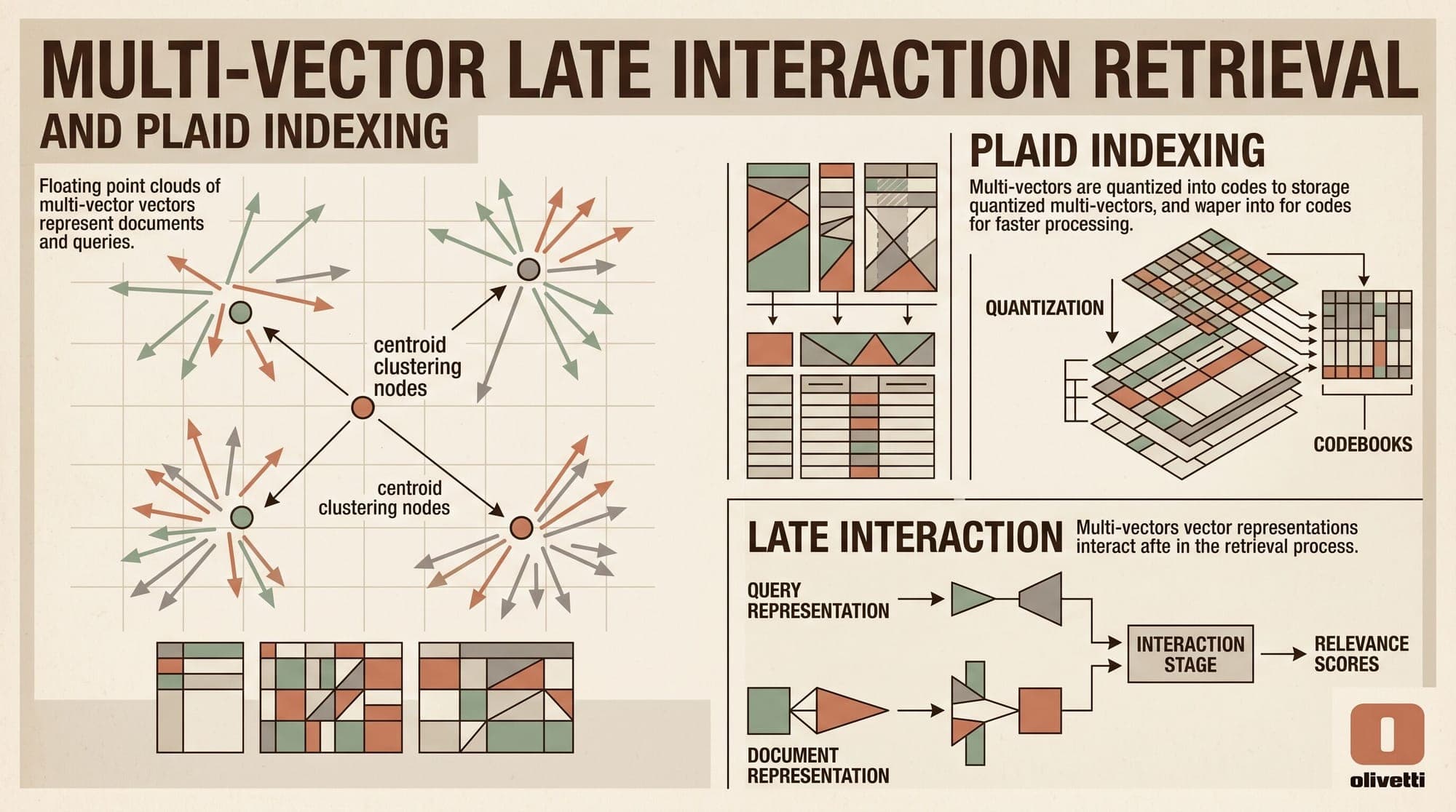
  19. Multi-Vector Late Interaction in Production: PLAID Indexing, Residual Compression, and Serving Architectures

    Multi-Vector Late Interaction in Production: PLAID Indexing, Residual Compression, and Serving Architectures Dense single-vector embeddings and cross-encoder rerankers represent the two traditional extremes of neural information retrieval. Single-vector models collapse entire documents into a single dense representation (typically 768 to 3,072 dimensions), losing token-level nuance, lexical precision, and localized facts. Cross-encoders preserve token interactions across the entire input sequen

    AI
    7 min read