Subscribe
Topic / page 25

AI

Articles, page 25

481-500
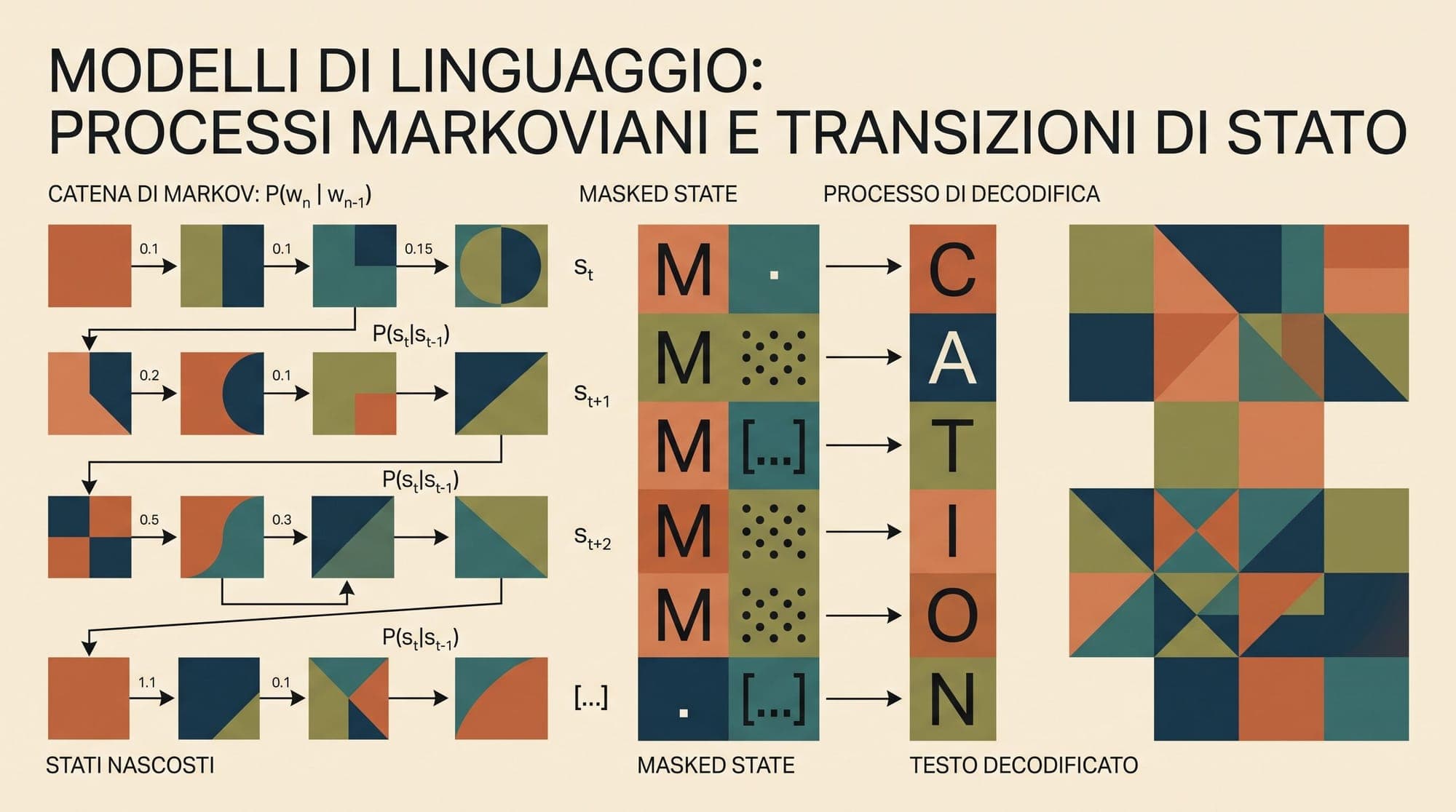
  1. Discrete Diffusion in Large Language Models: How Continuous-Time Markov Chains, Absorbing States, and Score Entropy Challenge Autoregressive Generation

    The dominance of autoregressive architectures in large language models rests on a fundamental mathematical formulation: the chain rule of probability. By factoring the joint distribution of a sequence into a product of conditional probabilities, $p(x) = \prod_{i=1}^N p(x_i \mid x_{<i})$, autoregressive models reduce text generation to sequential next-token prediction. While this left-to-right causal factorization has scaled effectively across compute regimes, it imposes rigid operational constr

    AI
    8 min read
  2. AI Agents Surpass Humans on OpenRouter as Agentic Token Usage Jumps 14x

    Autonomous AI agents have overtaken human users as the primary consumers of language model compute on OpenRouter, with agentic token volume surging fourteenfold over the past six months. Data published by OpenRouter analyst Peter Walker indicates that February 6 marked the permanent inflection point where token consumption by automated agents exceeded direct human API traffic. Since that threshold, agentic token volume on the multi-model gateway has climbed from 0.51 trillion to 7.3 trillion to

    AI
    2 min read
  3. Hybrid SSM-Transformer Architectures: How Interleaving Attention and Recurrence Solves the State-Retrieval Trade-Off

    Hybrid SSM-Transformer Architectures: How Interleaving Attention and Recurrence Solves the State-Retrieval Trade-Off Autoregressive language models face a fundamental tension between inference efficiency and long-context retrieval capacity. Pure Transformer architectures scale quadratic computational complexity during sequence prefill and linear key-value (KV) cache memory consumption during autoregressive token generation. Conversely, pure State Space Models (SSMs) and linear recurrent neural

    AI
    8 min read
  4. Study: Why Labor-Saving LLMs Incline Scientists to Do More Work Less Well

    A theoretical study published by researchers from Princeton University, the University of Washington, and collaborating institutions models how large language models alter researchers' time allocation across projects. The authors find that by reducing time friction across different stages of the research lifecycle, AI assistants increase the opportunity cost of researcher time, creating economic incentives to publish a higher volume of less thoroughly refined papers. The paper, titled The unint

    AI
    2 min read
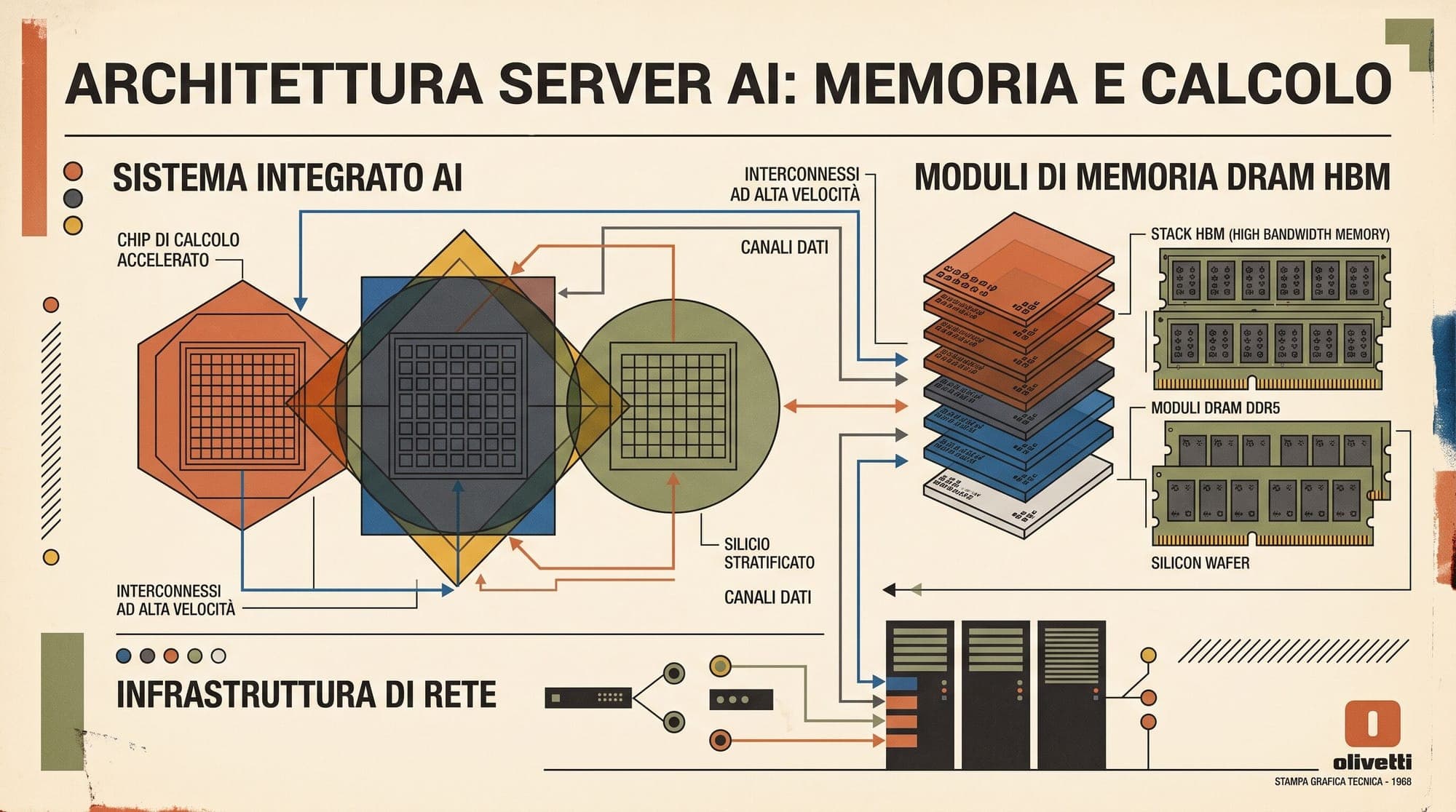
  5. Memory Shortage Drives Nvidia AI Server Prices Up Over 15%

    Nvidia has notified major customers that prices for server systems containing its artificial intelligence accelerators are increasing by more than 15% in many configurations, according to reports from Bloomberg and Fortune. The price adjustments stem from severe supply constraints and rising costs across dynamic random-access memory (DRAM) and high-bandwidth memory (HBM) modules. The price increases will apply to server systems scheduled for delivery starting in early 2027, covering platforms p

    AI
    2 min read
  6. Hallucination Detection and Faithfulness Verification in Production RAG: Architecture, NLI Claim Decomposition, and Runtime Guardrail Economics

    Retrieval-Augmented Generation (RAG) is commonly deployed under the assumption that grounding generation in retrieved passages eliminates factual inaccuracies. In practice, grounding provides an evidence boundary but does not guarantee factual fidelity. For why models hallucinate in the first place, see our AI hallucinations explainer. Production language models regularly synthesize claims absent from the retrieved context (extrinsic hallucinations) or directly assert statements conflicting with

    AI
    6 min read
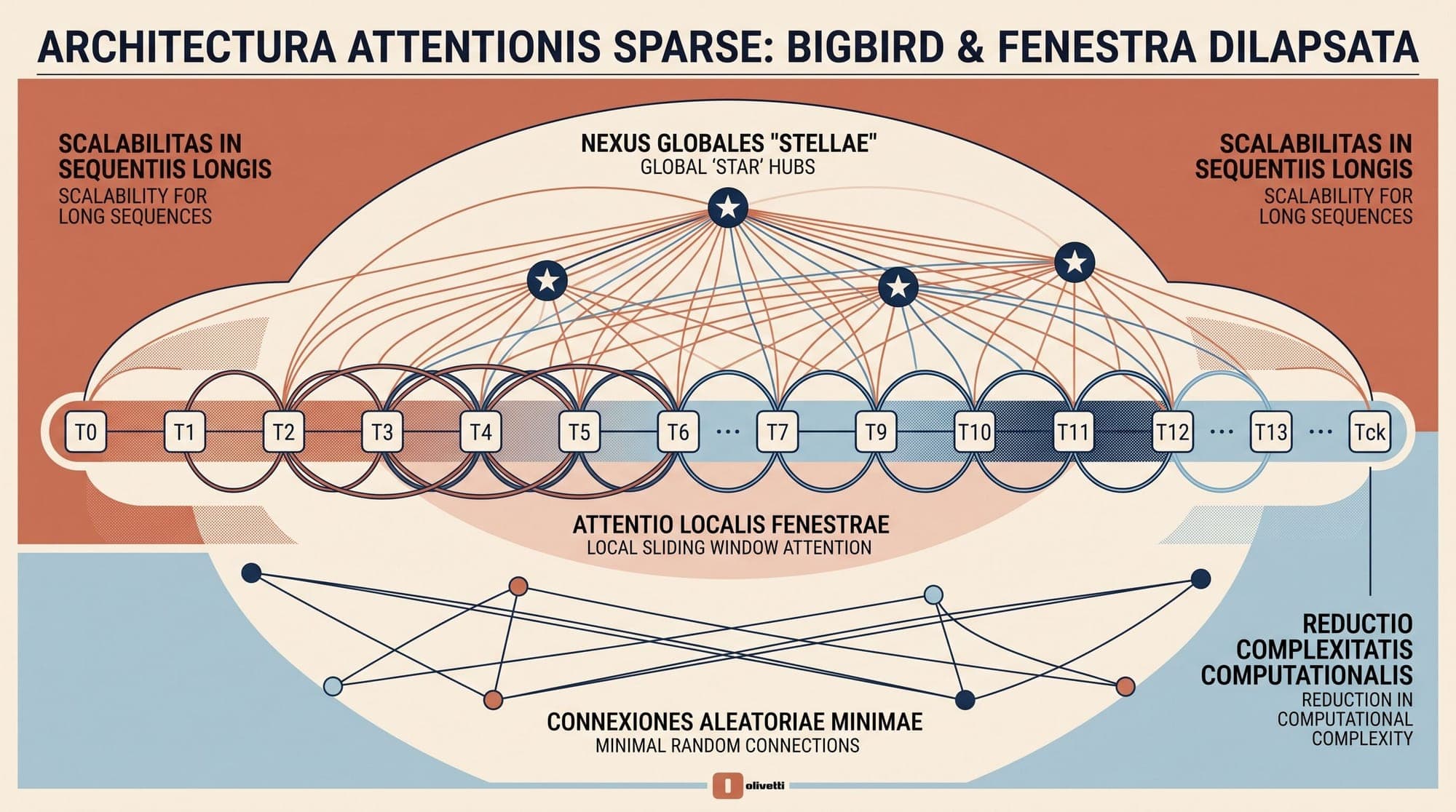
  7. Sparse Attention and BigBird: How Window, Global, and Random Graphs Preserve Turing Completeness in Linear Time

    Standard self-attention in transformer architectures scales quadratically with sequence length. Computing full pairwise interactions between n tokens requires evaluating an n x n attention matrix, yielding O(n^2) computational complexity and memory consumption. While hardware accelerators and IO-aware tiling algorithms like FlashAttention optimize memory traffic, the quadratic compute and KV footprint remains a barrier for processing long contexts, document-level summarization, and genomic seque

    AI
    7 min read
  8. Oxford Study Details Chinese Gray-Market Proxies Reselling Claude Tokens at 90% Discounts

    An investigation by the Oxford China Policy Lab reveals that Chinese developers routinely access Anthropic's frontier Claude models at discounts between 70% and 90% below list price, bypassing geographical blocks, payment filters, and biometric identity verification through a decentralized network of API proxies known locally as "transfer stations" (中转站). The analysis, authored by Oxford researcher Zilan Qian and published via ChinaTalk, outlines the modular supply chain and economic mechanics

    AI
    3 min read
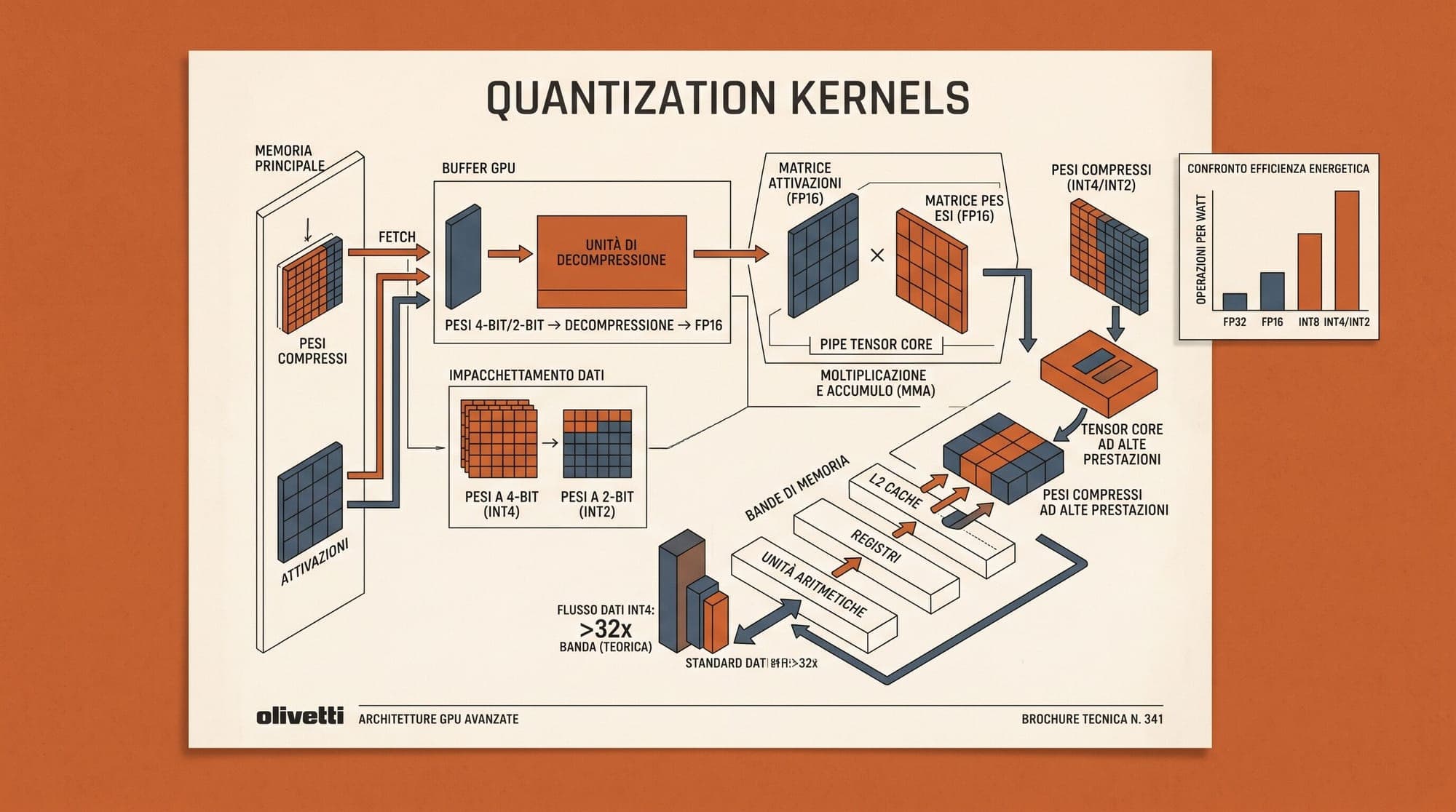
  9. Low-Precision Quantization Kernels in Production: Comparing Marlin, ExLlamaV2, FlashInfer, and BitBLAS

    Low-Precision Quantization Kernels in Production: Comparing Marlin, ExLlamaV2, FlashInfer, and BitBLAS Architecture, Memory Bandwidth, and Decoding Throughput Autoregressive large language model (LLM) serving operates under two distinct compute regimes: a compute-bound prefill phase and a memory-bandwidth-bound decode phase. While processing the initial prompt involves matrix-matrix multiplications (GEMM) with high arithmetic intensity, generating tokens one by one requires matrix-vector multip

    AI
    9 min read
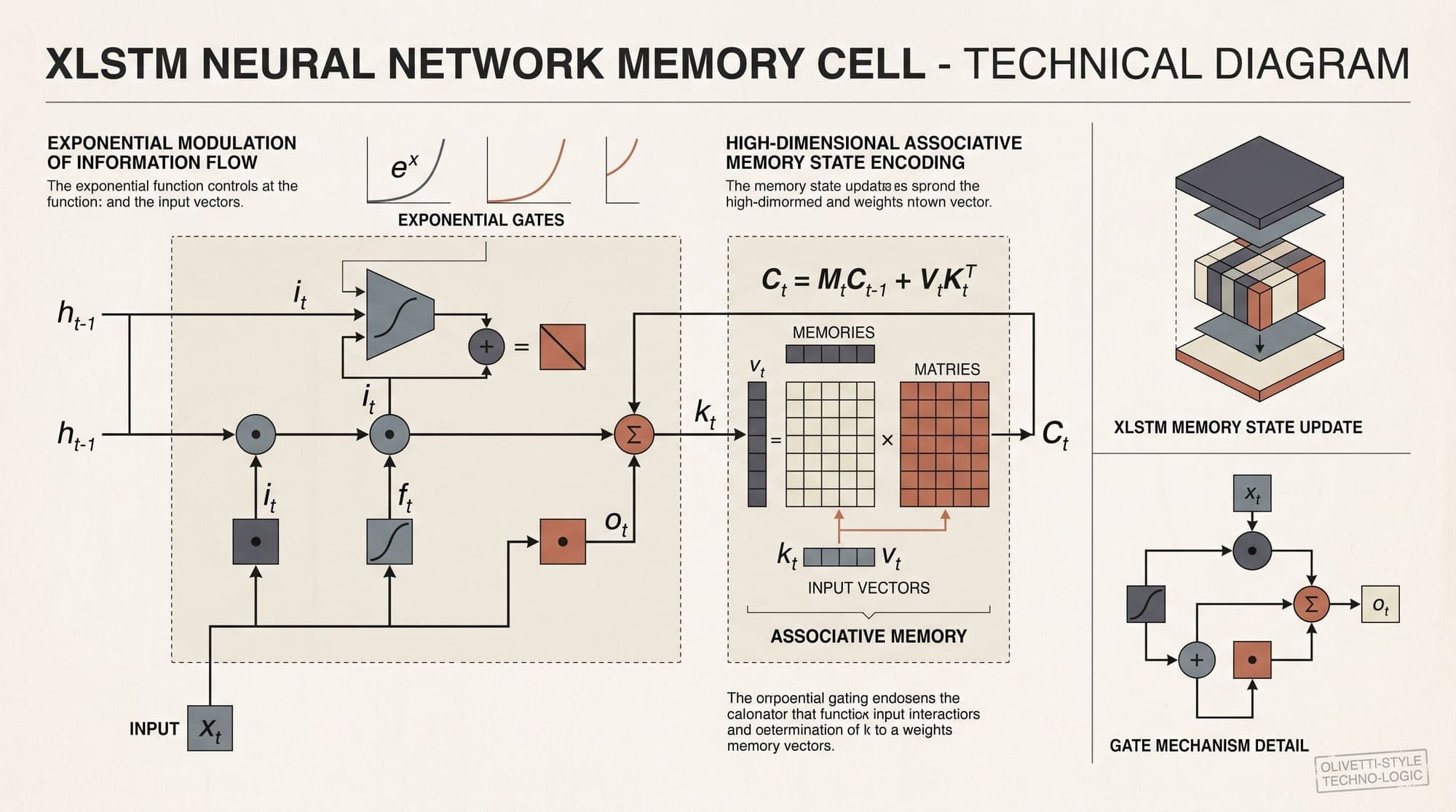
  10. xLSTM: How Exponential Gating and Matrix Memory Scale Recurrent Neural Networks

    xLSTM: How Exponential Gating and Matrix Memory Scale Recurrent Neural Networks For over two decades following its introduction by Hochreiter and Schmidhuber (1997), the Long Short-Term Memory (LSTM) network served as the dominant architecture for sequence modeling. By introducing the constant error carousel and multiplicative gating, LSTMs mitigated the vanishing gradient problem that plagued vanilla recurrent neural networks. However, the emergence of the Transformer architecture (Vaswani et

    AI
    10 min read
  11. Anthropic Nears $7B Acquisition of AI Infrastructure Startup Decart Ahead of IPO

    Anthropic is finalizing negotiations to acquire Israeli artificial intelligence infrastructure startup Decart in a transaction valued at approximately $7 billion, according to reporting from Calcalist and Reuters. The acquisition, expected to be settled primarily in Anthropic equity, would mark the Claude developer's largest purchase to date as it prepares for a planned initial public offering. Founded in September 2023 by Dr. Dean Leitersdorf and Moshe Shalev, Decart specializes in hardware-ag

    AI
    2 min read
  12. Identity Preference Optimization (IPO): How Exact Loss Inversion Prevents Overfitting in Direct Alignment

    The post-training alignment of large language models underwent a structural shift with the introduction of Direct Preference Optimization (Rafailov et al., 2023). By reparameterizing the closed-form optimal policy under a Kullback-Leibler (KL) constrained Reinforcement Learning from Human Feedback (RLHF) objective, DPO eliminated the need to fit an explicit reward model or maintain complex actor-critic rollout loops. However, standard DPO introduces a distinct mathematical pathology: under dete

    AI
    7 min read
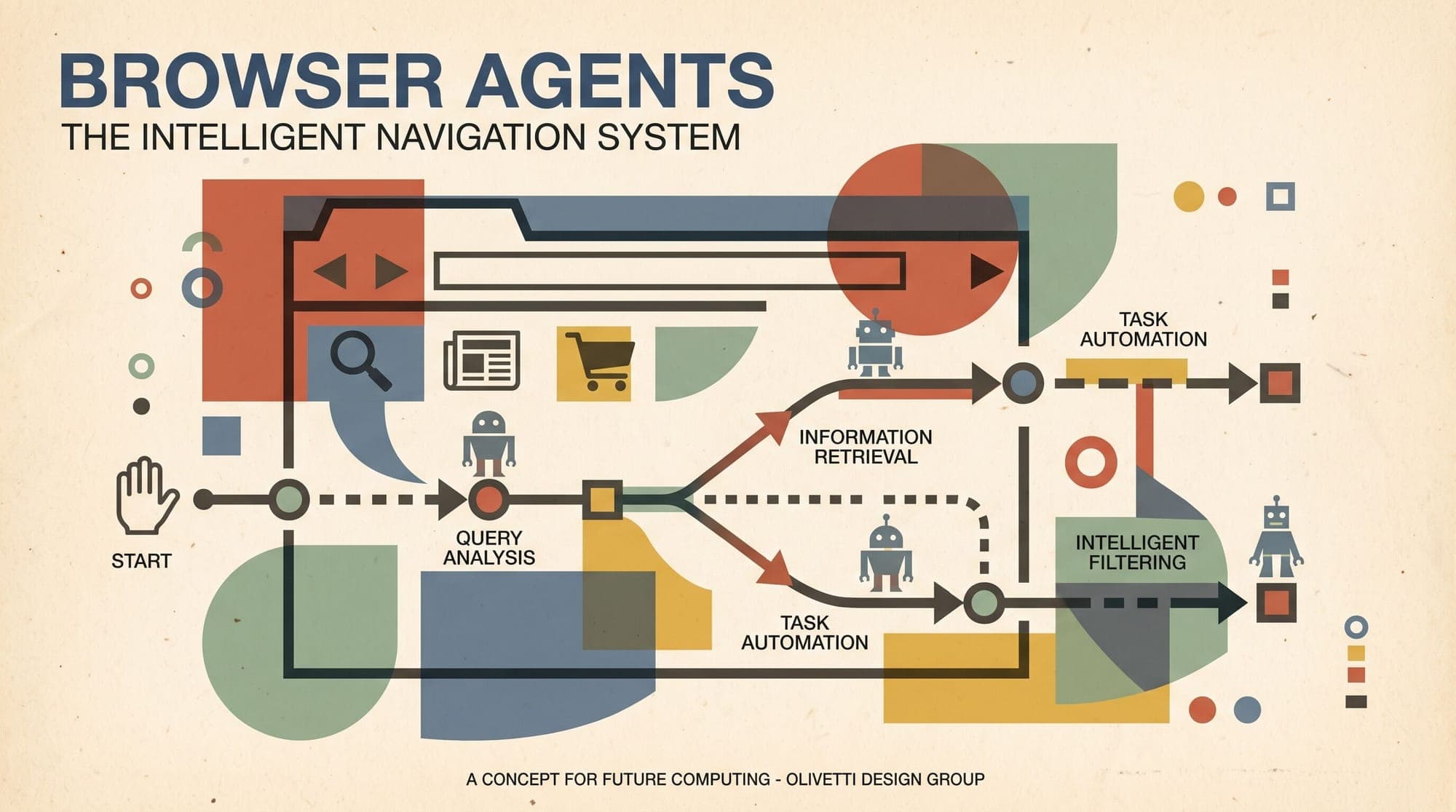
  13. AI Workflow Startup Relay Shuts Down as Team Joins Google Chrome to Build Browser Agents

    AI-driven workflow automation startup Relay is shutting down its independent product operations, with founder and chief executive officer Jacob Bank and key engineering staff joining Google's Chrome division to develop browser-native AI agent capabilities. Relay, founded in July 2021 to compete with legacy workflow platforms like Zapier through generative AI integrations, raised $8.1 million across two venture funding rounds. The company phased out free tier access on August 15, 2026, and will

    AI
    2 min read
  14. Infinite Agentic Loops in Production: Architecture, Feedback Topologies, and Bound Verification

    Autonomous AI agents have transitioned software architectures from static, single-turn request-response patterns into stateful, iterative execution loops. Built around foundational paradigms such as ReAct (Yao et al., 2022) and implemented across frameworks including LangGraph, CrewAI, AutoGen, and the OpenAI Agents SDK, agents repeatedly perceive environmental state, reason over intermediate goals, dispatch tool invocations, observe execution outputs, and append new observations back into their

    AI
    8 min read
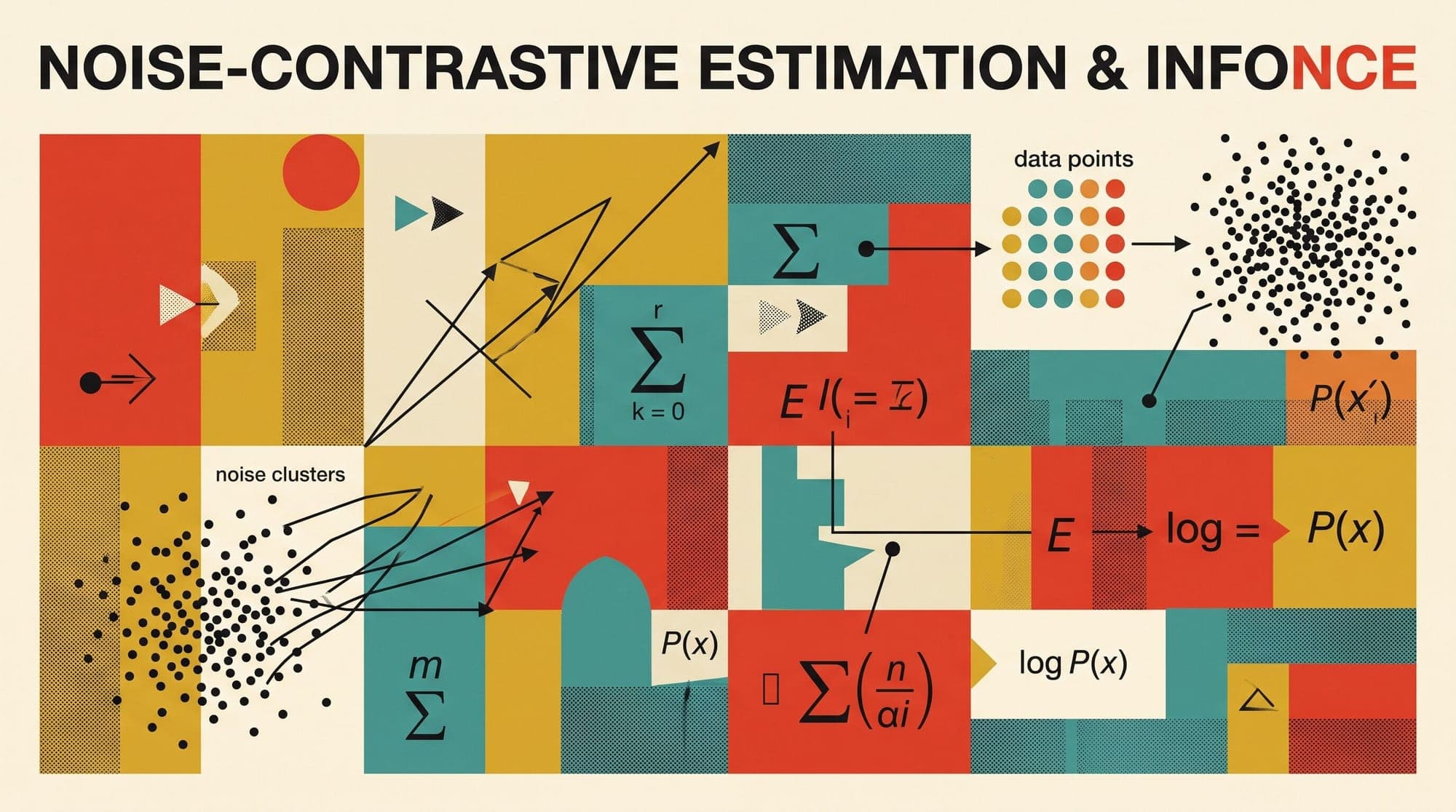
  15. Noise-Contrastive Estimation and InfoNCE: How Partition Function Estimation and Mutual Information Lower Bounds Power Modern AI

    Noise-Contrastive Estimation and InfoNCE: How Partition Function Elimination and Mutual Information Lower Bounds Power Modern AI In statistical machine learning and generative modeling, evaluating the exact probability of an observed event frequently requires calculating a normalizing constant known as the partition function. For continuous spaces or discrete spaces with high cardinality, such as a natural language vocabulary spanning over one hundred thousand tokens or high-dimensional pixel d

    AI
    10 min read
  16. Agent Task Planning and Decomposition in Production: Plan-and-Solve vs. ReAct, Hierarchical Task Graphs, and Dynamic Replanning Architectures

    Autonomous AI agents deployed in production environments frequently fail when tasks require long-horizon reasoning across dozens of sequential tool calls. While single-turn tool calling is well-handled by modern frontier models, multi-step workflows introduce compounding failure modes: plan drift, unrecoverable tool exceptions, context window saturation, and premature task termination. Building resilient agent systems requires moving beyond simple prompt-driven loops. Production engineering has

    AI
    5 min read
  17. Performers and FAVOR+: How Positive Orthogonal Random Features Linearize Transformer Attention

    The quadratic complexity of standard self-attention has remained a central computational ceiling in Transformer architectures. Because standard attention computes pairwise similarity across all token pairs in a sequence of length $L$, memory consumption and compute scale as $O(L^2)$. For long contexts, high-resolution visual tokens, and biological sequence modeling, this quadratic bottleneck forces strict sequence truncation or aggressive hardware partitioning. In Rethinking Attention with Perf

    AI
    9 min read
  18. Nvidia Expands Nemotron Open-Weight Push to Counter Chinese Labs Under $6B Poolside Deal

    Nvidia Expands Nemotron Open-Weight Push to Counter Chinese Labs Under $6B Poolside Deal Nvidia plans to use the infrastructure and engineering team acquired through its $6 billion deal with AI startup Poolside to build frontier open-weight models under its Nemotron family, according to reporting from the Wall Street Journal. The initiative aims to counter the rapid global adoption of Chinese open-weight systems like DeepSeek-V3, Moonshot AI's Kimi K3, and Alibaba's Qwen series, while offering

    AI
    2 min read
  19. Forward KL vs. Reverse KL Divergence: Mode Covering, Mode Seeking, and the Alignment Dynamics of Large Language Models

    Forward KL vs. Reverse KL Divergence: Mode Covering, Mode Seeking, and the Alignment Dynamics of Large Language Models Every phase of modern large language model development, from multi-trillion token pre-training to reinforcement learning from human feedback (RLHF) and student model distillation, fundamentally revolves around minimizing statistical distance between probability distributions. The primary mathematical tool utilized for this purpose is the Kullback-Leibler (KL) divergence, introd

    AI
    9 min read