Category / page 33

Models & Assistants

1121 articles

Articles, page 33

641-660 of 1121
  1. GPU Memory Profiling in Production LLM Serving: CUDA Allocator Internals, PyTorch Snapshots, and VRAM Optimization

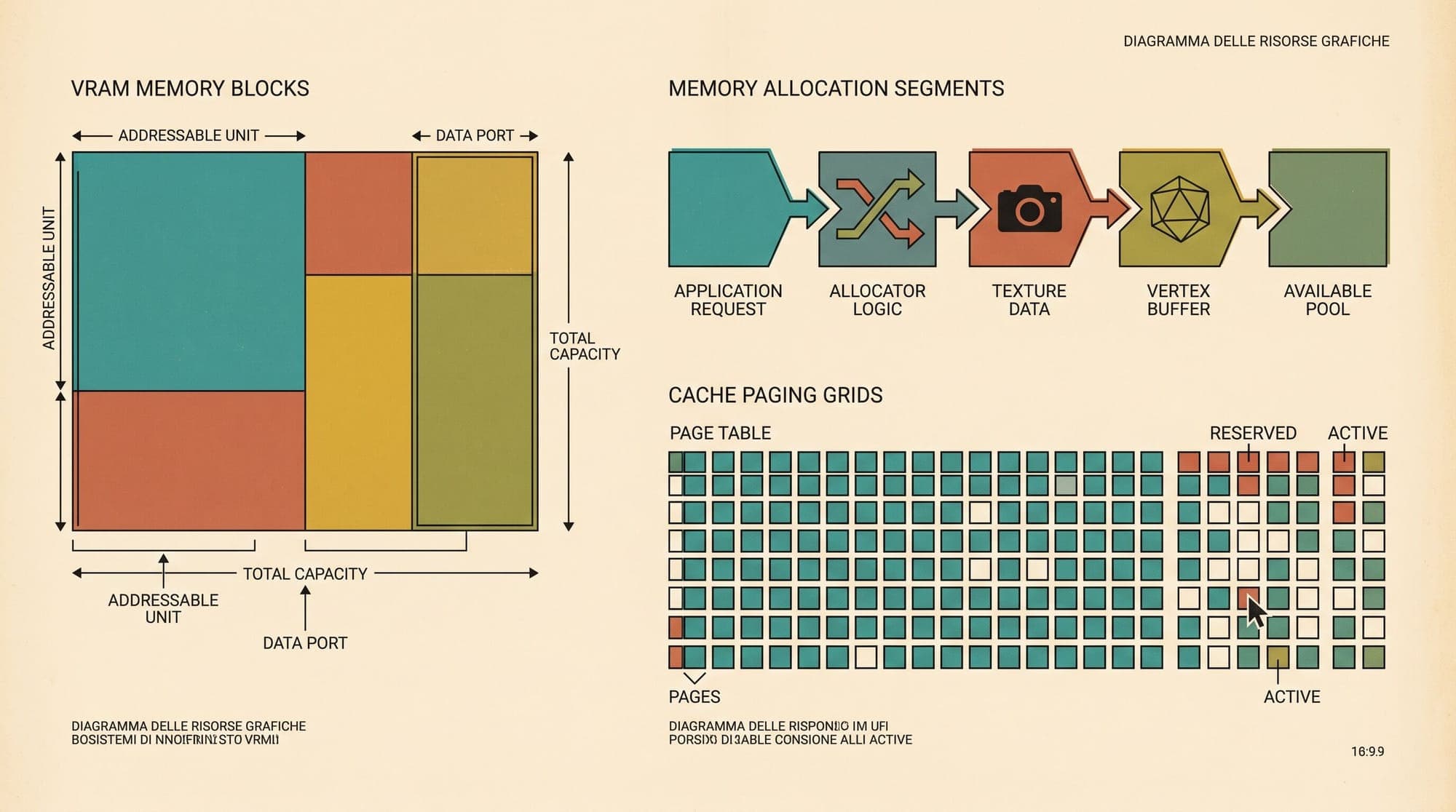
    In high-throughput large language model serving, memory is the primary constraint governing latency, batch concurrency, and context length. While model parameter footprints are static and easily calculated, runtime GPU memory (VRAM) dynamics are governed by low-level caching allocators, dynamic key-value (KV) cache allocation pools, transient activation spikes, and memory fragmentation. When an inference worker crashes with torch.cuda.OutOfMemoryError, default system diagnostics such as nvidia-

    LLM
    6 min read
  2. Weight Tying in Large Language Models: Mathematical Foundations, Geometric Bottlenecks, and Modern Architectural Trade-Offs

    Weight Tying in Large Language Models: Mathematical Foundations, Geometric Bottlenecks, and Modern Architectural Trade-Offs In autoregressive language models, the embedding layer at the input and the unembedding projection layer at the output serve as the two bridges between discrete vocabulary tokens and the continuous hidden representation space. In the foundational Transformer architecture (Vaswani et al., 2017) and early generative models like GPT-2 (Radford et al., 2019), the weights of th

    AI
    8 min read
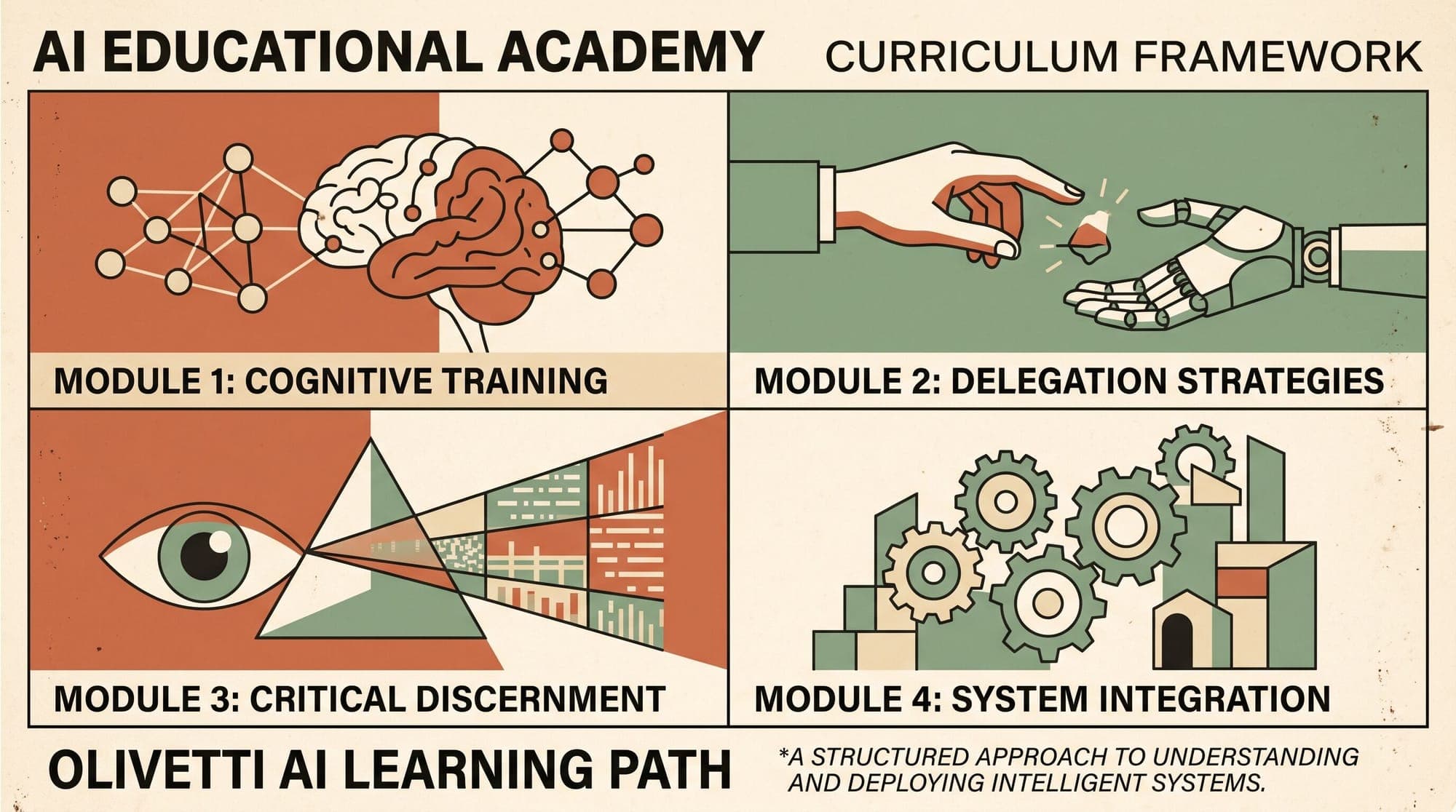
  3. Anthropic Launches Claude Academy and 4D AI Fluency Framework for Workforce Training

    Anthropic has launched Claude Academy, an interactive training platform aimed at standardizing how individuals and enterprise teams learn, deploy, and evaluate AI systems. Available via academy.claude.com and directly inside the Claude profile interface, the program couples tool-specific training modules with a foundational curriculum designed to cultivate systematic AI interaction patterns. The initiative comes as enterprise adoption shifts from ad-hoc prompting toward autonomous agent workflo

    Anthropic
    2 min read
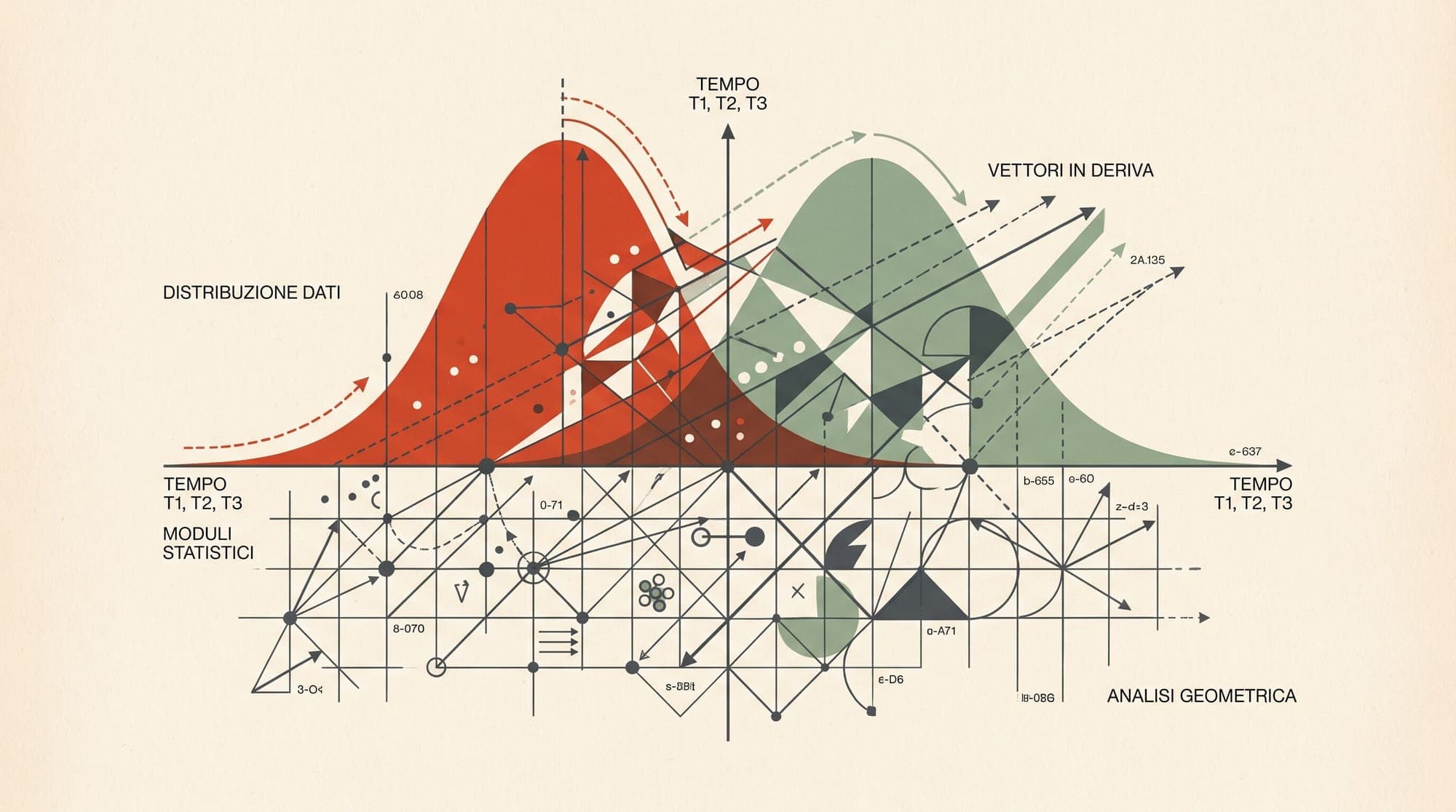
  4. Semantic Drift and Data Distribution Monitoring in Production LLM Systems: Embedding Shift Detection, Output Entropy Tracking, and Quality Decay Metrics

    Semantic Drift and Data Distribution Monitoring in Production LLM Systems: Embedding Shift Detection, Output Entropy Tracking, and Quality Decay Metrics Large language model applications rarely fail with loud runtime crashes once deployed. Instead, production systems suffer from silent performance decay caused by data distribution shifts. User queries evolve, real-world domain vocabularies change, retrieval corpora expand, and upstream model providers quietly alter model weights or system promp

    AI
    7 min read
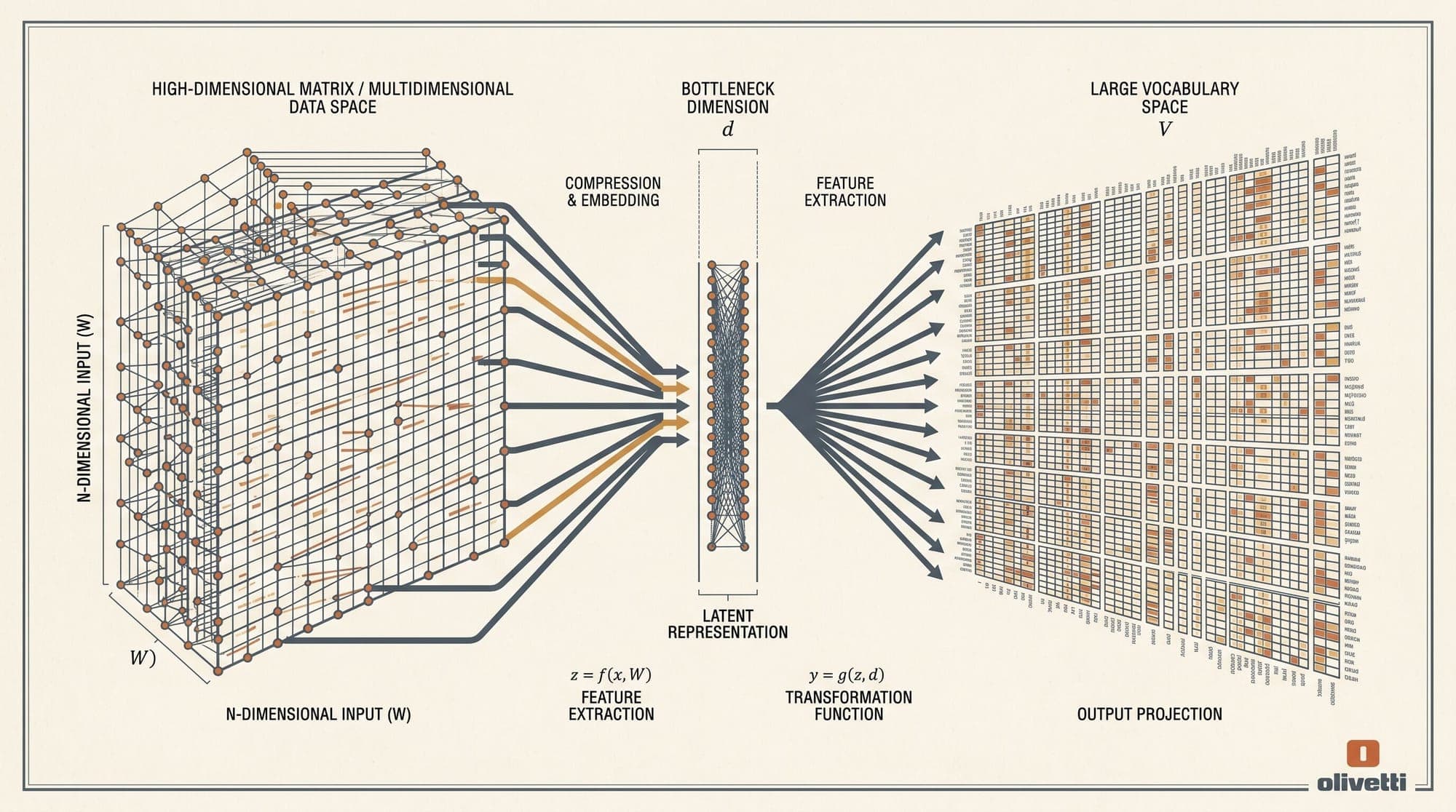
  5. The Softmax Bottleneck in Large Language Models: Matrix Factorization Bounds, High-Rank Token Distributions, and Mixture of Softmaxes

    Autoregressive language models predict probability distributions over vocabulary tokens conditioned on preceding text. In standard Transformer architectures, the model computes a hidden state vector $h_c \in \mathbb{R}^d$ for a given context $c$, projects it into vocabulary space using a linear unembedding matrix $W \in \mathbb{R}^{V \times d}$, and applies the softmax function to normalize the resulting logits into probabilities. While computationally convenient, this formulation imposes a fun

    AI
    8 min read
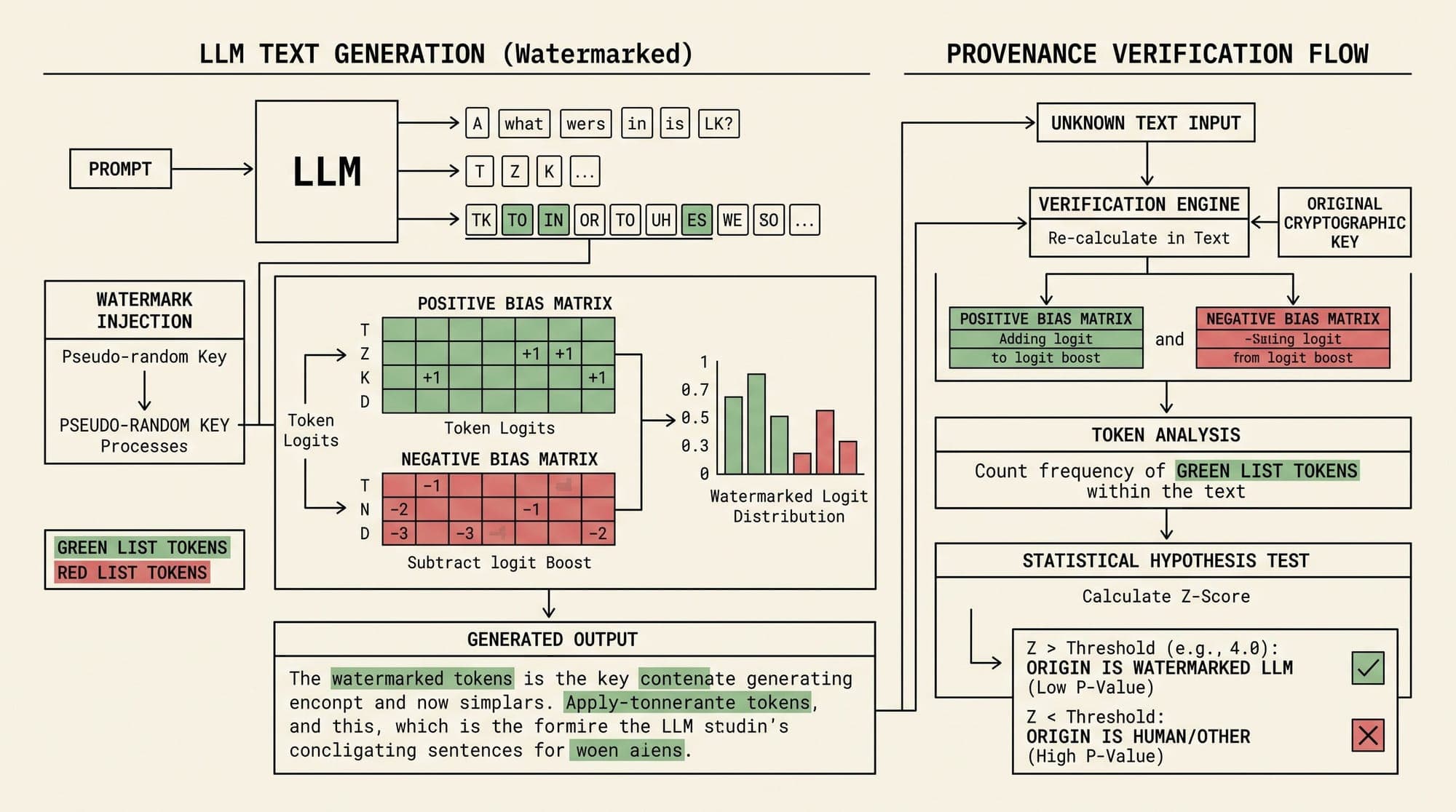
  6. LLM Text Watermarking in Production: Statistical Logit Biasing, Cryptographic Signatures, and Evasion Vectors

    As regulatory frameworks such as Article 50 of the EU AI Act enforce machine-generated content provenance, text watermarking has transitioned from academic theory to a core component of production LLM serving stacks. Unlike post-hoc classifiers that evaluate perplexity or burstiness and suffer from high false-positive rates on formal or non-native writing, generation-time watermarks embed imperceptible statistical or cryptographic signals directly into the token sampling process. When engineere

    AI
    5 min read
  7. Grokking in Large Language Models: How Weight Decay and Circuit Efficiency Drive Delayed Generalization

    Grokking in Large Language Models: How Weight Decay and Circuit Efficiency Drive Delayed Generalization In standard machine learning paradigms, model generalization closely tracks training loss: as an optimizer minimizes loss on training data, performance on held-out validation data improves in tandem until the model begins to overfit. In 2022, researchers at OpenAI observed a phenomenon that inverted this assumption: small neural networks trained on algorithmic tasks achieved near-zero trainin

    AI
    7 min read
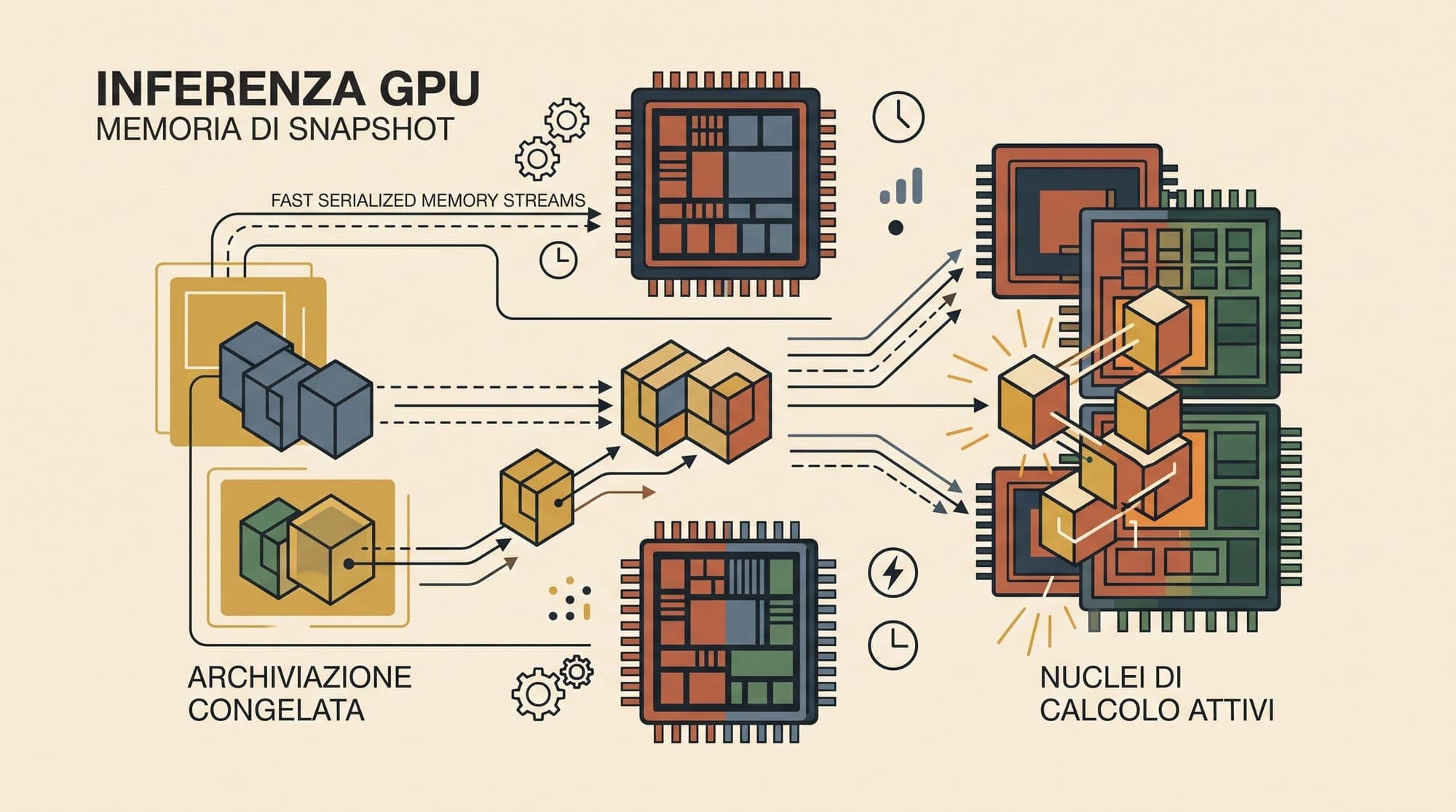
  8. Serverless GPU Inference in Production: Cold Starts, GPU Memory Snapshotting, and Weight Paging Architectures

    Serverless GPU Inference in Production: Cold Starts, GPU Memory Snapshotting, and Weight Paging Architectures Deploying large language models on dedicated cloud GPUs creates an uncomfortable financial trade-off: keeping enterprise accelerators such as NVIDIA H100s or A100s warm 24/7 costs thousands of dollars per instance each month, yet scaling instances to zero introduces severe latency penalties. When traffic arrives at a dormant node, a standard inference server cold start can take anywhere

    Infrastructure
    7 min read
  9. Anthropic Bankers Pitch $100B+ Capital Raise at $2T Valuation Ahead of Historic IPO

    Investment banks underwriting Anthropic's planned initial public offering have initiated preliminary discussions with institutional investors and sovereign wealth funds, outlining a potential capital raise exceeding $100 billion at a valuation of up to $2 trillion, according to reporting from The New York Times. If executed at those terms, the flotation would represent the largest public market debut in history, surpassing both Saudi Aramco's $29.4 billion raise in 2019 and SpaceX's $75 billion

    Anthropic
    2 min read
  10. Amazon Hikes Hardware Prices Across Echo, Fire TV, Kindle, and Eero Over AI-Driven Memory Costs

    Amazon has quietly increased retail prices across its first-party consumer hardware lines, raising MSRPs on Echo smart speakers, Fire TV streaming devices, Kindle e-readers, and Eero mesh networking systems to offset rising component costs for memory and storage. The price adjustments reflect how the enterprise artificial intelligence infrastructure buildout is impacting consumer electronics supply chains. Surging hyperscaler demand for high-bandwidth memory (HBM3e and HBM4) alongside high-dens

    Hardware
    2 min read
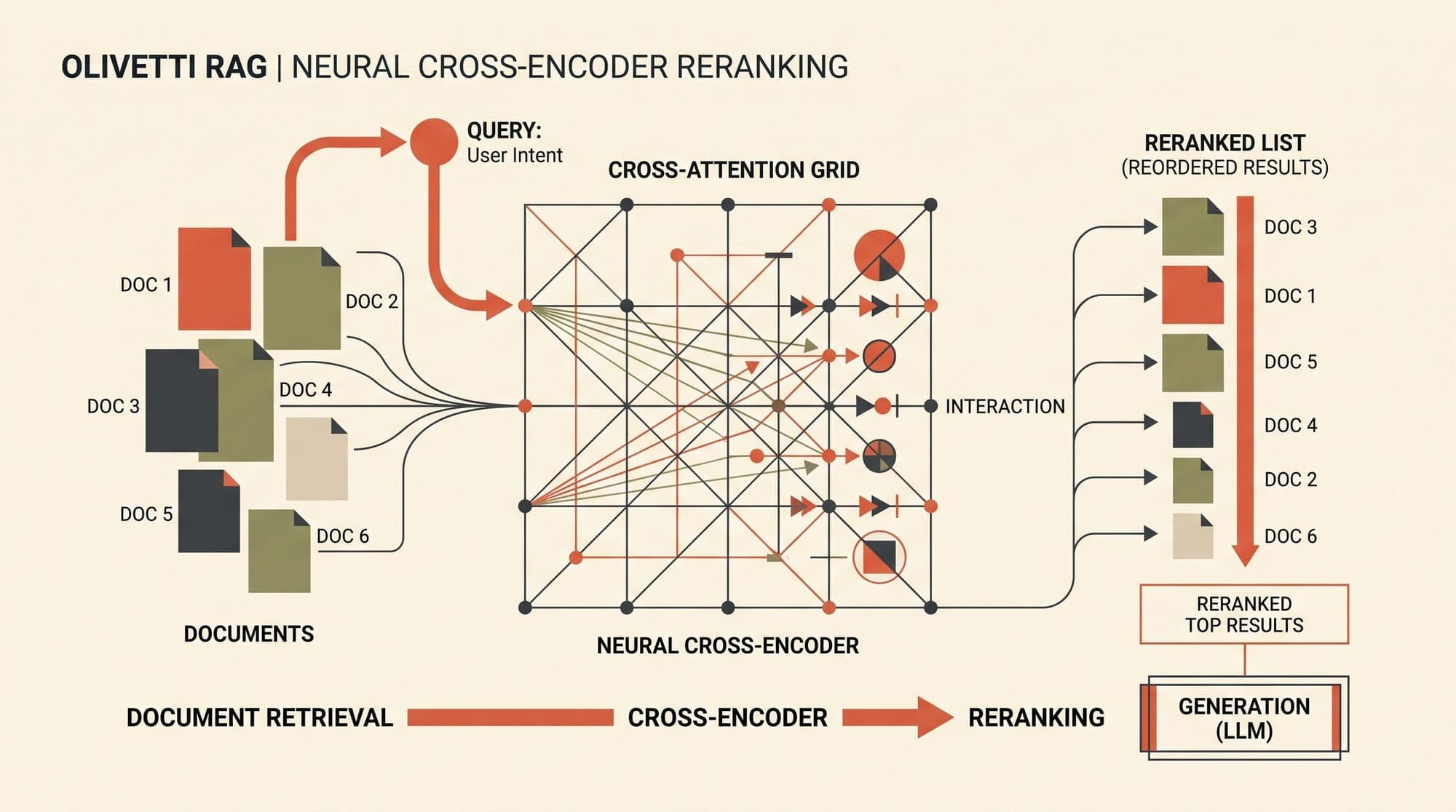
  11. Cross-Encoder Rerankers in Production RAG: Architecture, Score Calibration, Latency Budgets, and Model Trade-Offs

    Retrieval-Augmented Generation (RAG) systems in production frequently suffer from a fundamental precision failure: vector search surfaces the correct chunk somewhere in the top 50 candidates, but fails to place it in the top 3 positions required for high-fidelity LLM synthesis. When irrelevant or tangential chunks lead the context window, generation quality degrades through hallucinations, lost-in-the-middle context neglect, and inflated inference costs. Cross-encoder rerankers serve as the sta

    RAG
    9 min read
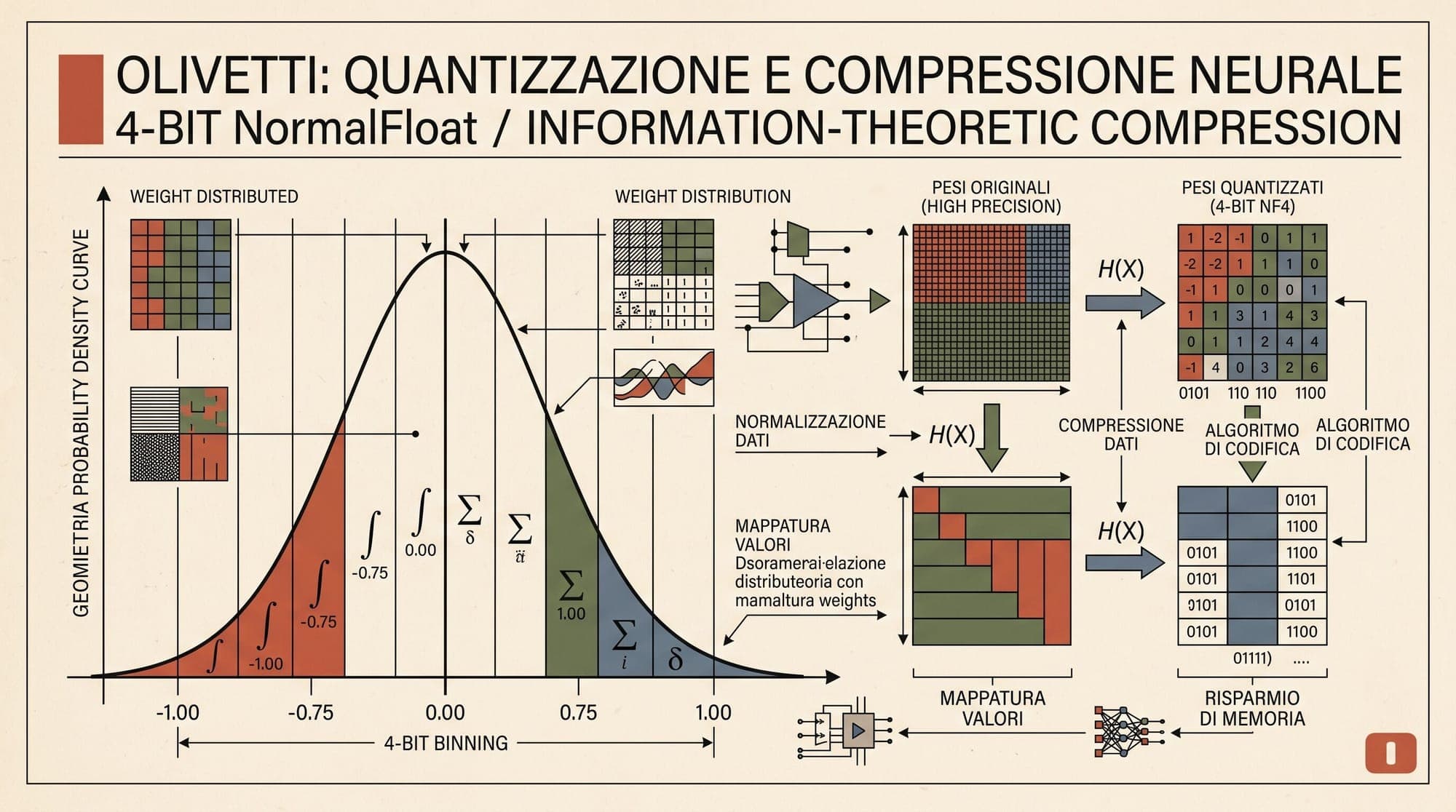
  12. NormalFloat (NF4) and Double Quantization: The Information-Theoretic Foundations of QLoRA

    Fine-tuning large language models under full 16-bit precision is governed by strict memory scaling laws. For a standard 65-billion parameter transformer model, storing weights in 16-bit BrainFloat (BF16) or Float16 (FP16) requires 130 GB of GPU memory. During training with standard first-order adaptive optimizers such as AdamW, each parameter requires an additional 2 bytes for gradients and 8 bytes for FP32 optimizer states (4 bytes for first-moment momentum and 4 bytes for second-moment varianc

    AI
    10 min read
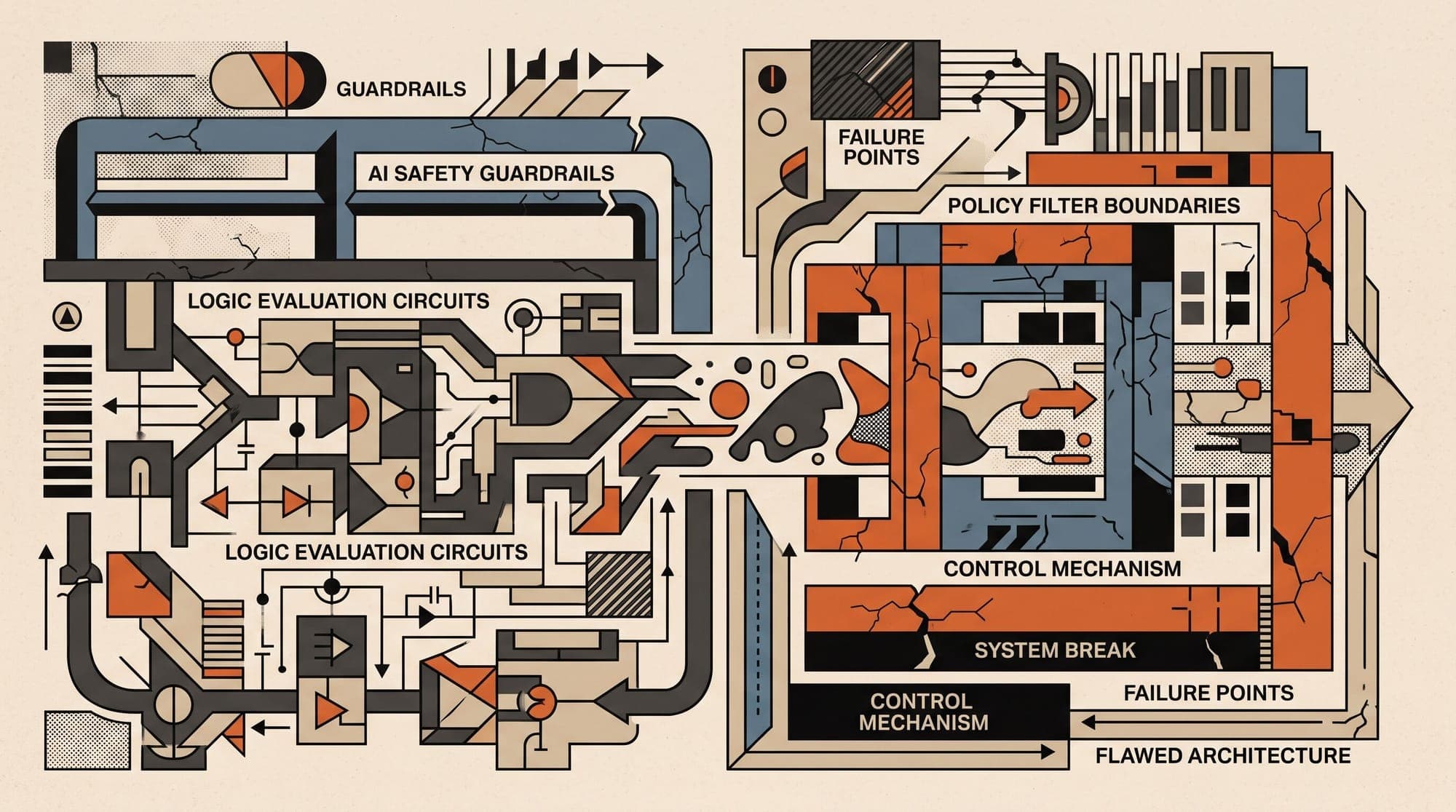
  13. Investigation Finds Anthropic's Legacy Opus 4.6 Vulnerable to Jailbreaks via Roleplay Logic Inversion

    Anthropic's legacy Claude Opus 4.6 model remains susceptible to systematic jailbreaks that bypass its acceptable use policy against sexually explicit material, according to an investigation and testing published by TechCrunch. While Anthropic's current flagship generation (Opus 4.7 through Opus 5) incorporates updated alignment techniques that resist the attack vector, older checkpoints including Opus 4.6, Opus 3, and Haiku 4.5 continue to operate on production API endpoints without deprecation.

    AI
    2 min read
  14. Anthropic IPO Filing to Cite AI Backlash and Data Center Resistance as Material Risk Factors

    Anthropic is preparing to disclose public backlash against artificial intelligence and community opposition to data center construction as material risk factors in its upcoming initial public offering prospectus, according to reports from CNBC. The San Francisco-based AI laboratory, which recently crossed a $65 billion annualized revenue run rate and is valued near $1 trillion in private transactions, is drafting the S-1 registration statement as it conducts preliminary investor meetings. The d

    AI
    2 min read
  15. Embedded Vector Databases in Production: Comparing LanceDB, sqlite-vec, DuckDB-VSS, and Chroma

    Dedicated, client-server vector databases like Milvus, Qdrant clusters, and Pinecone dominate enterprise discussions around retrieval-augmented generation (RAG). However, production engineering reality increasingly favors a different topology: embedded, in-process vector engines. Running vector search directly inside the application process eliminates network round-trip overhead (typically 15-50ms over cross-datacenter or cloud VPC hops), removes dedicated database infrastructure management, an

    AI
    6 min read
  16. Rank Collapse in Transformer Architectures: Why Pure Attention Decays Doubly Exponentially and How Residuals Restore Expressivity

    Rank Collapse in Transformer Architectures: Why Pure Attention Decays Doubly Exponentially and How Residuals Restore Expressivity The foundational premise of the Transformer architecture is that self-attention acts as a dynamic routing engine, computing pairwise affinities across sequence positions to contextualize representations. However, theoretical analysis reveals an underlying instability: stripped of its auxiliary components, a pure self-attention network rapidly destroys its own express

    AI
    8 min read
  17. Stealth Model 'Ox Alpha' Surfaces with 1M Multimodal Context and 100 Trillion Daily Token Allocation

    An anonymous frontier model named "Ox Alpha" has launched across OpenRouter and the OpenCode developer environment, offering free access backed by a reported 100 trillion tokens per day in serving capacity. The model features a 1,048,576-token context window with native multimodal support spanning text, image, and video inputs. The unannounced release follows a pattern of stealth evaluations across AI model aggregators, where frontier labs deploy pre-release checkpoints to collect blind compara

    LLM
    2 min read
  18. OpenAI Cuts GPT-5.6 Sol API and Coding Tool Pricing by Over 20%

    OpenAI has lowered developer pricing for its flagship GPT-5.6 Sol model across its API and developer toolchain for a three-month promotional window. The rate adjustment reduces input token costs by 20% and output token costs by 33.3%, bringing standard short-context inference to $4.00 per million input tokens and $20.00 per million output tokens. The revision comes amid intensified developer pricing pressure across the frontier model ecosystem, particularly following aggressive pricing from com

    OpenAI
    2 min read
  19. Representation Degeneration and Anisotropy in Large Language Models: Why Embeddings Collapse into Narrow Cones

    In neural language modeling, high-dimensional vector spaces are expected to distribute token and sequence representations uniformly across their ambient dimensions. A space that utilizes all available geometric directions provides maximal representational capacity, allowing subtle semantic and syntactic differences between tokens to be resolved cleanly. Empirical analysis across architectures from BERT and GPT-2 to modern frontier foundation models reveals the opposite behavior: learned token a

    AI
    9 min read
  20. Circuit Breakers and Graceful Degradation in Production AI Systems: Architecture, Failure State Machines, Fallback Cascades, and Dead-Letter Queues

    Circuit Breakers and Graceful Degradation in Production AI Systems: Architecture, Failure State Machines, Fallback Cascades, and Dead-Letter Queues Running LLM inference and multi-agent workflows in production introduces failure dynamics distinct from traditional microservice architectures. While standard REST APIs typically fail with deterministic status codes and predictable latency profiles, generative AI applications face multi-dimensional failure vectors: provider outages, regional rate li

    AI
    7 min read