Subscribe
Topic / page 3

Infrastructure

Articles, page 3

41-60
  1. Open-Source Video Diffusion Models in Production: Comparing HunyuanVideo, CogVideoX, Mochi 1, and LTX-Video

    Generating temporally coherent, high-resolution video from natural language prompts has transitioned from UNet-based frame interpolation pipelines to scalable Diffusion Transformers (DiT) operating over compressed spatiotemporal latent spaces. The release of open-weight video foundation models has established production-viable alternatives to proprietary commercial APIs. However, engineering teams deploying video generation pipelines face stark trade-offs across transformer parameter scaling, 3D

    AI
    7 min read
  2. Self-Hosted AI Code Completion Engines in Production: Comparing Tabby, Continue, Refact.ai, and Twinny Architecture, Fill-in-the-Middle Pipelines, AST Context Retrieval, and Serving Latency

    Deploying AI-assisted code completion within air-gapped environments, regulated enterprises, and privacy-conscious engineering teams requires decoupling developer tooling from third-party cloud APIs. While agentic coding systems focus on multi-turn planning and repository-wide refactoring with relaxed latency budgets, inline code completion operates under strict real-time constraints. Developers expect ghost-text suggestions to appear within 100 to 200 milliseconds of pausing keystrokes. Delive

    AI
    7 min read
  3. Embedding and Reranker Serving Engines in Production: Comparing Hugging Face TEI, Infinity, FastEmbed, and vLLM

    Serving dense embedding and reranking models in production involves fundamentally different hardware and execution bottlenecks than autoregressive LLM text generation. While generative decoder models are memory-bandwidth-bound during single-token autoregressive decoding, embedding models (such as BGE-M3, ModernBERT, GTE-Qwen2, and Snowflake Arctic) and cross-encoder rerankers operate purely in encoder or forward-pass pooling mode. They are compute-bound and latency-critical. In retrieval-augmen

    AI
    6 min read
  4. Lambda Secures $1B in Private Debt to Finance Nvidia GPUs Leased to Microsoft

    AI cloud infrastructure provider Lambda has secured $1 billion in private, short-dated debt to purchase Nvidia GPU clusters that will be leased directly to Microsoft. The transaction, arranged by JPMorgan Chase, highlights an accelerating shift across the AI infrastructure sector toward structured debt and asset-backed financing to fund capital-intensive data center hardware. The short-dated maturity structure indicates that Lambda plans to amortize the debt rapidly using contracted lease reven

    AI
    2 min read
  5. Andreessen Horowitz Launches $1.1B Machine Age Fund for Physical AI Infrastructure

    Venture capital firm Andreessen Horowitz (a16z) has announced the close of a $1.1 billion dedicated fund named "Machine Age." The vehicle is structured to invest specifically in the physical infrastructure and hardware supply chains required to scale modern artificial intelligence workloads. The launch marks a significant capital allocation into capital-intensive physical systems by a firm historically recognized for software-centric investments. Target Hardware and Infrastructure Domains Ac

    AI
    1 min read
  6. Meta Deploys ABB and Kinova Robots to Automate Physical Hardware Tasks in AI Data Centers

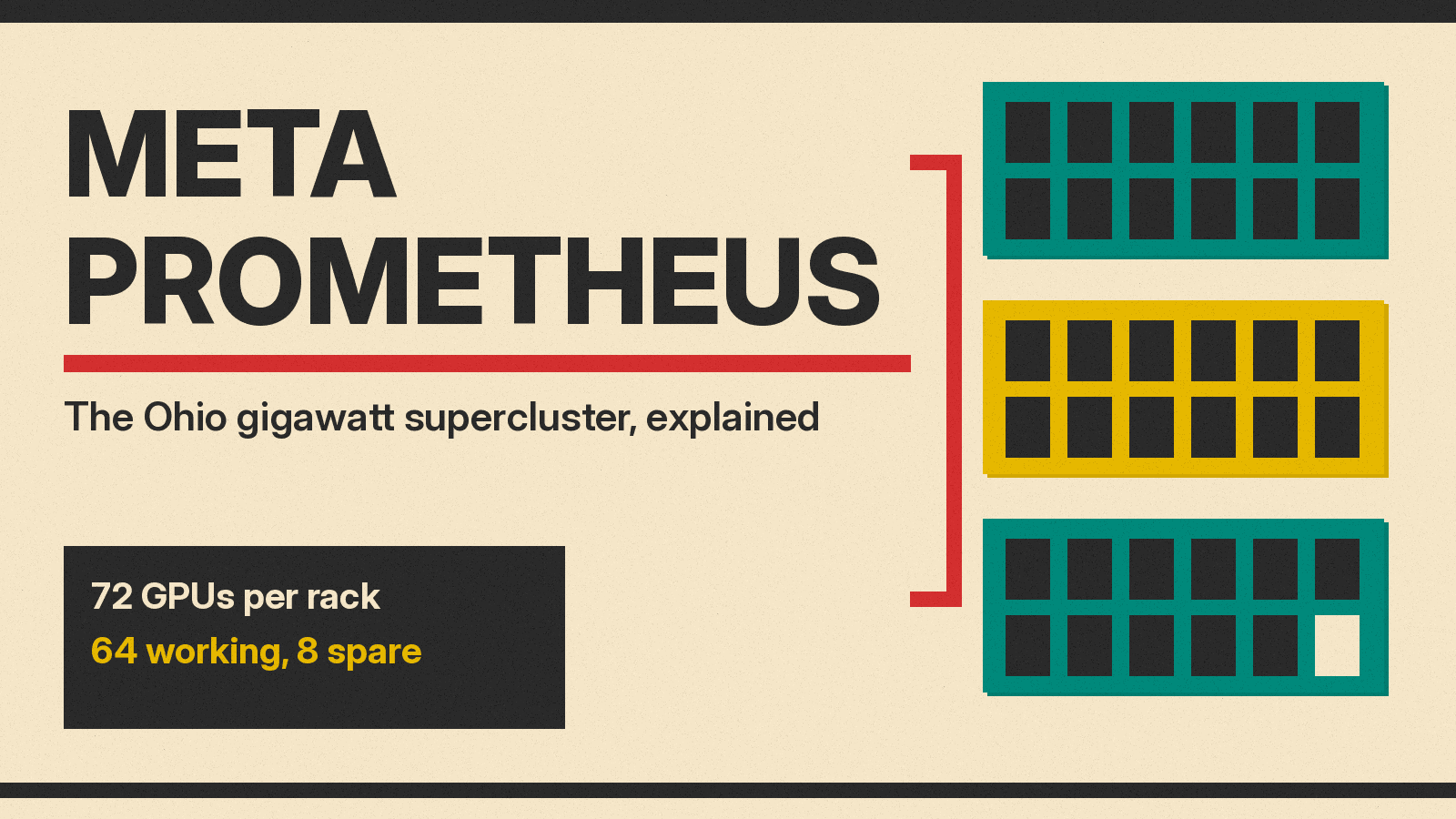
    Meta has begun testing specialized robotic systems from industrial automation manufacturers to perform physical maintenance tasks across its AI data center fleet, according to internal reporting confirmed by current and former staff. The automation program, deployed across facilities including the company's Prometheus data center campus in New Albany, Ohio, uses robots to replace networking cables, power-cycle servers, reseat components, and perform routine hardware maintenance without human in

    AI
    2 min read
  7. USD.AI Secures $100M Stablecoin Debt Facility from Bullish to Fund GPU-Backed Infrastructure Loans

    Digital asset exchange operator Bullish has committed a $100 million stablecoin-denominated debt facility to USD.AI, an on-chain lending protocol that issues non-recourse debt collateralized by data center GPU hardware. The financing establishes an institutional credit channel connecting liquid stablecoin capital with the expanding compute infrastructure requirements of modern AI training and inference providers. Developed by Permian Labs, USD.AI structures asset-backed credit facilities specif

    Hardware
    2 min read
  8. South Korea Launches AI for All Initiative Treating Frontier Models as Public Utilities

    South Korea's Ministry of Science and ICT (MSIT) has launched the "AI for All" initiative, a government-sponsored project aimed at deploying nationwide, free-tier access to artificial intelligence chatbots and public administrative agents. The initiative structures generative AI capabilities and agent workflows as public utilities, establishing a subsidized access model for South Korean citizens. Consortia and Public Bidding Six major commercial consortia submitted bids to operate the public

    AI
    2 min read
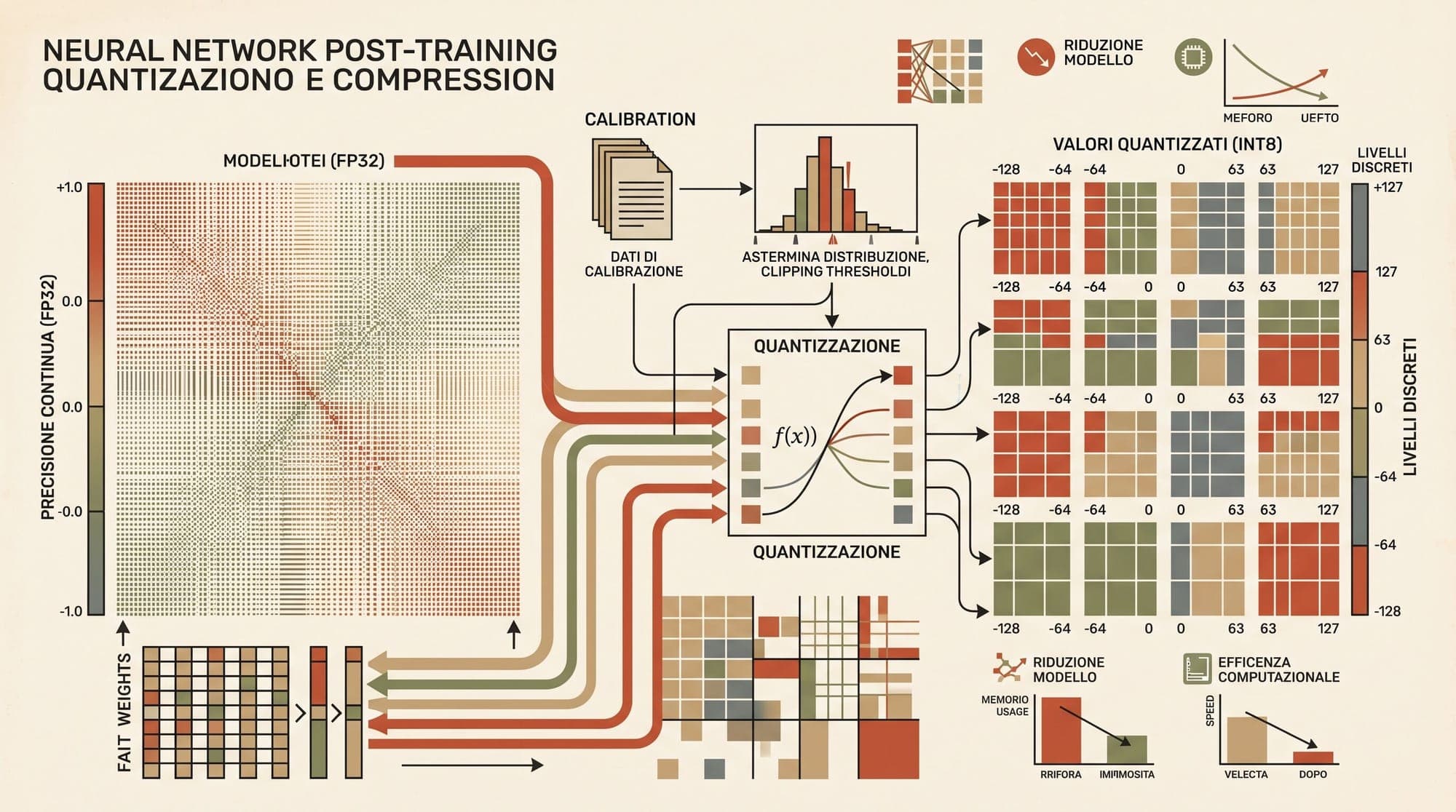
  9. Post-Training Quantization Toolkits in Production: Comparing AutoAWQ, AutoGPTQ, bitsandbytes, and llm-compressor Architecture, Calibration Profiling, Kernel Execution, and Serving Economics

    Large language model deployment in high-concurrency production environments is governed primarily by memory bandwidth and hardware economics. In standard autoregressive decoding, memory traffic dominates computation: for every token generated, every parameter of the model must be loaded from GPU High Bandwidth Memory (HBM) into SRAM and tensor cores. Serving a 70-billion parameter model in 16-bit precision requires at least 140 GB of VRAM solely for model weights, necessitating multi-GPU tensor

    LLM
    9 min read
  10. Nvidia Pauses Selected Revenue-Sharing Deals with AI Cloud Providers

    Nvidia has paused select partnership deals under its newly introduced AI cloud financing initiative, according to reporting by The Wall Street Journal. The program, unveiled in July 2026, was designed to provide credit support and hardware access to emerging cloud computing providers in exchange for a percentage of future recurring revenues. While Nvidia stated that the broader program remains operational, several individual agreements have been put on hold as the company reassesses customer te

    Nvidia
    2 min read
  11. Anthropic Discussed $7 Billion Acquisition of AI Chip Startup MatX Before Talks Stalled

    Anthropic held acquisition discussions to buy artificial intelligence semiconductor startup MatX for approximately $7 billion before talks stalled, according to reporting from Reuters. The negotiations, which have since transitioned into discussions surrounding a potential commercial partnership, highlight the increasing urgency among frontier AI laboratories to secure in-house silicon engineering capabilities. Following the breakdown of active acquisition talks, MatX is currently seeking to ra

    Anthropic
    3 min read
  12. Synthetic Data Generation and Data Curation Pipelines in Production: Comparing Distilabel, NVIDIA NeMo Curator, Data-Juicer, and InstructLab

    As frontier language models exhaust human-authored web text, pretraining and post-training performance increasingly depends on automated data curation and synthetic data synthesis. Unfiltered public corpora introduce duplicate content, synthetic artifacts, low-reasoning text, and licensing liabilities. Modern foundation models, including Meta's Llama 3.1, NVIDIA's Nemotron-4 340B, Alibaba's Qwen 2.5, and IBM's Granite, are trained on datasets where synthetic generation and rigorous multi-stage f

    Data Curation
    9 min read
  13. Nvidia Supply Commitments Reach $279 Billion Across Multi-Year AI Hardware Pipeline

    Nvidia has significantly expanded its forward supply chain obligations, reporting total component and manufacturing capacity commitments of $279 billion in its fiscal second-quarter disclosures. The figure marks a 134 percent sequential increase from $119 billion reported in the preceding quarter and $95.2 billion at the close of fiscal 2026. The multi-year commitments reflect efforts to secure critical semiconductor fabrication, advanced packaging, and high-bandwidth memory (HBM) capacity nece

    AI
    2 min read