Engineering11 articles

Engineering

Articles

  • Pipeline Parallelism in Large Language Models: How GPipe, 1F1B Scheduling, and Interleaving Tame Memory and Bubbles

    Training frontier large language models with tens or hundreds of billions of parameters exceeds the physical memory capacity of any individual GPU. While intra-node sharding strategies such as Tensor Parallelism partition individual matrix multiplications across accelerators over high-speed NVLink interconnects, scaling across multi-node clusters encounters strict hardware boundaries. Tensor Parallelism requires multiple collective All-Reduce communications per transformer layer. Across standar

    1 min
  • Document Parsing and Visual Retrieval for Production RAG: Architecture, Benchmarks, and Serving Trade-Offs for Docling, Marker, MinerU, and ColPali

    Document Parsing and Visual Retrieval for Production RAG: Architecture, Benchmarks, and Serving Trade-Offs for Docling, Marker, MinerU, and ColPali The retrieval quality of a Retrieval-Augmented Generation (RAG) system is strictly bounded by the fidelity of its document ingestion pipeline. In enterprise environments, the vast majority of domain knowledge remains locked in unstructured Portable Document Format (PDF) files, scanned reports, technical manuals, and multi-column research papers. Na

    1 min
  • Document Chunking Strategies for Production RAG: Fixed-Size, Semantic, Hierarchical, and Late Chunking Trade-Offs

    Document Chunking Strategies for Production RAG: Fixed-Size, Semantic, Hierarchical, and Late Chunking Trade-Offs In production retrieval-augmented generation (RAG), document chunking is often treated as a trivial preprocessing step. In practice, the method used to partition raw text directly dictates the upper bound of retrieval recall, embedding representation quality, and downstream generation accuracy. Retrieval systems face a fundamental tension. Dense vector search models perform best wh

    1 min
  • AI Guardrails in Production: Multi-Stage Filtering, Classification Models, and the Latency Tax

    AI Guardrails in Production: Multi-Stage Filtering, Classification Models, and the Latency Tax Production deployments of large language models cannot rely solely on system prompt instructions to maintain safety, prevent prompt injection, or restrict domain scope. System prompt alignment is inherently susceptible to adversarial bypasses, context dilution, and non-deterministic instruction following. To enforce strict security, compliance, and topic boundaries, engineering teams increasingly depl

    1 min
  • Multi-Head Latent Attention: How Low-Rank KV Compression Scales LLM Serving

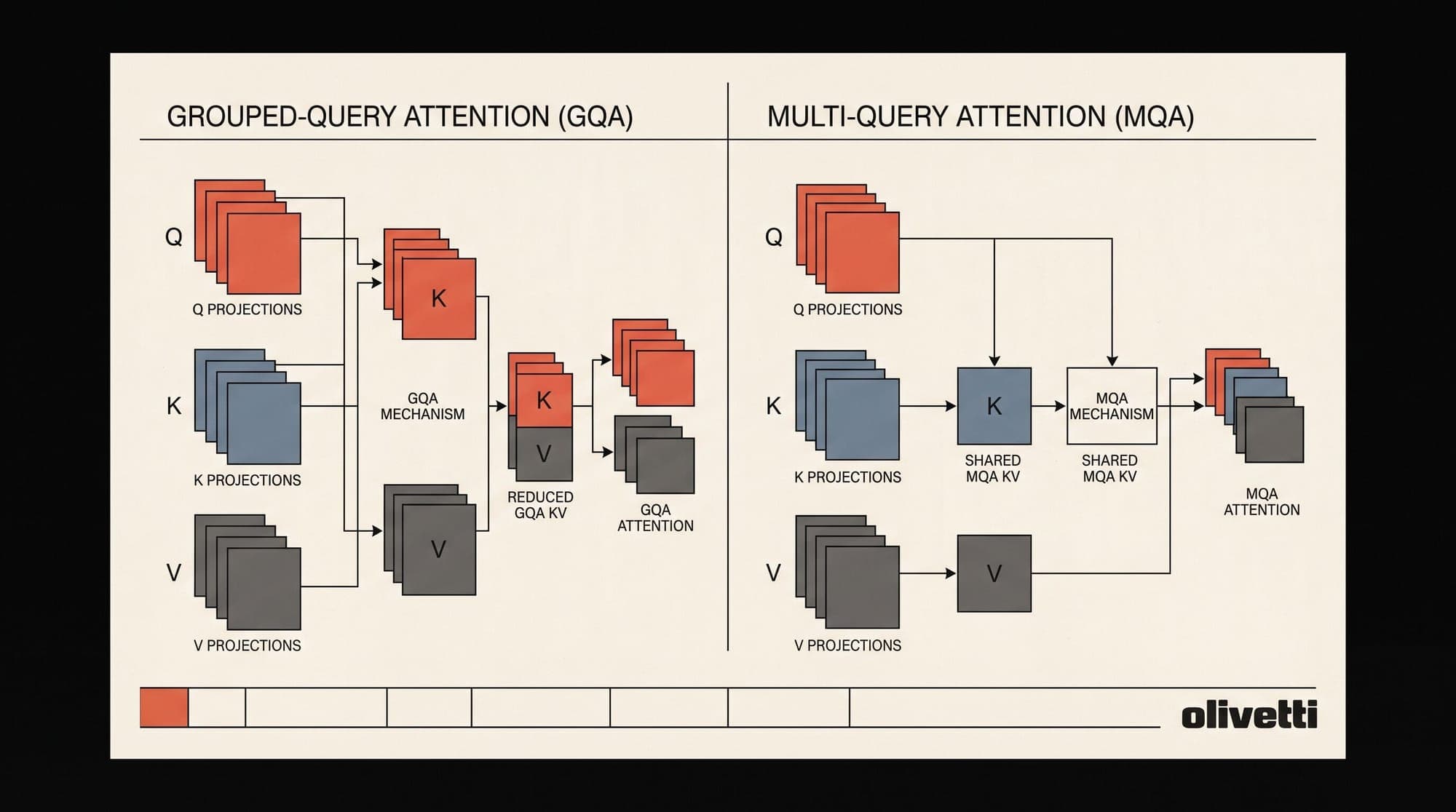
    Autoregressive transformer inference faces a fundamental hardware constraint during text generation: memory bandwidth saturation. While prefill (processing prompt tokens) is compute-bound and saturates GPU tensor cores, token-by-token generation is memory-bandwidth bound. To generate each subsequent token, the inference engine must load all prior Key and Value vectors from High Bandwidth Memory (HBM) into SRAM. As sequence lengths reach 32k, 64k, or 128k tokens and batch sizes scale, the Key-Va

    1 min
  • LLM Gateways in Production: Multi-Provider Failover, Rate Limiting, and Spend Governance

    LLM Gateways in Production: Multi-Provider Failover, Rate Limiting, and Spend Governance As generative AI workloads transition from experimental prototypes to mission-critical infrastructure, direct client-to-provider API calls introduce substantial operational risk. Relying on hardcoded SDK connections to a single model provider exposes production services to unexpected rate limits, regional outages, silent breaking changes, and uncontrolled token costs. To solve these reliability and governa

    1 min
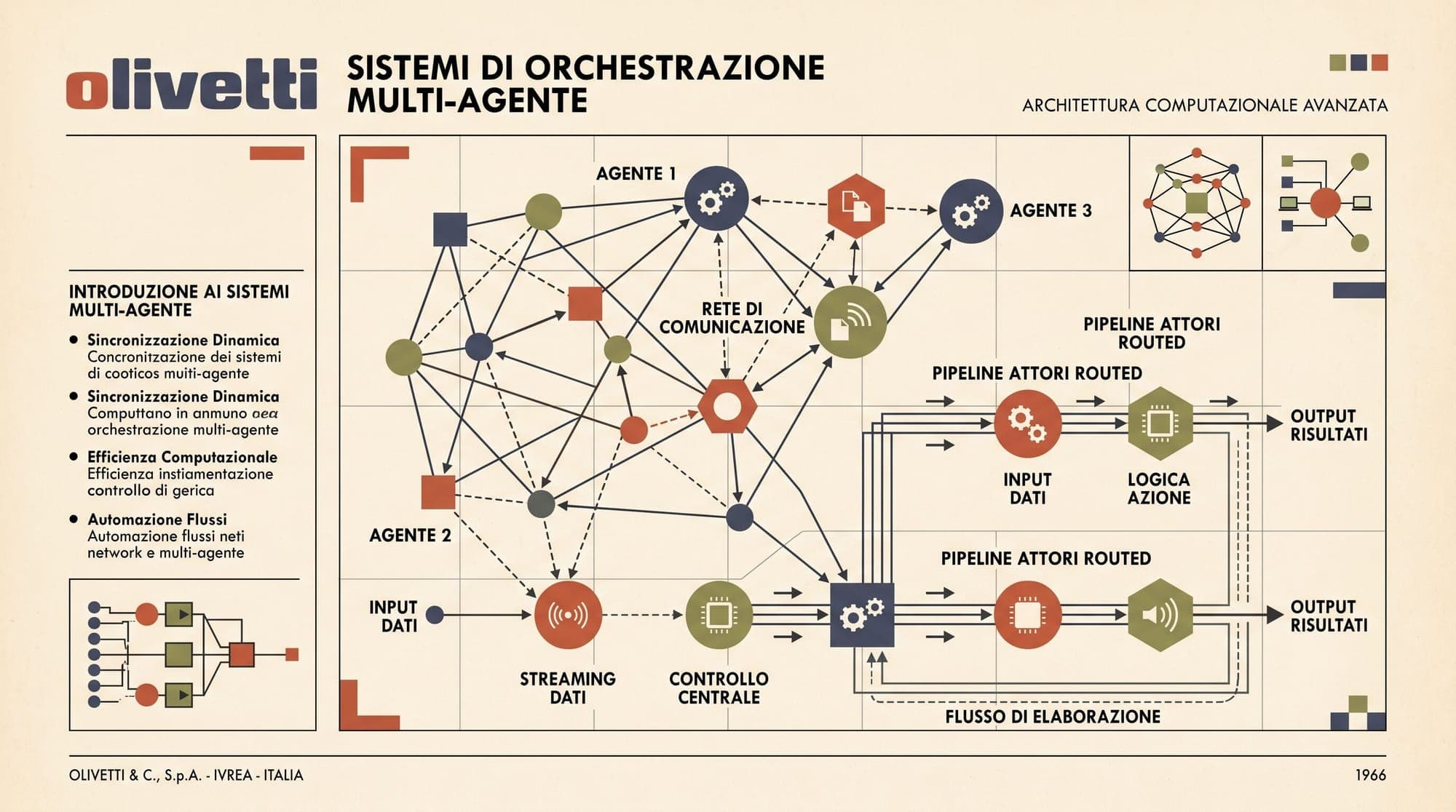
  • Multi-Agent Orchestration in Production: State Machines, Swarms, and Error Cascades

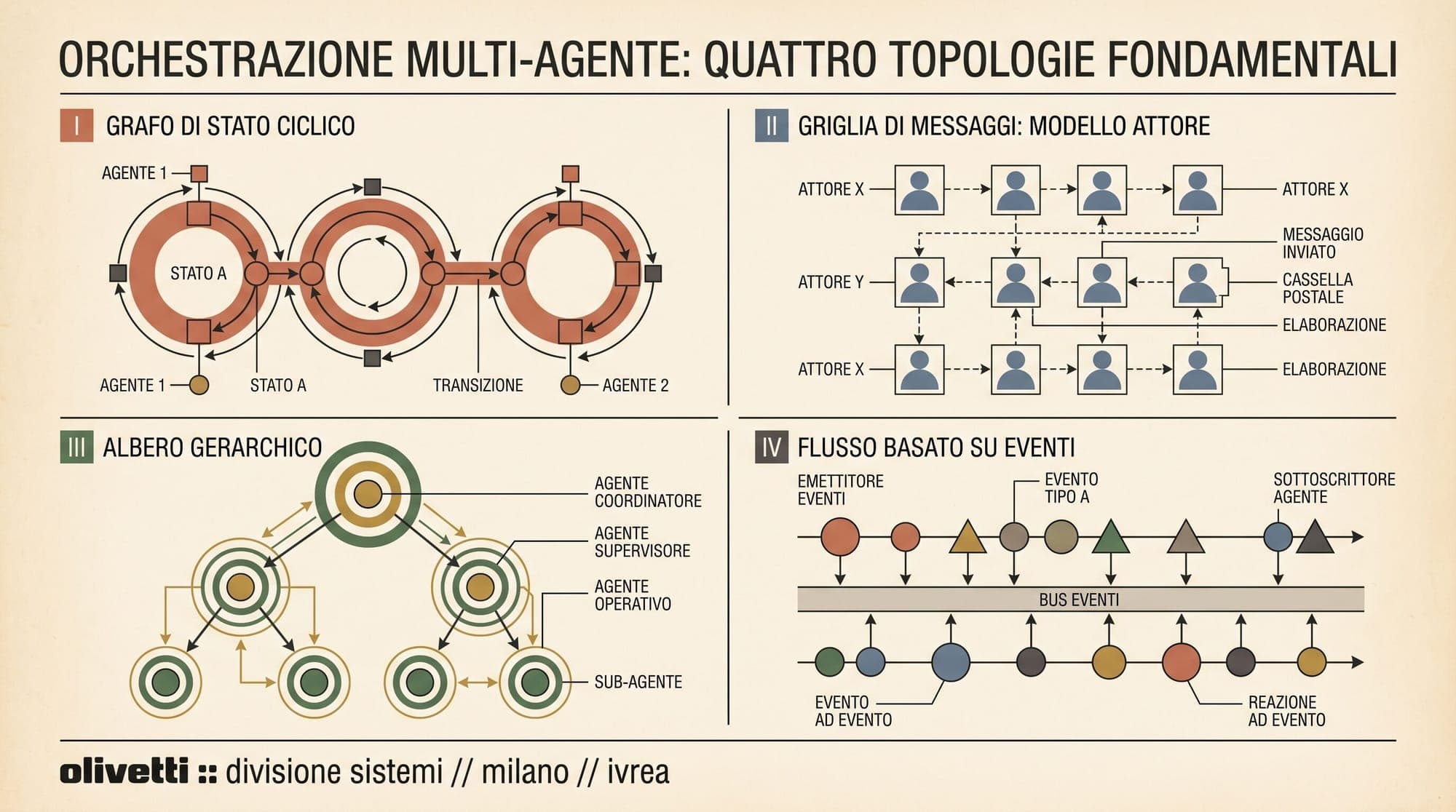
    Moving large language model applications from isolated prompts to multi-agent architectures introduces distinct systemic complexities. While single-agent systems face localized points of failure, multi-agent topologies exhibit emergent dynamics such as cascading hallucinations, coordination deadlocks, and severe context bloat. Designing multi-agent systems for production environments requires selecting explicit orchestration paradigms, bounding error propagation, and enforcing durable state per

    1 min
  • Model Context Protocol (MCP) in Production: Architecture, Security Boundaries, and Latency Overheads

    As autonomous language model agents transition from experimental chat interfaces into enterprise production infrastructure, the architectural bottleneck has shifted from raw model reasoning to external environment integration. In early agent implementations, connecting an LLM to external systems required bespoke tool definitions, vendor-specific function schemas, and custom API wrappers. Every framework maintained its own incompatible tool-calling abstraction, fragmenting integrations across age

    1 min
  • LLM Model Routing and Cascades: Architecture, Economics, and Quality Trade-Offs

    In modern enterprise AI systems, uniform model dispatch, sending all incoming user traffic to a single frontier large language model, is one of the most common architectural inefficiencies. Frontier models like GPT-4o and Claude 3.5 Sonnet provide industry-leading reasoning and code generation capabilities, but their inference costs range between $2.50 and $15.00 per million tokens. Conversely, smaller open-weights or distilled models, such as Llama 3.1 8B or GPT-4o-mini, execute at a fraction o

    1 min
  • Prompt Caching in Production: Architecture, Economics, and Invalidation Pitfalls

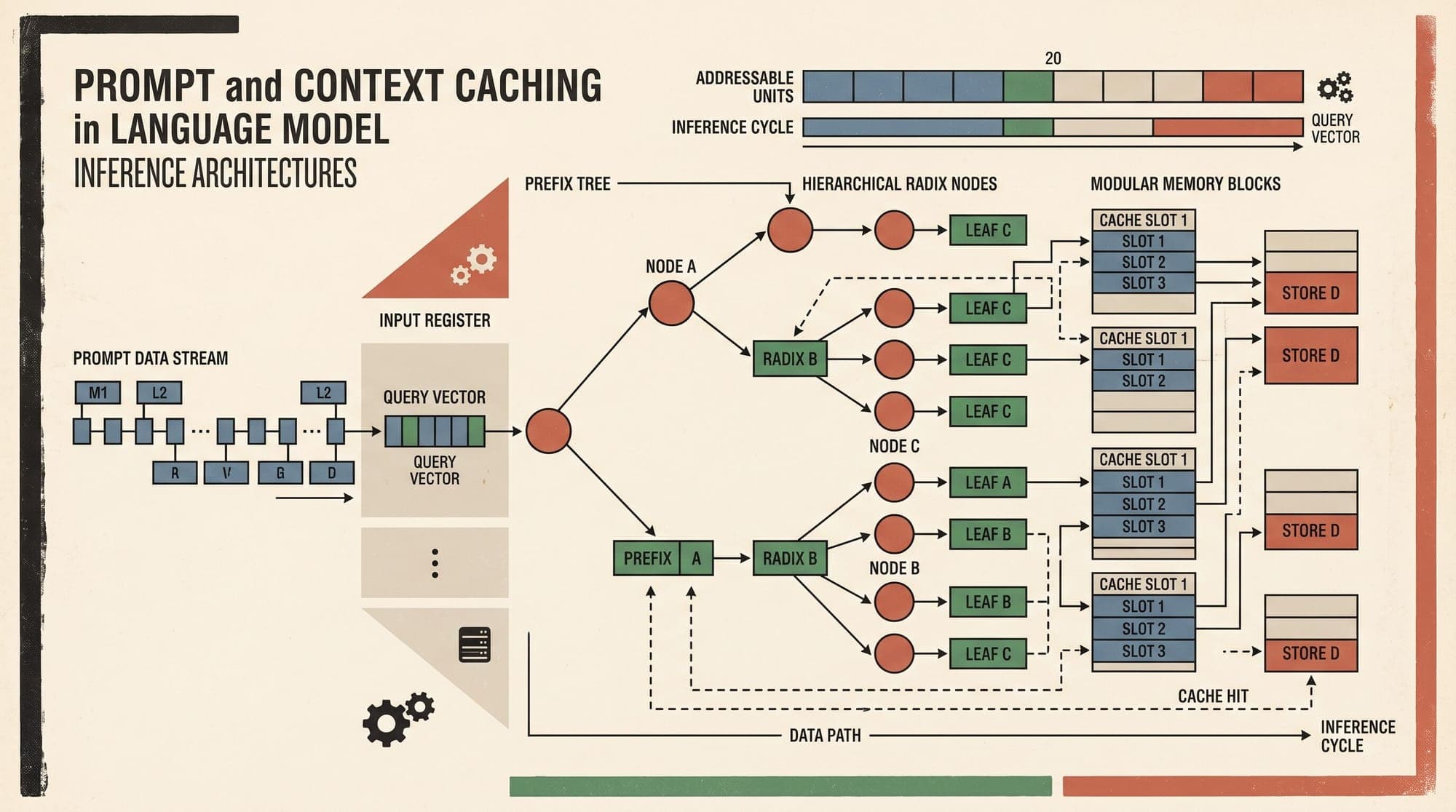
    As multi-turn AI agents, code generation assistants, and retrieval-augmented generation (RAG) pipelines expand in production, prompt sizes routinely exceed tens of thousands of tokens per request. In these architectures, the vast majority of tokens across consecutive API calls are static: system prompts, OpenAPI tool specifications, reference documents, and accumulated conversation history. Without optimization, inference engines must re-evaluate the full attention matrix for every token on eac

    1 min
  • How Modern Inference Engines Tamed Structured Outputs

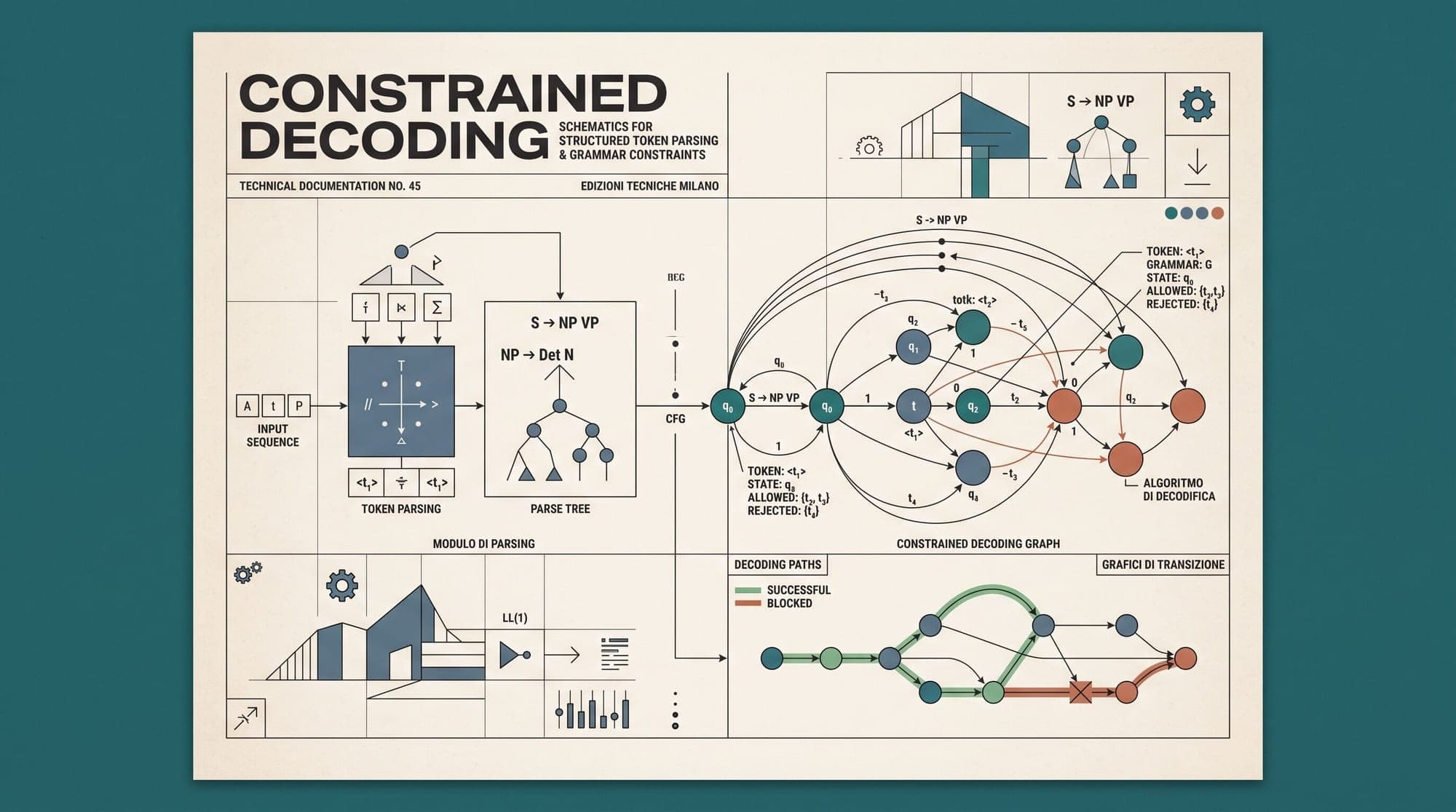
    Autoregressive language models generate tokens sequentially by sampling from a probability distribution over a vocabulary. While this mechanism excels at natural language generation, it provides no structural guarantees when producing machine-readable data formats such as JSON, SQL, or structured tool calls. A single missing quotation mark, mismatched bracket, or hallucinated enum value invalidates the downstream payload. Prompt engineering, few-shot examples, and setting sampling temperature t

    1 min