
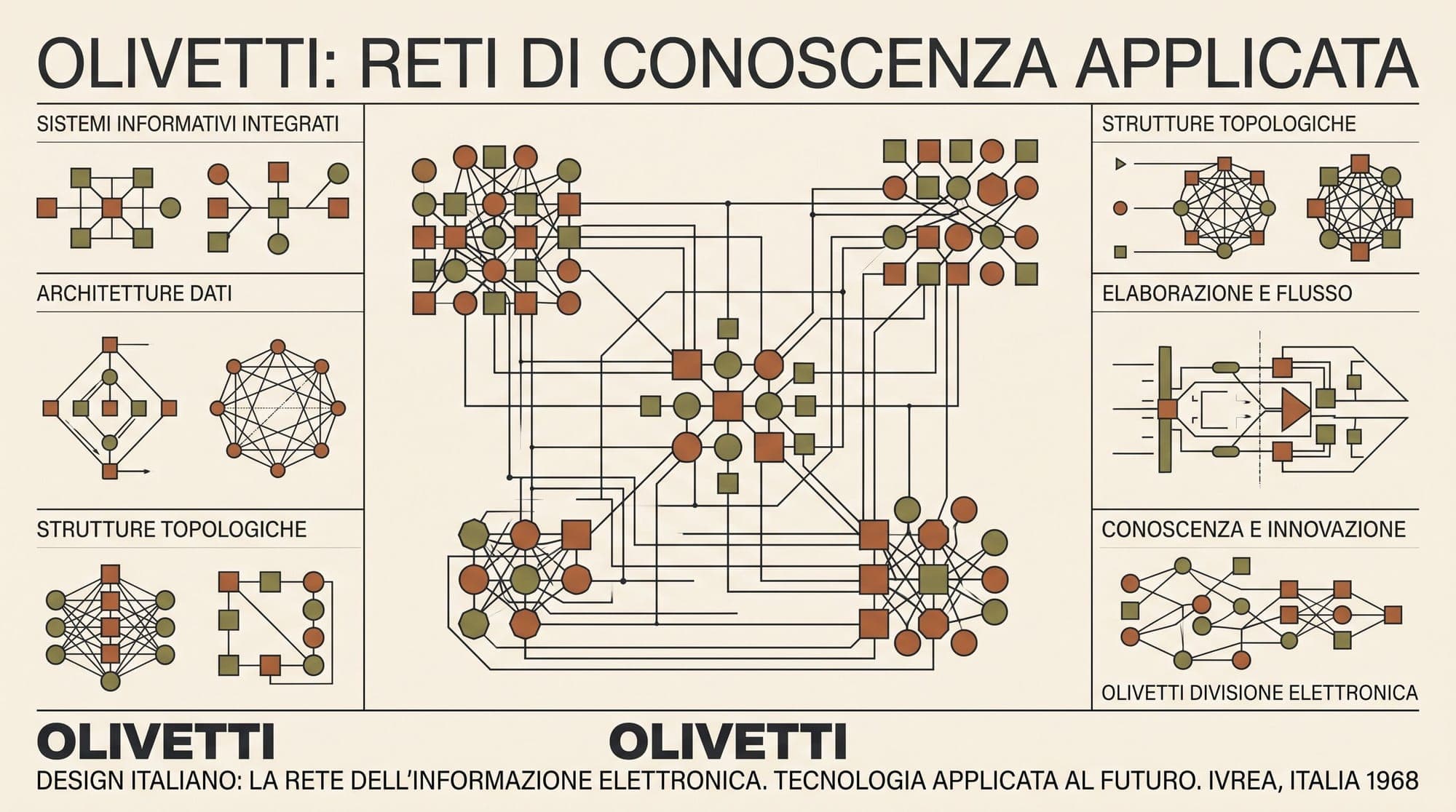
Standard vector retrieval-augmented generation (RAG) relies on dense semantic embeddings to map text chunks into a shared vector space. While effective for localized semantic lookups, dense retrieval degrades on two distinct query classes: corpus-wide global summarization (such as identifying overarching themes across an entire document store) and complex multi-hop associative queries (connecting entity A to entity D through multiple intermediary relationships across disparate documents).
Graph-augmented RAG addresses these limitations by extracting entities and relationships into structured graphs, bridging disconnected passages through explicit topological links. However, the operational overhead, token consumption during indexing, query latency, and index mutability vary substantially across modern frameworks.
This analysis evaluates the four dominant Graph RAG architectures in production: Microsoft GraphRAG, LightRAG, HippoRAG, and Fast GraphRAG.
Architectural Foundations
The four frameworks implement fundamentally divergent graph construction and traversal strategies.
+-----------------------------------------------------------------------------------+
|                           GRAPH RAG PARADIGM COMPARISON                           |
+---------------------+-------------------------------+-----------------------------+
| Framework           | Indexing Topology             | Retrieval Mechanism         |
+---------------------+-------------------------------+-----------------------------+
| Microsoft GraphRAG  | Hierarchical Leiden Clusters  | Map-Reduce Summary Aggregation|
|                     | + Multi-Level Summaries       | or Entity Neighborhood Search |
+---------------------+-------------------------------+-----------------------------+
| LightRAG            | Dual-Layer Vectorized Graph   | Dual-Level Match (Low/High) |
|                     | (Nodes + Edges Embedded)      | Direct Subgraph Formulation |
+---------------------+-------------------------------+-----------------------------+
| HippoRAG            | Bipartite Passage-Entity Net  | Personalized PageRank (PPR) |
|                     | + Dense Synonym Linking       | Zero-LLM Graph Diffusion    |
+---------------------+-------------------------------+-----------------------------+
| Fast GraphRAG       | Typed Entity-Relation Graph   | Seeded Personalized PageRank|
|                     | + Vector-Mapped Entities      | Asynchronous Graph Walking  |
+---------------------+-------------------------------+-----------------------------+
1. Microsoft GraphRAG: Hierarchical Community Summarization
Developed by Microsoft Research (Edge et al., 2024), GraphRAG builds a multi-level hierarchical knowledge graph designed primarily for query-focused summarization across large corpora.
The indexing pipeline operates in five distinct phases:
- Source Chunking: Raw documents are partitioned into text chunks (typically 300 to 1,200 tokens).
- Element Extraction: An LLM extracts entities (name, type, description) and relationships (source, target, description, weight) via Open Information Extraction (OpenIE) prompts, alongside optional covariates (claims, dates, facts).
- Graph Construction: Extracted nodes and edges are merged across chunks.
- Hierarchical Clustering: The Leiden community detection algorithm recursively partitions the graph into a hierarchy of non-overlapping communities at multiple granularity levels (C0 root, C1 intermediate, C2 leaf).
- Community Summarization: An LLM generates structured natural language summaries for every detected community at every level of the hierarchy.
GraphRAG supports two online retrieval modes:
- Global Search: Tailored for corpus-wide thematic questions ("What are the primary operational risks identified in these filings?"). It performs a map-reduce operation over pre-computed community summaries, scoring summary relevance in parallel and synthesizing the results into a consolidated answer.
- Local Search: Tailored for specific entity-centric questions ("What interactions occurred between Organization X and Agency Y?"). It vectorizes the query to identify seed entities, extracts their immediate 1-hop or 2-hop neighborhoods, associated relationship descriptions, text chunks, and covariates, and feeds the extracted context to the generator.
2. LightRAG: Dual-Level Vectorized Knowledge Graphs
Introduced by researchers at the University of Hong Kong (Guo et al., 2024), LightRAG eliminates hierarchical community clustering and multi-level summarization to reduce indexing cost and support incremental updates.
The core architecture centers on:
- Dual-Level Knowledge Representation: Text chunks are processed by an LLM to extract entities and relationships. Both entity nodes and relationship edges are stored with structured text descriptions and independently embedded into a vector database.
- Key-Value Pair Indexing: Dedicated key-value mappings connect query keywords and entity labels directly to relevant text chunks.
- Dual-Level Retrieval:
- Low-Level Retrieval: Identifies fine-grained entities and immediate relational triples matching specific query keywords.
- High-Level Retrieval: Matches broader thematic concepts by querying higher-order graph connections and aggregated relationship vectors.
- Hybrid Mode: Blends low-level and high-level retrieval channels into a unified context prompt.
- Incremental Indexing: New documents are integrated via graph union operations (merging new nodes, averaging or updating edge weights and descriptions) without re-clustering the entire graph.
3. HippoRAG: Neurobiologically Inspired Personalized PageRank
Published at NeurIPS 2024 (Gutiérrez et al., 2024), HippoRAG models human memory consolidation based on the Hippocampal Indexing Theory. In this paradigm, the LLM acts as the neocortex (storing parametric knowledge and semantic representations), while an associative graph acts as the hippocampus (indexing relationships and routing activation signals).
The mechanics involve:
- Schemaless Entity Extraction: An offline LLM pass extracts named entities from document passages.
- Dense Synonym Linking: Extracted entities are embedded with dense encoders (such as Contriever or RoBERTa). Entities exceeding a cosine similarity threshold are linked with bidirectional synonym edges, creating a continuous associative highway across discrete entity mentions.
- Bipartite Memory Graph: Nodes consist of document passages and entity mentions. Edges represent passage-entity containment and entity-entity co-occurrence or synonymy.
- Online Activation via Personalized PageRank (PPR): Given a user query, an LLM extracts query entities. These entities are matched against graph nodes via dense similarity to construct an initial probability distribution (restart vector ). HippoRAG then computes stationary probability distributions using Personalized PageRank over the graph adjacency matrix :
- Zero-LLM Traversal: The multi-hop graph exploration runs purely through matrix operations on CPU or GPU in milliseconds, returning top-ranked passage nodes without intermediate LLM inference calls.
4. Fast GraphRAG: Type-Safe Asynchronous Graph Traversal
Developed by Circlemind (Fast GraphRAG), Fast GraphRAG translates PageRank-based exploration into a production-engineered runtime with typed entity schemas and asynchronous execution.
Key design elements include:
- Pydantic/Instructor Structured Extraction: Replaces unstructured OpenIE text parsing with strict JSON schema validation, eliminating parsing failures during batch ingestion.
- Vector-Seeded Graph Walking: Combines semantic entity retrieval with personalized PageRank diffusion across dynamic edge weights.
- Asynchronous Pipeline Execution: Implements non-blocking async workers for ingestion and retrieval, reducing pipeline latency on concurrent multi-user workloads.
- Dynamic Mutation Support: Supports entity insertion, edge updating, and graph pruning without requiring global graph reconstruction.

Indexing Pipelines and Computational Overhead
The computational bottleneck of Graph RAG systems lies in the offline indexing phase. The token consumption and API call volume during ingestion dictate deployment feasibility at enterprise scale.
+-----------------------------------------------------------------------------------+
|                        INDEXING OVERHEAD & COMPLEXITY                             |
+---------------------+-------------------+------------------+----------------------+
| Framework           | Token Overhead    | LLM Passes per   | Incremental Updating |
|                     | (per 1M input)    | Chunk            | Support              |
+---------------------+-------------------+------------------+----------------------+
| Microsoft GraphRAG  | ~15M - 40M tokens | 3-5 passes       | Poor (Requires full  |
|                     |                   | (Extract, Merge, | re-clustering or     |
|                     |                   | Summarize)       | costly reconciles)   |
+---------------------+-------------------+------------------+----------------------+
| LightRAG            | ~1.2M - 2.5M      | 1 pass           | Native (Graph union  |
|                     | tokens            | (Extract + Embed)| & node upsert)       |
+---------------------+-------------------+------------------+----------------------+
| HippoRAG            | ~1.1M - 2.0M      | 1 pass           | Native (Passage/node |
|                     | tokens            | (Extract + Embed)| insertion + KNN link)|
+---------------------+-------------------+------------------+----------------------+
| Fast GraphRAG       | ~1.1M - 2.2M      | 1 pass (Typed    | Native (Async node   |
|                     | tokens            | structured pass) | and edge mutations)  |
+---------------------+-------------------+------------------+----------------------+
The Cost of Community Summarization in Microsoft GraphRAG
Microsoft GraphRAG incurs extreme token overhead because its index construction requires multiple successive LLM processing layers:
- Entity & Relation Extraction: LLM calls across text chunks.
- Entity Disambiguation & Description Synthesis: Merging duplicate entity references requires consolidating descriptions across multiple chunks with dedicated LLM prompts.
- Leiden Community Summarization: For a graph with communities across 3 hierarchy levels, the system prompts the LLM for every community . For large document collections, community summaries alone consume hundreds of thousands of output tokens.
Empirical evaluations show that indexing a corpus of 1 million tokens with Microsoft GraphRAG can consume between 15 million and 40 million tokens depending on chunk overlap, extraction prompt verbosity, and community hierarchy depth. Furthermore, updating the index with new incoming documents requires either running expensive graph reconciliation routines or re-executing Leiden clustering and re-generating community summaries from scratch.
Lightweight Graph Construction: LightRAG, HippoRAG, and Fast GraphRAG
LightRAG, HippoRAG, and Fast GraphRAG eliminate hierarchical summarization entirely:
- LightRAG runs a single entity/relation extraction pass per chunk, then immediately computes dense vector embeddings for the extracted nodes and edges. Total indexing token overhead scales roughly at to the raw corpus token count. When new documents arrive, new nodes and edges are merged into the existing graph via basic dictionary upserts, and new embeddings are added to the vector index in amortized time.
- HippoRAG offloads relation construction from LLM generation to dense similarity linking. The LLM extracts entity surface forms; a sentence transformer embeds entities; and a nearest-neighbor index adds synonym edges between entities whose embedding distance is below threshold . This completely decouples graph density from LLM token costs.
- Fast GraphRAG utilizes structured JSON schemas to extract typed entities and directed relations in a single call, routing vectors into embedded storage (such as NanoVectorDB or Qdrant) with minimal token inflation.
Online Retrieval Latency and Serving Mechanics
Online query mechanics present a critical trade-off between retrieval latency, token footprint, and multi-hop reasoning capability.
+-----------------------------------------------------------------------------------+
|                        ONLINE QUERY CHARACTERISTICS                               |
+---------------------+-------------------+--------------------+--------------------+
| Framework           | Traversal Engine  | Intermediate LLM   | End-to-End Query   |
|                     |                   | Calls during Query | Latency (P50/P95)  |
+---------------------+-------------------+--------------------+--------------------+
| MS GraphRAG Global  | Map-Reduce over   | Multiple calls     | 4,000 - 12,000 ms  |
|                     | community reports | (Map stage + Red.) |                    |
+---------------------+-------------------+--------------------+--------------------+
| MS GraphRAG Local   | Vector seed +     | 0 intermediate     | 800 - 2,500 ms     |
|                     | 2-hop neighborhood| (1 final gen)      |                    |
+---------------------+-------------------+--------------------+--------------------+
| LightRAG Dual-Level | Vector match on   | 0 intermediate     | 400 - 1,200 ms     |
|                     | nodes & edges     | (1 final gen)      |                    |
+---------------------+-------------------+--------------------+--------------------+
| HippoRAG            | Personalized      | 0 intermediate     | 150 - 450 ms       |
|                     | PageRank (Matrix) | (1 final gen)      |                    |
+---------------------+-------------------+--------------------+--------------------+
| Fast GraphRAG       | Seeded PageRank   | 0 intermediate     | 180 - 500 ms       |
|                     | on weighted graph | (1 final gen)      |                    |
+---------------------+-------------------+--------------------+--------------------+
Map-Reduce Summaries vs. Graph Random Walks
- Microsoft GraphRAG Global Search operates as an analytical batch process rather than a low-latency query engine. When an analytical query arrives, the system selects community summaries at a specified hierarchy level, generates intermediate point-form responses across multiple community chunks via parallel LLM calls (Map), rates the importance of each point, and passes the concatenated points to a final synthesis prompt (Reduce). The resulting context window regularly exceeds 20,000 to 40,000 tokens per query, leading to query latencies between 4 and 12 seconds and substantial inference costs per request.
- Microsoft GraphRAG Local Search avoids the map-reduce fan-out by restricting context to the 1-hop or 2-hop subgraphs surrounding query entities. While much faster than Global Search, it depends heavily on the initial dense entity match; if the query does not explicitly reference a primary entity anchor, neighborhood extraction misses relevant multi-hop paths.
- LightRAG Dual-Level Retrieval executes parallel vector searches against the entity index and the relationship index. It gathers high-relevance nodes and edges into a structured markdown prompt, capturing both atomic facts and broader topical relationships in a single retrieval step without graph traversal iterations.
- HippoRAG and Fast GraphRAG (PageRank Diffusion): Instead of querying an LLM to decide which graph edges to follow (as seen in agentic graph walkers), HippoRAG and Fast GraphRAG execute Personalized PageRank over the in-memory adjacency graph. The probability mass diffuses from query seeds across multi-hop edges and synonym bridges in 5 to 30 milliseconds. Passage nodes with the highest stationary probabilities are directly extracted and injected into the prompt. The entire retrieval step requires zero intermediate LLM calls, keeping end-to-end query latency under 500 milliseconds.
Retrieval Quality and Multi-Hop Benchmark Analysis
Performance across multi-hop reasoning benchmarks (HotpotQA, 2WikiMultihopQA, and MuSiQue) highlights clear structural distinctions between these frameworks.
+-----------------------------------------------------------------------------------+
|                     MULTI-HOP QUESTION ANSWERING BENCHMARKS                       |
+---------------------+------------------------+------------------------------------+
| Framework           | HotpotQA (F1 / EM)     | 2WikiMultihopQA (F1 / EM)          |
+---------------------+------------------------+------------------------------------+
| Naive Vector RAG    | 53.57 / 32.60          | 43.57 / 36.20                      |
| MS GraphRAG Local   | 27.77 / 19.60          | 26.65 / 22.90                      |
| LightRAG            | 60.68 / 44.20          | 50.01 / 41.60                      |
| HippoRAG            | 67.80 / 51.40          | 58.20 / 48.90                      |
+---------------------+------------------------+------------------------------------+
Benchmark data compiled from Guo et al. (2024), Gutiérrez et al. (2024), and independent evaluations on multi-hop reasoning datasets.
Key Findings from Empirical Results
- Microsoft GraphRAG is optimized for global thematic synthesis, not multi-hop fact retrieval. In multi-hop benchmarks like HotpotQA and 2WikiMultihopQA, GraphRAG's community summaries discard fine-grained entity links necessary for multi-step deduction, resulting in lower exact-match scores than even naive vector RAG. Conversely, on dataset-wide summarization benchmarks (such as QFS on multi-document collections), GraphRAG substantially outperforms baseline methods in comprehensiveness and thematic diversity.
- LightRAG excels in balancing precision and resource efficiency. By indexing relationships as independent vector embeddings, LightRAG captures relational context that dense passage retrieval misses, achieving a 13% to 25% improvement in F1 score over naive RAG on multi-hop benchmarks while maintaining indexing token overhead at a fraction of Microsoft GraphRAG.
- HippoRAG delivers the highest multi-hop recall and accuracy. The combination of dense synonym linking and Personalized PageRank allows HippoRAG to bridge non-obvious semantic gaps without relying on LLM-driven graph traversal loops. On complex 3-hop and 4-hop queries in MuSiQue, HippoRAG matches or exceeds the accuracy of iterative multi-turn agents (such as IRCoT) while executing 10 to 30 times faster.
Production Selection Guide
Choosing the appropriate Graph RAG architecture depends on corpus size, data mutation rates, query types, and latency budgets:
Choose Microsoft GraphRAG when:
- The primary workload consists of high-level analytical queries across static or infrequently updated document sets ("Summarize all geopolitical risk factors mentioned across five years of filings").
- Latency requirements are loose (P95 > 5 seconds is acceptable).
- The indexing budget can accommodate 15x to 40x token overhead.
Choose LightRAG when:
- The system must support dynamic, streaming data where documents are continuously added or modified.
- Queries span both specific factual lookups and intermediate thematic questions.
- Minimizing LLM token costs during indexing is an engineering priority.
- Fast, single-pass generation is required without complex multi-agent orchestration.
Choose HippoRAG or Fast GraphRAG when:
- The primary challenge is complex multi-hop reasoning across interconnected documents.
- Online query latency must remain strictly under 500 milliseconds.
- High retrieval recall across indirect entity connections is critical (e.g., medical diagnostics, fraud detection, legal discovery).
- Zero-LLM graph traversal is required to maintain predictable inference costs.
Sources
- From Local to Global: A Graph RAG Approach to Query-Focused Summarization (Edge et al., 2024)
- LightRAG: Simple and Fast Retrieval-Augmented Generation (Guo et al., 2024)
- HippoRAG: Neurobiologically Inspired Long-Term Memory for Large Language Models (Gutiérrez et al., NeurIPS 2024)
- Fast GraphRAG Repository and Architectural Overview (Circlemind)
- HotpotQA: A Dataset for Diverse, Explainable Multi-hop Question Answering (Yang et al., 2018)
- Constructing A Multi-hop QA Dataset for Comprehensive Evaluation (Ho et al., 2020)
- MuSiQue: Multihop Questions via Single-hop Question Composition (Trivedi et al., 2022)



