Subscribe
Topic / page 30

AI

Articles, page 30

581-600
  1. Google DeepMind Outlines 15-Year Game AI Arc and EVE Online Research Sandbox

    Google DeepMind has detailed its 15-year trajectory of game-based artificial intelligence research, outlining how milestones from arcade reinforcement learning to modern multimodal models have culminated in an experimental research program inside the persistent virtual universe of EVE Online. The retrospective connects early breakthroughs in discrete, fully observable games to the frontier challenges currently facing autonomous systems: long-horizon planning, non-stationary multi-agent dynamics

    AI
    3 min read
  2. The Residual Stream in Transformers: How Linear Additive State, Subspace Projections, and Layer Accumulation Power Modern LLMs

    In standard descriptions of transformer architectures, multi-head attention and feedforward networks receive the vast majority of analytical focus. However, the operational backbone coordinating these sublayers is the residual stream. First introduced in convolutional computer vision models by He et al. (2016) to mitigate vanishing gradients in deep networks, residual skip connections operate in large language models as a persistent, high-dimensional linear communication bus. Rather than proces

    AI
    6 min read
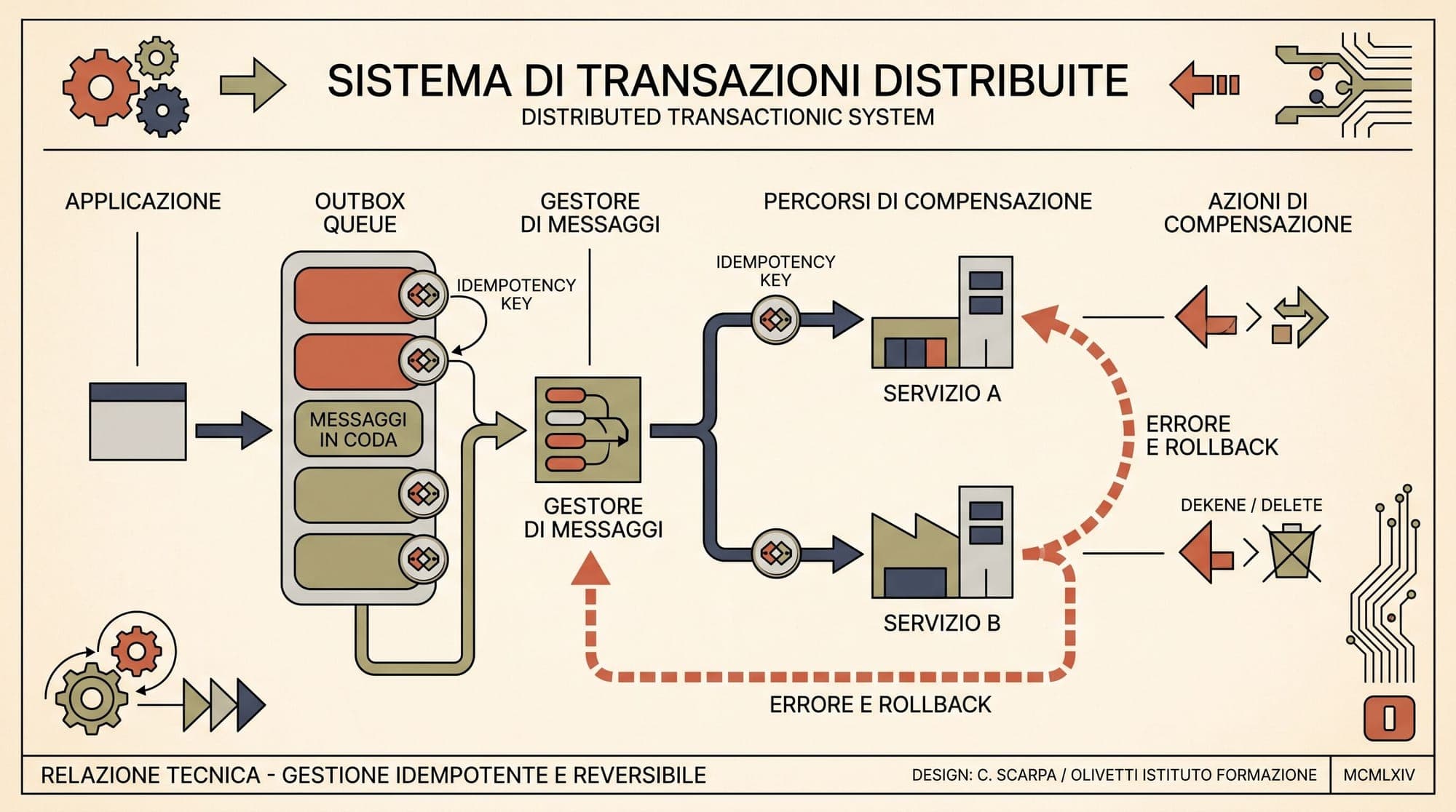
  3. Idempotency and Side-Effect Safety in Production AI Agents: Transactional Outboxes, Distributed Sagas, and Compensating Actions

    Autonomous AI agents interacting with real-world infrastructure frequently execute irreversible side-effects: charging payment methods, provisioning cloud servers, sending external webhooks, and modifying production databases. While traditional microservices rely on deterministic business logic and predictable retry policies, Large Language Model (LLM) agents operate probabilistically. An agent faced with a transient network drop, an HTTP 504 Gateway Timeout, or context window compaction can re-

    AI
    7 min read
  4. US Corporate AI Debt Surge Tests Investor Limits as Hyperscalers Issue $220B in 2026 Bonds

    The unprecedented capital requirements of frontier artificial intelligence infrastructure have triggered a record borrowing spree among US technology hyperscalers, testing the absorptive capacity of institutional credit markets. Total corporate debt issuance tied to AI hyperscalers has surpassed $220 billion in 2026 according to data from BNP Paribas, representing an eighteen-fold increase compared to the $12.5 billion issued during the same period in 2025. As mega-cap technology firms repeated

    AI
    2 min read
  5. Nvidia in Early Talks with South Korean AI Chip Designer Rebellions

    Nvidia is in early-stage discussions with South Korean AI semiconductor designer Rebellions regarding possible strategic tie-ups, including technology licensing partnerships, direct equity investments, or a full acquisition. Nvidia Chief Executive Officer Jensen Huang met with Rebellions co-founder and Chief Executive Officer Sunghyun Park at Nvidia headquarters in Santa Clara, California, according to reporting from Bloomberg citing people familiar with the matter. The discussions remain preli

    AI
    2 min read
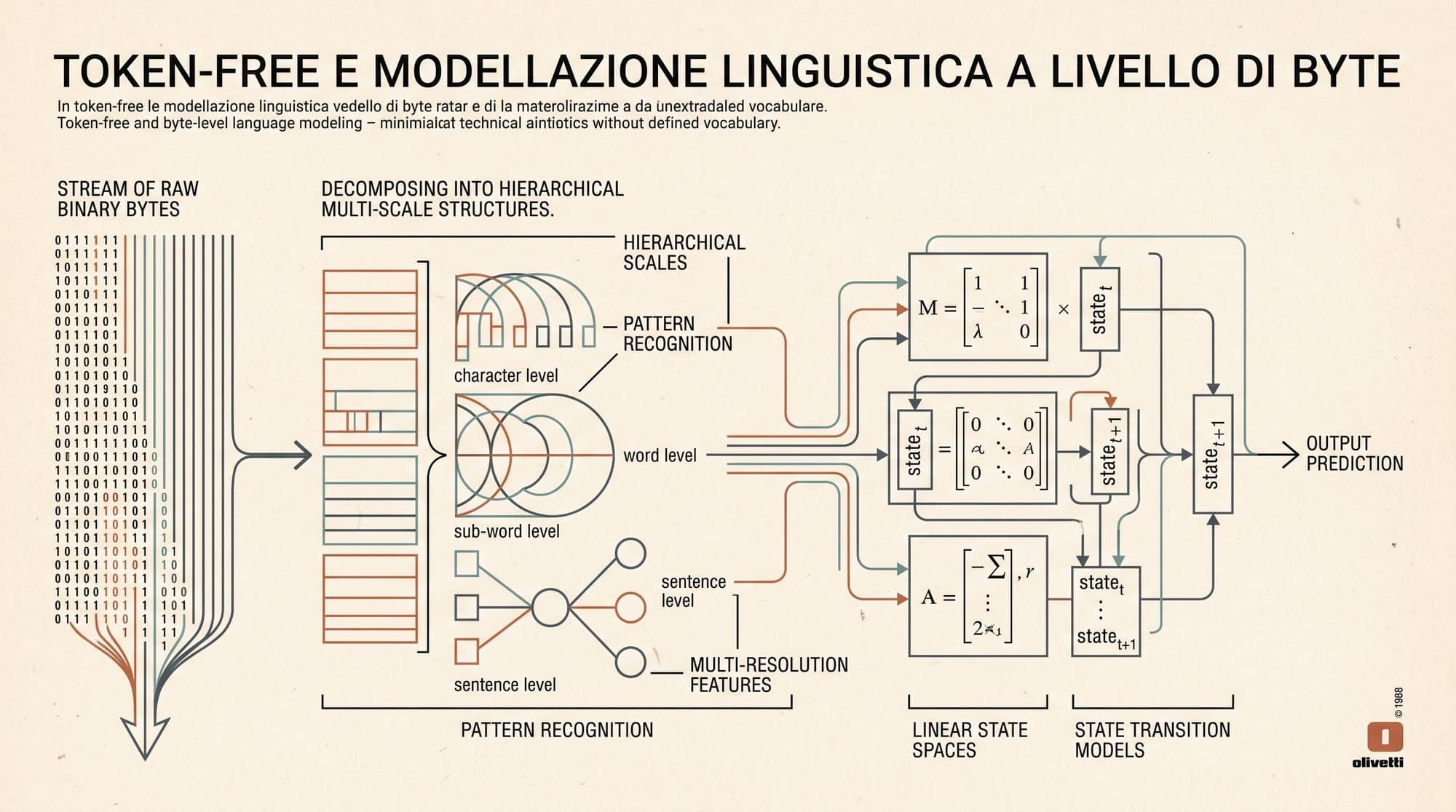
  6. Token-Free and Byte-Level Language Models: How Hierarchical Patching, MegaByte, and MambaByte Eliminate Tokenizer Bottlenecks

    Modern large language models universally rely on subword tokenizers such as Byte-Pair Encoding (BPE), WordPiece, and Unigram algorithms. These tokenizers compress text into discrete integer IDs from a fixed vocabulary, typically spanning 32,000 to 256,000 entries. By collapsing three to five characters into a single token, tokenizers reduce sequence length ($L$), making quadratic $O(L^2)$ self-attention computationally tractable. However, subword tokenization introduces systemic architectural l

    AI
    7 min read
  7. PII Redaction and Reversible Tokenization in Production LLM Systems: Architecture, NER Latency, and Streaming De-Anonymization

    In enterprise production environments, forwarding unsanitized prompt payloads to third-party model providers or logging raw agent execution traces exposes organizations to severe regulatory liability. Under frameworks such as GDPR Article 4(1), the HIPAA Safe Harbor standard, and the California Privacy Rights Act (CPRA), personally identifiable information (PII) including patient health identifiers, Social Security numbers, credit card data, full names, and personal email addresses cannot be tra

    AI
    7 min read
  8. Weight Initialization in Large Language Models: How Variance Scaling, Residual Multipliers, and DeepNorm Stabilize Deep Transformer Pre-Training

    Weight Initialization in Large Language Models: How Variance Scaling, Residual Multipliers, and DeepNorm Stabilize Deep Transformer Pre-Training In deep transformer architectures, weight initialization is the primary determinant of whether a trillion-token pre-training run converges smoothly or diverges during the first thousand steps. When training networks with 80 to 120 layers (such as Llama 3 70B, GPT-4, or deep mixture-of-experts models), naive application of classical Gaussian or uniform

    AI
    10 min read
  9. OpenAI Adds Native Alpha Transparency to GPT-Image-2 API

    OpenAI has added native transparent background generation to its GPT-Image-2 model via the developer API, enabling direct creation of PNG images with integrated alpha channels. The feature bypasses post-processing segmentation pipelines, allowing developers to generate isolated visual assets directly during the synthesis step. Direct Alpha Generation vs. Post-Processing Traditional visual asset pipelines rely on secondary background-removal models, such as semantic segmentation masks or matti

    AI
    2 min read
  10. Jacobi and Lookahead Decoding: How Parallel Fixed-Point Iteration Accelerates Autoregressive Inference Without Draft Models

    Standard autoregressive generation in large language models operates as a strictly sequential process. To generate a sequence of $K$ tokens, an inference engine must execute $K$ successive forward passes through the network. In single-request serving regimes (batch size 1), each forward pass is heavily memory-bandwidth bound: the GPU must stream billions of model parameters from High Bandwidth Memory (HBM) into on-chip SRAM to process a single token, leaving tensor compute cores severely underut

    AI
    7 min read
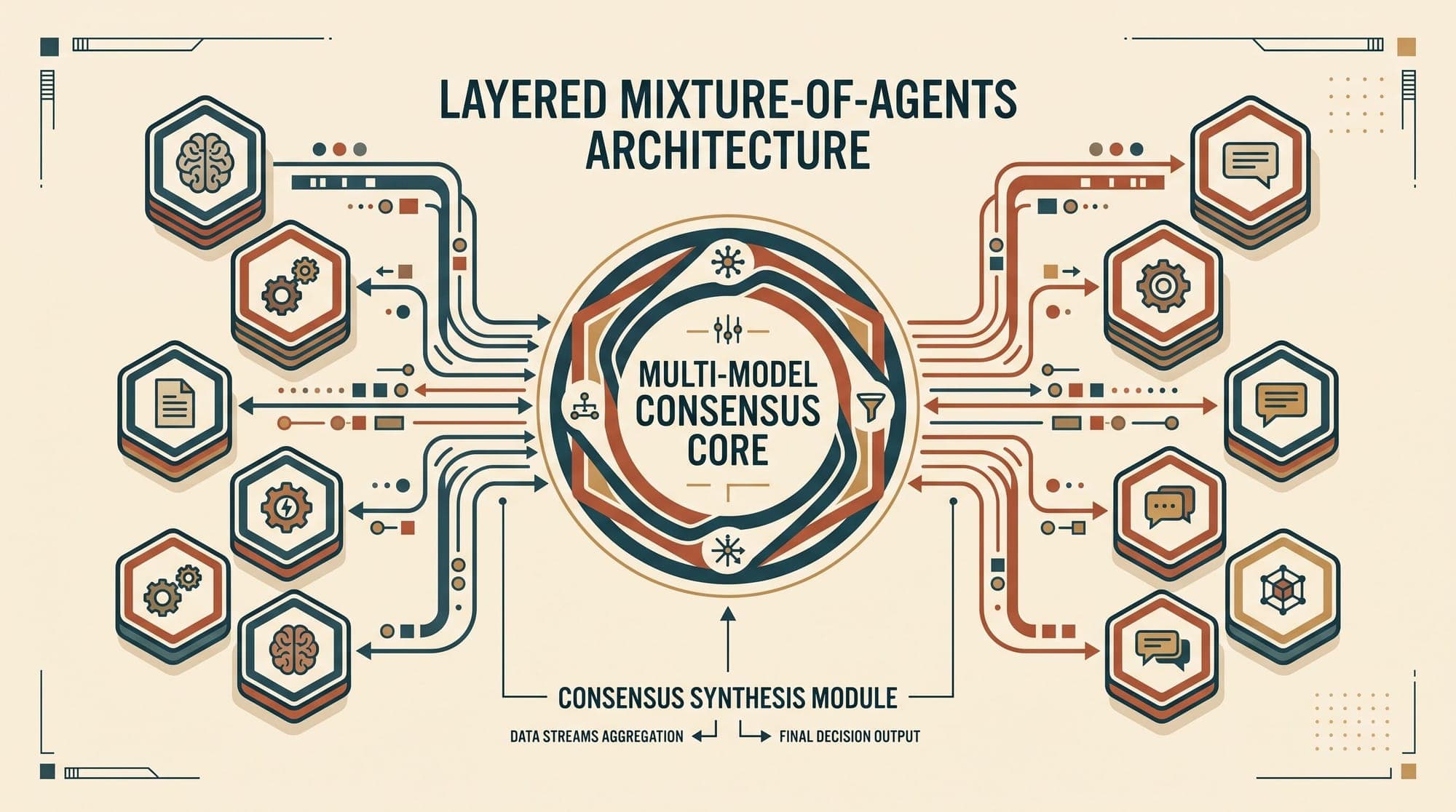
  11. Mixture-of-Agents and Multi-LLM Consensus in Production: Architecture, Layered Synthesis, Latency Budgets, and Cost Trade-Offs

    Single frontier models face physical and economic scaling limits. While model developers continue to scale pre-training compute and post-training reinforcement learning, individual foundation models still exhibit persistent failure modes: domain blind spots, subtle reasoning hallucinations, and inconsistent instruction adherence. To break past the performance ceilings of single models, production engineering teams increasingly deploy multi-model ensemble architectures. The most prominent of the

    AI
    7 min read
  12. Differential Attention in Large Language Models: How Denoising Subtraction Eliminates Attention Noise and Outlier Activations

    In standard transformer architectures, the self-attention mechanism computes pairwise token interactions through the scaled dot-product operator followed by a softmax normalization. While this formulation has underpinned modern large language models, it suffers from an architectural limitation: attention noise. Because the softmax function maps input logits to a strictly positive probability distribution summing to one, it forces probability mass onto irrelevant context tokens. In sequences span

    AI
    6 min read
  13. LLM Output Calibration and Uncertainty Estimation in Production: Token Entropy, Semantic Clustering, and Risk-Controlled Abstention

    Production deployments of large language models frequently fail not because models lack capability, but because they lack reliable uncertainty estimation. Autoregressive language models generate hallucinations with the exact same fluent, assertive cadence as verified ground truth. When an enterprise application relies on downstream actions, database writes, or customer-facing advice, uncalibrated generations introduce severe operational risk. Treating raw token probabilities as calibrated confi

    AI
    6 min read
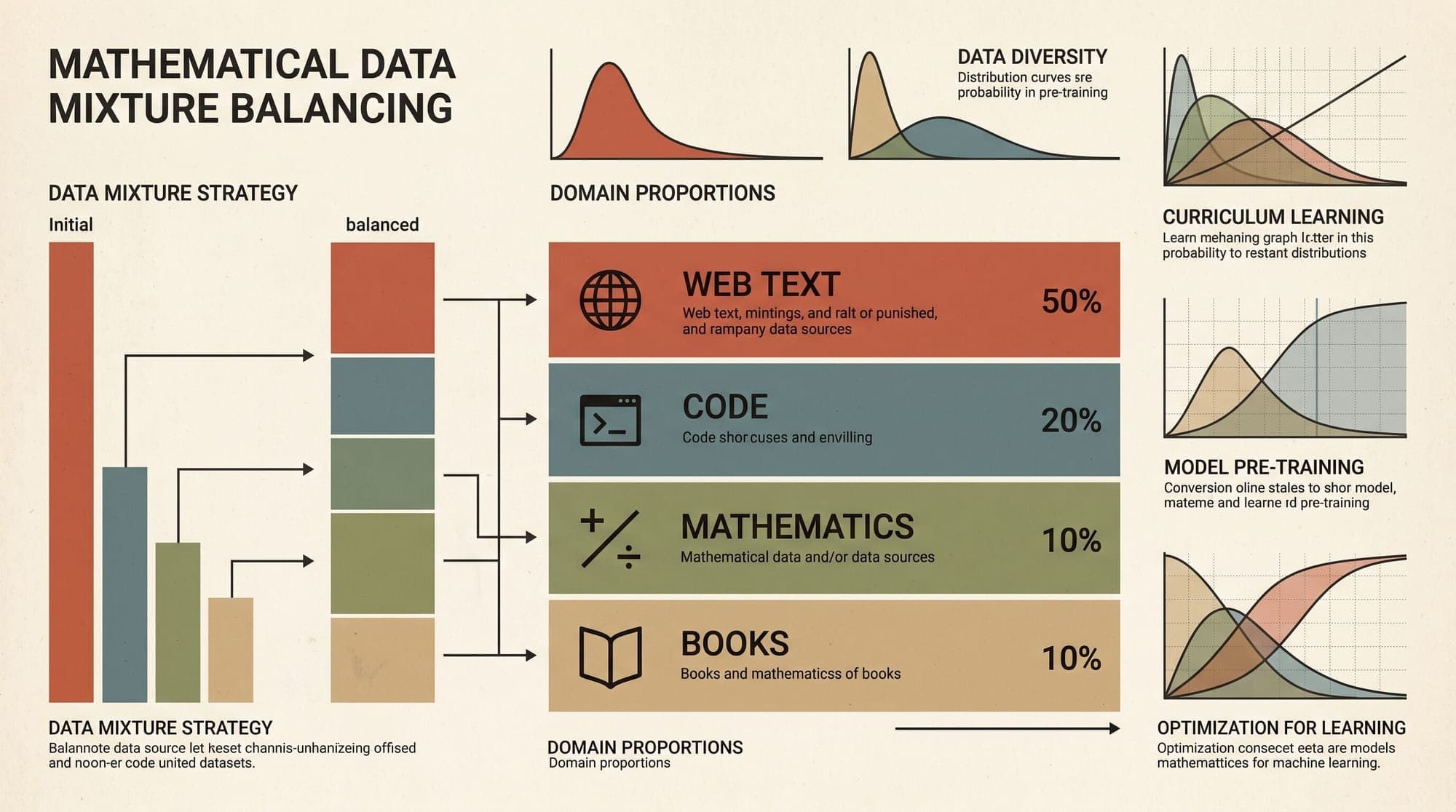
  14. Data Mixing and Domain Scheduling in Large Language Models: How DoReMi, RegMix, and Multi-Stage Annealing Shape Pre-Training Dynamics

    Data Mixing and Domain Scheduling in Large Language Models: How DoReMi, RegMix, and Multi-Stage Annealing Shape Pre-Training Dynamics In large language model pre-training, data composition is as consequential as parameter count and compute budget. While early foundation models relied on raw natural frequencies or manual heuristic filtering to construct training corpora, empirical scaling laws have shown that arbitrary domain ratios cause severe compute inefficiencies. Over-sampling redundant te

    AI
    6 min read
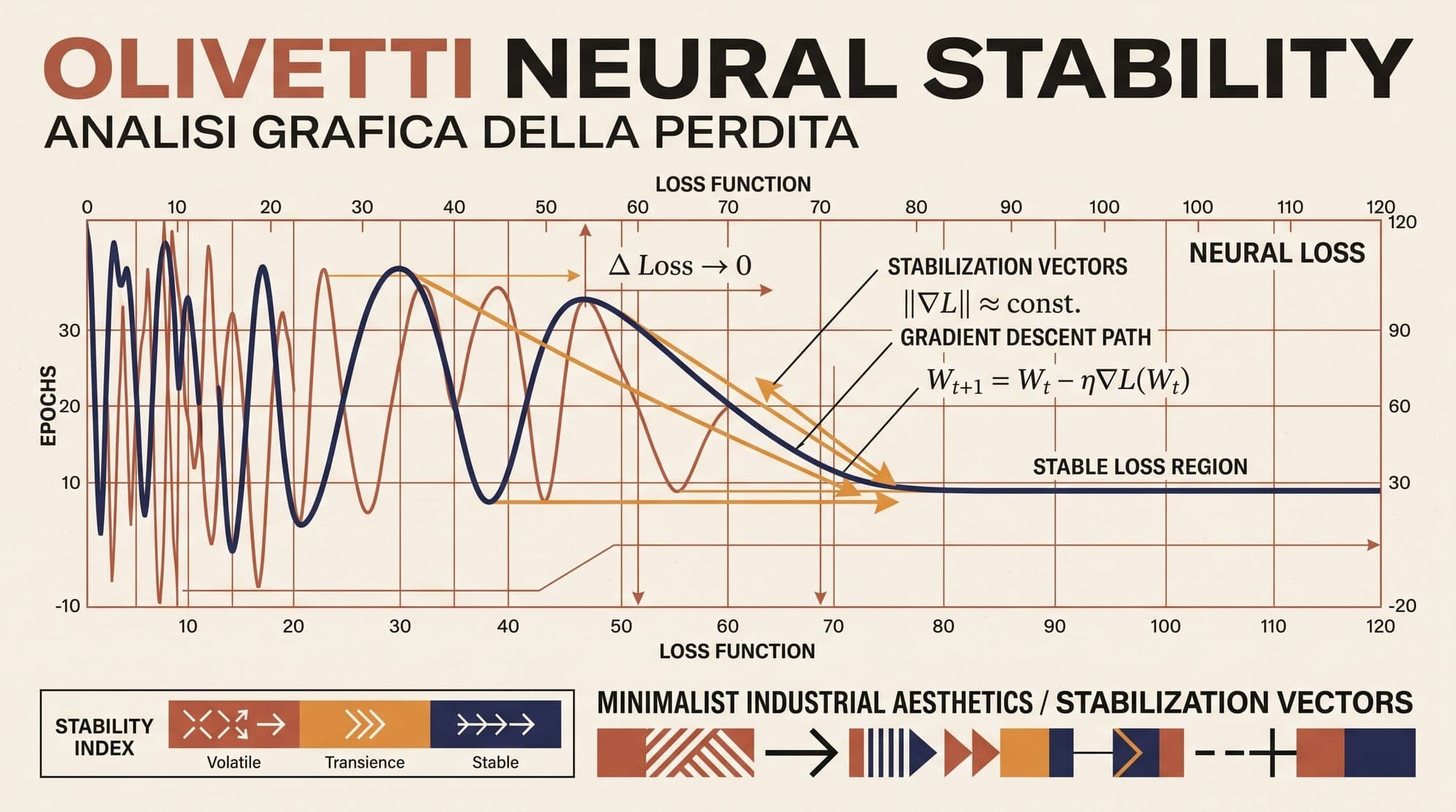
  15. Loss Spikes and Training Stability in Large Language Models: How Attention Logit Drift, z-loss, and QK-Norm Prevent Gradient Explosions

    During the pre-training of modern large language models, few operational failures are as costly as loss spikes. When training clusters containing thousands of GPUs run for weeks across trillions of tokens, a sudden, discontinuous surge in cross-entropy loss can corrupt optimizer momentum buffers, induce numerical overflow in half-precision representations, and permanently degrade downstream model capabilities. In severe cases, models experience catastrophic divergence, forcing engineering teams

    AI
    11 min read
  16. Anthropic-Backed Enterprise Venture Ode Acquires AI Consultancy Casper Studios

    Ode with Anthropic, an enterprise AI transformation company established by Anthropic alongside private equity and growth investors, has acquired AI services consultancy Casper Studios. The transaction combines Ode's custom AI systems engineering with Casper's practice of embedding Anthropic's Claude models into corporate software environments. Financial terms of the transaction were not disclosed. Strategic Focus and Investor Backing Ode was formally established in 2026 through a joint initi

    AI
    2 min read
  17. Deterministic Replay for Production AI Agents: Architecture, Event Sourcing, and State Playback

    Deterministic Replay for Production AI Agents: Architecture, Event Sourcing, and State Playback Debugging multi-step autonomous AI agents in production is notoriously difficult. Unlike traditional deterministic software systems where a stack trace and a fixed set of inputs reproduce an error, autonomous agent workflows suffer from compound non-determinism across multiple infrastructure layers. A failure occurring at step 24 of a coding or research agent cannot reliably be reproduced simply by r

    AI
    6 min read
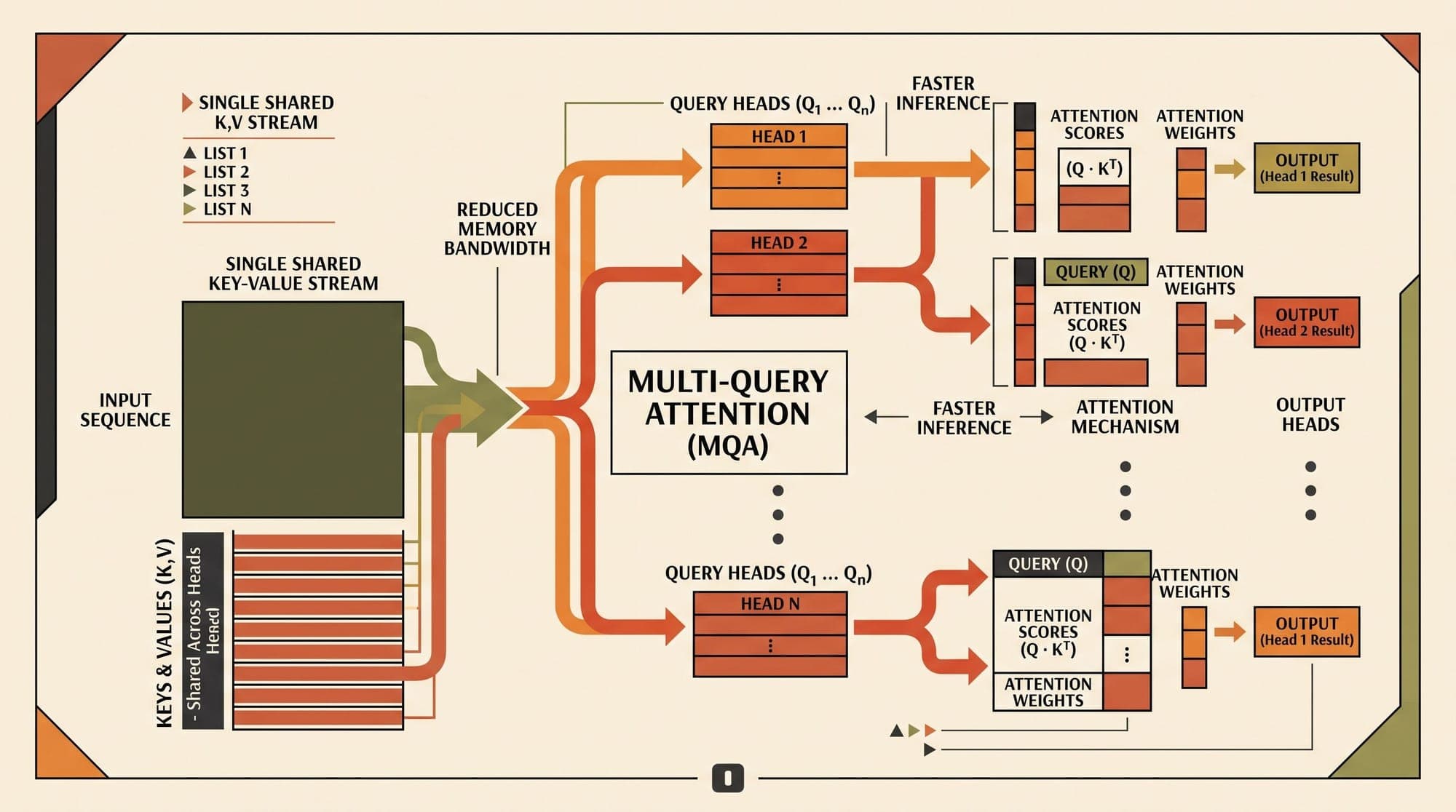
  18. Multi-Query Attention: How Single Key-Value Head Sharing Slashed Transformer Serving Bottlenecks

    Multi-query attention (MQA) is an architectural modification to the Transformer attention mechanism designed to resolve the memory bandwidth bottleneck during autoregressive token generation. First proposed by Noam Shazeer in the 2019 paper Fast Transformer Decoding: One Write-Head is All You Need, MQA alters the ratio of query, key, and value heads by sharing a single key head and a single value head across all query heads in each Transformer layer. While standard multi-head attention (MHA) pr

    AI
    7 min read
  19. Brazil Commits 44M to Sovereign AI, Splitting Compute Between Huawei, iFlytek, and US Suppliers

    Brazil has launched a national artificial intelligence infrastructure program totaling 2.3 billion reais ($444.2 million), dividing major compute and development contracts between Chinese and American technology providers to maintain technological sovereignty and avoid vendor lock-in. The initiative, announced by the administration of President Luiz Inacio Lula da Silva, allocates resources through the National Fund for Scientific and Technological Development (FNDCT). The funding structure est

    AI
    2 min read
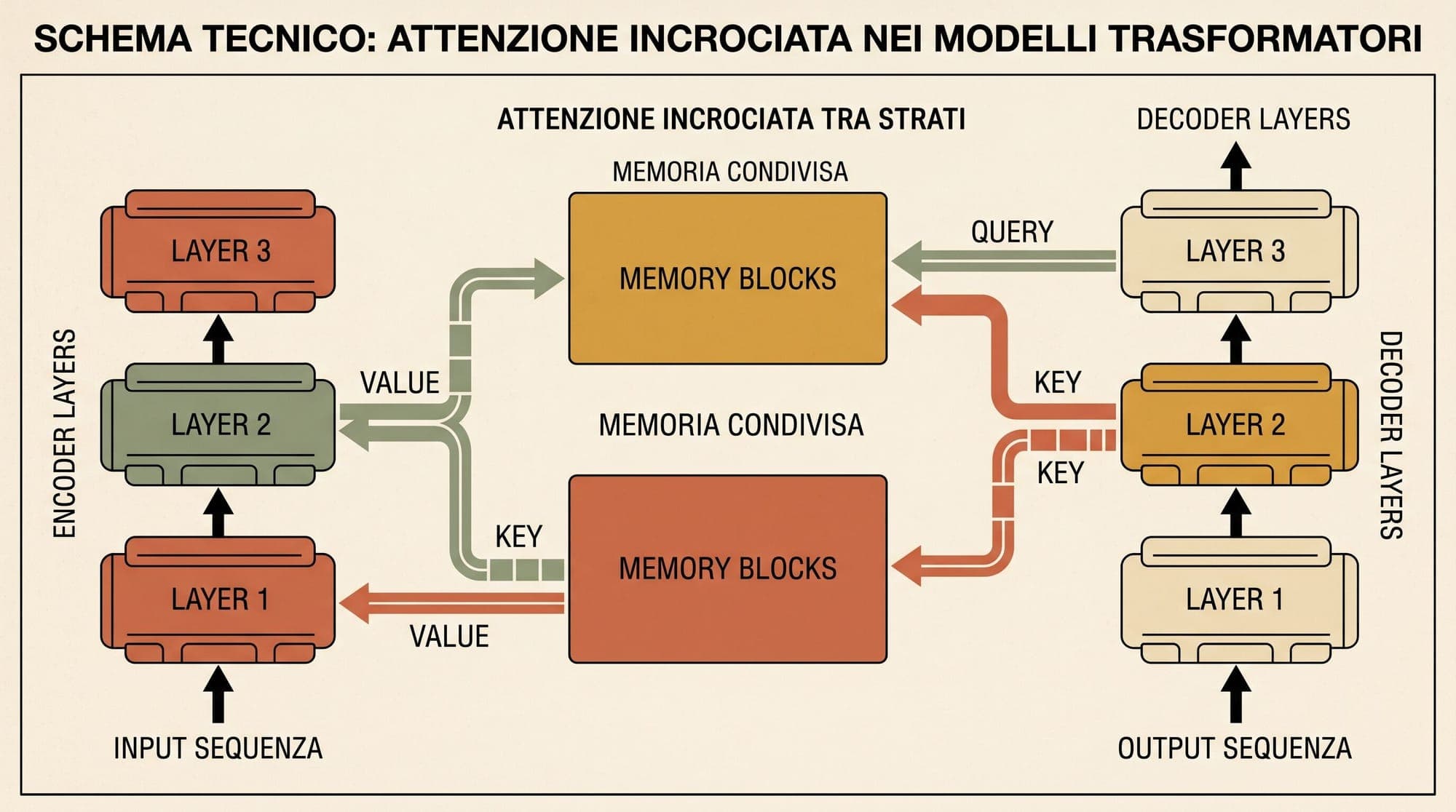
  20. Cross-Layer Attention: How Sharing Key-Value Tensors Across Transformer Layers Slashes KV Cache Memory

    In autoregressive large language models, the primary operational ceiling for serving long sequences and high batch concurrency is the Key-Value (KV) cache. During standard generation, every transformer layer computes and stores key and value activations for every token in the sequence to prevent quadratic recomputation during subsequent autoregressive decoding steps. While this mechanism transforms inference time complexity from $O(N^2)$ to $O(N)$ per generated token, it introduces a massive me

    AI
    9 min read