Subscribe
Topic / page 16

AI

Articles, page 16

301-320
  1. Gemini Live Adds Agentic Spark Tasks, Daily Brief and Voice Inbox Control

    Google said on August 26, 2026 that Gemini Live adds Spark agentic background tasks across Docs, Sheets, Drive and the web, a spoken Daily Brief from Gmail and Calendar, hands-free Gmail triage, and Personal Intelligence across chats and apps. Spark needs AI Pro; Daily Brief needs AI Plus.

    AI
    3 min read
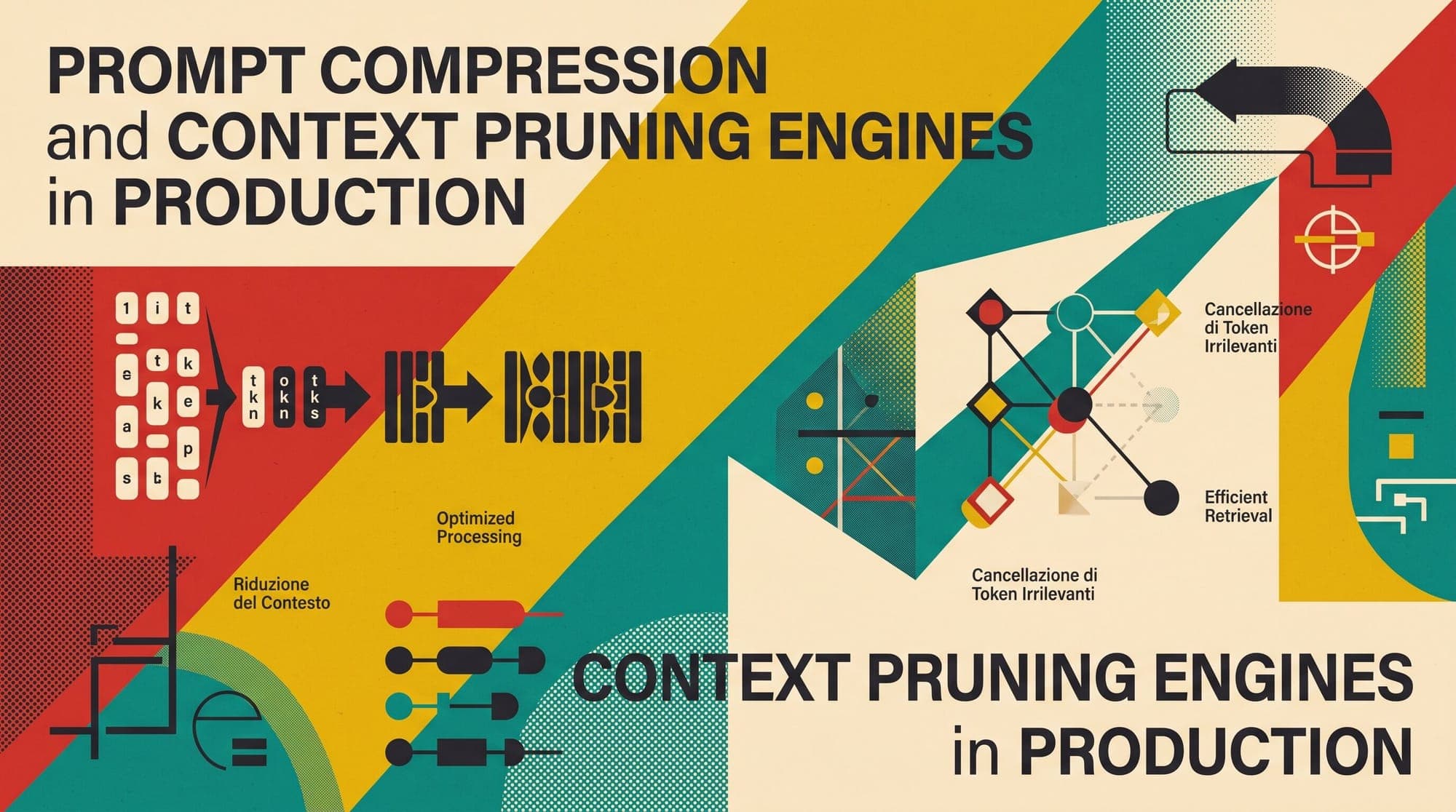
  2. Prompt Compression and Context Pruning Engines in Production: Comparing LLMLingua-2, LongLLMLingua, Selective-Context, and RECOMP

    Prompt Compression and Context Pruning Engines in Production: Comparing LLMLingua-2, LongLLMLingua, Selective-Context, and RECOMP Every non-obvious claim below links to a source. Benchmarks are from the papers as cited; the comparative numbers are taken directly from the LLMLingua-2 paper and the RECOMP paper, not synthesized from prose. The context window paradox is real: modern LLMs accept 128k to 1M tokens, but API cost scales linearly with input length, attention compute scales quadratical

    AI
    9 min read
  3. Google Releases Gemini 3.5 Transcribe with Disfluency Filtering and Task Delegation

    Google has launched Gemini 3.5 Transcribe, a dedicated speech-to-text model designed for real-time streaming, automated disfluency cleanup, and agentic task delegation. The release introduces two API interfaces alongside integration across Google developer tooling and consumer operating system surfaces. Dual API Architecture for Live and Batch Audio Gemini 3.5 Transcribe is split into two operational endpoints tailored for distinct latency profiles: * Real-time streaming (gemini-3.5-transcr

    AI
    2 min read
  4. Model Routing and LLM Gateway Architectures in Production: Comparing LiteLLM, Portkey, RouteLLM, and Not Diamond Architecture, Classifier Algorithms, Cascading Fallbacks, and Serving Economics

    Production AI systems rarely rely on a single monolithic language model. As production traffic scales, routing every incoming prompt to a frontier model creates prohibitive compute costs and risks severe provider rate limits. Conversely, standardizing entirely on smaller, lightweight models compromises reasoning depth, domain compliance, and structured extraction quality. To resolve this trade-off, modern AI infrastructure employs a decoupled architectural layer: model gateways and intelligent

    AI
    7 min read
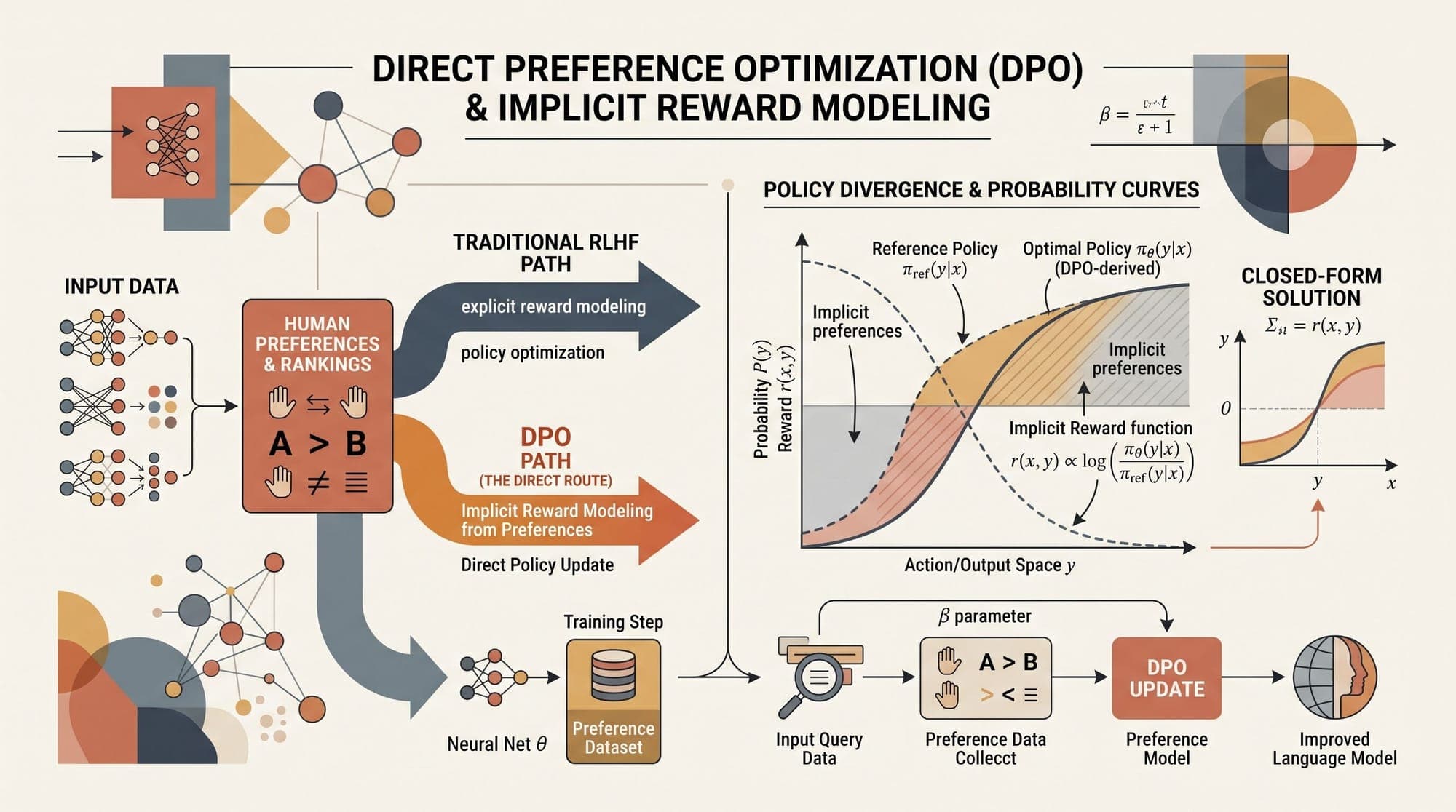
  5. Direct Preference Optimization (DPO): Mathematical Foundations, Implicit Reward Derivation, Closed-Form Bradley-Terry Equivalence, and Reference Policy Regularization

    Direct Preference Optimization (DPO): Mathematical Foundations, Implicit Reward Derivation, Closed-Form Bradley-Terry Equivalence, and Reference Policy Regularization Post-training preference alignment is the central mechanism for transforming pretrained base large language models into instruction-following, steerable, and safe conversational agents. Historically, the dominant paradigm for preference alignment has been Reinforcement Learning from Human Feedback (Christiano et al., 2017; Ouyang

    AI
    15 min read
  6. SandboxAQ Open-Sources Switch, a Coordination Layer for AI Agents in Slack and Teams

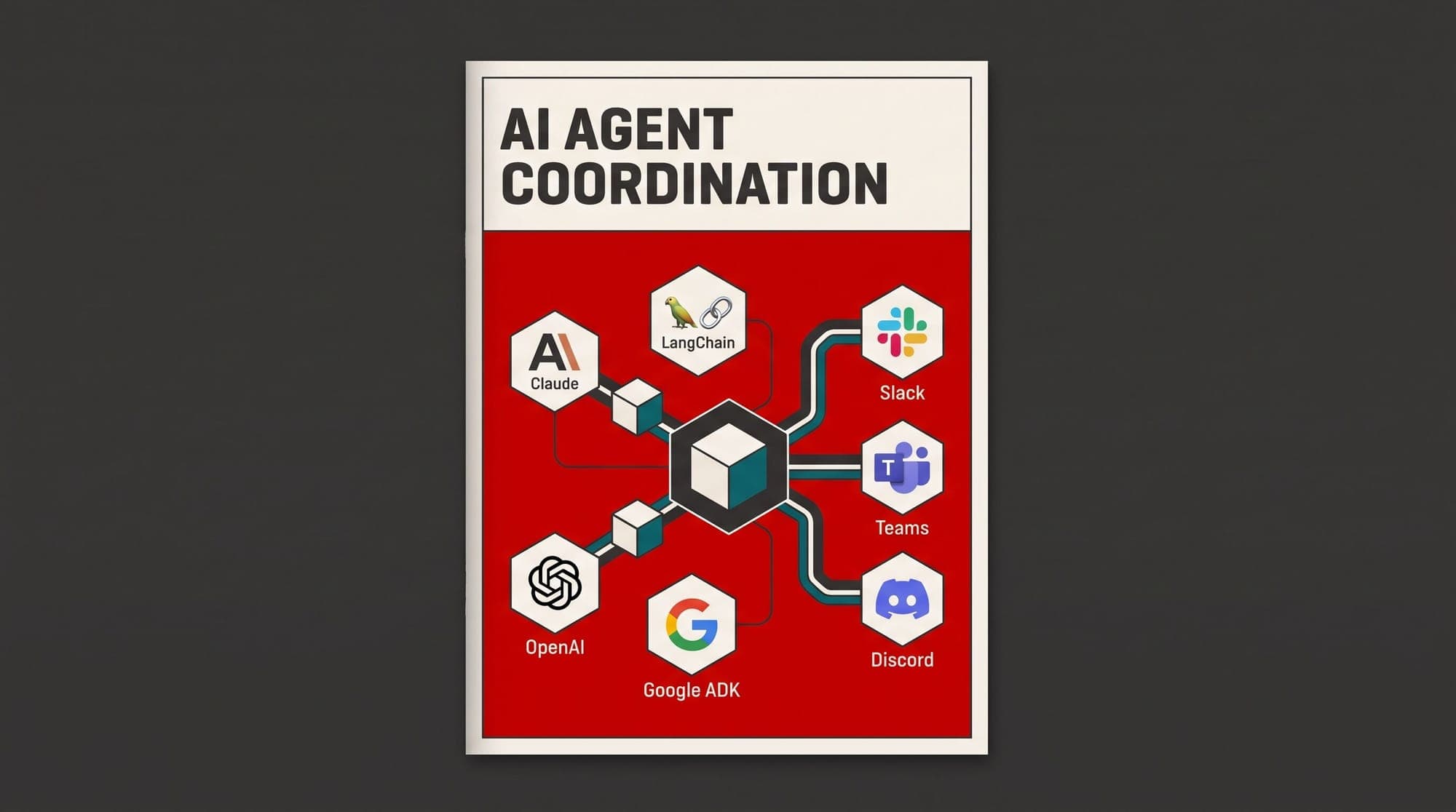
    SandboxAQ released Switch on August 26, 2026, and made its agent coordination software free to use (PR Newswire). Switch connects AI agents built with Claude Code, Google's Agent Development Kit, LangChain, OpenAI tooling and other frameworks into shared Slack, Microsoft Teams or Discord channels where employees already work. Architecture Switch turns a chat channel into a "room": a shared workspace where people and agents operate with the same context, resources and history. Agents connect t

    AI
    2 min read
  7. Z.ai releases GLM-5.3-Flash, a 320B parameter hybrid sparse-linear attention model with 18B active parameters

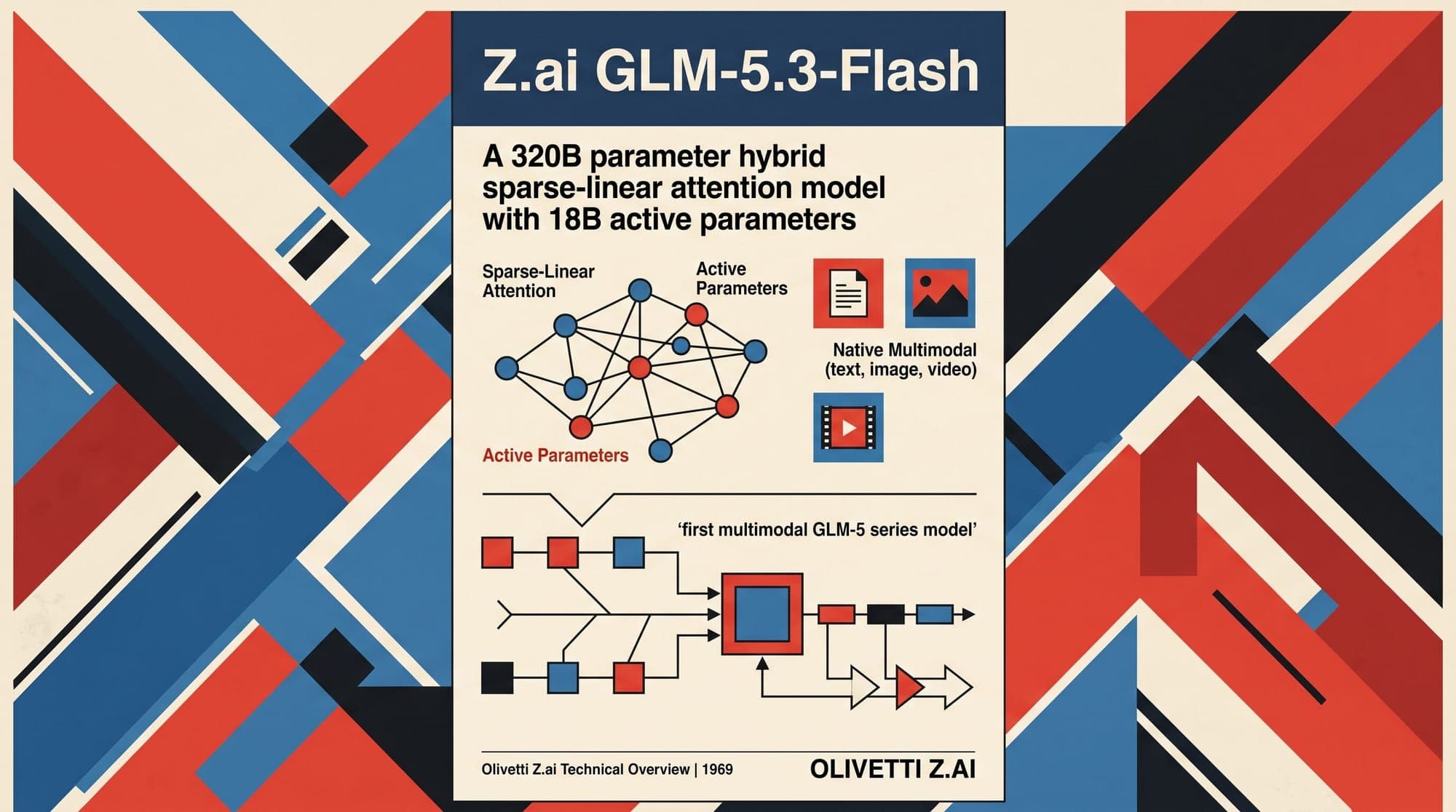
    Z.ai releases GLM-5.3-Flash, a 320B parameter hybrid sparse-linear attention model with 18B active parameters Chinese AI startup Z.ai (formerly Zhipu AI) has released GLM-5.3-Flash, the first natively multimodal model in the GLM-5 series. The model was previously known in stealth as "Ox Alpha" and topped OpenRouter's leaderboard before its official release. GLM-5.3-Flash features a hybrid architecture combining sparse and linear attention with Manifold-Constrained Hyper-Connections (mHC), redu

    AI
    2 min read
  8. Alibaba Releases Open-Weight Qwen3.8-Flash-Next with 6B Active Parameters and Qwen 4 Architecture Preview

    Alibaba has released the open weights for Qwen3.8-Flash-Next, a 125B-parameter multimodal Mixture-of-Experts (MoE) model that acts as an early architectural preview for the upcoming Qwen4 family. Operating with only 6B active parameters per token alongside a 51B N-gram embedding layer, the model targets cost efficiency across long-context reasoning, agentic coding, and multimodal workloads. For how it fits with Qwen3.8-Max, the open 2.4T weights and the Omni models, see our Qwen3.8 explainer. U

    Alibaba
    2 min read
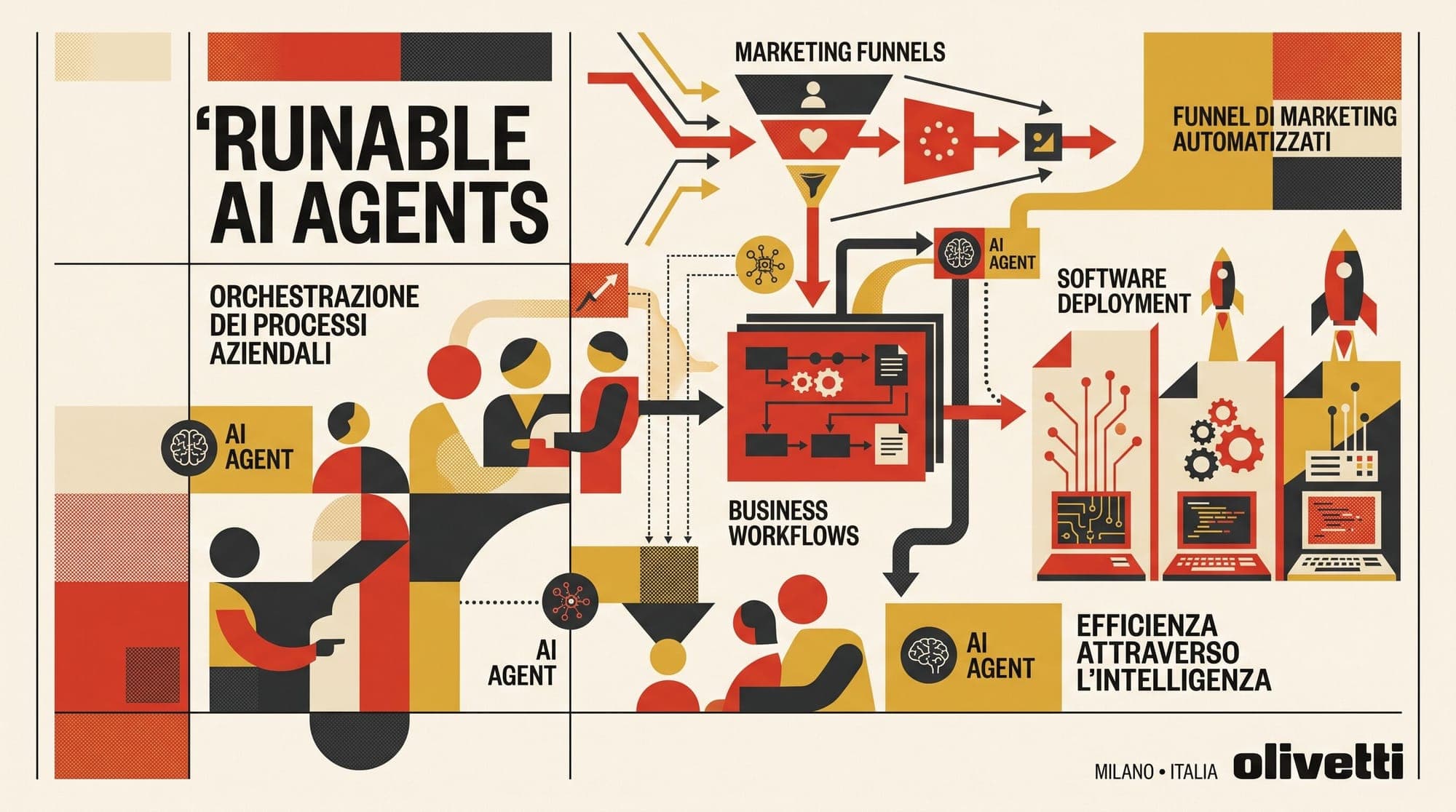
  9. Runable Raises $21M Series A to Expand Autonomous AI Agents Into Business Growth

    Bengaluru-based artificial intelligence startup Runable has raised $21 million in Series A funding to expand its autonomous agent platform from code generation into full-funnel business operations and customer acquisition. The all-equity round valued the company at $65 million post-money and was co-led by Susquehanna Venture Capital and Nexus Venture Partners, with participation from existing backers Together Fund and Array VC. Founded in 2025 by Umesh Kumar and Saksham Sarda, Runable operates

    AI
    2 min read
  10. MiniMax Reports H1 2026 Revenue Surging 283% YoY to $116.6M Amid China AI Race

    Shanghai-based artificial intelligence foundation model developer MiniMax Group Inc. reported that its revenue increased 283% year-over-year to $116.6 million for the first half of 2026. The financial disclosure, reported by Bloomberg following the company's interim earnings filing on the Hong Kong Stock Exchange, highlights accelerated commercial monetization even as domestic foundation model competition intensifies across China. The 283% top-line expansion in the six months ending June 30, 20

    AI
    2 min read
  11. Insilico Medicine Reports First Full-Period Profit with $106.3M Revenue in H1 2026

    Clinical-stage generative AI drug discovery company Insilico Medicine reported a net profit of $35.54 million and adjusted net profit of $51.23 million on total revenue of $106.3 million for the first half of 2026. The financial results, disclosed in the company's interim report following its listing on the Hong Kong Stock Exchange in late 2025, represent the first full-period profitability recorded by an AI-focused biopharmaceutical platform company. The company achieved positive operating cas

    AI
    3 min read
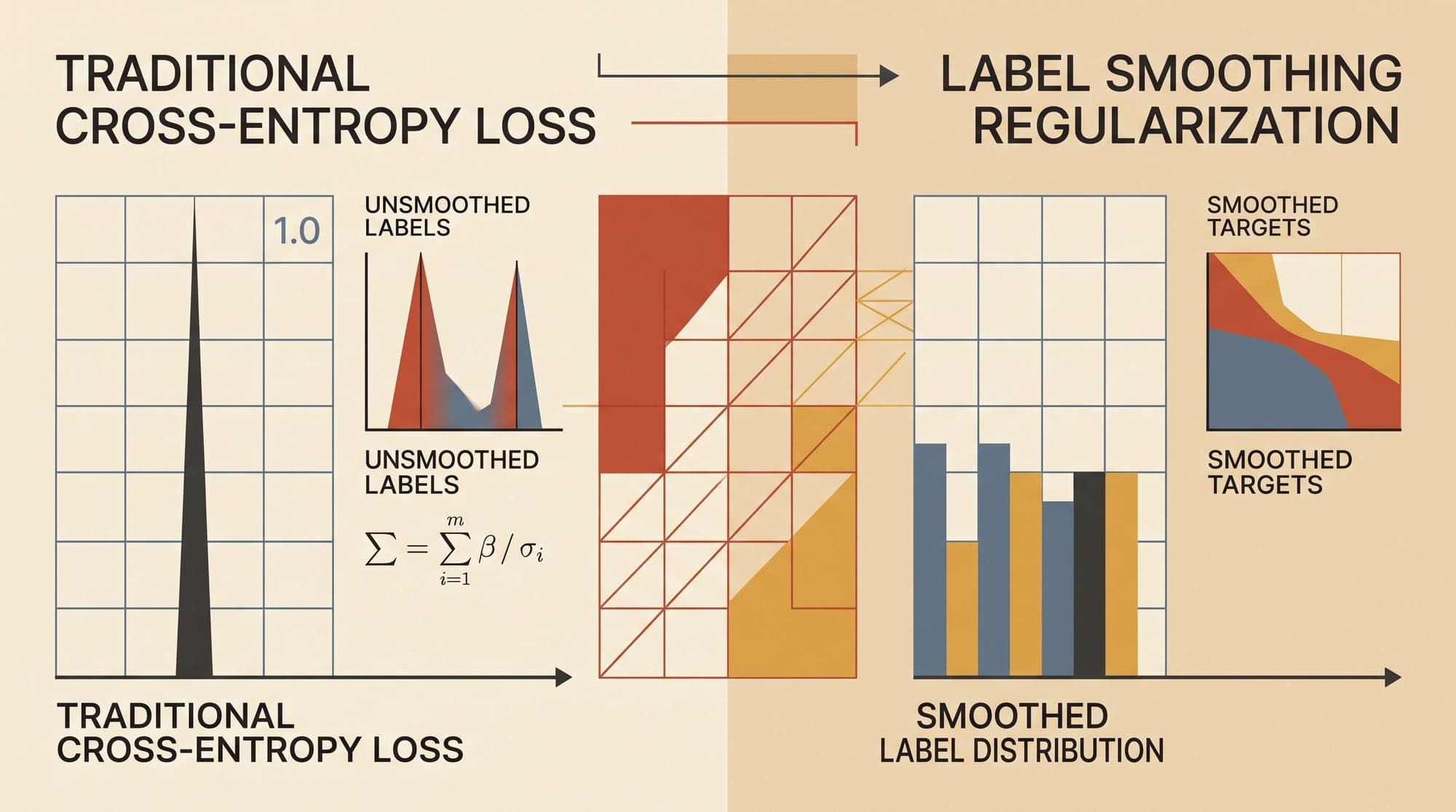
  12. Label Smoothing Regularization: Mathematical Foundations, Maximum Entropy Dynamics, and the Regular Simplex Geometry in LLMs

    In supervised classification and autoregressive language modeling, standard cross-entropy loss trains neural networks against discrete, one-hot target distributions. While intuitive, one-hot supervision creates an inherent optimization pathology: minimizing the cross-entropy objective to zero requires pushing the logit of the target class toward positive infinity while driving all competing non-target logits toward negative infinity. In deep networks, this dynamic inflates parameter norms, cause

    AI
    11 min read
  13. Tool Retrieval and Dynamic Function Selection in Production AI Agents: Architecture, Semantic Routing, Schema Compression, and Context Bloat Mitigation

    Tool Retrieval and Dynamic Function Selection in Production AI Agents: Architecture, Semantic Routing, Schema Compression, and Context Bloat Mitigation As enterprise AI agents evolve from static single-purpose chatbots into orchestrators interacting with hundreds or thousands of external tools (REST APIs, SQL databases, Model Context Protocol servers, and internal microservices), system architects encounter a fundamental scalability barrier: context bloat and tool interference. In standard fun

    AI
    6 min read
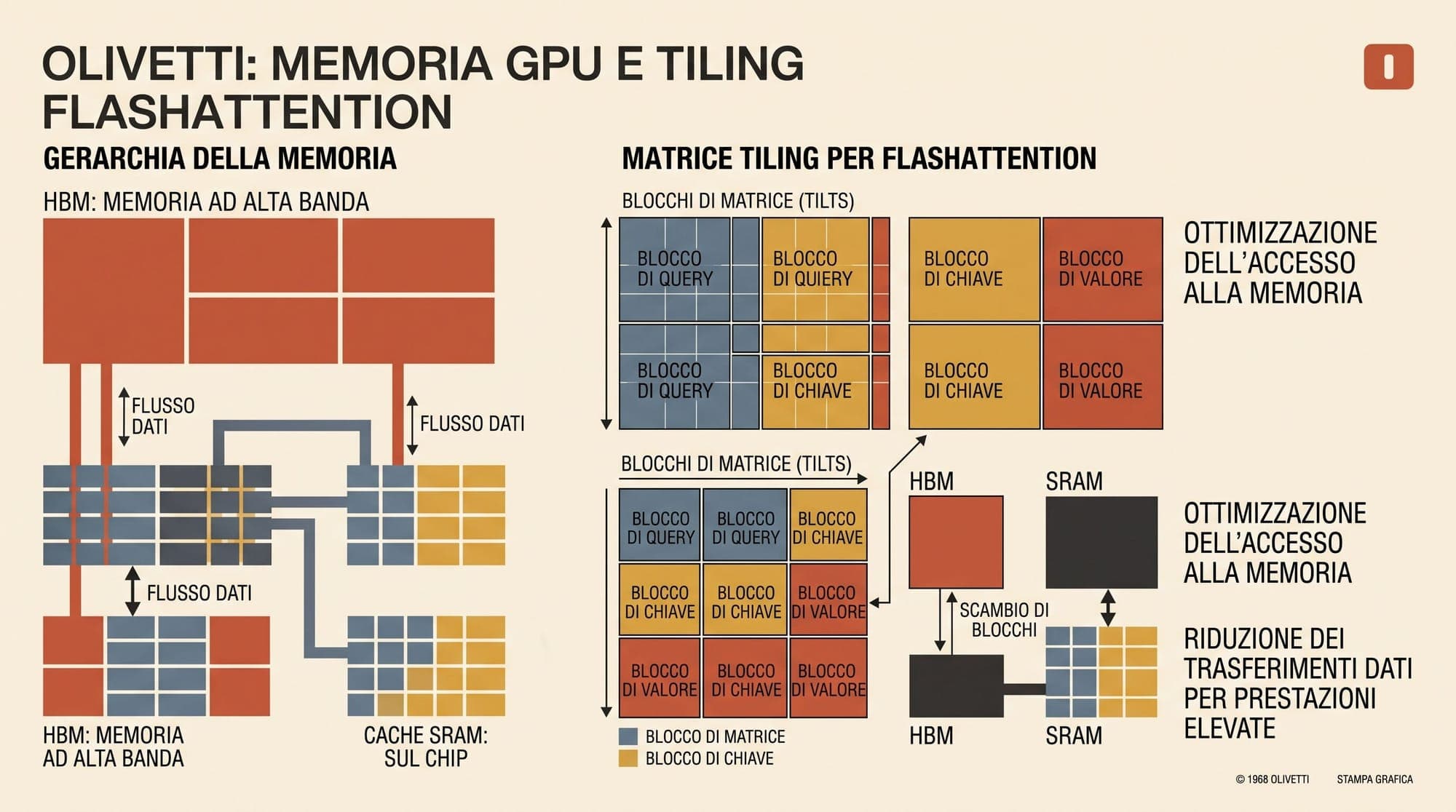
  14. FlashAttention: Mathematical Foundations, Online Softmax Tiling, IO-Awareness, and Exact Attention Scaling

    Standard multi-head self-attention in the Transformer architecture exhibits quadratic time and memory complexity with respect to sequence length $N$. While the $O(N^2)$ computational complexity is widely cited, the primary performance bottleneck in production hardware is not arithmetic throughput, but memory access overhead. On modern GPU architectures such as NVIDIA A100 and H100, tensor processing cores execute matrix multiplications at teraflop and petaflop scales, but memory bandwidth betwee

    AI
    13 min read
  15. Moonshot AI in Revenue-Sharing Talks with Microsoft, Amazon, and Google to Host Kimi K3

    Beijing-based artificial intelligence developer Moonshot AI is negotiating revenue-sharing partnerships with Microsoft, Amazon, and Alphabet's Google to host its flagship open-weight model, Kimi K3, across major cloud platforms. According to reporting from Reuters, the startup is seeking up to a 30 percent share of revenue generated from Kimi K3 inference services hosted on Microsoft Azure, Amazon Web Services (AWS), and Google Cloud. Moonshot released Kimi K3 in July 2026 as a 2.8-trillion par

    AI
    2 min read
  16. Zhipu Confirms Ox Alpha Stealth Model Is GLM Derivative Ahead of Open-Weight Release

    Beijing-based AI lab Z.AI, widely known as Zhipu, has confirmed that the mystery stealth model "Ox Alpha" is an upcoming release in its GLM model series. The company confirmed the model's identity in response to inquiries from Bloomberg on Wednesday and stated it will release the open model weights tonight. Ox Alpha first appeared on August 20, 2026, as an uncredited stealth model on the OpenRouter model routing platform. Operating under a free evaluation tier, the model quickly surged to the t

    AI
    2 min read
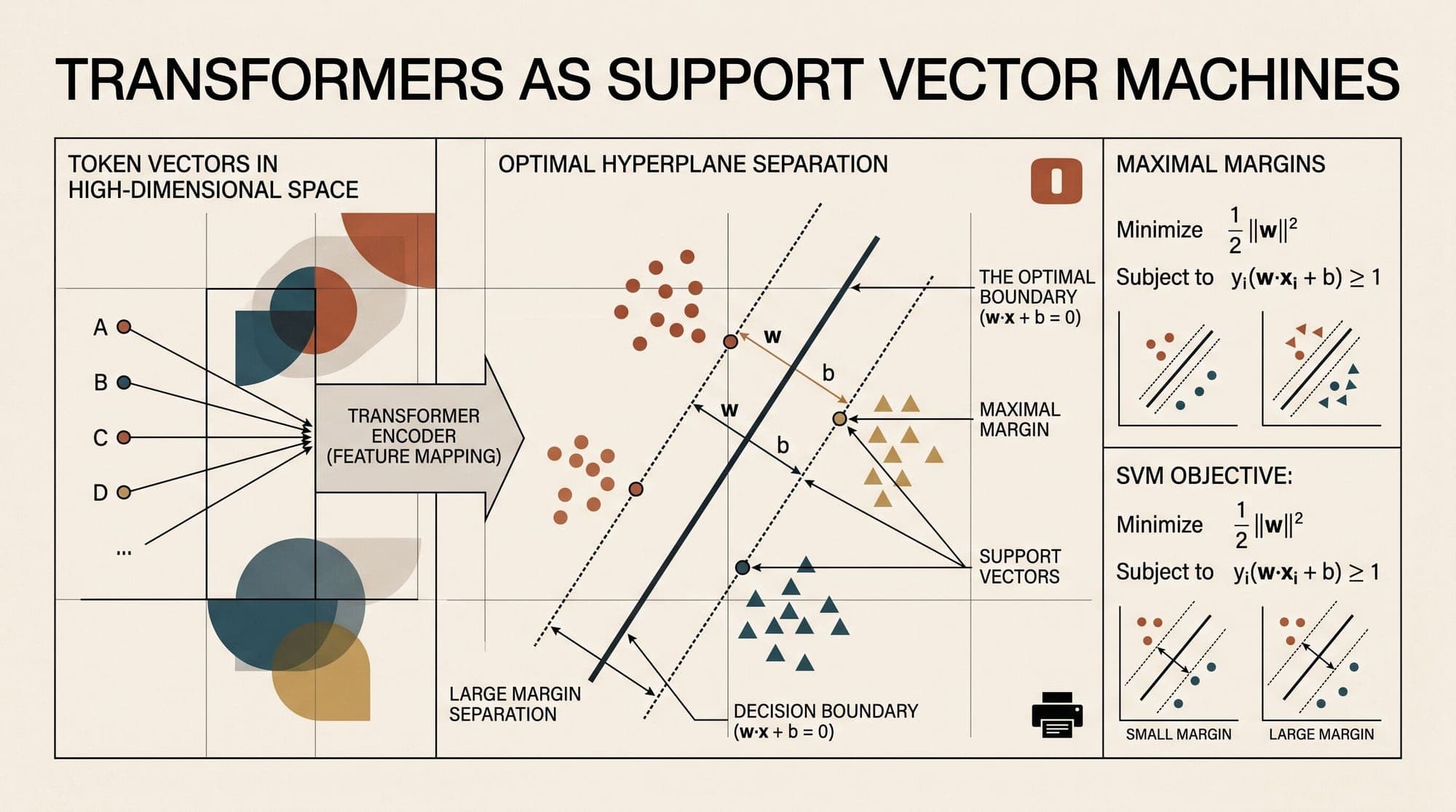
  17. Transformers as Support Vector Machines: Mathematical Foundations of Implicit Bias, Margin Maximization, and Hard-Attention Convergence

    Understanding why overparameterized deep neural networks generalize well despite possessing sufficient capacity to memorize training data remains a fundamental question in theoretical machine learning. In classical linear models trained on separable data under exponential-tailed losses (such as logistic or cross-entropy loss), gradient descent exhibits an implicit bias: parameter iterates diverge in norm while their directions asymptotically converge to the maximum-margin hyperplane, known as th

    AI
    9 min read
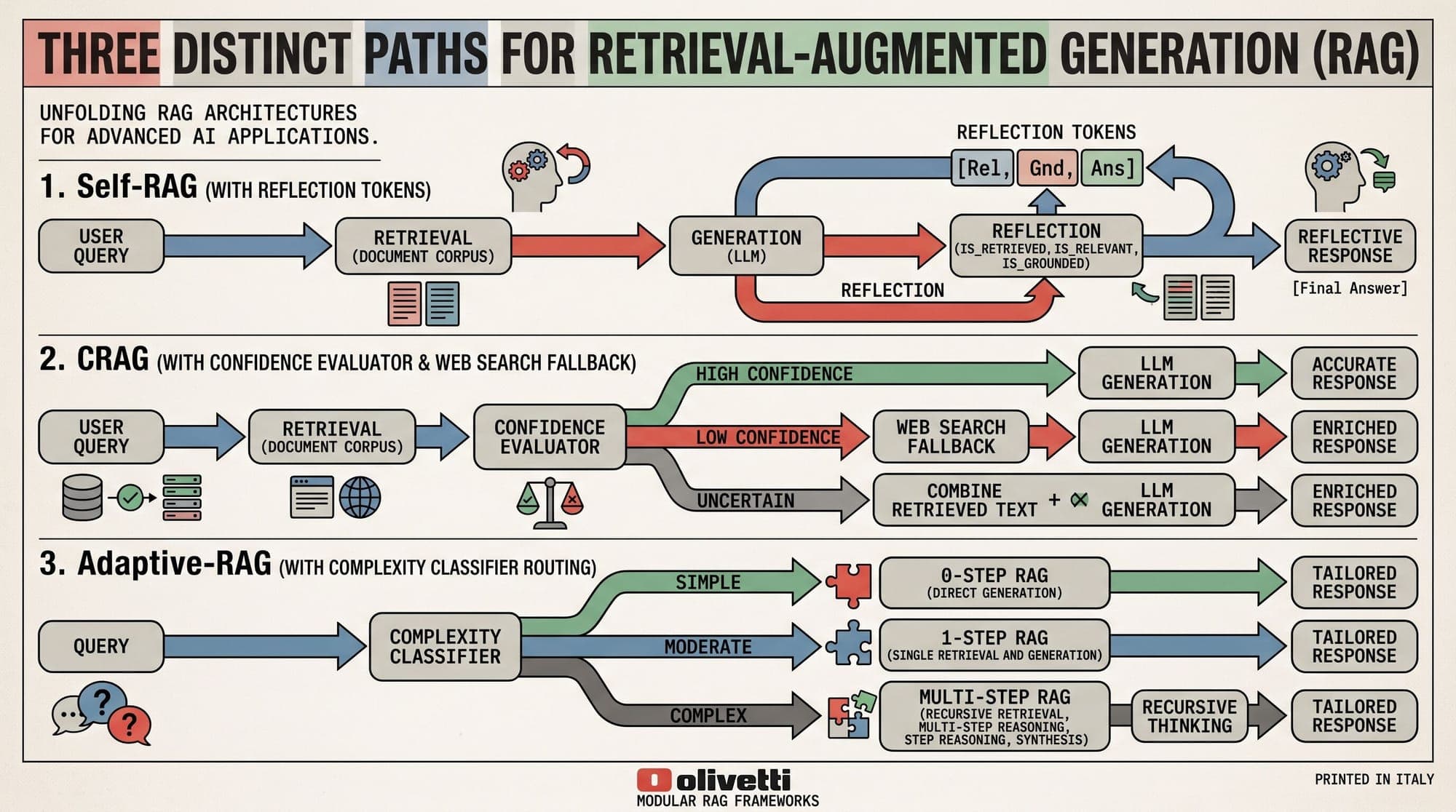
  18. Beyond Naive RAG: Production Comparison of Self-RAG, CRAG, and Adaptive-RAG for Enterprise LLMs

    Beyond Naive RAG: Production Comparison of Self-RAG, CRAG, and Adaptive-RAG for Enterprise LLMs As retrieval-augmented generation (RAG) matures from prototype to production, teams face a critical choice: which advanced RAG variant best balances accuracy, latency, and operational complexity? Three leading approaches—Self-RAG, Corrective RAG (CRAG), and Adaptive-RAG—offer distinct trade-offs for enterprise deployment. Architectural Overview Self-RAG: Learning to Reflect Self-RAG (Asai et al.

    AI
    4 min read
  19. Matryoshka Representation Learning: Mathematical Foundations, Nested Subspace Optimization, and Adaptive Dimension Truncation in Modern Embedding Systems

    In modern deep learning systems, embedding vectors serve as the foundational intermediate representation for search, recommendation, retrieval-augmented generation (RAG), and zero-shot classification. Historically, these representations have been rigid: a model trained to produce 1536-dimensional or 2048-dimensional vectors outputs a fixed-width array for every input. Downstream systems must ingest, store, index, and compute distance metrics across the entire dimensional width, regardless of whe

    AI
    8 min read