Subscribe
Topic / page 17

AI

Articles, page 17

321-340
  1. DeepSeek Generates $70.7M in Revenue with $106M Net Loss in First Seven Months of 2026

    Hangzhou-based artificial intelligence laboratory DeepSeek generated approximately 475 million yuan ($70.7 million) in revenue and recorded a net loss of $106 million during the first seven months of 2026, according to financial figures reported by The Information. The performance marks a roughly tenfold revenue surge compared to the lab's full-year 2025 revenue, alongside a modest contraction in net burn from the $139 million net loss reported for all of 2025. The disclosures provide a rare ac
    AI
    3 min read
  2. Activation-Aware Weight Quantization (AWQ): Mathematical Foundations, Salient Weight Protection, and Hardware-Efficient Low-Bit Inference

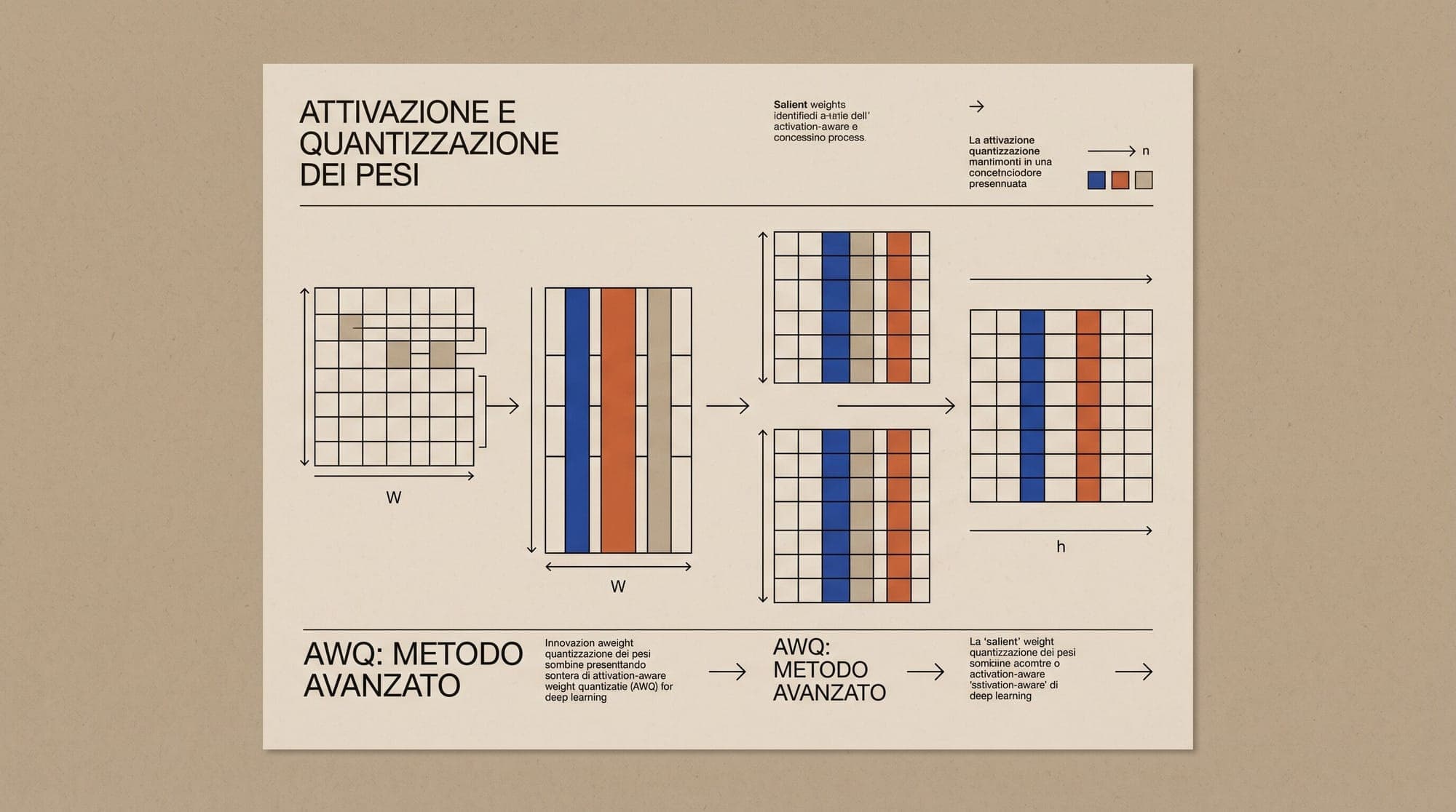
    Large language model inference during autoregressive generation is overwhelmingly memory bandwidth bound. While the prefill phase processes multiple prompt tokens in parallel with high arithmetic intensity, the token generation phase computes matrix-vector multiplications ($M=1$) for each sequential token. In this regime, the GPU spends the vast majority of its cycle budget streaming model parameters from High Bandwidth Memory (HBM) or GDDR into SRAM rather than performing floating-point arithme

    AI
    7 min read
  3. Intel Details 256-Core Xeon 7 and 480GB Crescent Island Inference GPU at Hot Chips 2026

    At the Hot Chips 2026 conference, Intel outlined architectural disclosures for three upcoming computing platforms tailored for AI workflows: the Xeon 7 enterprise processor (codename Diamond Rapids), the Crescent Island data center inference GPU, and the Wildcat Lake client processor (Intel Core Series 3). The announcements detail Intel's shift toward modular multi-die packaging, open chiplet interconnect standards, and expanded on-chip memory to meet the computational demands of multi-agent AI

    AI
    3 min read
  4. GPTQ: Mathematical Foundations, Optimal Brain Surgeon Inversion, and Second-Order Error Minimization in LLM Quantization

    Large language model inference during autoregressive generation is overwhelmingly memory-bandwidth bound. For batch size 1 decoding, each generated token requires streaming every parameter of a model from High Bandwidth Memory (HBM) into GPU SRAM and Tensor Cores. A 70-billion parameter model in 16-bit precision (FP16 or BF16) requires roughly 140 GB of VRAM, exceeding the capacity of a single 80 GB NVIDIA A100 or H100 GPU and demanding multi-GPU tensor parallelism solely to hold the model weigh

    AI
    14 min read
  5. AM Intelligence Orders 9,000 Nvidia Vera Rubin Systems for $8B AI Infrastructure Project

    Indian AI infrastructure platform AM Intelligence (AMI) has placed a binding purchase order for 9,000 Nvidia Vera Rubin computing systems. The procurement represents one of the earliest hyperscale commitments for Nvidia's next-generation Rubin architecture across Asia and anchors an $8 billion capital expenditure initiative to build 1 gigawatt (GW) of dedicated AI computing capacity. The first phase of the deployment will take place at AMI's upcoming data center facility in Hyderabad, India. Th

    AI
    2 min read
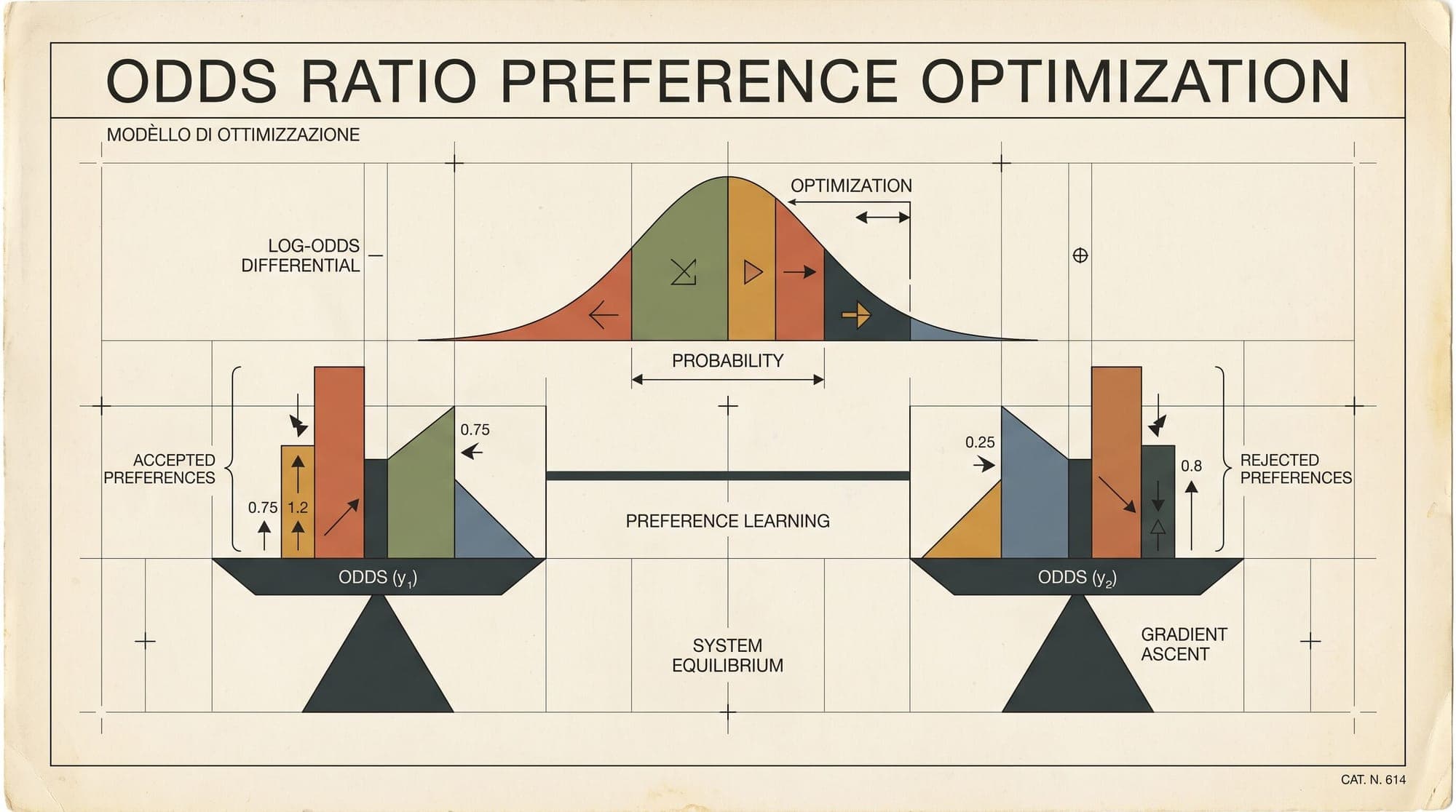
  6. Odds Ratio Preference Optimization (ORPO): Mathematical Foundations, Monolithic SFT-Alignment, and Reference-Free Odds Penalties

    Post-training large language models typically relies on a decoupled, two-stage pipeline: Supervised Fine-Tuning (SFT) on curated instruction-response pairs, followed by Preference Alignment using algorithms such as Reinforcement Learning from Human Feedback (PPO) or Direct Preference Optimization (DPO). While effective, this multi-stage paradigm introduces substantial operational and computational friction. First, DPO and PPO require maintaining auxiliary reference models in GPU memory to preve

    AI
    9 min read
  7. QLoRA: Mathematical Foundations of 4-Bit NormalFloat Quantization, Double Quantization, and Paged Optimizers

    Fine-tuning large language models in full 16-bit precision requires substantial hardware infrastructure. For a 65-billion parameter model, storing weights in 16-bit brain floating point (BF16) requires 130 GB of VRAM. When optimizing those parameters with 32-bit AdamW, storing gradients (130 GB), first moments (260 GB), second moments (260 GB), and master weights (260 GB) drives the minimum memory footprint beyond 780 GB of VRAM, even before accounting for sequence activations. While Low-Rank A

    AI
    7 min read
  8. Projecting Conflicting Gradients (PCGrad): Mathematical Foundations, Orthogonal Projections, and Multi-Task Optimization in Deep Learning

    Projecting Conflicting Gradients (PCGrad): Mathematical Foundations, Orthogonal Projections, and Multi-Task Optimization in Deep Learning In modern machine learning systems, models rarely optimize for a single objective. Foundation models are trained simultaneously on diverse data distributions spanning natural language, source code, mathematical reasoning, and multimodal inputs. Similarly, post-training alignment pipelines must simultaneously optimize for helpfulness, factual accuracy, harmles

    AI
    11 min read
  9. Amazon to Shut Down Mechanical Turk on September 30 After 21 Years

    Amazon Web Services has announced that it will permanently shut down Amazon Mechanical Turk on September 30, 2026. The retirement brings an end to a 21-year-old crowdsourcing platform that served as an early foundation for modern machine learning dataset annotation and human-in-the-loop computing. In a formal notice posted to the Mechanical Turk portal, AWS stated that the decision followed an internal assessment of its service portfolio. The platform had previously halted new customer registra

    Amazon
    3 min read
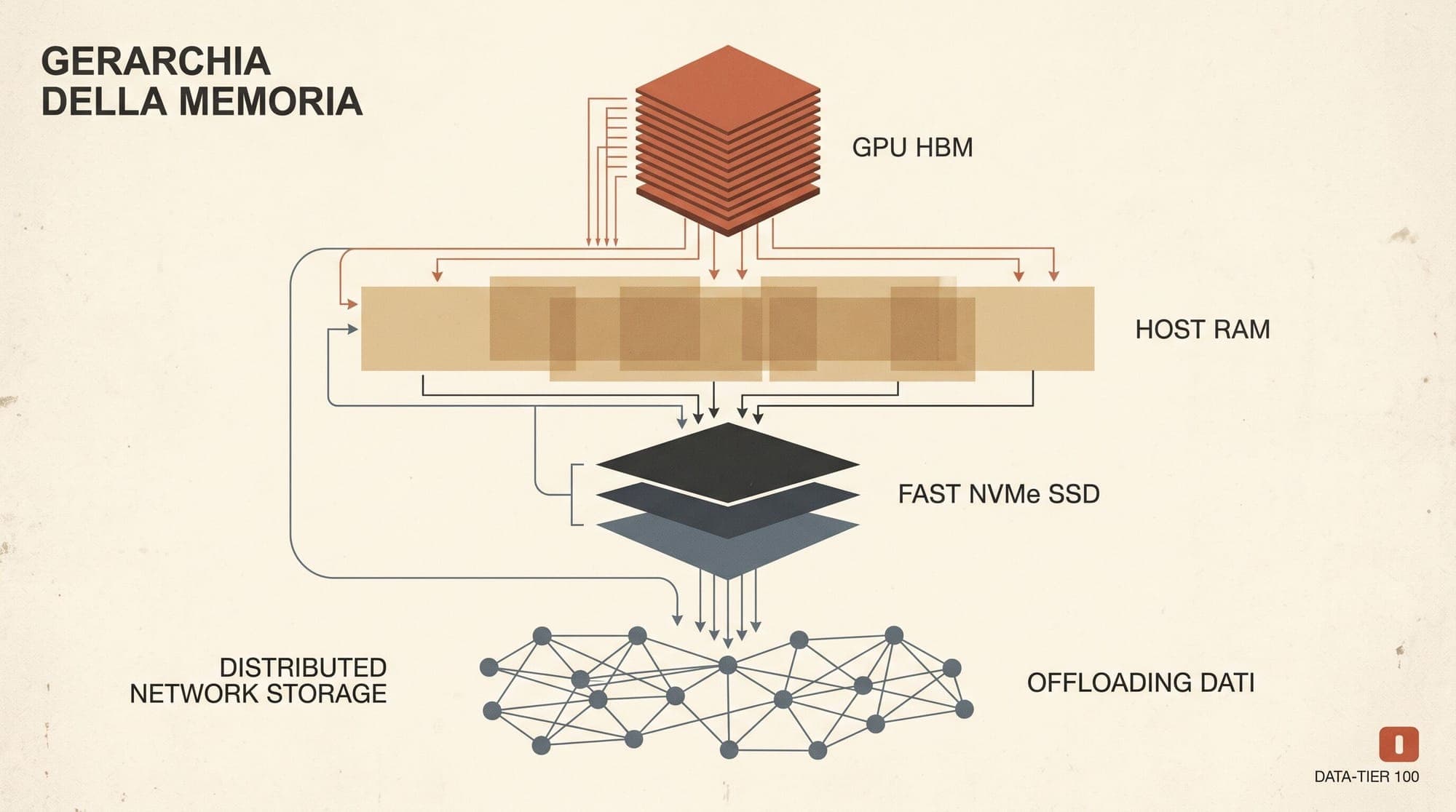
  10. Hierarchical KV Cache Offloading in Production LLM Serving: Host RAM, Local NVMe, Remote Storage, and LMCache Architecture

    High-concurrency large language model (LLM) serving faces an acute memory capacity bottleneck. While modern GPUs deliver high floating-point compute throughput, High-Bandwidth Memory (HBM) capacity remains severely constrained. In workloads involving multi-turn conversations, agentic coding loops, and long-document retrieval-augmented generation (RAG), Key-Value (KV) cache tensors rapidly consume available GPU memory, forcing engines to either reject requests, preempt running sequences, or recom

    AI
    9 min read
  11. Mixture-of-Depths: Mathematical Foundations, Dynamic Compute Routing, Capacity-Constrained Tensors, and IsoFLOP Scaling

    Mixture-of-Depths (MoD): Mathematical Foundations, Dynamic Compute Routing, Capacity-Constrained Tensors, and IsoFLOP Scaling In standard autoregressive Transformer architectures, computational effort is distributed uniformly across all tokens in a sequence. Every token position $i \in \{1, \dots, S\}$ passes through every layer $l \in \{1, \dots, L\}$, executing identical matrix multiplications across multi-head self-attention and feed-forward networks (FFN). This architectural constraint igno

    AI
    11 min read
  12. LLM Gateways in Production: Comparing LiteLLM, Portkey, Kong AI Gateway, and Cloudflare AI Gateway Architecture, Fallback Cascades, and Serving Economics

    As enterprise production architectures scale from single prototype endpoints to multi-model agentic pipelines, coupling application code directly to foundation model provider APIs creates severe operational bottlenecks. Direct client integration leads to fractured telemetry, credential sprawl across microservices, unhandled upstream rate limits, and vendor lock-in. To isolate application logic from downstream provider volatility, engineering teams deploy dedicated LLM gateways. These specialize

    AI
    8 min read
  13. OpenAI Data Center Lead Chris Malone Departs Amid Infrastructure Realignment

    OpenAI head of data centers Chris Malone has departed the company, marking another high-level transition within the artificial intelligence lab as it restructures its infrastructure divisions ahead of a planned initial public offering. Malone, who joined OpenAI in March 2025 after five years leading data center strategy at Meta and over a decade as an engineer at Google, oversaw technical deployment across OpenAI's compute expansion efforts. Infrastructure Realignment Malone's exit coincides

    AI
    1 min read
  14. South Korea's Wrtn Raises $72.2M Series C at $722M Valuation

    South Korean AI platform operator Wrtn Technologies has secured approximately 100 billion won ($72.2 million) in a Series C funding round, pushing the startup's valuation above 1 trillion won ($722 million). The new capital brings Wrtn's cumulative funding to roughly 230 billion won ($166 million) as the company expands its consumer and enterprise generative AI offerings across Asian markets. Expanding Beyond Domestic Aggregation Founded in Seoul in 2021, Wrtn built its initial user base as

    AI
    1 min read
  15. Synthetic Data Pipelines in Production LLM Post-Training: Architecture, Prompt Evolution, Quality Filtering, and Contamination Control

    Scaling supervised fine-tuning (SFT) and preference alignment (DPO, PPO, GRPO) through human annotation faces severe economic and operational constraints. Human annotation costs between $5.00 and $50.00 per complex instruction-response trajectory, exhibits significant variance across labeler cohorts, and scales linearly with dataset volume. The LIMA study by Zhou et al. (2023) showed that post-training requires strict data quality rather than raw volume, yet modern frontier models demand million

    AI
    6 min read
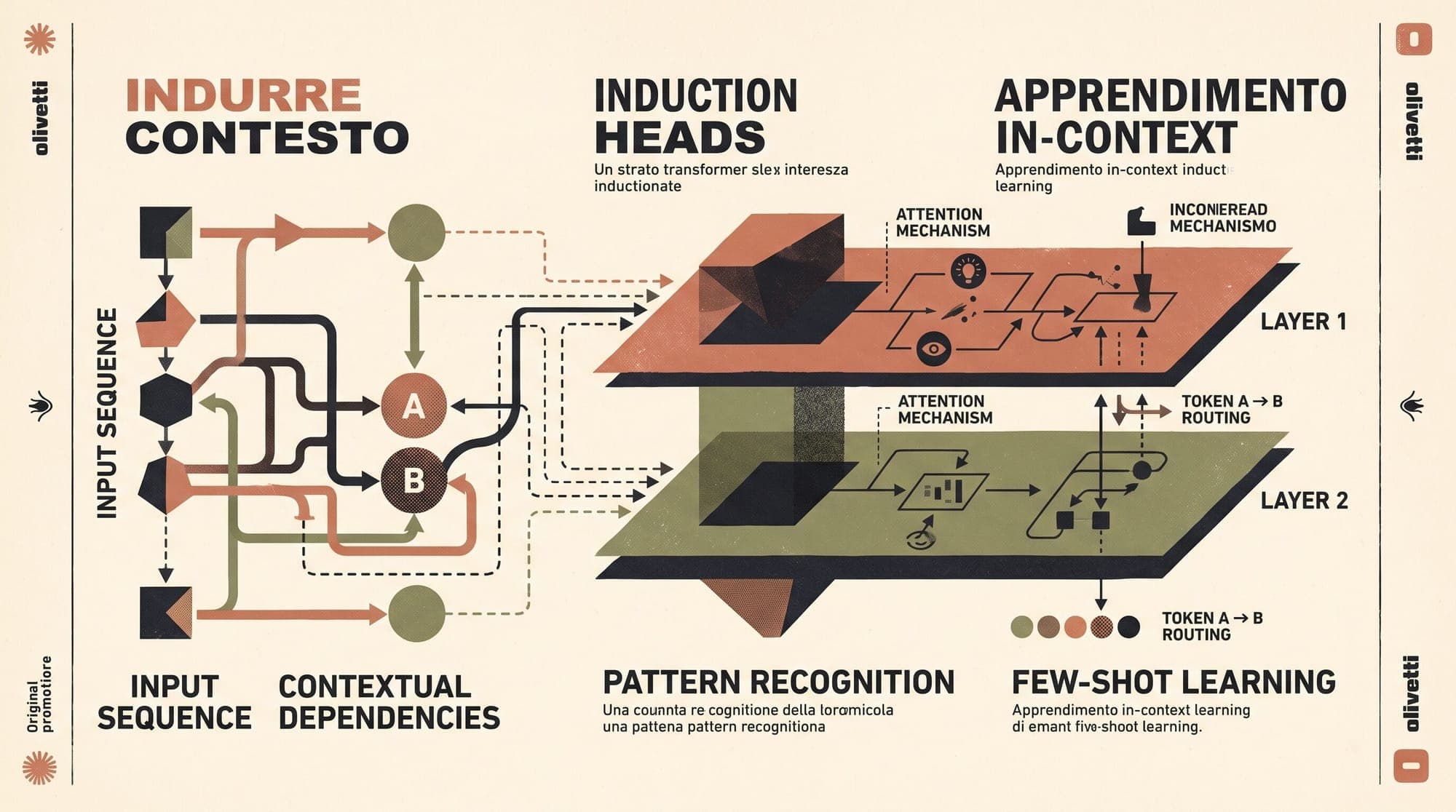
  16. Induction Heads: Mathematical Foundations, Two-Layer Circuit Composition, and the Emergence of In-Context Learning in Transformers

    Induction Heads: Mathematical Foundations, Two-Layer Circuit Composition, and the Emergence of In-Context Learning in Transformers One of the defining capabilities of modern autoregressive large language models is in-context learning: the ability to infer rules, adapt to task formats, and execute complex few-shot instructions purely from prompt context without updating neural network weights. For years, in-context learning was treated as an enigmatic, emergent property of large-scale autoregres

    AI
    13 min read
  17. Continuous Batching and Request Scheduling in Production LLM Serving: Comparing Orca, FastServe, Sarathi-Serve, and vLLM Architecture, Preemption Policies, Chunked Prefill Interleaving, and TTFT-TBT Trade-Offs

    Autoregressive large language model serving exhibits a fundamental architectural tension between compute utilization and latency guarantees. Standard deep learning inference pipelines rely on static request-level batching, where incoming queries are grouped into a fixed tensor, executed across forward passes until all sequences finish, and evicted simultaneously. In transformer-based text generation, static batching collapses serving efficiency. Because sequence lengths vary widely and token gen

    AI
    7 min read
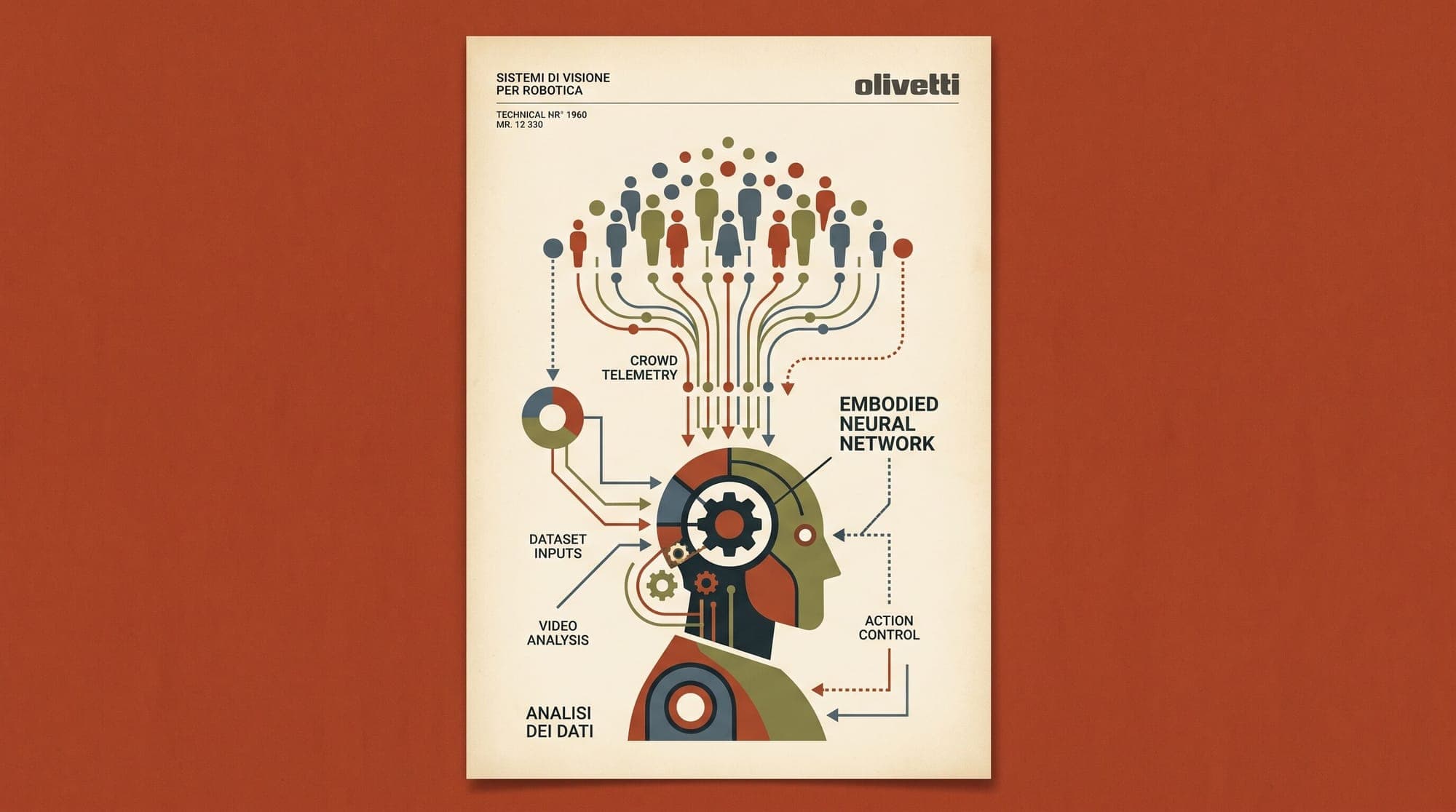
  18. Figure AI Unveils Index Platform with 16 Million Crowdsourced Videos for Robot Foundation Models

    Humanoid robotics startup Figure AI has launched Index, a global crowdsourced data collection platform engineered to capture real-world human task demonstrations at scale. Operating in stealth for four months prior to its public unveiling, the platform has compiled 16 million video demonstrations from contributors across 108 countries, generating embodied training data for Figure's physical AI foundation models. The initiative directly targets the primary bottleneck in scaling embodied AI: the

    AI
    2 min read
  19. Anthropic Claude Autonomously Designs Validated Protein Binders Across 14 Targets

    Anthropic has released results from an autonomous de novo protein binder design campaign run by its Claude models, with wet-lab validation from two outside evaluators. Claude designed binders against 15 targets and succeeded against 14 of them, according to Anthropic. Across all campaigns, 27% of designs bound, and 49% of the designs Claude ranked first for each target bound, according to Anthropic's technical report. The campaign used Claude Opus 4.8 and Claude Mythos Preview inside Claude Sci

    AI
    3 min read