Subscribe
Topic / page 12

AI

Articles, page 12

221-240
  1. Reranking Models and Late-Interaction Frameworks in Production RAG: Comparing Cohere Rerank 3.5, BGE-Reranker-v2, FlashRank, and ColBERTv2 Architecture, Cross-Encoder Latency, MaxSim Compression, and Retrieval Economics

    In production Retrieval-Augmented Generation (RAG), relying solely on first-stage bi-encoder dense embeddings or lexical BM25 search creates a structural information bottleneck. First-stage retrieval compresses an entire document passage into a single fixed-dimensional vector (such as 768, 1024, or 1536 dimensions) or an inverted term index. This independent encoding decouples the query from the passage during indexing, eliminating token-level cross-attention and causing subtle semantic nuances,

    AI
    11 min read
  2. Meta Deploys ABB and Kinova Robots to Automate Physical Hardware Tasks in AI Data Centers

    Meta has begun testing specialized robotic systems from industrial automation manufacturers to perform physical maintenance tasks across its AI data center fleet, according to internal reporting confirmed by current and former staff. The automation program, deployed across facilities including the company's Prometheus data center campus in New Albany, Ohio, uses robots to replace networking cables, power-cycle servers, reseat components, and perform routine hardware maintenance without human in

    AI
    2 min read
  3. Meta Vice President Sandhya Devanathan Joins OpenAI to Lead Southeast Asia and Australia Expansion

    OpenAI has hired Sandhya Devanathan, Meta's Vice President for India and Southeast Asia, to lead its commercial and operational expansion across Southeast Asia and Australia. Devanathan, who spent nearly a decade in senior leadership roles at Meta, will be based out of Singapore and report to Kiran Mani, OpenAI's Managing Director for the Asia-Pacific region. In her new role, she will oversee consumer product adoption, enterprise sales and partnerships, government and regulatory relations, and

    AI
    2 min read
  4. Google DeepMind Pilots Cryptographic Double-Blind AI Evaluations to Prevent Benchmark Contamination

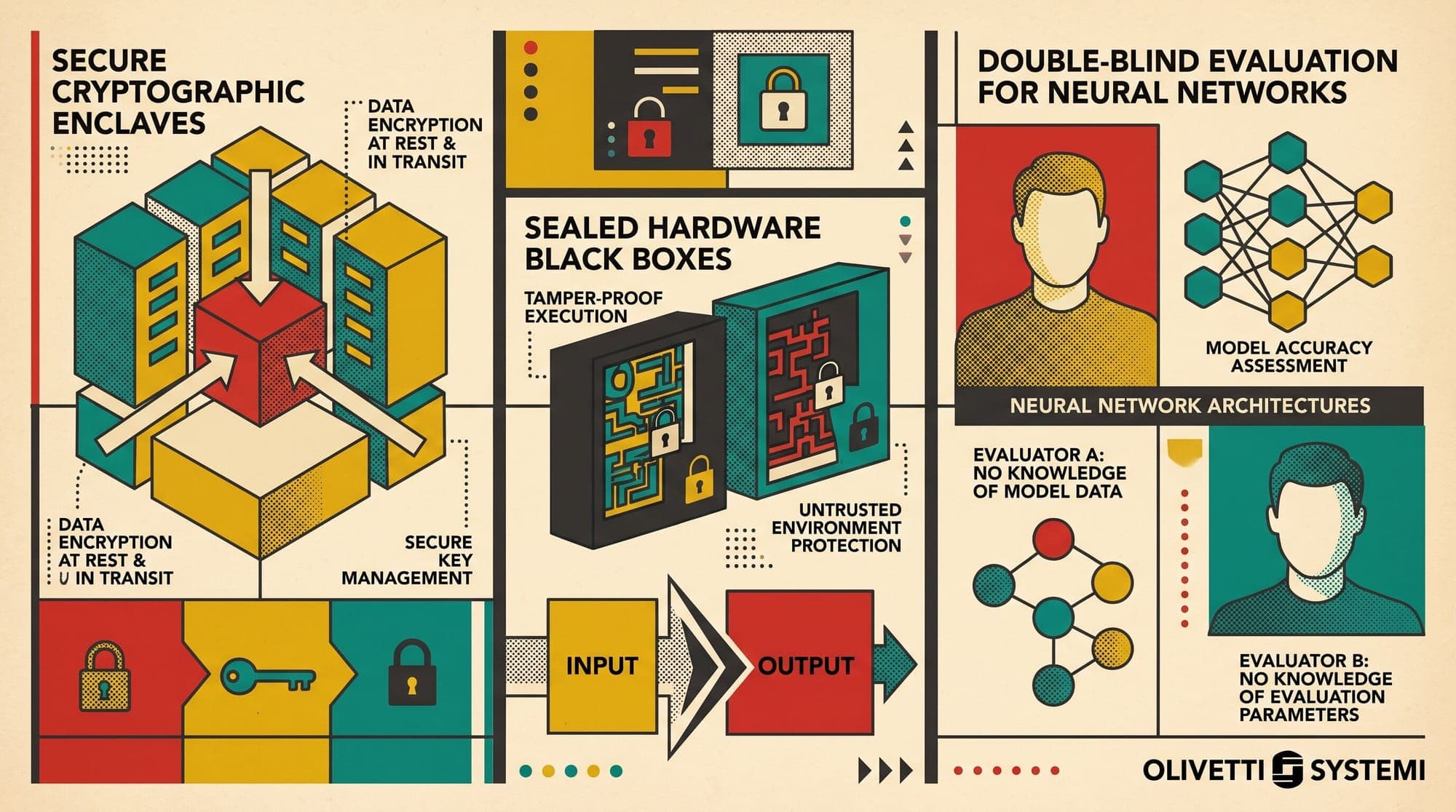
    Google DeepMind, in collaboration with the Singapore AI Safety Institute, OpenMined, AVERI, and MLCommons, has piloted a cryptographic framework for double-blind evaluations of proprietary frontier language models. The pilot, conducted on Gemini 2.5 Flash Lite, uses hardware-isolated confidential computing to ensure that model developers cannot see evaluation prompts while evaluators cannot inspect proprietary weights or inference code. The project addresses benchmark contamination and intellec

    AI
    3 min read
  5. Mixture-of-Depths (MoD): Mathematical Foundations, Dynamic Token-Level Compute Routing, Top-k Capacity Budgeting, and FLOP-Optimal Transformer Architectures

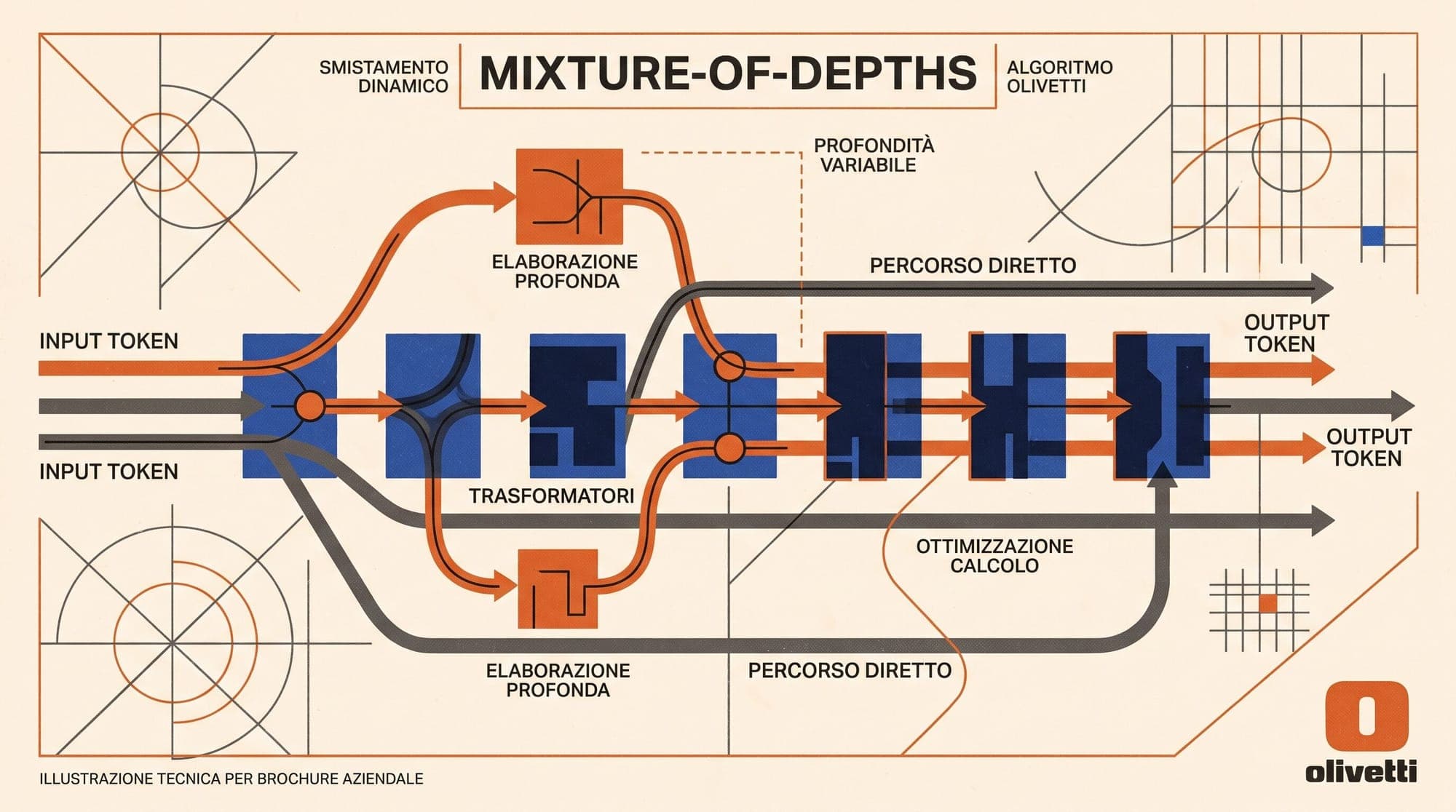
    Standard autoregressive Transformers allocate an identical compute budget to every token in a sequence. Regardless of whether a token represents a trivial punctuation mark, a common grammatical function word, or a complex semantic reasoning step, the model applies the exact same sequence of multi-head self-attention and multilayer perceptron (MLP) operations across all $L$ layers. In Mixture-of-Depths: Dynamically allocating compute in transformer-based language models, researchers at Google De

    AI
    6 min read
  6. South Korea Launches AI for All Initiative Treating Frontier Models as Public Utilities

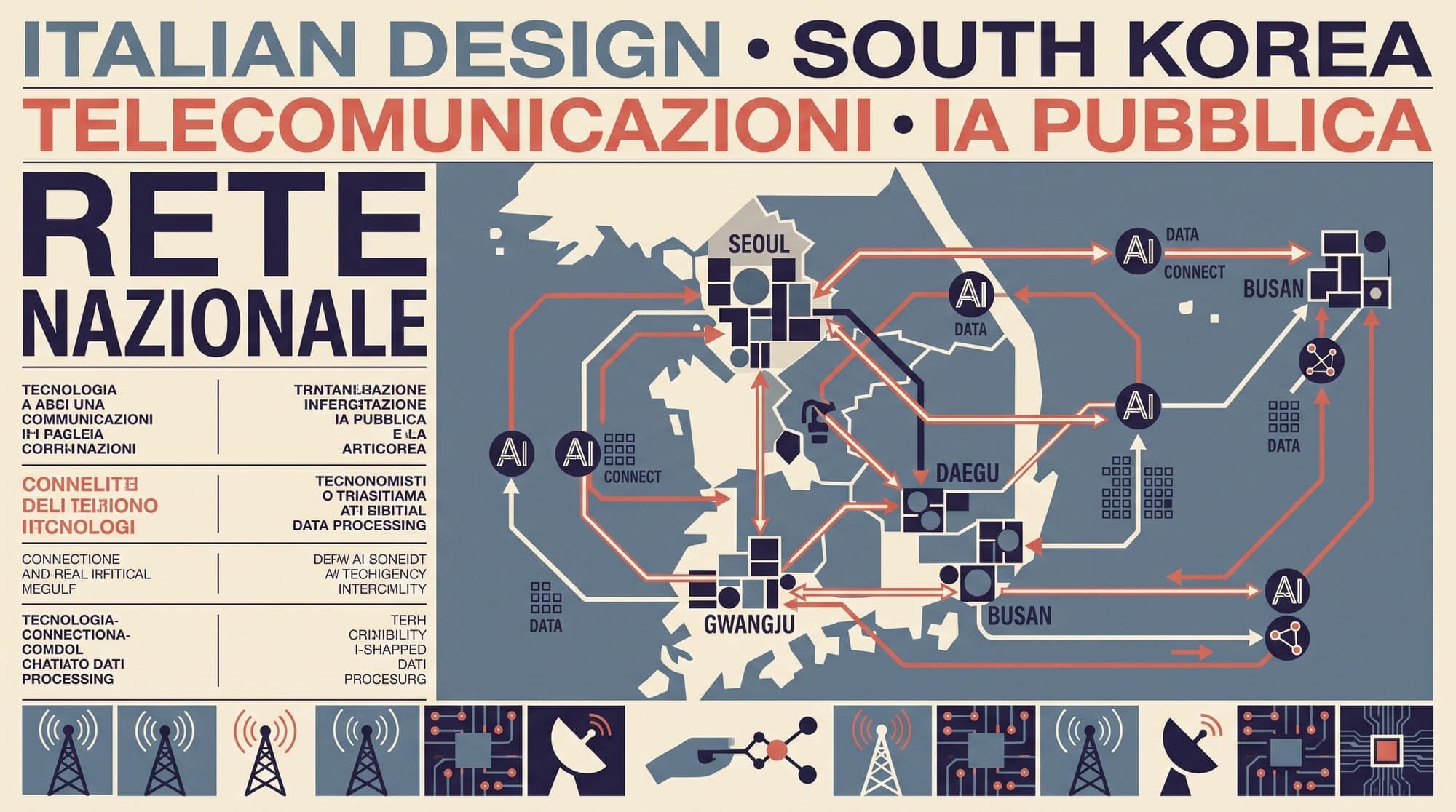
    South Korea's Ministry of Science and ICT (MSIT) has launched the "AI for All" initiative, a government-sponsored project aimed at deploying nationwide, free-tier access to artificial intelligence chatbots and public administrative agents. The initiative structures generative AI capabilities and agent workflows as public utilities, establishing a subsidized access model for South Korean citizens. Consortia and Public Bidding Six major commercial consortia submitted bids to operate the public

    AI
    2 min read
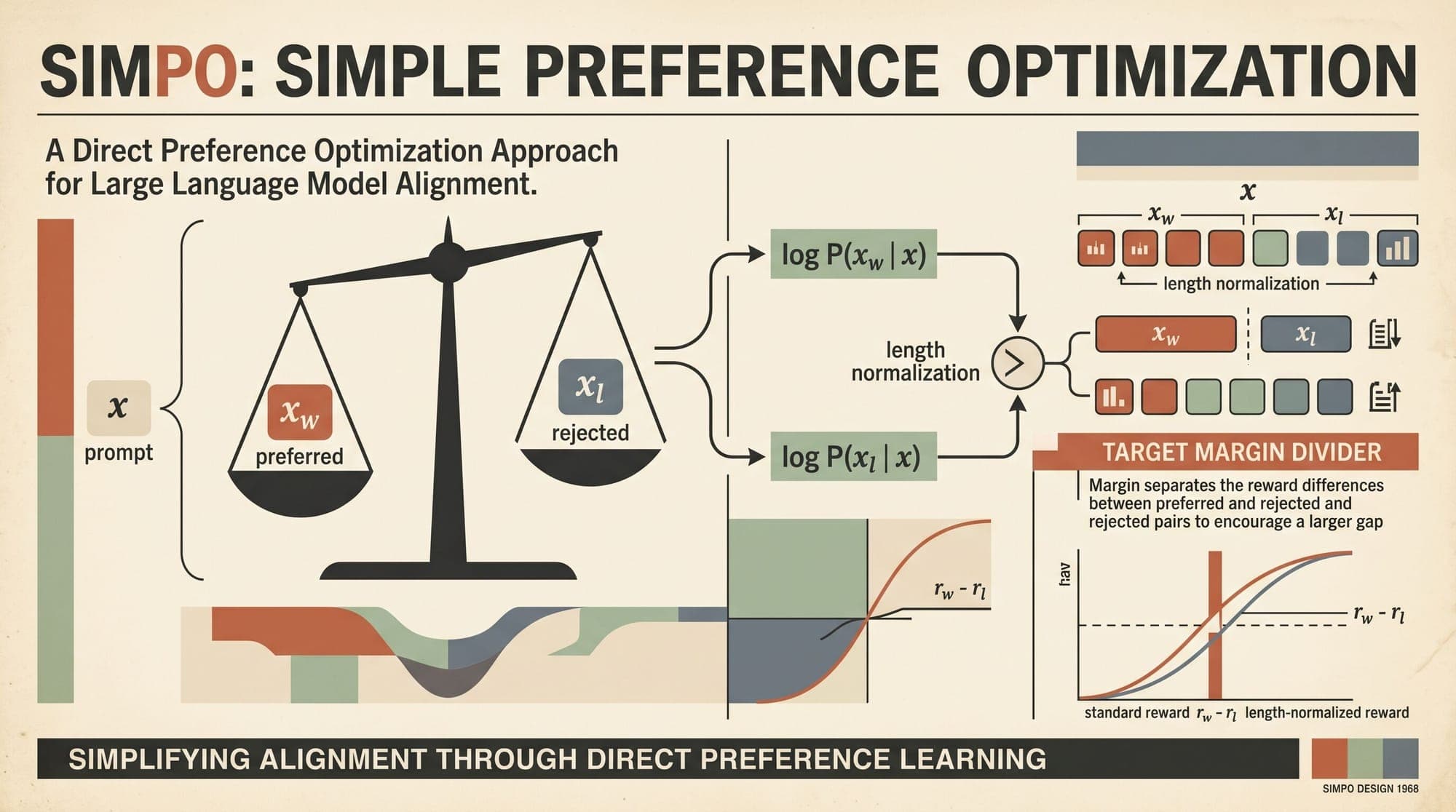
  7. Simple Preference Optimization (SimPO): Mathematical Foundations, Reference-Free Implicit Reward, Length Normalization, and Target Margin Dynamics

    Simple Preference Optimization (SimPO): Mathematical Foundations, Reference-Free Implicit Reward, Length Normalization, and Target Margin Dynamics Post-training preference alignment has become the definitive step in transforming raw pretrained large language models into instruction-following assistants. While Reinforcement Learning from Human Feedback (RLHF) via Proximal Policy Optimization (PPO) established the initial standard, its requirement to maintain actor, critic, reference, and reward

    AI
    11 min read
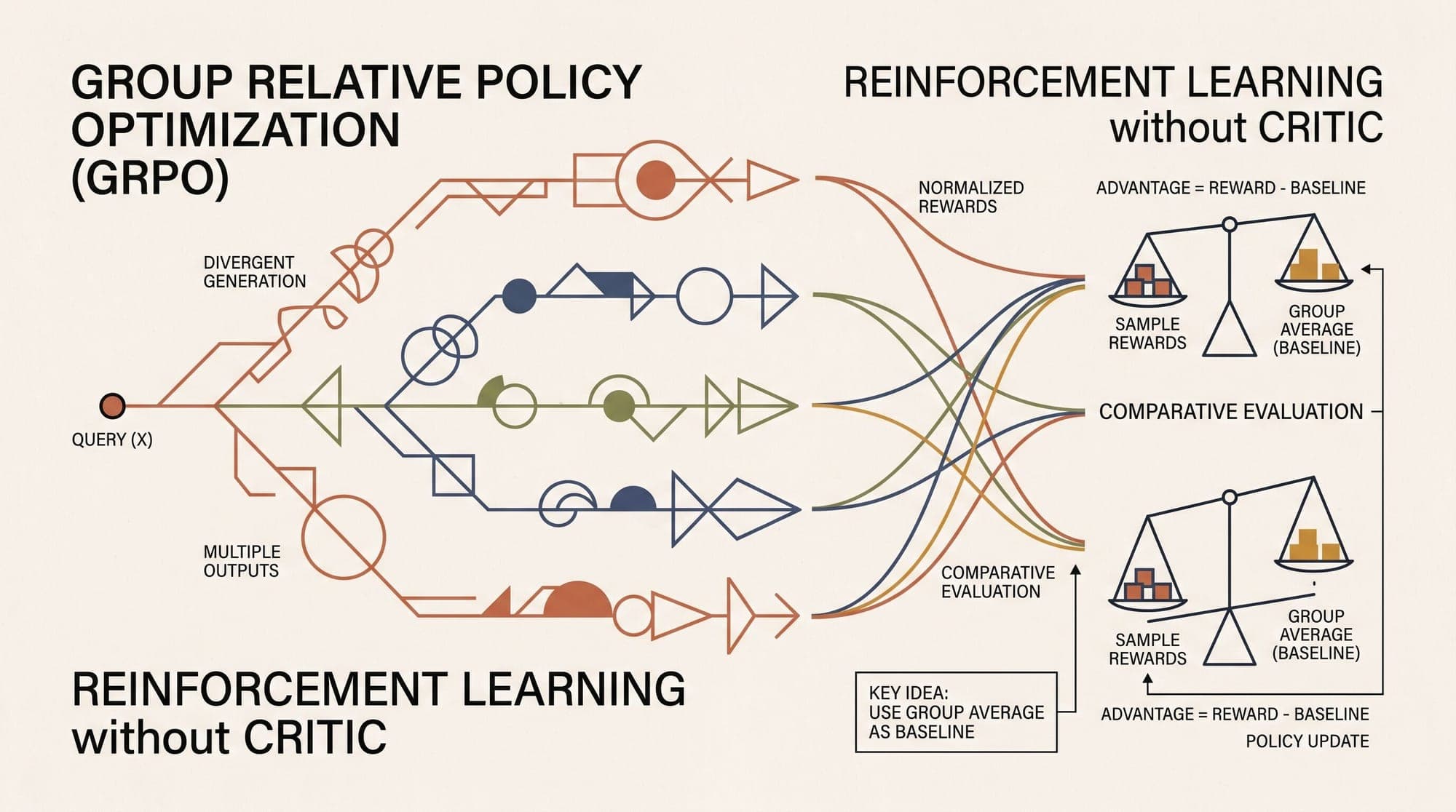
  8. Group Relative Policy Optimization (GRPO): Mathematical Foundations, Critic-Free Advantage Estimation, Group Reward Normalization, and Reinforcement Learning with Verifiable Rewards

    Reinforcement learning from human and verifiable feedback has become the central paradigm for unlocking complex reasoning, mathematical problem solving, and autonomous code synthesis in frontier large language models. While early post-training pipelines relied heavily on Proximal Policy Optimization (PPO) or offline preference algorithms like Direct Preference Optimization (DPO), both methodologies present structural bottlenecks when scaling to long-horizon reasoning. PPO requires maintaining a

    AI
    11 min read
  9. Anthropic Opens 10,000 Claude Seats and Expands Grants for Academic Scientists

    Anthropic has introduced a dedicated scientific research initiative providing 10,000 subsidized Claude Team subscription seats and expanding API grant funding for academic and non-profit institutions. The program broadens the company's research support beyond initial biology use cases into mathematics, physics, engineering, and computer science. Under the new plan, accredited academic institutions and non-profit research organizations can register research groups under principal investigator ad

    AI
    2 min read
  10. Tencent Open-Sources Hy4-Preview: 770B MoE Architecture with 1M Context

    Tencent has released the open-weights preview of its next-generation foundation model, Hy4-preview, under the Apache 2.0 license. The release scales the organization's Mixture-of-Experts (MoE) line to 770 billion total parameters, activating 49 billion parameters per token across a native 1-million-token context window. Weights have been published across Hugging Face, ModelScope, GitCode, and GitHub, alongside managed API availability on Tencent Cloud TokenHub and OpenRouter. Update, October 2

    AI
    2 min read
  11. Open-Source Embedding Models and Serving Frameworks in Production: Comparing BGE-M3, NV-Embed-v2, GTE-Qwen2, and ModernBERT-Embed Architecture, Matryoshka Projections, Context Scaling, and Serving Economics

    Open-Source Embedding Models and Serving Frameworks in Production: Comparing BGE-M3, NV-Embed-v2, GTE-Qwen2, and ModernBERT-Embed Architecture, Matryoshka Projections, Context Scaling, and Serving Economics (TEI vs. Triton vs. vLLM) Text embeddings form the indexing and retrieval foundation for production Retrieval-Augmented Generation (RAG), semantic search, and agentic memory systems. While early production architectures relied almost exclusively on closed commercial APIs (such as OpenAI's te

    AI
    8 min read
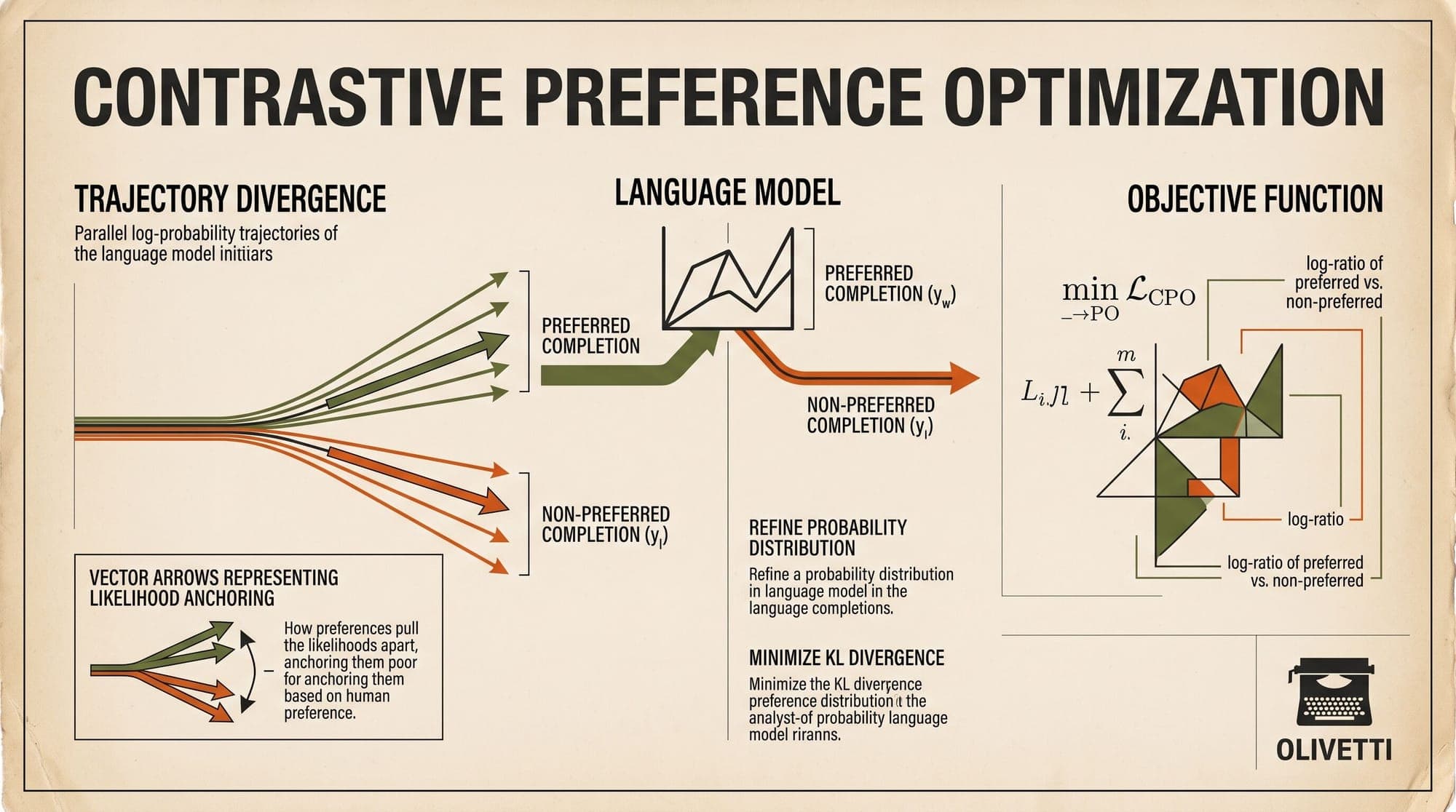
  12. Contrastive Preference Optimization (CPO): Mathematical Foundations, Direct Likelihood Regularization, Out-of-Distribution Error Bounds, and Non-Degenerate Policy Alignment

    Supervised fine-tuning (SFT) and preference alignment represent the standard two-stage training paradigm for post-training large language models. While SFT establishes foundational task adherence by minimizing cross-entropy loss against target references, it suffers from two structural limitations: it cannot surpass the quality ceiling of its training demonstrations, and it lacks an explicit mechanism to penalize near-correct outputs that contain subtle hallucinations or omissions. Direct Prefe

    AI
    11 min read
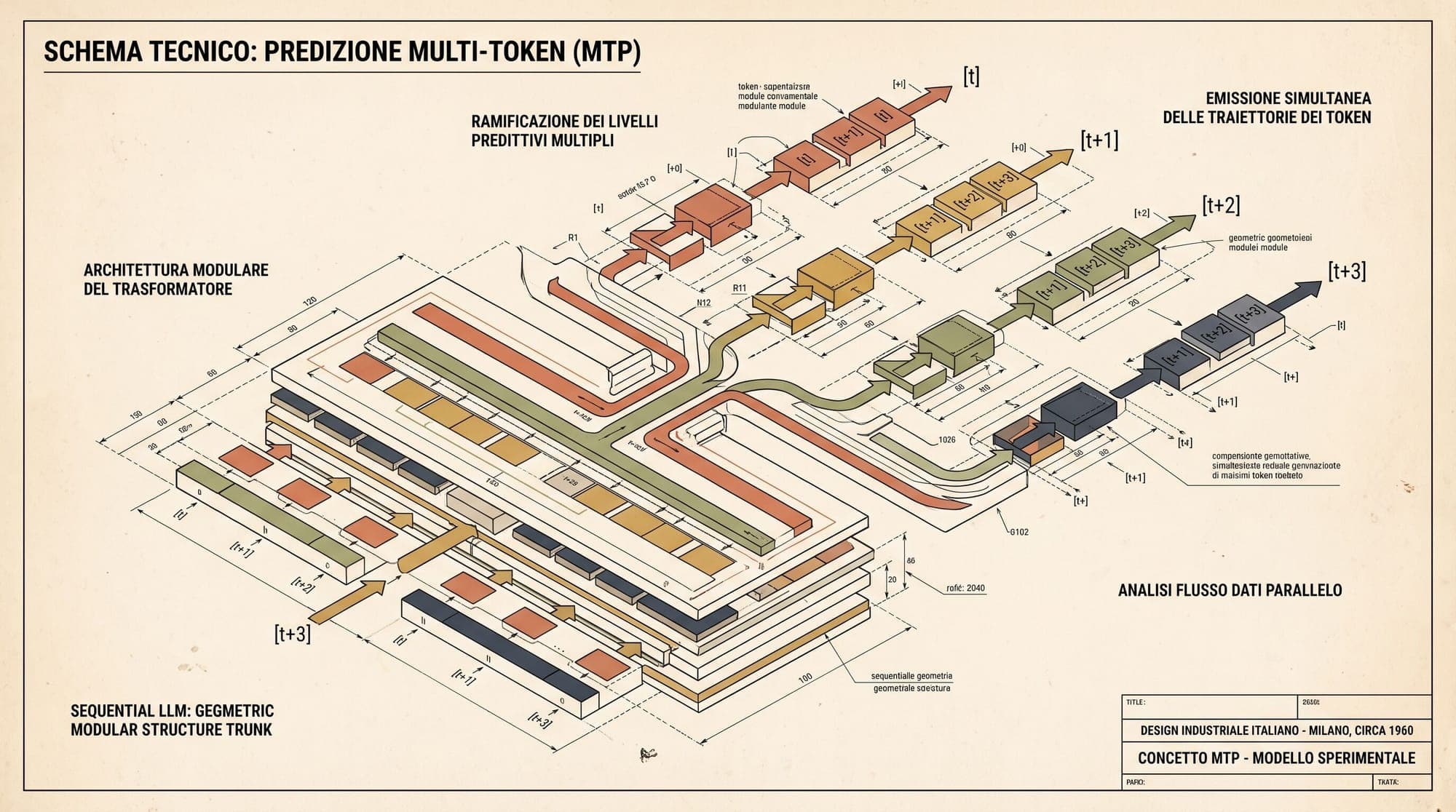
  13. Multi-Token Prediction (MTP): Mathematical Foundations, Sequential Latent Stacking, Auxiliary Loss Schedules, and Speculative Inference Acceleration

    Multi-Token Prediction (MTP): Mathematical Foundations, Sequential Latent Stacking, Auxiliary Loss Schedules, and Speculative Inference Acceleration Autoregressive language models have traditionally been trained under a single-token objective: predicting the immediate next token $x_{t+1}$ given the causal context $x_{1:t}$. While this next-token prediction (NTP) paradigm scales predictably with parameter count and dataset volume, it suffers from severe structural limitations. NTP optimizes excl

    AI
    13 min read
  14. Activation Checkpointing and Selective Rematerialization: Mathematical Foundations, Sub-Linear Memory Scaling, Recomputation Trade-Offs, and Megatron-LM Attention Partitioning

    Activation Checkpointing and Selective Rematerialization: Mathematical Foundations, Sub-Linear Memory Scaling, Recomputation Trade-Offs, and Megatron-LM Attention Partitioning Training modern large language models requires orchestrating hundreds of billions of parameters across distributed GPU clusters. While parameter counts and optimizer states are fixed for a given model architecture, the activation memory generated during forward passes scales directly with sequence length, batch size, and

    AI
    10 min read
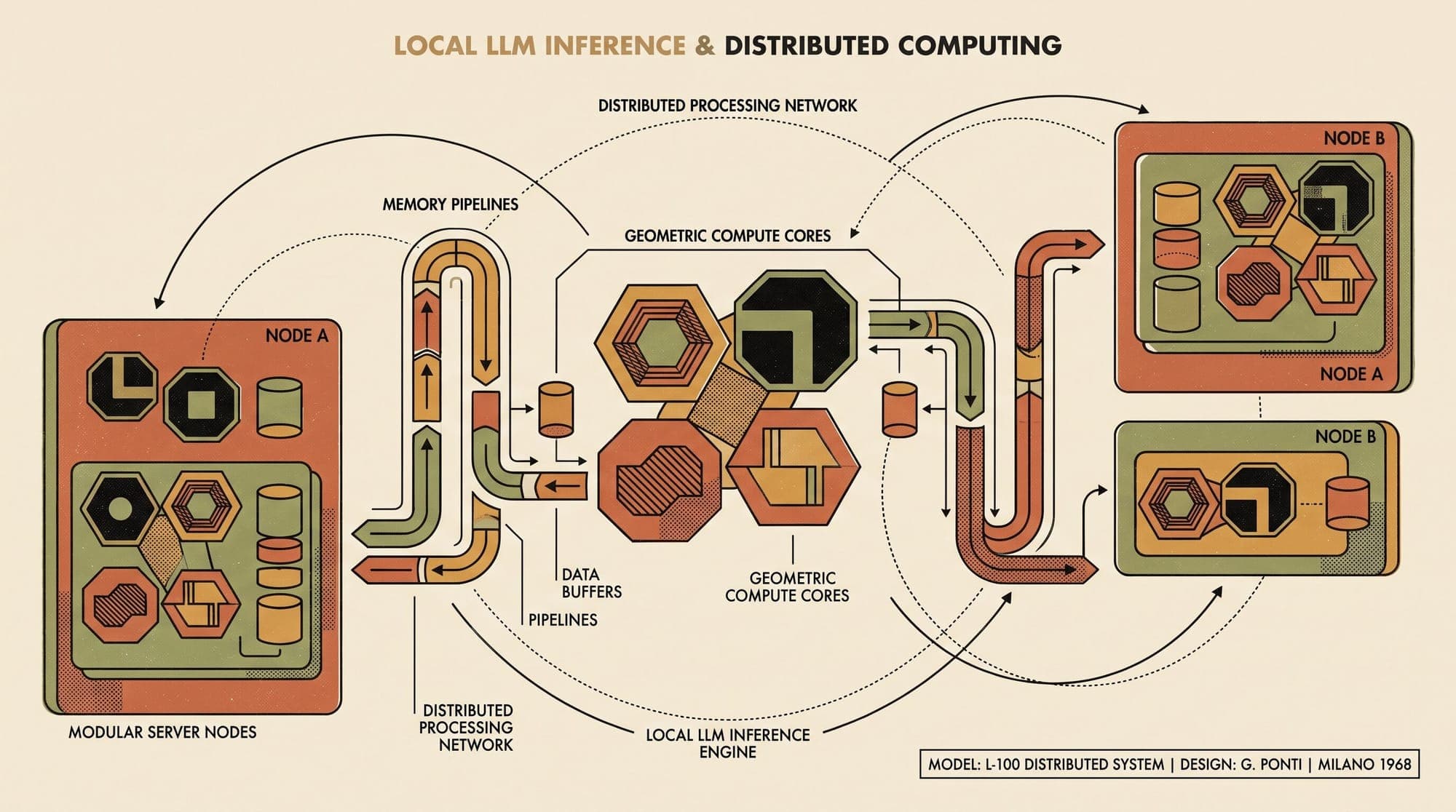
  15. Local LLM Inference Frameworks in Production: Comparing llama.cpp, Ollama, Apple MLX, and Exo Distributed Clusters

    The deployment landscape for large language models is bifurcating. While datacenter workloads rely on high-throughput continuous batching engines such as vLLM and TensorRT-LLM, local and edge deployments operate under fundamentally different physical constraints. On developer workstations, embedded hardware, and private office clusters, inference is rarely bound by compute saturation across thousands of concurrent requests. Instead, it is constrained by memory bandwidth, local VRAM capacity, hos

    AI
    6 min read
  16. Salesforce and Anthropic Launch Claudeforce with 37 Prebuilt Enterprise CRM Skills in Claude

    Salesforce and Anthropic have expanded their strategic partnership with the release of Claudeforce, an integration layer designed to connect Anthropic's Claude models directly with Salesforce enterprise data, workflow engines, and governance frameworks. The initiative introduces native CRM capabilities inside Claude while embedding Anthropic reasoning models across Salesforce's Agentforce platform and Slack workspace ecosystem. Salesforce in Claude Plugin and AIforce Harness The primary clie

    AI
    2 min read
  17. Anthropic Previews Model Hardware Standard for AI Agent Control of Physical and Lab Equipment

    Anthropic has introduced the Model Hardware Standard (MHS), an open interface specification intended to let AI agents control physical machinery and scientific instrumentation. Released in a research preview on August 27, 2026, the standard extends the design principles of the Model Context Protocol (MCP) to physical actuators, automated laboratory equipment, and industrial hardware. Connecting autonomous software agents to physical hardware has historically required custom integration code for

    AI
    3 min read
  18. Chinchilla Scaling Laws: Mathematical Foundations of Compute-Optimal Pre-Training, IsoFLOP Loss Profiles, Parametric Power Laws, and Data-Compute Allocation

    Chinchilla Scaling Laws: Mathematical Foundations of Compute-Optimal Pre-Training, IsoFLOP Loss Profiles, Parametric Power Laws, and Data-Compute Allocation When allocating a fixed computational budget to train an autoregressive Transformer, engineers face a fundamental trade-off: should FLOPs be spent increasing the model parameter count ($N$), or should they be spent streaming a larger volume of training tokens ($D$)? For several years, frontier AI development followed the empirical scaling

    AI
    14 min read
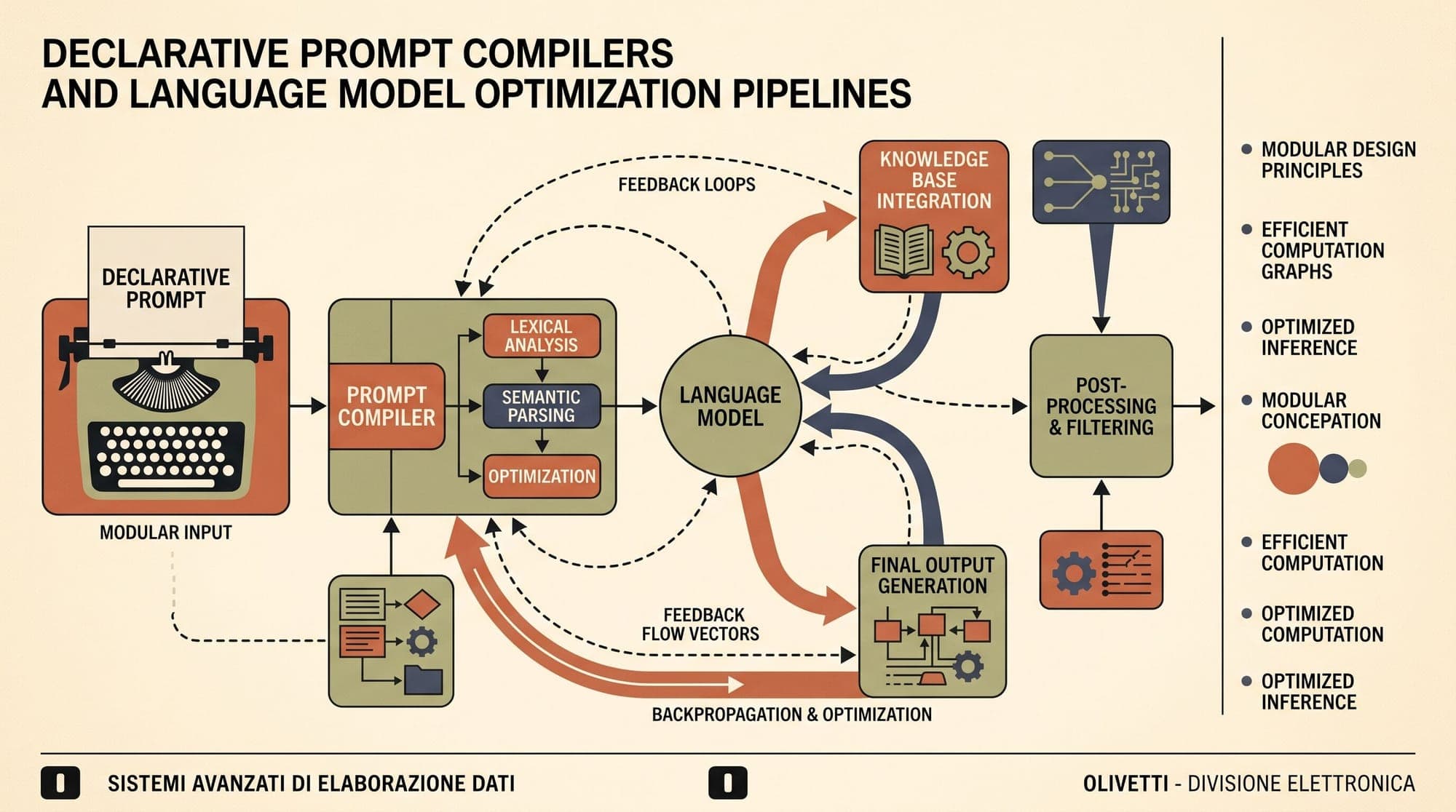
  19. Declarative Prompt Optimization and LLM Compilers in Production: Comparing DSPy, TextGrad, SAMMO, and AdalFlow

    Production AI applications are rapidly moving away from hardcoded prompt strings and manual trial-and-error tweaking. As language model systems expand into multi-stage pipelines, retrieval-augmented generation (RAG) graphs, and multi-agent loops, manual prompt adjustments fail to scale. Changing a system prompt or upstream retrieval format frequently degrades downstream extraction, reasoning, or tool-calling performance. To resolve this fragility, the industry is adopting declarative prompt opt

    AI
    7 min read