Latest / page 12

The latest stories

1230 articles

Articles, page 12

221-240 of 1230
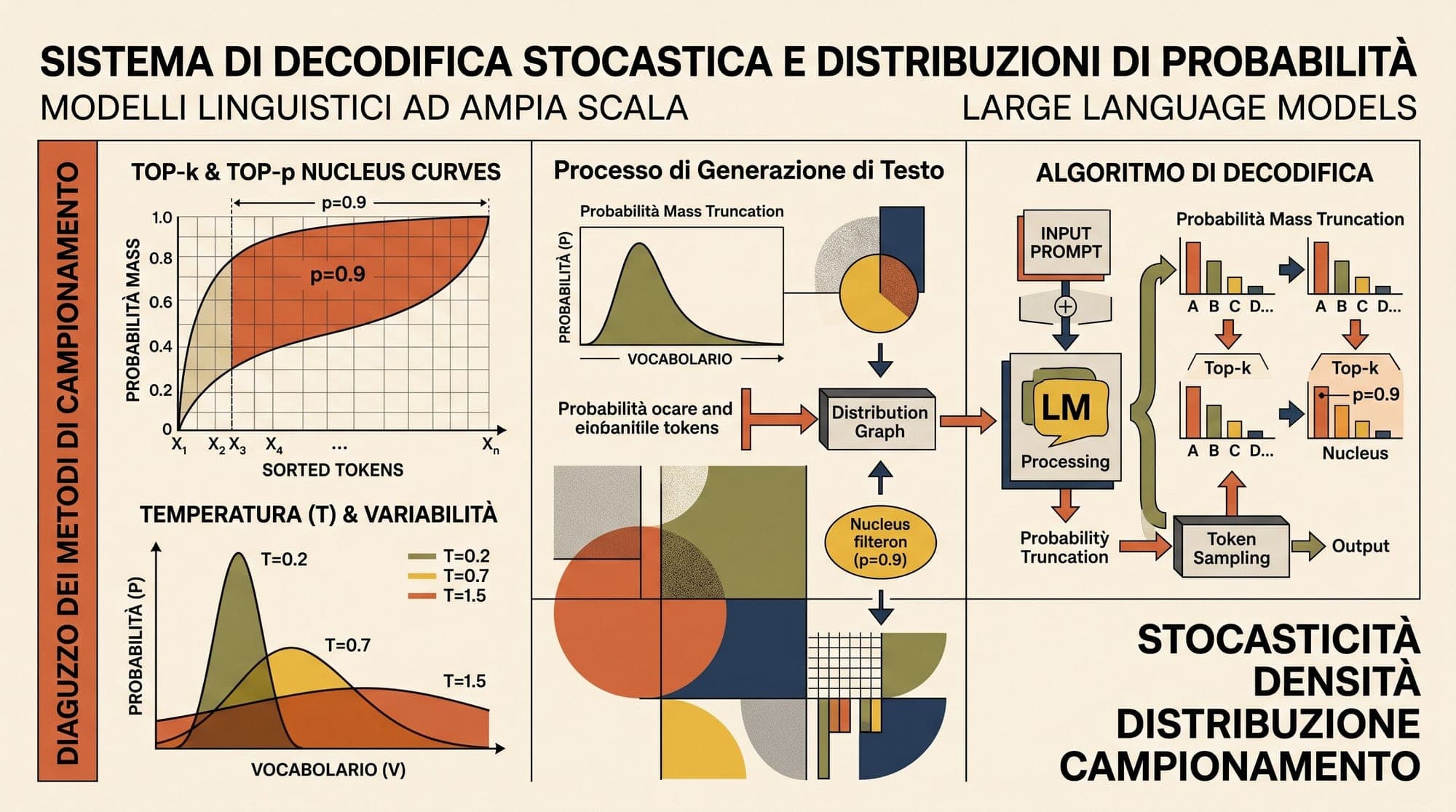
  1. Stochastic Decoding Strategies in Large Language Models: Mathematical Foundations of Temperature Scaling, Top-k, Nucleus (Top-p), Typical Sampling, and Min-p

    Autoregressive language models generate text sequentially by estimating a conditional probability distribution over a vocabulary at each decoding step. While model training optimizes cross-entropy loss over large corpora, the quality, diversity, and coherence of generated sequences depend directly on the decoding strategy used to select tokens from the output logits. Deterministic algorithms such as greedy search and beam search systematically fail in open-ended generation tasks, collapsing int

    AI
    8 min read
  2. Microsoft Cancels 23,000 GPU Deal at Nscale UK AI Data Center Over Grid Delays

    Microsoft has canceled its contract to lease 23,000 Nvidia AI chips at Nscale's planned data center facility in Loughton, Essex, following mounting delays in securing local electrical grid power. The decision removes the sole anchor tenant from Nscale's flagship British campus just weeks before the infrastructure provider's planned initial public offering in New York. Grid Connection Bottlenecks The Loughton facility was announced as the site of the UK's largest AI supercomputer, intended to

    AI
    4 min read
  3. Open-Source Sub-3B Small Language Models in Production: Comparing SmolLM2, Qwen2.5, Llama 3.2, and Gemma 2

    Deploying language models directly on client hardware, edge gateways, and low-latency routing layers requires balancing parameter count, memory footprint, and task-specific reasoning capability. The sub-3B parameter class has shifted from stripped-down toy models to highly capable engines trained on tens of trillions of tokens or distilled from frontier teachers. In production architectures, models in the 1B to 3B range serve three primary roles: speculative decoding draft models that accelerat

    AI
    6 min read
  4. Machine Unlearning in Large Language Models: Mathematical Foundations of Gradient Ascent, Negative Preference Optimization, and Representation Misdirection

    Machine Unlearning in Large Language Models: Mathematical Foundations of Gradient Ascent, Negative Preference Optimization, and Representation Misdirection Machine unlearning in large language models (LLMs) addresses the challenge of removing specific training data, copyrighted material, private identifiers, or hazardous capabilities from a pre-trained model without retraining the network from scratch. Because training frontier language models requires millions of GPU-hours and petabyte-scale c

    AI
    8 min read
  5. Anthropic Commits 5% Initial Equity to Scaling Public Benefit Fund

    Anthropic has announced the creation of the Anthropic Public Benefit Fund, committing an initial 5% equity stake to an independent LLC vehicle designed to scale its ownership as the artificial intelligence lab expands. The governance structure includes a ratchet mechanism: for every 50% increase in Anthropic's company valuation above an established baseline, the board holds discretion to allocate an additional 2% of company equity to the fund. Structural Model and Governance Restrictions Ant

    Anthropic
    2 min read
  6. Open-Source Vector Search Indexing Libraries in Production: Comparing Faiss, HNSWLib, ScaNN, and USearch Architecture, Quantization Schemes, SIMD Vectorization, and Memory Economics

    Vector retrieval systems across modern retrieval-augmented generation (RAG) pipelines, multimodal search engines, and recommendation systems depend on low-level Approximate Nearest Neighbor (ANN) search libraries. While production systems often wrap these engines inside managed vector databases such as Qdrant, Milvus, Weaviate, or ClickHouse, the fundamental compute bottlenecks, memory limits, and latency profiles are dictated by the underlying C++ vector indexing libraries. Four open-source li

    AI
    8 min read
  7. The Logit Lens and Tuned Lens: Mathematical Foundations, Residual Stream Projections, and Representation Dynamics in Transformers

    Large language models based on decoder-only transformer architectures process information through a sequence of stacked attention and multi-layer perceptron (MLP) blocks connected by a residual stream. While the final output distribution over the vocabulary is produced by projecting the final hidden state through an unembedding matrix, understanding how intermediate representations evolve across depth remains a central problem in mechanistic interpretability. The logit lens and the tuned lens p

    AI
    5 min read
  8. Open-Source Reasoning Models in Production: Comparing DeepSeek-R1 Distillations, QwQ-32B, Sky-T1, and Marco-o1

    Open-Source Reasoning Models in Production: Comparing DeepSeek-R1 Distillations, QwQ-32B, Sky-T1, and Marco-o1 The release of frontier reasoning models demonstrated that allocating test-time compute to explicit chain-of-thought generation significantly elevates problem-solving accuracy in mathematics, software engineering, and scientific reasoning. While proprietary systems conceal their training pipelines and reasoning traces, the open-source ecosystem has produced diverse approaches to replic

    Reasoning
    7 min read
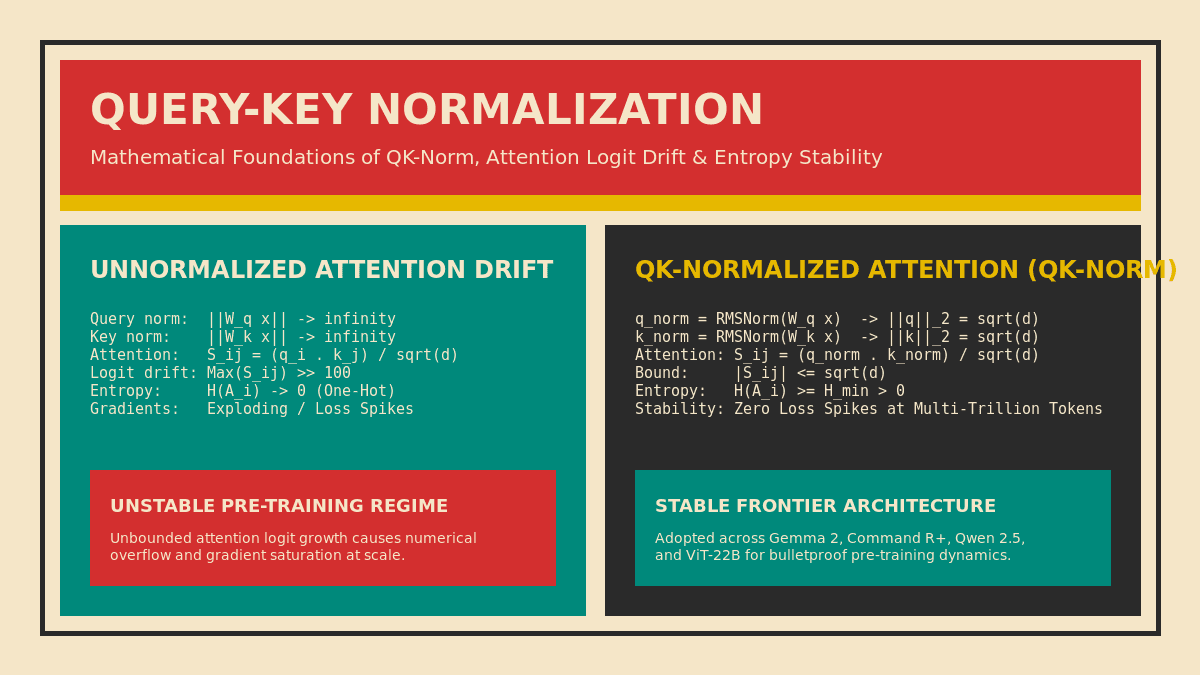
  9. Query-Key Normalization (QK-Norm): Mathematical Foundations, Attention Logit Drift, Entropy Collapse, and Large-Scale Transformer Training Stability

    Large-scale Transformer pre-training at trillion-token scale frequently encounters sudden, irrecoverable training instabilities, often manifesting as gradient norm spikes and divergence in training loss. While gradient clipping, learning rate warmups, and pre-layer normalization (Pre-LN) mitigate optimization bottlenecks in shallow architectures, deeper and wider models exhibit an intrinsic failure mode in the standard scaled dot-product attention mechanism: unconstrained attention logit growth.

    AI
    6 min read
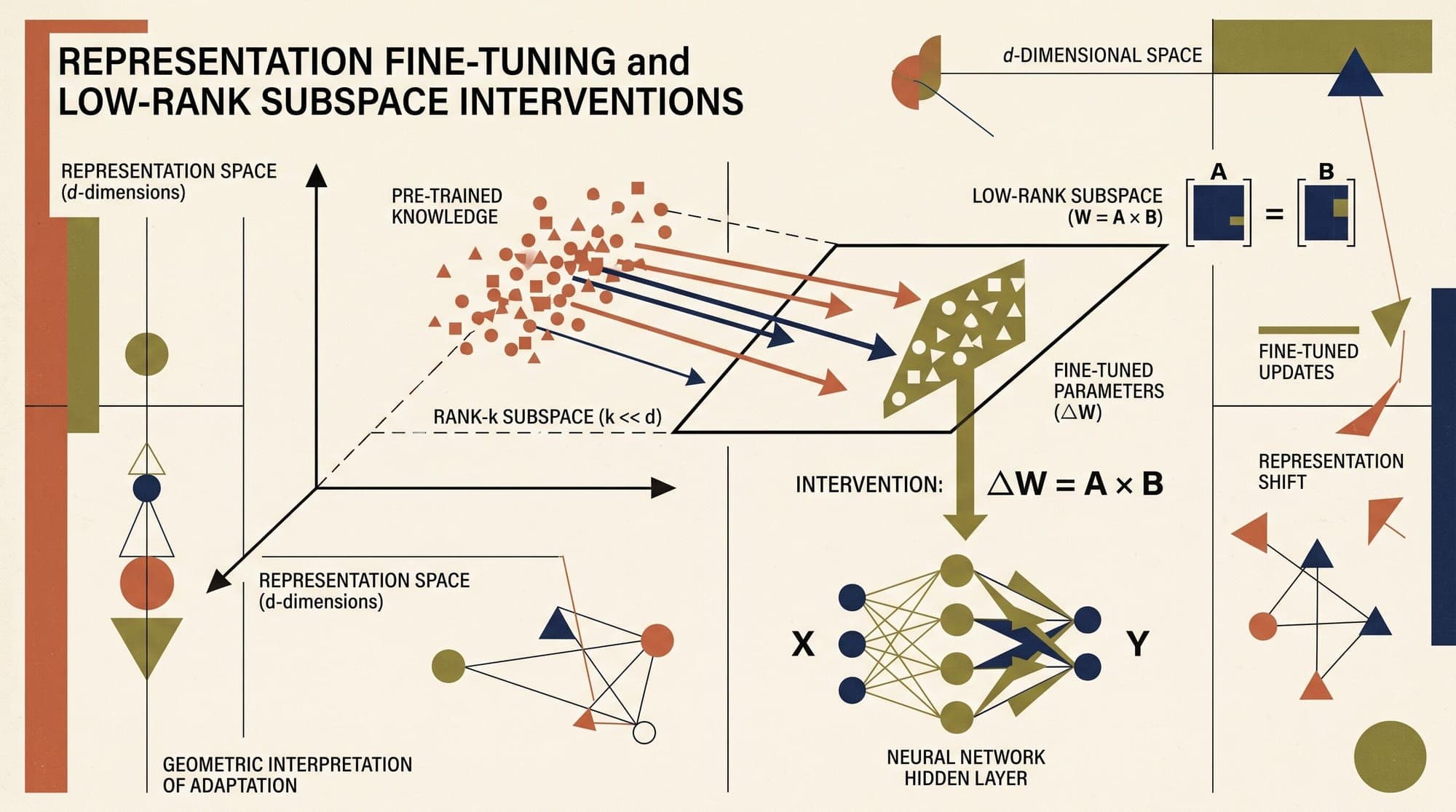
  10. Representation Fine-Tuning (ReFT): Mathematical Foundations, Low-Rank Linear Subspaces, Intervention Operations, and Parameter-Efficient Representation Editing in Large Language Models

    Representation Fine-Tuning (ReFT) introduces a parameter-efficient adaptation paradigm that operates directly on the hidden representations of frozen language models rather than updating or augmenting model weight matrices. Developed by researchers at Stanford University (Wu et al., 2024), ReFT leverages insights from mechanistic interpretability and causal abstraction to steer model behavior through learned low-rank subspace interventions. By editing internal activations at targeted sequence po

    AI
    6 min read
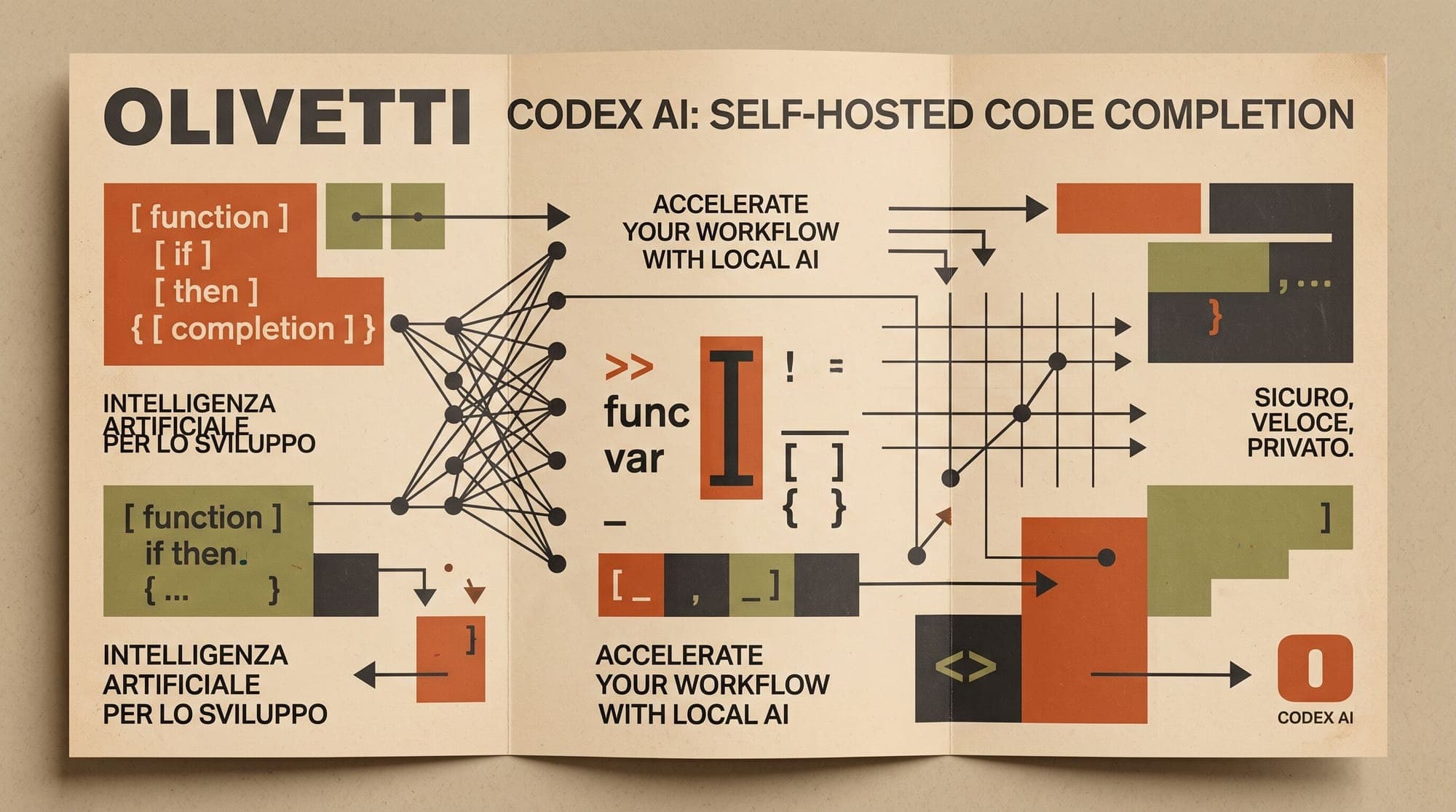
  11. Self-Hosted AI Code Completion Engines in Production: Comparing Tabby, Continue, Refact.ai, and Twinny Architecture, Fill-in-the-Middle Pipelines, AST Context Retrieval, and Serving Latency

    Deploying AI-assisted code completion within air-gapped environments, regulated enterprises, and privacy-conscious engineering teams requires decoupling developer tooling from third-party cloud APIs. While agentic coding systems focus on multi-turn planning and repository-wide refactoring with relaxed latency budgets, inline code completion operates under strict real-time constraints. Developers expect ghost-text suggestions to appear within 100 to 200 milliseconds of pausing keystrokes. Delive

    AI
    7 min read
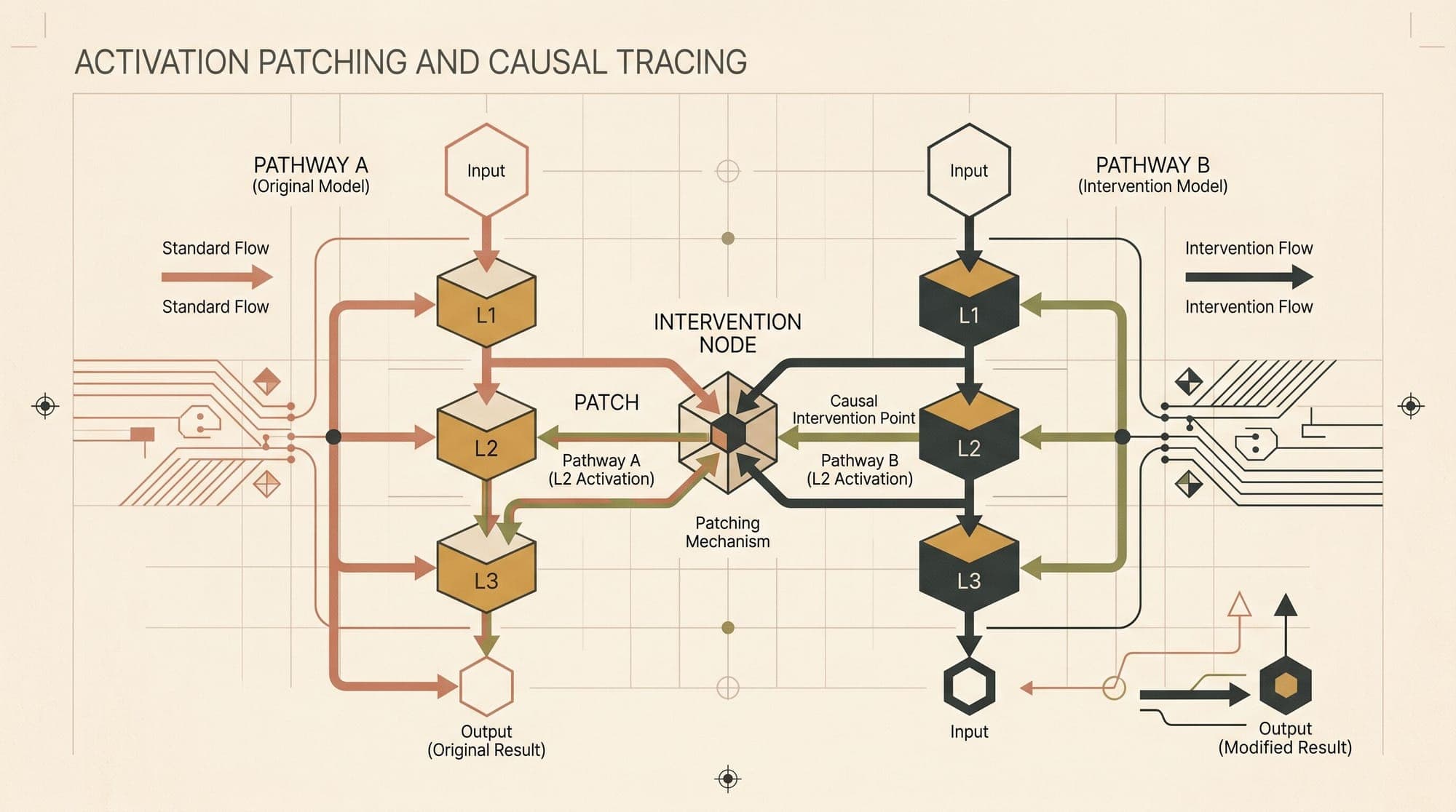
  12. Activation Patching and Causal Tracing: Mathematical Foundations, Counterfactual Interventions, and Circuit Discovery in Large Language Models

    Activation Patching and Causal Tracing: Mathematical Foundations, Counterfactual Interventions, and Circuit Discovery in Large Language Models Mechanistic interpretability aims to reverse-engineer the computational graphs implemented by trained neural networks into human-understandable algorithms. In autoregressive Transformer models, standard observational tools such as attention map visualization and linear probing often fail to distinguish between active computational paths and passive corre

    Education
    8 min read
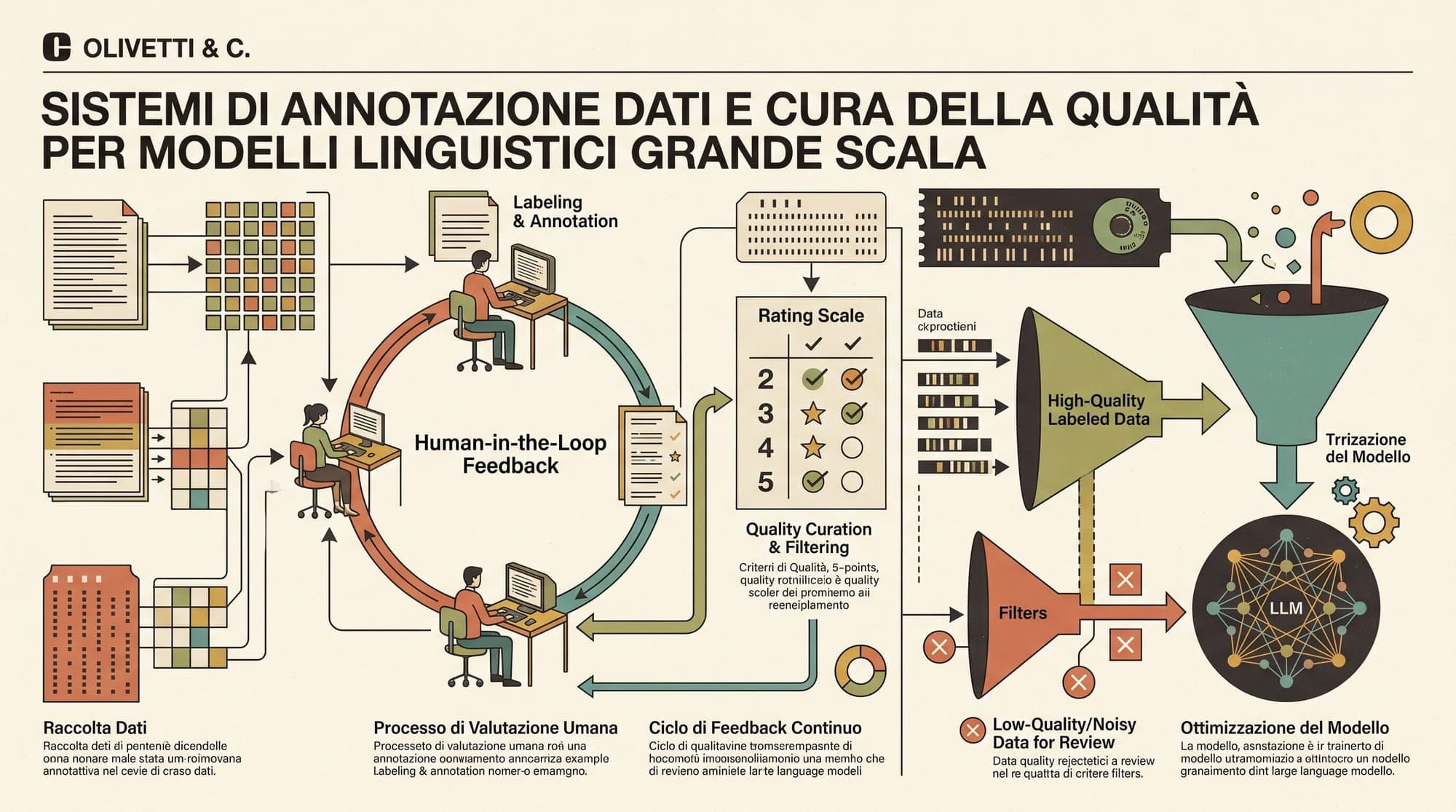
  13. Data Annotation and Preference Labeling Frameworks in Production: Comparing Argilla, Label Studio, Prodigy, and Cleanlab

    Modern frontier and open-weight large language models rely heavily on curated data pipelines across Supervised Fine-Tuning (SFT), Reinforcement Learning from Human Feedback (RLHF), and Direct Preference Optimization (DPO). While pre-training ingests trillions of uncurated tokens from the public web, post-training alignment requires high-precision preference rankings, instruction demonstrations, and safety boundary evaluations. Empirical research demonstrates that a few thousand meticulously cura

    AI
    6 min read
  14. Self-Play Fine-Tuning (SPIN): Mathematical Foundations, Two-Player Minimax Games, and Iterative Distribution Alignment

    Self-Play Fine-Tuning (SPIN): Mathematical Foundations, Two-Player Minimax Games, and Iterative Distribution Alignment Supervised Fine-Tuning (SFT) has served as the baseline method for converting pre-trained foundation models into instruction-following assistants. By training on curated prompt-response pairs $(x, y)$ via Maximum Likelihood Estimation (MLE), SFT aligns the model's next-token distributions with human demonstrations. However, standard SFT exhibits fundamental theoretical limitat

    AI
    8 min read
  15. Accenture Caps Employee Claude Spending at 9 Monthly to Contain AI Token Costs

    Global IT services and consulting firm Accenture has instituted a centralized spending cap on employee access to Anthropic's Claude, limiting central corporate funding to $29 per month per worker. The move follows internal spending reviews that revealed heavy users, particularly software engineers and consultants utilizing Anthropic's agentic coding tools, were running monthly inference bills between $500 and $1,000 per seat. Policy Structure and Budget Shifting Effective October 1, 2026, the

    Anthropic
    2 min read
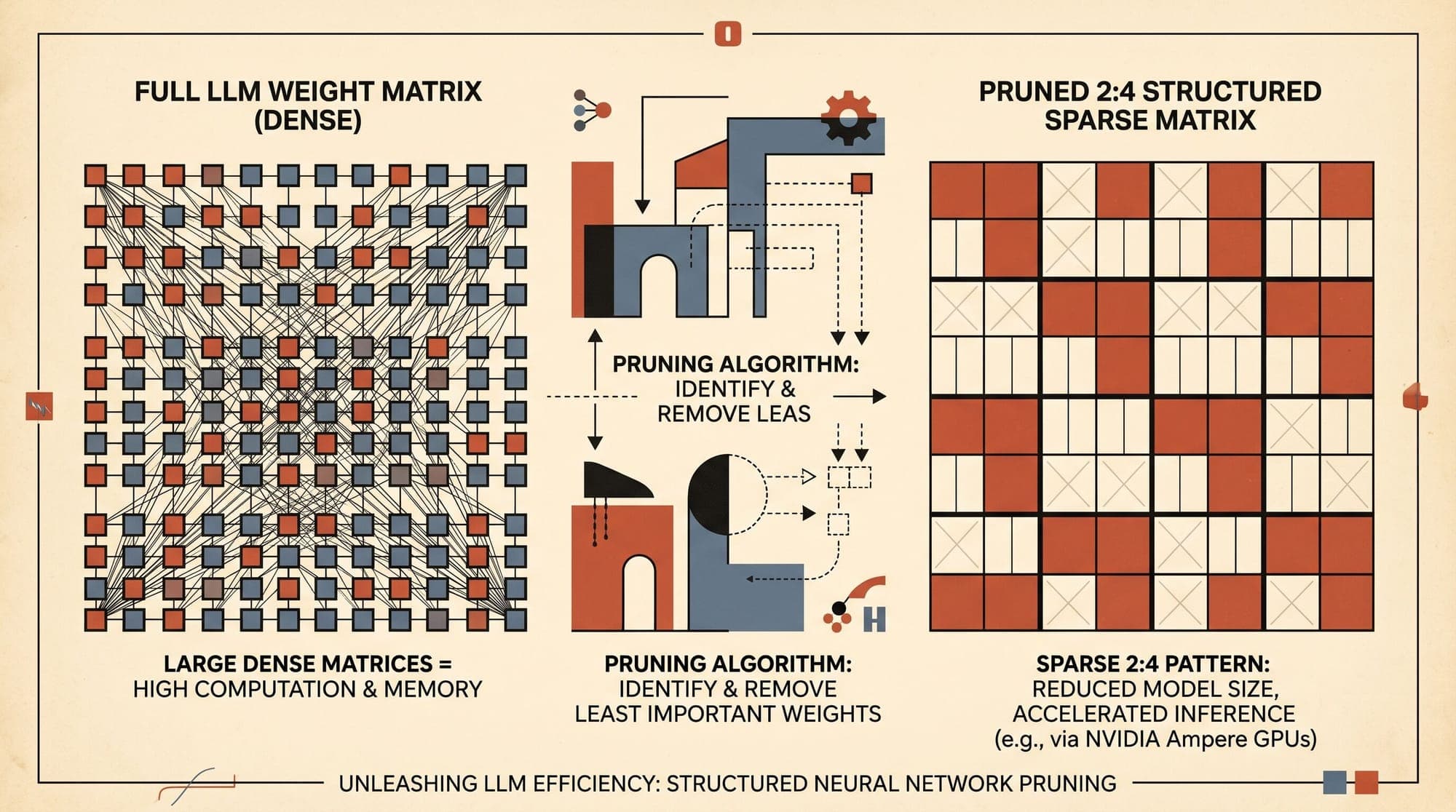
  16. Weight Pruning in Large Language Models: Mathematical Foundations of Magnitude Pruning, Wanda, SparseGPT, and Semi-Structured 2:4 Sparsity

    Weight Pruning in Large Language Models: Mathematical Foundations of Magnitude Pruning, Wanda, SparseGPT, and Semi-Structured 2:4 Sparsity As frontier transformer models expand past hundreds of billions of parameters, model serving is constrained by memory capacity and memory bandwidth. In autoregressive token generation, memory bandwidth dominates latency because memory-bound matrix-vector operations require streaming entire weight matrices from High Bandwidth Memory (HBM) to on-chip SRAM for

    Education
    7 min read
  17. OpenCode Breach Exposes Third-Party API Keys in Targeted Distillation Attack

    Anomaly Innovations, the developer behind the open-source AI coding tool OpenCode, confirmed that a security breach exposed third-party API credentials stored by approximately 1.4% of its Console users. The unauthorized access targeted an internal legacy system during decommissioning and was leveraged to execute automated model distillation attacks against frontier AI providers. Update, Oct 19 The exposed keys are the ones users saved in OpenCode Console, the company's optional hosted service

    Security
    3 min read
  18. Embedding and Reranker Serving Engines in Production: Comparing Hugging Face TEI, Infinity, FastEmbed, and vLLM

    Serving dense embedding and reranking models in production involves fundamentally different hardware and execution bottlenecks than autoregressive LLM text generation. While generative decoder models are memory-bandwidth-bound during single-token autoregressive decoding, embedding models (such as BGE-M3, ModernBERT, GTE-Qwen2, and Snowflake Arctic) and cross-encoder rerankers operate purely in encoder or forward-pass pooling mode. They are compute-bound and latency-critical. In retrieval-augmen

    AI
    6 min read
  19. Identity Preference Optimization (IPO): Mathematical Foundations, Overfitting in DPO, and Non-Parametric Preference Alignment

    Identity Preference Optimization (IPO) is a closed-form preference alignment algorithm for large language models developed by researchers at Google DeepMind. Introduced by Azar et al. (2023) in A General Theoretical Paradigm to Understand Learning from Human Preferences, IPO addresses a fundamental failure mode in Direct Preference Optimization (DPO): empirical and theoretical overfitting caused by unbounded surrogate losses and rigid Bradley-Terry preference assumptions. While DPO recasts rein

    AI
    8 min read
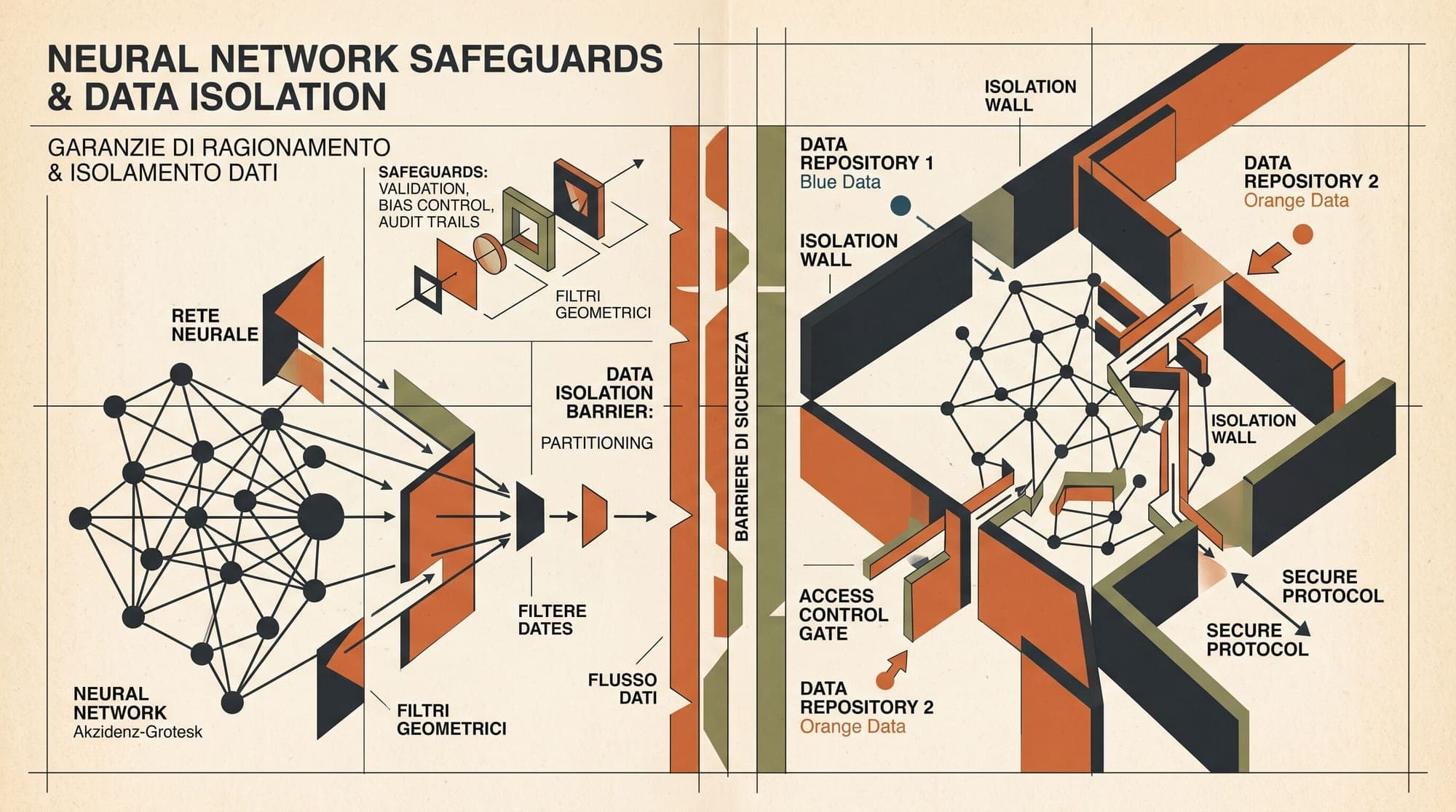
  20. Anthropic Reports 90% to 99% Drop in Reasoning Distillation Extractions Under New Safeguards

    Anthropic has published technical findings detailing its multi-layered defense system against model distillation attacks, reporting a 90% to 99% reduction in reasoning tokens extracted by unauthorized actors. The safeguards combine architectural context locking, multi-stage constitutional classifiers, and aggressive account-level enforcement to protect frontier reasoning chains from being replicated into unaligned or foreign models. Model distillation involves systematically querying a high-cap

    Anthropic
    2 min read