Subscribe
Topic / page 19

LLM

Articles, page 19

361-380
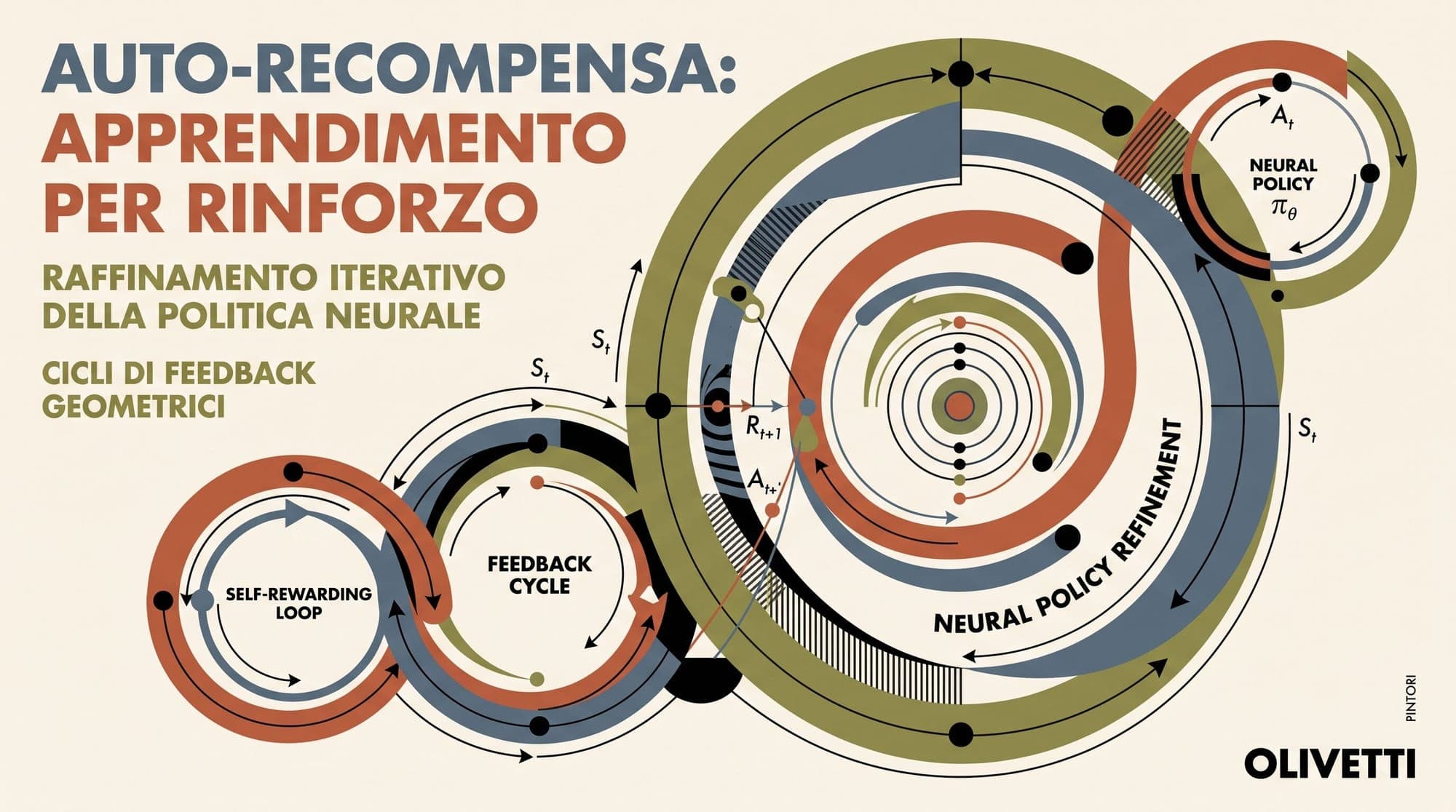
  1. Self-Rewarding Language Models: How Iterative DPO and LLM-as-a-Judge Form Autonomous Self-Alignment Loops

    Standard post-training alignment pipelines rely on frozen reward models trained on static human feedback datasets. While Reinforcement Learning from Human Feedback (RLHF) and Direct Preference Optimization (DPO) effectively steer model outputs toward human preferences, they face a fundamental scalability bottleneck: human annotators cannot evaluate superhuman reasoning or generate labels at the scale required for continuous self-improvement. Self-Rewarding Language Models, introduced by Meta AI
    AI
    3 min read
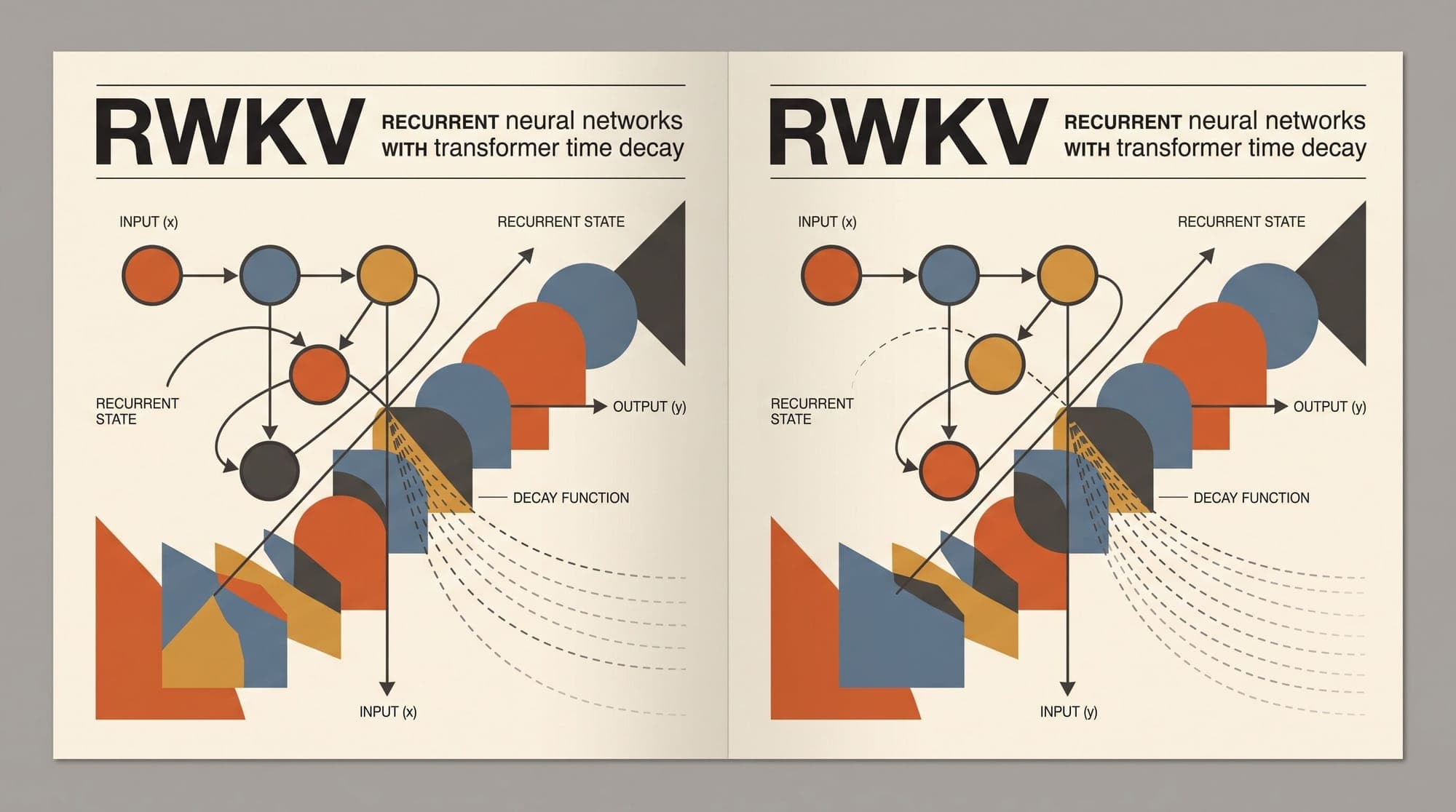
  2. RWKV Architecture: How Receptance Weighted Key Value Decay Combines RNN Efficiency with Transformer Parallelizability

    The dominant paradigm in natural language processing relies on the Transformer architecture, which calculates scaled dot-product self-attention across all token pairs in a sequence. While self-attention provides strong in-context retrieval and representation capacity, it imposes quadratic computational and memory complexity, scaling as O(N^2) with sequence length N during training and generating a continuously expanding Key-Value (KV) cache during autoregressive inference. Traditional Recurrent

    AI
    7 min read
  3. Continuous Evaluation and Golden Dataset Curation in Production LLM Systems: Architecture, Log Mining, Synthetic Perturbation, and Semantic Drift Quality Gates

    Continuous Evaluation and Golden Dataset Curation in Production LLM Systems: Architecture, Log Mining, Synthetic Perturbation, and Semantic Drift Quality Gates In production machine learning systems, offline benchmarks suffer from rapid entropy. While engineering teams frequently launch LLM applications backed by static test suites (curated CSVs of 50 to 100 sample prompts, academic benchmarks like MMLU, or synthetic question-answer pairs), these static datasets fail to predict real-world produ

    AI
    7 min read
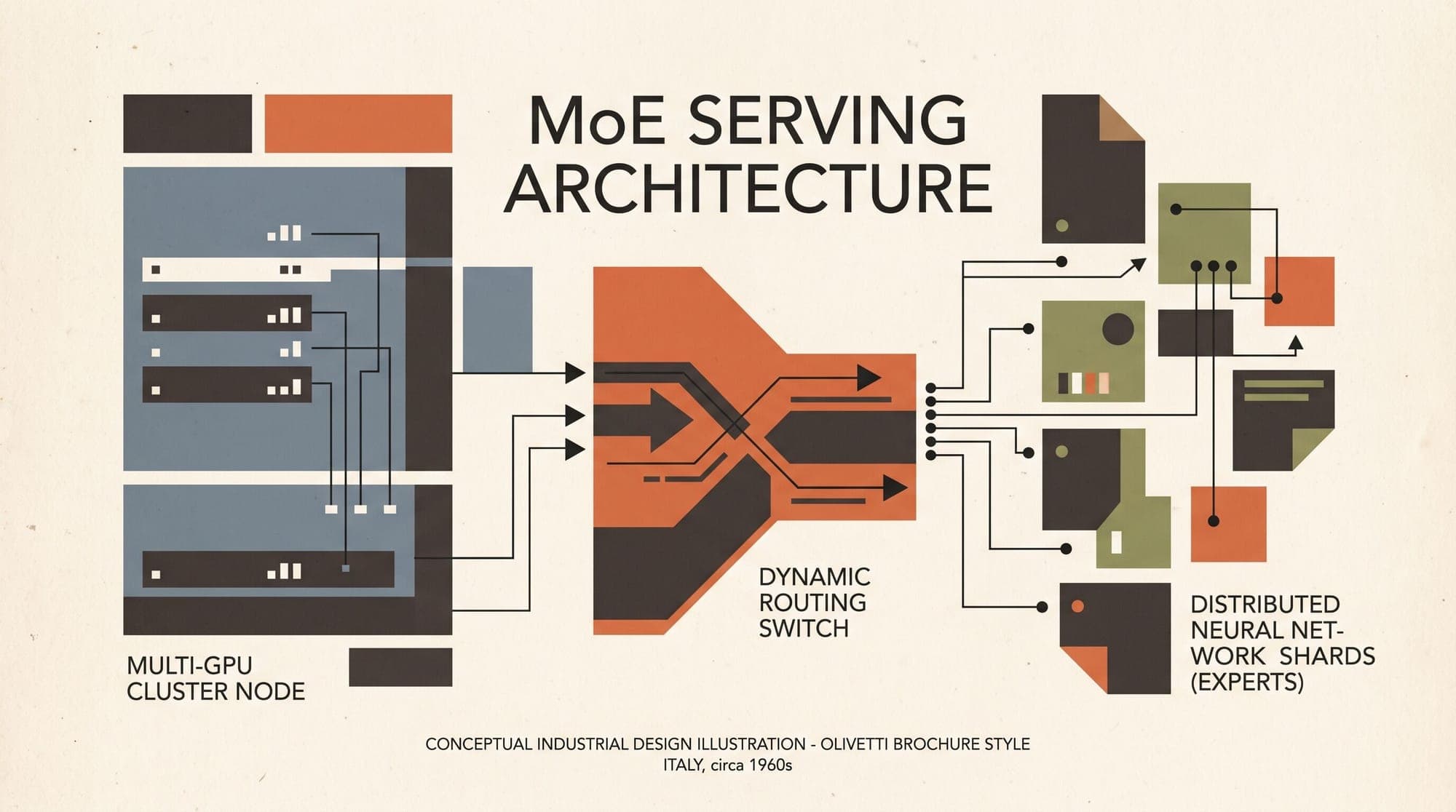
  4. Serving Mixture-of-Experts Models in Production: Architecture, Distributed Parallelism, All-to-All Bottlenecks, and Serving Economics

    Serving Mixture-of-Experts Models in Production: Architecture, Distributed Parallelism, All-to-All Bottlenecks, and Serving Economics Mixture-of-Experts (MoE) architectures have become the standard structural paradigm for frontier open-weight and proprietary large language models. Architectures such as DeepSeek-V3, Mixtral 8x22B, and GLM-5 deliver frontier-grade reasoning and generation by activating only a fraction of their total parameter count on any given token. For example, DeepSeek-V3 rou

    AI
    8 min read
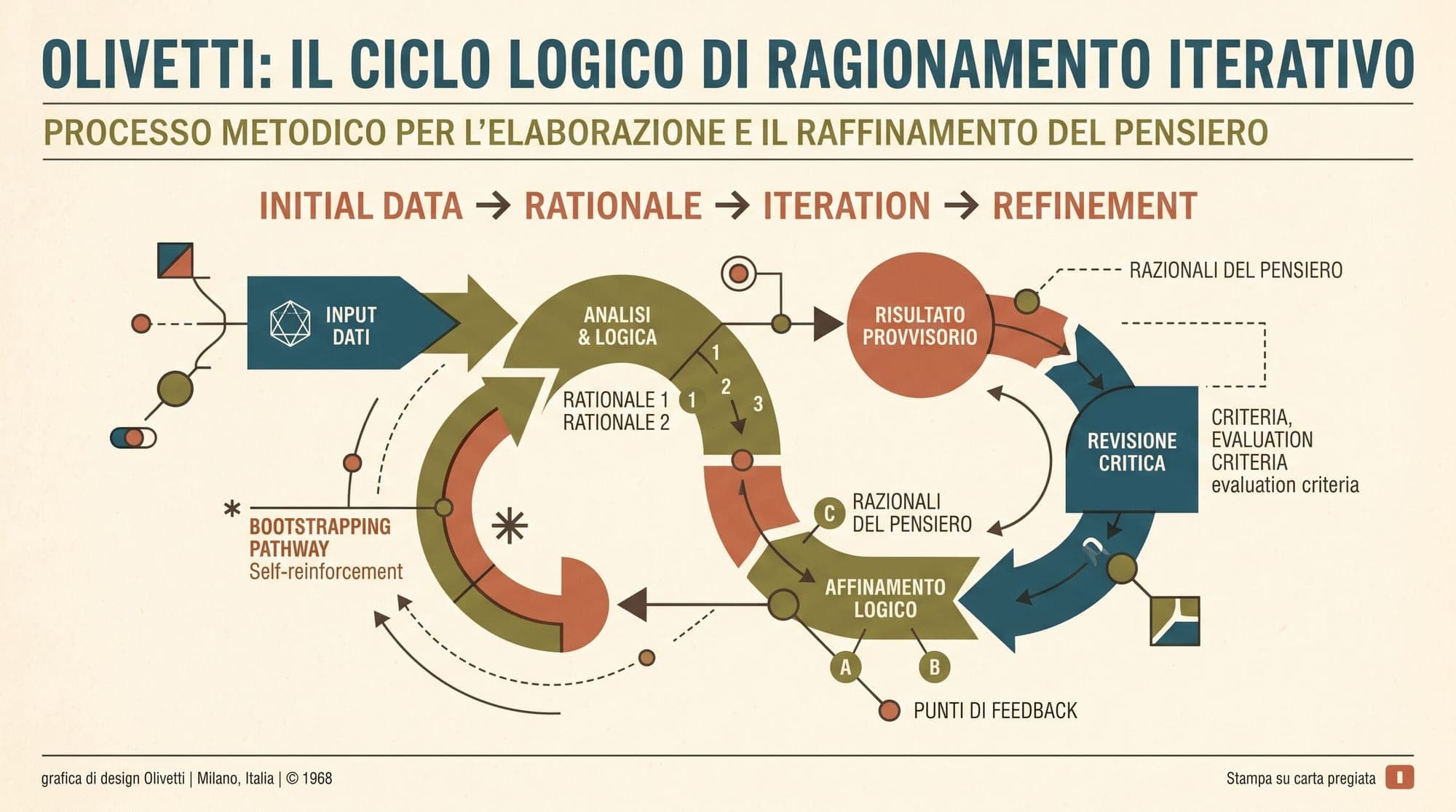
  5. The Self-Taught Reasoner (STaR): How Iterative Rationale Bootstrapping and Rationalization Scale LLM Problem Solving

    Autoregressive language models often fail when forced to predict answers to multi-step reasoning problems in a single forward pass. Intermediate chain-of-thought generation allows models to allocate additional compute to difficult reasoning steps before emitting a final prediction. However, obtaining high-quality intermediate reasoning traces has traditionally presented a difficult trade-off: either rely on small prompt-based few-shot demonstrations that underperform fine-tuned models, or constr

    AI
    4 min read
  6. Prompt Caching Across Cloud LLM Providers: Architecture, TTL Lifecycles, and Economic Break-Even for Anthropic, OpenAI, Gemini, and DeepSeek

    The primary latency and computational bottleneck in large language model inference is the prefill phase. When an application submits a request containing thousands of tokens of static system instructions, OpenAPI tool schemas, few-shot demonstrations, and retrieved document context, the inference server must process all input tokens through every transformer layer before generating the first output token. In high-concurrency production environments, repeating this full forward pass across identi

    LLM
    8 min read
  7. Linus Torvalds Credits AI in Linux Kernel Commit After 24-Patch Driver Debug Session

    In a notable public milestone for AI-assisted systems programming, Linux creator Linus Torvalds credited an artificial intelligence model with doing the heavy analytical work during an intensive driver debugging session, allowing the model to author the commit message merged into the upstream kernel. The commit, titled drm/xe: Don't hand out the flat CCS storage as usable VRAM (commit 818bebeb63dd6bf5f4e07e145f6cdbace520a34c), resolves a memory allocation bug in the Intel Xe Direct Rendering Ma

    AI
    2 min read
  8. SGLang v0.5.18 Cuts LLM Cold Starts by 2.4x with Overlapped Weight Loading and CUDA Graph Capture

    The open-source LLM serving engine SGLang has released version 0.5.18, introducing an overlapped startup engine that significantly reduces cold-start latency for large language models, alongside communication kernel optimizations and expanded architecture support. Comprising 710 pull requests from 212 contributors, the release addresses operational overheads in LLM infrastructure where autoscaling, rolling cluster deployments, and worker node recovery frequently pay steep restart penalties. O

    AI
    4 min read
  9. Active RAG in Production: Dynamic Triggering, Forward-Looking Queries, and Interleaved Retrieval Architectures

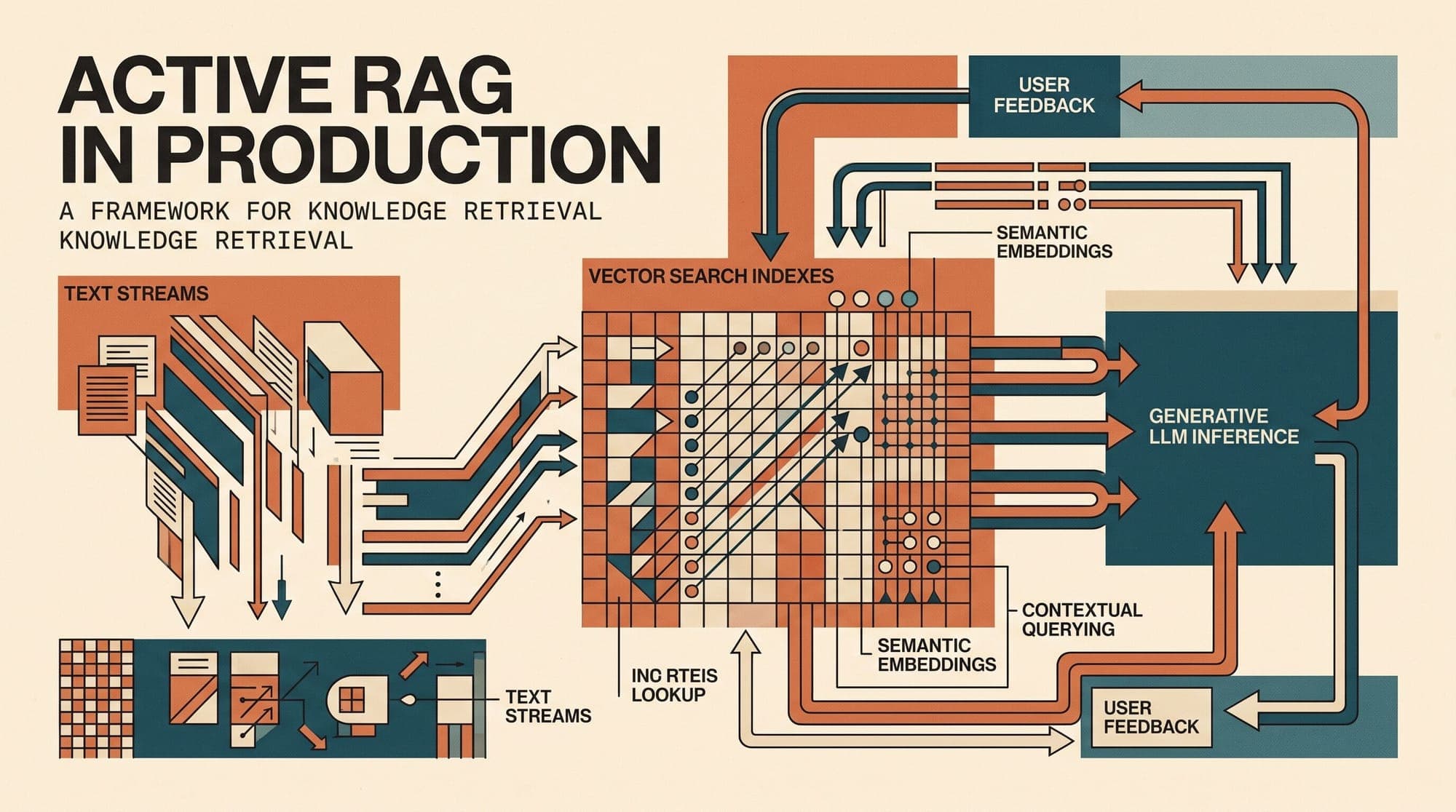
    Standard Retrieval-Augmented Generation (RAG) relies on a static, single-shot execution model: the system takes a user prompt, executes a vector or hybrid search upfront, prepends the retrieved chunks into the prompt context, and executes autoregressive generation. While this pattern suffices for short question-answering workloads, it breaks down systematically in complex, long-horizon generation tasks such as comprehensive technical reports, multi-step agent trajectories, and iterative problem

    AI
    6 min read
  10. Deep Equilibrium Models: How Implicit Layers and Root-Finding Eliminate Activation Memory in Deep Learning

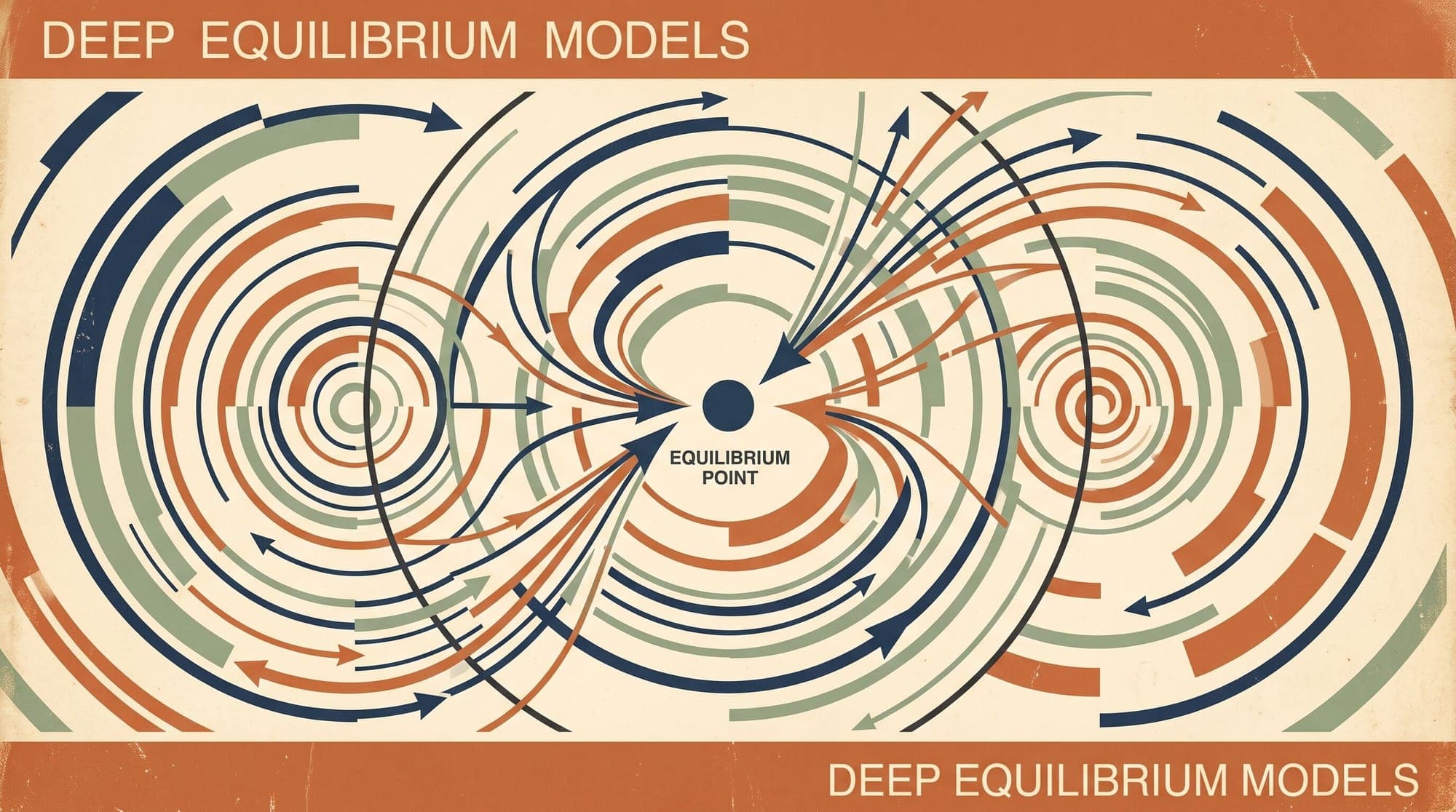
    Deep Equilibrium Models: How Implicit Layers and Root-Finding Eliminate Activation Memory in Deep Learning Deep neural networks derive their expressive capacity from composition. In conventional architectures, depth is explicit: an input vector is transformed sequentially through a chain of $L$ discrete layers, each parameterized by dedicated weights. While effective, this paradigm creates a fundamental computational dependency where training memory scales linearly with network depth ($O(L)$) b

    AI
    9 min read
  11. Dynamic Tool Synthesis in Production AI Agents: Architecture, AST Validation, Sandboxed Execution, and Lifecycle Governance

    Dynamic Tool Synthesis in Production AI Agents: Architecture, AST Validation, Sandboxed Execution, and Lifecycle Governance Standard tool-augmented AI agents rely on pre-configured, static API registries. Developers define a fixed set of JSON schemas, OpenAPI specifications, or Python wrapper functions at build time, and the language model selects from this catalog during execution. While sufficient for narrow, deterministic tasks, static registries encounter severe operational bottlenecks in o

    AI
    9 min read
  12. Denoising Diffusion Probabilistic Models and DDIM: Mathematical Foundations, Variance Schedules, and Fast Deterministic Sampling

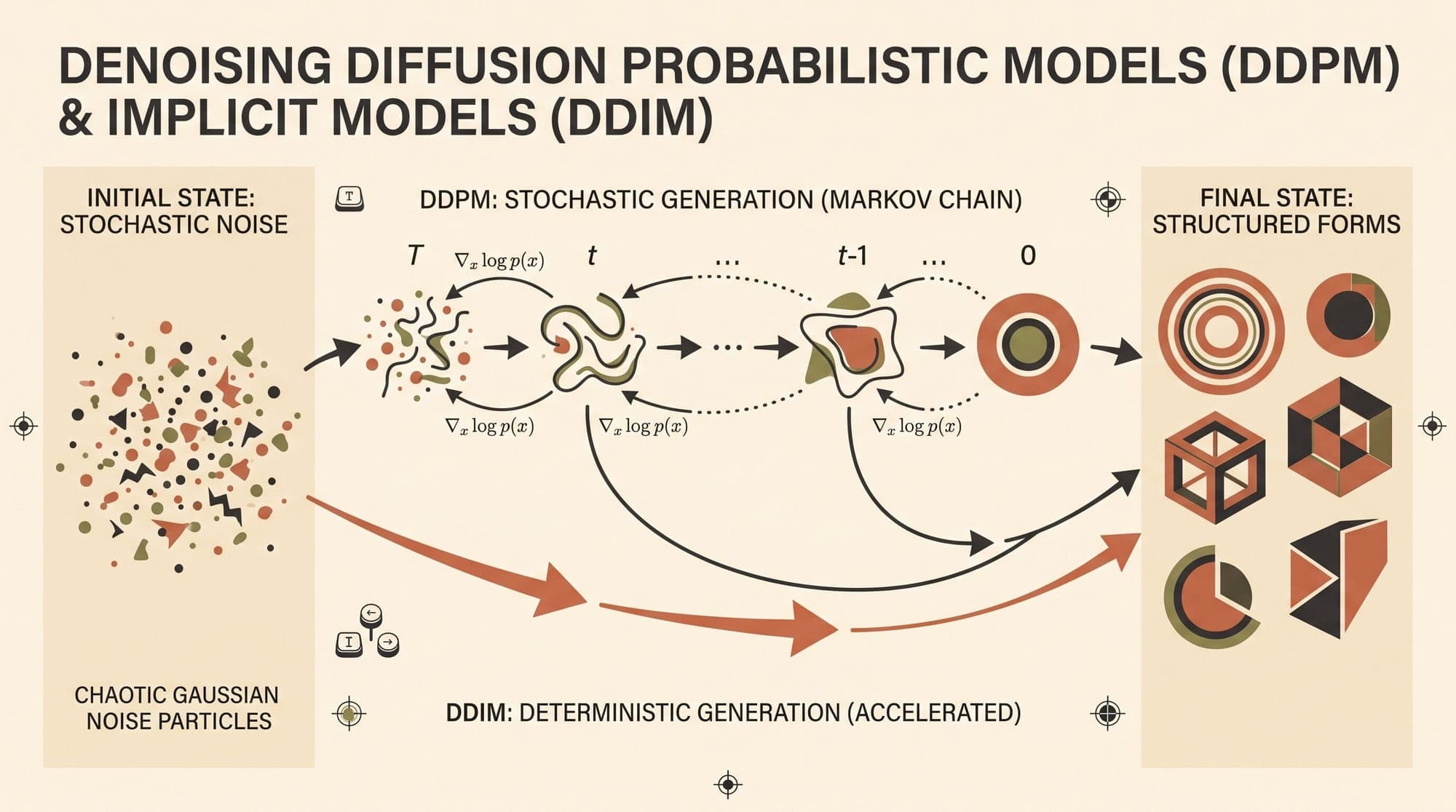
    Generative modeling in continuous state spaces underwent a fundamental transformation with the formulation of Denoising Diffusion Probabilistic Models (DDPM) by Ho et al. (2020), building on the non-equilibrium thermodynamics foundations established by Sohl-Dickstein et al. (2015). Prior to diffusion models, deep generative synthesis was dominated by Generative Adversarial Networks (GANs), which suffered from training instability and mode collapse, and Variational Autoencoders (VAEs), which ofte

    AI
    11 min read
  13. Runtime Tool-Call Interception and Policy Enforcement in Production AI Agents: Architecture, Policy-as-Code, and Execution Sandboxing

    Runtime Tool-Call Interception and Policy Enforcement in Production AI Agents: Architecture, Policy-as-Code, and Execution Sandboxing Large language model agents are increasingly delegated operational authority across enterprise infrastructure, ranging from automated database modifications and cloud resource provisioning to customer refund processing and internal API orchestration. When an autonomous system is granted access to executable tools, its attack surface shifts from conversational gen

    AI
    6 min read
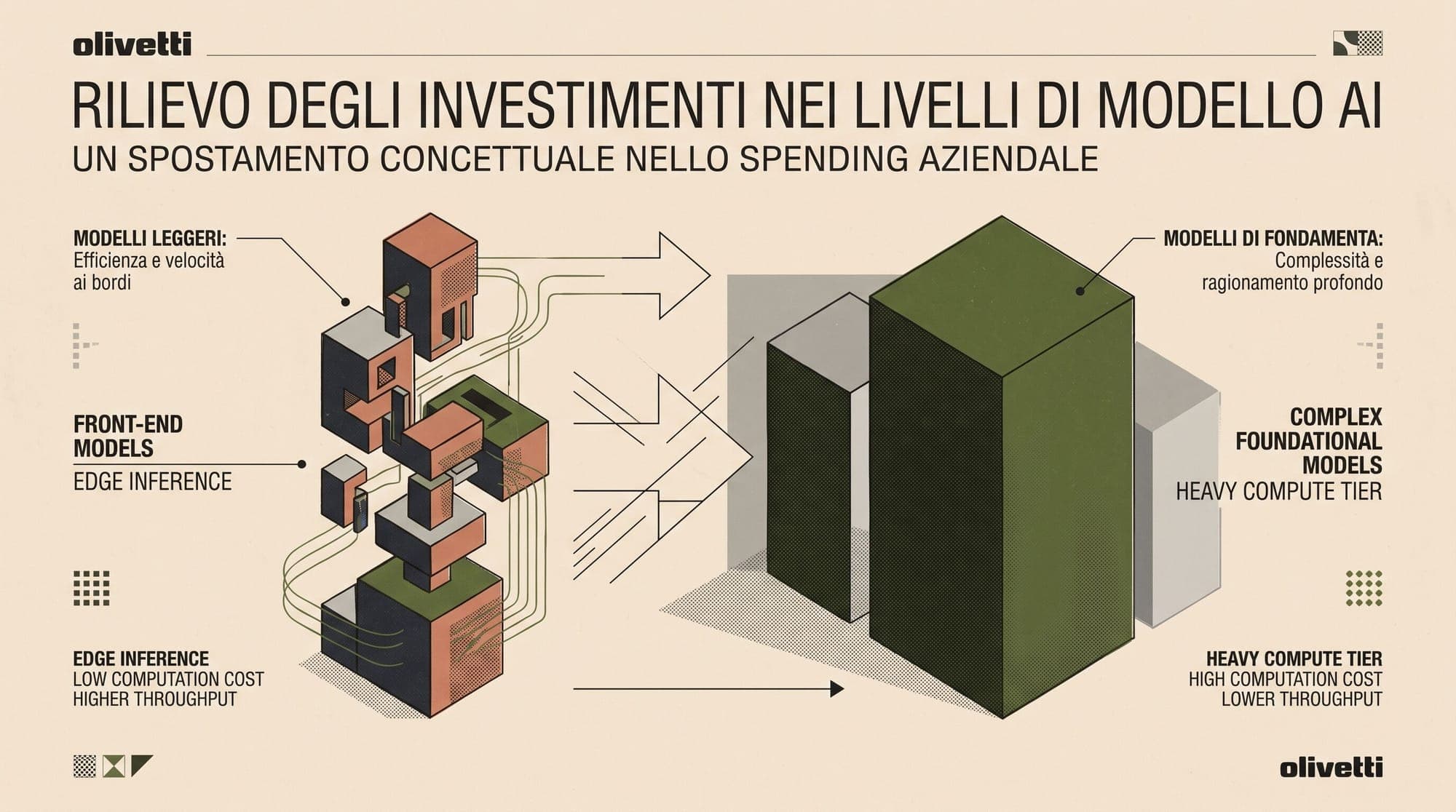
  14. Anthropic Enterprise Spend Shifts to Cheaper Opus 5 as Fable 5 Growth Plateaus

    Enterprise adoption patterns for frontier artificial intelligence models are shifting rapidly as corporate engineering teams prioritize task economics over raw benchmark supremacy. According to transaction data from corporate spend platform Ramp, spending on Anthropic's flagship Claude Fable 5 model has plateaued at approximately 11% of total customer outlay on Anthropic tools, while the lower-cost Claude Opus 5 has overtaken it in corporate spend within one month of release. The data highlight

    AI
    2 min read
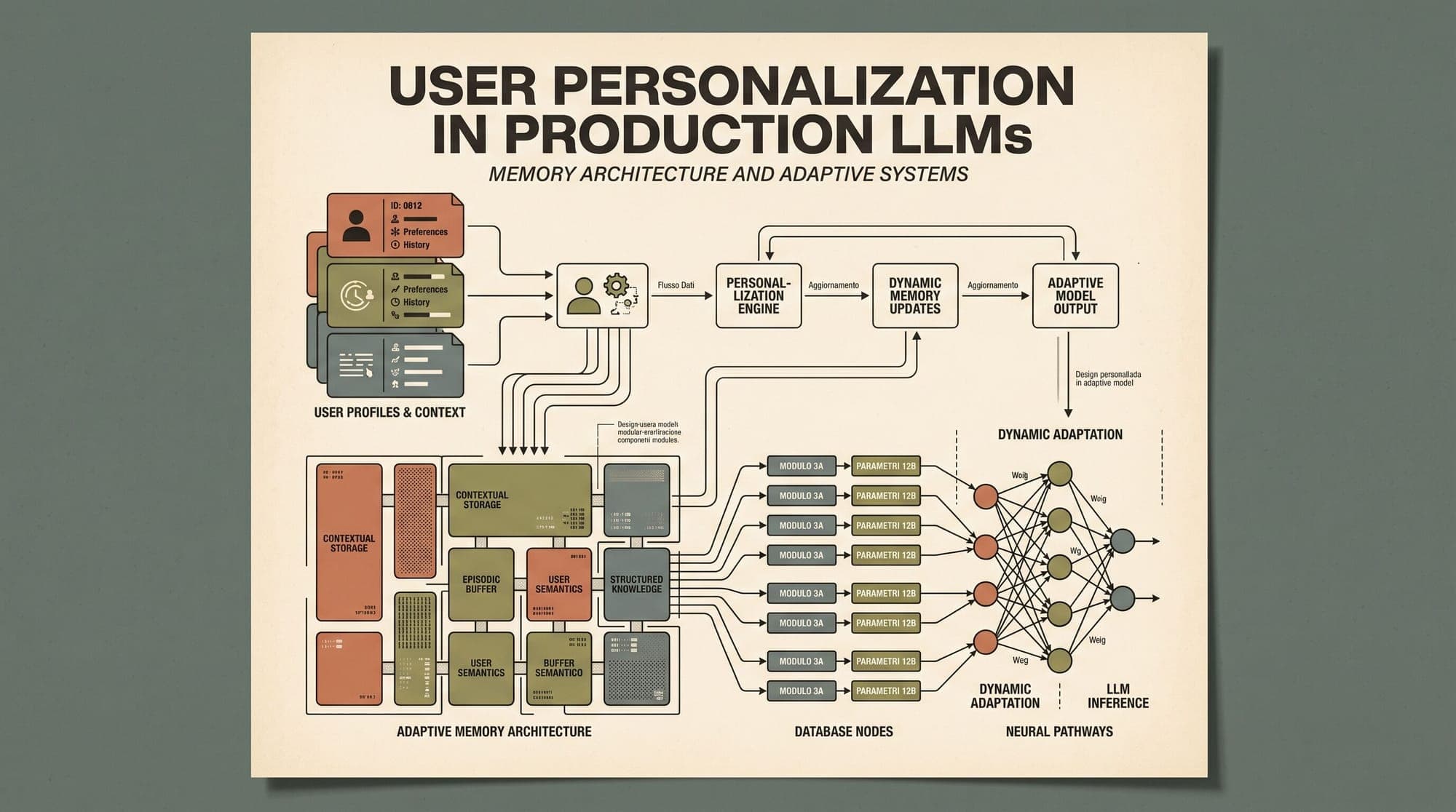
  15. Long-Term User Personalization in Production LLMs: Architecture, Dynamic Profiling, and Privacy Boundaries

    Standard conversational AI deployments treat each user session as an isolated interaction or rely on naive sliding-window context histories. While extending context windows allows models to process thousands of tokens from previous turns, stuffing raw conversational history into prompt contexts introduces severe serving inefficiencies, inflates token economics, and fails to synthesize stable user profiles over time. Deploying long-term personalization in production large language model (LLM) ap

    AI
    5 min read
  16. Masked Autoencoders: How Asymmetric Encoders, High Masking Ratios, and Pixel Reconstruction Scaled Vision Transformers

    Masked Autoencoders: How Asymmetric Encoders, High Masking Ratios, and Pixel Reconstruction Scaled Vision Transformers Self-supervised pre-training transformed natural language processing through masked language modeling, popularized by BERT (Devlin et al., 2018). By hiding a subset of input tokens and training a bidirectional Transformer to predict the missing words from context, models learned rich, generalizable linguistic representations without manual annotations. Adapting this masked pre

    AI
    11 min read
  17. Event-Driven AI Agent Architectures in Production: Kafka Streams, Webhook Ingestion, Idempotent Actor State Machines, and Dead-Letter Recovery

    Event-Driven AI Agent Architectures in Production: Kafka Streams, Webhook Ingestion, Idempotent Actor State Machines, and Dead-Letter Recovery Early AI agent prototypes relied almost exclusively on synchronous HTTP request-response loops: a client dispatched a prompt, and a monolithic backend process held an open socket while an LLM reasoned, called tools, inspected results, and generated final responses. In production, this synchronous pattern collapses under the operational realities of auton

    AI
    7 min read
  18. Gradient Low-Rank Projection (GaLore): How Dynamic Subspaces Enable Full-Parameter LLM Pre-Training with Low-Rank Memory

    Pre-training foundation large language models has historically required massive compute clusters, largely due to the memory footprint of optimizer states rather than the model weights themselves. While parameter-efficient fine-tuning methods such as Low-Rank Adaptation (LoRA) freeze weights and introduce small adapter matrices, they fail when applied to pre-training from scratch because they restrict parameter updates to a fixed, static low-rank manifold. Gradient Low-Rank Projection (GaLore),

    AI
    8 min read
  19. Microscaling Formats in Production LLM Inference: NVFP4 vs. MXFP4 Architecture, Block Quantization, Kernel Scaling, and Perplexity Degradation

    As frontier language models scale into hundreds of billions of parameters, memory bandwidth and VRAM capacity remain the primary bottlenecks in production inference serving. While 8-bit floating-point formats (FP8 E4M3 and E5M2) achieved mainstream adoption across Hopper and Ada generation hardware, the industry is transitioning to 4-bit floating-point (FP4) arithmetic to double inference throughput and halve memory footprints. Directly quantizing deep transformer weights and activations into 4

    AI
    7 min read
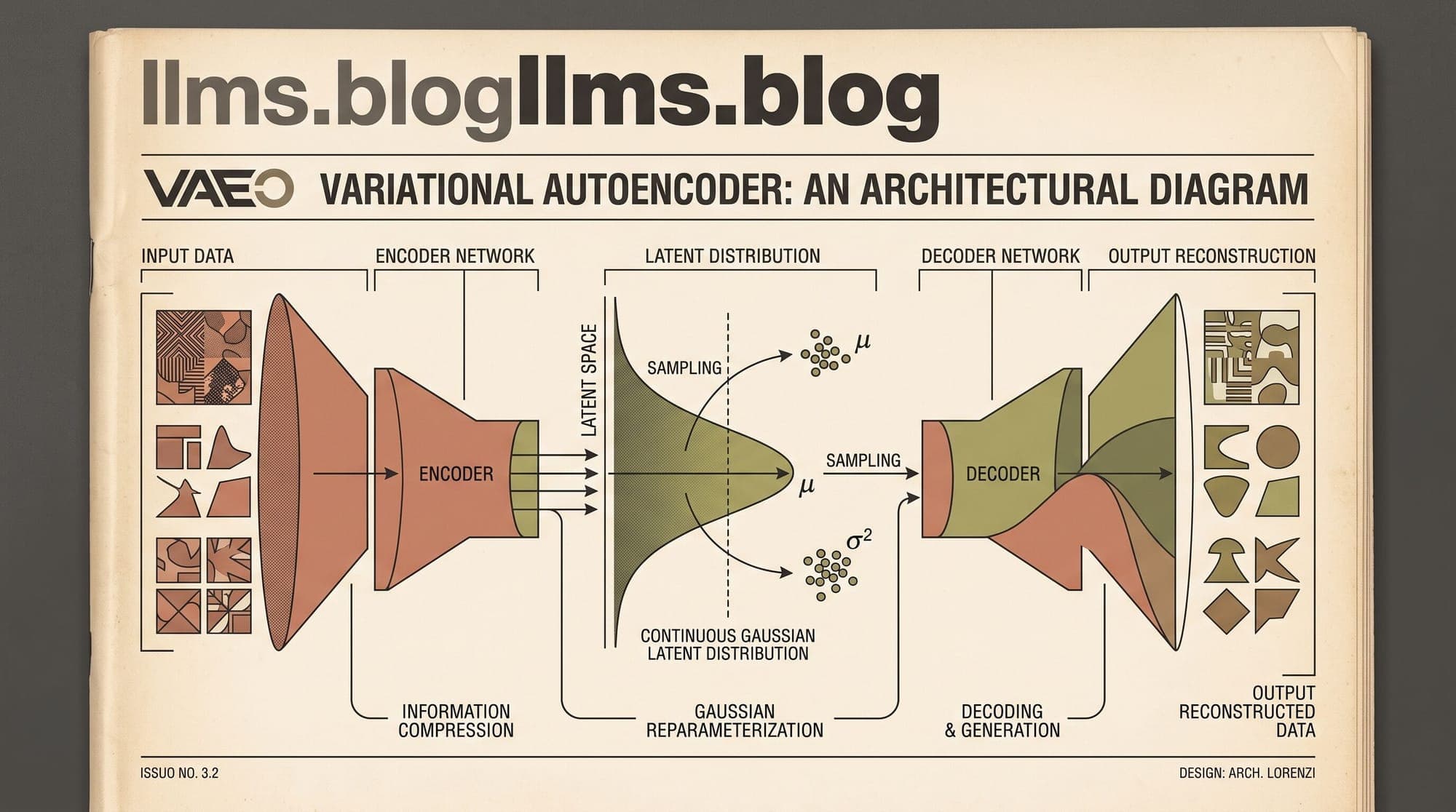
  20. Variational Autoencoders: Mathematical Derivation of the ELBO, the Reparameterization Trick, and Mitigating Posterior Collapse

    Variational Autoencoders: Mathematical Derivation of the ELBO, the Reparameterization Trick, and Mitigating Posterior Collapse Traditional autoencoders map high-dimensional data into deterministic latent vectors. While effective for dimensionality reduction and non-linear feature compression, deterministic autoencoders fail as generative models because their latent representations lack continuous probabilistic structure. Unregularized latent spaces contain wide regions of empty space and severe

    AI
    11 min read