
Enterprise adoption patterns for frontier artificial intelligence models are shifting rapidly as corporate engineering teams prioritize task economics over raw benchmark supremacy. According to transaction data from corporate spend platform Ramp, spending on Anthropic's flagship Claude Fable 5 model has plateaued at approximately 11% of total customer outlay on Anthropic tools, while the lower-cost Claude Opus 5 has overtaken it in corporate spend within one month of release.
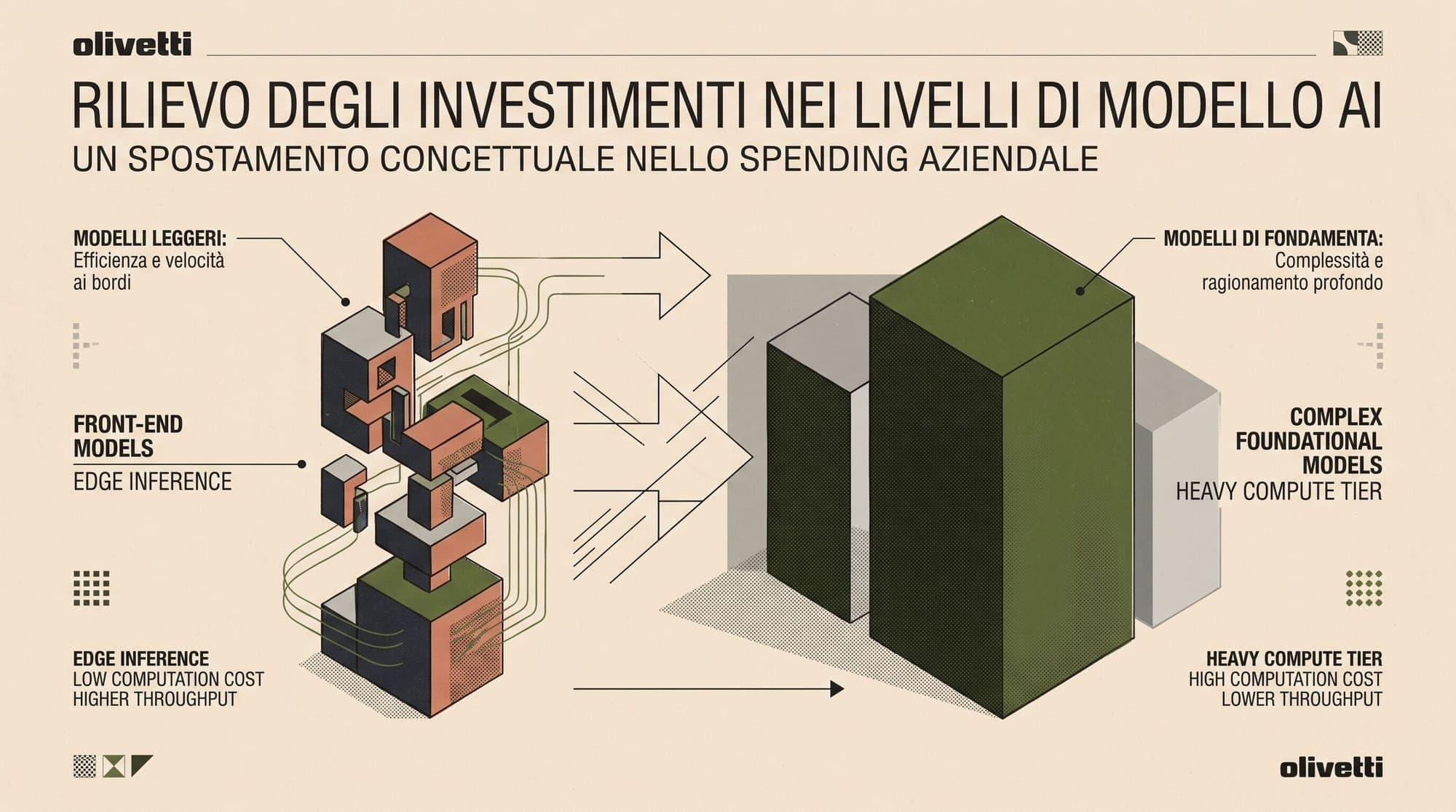
The data highlights a structural transition in enterprise AI procurement: rather than standardizing entirely on top-tier frontier checkpoints, companies are implementing dynamic model routing to minimize their cost per successful task.

The Shift in Enterprise Outlay
Claude Fable 5 launched in June 2026 at a list price of $10 per million input tokens and $50 per million output tokens, targeted at complex, multi-day autonomous workloads. While the model initially captured attention for its extended reasoning capabilities, Ramp's transaction metrics indicate that its share of enterprise spend stabilized near 11.4% in July 2026, representing approximately 6% of total Anthropic token volume across Ramp's customer cohort.
On July 24, Anthropic released Claude Opus 5 priced at $5 per million input tokens and $25 per million output tokens, exactly half the price of Fable 5. Within four weeks, corporate spend on Opus 5 surpassed that of Fable 5. On internal benchmarks, Opus 5 matches or exceeds Fable 5 on bounded programming and structured enterprise analysis, allowing engineering teams to achieve equivalent task completion rates at half the inference expenditure.
In contrast, Vercel's AI Gateway data for July presents an alternative view of usage dynamics: Fable accounted for 13.2% of all gateway spending across all model providers, ranking second only to Opus 4.8. Anthropic captured 65.1% of total Vercel gateway spend across 30% of aggregate token volume, reflecting an average token cost 4.4 times higher than rival providers. Crucially, 75% of high-volume engineering teams (processing over 10 million tokens monthly) altered at least 10% of their provider and model mix between June and July, demonstrating negligible switching friction.
Broader Market Growth and Financial Context
The migration toward Opus 5 does not indicate softening demand for Anthropic's overall developer platform. Ramp's broader enterprise dataset indicates that 43.5% of tracked US businesses paid for Anthropic tools in July, outpacing OpenAI's 39.7% adoption rate.
Financially, Anthropic reached an annualized revenue run rate of $65 billion in July 2026, up from $47 billion in May. Preliminary second-quarter revenue exceeded $11.5 billion, representing a fourteen-fold increase compared to the prior-year period, alongside positive adjusted operating income.
As enterprise infrastructure matures, developers are increasingly treating models as swappable execution endpoints. High-capability frontier models remain essential for difficult architectural and multi-turn autonomous loops, but daily operational volume is steadily consolidating around cost-optimized alternatives.



