
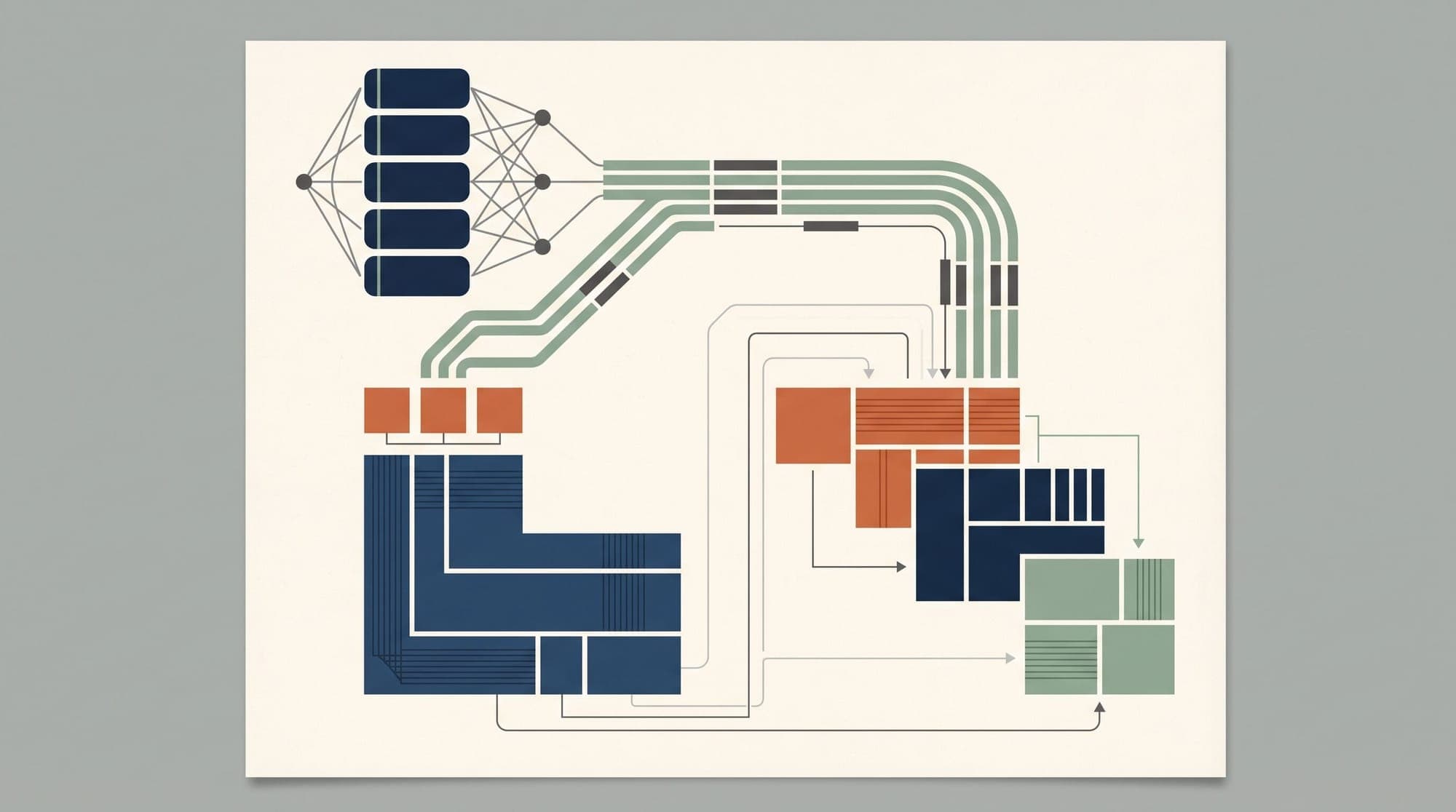
The primary latency and computational bottleneck in large language model inference is the prefill phase. When an application submits a request containing thousands of tokens of static system instructions, OpenAPI tool schemas, few-shot demonstrations, and retrieved document context, the inference server must process all input tokens through every transformer layer before generating the first output token. In high-concurrency production environments, repeating this full forward pass across identical prompt prefixes consumes vast GPU memory bandwidth and drives up compute costs.
To solve this inefficiency, major cloud LLM providers have transitioned from stateless request processing to state-aware prompt caching architectures. By retaining computed Key-Value (KV) cache tensors in GPU High Bandwidth Memory (HBM), host DRAM, or non-volatile storage across requests, inference engines can bypass prefill computation on common prefixes.
However, the major foundation model providers (Anthropic, OpenAI, Google Cloud, and DeepSeek) have implemented fundamentally different caching paradigms. These systems diverge in their activation mechanisms (explicit developer breakpoints versus automatic background caching), memory eviction policies (sliding time-to-live, dynamic least-recently-used, or explicit storage leases), alignment requirements, and cost structures. Designing resilient, multi-provider LLM pipelines requires understanding the exact technical trade-offs, break-even query economics, and prompt engineering constraints of each platform.
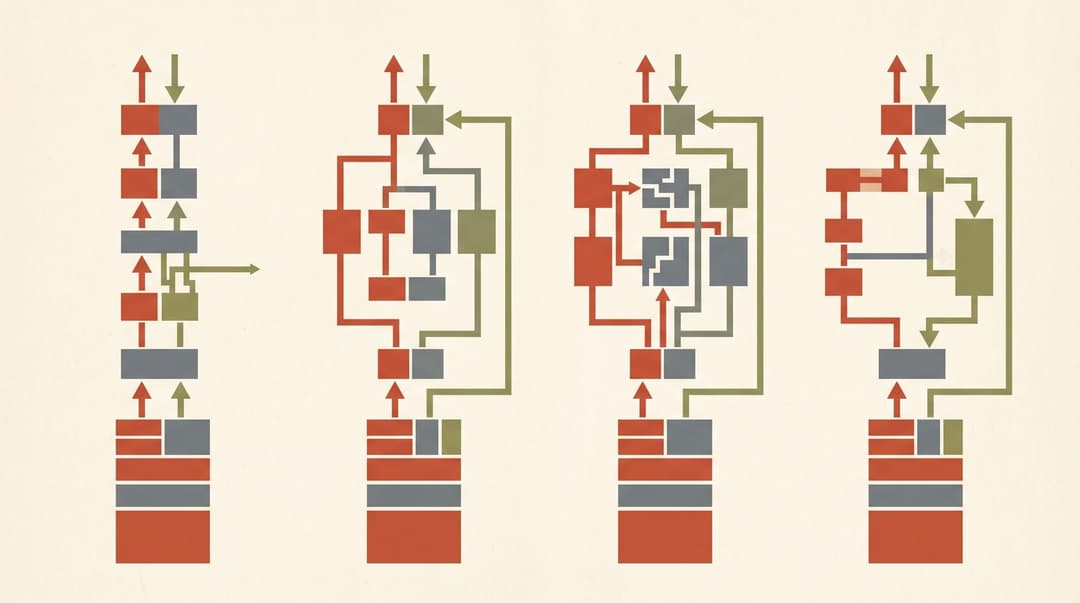
Architectural Approaches Across Major Providers
1. Anthropic: Explicit Breakpoints with Sliding TTL
Anthropic implemented explicit prompt caching across the Claude 3.5 Sonnet, Claude 3.5 Haiku, and Claude 3.0 Opus models. Instead of attempting to infer cacheable boundaries automatically, Anthropic requires developers to annotate prompt components with an explicit cache_control marker:
{
  "type": "text",
  "text": "...",
  "cache_control": {"type": "ephemeral"}
}- Breakpoint Limit: Up to 4 explicit breakpoints per API request, which can be placed on system messages, tool definitions, or individual conversation turns.
- Minimum Token Threshold: 1,024 tokens for Claude 3.5 Sonnet and Claude 3.0 Opus; 2,048 tokens for Claude 3.5 Haiku. Prompts with fewer tokens than the threshold are processed uncached.
- Eviction Model: A default 5-minute Time-To-Live (TTL). Every subsequent request that successfully hits a cached prefix automatically resets the 5-minute countdown, keeping active sessions resident indefinitely.
- Prefix Invariance: Caching is strictly sequential from the first token. If any token before a breakpoint changes (such as an altered system instruction or modified tool parameter), that breakpoint and all subsequent breakpoints are invalidated.
- Economic Structure: Anthropic applies a 25% surcharge on initial cache writes (1.25x base input price) and grants a 90% discount on cache reads (0.10x base input price).
2. OpenAI: Automatic Prefix Caching with 128-Token Bucketing
OpenAI provides fully automatic prompt caching across GPT-4o, GPT-4o mini, o1, o3-mini, and GPT-4.5. Developers do not need to modify request payloads or specify breakpoints.
- Activation Model: Fully implicit. The routing infrastructure computes prefix hashes of incoming requests and matches them against warm KV cache blocks on the serving cluster.
- Minimum Token Threshold: 1,024 tokens.
- Granularity and Alignment: Prefix matching operates in discrete 128-token increments. A prompt containing 1,150 identical prefix tokens will match exactly 1,024 cached tokens (8 blocks of 128 tokens); the remaining 126 tokens are processed in standard prefill.
- Eviction Model: Dynamic Least Recently Used (LRU) eviction managed at the cluster level. The effective TTL typically ranges from 5 to 10 minutes during standard operating conditions, but caches may be evicted sooner during severe cluster load spikes.
- Economic Structure: OpenAI charges no cache write surcharge (1.0x base input price on cache misses) and provides a 50% discount on cache hits (0.50x base input price).
3. Google Gemini: Explicit Resource Provisioning with Storage Leases
Google Cloud took an enterprise storage approach for Gemini 1.5 Pro, Gemini 1.5 Flash, and Gemini 2.0. Rather than caching transient API requests on the fly, developers explicitly create a standalone CachedContent resource via Vertex AI or Google AI Studio and pass its resource name (cached_content) in subsequent generation calls.
- Activation Model: Explicit REST or gRPC resource creation. The cache object is created independently of inference queries.
- Minimum Token Threshold: 32,768 tokens. Google designed this mechanism for long-form context: extensive codebases, multi-hour video streams, audio corpora, or large collections of technical documentation.
- Eviction Model: Deterministic user-defined TTL. The default lifespan is 1 hour, which can be configured or extended programmatically via PATCH requests. Caches are guaranteed not to be evicted before their configured expiration.
- Economic Structure: A two-part billing model consisting of a flat hourly storage fee ($4.50 per 1M tokens per hour on Gemini 1.5 Pro; $1.00 per 1M tokens per hour on Gemini 1.5 Flash) combined with a 75% discount on cached input token execution ($1.25/1M on Pro vs. $5.00/1M uncached).
4. DeepSeek: Multi-Tier Radix Caching with MLA Compression
DeepSeek implemented automatic prompt caching across DeepSeek-V3 and DeepSeek-R1, leveraging their native Multi-Head Latent Attention (MLA) architecture and a Radix tree indexing backend.
- Activation Model: Fully automatic. Incoming token sequences are matched against an in-memory and NVMe-backed Radix tree index on multi-tenant inference nodes.
- Minimum Token Threshold: 64 tokens. Because MLA compresses KV cache projections into low-rank latent vectors (reducing KV cache memory footprint by over 80% compared to standard MHA), DeepSeek can afford fine-grained prefix caching at low token boundaries.
- Eviction Model: Tiered eviction hierarchy (GPU HBM to Host DRAM to Local NVMe SSD). Cache hits that spill to DRAM or NVMe experience a minor latency penalty (tens of milliseconds) to reload weights but avoid GPU recomputation.
- Economic Structure: Zero cache write surcharge and a 90% discount on cache hits ($0.014 per 1M tokens cached vs. $0.14 per 1M tokens uncached on DeepSeek-V3).
Comparative Specifications Summary
Provider Comparison Matrix:

1. Anthropic Claude
   - Activation: Explicit (cache_control: {"type": "ephemeral"})
   - Minimum Threshold: 1,024 tokens (Sonnet/Opus) / 2,048 tokens (Haiku)
   - Alignment: Exact prefix to breakpoint (up to 4 breakpoints)
   - Write Surcharge: +25% (1.25x base input price)
   - Read Discount: 90% discount (0.10x base input price)
   - Eviction: 5-minute sliding TTL (auto-resets on cache hit)

2. OpenAI (GPT-4o, o1, o3, GPT-4.5)
   - Activation: Automatic (Prefix Hash Routing)
   - Minimum Threshold: 1,024 tokens
   - Alignment: 128-token chunk boundaries
   - Write Surcharge: None (1.0x base input price)
   - Read Discount: 50% discount (0.50x base input price)
   - Eviction: Dynamic LRU (5 to 10 minute typical lifespan)

3. Google Gemini (1.5 Pro/Flash, 2.0)
   - Activation: Explicit (CachedContent resource creation)
   - Minimum Threshold: 32,768 tokens
   - Alignment: Full resource payload
   - Write Surcharge: Hourly storage fee ($4.50/1M/hr on Pro, $1.00/1M/hr on Flash)
   - Read Discount: 75% discount (0.25x base input price)
   - Eviction: Fixed TTL lease (default 1 hour, configurable)

4. DeepSeek (DeepSeek-V3, DeepSeek-R1)
   - Activation: Automatic (Radix Tree prefix index)
   - Minimum Threshold: 64 tokens
   - Alignment: Node-level Radix prefix
   - Write Surcharge: None (1.0x base input price)
   - Read Discount: 90% discount (0.10x base input price)
   - Eviction: Multi-tier LRU (GPU HBM -> Host DRAM -> NVMe SSD)
Mathematical Break-Even Analysis and Query Economics
Calculating the economic viability of prompt caching depends on whether the provider levies a write surcharge, an ongoing storage fee, or zero write overhead.
Anthropic Break-Even Calculation:
Uncached Cost = N * P_input
Cached Cost   = 1.25 * P_input + (N - 1) * 0.10 * P_input

Setting Uncached Cost = Cached Cost:
N * P_input = 1.25 * P_input + 0.10 * N * P_input - 0.10 * P_input
0.90 * N = 1.15
N_break_even = 1.278 requests (requires >= 2 requests within 5 minutes)
1. Anthropic Break-Even Threshold
Because Anthropic charges a 25% premium on cache creation, a single request that creates a cache without subsequent reuse loses 25% compared to standard execution. However, on the second request within the 5-minute window:
- Uncached cost for 2 requests: 2.00 * P_input
- Cached cost for 2 requests: 1.25 * P_input + 0.10 * P_input = 1.35 * P_input (a 32.5% net savings).
- At 10 requests: 1.25 + (9 * 0.10) = 2.15 * P_input vs. 10.00 * P_input (a 78.5% net savings).
2. OpenAI and DeepSeek Zero-Write Models
Because OpenAI and DeepSeek impose zero write surcharges, the break-even threshold is exactly N = 1. Every cache hit provides immediate margin expansion (50% on OpenAI, 90% on DeepSeek) with zero financial downside on cache misses.
3. Google Gemini Time-Dependent Storage Model
Google Gemini introduces a continuous storage cost. Let S be the storage fee per million tokens per hour ($4.50 for Pro), P_input be base input price ($5.00/1M), and P_cached be cached input price ($1.25/1M). The input savings per query is:
To offset the hourly storage cost S, an application must execute a minimum query frequency Q_min per hour:
For Gemini 1.5 Flash ($1.00/hour storage, saving $0.2625/1M tokens):
If a 100,000-token corpus is queried 20 times per hour on Gemini 1.5 Pro, standard input costs would be $10.00. Using Context Caching, the hourly cost is $0.45 (storage) + $2.50 (execution) = $2.95, delivering a 70.5% net cost reduction.
Prompt Engineering Guidelines for Cache Optimization
To achieve consistent 80%+ cache hit rates across all four providers, engineering teams must adhere to strict prompt assembly conventions:
1. Invariant Prefix Ordering
In transformer attention mechanisms, prompt prefixes must match token-for-token from index 0. Developers must structure prompts in descending order of stability:
- System Directives and Core Guardrails (Completely static across all sessions).
- Tool and Function Schemas (Alphabetically sorted, static across API versions).
- Few-Shot Exemplars (Static demonstration pairs).
- Knowledge Base and Retrieved Corpus (Stable document chunks ordered deterministically by ID).
- Episodic Conversation History (Appended sequentially without retroactive edits).
- Current User Turn and Dynamic Variables (Placed at the very end of the payload).
2. Avoiding Invalidation Traps
- Dynamic Timestamps in System Prompts: Injecting dynamic timestamps like
Current time: 2026-08-23T23:45:00Zat the top of a system prompt completely invalidates all downstream caches on every clock tick. Move dynamic timestamps into the latest user message or use a dedicated dynamic metadata block. - Non-Deterministic JSON Serialization: Dictionary key ordering in JSON payloads can fluctuate across programming runtimes. Always enforce sorted keys (
json.dumps(obj, sort_keys=True)in Python or canonical JSON serializers in TypeScript) when serializing tool schemas and parameters. - User ID Injection: Avoid embedding user session IDs, IP addresses, or tenant identifiers in the system instructions. Place user identity variables in the final user message to preserve the shared multi-tenant system prompt cache.
Implementing a Unified Cache-Aware Gateway
When building multi-model gateways or proxy layers, the routing logic must transform uniform application payloads into provider-specific caching formats.
import json
from typing import Any, Dict, List

def format_cache_payload(
    provider: str,
    system_prompt: str,
    tools: List[Dict[str, Any]],
    messages: List[Dict[str, Any]],
) -> Dict[str, Any]:
    """Normalizes prompt caching headers and structures across LLM providers."""

    # Enforce deterministic tool serialization
    sorted_tools = sorted(tools, key=lambda t: t.get("name", ""))

    if provider == "anthropic":
        # Anthropic: Inject explicit cache_control breakpoints
        formatted_system = [
            {
                "type": "text",
                "text": system_prompt,
                "cache_control": {"type": "ephemeral"}
            }
        ]
        formatted_tools = [
            {**tool, "cache_control": {"type": "ephemeral"}} if idx == len(sorted_tools) - 1 else tool
            for idx, tool in enumerate(sorted_tools)
        ]
        return {
            "system": formatted_system,
            "tools": formatted_tools,
            "messages": messages,
        }

    elif provider in ("openai", "deepseek"):
        # OpenAI & DeepSeek: Automatic prefix caching requires clean prefix ordering
        # Ensure system prompt and static tool definitions are strictly placed first
        return {
            "messages": [{"role": "system", "content": system_prompt}] + messages,
            "tools": sorted_tools,
        }

    elif provider == "gemini":
        # Google Gemini: Reference pre-created CachedContent resource ID if available
        return {
            "contents": messages,
            "tools": sorted_tools,
        }

    raise ValueError(f"Unsupported provider: {provider}")
Conclusion
Prompt caching has transformed LLM serving economics from a purely linear cost model into a cached amortized architecture. For interactive chat and agentic loops, Anthropic and DeepSeek offer high read discounts (90%), while OpenAI provides zero-friction automatic caching. For massive static corpuses, Google Gemini's deterministic leases offer sustained predictable savings.
Maximizing efficiency across these systems requires treating the prompt prefix as an immutable cache key: sorting tool definitions deterministically, isolating dynamic timestamps, and monitoring cache hit metrics as a primary operational KPI.
