Subscribe
Topic / page 17

LLM

Articles, page 17

321-340
  1. Grammar-Constrained Decoding in Production: Comparing Outlines, llguidance, XGrammar, and LM-Format-Enforcer Architecture, Token Masking Overhead, and JSON Schema Enforcement

    Deploying Large Language Models into production software workflows requires deterministic adherence to structural formats such as JSON schemas, Pydantic data models, SQL queries, and tool-call signatures. Unconstrained autoregressive generation relies entirely on prompt instructions and few-shot examples, frequently resulting in malformed JSON syntax, trailing commas, type mismatches, or missing required attributes. Post-hoc repair parsers and retry loops introduce non-deterministic latency spik


    AI
    10 min read
  2. Adversarial Jailbreak Defenses in Production LLMs: Input Perturbation, Representation Circuit Breakers, and Guardrail Cascades

    Standard post-training alignment techniques such as Supervised Fine-Tuning (SFT) and Direct Preference Optimization (DPO) instill safety constraints into large language models by shaping token probabilities toward refusal strings. In production environments, however, these surface-level behavioral alignments have proven brittle against systematic adversarial inputs. Gradient-driven token optimization methods such as Greedy Coordinate Gradient (Zou et al., 2023), automated genetic search algorith

    AI
    6 min read
  3. Meta Prepares Consumer AI Agent 'Hatch' and October Launch for 'Watermelon' Frontier Model

    Meta Platforms is preparing to roll out an autonomous consumer AI agent codenamed Hatch in late August or early September, followed by the planned release of its next flagship foundation model, codenamed Watermelon, in October 2026. The initiatives, first reported by The Information, highlight Meta's dual-track approach to commercialize autonomous software workflows while scaling foundation model training compute to compete directly with frontier offerings from OpenAI and Anthropic. Consumer

    Meta
    2 min read
  4. Continuous LLM Performance Profiling in Production: Roofline Models, Model FLOPs Utilization, Model Bandwidth Utilization, and Hardware Bottleneck Diagnostics

    Evaluating the runtime performance of large language model serving infrastructures requires looking beyond raw GPU metrics. Standard operating system utilities such as nvidia-smi report high GPU utilization percentages whenever compute cores or memory controllers are active, masking critical inefficiencies in memory access, communication, and kernel scheduling. A serving node running single-stream autoregressive decoding can report 100% GPU utilization while operating at less than 2% of the hard

    AI
    7 min read
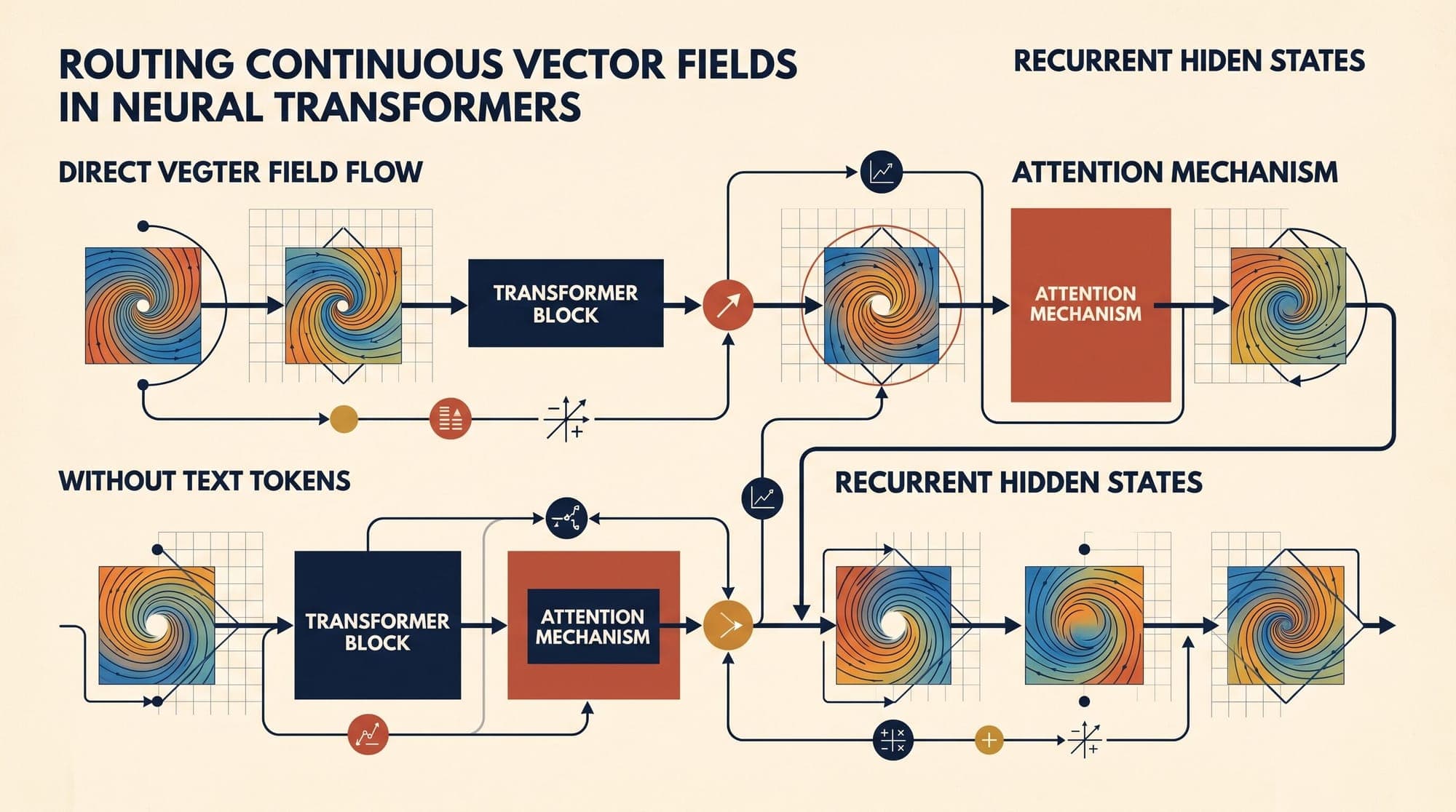
  5. Latent Reasoning in Large Language Models: How Continuous Thoughts and Recurrent Hidden States Bypass Discrete Tokenization

    Standard autoregressive language models solve multi-step reasoning tasks by generating explicit verbal scratchpads. Under the Chain-of-Thought (CoT) paradigm formalized by Wei et al. (2022), a Transformer expands its effective computational depth by emitting intermediate natural language tokens into the prompt context. Each emitted token provides an additional forward pass through the network's layers, transforming reasoning into a sequence of left-to-right text predictions. While language-base

    AI
    8 min read
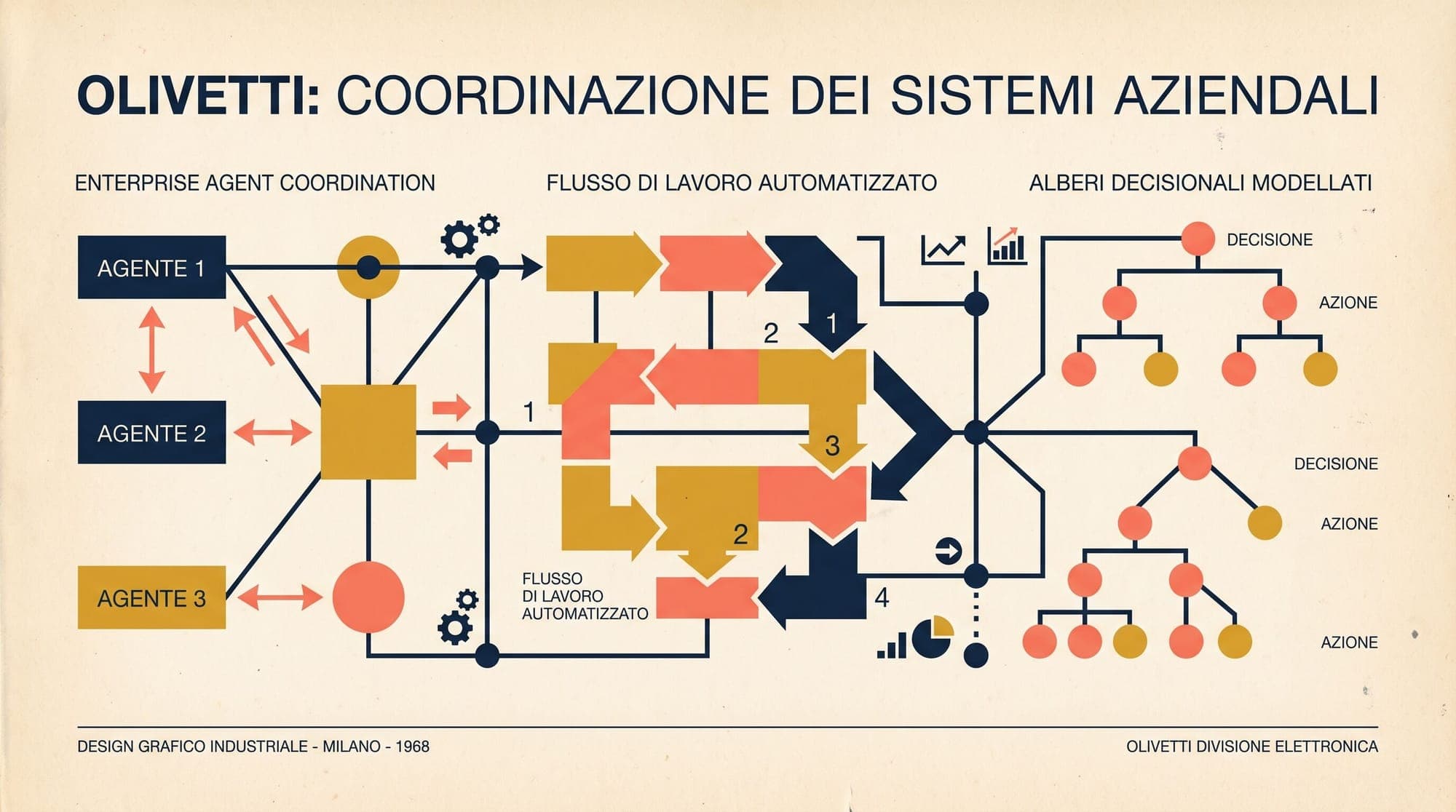
  6. Writer Releases Palmyra X6 Flagship Agentic Model with Rebuilt Enterprise Agent Harness

    Enterprise generative AI platform Writer has launched Palmyra X6, its new flagship agentic foundation model, alongside a rebuilt runtime harness engineered for multi-step workflow execution and governance. The model release introduces substantial latency and efficiency improvements over previous Palmyra iterations, cutting inference costs by 52% while accelerating output generation by 48%. Writer reported average generation speeds of 82 tokens per second and a mean task completion time of 26 se

    AI
    1 min read
  7. Unlikelihood Training in Large Language Models: How Negative Candidate Loss and Sequence-Level Penalties Suppress Repetition Loops and Hallucinations

    Unlikelihood Training in Large Language Models: How Negative Candidate Loss and Sequence-Level Penalties Suppress Repetition Loops and Hallucinations Autoregressive language models generate text by iteratively predicting the probability distribution of the next token conditioned on preceding tokens. While standard maximum likelihood estimation (MLE) via cross-entropy loss serves as the universal training objective across modern foundation models, it possesses a fundamental structural asymmetry:

    AI
    13 min read
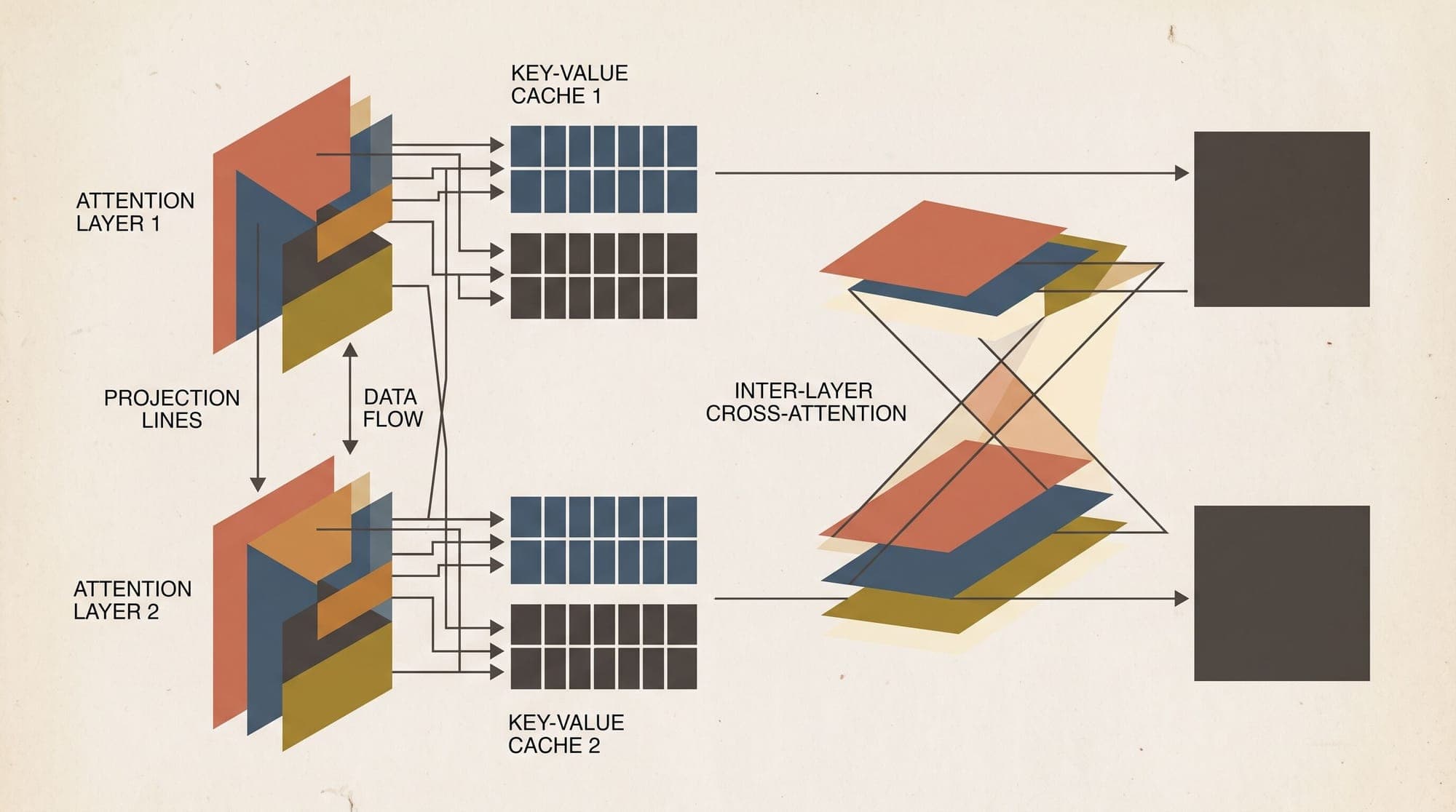
  8. Cross-Model KV Cache Transfer in Production: Architecture, Closed-Form Ridge Projections, and Cascaded Serving Economics

    Modern enterprise LLM serving architectures frequently rely on multi-model pipelines to balance inference cost, generation latency, and output quality. In model routing cascades, lightweight 8B models triage incoming queries and escalate complex reasoning tasks to 70B or MoE models. In speculative decoding pipelines, smaller draft models propose token sequences verified by larger target models. In long-horizon AI agent swarms, sub-agents frequently switch between specialized models across multi-

    LLM
    8 min read
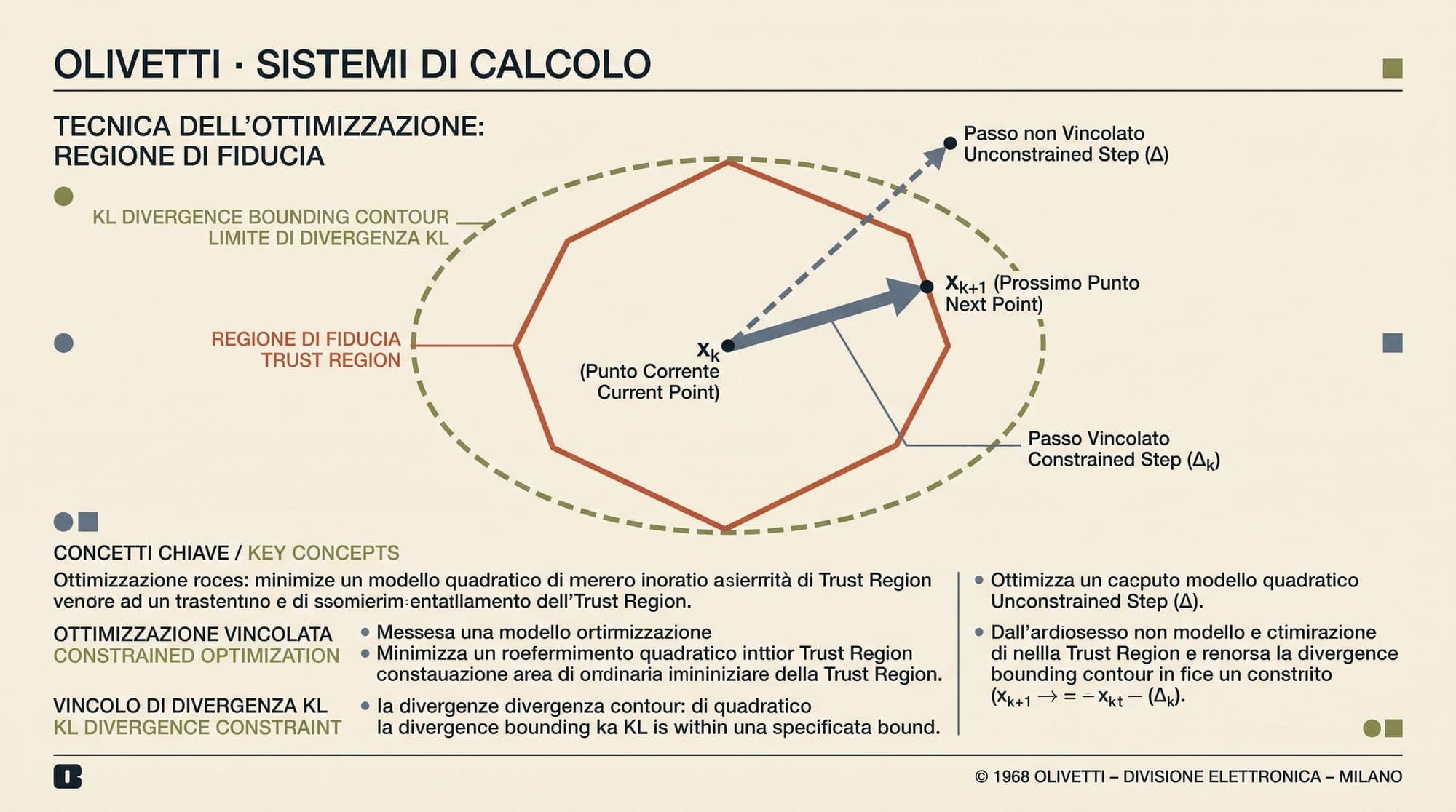
  9. Trust Region Policy Optimization: Mathematical Foundations, Monotonic Improvement Guarantees, and Conjugate Gradient Updates

    Trust Region Policy Optimization: Mathematical Foundations, Monotonic Improvement Guarantees, and Conjugate Gradient Updates In policy gradient reinforcement learning, optimization dynamics differ fundamentally from standard supervised learning. In supervised regression or classification, the underlying data distribution $P(x, y)$ remains stationary throughout training; a sub-optimal parameter update merely yields high loss on the current batch without corrupting future sample collection. In re

    AI
    9 min read
  10. Vector Quantization for LLM Weights in Production: Comparing QuIP#, AQLM, and VPTQ Architecture, Dequantization Kernels, and 2-Bit Serving Economics

    Vector Quantization for LLM Weights in Production: Comparing QuIP#, AQLM, and VPTQ Architecture, Dequantization Kernels, and 2-Bit Serving Economics Scalar post-training quantization methods such as GPTQ and AWQ have become the standard for compressing large language models to 4-bit integer formats (INT4). At 4 bits per parameter, scalar techniques preserve over 98% of baseline 16-bit floating-point (FP16/BF16) model accuracy across common benchmarks. However, pushing scalar quantization below

    AI
    9 min read
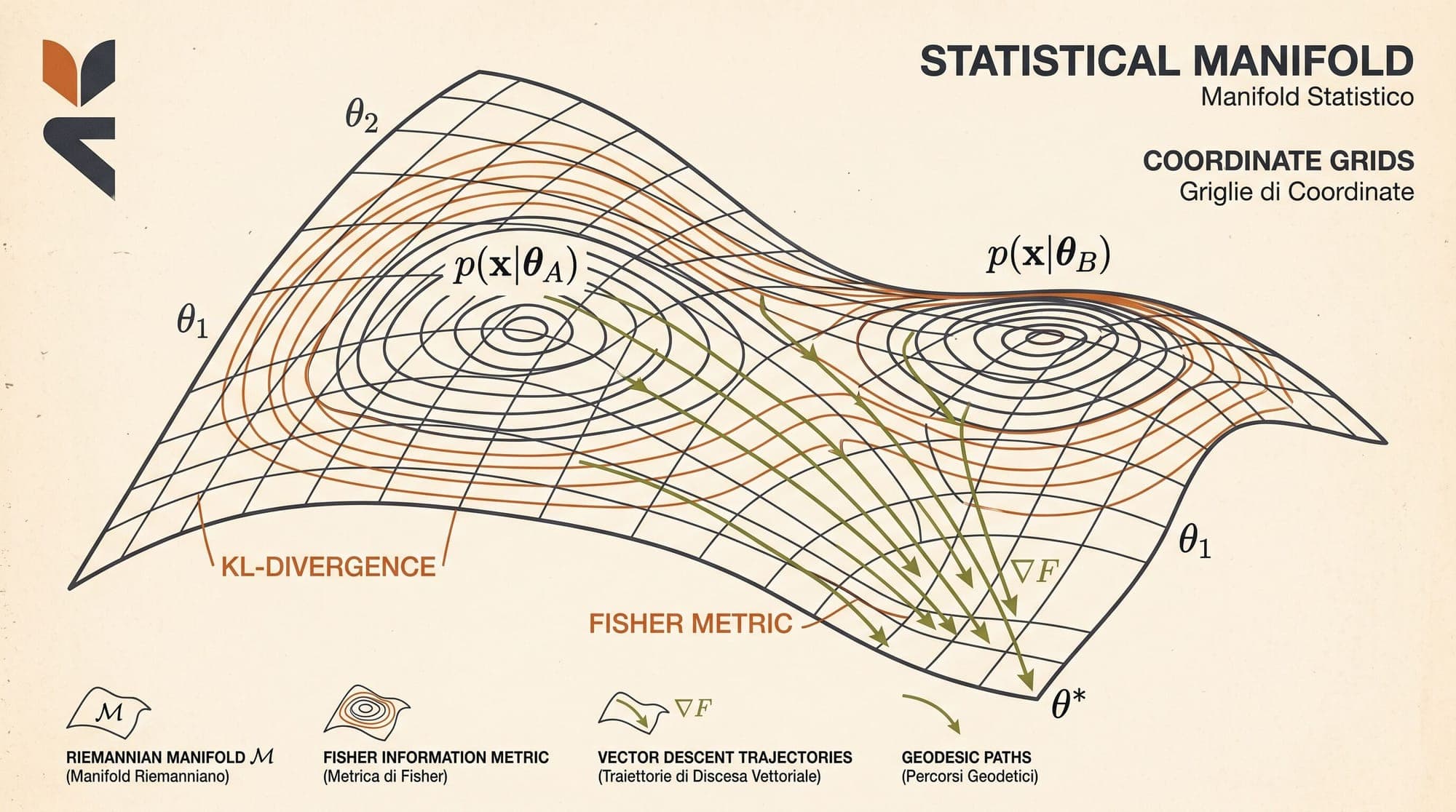
  11. The Fisher Information Matrix and Natural Gradient Descent: How Information Geometry, Riemannian Manifolds, and Curvature Invariance Reshape Neural Optimization

    The Fisher Information Matrix and Natural Gradient Descent: How Information Geometry, Riemannian Manifolds, and Curvature Invariance Reshape Neural Optimization Standard gradient descent operates under an implicit, often unexamined assumption: that parameter space is Euclidean. When an optimizer updates network weights via $\theta_{t+1} = \theta_t - \eta \nabla_\theta \mathcal{L}(\theta)$, it calculates the direction of steepest descent within an arbitrary coordinate system. If the network is r

    AI
    10 min read
  12. Agent Self-Evolution and Experiential Learning in Production: Trajectory Reflection, Skill Library Curation, and Verifiable Policy Distillation

    Deploying autonomous AI agents into complex environments reveals a persistent operational bottleneck: frozen model weights. When an agent fails at a non-trivial workflow, traditional engineering setups rely on humans to diagnose the failure, rewrite prompt templates, adjust few-shot exemplars, or add custom heuristic wrappers. This manual iteration loop fails to scale across diverse, long-horizon production environments where agents encounter thousands of unique edge cases daily. To break this

    AI
    6 min read
  13. Loss Landscapes in Deep Neural Networks: How Filter Normalization, Hessian Curvature, and Basin Flatness Explain Generalization

    The parameter space of modern deep learning models spans millions to hundreds of billions of dimensions. In this high-dimensional space, the empirical risk objective forms a complex geometric surface known as the loss landscape. Despite the extreme non-convexity of deep neural networks, standard first-order optimization algorithms such as stochastic gradient descent (SGD) and Adam regularly converge to parameter configurations that achieve both low training error and robust test set generalizati

    AI
    9 min read
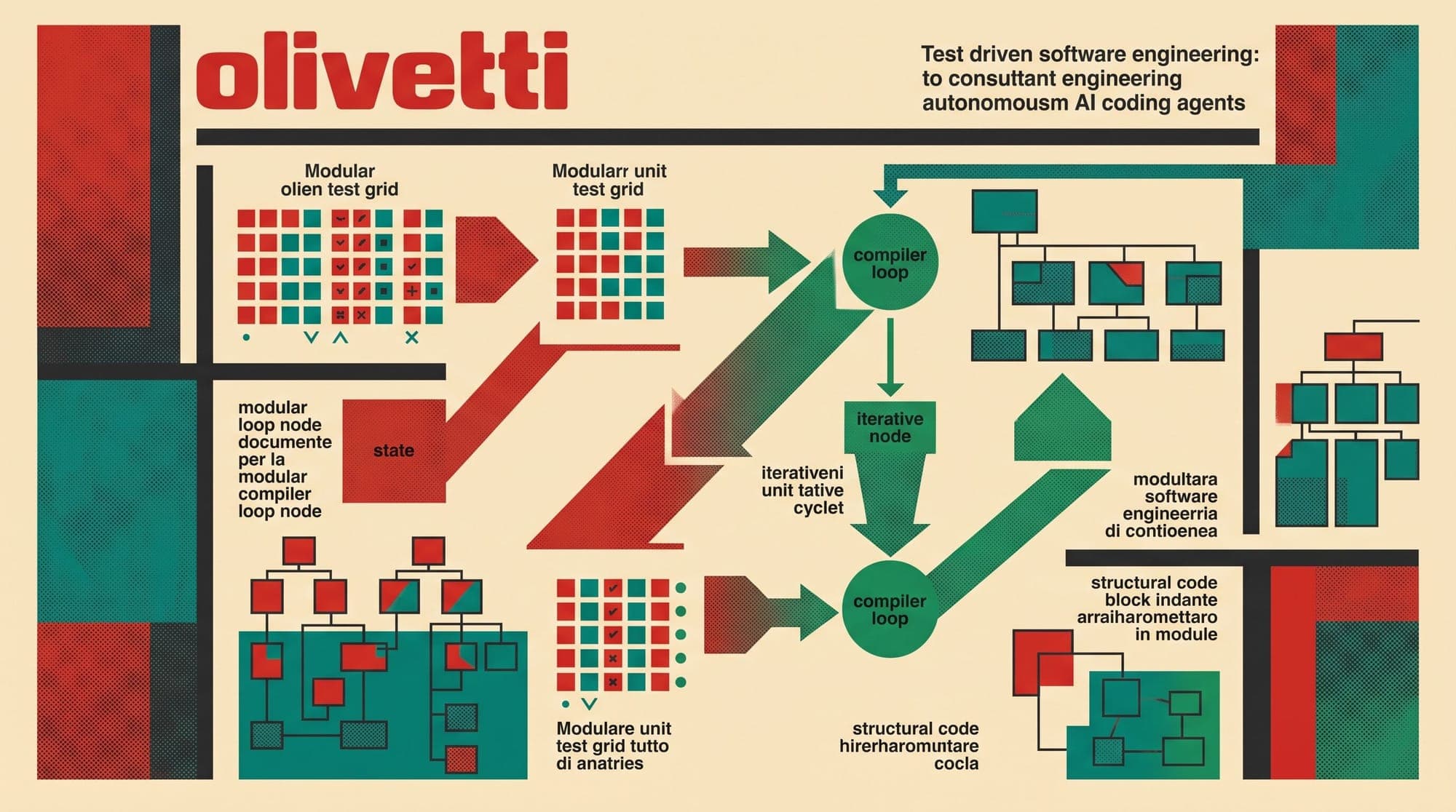
  14. Test-Driven Development in AI Coding Agents: Architecture, Reproduction Harnesses, and Execution-Guided Verification

    Autonomous coding agents face a fundamental structural limitation when operating in open-loop, single-turn, or ungrounded generative modes: without dynamic feedback from runtime execution, large language models generate syntactically plausible code that frequently fails subtle interface contracts, breaks existing edge cases, or introduces silent regressions. While early benchmark evaluations relied heavily on zero-shot or few-shot code completion, modern production coding architectures such as S

    AI
    5 min read
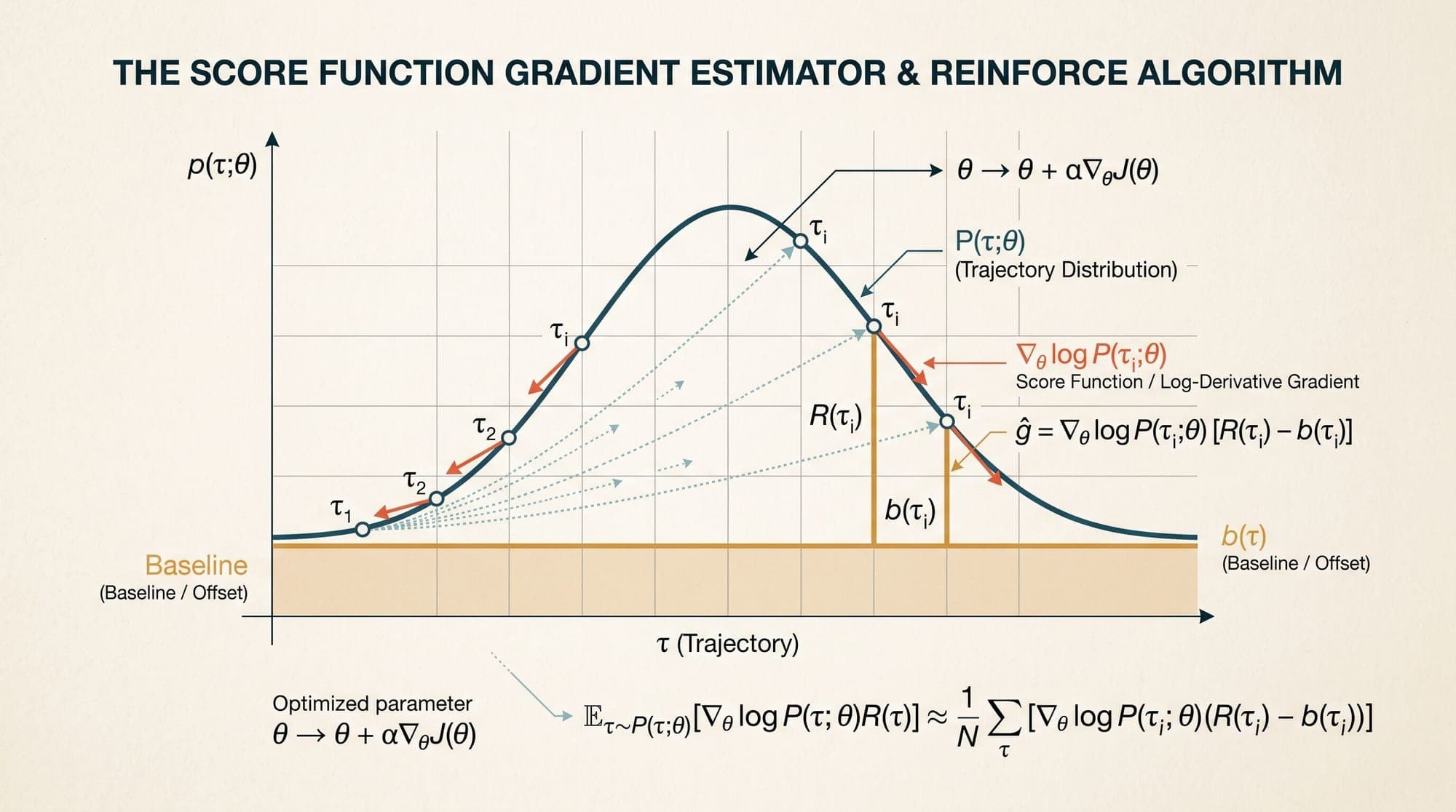
  15. The Score Function Estimator: Mathematical Foundations of REINFORCE, Log-Derivative Tricks, and Baseline Variance Reduction

    In modern artificial intelligence, standard backpropagation relies on continuous differentiability: every operation between model parameters and the final loss must provide well-behaved analytical Jacobian matrices. However, many of the most critical optimization challenges in machine learning break this continuity. Autoregressive token generation in large language models, discrete tool invocation, programmatic compiler execution, and black-box reward environments are fundamentally non-different

    Reinforcement Learning
    10 min read
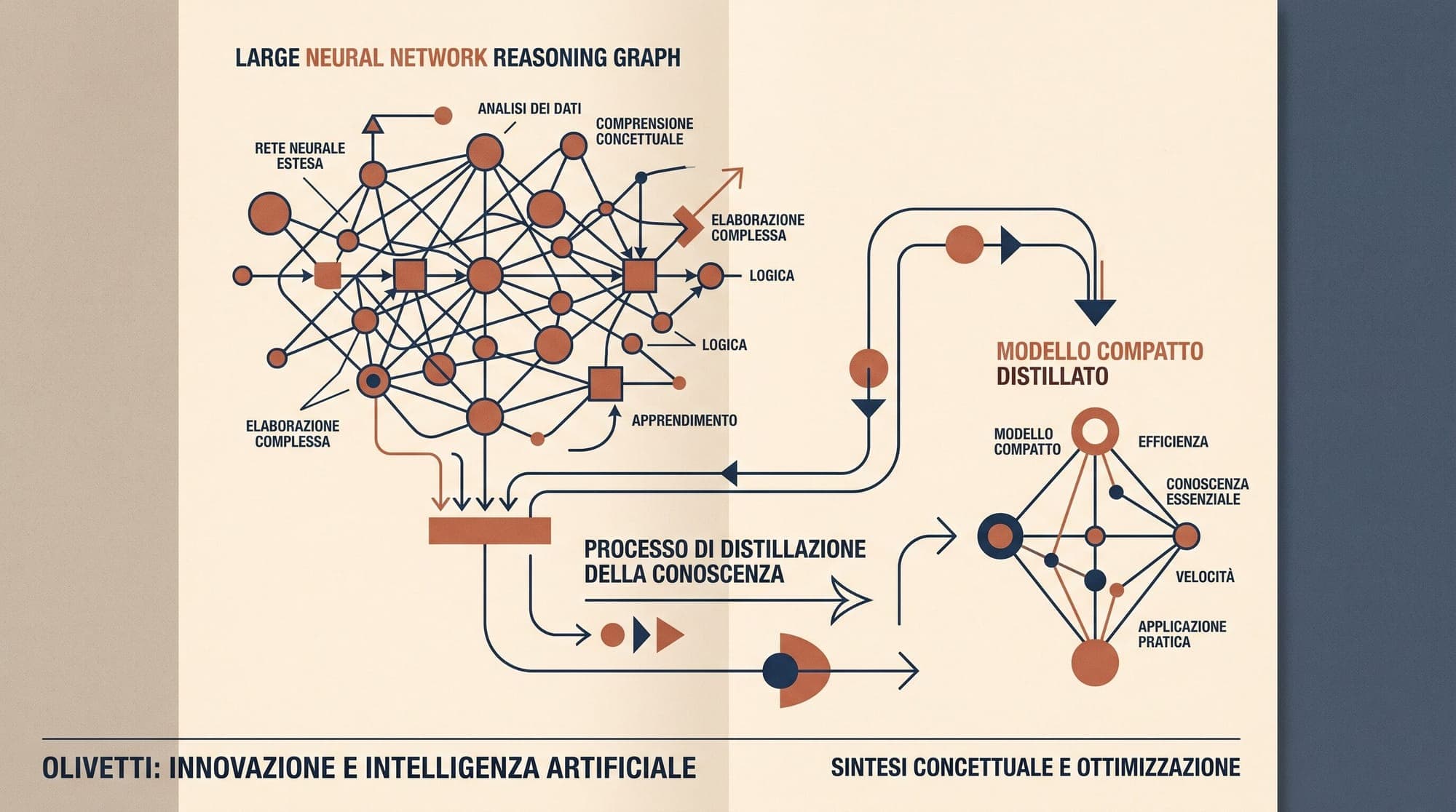
  16. Reasoning Model Distillation in Production: Trajectory Curation, Thinking-Token Formatting, Over-Thinking Mitigation, and Student RL Alignment

    Reasoning Model Distillation in Production: Trajectory Curation, Thinking-Token Formatting, Over-Thinking Mitigation, and Student RL Alignment Distilling frontier reasoning models into compact language models has emerged as one of the most effective strategies for deploying low-latency, cost-efficient inference pipelines. Rather than training small models purely on input-output answer pairs, reasoning distillation transfers the intermediate exploration, backtracking, and verification trajectori

    LLM
    5 min read
  17. Online Evaluation and Multi-Armed Bandit Routing in Production LLM Systems: Interleaving, Counterfactual Estimation, and Adaptive Traffic Allocation

    Online Evaluation and Multi-Armed Bandit Routing in Production LLM Systems: Interleaving, Counterfactual Estimation, and Adaptive Traffic Allocation Static offline benchmarks such as MMLU, HumanEval, and synthetic LLM-as-a-judge evaluation pipelines have become standard fixtures in modern AI development. However, production engineering teams frequently observe that offline benchmark improvements fail to translate into tangible user satisfaction or business outcomes. Static evaluation suites suf

    AI
    12 min read
  18. Teacher Forcing and Exposure Bias in Autoregressive Models: Mathematical Foundations, Compounding Errors, and Mitigation Strategies

    Teacher Forcing and Exposure Bias in Autoregressive Models: Mathematical Foundations, Compounding Errors, and Mitigation Strategies Autoregressive sequence models form the computational backbone of modern language modeling, code synthesis, and multi-step reasoning agents. From decoder-only Transformers like GPT and Claude to recurrent architectures, these systems factorize the joint probability of a sequence of tokens $y = (y_1, y_2, \dots, y_T)$ into a product of conditional probabilities: $$

    AI
    10 min read
  19. Study Exposes Citation Monoculture Across Frontier LLMs as Recursive Drafting Compounds Bias

    Study Exposes Citation Monoculture Across Frontier LLMs as Recursive Drafting Compounds Bias As large language models take over literature reviews and automated research workflows, a collaborative study from UT Austin, Stevens Institute of Technology, Washington University in St. Louis, Rice University, and the University of Notre Dame demonstrates that frontier models suffer from severe citation monoculture. Even when all identifying metadata is removed, LLMs across vendors converge on a narro

    Research
    2 min read
  20. Virtual Memory for AI Agents in Production: Context Window Paging, Working Set Estimation, and Hierarchical Storage Architectures

    Virtual Memory for AI Agents in Production: Context Window Paging, Working Set Estimation, and Hierarchical Storage Architectures As autonomous AI agents shift from single-turn chat interactions to long-horizon workflows spanning days, weeks, or millions of execution steps, managing context has become the primary operational bottleneck. While modern foundation models support nominal context windows ranging from 128k to over 1M tokens, treating the active context window as an unbounded append-on

    AI
    9 min read