Writer Releases Palmyra X6 Flagship Agentic Model with Rebuilt Enterprise Agent Harness

Enterprise generative AI platform Writer has launched Palmyra X6, its new flagship agentic foundation model, alongside a rebuilt runtime harness engineered for multi-step workflow execution and governance. The model release introduces substantial latency and efficiency improvements over previous Palmyra iterations, cutting inference costs by 52% while accelerating output generation by 48%. Writer reported average generation speeds of 82 tokens per second and a mean task completion time of 26 se

1 min
Writer Releases Palmyra X6 Flagship Agentic Model with Rebuilt Enterprise Agent Harness

Enterprise generative AI platform Writer has launched Palmyra X6, its new flagship agentic foundation model, alongside a rebuilt runtime harness engineered for multi-step workflow execution and governance.

The model release introduces substantial latency and efficiency improvements over previous Palmyra iterations, cutting inference costs by 52% while accelerating output generation by 48%. Writer reported average generation speeds of 82 tokens per second and a mean task completion time of 26 seconds across standardized enterprise benchmarks.

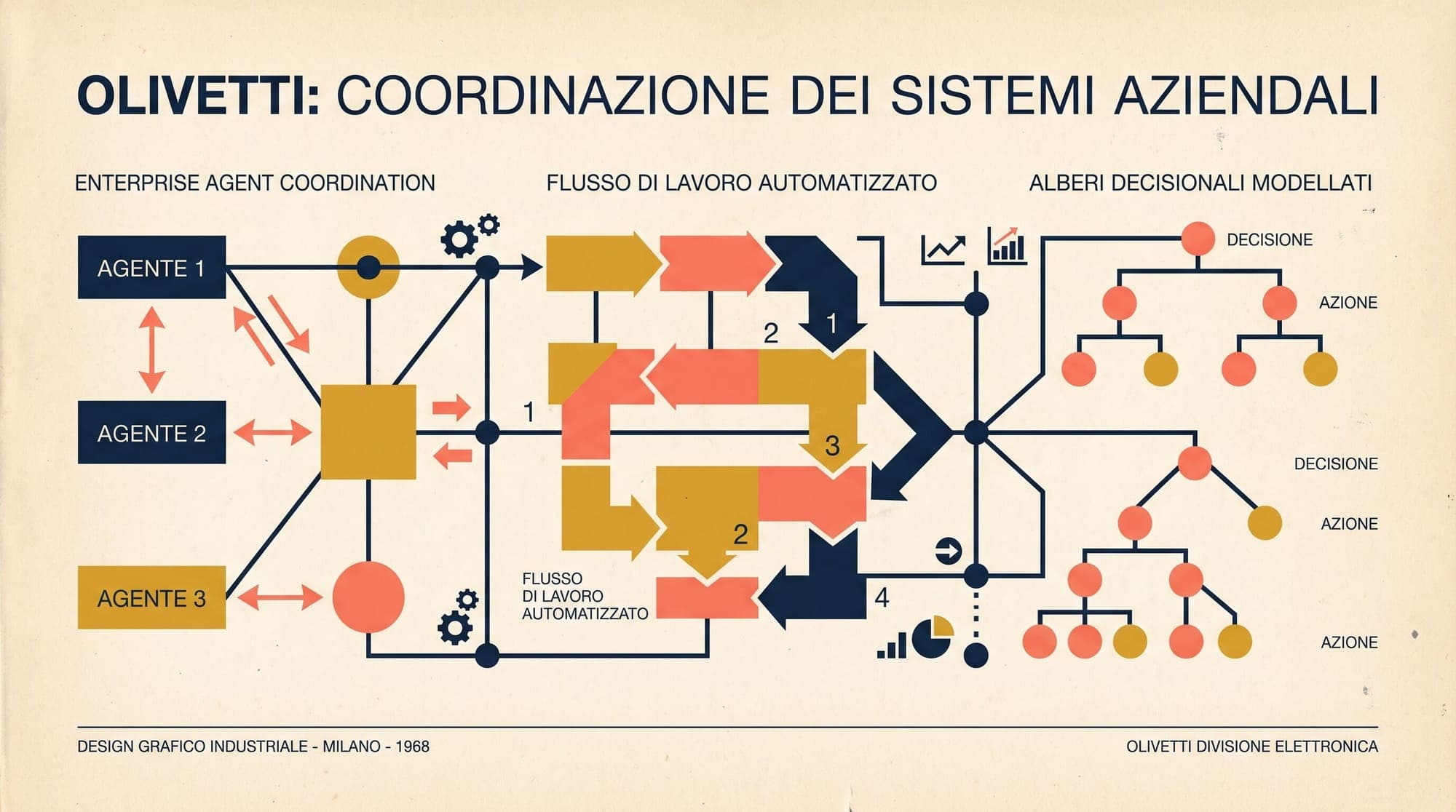
Writer Palmyra X6 Agent Orchestration

Sustained Agentic Reasoning and Long-Horizon Execution

A primary architectural focus for Palmyra X6 is maintaining coherence across extended agentic loops without drifting from initial instructions. Writer benchmarks indicate the model can sustain unattended execution toward multistage objectives for up to eight hours.

Key features in the accompanying Agent platform overhaul include:

  • Modular Playbooks and Routines: Pre-configured operational templates spanning more than 200 domain-specific enterprise skills, standardizing how teams structure complex workflows.
  • Enterprise Governance and Auditing: Centralized administrative dashboards that track agent adoption, runtime spend, and execution accuracy across business units.
  • Microservice and Cloud Deployments: Availability as an NVIDIA NIM inference microservice for deployment across private data centers, workstations, and hybrid clouds, alongside native integration in Amazon Bedrock.

Enterprise Workflow Specialization

Writer positioned Palmyra X6 directly against generalized frontier models like GPT-5.5 and Gemini 3.1, emphasizing domain tuning and lower political/ideological bias metrics for corporate communications, legal analysis, and revenue operations.

By combining low-latency token generation with structured execution guards, the platform targets enterprises seeking to deploy autonomous workflows without the operational overhead of managing raw model fine-tuning and prompt scaffolding internally.


Sources

Written by

More to read

  • Meta Prepares Consumer AI Agent 'Hatch' and October Launch for 'Watermelon' Frontier Model

    Meta Platforms is preparing to roll out an autonomous consumer AI agent codenamed Hatch in late August or early September, followed by the planned release of its next flagship foundation model, codenamed Watermelon, in October 2026. The initiatives, first reported by The Information, highlight Meta's dual-track approach to commercialize autonomous software workflows while scaling foundation model training compute to compete directly with frontier offerings from OpenAI and Anthropic. Consumer

    1 min
  • Continuous LLM Performance Profiling in Production: Roofline Models, Model FLOPs Utilization, Model Bandwidth Utilization, and Hardware Bottleneck Diagnostics

    Evaluating the runtime performance of large language model serving infrastructures requires looking beyond raw GPU metrics. Standard operating system utilities such as nvidia-smi report high GPU utilization percentages whenever compute cores or memory controllers are active, masking critical inefficiencies in memory access, communication, and kernel scheduling. A serving node running single-stream autoregressive decoding can report 100% GPU utilization while operating at less than 2% of the hard

    1 min
  • Latent Reasoning in Large Language Models: How Continuous Thoughts and Recurrent Hidden States Bypass Discrete Tokenization

    Standard autoregressive language models solve multi-step reasoning tasks by generating explicit verbal scratchpads. Under the Chain-of-Thought (CoT) paradigm formalized by Wei et al. (2022), a Transformer expands its effective computational depth by emitting intermediate natural language tokens into the prompt context. Each emitted token provides an additional forward pass through the network's layers, transforming reasoning into a sequence of left-to-right text predictions. While language-base

    1 min

