Subscribe
Topic / page 3

Architecture

Articles, page 3

41-60
  1. Semantic Memory Consolidation in Production AI Agents: Architecture, Episodic Decay Curves, and Procedural Knowledge Distillation

    Long-running autonomous AI agents accumulate hundreds of interaction turns, tool executions, and environment observations across extended deployments. Naive implementations store these raw episodic traces directly in vector databases, retrieving past interactions via dense semantic similarity. In production, this append-only strategy degrades quickly: retrieval queries surface outdated facts, contradictory state assertions pollute prompt context, and the agent fails to extract generalizable prob


    AI
    7 min read
  2. Long-Context Evaluation in Production: Why Synthetic Needles Fail, Multi-Hop Stress Testing, and Benchmarking Effective Context Size

    Frontier model providers frequently market sequence lengths spanning 128K, 1M, or 2M tokens. However, engineering teams deploying these models in production environments for codebase refactoring, multi-turn agent execution, or complex document analysis regularly observe severe retrieval failures and reasoning breakdowns well before hitting context boundaries. The primary culprit behind this disconnect is the widespread reliance on vanilla Needle In A Haystack (NIAH) evaluations. While standard

    AI
    6 min read
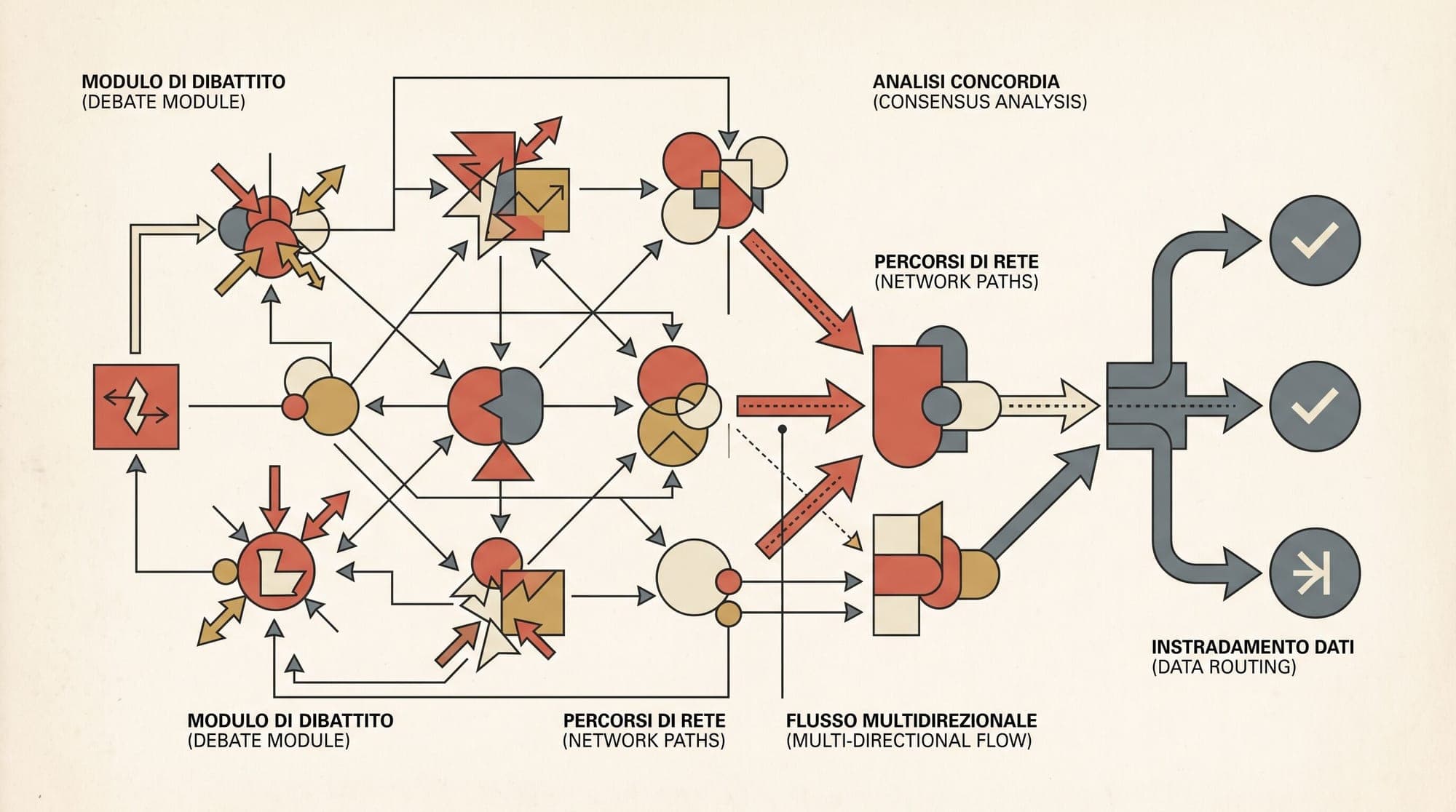
  3. Multi-Agent Debate and Consensus Protocols in Production: Topologies, Stopping Criteria, and Error Cascade Prevention

    Single-model inference pipelines face severe structural limits when handling high-stakes reasoning, multi-step code synthesis, and mission-critical verification. While techniques like self-consistency decoding sample multiple independent trajectories from a single model to find majority consensus, they fail when the underlying model exhibits systemic bias or correlated hallucinations. When an LLM harbors a flawed premise, sampling ten independent stochastic paths frequently yields ten variations

    AI
    7 min read
  4. Compound AI Systems in Production: Architecture, Co-Optimization, and Error Cascades

    Compound AI Systems in Production: Architecture, Co-Optimization, and Error Cascades For the first two years following the release of GPT-4, enterprise AI development focused almost exclusively on model-centric scaling: upgrading to larger parameter checkpoints, expanding prompt context windows, and tuning system prompts. However, production deployments quickly revealed a fundamental constraint: single, monolithic foundation models exhibit diminishing returns on high-complexity, multi-step task

    AI
    7 min read
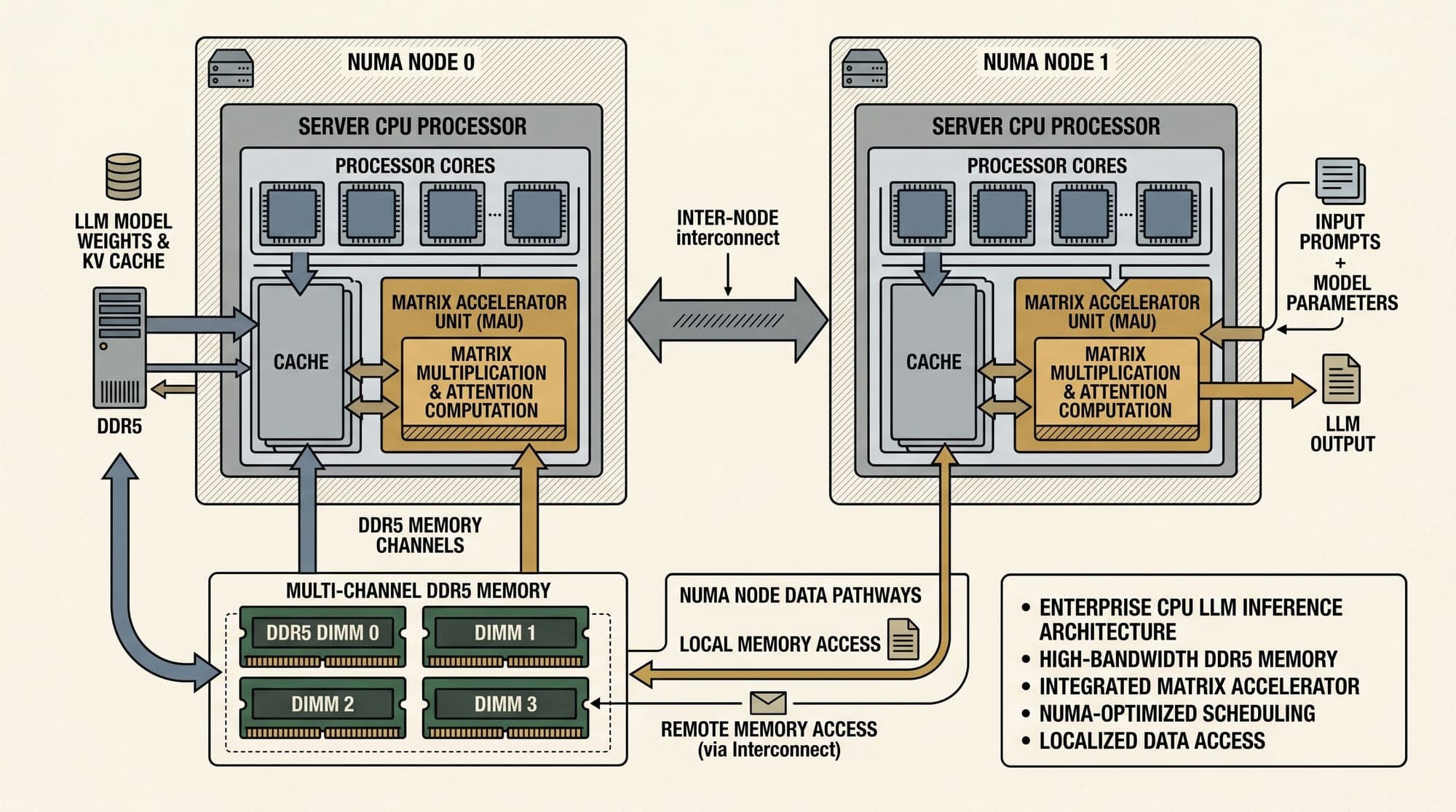
  5. LLM Inference on Enterprise CPUs in Production: Architecture, NUMA Topologies, Matrix Extensions, and Serving Economics

    Deploying large language models has historically been treated as an exclusively GPU-centric problem. Accelerators like NVIDIA H100 and A100 GPUs provide multi-terabyte-per-second High Bandwidth Memory (HBM) and tensor cores essential for training and high-concurrency serving. However, the operational economics of enterprise inference often diverge from frontier training requirements. Many enterprise applications, including internal code assistance, document extraction, low-concurrency agents, an

    AI
    6 min read
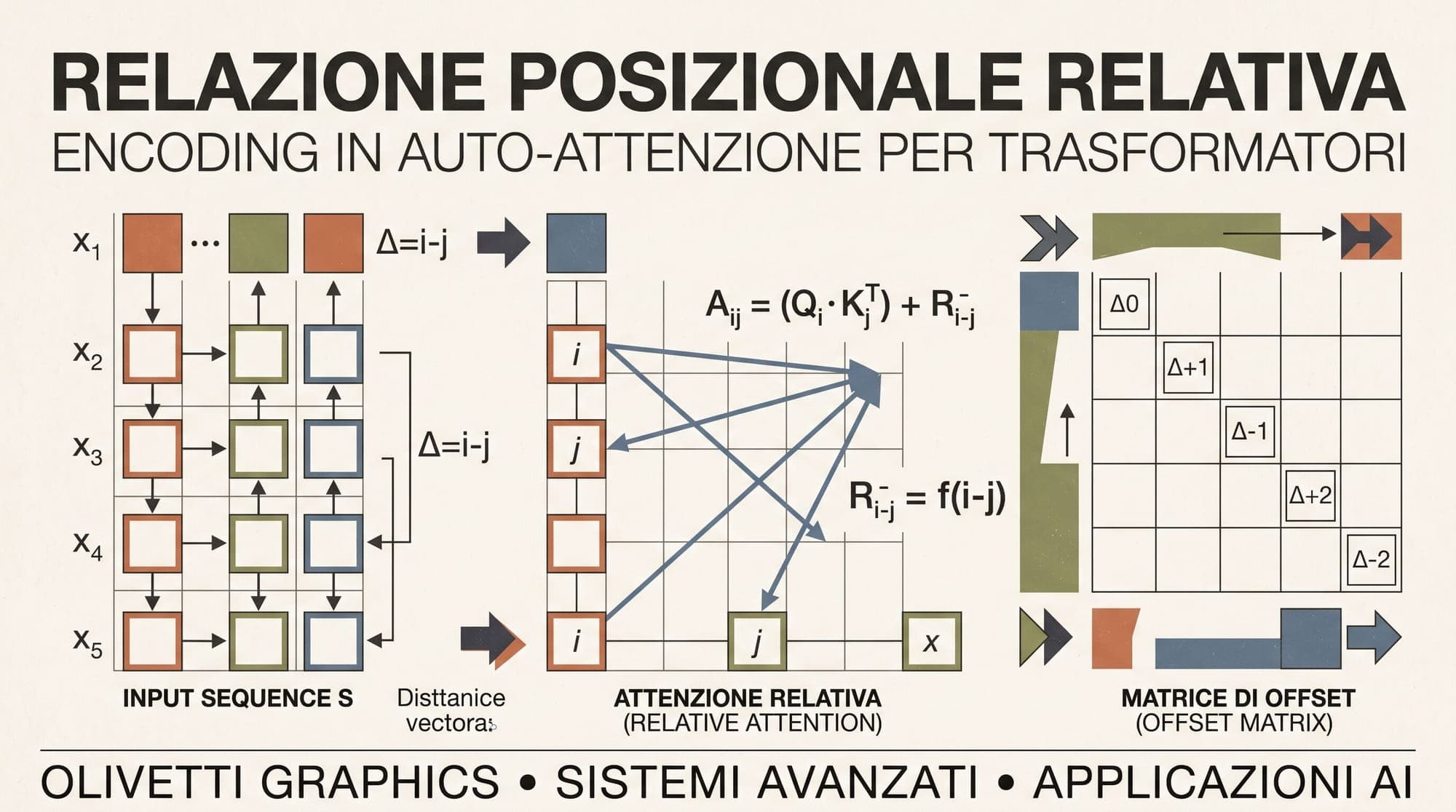
  6. Relative Positional Encodings in Transformers: How Shaw's Attention, Transformer-XL, and T5 Relative Biases Preserve Translation Invariance

    Relative Positional Encodings in Transformers: How Shaw's Attention, Transformer-XL, and T5 Relative Biases Preserve Translation Invariance Standard self-attention operations in transformer architectures possess no inherent awareness of sequence order. Because scaled dot-product attention computes interactions across sets of tokens without regard to index ordering, early models relied on absolute positional encodings to inject sequential structure. While absolute encodings assign rigid coordina

    AI
    9 min read
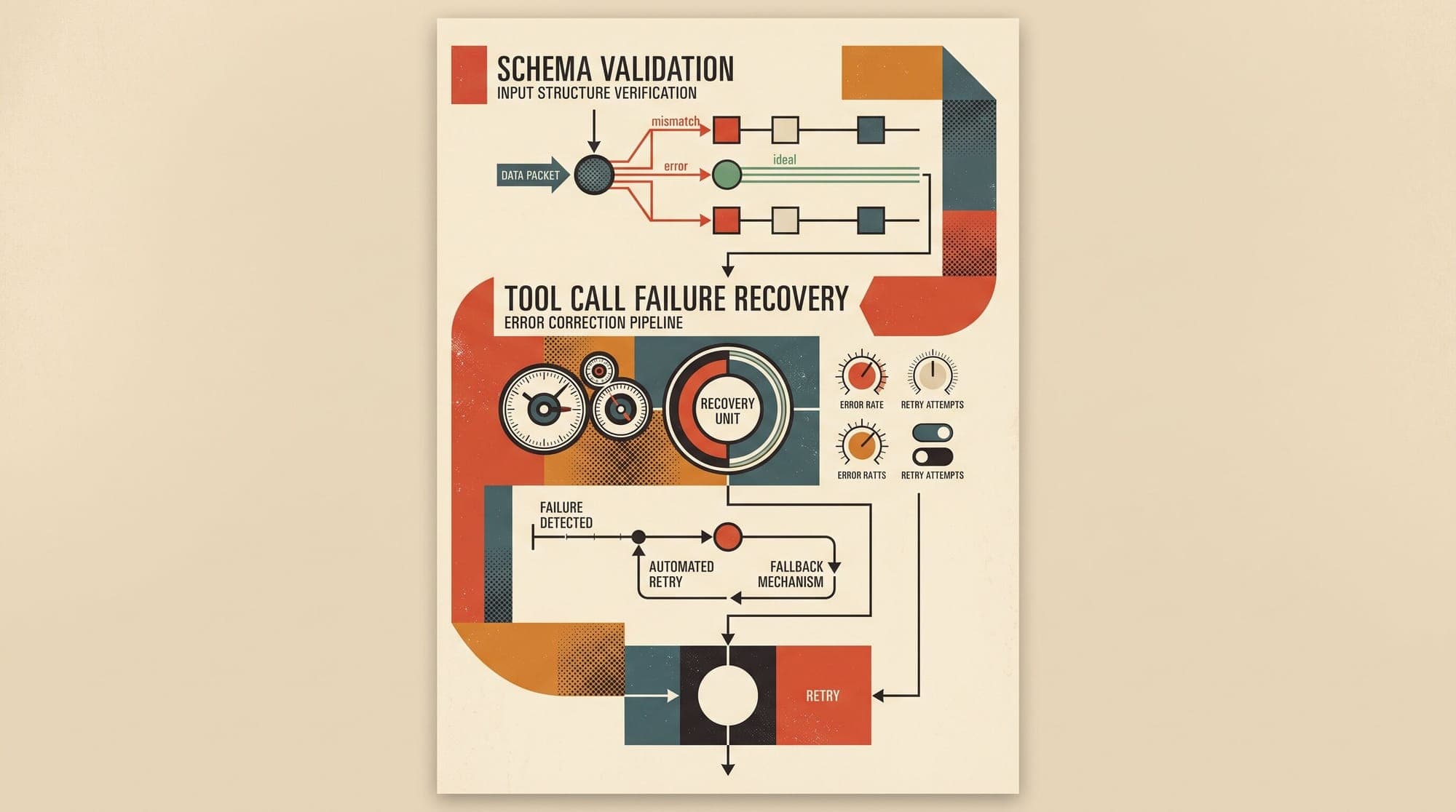
  7. Tool-Call Failure Recovery in Production AI Agents: Syntactic Repair, Schema Coercion, Parameter Inoculation, and Dynamic Fallback Architectures

    Tool-Call Failure Recovery in Production AI Agents: Syntactic Repair, Schema Coercion, Parameter Inoculation, and Dynamic Fallback Architectures Autonomous language model agents operate by interleaving natural language reasoning traces with structured tool invocations. However, when deployed in multi-turn production environments, raw tool calling exhibits significant fragility. Empirical studies from benchmark suites such as $\tau$-bench (arXiv:2406.12045) and the Berkeley Function Calling Lead

    Agents
    8 min read
  8. Vector Compression in Production Search: Comparing SQ, PQ, and RaBitQ Architecture, Recall Retention, and Memory Economics

    In production Retrieval-Augmented Generation (RAG) systems and enterprise search platforms, storing raw floating-point embedding vectors in RAM quickly encounters hard hardware limits. A dataset of 100 million 1536-dimensional embeddings stored in FP32 requires over 614 GB of high-speed memory solely for vector coordinates, before accounting for index graph structures like HNSW or DiskANN. To scale similarity search to billions of vectors while keeping indices memory-resident, production vector

    AI
    4 min read
  9. Context Structuring and Attention Placement in Long-Context LLMs: Mitigating Position Bias, Attention Dispersion, and Information Loss in Production

    Context Structuring and Attention Placement in Long-Context LLMs: Mitigating Position Bias, Attention Dispersion, and Information Loss in Production Modern foundation models support context windows ranging from 128,000 to over 2,000,000 tokens. Serving runtimes and API gateways routinely process entire codebases, multi-year financial statements, and sprawling legal filings in a single inference call. However, supporting a nominal sequence length does not guarantee that a transformer can effecti

    Architecture
    8 min read
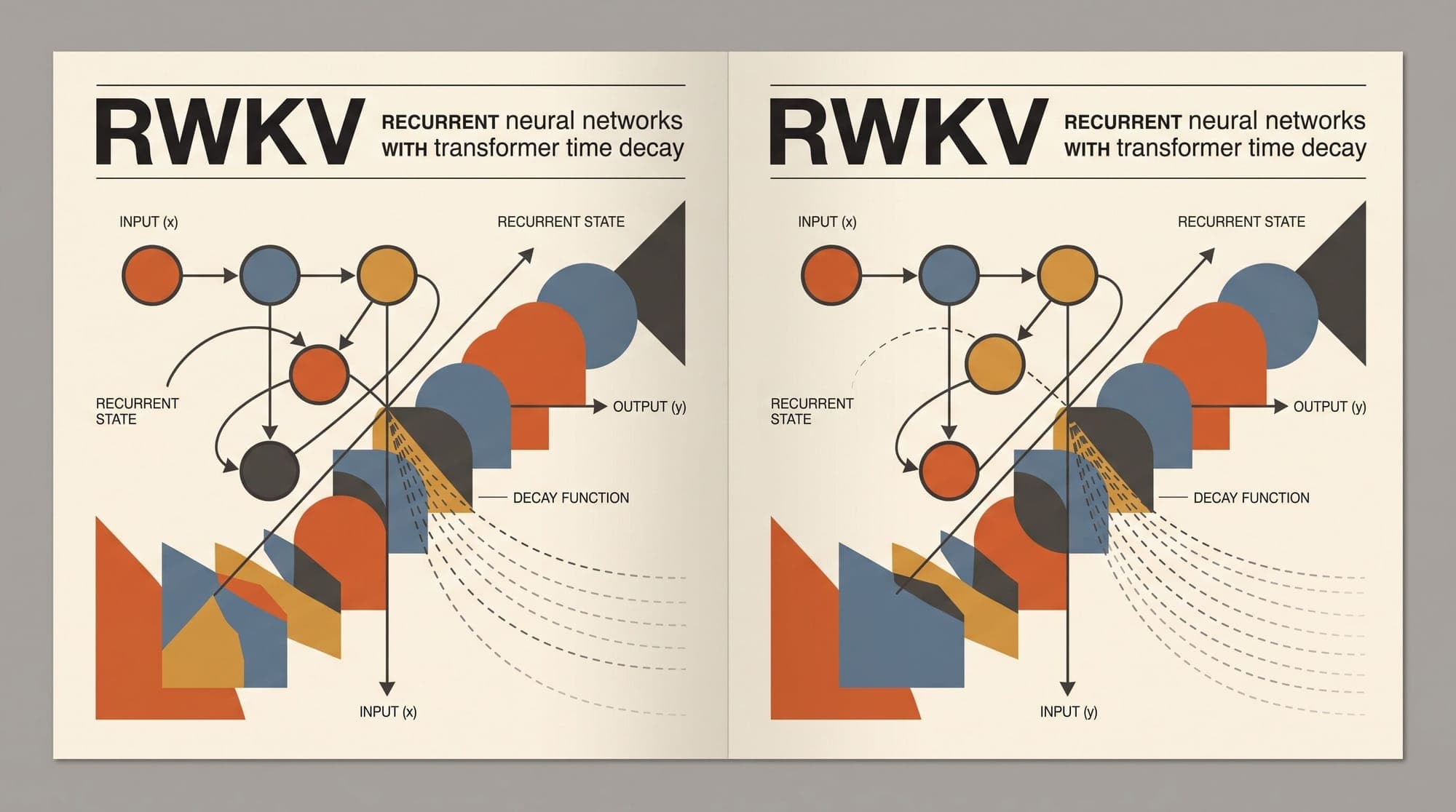
  10. RWKV Architecture: How Receptance Weighted Key Value Decay Combines RNN Efficiency with Transformer Parallelizability

    The dominant paradigm in natural language processing relies on the Transformer architecture, which calculates scaled dot-product self-attention across all token pairs in a sequence. While self-attention provides strong in-context retrieval and representation capacity, it imposes quadratic computational and memory complexity, scaling as O(N^2) with sequence length N during training and generating a continuously expanding Key-Value (KV) cache during autoregressive inference. Traditional Recurrent

    AI
    7 min read
  11. Prompt Caching Across Cloud LLM Providers: Architecture, TTL Lifecycles, and Economic Break-Even for Anthropic, OpenAI, Gemini, and DeepSeek

    The primary latency and computational bottleneck in large language model inference is the prefill phase. When an application submits a request containing thousands of tokens of static system instructions, OpenAPI tool schemas, few-shot demonstrations, and retrieved document context, the inference server must process all input tokens through every transformer layer before generating the first output token. In high-concurrency production environments, repeating this full forward pass across identi

    LLM
    8 min read
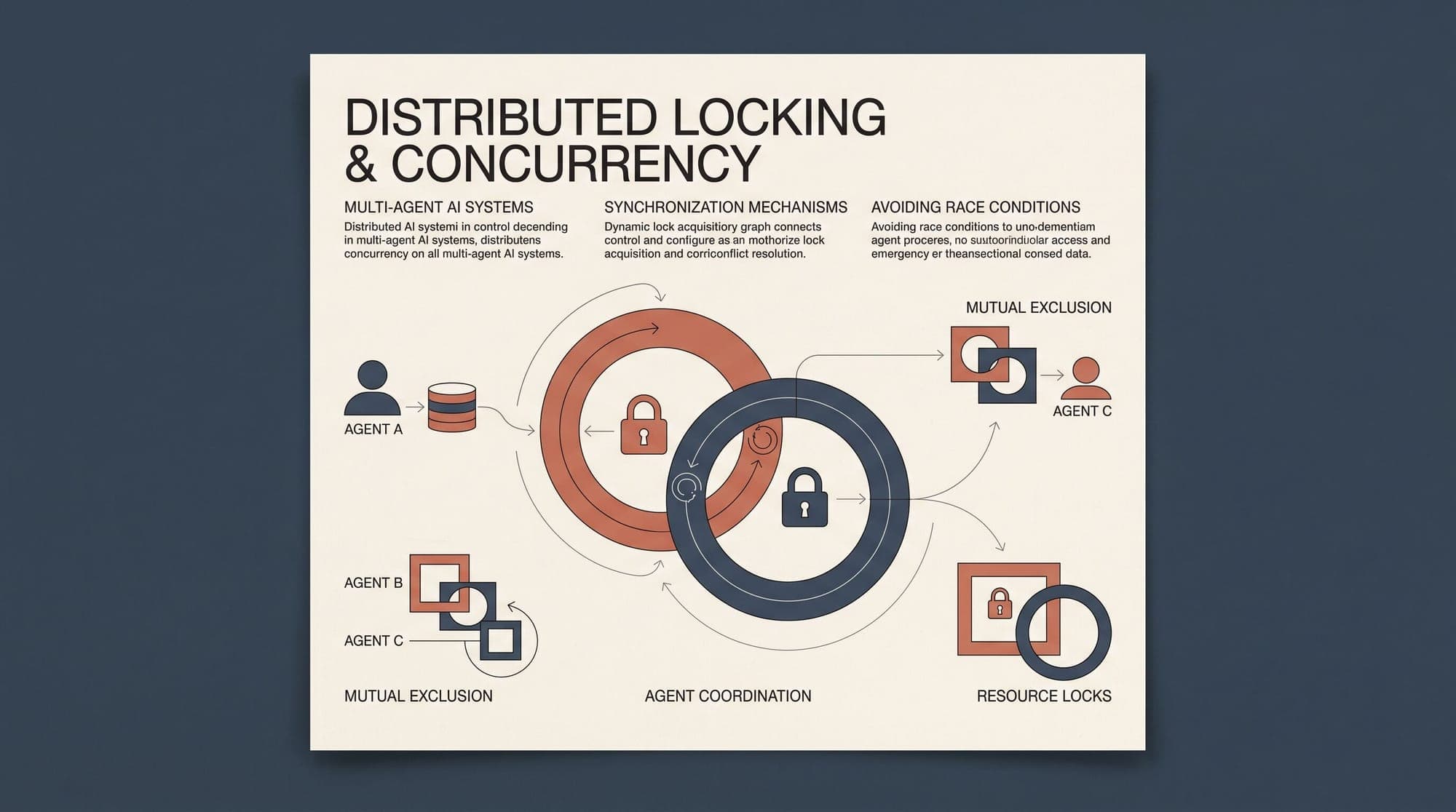
  12. Distributed Locking and Deadlock Prevention in Production AI Agents: Architecture, Semantic Mutexes, Leases, and Wait-For Graphs

    When autonomous AI agent architectures scale from isolated single-agent loops to concurrent multi-agent fleets, systems engineering teams encounter a fundamental distributed systems reality: concurrency bugs in language models do not merely produce dirty reads. They produce reasoning corruption, circular delegation deadlocks, and cascading execution failures. In single-agent execution pipelines, control flow is strictly sequential: retrieve context, prompt the model, parse tool arguments, apply

    Agents
    8 min read
  13. Dynamic Tool Synthesis in Production AI Agents: Architecture, AST Validation, Sandboxed Execution, and Lifecycle Governance

    Dynamic Tool Synthesis in Production AI Agents: Architecture, AST Validation, Sandboxed Execution, and Lifecycle Governance Standard tool-augmented AI agents rely on pre-configured, static API registries. Developers define a fixed set of JSON schemas, OpenAPI specifications, or Python wrapper functions at build time, and the language model selects from this catalog during execution. While sufficient for narrow, deterministic tasks, static registries encounter severe operational bottlenecks in o

    AI
    9 min read
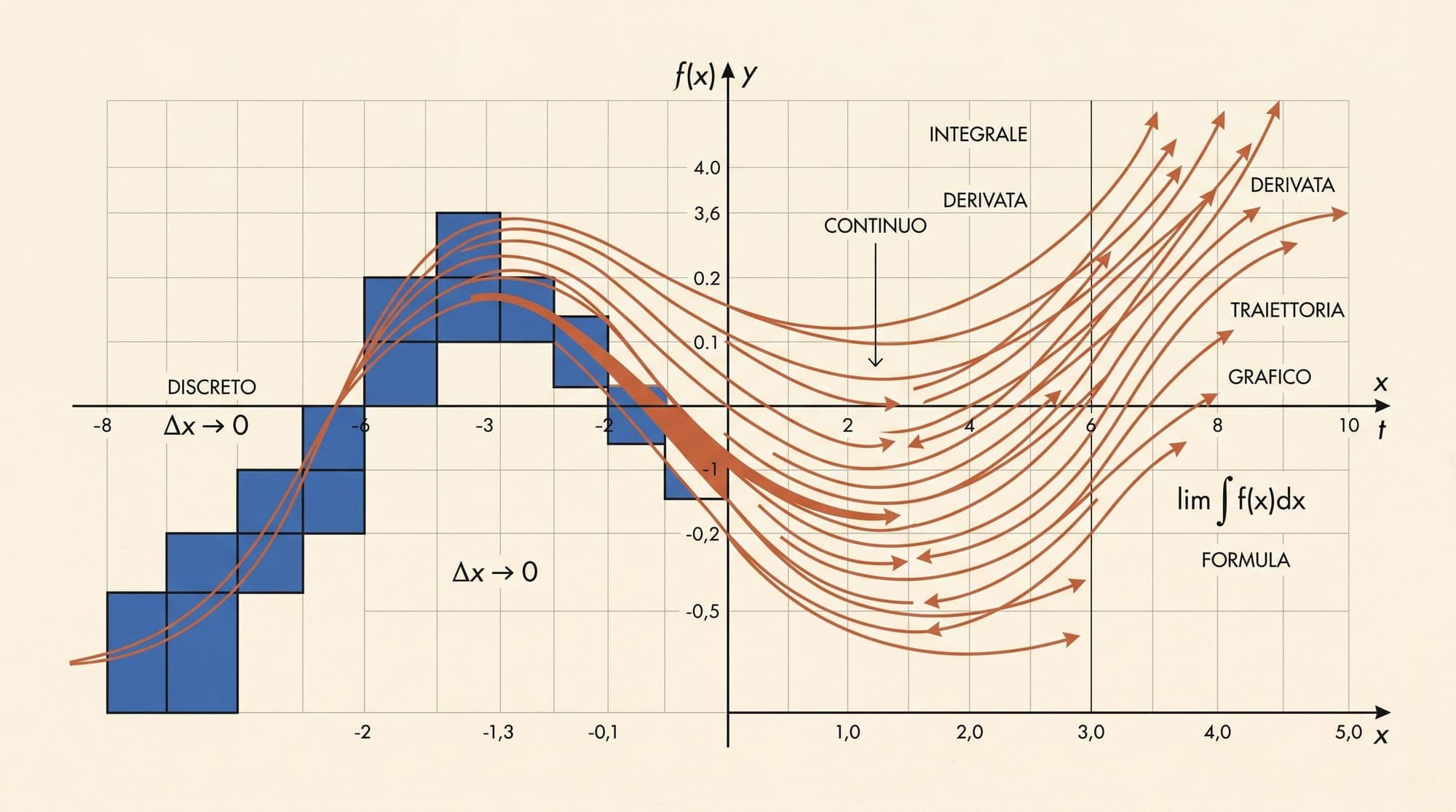
  14. Neural Ordinary Differential Equations: How Continuous-Depth Dynamics and Adjoint Sensitivity Solve the Memory Bottleneck in Deep Learning

    Neural Ordinary Differential Equations: How Continuous-Depth Dynamics and Adjoint Sensitivity Solve the Memory Bottleneck in Deep Learning Deep neural networks are traditionally structured as a discrete sequence of layers. An input tensor passes through layer after layer, transforming its representation at fixed, integer time steps. In standard architectures like Residual Networks (ResNets), each successive block computes an additive update: h_{t+1} = h_t + f(h_t, \theta_t) In 2018, researche

    AI
    7 min read
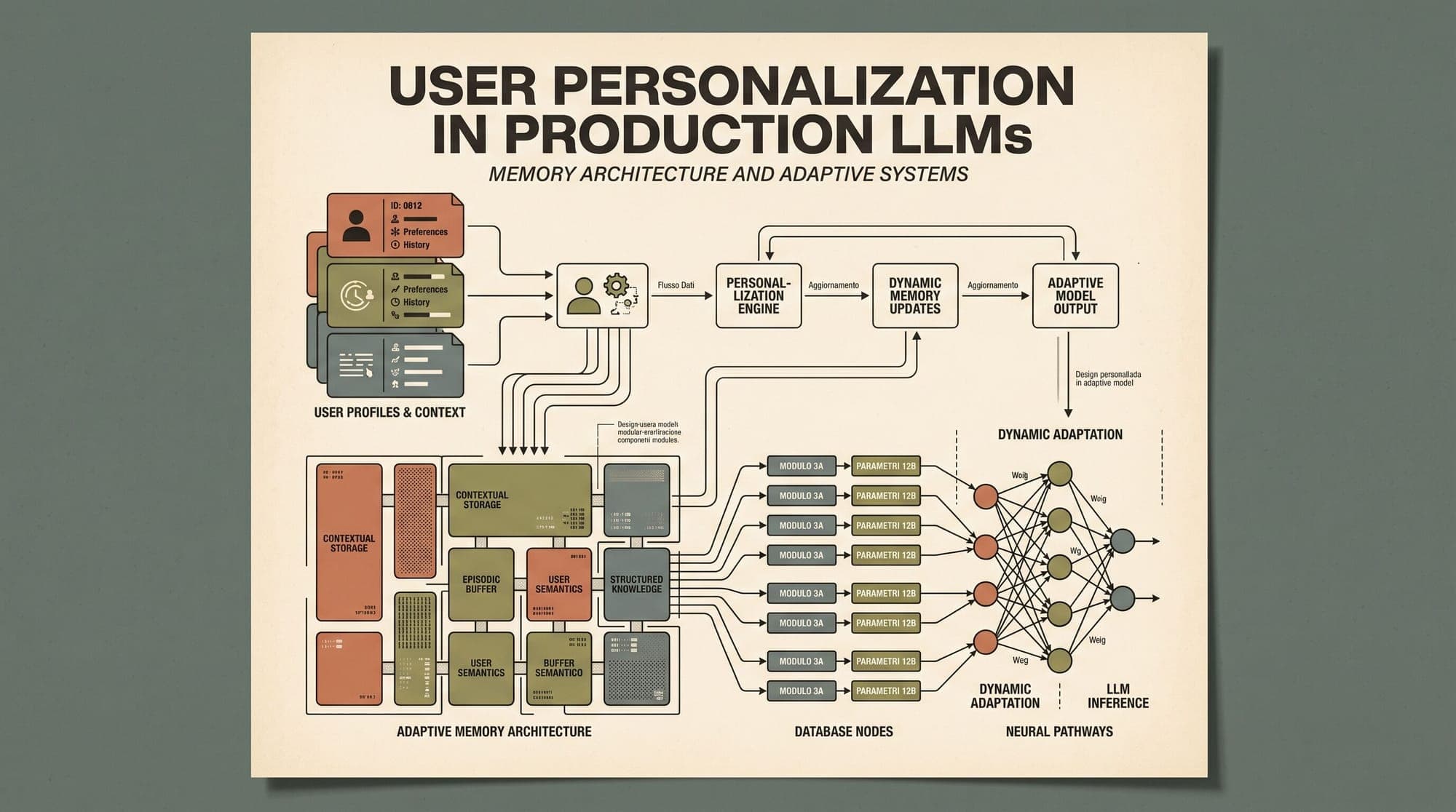
  15. Long-Term User Personalization in Production LLMs: Architecture, Dynamic Profiling, and Privacy Boundaries

    Standard conversational AI deployments treat each user session as an isolated interaction or rely on naive sliding-window context histories. While extending context windows allows models to process thousands of tokens from previous turns, stuffing raw conversational history into prompt contexts introduces severe serving inefficiencies, inflates token economics, and fails to synthesize stable user profiles over time. Deploying long-term personalization in production large language model (LLM) ap

    AI
    5 min read
  16. Masked Autoencoders: How Asymmetric Encoders, High Masking Ratios, and Pixel Reconstruction Scaled Vision Transformers

    Masked Autoencoders: How Asymmetric Encoders, High Masking Ratios, and Pixel Reconstruction Scaled Vision Transformers Self-supervised pre-training transformed natural language processing through masked language modeling, popularized by BERT (Devlin et al., 2018). By hiding a subset of input tokens and training a bidirectional Transformer to predict the missing words from context, models learned rich, generalizable linguistic representations without manual annotations. Adapting this masked pre

    AI
    11 min read
  17. Event-Driven AI Agent Architectures in Production: Kafka Streams, Webhook Ingestion, Idempotent Actor State Machines, and Dead-Letter Recovery

    Event-Driven AI Agent Architectures in Production: Kafka Streams, Webhook Ingestion, Idempotent Actor State Machines, and Dead-Letter Recovery Early AI agent prototypes relied almost exclusively on synchronous HTTP request-response loops: a client dispatched a prompt, and a monolithic backend process held an open socket while an LLM reasoned, called tools, inspected results, and generated final responses. In production, this synchronous pattern collapses under the operational realities of auton

    AI
    7 min read
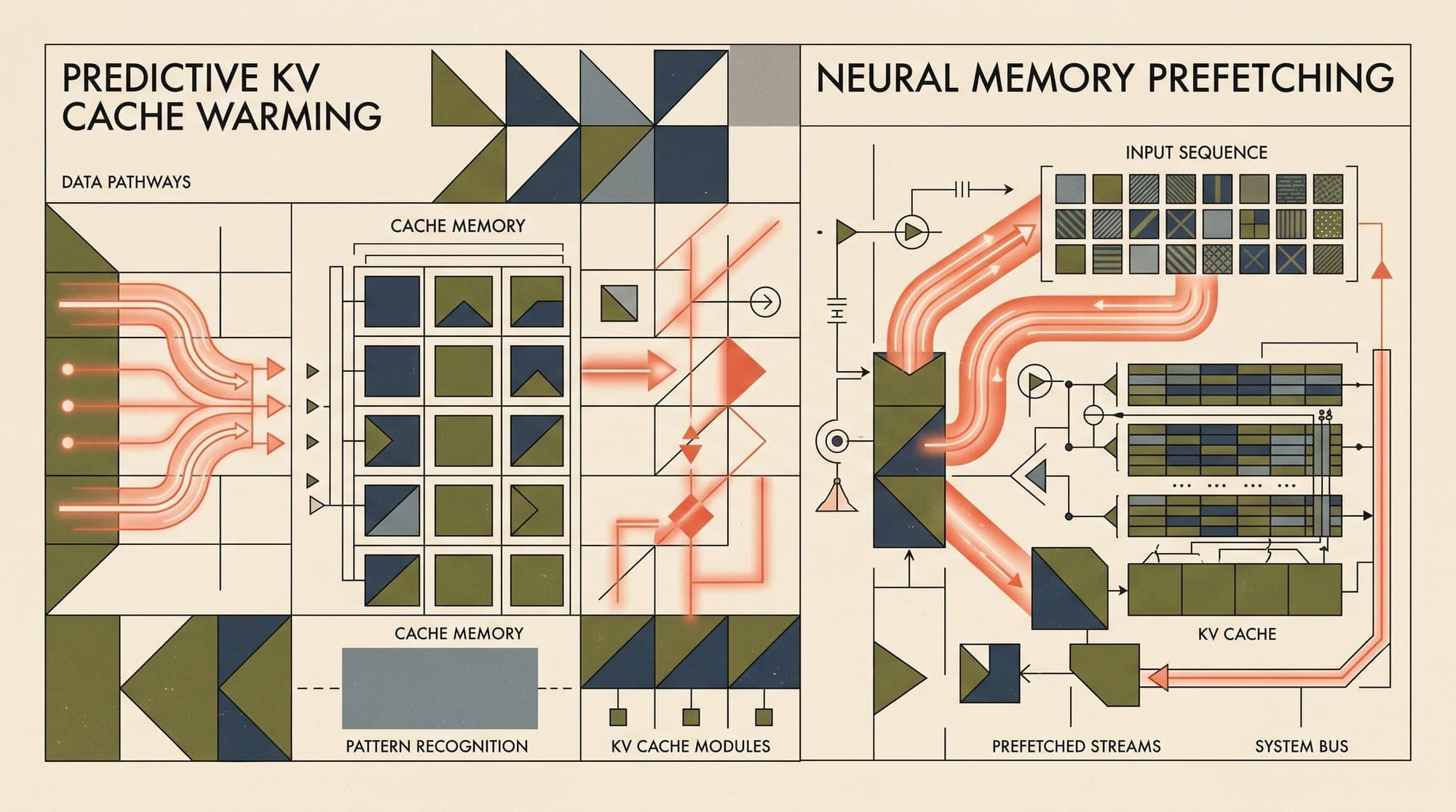
  18. Predictive KV Cache Warming in Production LLM Serving: Architecture, Session Prefetching, and TTFT Latency Shaving

    Predictive KV Cache Warming in Production LLM Serving: Architecture, Session Prefetching, and TTFT Latency Shaving In long-context large language model (LLM) deployments, Time-to-First-Token (TTFT) represents the primary latency bottleneck. As input prompts scale from 8,000 tokens to 128,000 tokens in multi-turn coding agents, legal document analysis, and enterprise retrieval pipelines, prefill execution consumes between 85% and 95% of total GPU compute time per request. Standard optimization

    AI
    5 min read
  19. Discrete Diffusion in Large Language Models: How Continuous-Time Markov Chains, Absorbing States, and Score Entropy Challenge Autoregressive Generation

    The dominance of autoregressive architectures in large language models rests on a fundamental mathematical formulation: the chain rule of probability. By factoring the joint distribution of a sequence into a product of conditional probabilities, $p(x) = \prod_{i=1}^N p(x_i \mid x_{<i})$, autoregressive models reduce text generation to sequential next-token prediction. While this left-to-right causal factorization has scaled effectively across compute regimes, it imposes rigid operational constr

    AI
    8 min read
  20. Hybrid SSM-Transformer Architectures: How Interleaving Attention and Recurrence Solves the State-Retrieval Trade-Off

    Hybrid SSM-Transformer Architectures: How Interleaving Attention and Recurrence Solves the State-Retrieval Trade-Off Autoregressive language models face a fundamental tension between inference efficiency and long-context retrieval capacity. Pure Transformer architectures scale quadratic computational complexity during sequence prefill and linear key-value (KV) cache memory consumption during autoregressive token generation. Conversely, pure State Space Models (SSMs) and linear recurrent neural

    AI
    8 min read