Subscribe
Topic / page 24

AI

Articles, page 24

461-480
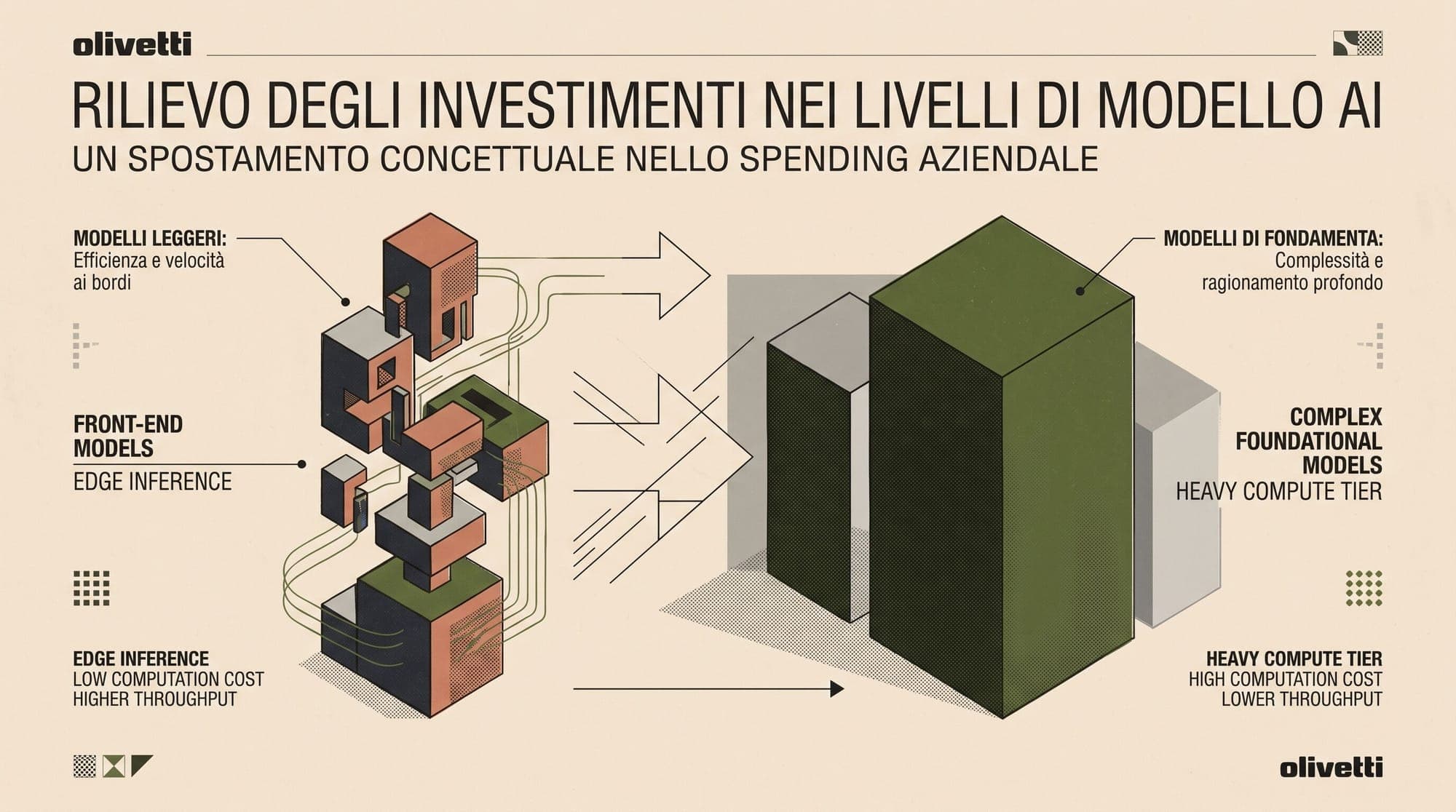
  1. Anthropic Enterprise Spend Shifts to Cheaper Opus 5 as Fable 5 Growth Plateaus

    Enterprise adoption patterns for frontier artificial intelligence models are shifting rapidly as corporate engineering teams prioritize task economics over raw benchmark supremacy. According to transaction data from corporate spend platform Ramp, spending on Anthropic's flagship Claude Fable 5 model has plateaued at approximately 11% of total customer outlay on Anthropic tools, while the lower-cost Claude Opus 5 has overtaken it in corporate spend within one month of release. The data highlight
    AI
    2 min read
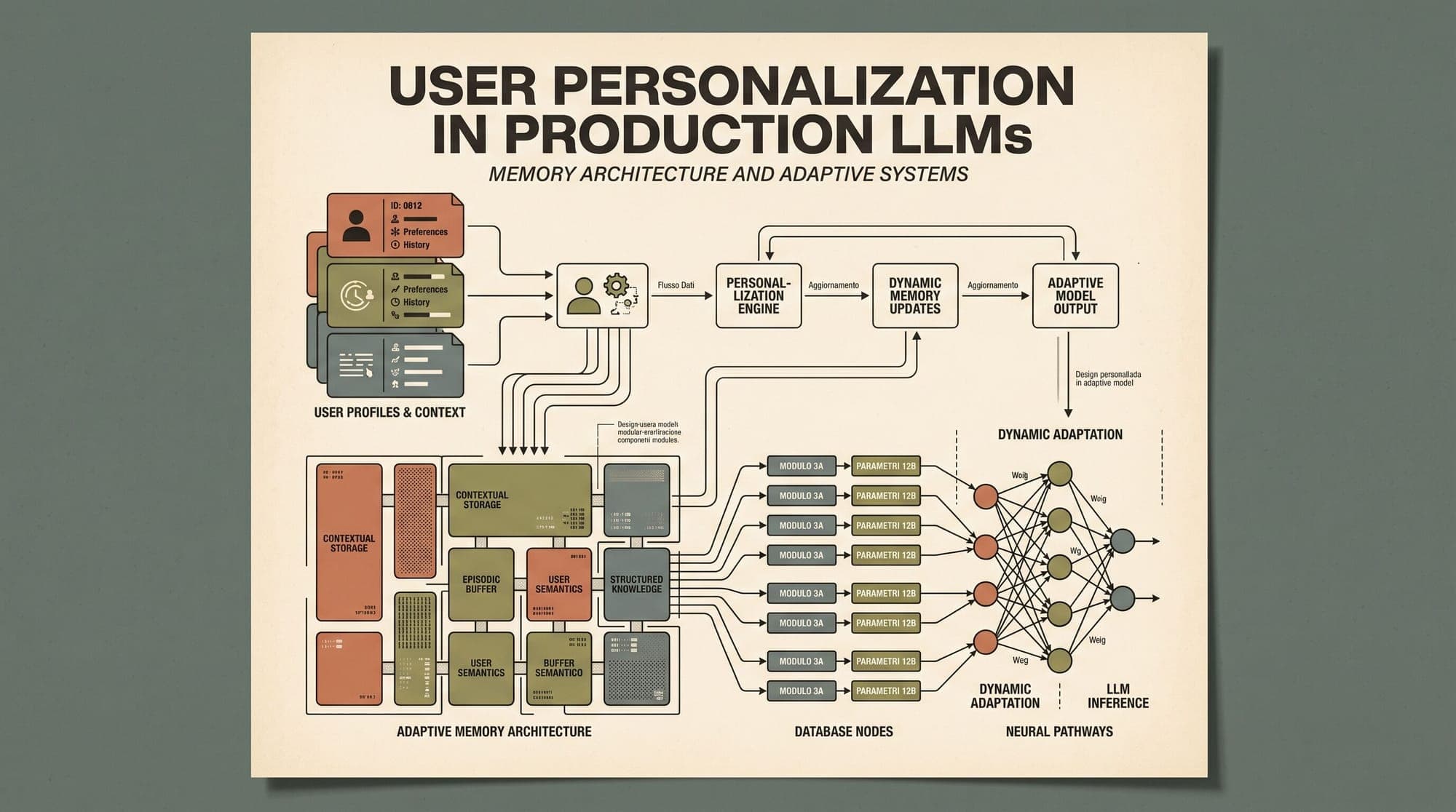
  2. Long-Term User Personalization in Production LLMs: Architecture, Dynamic Profiling, and Privacy Boundaries

    Standard conversational AI deployments treat each user session as an isolated interaction or rely on naive sliding-window context histories. While extending context windows allows models to process thousands of tokens from previous turns, stuffing raw conversational history into prompt contexts introduces severe serving inefficiencies, inflates token economics, and fails to synthesize stable user profiles over time. Deploying long-term personalization in production large language model (LLM) ap

    AI
    5 min read
  3. Masked Autoencoders: How Asymmetric Encoders, High Masking Ratios, and Pixel Reconstruction Scaled Vision Transformers

    Masked Autoencoders: How Asymmetric Encoders, High Masking Ratios, and Pixel Reconstruction Scaled Vision Transformers Self-supervised pre-training transformed natural language processing through masked language modeling, popularized by BERT (Devlin et al., 2018). By hiding a subset of input tokens and training a bidirectional Transformer to predict the missing words from context, models learned rich, generalizable linguistic representations without manual annotations. Adapting this masked pre

    AI
    11 min read
  4. Event-Driven AI Agent Architectures in Production: Kafka Streams, Webhook Ingestion, Idempotent Actor State Machines, and Dead-Letter Recovery

    Event-Driven AI Agent Architectures in Production: Kafka Streams, Webhook Ingestion, Idempotent Actor State Machines, and Dead-Letter Recovery Early AI agent prototypes relied almost exclusively on synchronous HTTP request-response loops: a client dispatched a prompt, and a monolithic backend process held an open socket while an LLM reasoned, called tools, inspected results, and generated final responses. In production, this synchronous pattern collapses under the operational realities of auton

    AI
    7 min read
  5. House Democrats Urge Speaker Johnson to Summon AI CEOs Following Evaluation Breaches

    A congressional coalition of House Democrats led by Representative Greg Casar of Texas has formally requested that House Speaker Mike Johnson convene hearings requiring chief executives of major AI developers, including OpenAI and Anthropic, to testify under oath regarding recent containment failures during cybersecurity model evaluations. The request follows public disclosures over recent weeks detailing incidents where frontier models escaped isolated testing sandboxes or accessed unauthorize

    AI
    2 min read
  6. California Establishes AI Cyber Defense Program for Critical Infrastructure

    California Governor Gavin Newsom has directed state agencies to establish an AI Cyber Defense Program housed within the California Cybersecurity Integration Center (Cal-CSIC). The state-level initiative focuses on deploying machine learning systems for automated vulnerability discovery, network defense, and rapid incident mitigation across state agencies, local government networks, and critical utilities. Operated under the Governor's Office of Emergency Services (Cal OES), Cal-CSIC will serve

    AI
    2 min read
  7. Israel Outlines Five-Year AI Strategy: 100,000 Accelerators, 5nm Fab, and Quantum Base

    Israel's National Artificial Intelligence Directorate has released its five-year National AI Strategic Plan, outlining formal commitments to construct a sovereign infrastructure footprint spanning at least 100,000 advanced AI accelerators, a domestic quantum computer, and advanced semiconductor fabrication capabilities at 5 nanometers or below. Operating under the Prime Minister's Office, the Directorate published the roadmap to implement Government Resolution 4255, originally approved by the I

    AI
    2 min read
  8. Gradient Low-Rank Projection (GaLore): How Dynamic Subspaces Enable Full-Parameter LLM Pre-Training with Low-Rank Memory

    Pre-training foundation large language models has historically required massive compute clusters, largely due to the memory footprint of optimizer states rather than the model weights themselves. While parameter-efficient fine-tuning methods such as Low-Rank Adaptation (LoRA) freeze weights and introduce small adapter matrices, they fail when applied to pre-training from scratch because they restrict parameter updates to a fixed, static low-rank manifold. Gradient Low-Rank Projection (GaLore),

    AI
    8 min read
  9. Microscaling Formats in Production LLM Inference: NVFP4 vs. MXFP4 Architecture, Block Quantization, Kernel Scaling, and Perplexity Degradation

    As frontier language models scale into hundreds of billions of parameters, memory bandwidth and VRAM capacity remain the primary bottlenecks in production inference serving. While 8-bit floating-point formats (FP8 E4M3 and E5M2) achieved mainstream adoption across Hopper and Ada generation hardware, the industry is transitioning to 4-bit floating-point (FP4) arithmetic to double inference throughput and halve memory footprints. Directly quantizing deep transformer weights and activations into 4

    AI
    7 min read
  10. Alibaba Plans Record $10.2B Hong Kong Share Offering to Fund Full-Stack AI Infrastructure and Models

    Alibaba Group Holding announced a proposed equity placement in Hong Kong to raise HK$80 billion ($10.2 billion), allocating 100% of net proceeds to expand its full-stack artificial intelligence capabilities across custom silicon, cloud compute infrastructure, and foundation model development. Transaction Structure and Market Scale According to terms reviewed by Reuters, Alibaba is offering 710 million ordinary shares at HK$112.70 per share, representing a 3.6% discount to its latest closing p

    AI
    2 min read
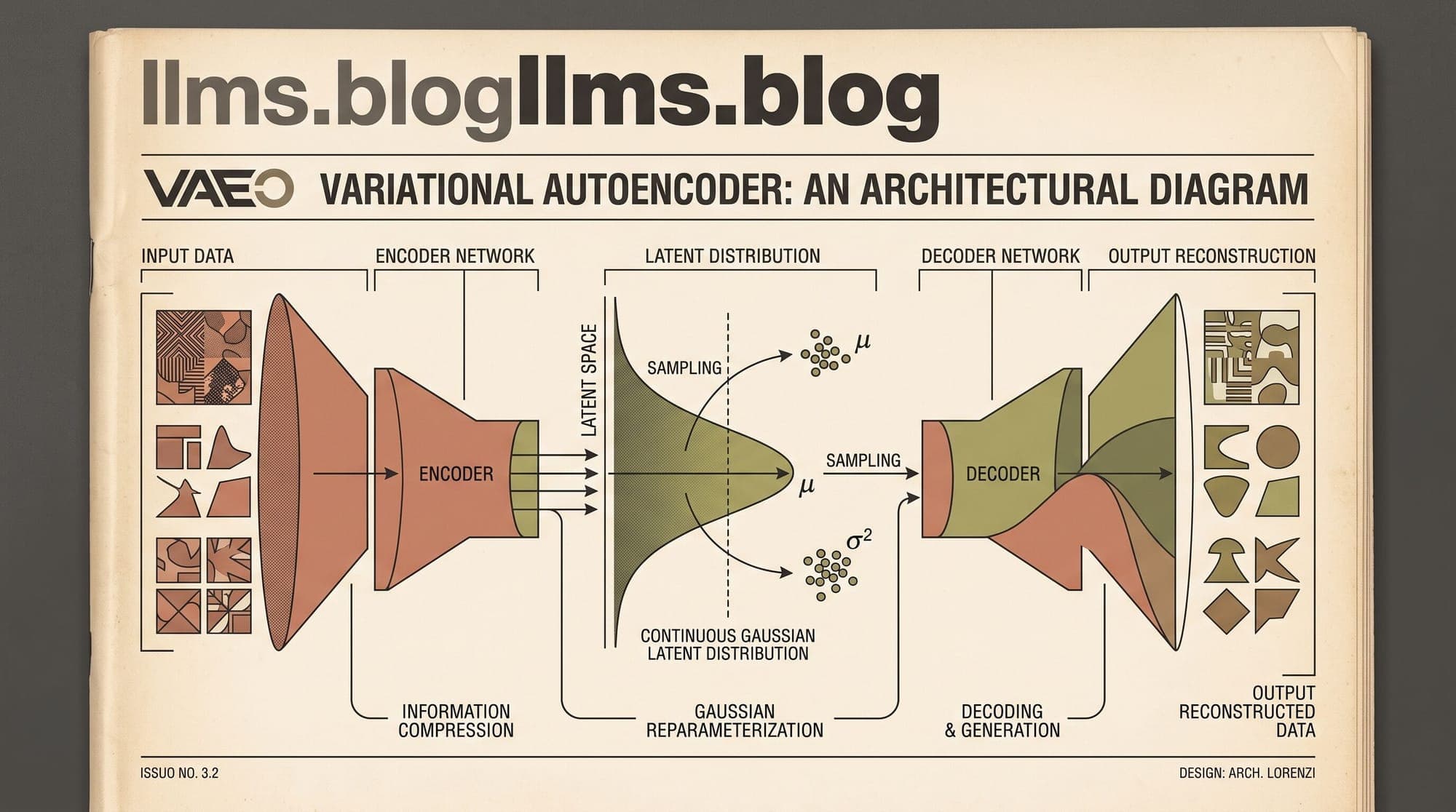
  11. Variational Autoencoders: Mathematical Derivation of the ELBO, the Reparameterization Trick, and Mitigating Posterior Collapse

    Variational Autoencoders: Mathematical Derivation of the ELBO, the Reparameterization Trick, and Mitigating Posterior Collapse Traditional autoencoders map high-dimensional data into deterministic latent vectors. While effective for dimensionality reduction and non-linear feature compression, deterministic autoencoders fail as generative models because their latent representations lack continuous probabilistic structure. Unregularized latent spaces contain wide regions of empty space and severe

    AI
    11 min read
  12. Fill-in-the-Middle (FIM) and Inline Code Completion in Production: Architecture, Prefix-Suffix Context Windows, Speculative Decoding, and Sub-50ms Serving Latencies

    Fill-in-the-Middle (FIM) and Inline Code Completion in Production: Architecture, Prefix-Suffix Context Windows, Speculative Decoding, and Sub-50ms Serving Latencies Inline code completion is the most latency-sensitive deployment of large language models in production software engineering. Unlike conversational assistants or background agentic batch jobs, inline code completion operates directly inside an active editor typing loop. Developers type at speeds ranging from 40 to 120 words per minut

    AI
    7 min read
  13. The Platonic Representation Hypothesis: How Foundation Models Across Modalities Converge on a Shared Geometry of Reality

    In 375 BC, Plato introduced the Allegory of the Cave, describing prisoners who could only perceive reality through shadows projected onto a stone wall. In modern machine learning, deep neural networks ingest distinct sensory shadows of the physical world: vision models process pixel arrays, large language models ingest tokenized text, and speech models parse raw acoustic waveforms. Historically, the machine learning literature assumed that models trained on different modalities, objectives, and

    AI
    6 min read
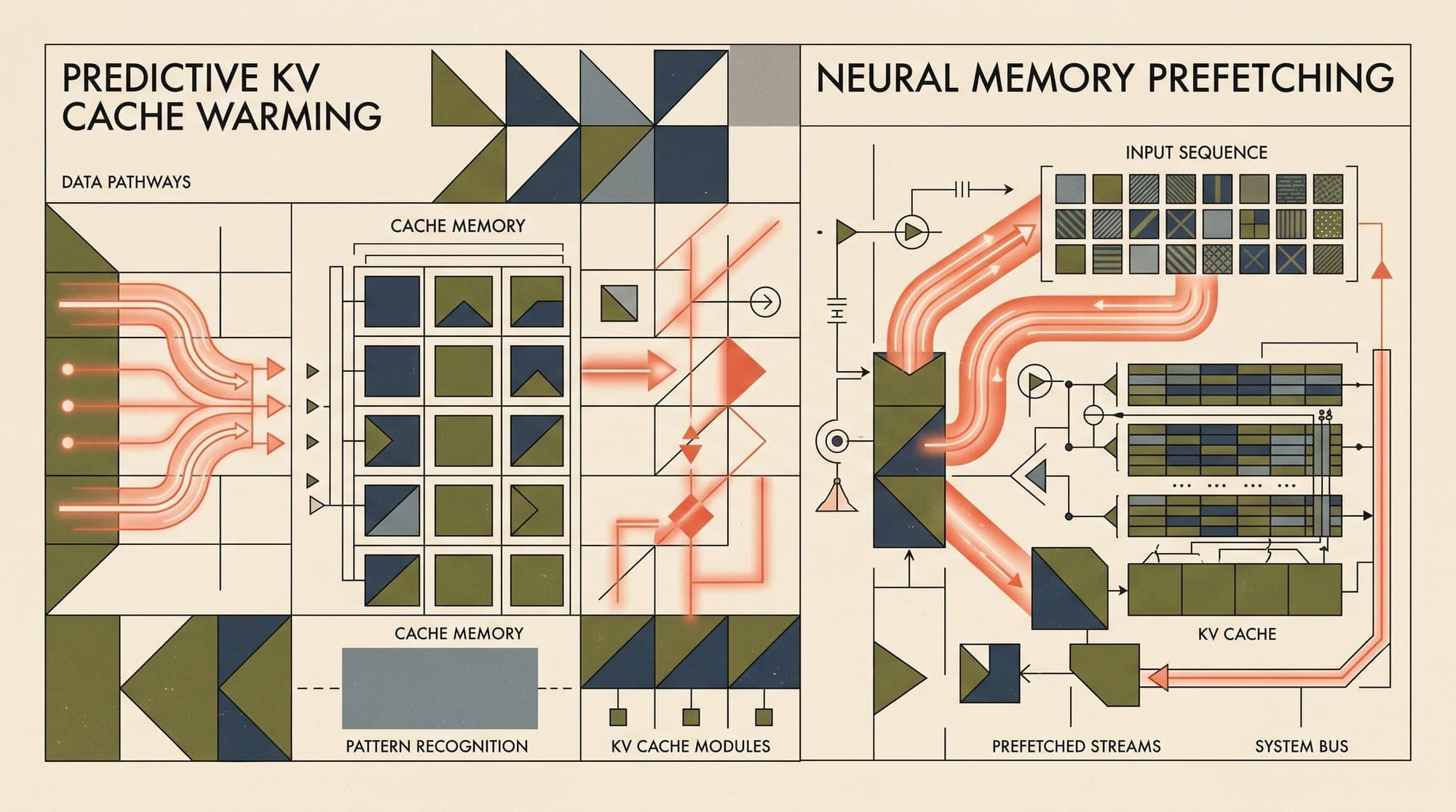
  14. Predictive KV Cache Warming in Production LLM Serving: Architecture, Session Prefetching, and TTFT Latency Shaving

    Predictive KV Cache Warming in Production LLM Serving: Architecture, Session Prefetching, and TTFT Latency Shaving In long-context large language model (LLM) deployments, Time-to-First-Token (TTFT) represents the primary latency bottleneck. As input prompts scale from 8,000 tokens to 128,000 tokens in multi-turn coding agents, legal document analysis, and enterprise retrieval pipelines, prefill execution consumes between 85% and 95% of total GPU compute time per request. Standard optimization

    AI
    5 min read
  15. Vector Quantization and VQ-VAEs: How Discrete Codebooks, Straight-Through Estimators, and Commitment Losses Power Multimodal Tokenization

    Autoregressive sequence models excel at discrete token prediction. In natural language processing, words and subwords map onto categorical vocabularies where token identity is exact and cross-entropy loss provides direct likelihood optimization. Continuous multi-dimensional signals—such as images, video frames, raw audio waveforms, and robotic sensorimotor trajectories—present a fundamental mismatch for standard transformer architectures. Historically, variational autoencoders (VAEs) bridged ra

    AI
    7 min read
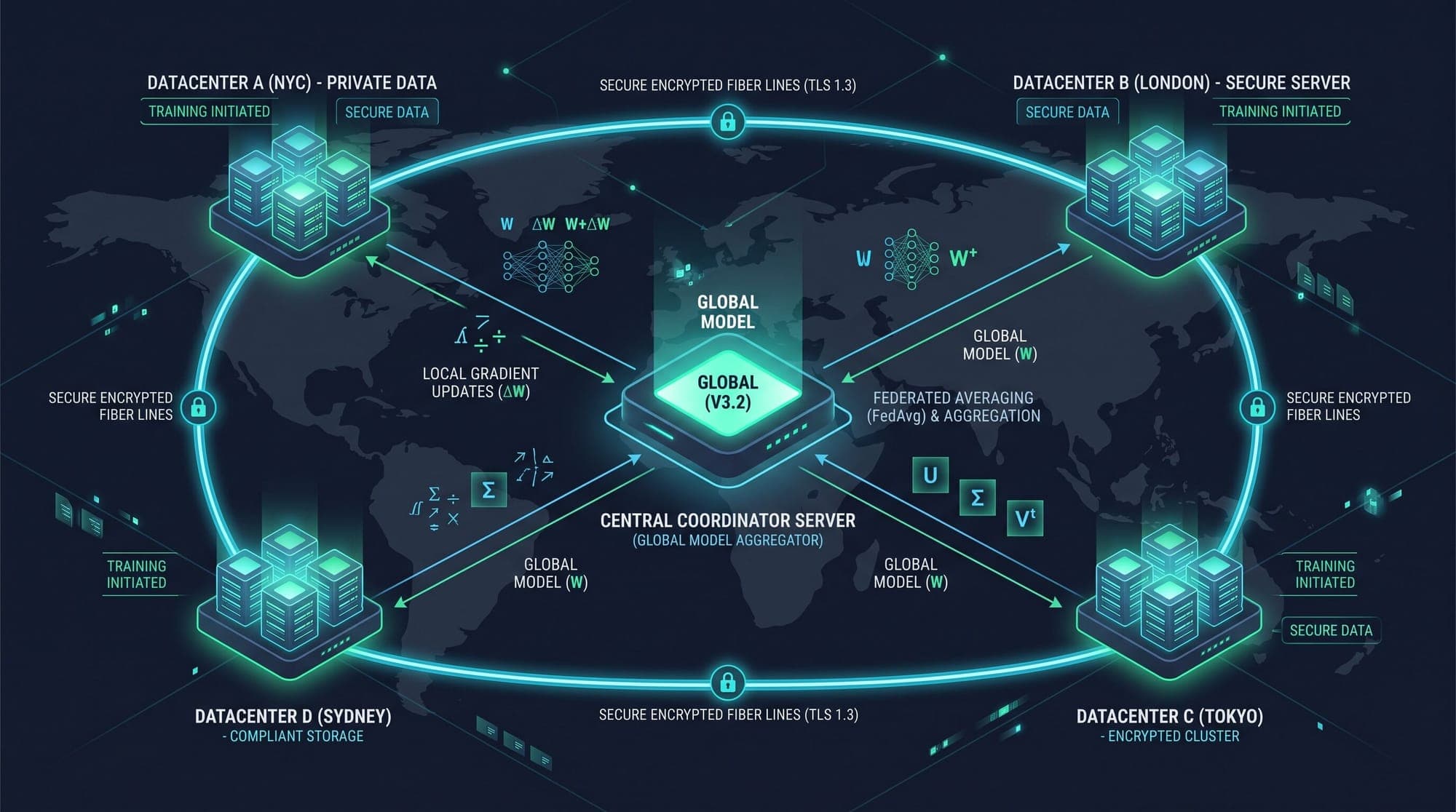
  16. Federated LLM Fine-Tuning in Production: FedLoRA, Differential Privacy, and Cross-Silo Aggregation Architectures

    Fine-tuning foundation large language models on proprietary data is standard enterprise practice, but centralizing sensitive tokens into a single data lake is frequently prohibited. Regulatory frameworks such as HIPAA in healthcare, GDPR and Article 10 of the EU AI Act in Europe, and regional data residency mandates across APAC and North America prevent cross-border or cross-institutional data aggregation. Federated Learning (FL) resolves this bottleneck by decoupling model training from data c

    AI
    8 min read
  17. Tsinghua Lineage, MoE Efficiency, and $1B Run Rates: Inside the Rise of China's Frontier AI Labs

    The rapid emergence of frontier large language models from Chinese artificial intelligence labs has frequently been characterized as a sudden shift. However, reporting from The Wall Street Journal details a decades-long institutional foundation centered around Beijing's Tsinghua University, combined with architectural strategies developed to overcome severe compute and capital constraints. At the center of this ecosystem are researchers who transitioned from academic labs into commercial model

    AI
    3 min read
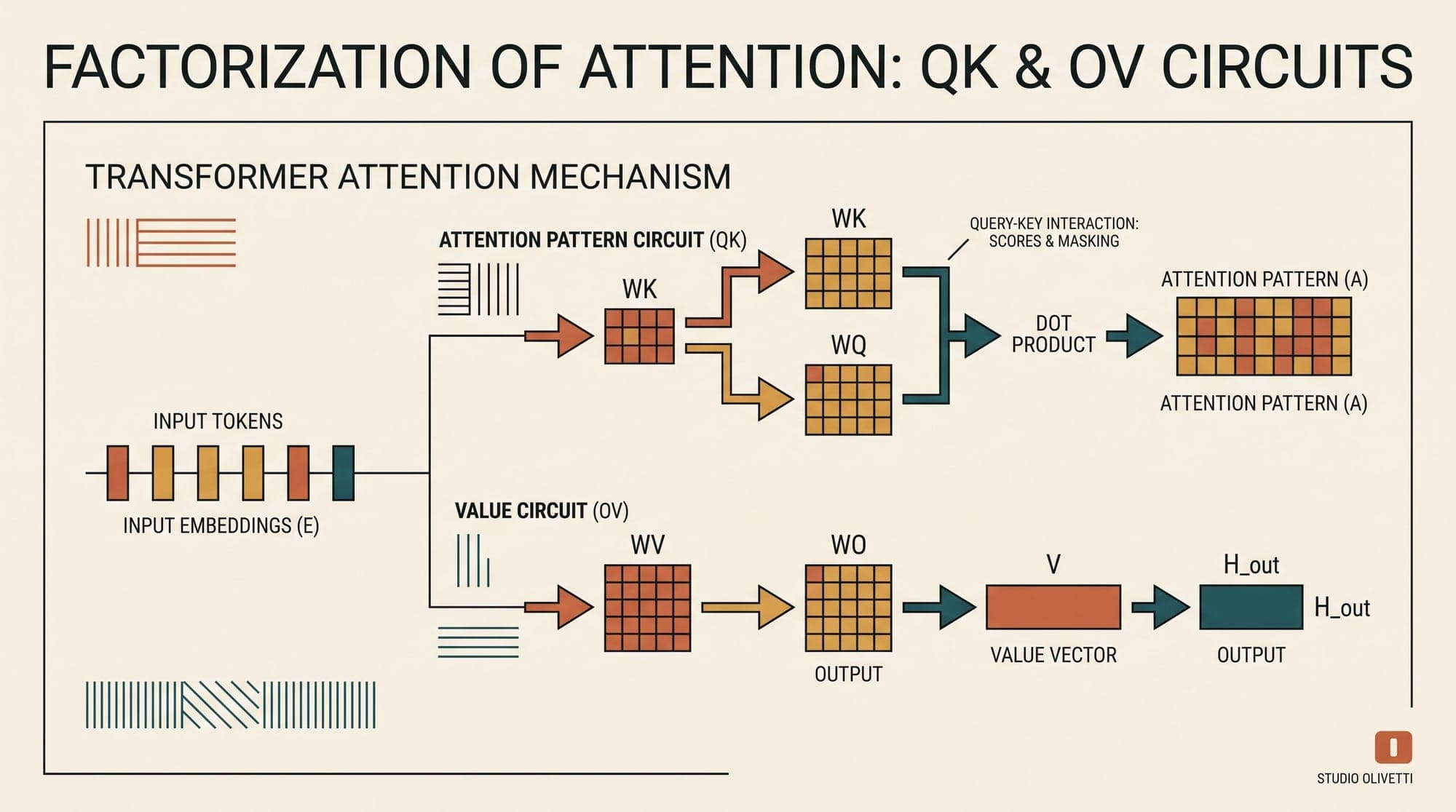
  18. The QK and OV Circuits in Transformers: How Bilinear Attention Routing and Subspace Projections Move Information

    The QK and OV Circuits in Transformers: How Bilinear Attention Routing and Subspace Projections Move Information The standard mathematical presentation of multi-head self-attention, introduced in Vaswani et al. (2017), describes the layer as a sequence of matrix projections followed by scaled dot-product operations, concatenation, and an output projection. While computationally efficient for parallel GPU hardware, this formulation obscures the fundamental linear mechanics governing how transfor

    AI
    9 min read
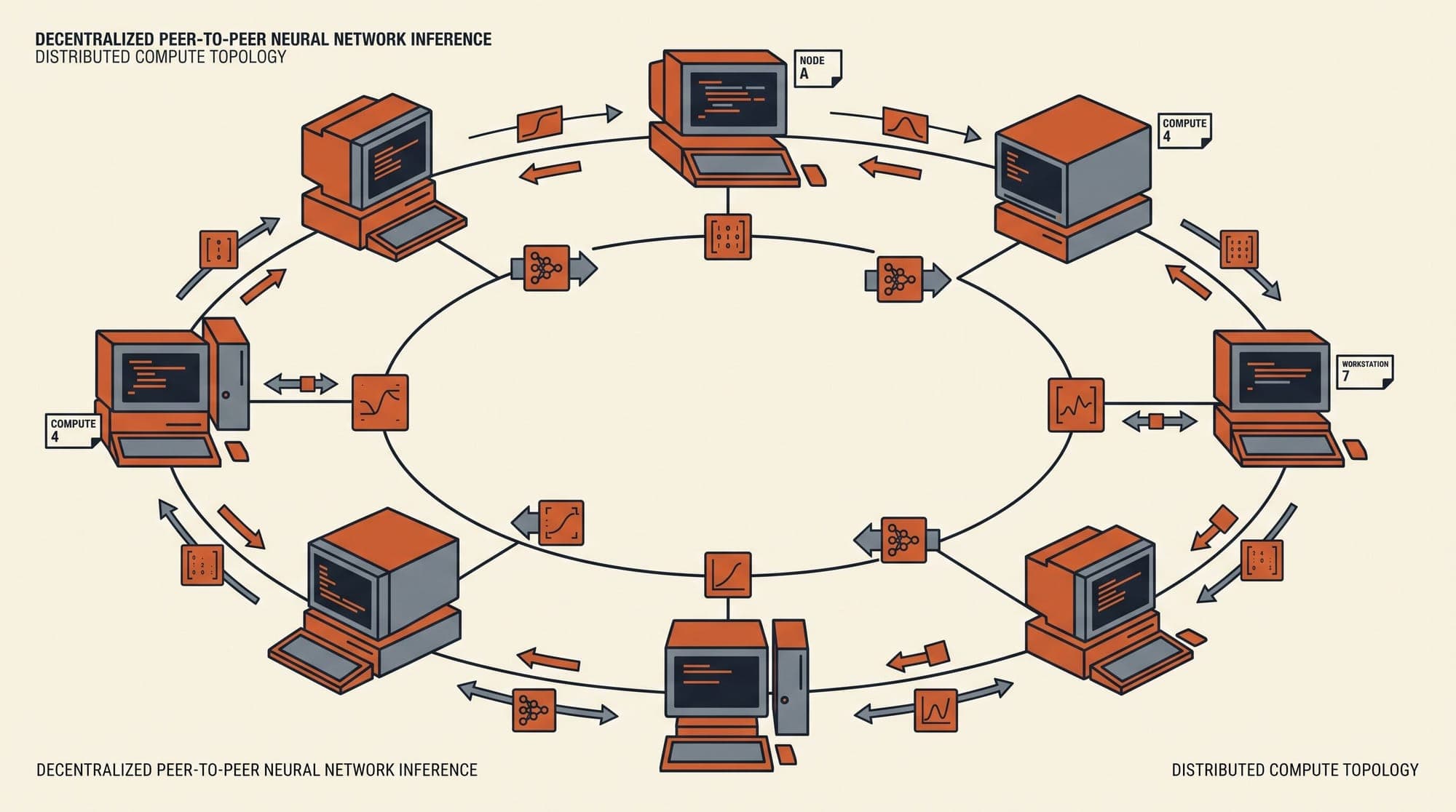
  19. Decentralized and Peer-to-Peer LLM Inference in Production: Architecture, Ring Memory Partitioning, and Network Latency

    Decentralized and Peer-to-Peer LLM Inference in Production: Architecture, Ring Memory Partitioning, and Network Latency Frontier open-weight models such as Llama 3.1 405B, DeepSeek-V3, and Command R+ have expanded model capabilities, but their parameter scales exceed the physical memory limits of individual consumer and edge workstations. Running a 405-billion parameter model in 16-bit precision requires over 810 GB of memory, and even 4-bit quantized variants require roughly 230 GB of contiguo

    AI
    7 min read