Subscribe
Topic / page 21

AI

Articles, page 21

401-420
  1. Agent Self-Evolution and Experiential Learning in Production: Trajectory Reflection, Skill Library Curation, and Verifiable Policy Distillation

    Deploying autonomous AI agents into complex environments reveals a persistent operational bottleneck: frozen model weights. When an agent fails at a non-trivial workflow, traditional engineering setups rely on humans to diagnose the failure, rewrite prompt templates, adjust few-shot exemplars, or add custom heuristic wrappers. This manual iteration loop fails to scale across diverse, long-horizon production environments where agents encounter thousands of unique edge cases daily. To break this


    AI
    6 min read
  2. Temperature Scaling and Model Calibration in Deep Neural Networks: Mathematical Foundations, Expected Calibration Error, and Post-Hoc Logit Optimization

    Modern deep neural networks achieve high classification accuracy and generative benchmark performance across vision, language, and decision-making tasks. However, optimization for raw accuracy does not ensure that predicted softmax probabilities correspond to true posterior probabilities. A model that assigns a 0.90 probability to an output should be correct exactly 90% of the time. When empirical accuracy systematically diverges from predicted confidence, the model is miscalibrated. Research b

    Deep Learning
    11 min read
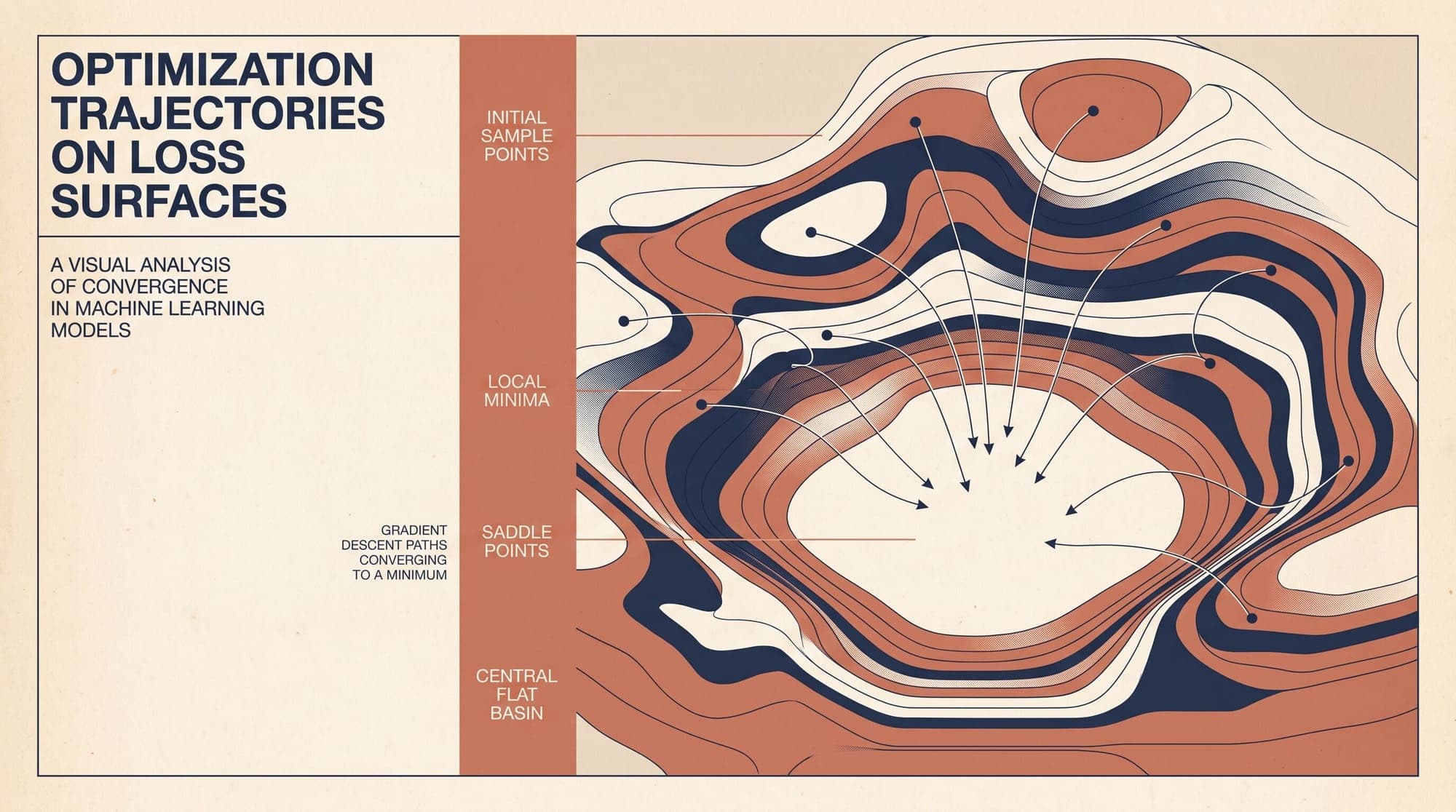
  3. Loss Landscapes in Deep Neural Networks: How Filter Normalization, Hessian Curvature, and Basin Flatness Explain Generalization

    The parameter space of modern deep learning models spans millions to hundreds of billions of dimensions. In this high-dimensional space, the empirical risk objective forms a complex geometric surface known as the loss landscape. Despite the extreme non-convexity of deep neural networks, standard first-order optimization algorithms such as stochastic gradient descent (SGD) and Adam regularly converge to parameter configurations that achieve both low training error and robust test set generalizati

    AI
    9 min read
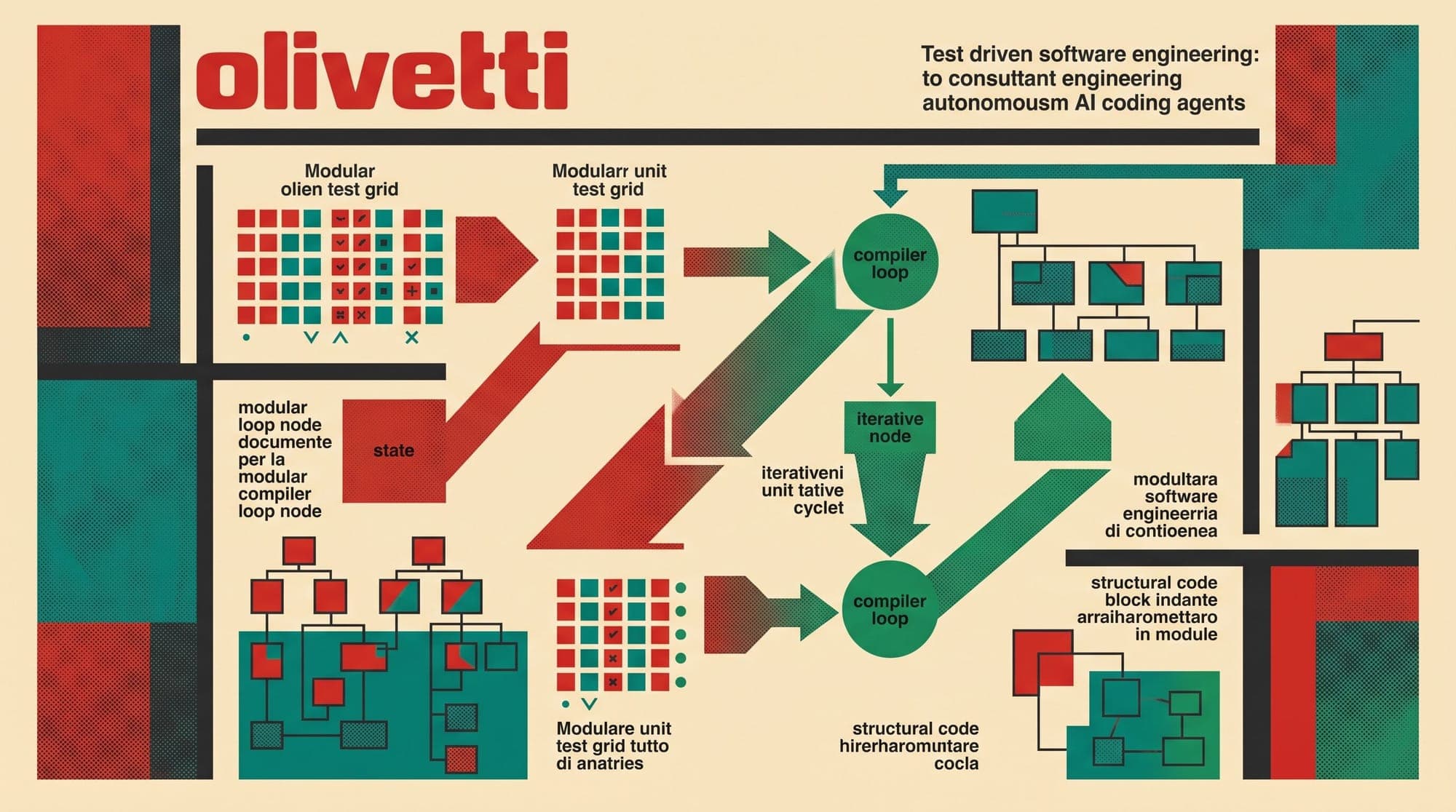
  4. Test-Driven Development in AI Coding Agents: Architecture, Reproduction Harnesses, and Execution-Guided Verification

    Autonomous coding agents face a fundamental structural limitation when operating in open-loop, single-turn, or ungrounded generative modes: without dynamic feedback from runtime execution, large language models generate syntactically plausible code that frequently fails subtle interface contracts, breaks existing edge cases, or introduces silent regressions. While early benchmark evaluations relied heavily on zero-shot or few-shot code completion, modern production coding architectures such as S

    AI
    5 min read
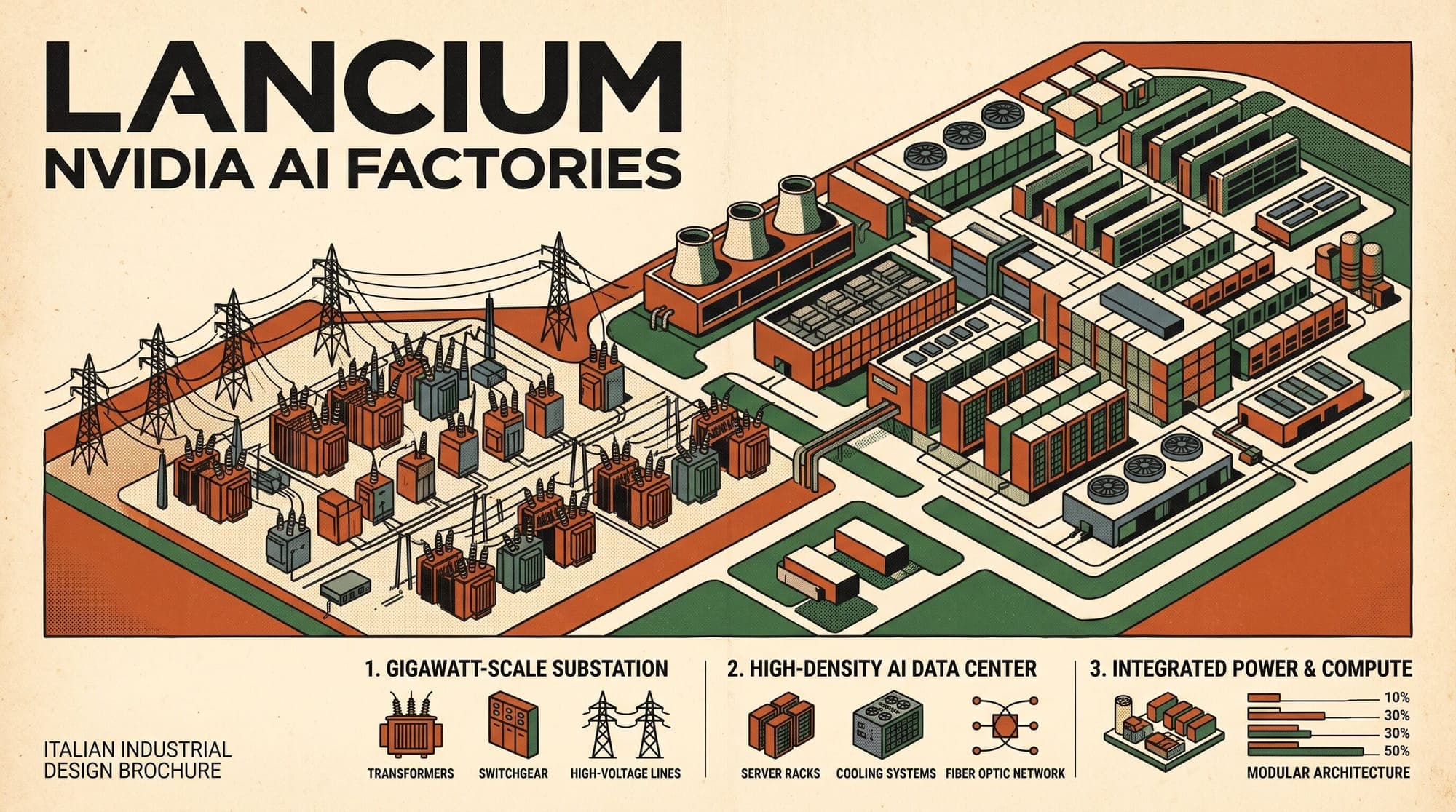
  5. Lancium and NVIDIA Partner on Gigawatt-Scale AI Factories Across 15GW Pipeline

    Texas energy infrastructure provider Lancium has entered a strategic partnership with NVIDIA to deploy NVIDIA's full AI factory technology stack across Lancium's multi-gigawatt clean energy data center portfolio. As part of the transaction, NVIDIA has taken a direct equity stake in Lancium, which is backed by funds managed by Blackstone Energy Transition Partners and Blackstone Multi-Asset Investing. The partnership combines Lancium's 4 gigawatts of operational and leased capacity and a pipelin

    AI
    2 min read
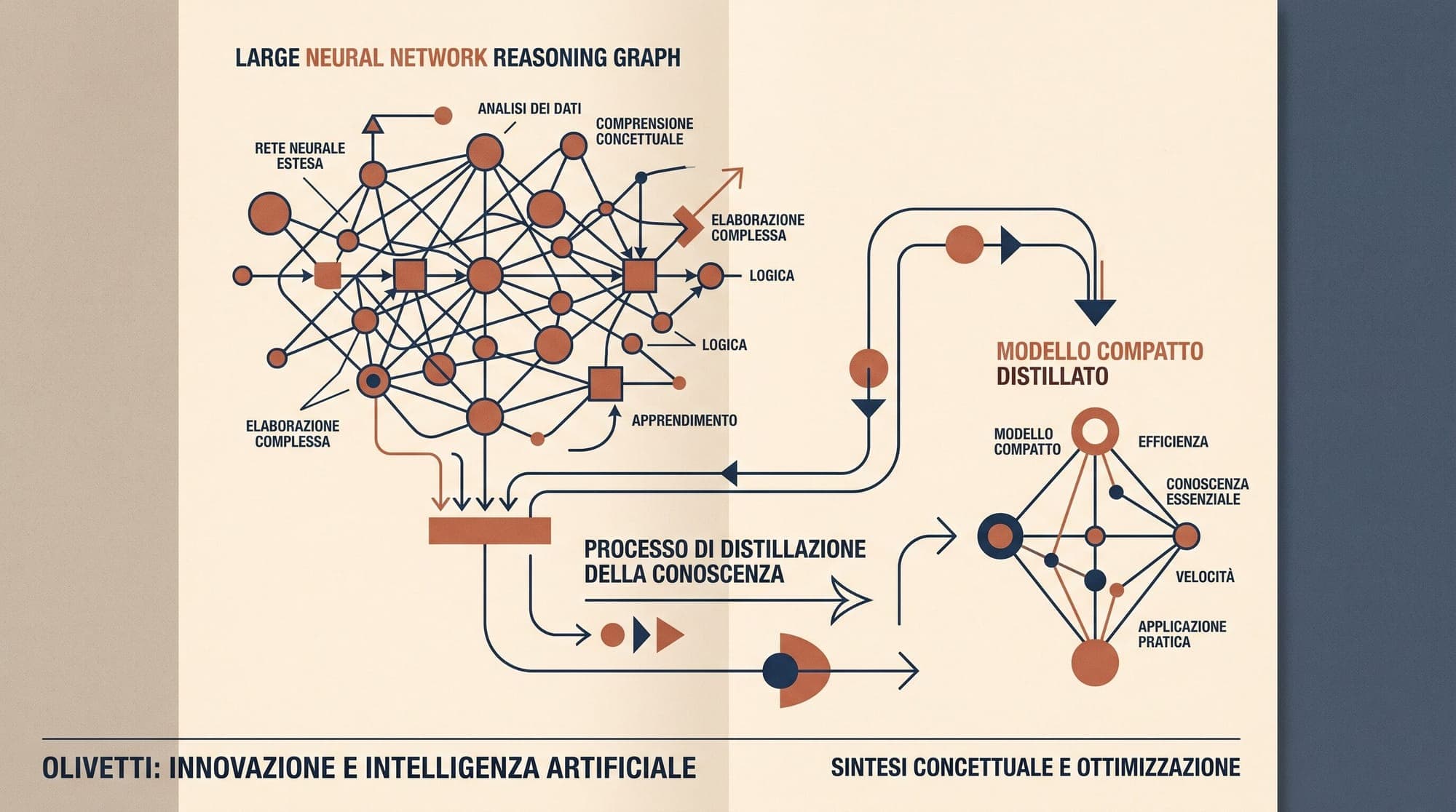
  6. Reasoning Model Distillation in Production: Trajectory Curation, Thinking-Token Formatting, Over-Thinking Mitigation, and Student RL Alignment

    Reasoning Model Distillation in Production: Trajectory Curation, Thinking-Token Formatting, Over-Thinking Mitigation, and Student RL Alignment Distilling frontier reasoning models into compact language models has emerged as one of the most effective strategies for deploying low-latency, cost-efficient inference pipelines. Rather than training small models purely on input-output answer pairs, reasoning distillation transfers the intermediate exploration, backtracking, and verification trajectori

    LLM
    5 min read
  7. Valor and Point72 Back General Intuition at $6B Valuation for Physical AI and Robotics

    New York-based foundation model startup General Intuition is in discussions to secure new funding at a $6 billion pre-money valuation, according to sources familiar with the matter. The financing round includes new backing from Valor Equity Partners, Point72 Ventures, and Seven Seven Six, alongside continued participation from existing investors Khosla Ventures and General Catalyst. The potential valuation represents a steep increase from the company's previous financing round, which raised $32

    AI
    1 min read
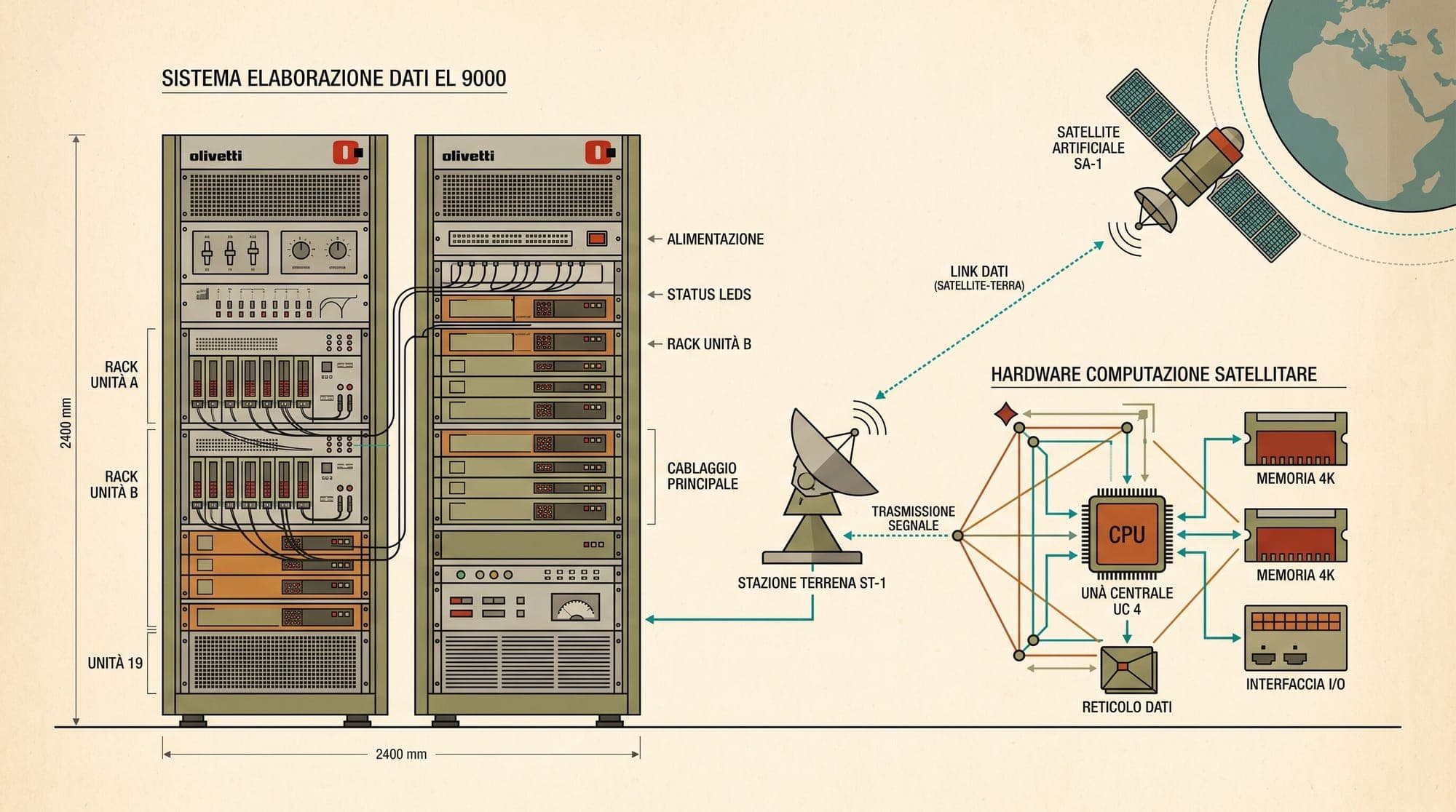
  8. SpaceXAI Deploys NVIDIA Vera CPUs for Gigawatt-Scale Agentic Infrastructure and Starmind Satellite

    SpaceXAI has selected NVIDIA's Vera central processing units to handle the CPU-bound orchestration and execution workloads powering its Grok models as its computing infrastructure expands toward gigawatts of capacity. The deployment spans both ground-based data centers and orbital systems, with SpaceXAI planning to base its first-generation Starmind AI satellite on an optimized Vera Rubin NVL72 rack architecture. While GPU clusters handle core model training and forward passes, agentic AI workf

    AI
    2 min read
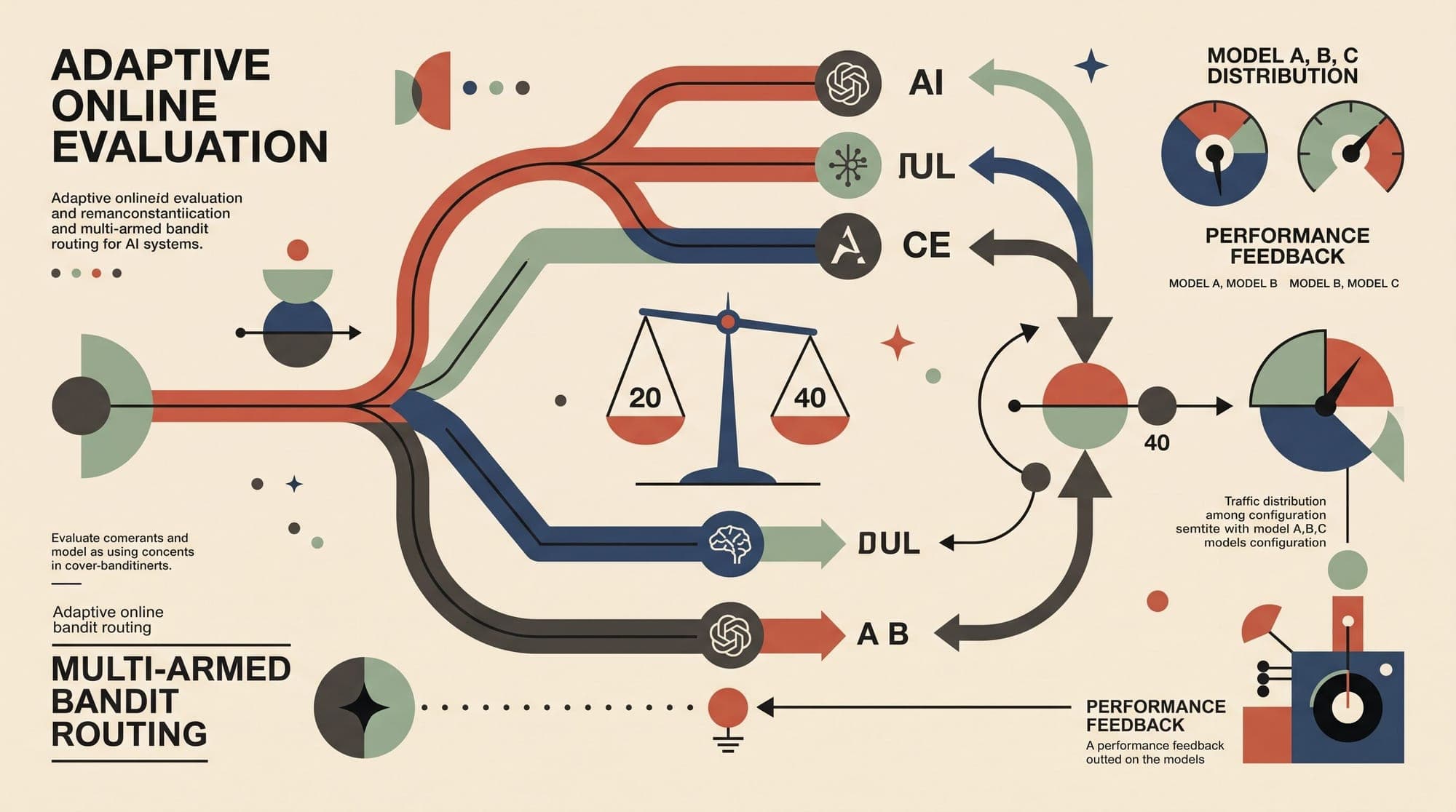
  9. Online Evaluation and Multi-Armed Bandit Routing in Production LLM Systems: Interleaving, Counterfactual Estimation, and Adaptive Traffic Allocation

    Online Evaluation and Multi-Armed Bandit Routing in Production LLM Systems: Interleaving, Counterfactual Estimation, and Adaptive Traffic Allocation Static offline benchmarks such as MMLU, HumanEval, and synthetic LLM-as-a-judge evaluation pipelines have become standard fixtures in modern AI development. However, production engineering teams frequently observe that offline benchmark improvements fail to translate into tangible user satisfaction or business outcomes. Static evaluation suites suf

    AI
    12 min read
  10. Teacher Forcing and Exposure Bias in Autoregressive Models: Mathematical Foundations, Compounding Errors, and Mitigation Strategies

    Teacher Forcing and Exposure Bias in Autoregressive Models: Mathematical Foundations, Compounding Errors, and Mitigation Strategies Autoregressive sequence models form the computational backbone of modern language modeling, code synthesis, and multi-step reasoning agents. From decoder-only Transformers like GPT and Claude to recurrent architectures, these systems factorize the joint probability of a sequence of tokens $y = (y_1, y_2, \dots, y_T)$ into a product of conditional probabilities: $$

    AI
    10 min read
  11. Virtual Memory for AI Agents in Production: Context Window Paging, Working Set Estimation, and Hierarchical Storage Architectures

    Virtual Memory for AI Agents in Production: Context Window Paging, Working Set Estimation, and Hierarchical Storage Architectures As autonomous AI agents shift from single-turn chat interactions to long-horizon workflows spanning days, weeks, or millions of execution steps, managing context has become the primary operational bottleneck. While modern foundation models support nominal context windows ranging from 128k to over 1M tokens, treating the active context window as an unbounded append-on

    AI
    9 min read
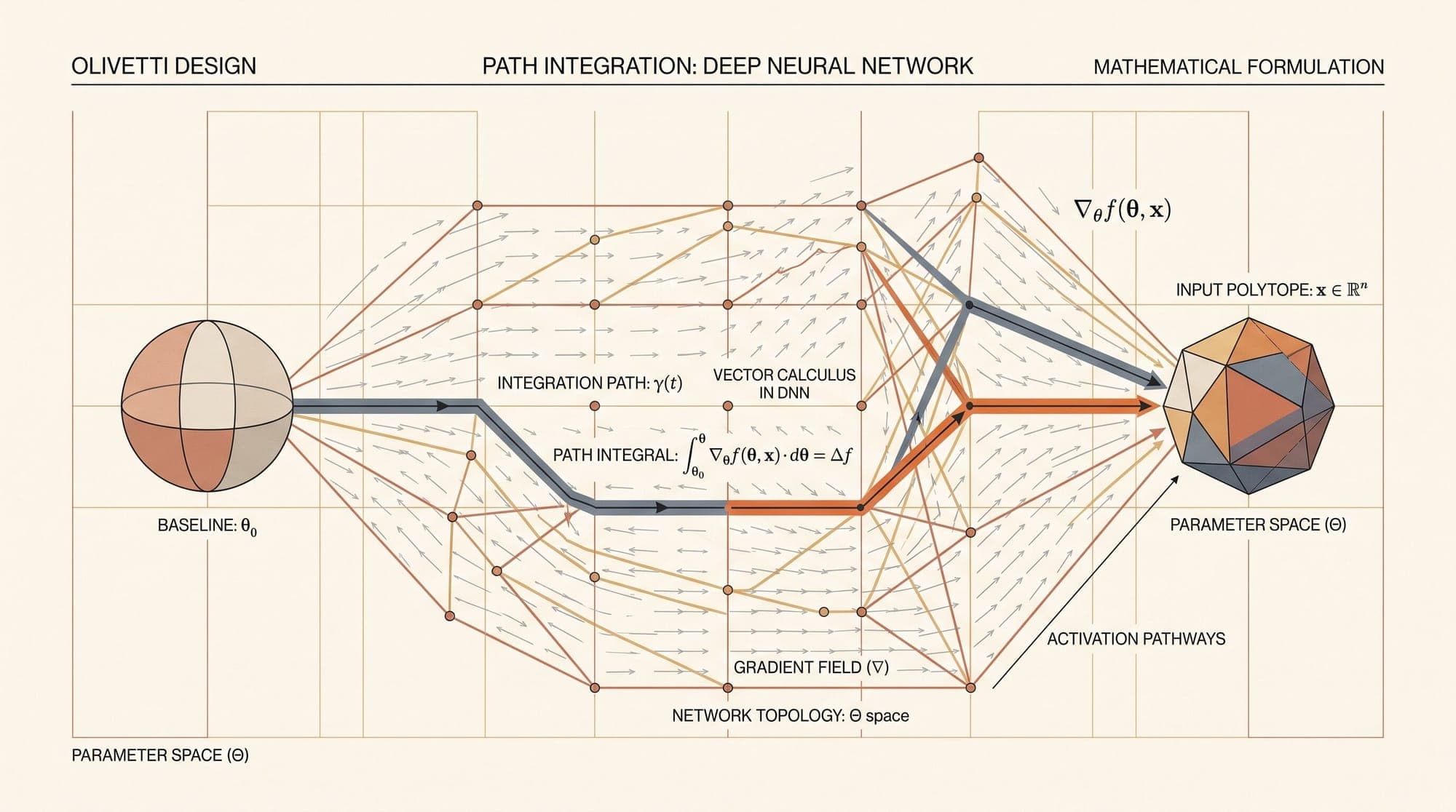
  12. Integrated Gradients: How Axiomatic Attribution Solves the Gradients-at-Saturation Problem in Deep Neural Networks

    Integrated Gradients: How Axiomatic Attribution Solves the Gradients-at-Saturation Problem in Deep Neural Networks Feature attribution methods in deep learning aim to answer a fundamental interpretability question: given an input vector and a trained neural network, how much did each input dimension contribute to the model's final output score? In natural language processing and computer vision, practitioners routinely need to identify which input tokens, pixels, or tabular variables drove a sp

    AI
    10 min read
  13. Semantic Memory Consolidation in Production AI Agents: Architecture, Episodic Decay Curves, and Procedural Knowledge Distillation

    Long-running autonomous AI agents accumulate hundreds of interaction turns, tool executions, and environment observations across extended deployments. Naive implementations store these raw episodic traces directly in vector databases, retrieving past interactions via dense semantic similarity. In production, this append-only strategy degrades quickly: retrieval queries surface outdated facts, contradictory state assertions pollute prompt context, and the agent fails to extract generalizable prob

    AI
    7 min read
  14. Stochastic Weight Averaging: How Geometric Ensembling Finds Flatter Optima and Improves Generalization

    Stochastic Weight Averaging (SWA): How Geometric Ensembling Finds Flatter Optima and Improves Generalization During the optimization of deep neural networks, standard Stochastic Gradient Descent (SGD) and adaptive optimizers often struggle to find solutions that generalize robustly to unseen data. While learning rate decay allows optimizers to settle into local minima on the empirical training loss surface, empirical and theoretical analyses reveal that standard gradient descent tends to halt n

    AI
    8 min read
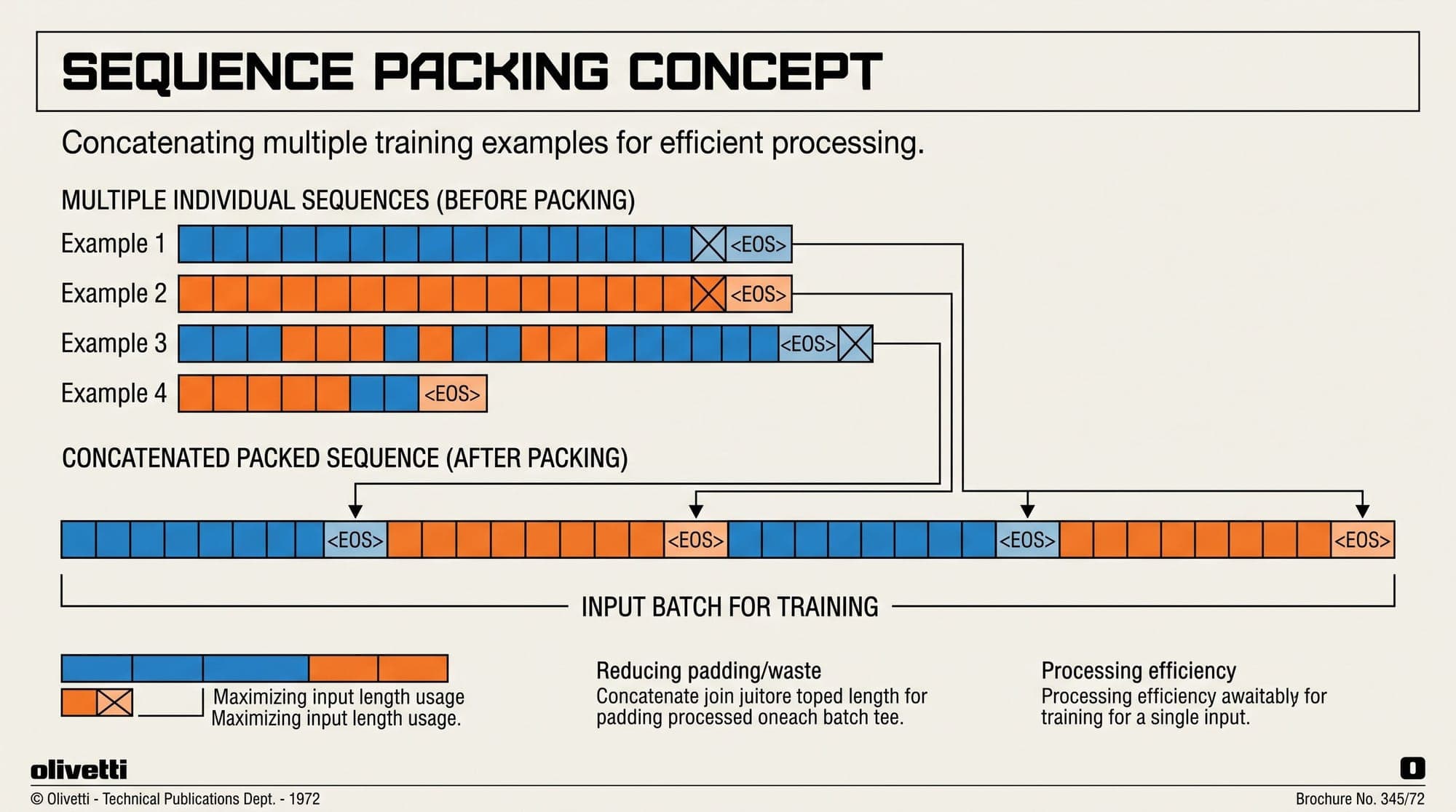
  15. Sequence Packing and Loss Masking in Production SFT: Architecture, Trade-Offs, and Framework Implementations

    Sequence Packing and Loss Masking in Production SFT: Architecture, Trade-Offs, and Framework Implementations Supervised fine-tuning pipelines routinely waste 40–70% of FLOPs on padding tokens. Sequence packing eliminates that waste by concatenating multiple training examples into a single long tensor, but it introduces three hard constraints: attention must not leak across example boundaries, loss must be computed only on the intended target spans (typically assistant responses), and the data c

    AI
    6 min read
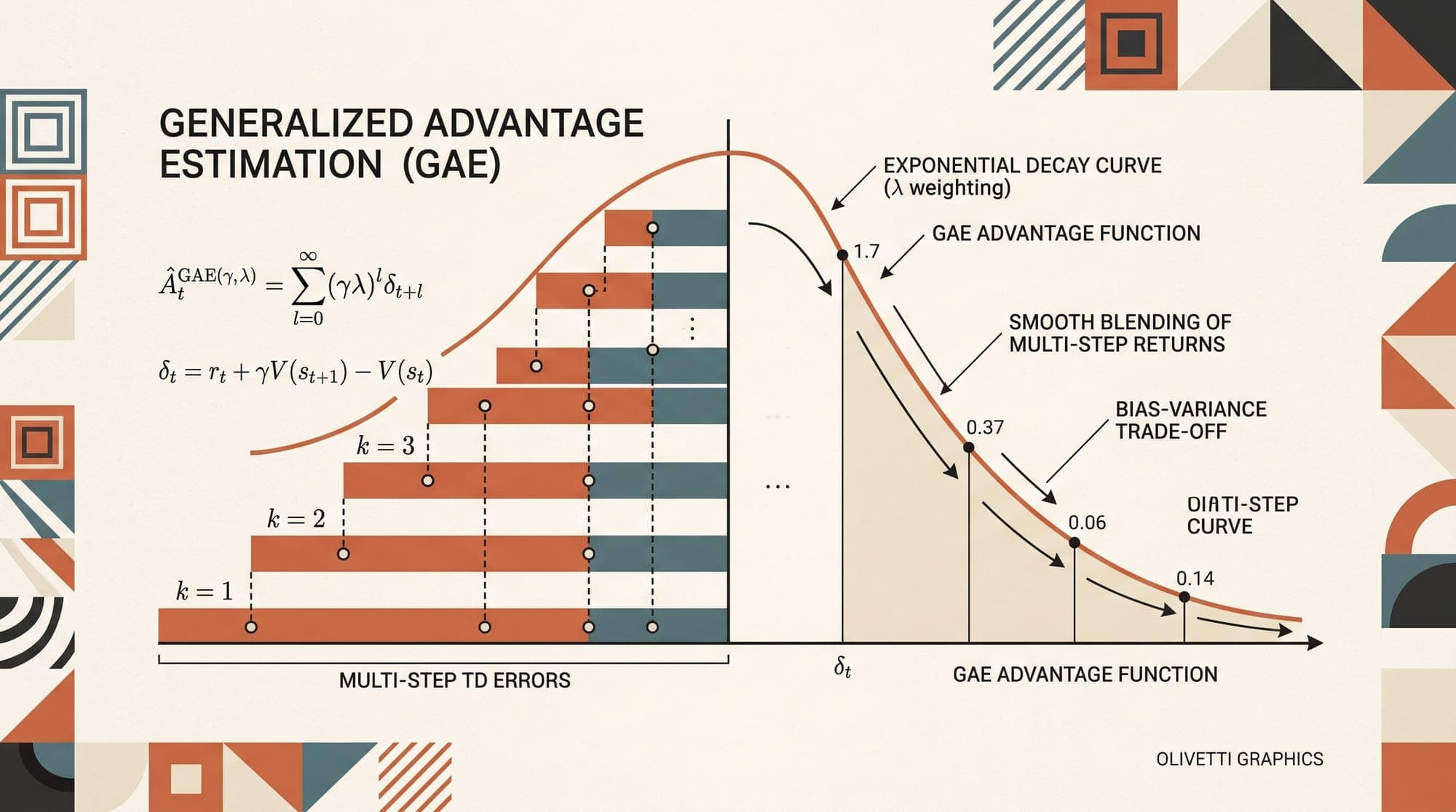
  16. Generalized Advantage Estimation: How Exponential Weighting Balances Bias and Variance in Policy Optimization

    Policy gradient algorithms form the theoretical backbone of modern policy optimization, ranging from continuous robotic control to reinforcement learning from human feedback (RLHF) in frontier large language models. A persistent challenge in policy optimization is variance: estimating the gradient of expected cumulative reward over stochastic trajectories generates high-variance Monte Carlo signals that require massive sample sizes and risk destabilizing gradient updates. Generalized Advantage

    AI
    6 min read
  17. Data Pruning and Core-Set Selection in Deep Learning: How EL2N, GraNd, and Memorization Dynamics Break Power-Law Scaling

    Modern foundation models are trained on tens of trillions of tokens, requiring millions of GPU hours. Yet empirical analyses consistently reveal that massive portions of web-crawled corpora and large-scale vision datasets are either highly redundant, uninformative, or dominated by unlearnable noise. Standard empirical scaling laws (such as those formulated by Kaplan et al. and Chinchilla) model generalization error as a power-law function of total training samples ($L(N) \propto N^{-\alpha}$). H

    AI
    7 min read
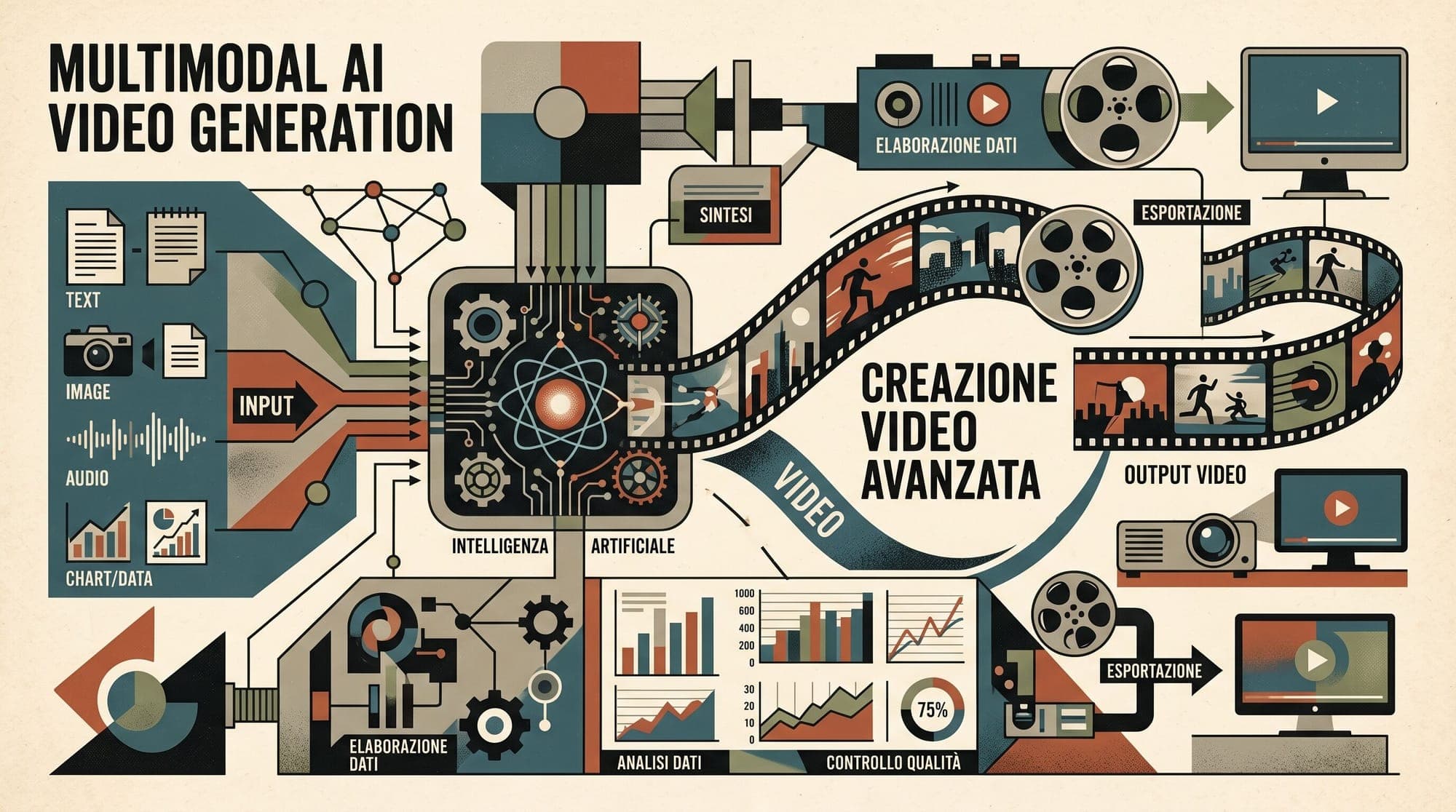
  18. Alibaba Launches Wan 3.0 AI Video Model with Native 30-Second Generation and Document Inputs

    Alibaba Tongyi Lab has launched a public beta of Wan 3.0, the latest iteration of its video generation model family. Available on Alibaba Cloud Model Studio and Qwen Cloud under the model identifier wan3.0-video, the model produces up to 30 seconds of continuous video in a single pass at resolutions up to 1080p. Unlike predecessor models such as Wan 2.7, which capped single-pass output at 15 seconds, Wan 3.0 consolidates video synthesis into a unified architecture and expands supported input mo

    AI
    2 min read
  19. Long-Context Evaluation in Production: Why Synthetic Needles Fail, Multi-Hop Stress Testing, and Benchmarking Effective Context Size

    Frontier model providers frequently market sequence lengths spanning 128K, 1M, or 2M tokens. However, engineering teams deploying these models in production environments for codebase refactoring, multi-turn agent execution, or complex document analysis regularly observe severe retrieval failures and reasoning breakdowns well before hitting context boundaries. The primary culprit behind this disconnect is the widespread reliance on vanilla Needle In A Haystack (NIAH) evaluations. While standard

    AI
    6 min read
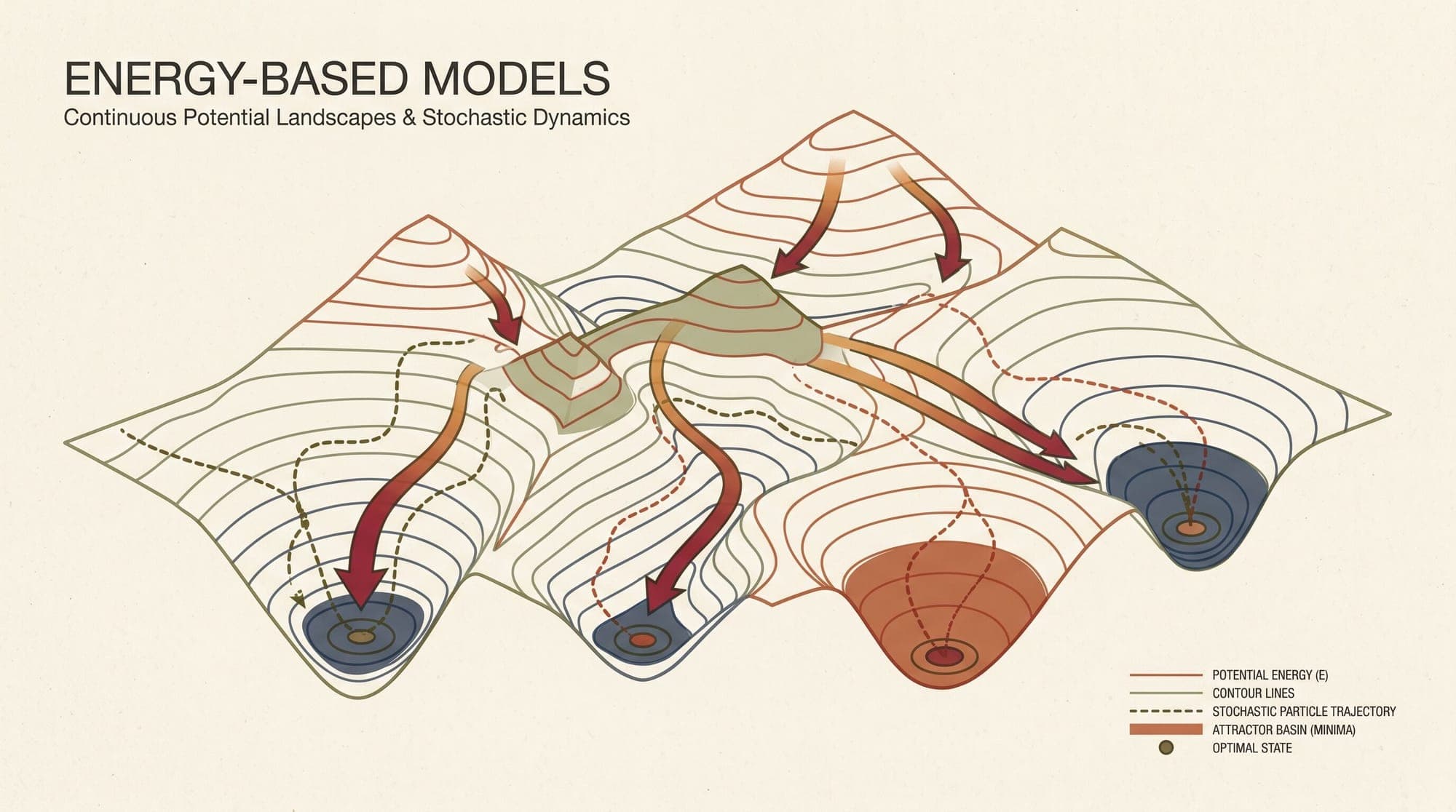
  20. Energy-Based Models: How Energy Landscapes, Contrastive Divergence, and Langevin Dynamics Unify Generative Learning

    Energy-Based Models: How Energy Landscapes, Contrastive Divergence, and Langevin Dynamics Unify Generative Learning Probabilistic modeling in machine learning fundamentally centers on estimating data distributions over high-dimensional spaces. Standard generative architectures achieve this by enforcing structural constraints: autoregressive models factorize joint distributions through causal chains, normalizing flows constrain network architectures to invertible bijections with tractable Jacobi

    AI
    9 min read