Subscribe
Topic / page 20

AI

Articles, page 20

381-400
  1. Hugging Face Introduces gr.Workflow to Turn AI Pipelines into Visual Graphs and REST APIs

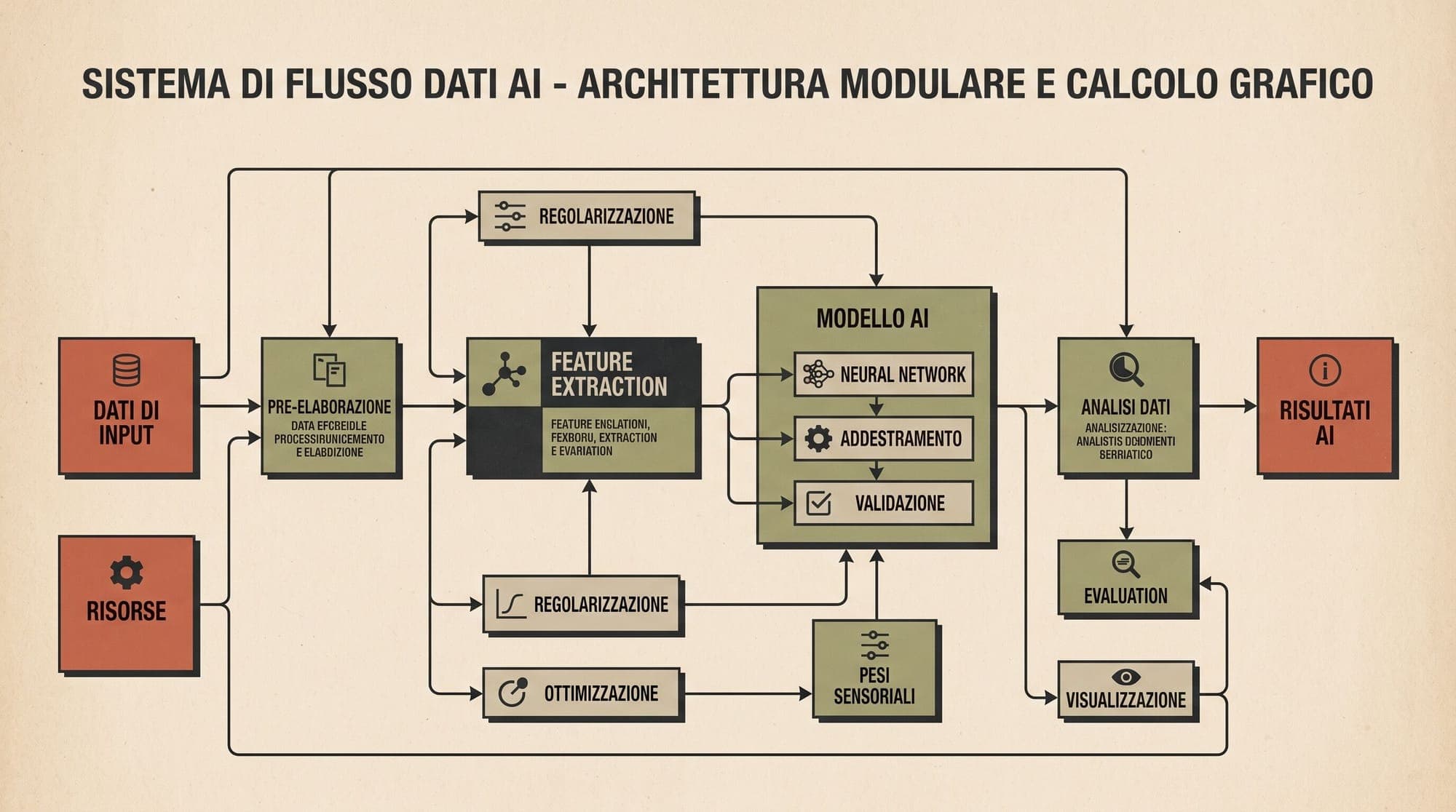
    Hugging Face has released gr.Workflow, a native extension to the Gradio framework designed to convert multi-stage artificial intelligence pipelines into interactive node graphs, visual user interfaces, and deployable REST APIs. Modern machine learning applications increasingly rely on compound pipelines that chain heterogeneous models: generating text via large language models, feeding prompts into diffusion systems, processing outputs through background removal or audio synthesis models, and a

    AI
    2 min read
  2. Grammar-Constrained Decoding in Production: Comparing Outlines, llguidance, XGrammar, and LM-Format-Enforcer Architecture, Token Masking Overhead, and JSON Schema Enforcement

    Deploying Large Language Models into production software workflows requires deterministic adherence to structural formats such as JSON schemas, Pydantic data models, SQL queries, and tool-call signatures. Unconstrained autoregressive generation relies entirely on prompt instructions and few-shot examples, frequently resulting in malformed JSON syntax, trailing commas, type mismatches, or missing required attributes. Post-hoc repair parsers and retry loops introduce non-deterministic latency spik

    AI
    10 min read
  3. Batch Normalization: Mathematical Foundations, Gradient Smoothing Dynamics, and Why Sequence Models Adopted Layer Normalization

    Batch Normalization remains one of the most widely implemented algorithmic developments in the history of deep learning. Introduced by Sergey Ioffe and Christian Szegedy in their 2015 paper, Batch Normalization: Accelerating Deep Network Training by Reducing Internal Covariate Shift, the technique enabled stable training of deep feedforward networks and convolutional architectures at significantly higher learning rates. While initially designed for computer vision architectures such as ResNet a

    AI
    7 min read
  4. Adversarial Jailbreak Defenses in Production LLMs: Input Perturbation, Representation Circuit Breakers, and Guardrail Cascades

    Standard post-training alignment techniques such as Supervised Fine-Tuning (SFT) and Direct Preference Optimization (DPO) instill safety constraints into large language models by shaping token probabilities toward refusal strings. In production environments, however, these surface-level behavioral alignments have proven brittle against systematic adversarial inputs. Gradient-driven token optimization methods such as Greedy Coordinate Gradient (Zou et al., 2023), automated genetic search algorith

    AI
    6 min read
  5. SEC Probes Leopold Aschenbrenner's AI Investment Fund Situational Awareness

    The US Securities and Exchange Commission has launched an inquiry into Situational Awareness, the AI-focused investment fund founded by former OpenAI researcher Leopold Aschenbrenner, according to a report by The New York Times. The investigation follows a sharp July 2026 market downturn across artificial intelligence equities that triggered severe portfolio drawdowns for the high-profile fund. Scope of Subpoenas and Banking Relationships Federal regulators have issued subpoenas to multiple

    AI
    2 min read
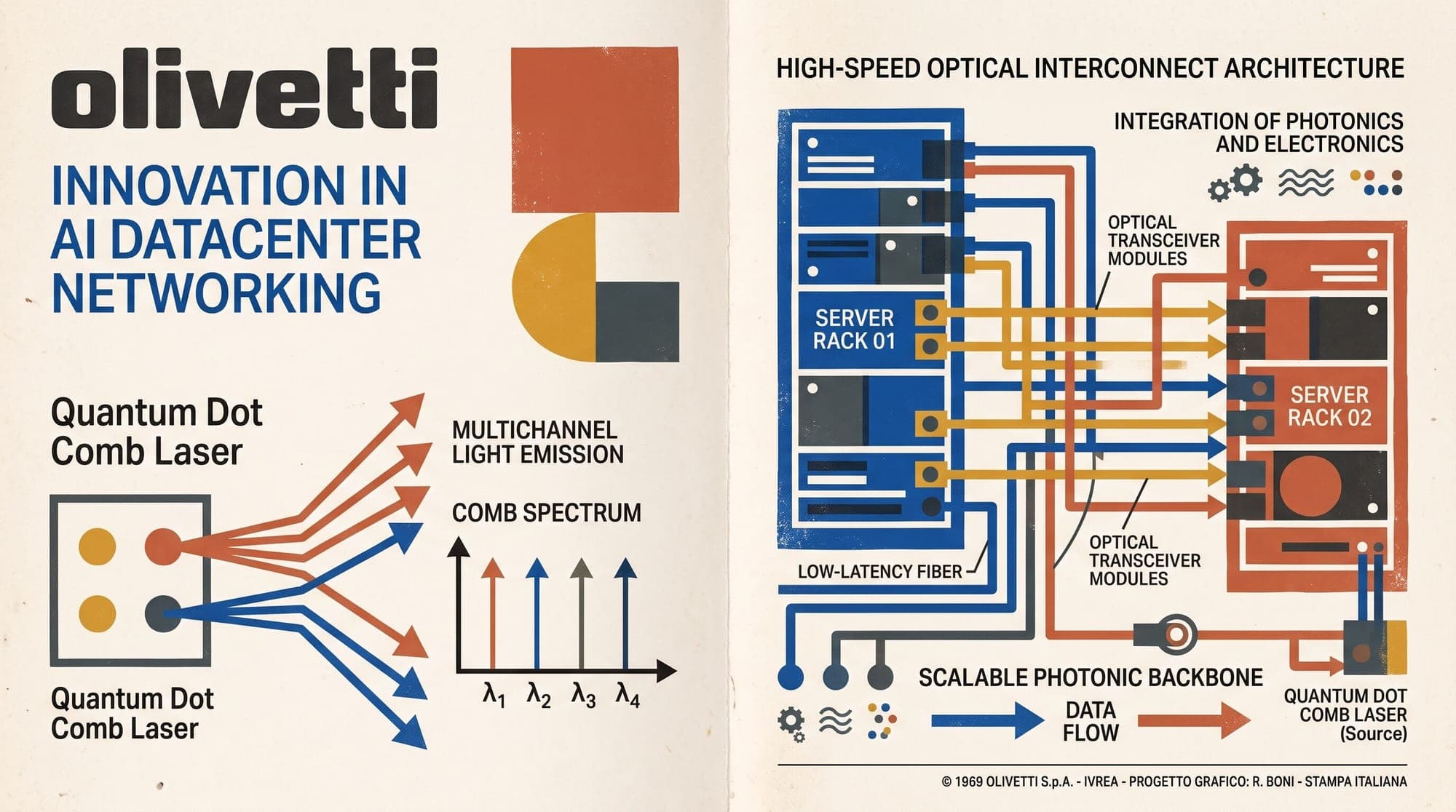
  6. Quintessent Secures $40M Series A to Scale Quantum Dot Comb Lasers for AI Clusters

    Optical interconnect startup Quintessent has raised $40 million in an oversubscribed Series A funding round to commercialize quantum dot comb lasers for AI data center networking. The round was led by Cycle Capital, with participation from Goldman Sachs XIG-Industry Ventures, optical networking provider Ciena, Hina Liberty Capital, Susquehanna International Group, InterVest, Safar Partners, M Ventures, Osage University Partners, Foothill Ventures, and Sierra Ventures. The financing follows an $

    AI
    2 min read
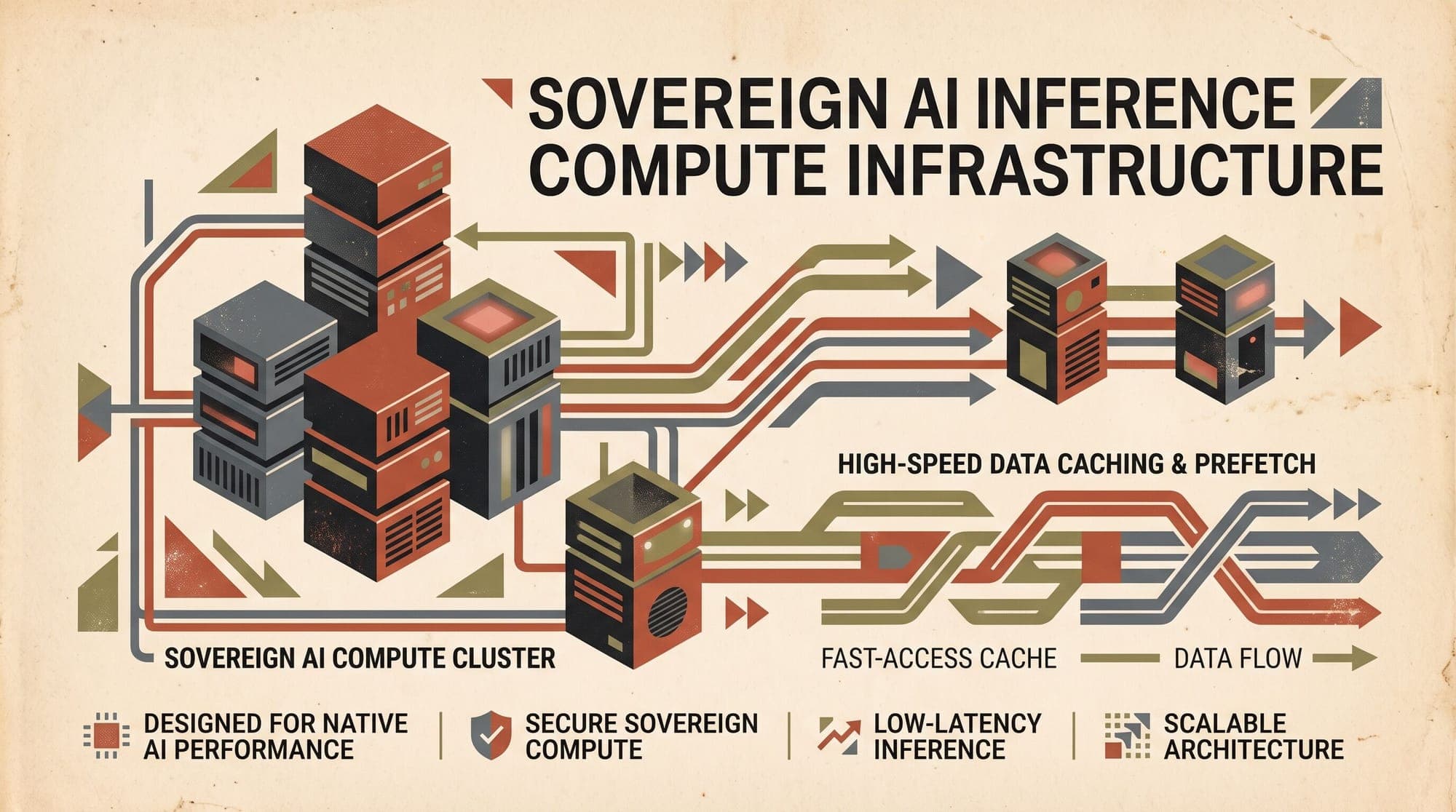
  7. SCX.ai Partners With DDN to Scale Australian Sovereign AI Inference Infrastructure

    Australian sovereign AI infrastructure provider SCX.ai has entered a strategic partnership with data storage systems vendor DDN to expand its domestic AI inferencing cloud. The collaboration combines SCX's ASIC-based compute clusters with DDN's Infinia data management platform, targeting enterprise, government, and scientific research workloads that must remain strictly within Australian jurisdiction. The agreement comes days after SCX completed a $40 million initial public offering on the Aust

    AI
    2 min read
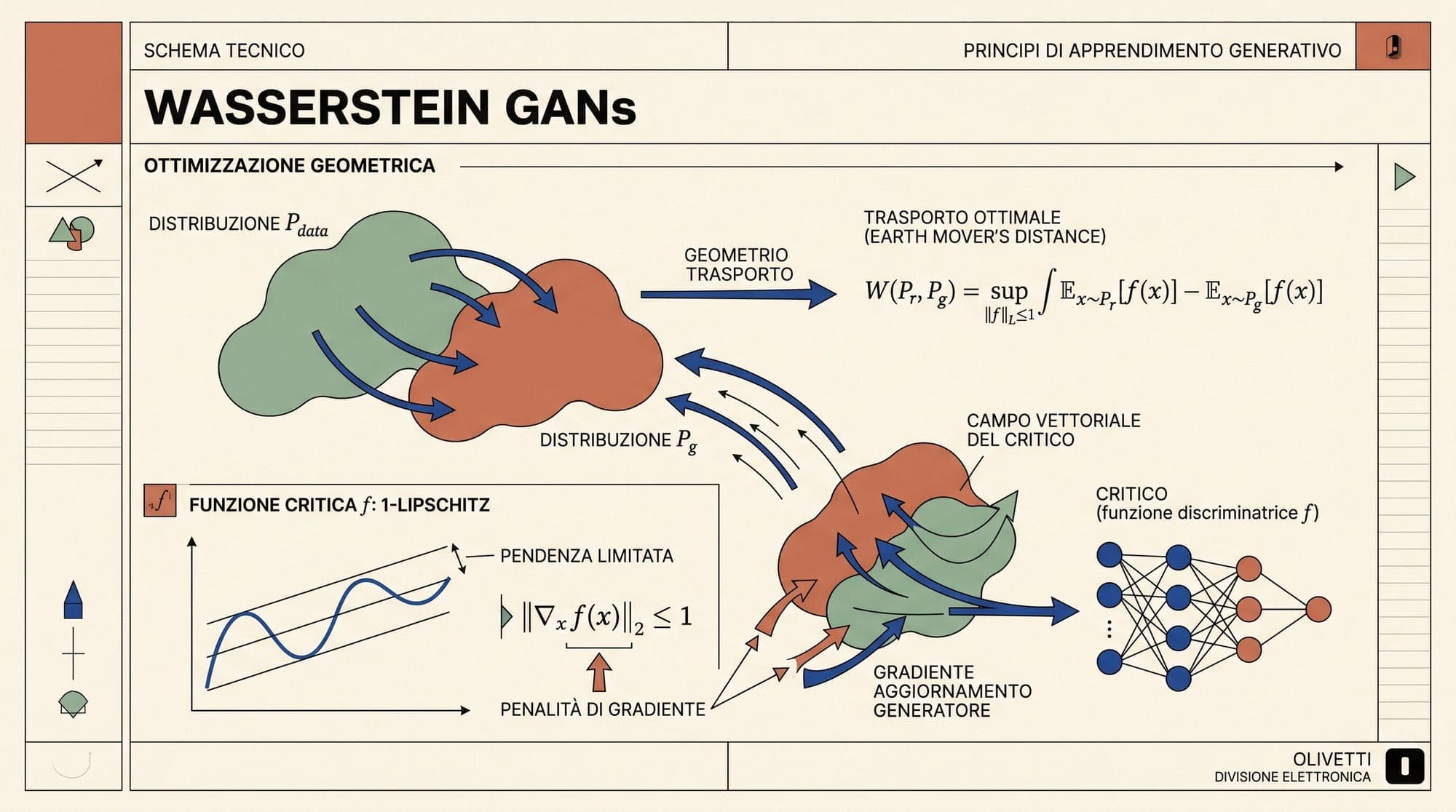
  8. Wasserstein GANs: How Earth Mover's Distance, Kantorovich-Rubinstein Duality, and Gradient Penalties Fixed Generative Adversarial Training

    Wasserstein GANs: How Earth Mover's Distance, Kantorovich-Rubinstein Duality, and Gradient Penalties Fixed Generative Adversarial Training Generative Adversarial Networks (Goodfellow et al., 2014) established an influential paradigm for generative modeling: formulating data synthesis as a minimax game between a generator mapping latent noise to data space and a discriminator distinguishing synthetic samples from real empirical data. Despite early empirical success, the original GAN formulation

    AI
    11 min read
  9. Meta Prepares Consumer AI Agent 'Hatch' and October Launch for 'Watermelon' Frontier Model

    Meta Platforms is preparing to roll out an autonomous consumer AI agent codenamed Hatch in late August or early September, followed by the planned release of its next flagship foundation model, codenamed Watermelon, in October 2026. The initiatives, first reported by The Information, highlight Meta's dual-track approach to commercialize autonomous software workflows while scaling foundation model training compute to compete directly with frontier offerings from OpenAI and Anthropic. Consumer

    Meta
    2 min read
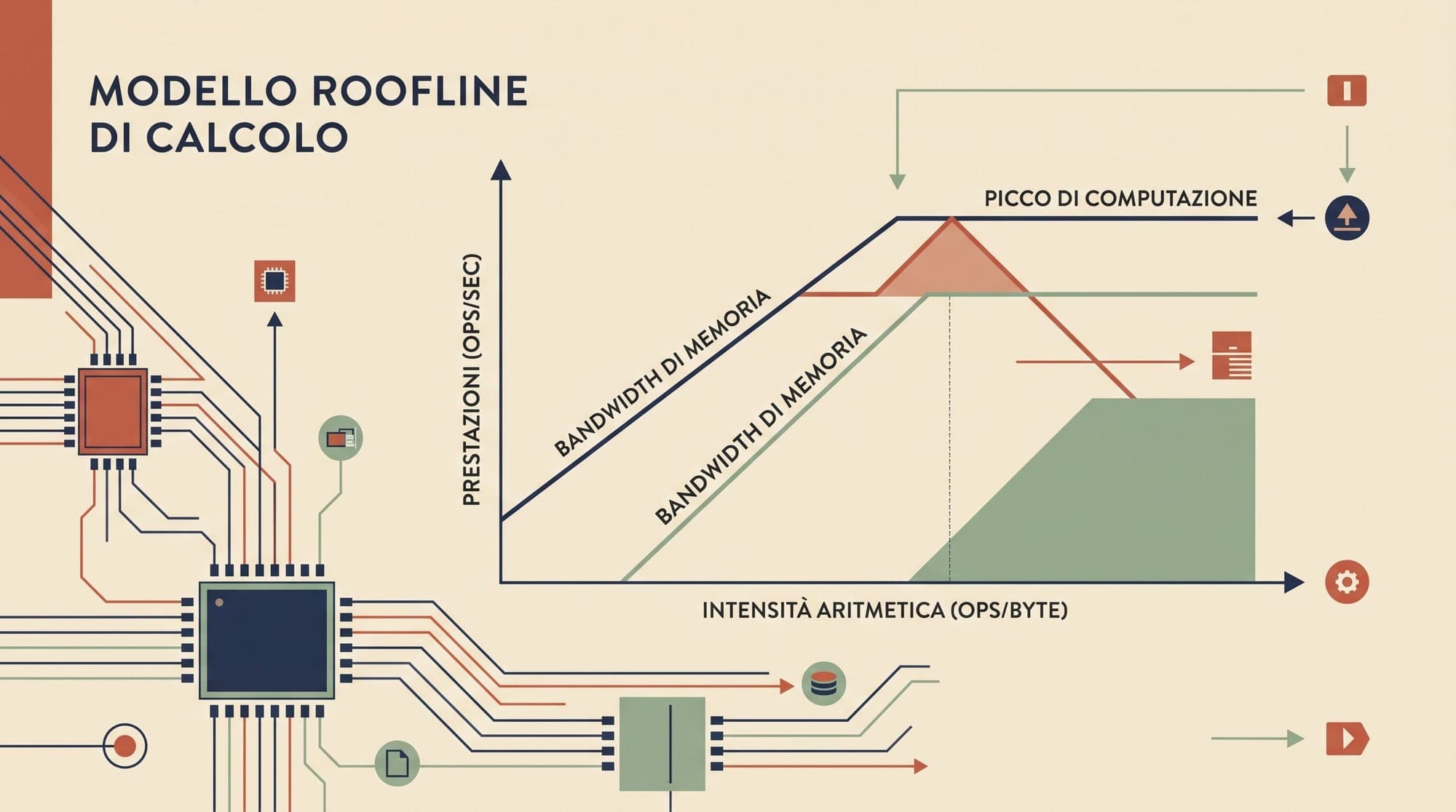
  10. Continuous LLM Performance Profiling in Production: Roofline Models, Model FLOPs Utilization, Model Bandwidth Utilization, and Hardware Bottleneck Diagnostics

    Evaluating the runtime performance of large language model serving infrastructures requires looking beyond raw GPU metrics. Standard operating system utilities such as nvidia-smi report high GPU utilization percentages whenever compute cores or memory controllers are active, masking critical inefficiencies in memory access, communication, and kernel scheduling. A serving node running single-stream autoregressive decoding can report 100% GPU utilization while operating at less than 2% of the hard

    AI
    7 min read
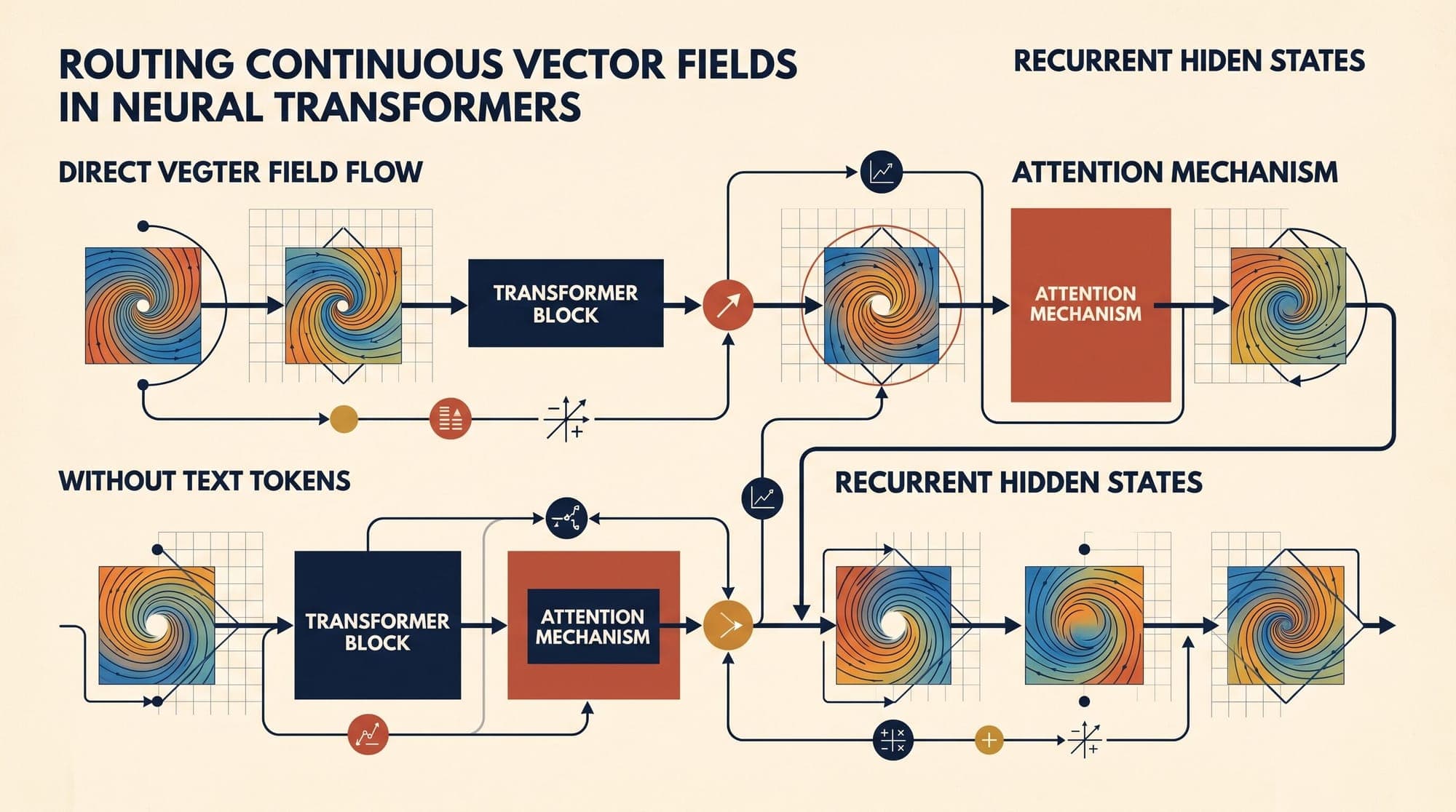
  11. Latent Reasoning in Large Language Models: How Continuous Thoughts and Recurrent Hidden States Bypass Discrete Tokenization

    Standard autoregressive language models solve multi-step reasoning tasks by generating explicit verbal scratchpads. Under the Chain-of-Thought (CoT) paradigm formalized by Wei et al. (2022), a Transformer expands its effective computational depth by emitting intermediate natural language tokens into the prompt context. Each emitted token provides an additional forward pass through the network's layers, transforming reasoning into a sequence of left-to-right text predictions. While language-base

    AI
    8 min read
  12. Speech-to-Text Serving in Production: Comparing Faster-Whisper, Moonshine, SenseVoice, and NeMo Canary Architecture, Streaming Latency, and GPU Economics

    In conversational voice AI and real-time agentic workflows, the speech-to-text (STT) layer sets the hard lower bound on system responsiveness. Human conversational cadence expects turn-taking latencies between 200ms and 500ms. When an AI pipeline must accommodate downstream large language model (LLM) time-to-first-token generation (100ms to 250ms) and text-to-speech (TTS) audio synthesis (100ms to 200ms), the automatic speech recognition (ASR) stage cannot exceed 100ms to 150ms of processing ove

    AI
    8 min read
  13. Writer Releases Palmyra X6 Flagship Agentic Model with Rebuilt Enterprise Agent Harness

    Enterprise generative AI platform Writer has launched Palmyra X6, its new flagship agentic foundation model, alongside a rebuilt runtime harness engineered for multi-step workflow execution and governance. The model release introduces substantial latency and efficiency improvements over previous Palmyra iterations, cutting inference costs by 52% while accelerating output generation by 48%. Writer reported average generation speeds of 82 tokens per second and a mean task completion time of 26 se

    AI
    1 min read
  14. River AI Secures $1.1B Led by General Catalyst to Build Open-Weight Model Infrastructure

    River AI, an artificial intelligence startup founded by former xAI co-founder Igor Babuschkin, has secured $1.1 billion in early-stage funding to build an open-weight model stack and decentralized AI infrastructure platform. The financing round was led jointly by General Catalyst and public benefit corporation AMP PBC, with strategic participation from NVIDIA, AMD Ventures, Y Combinator, and Singapore sovereign fund Temasek. Babuschkin, whose prior engineering background spans OpenAI, Google De

    AI
    2 min read
  15. Unlikelihood Training in Large Language Models: How Negative Candidate Loss and Sequence-Level Penalties Suppress Repetition Loops and Hallucinations

    Unlikelihood Training in Large Language Models: How Negative Candidate Loss and Sequence-Level Penalties Suppress Repetition Loops and Hallucinations Autoregressive language models generate text by iteratively predicting the probability distribution of the next token conditioned on preceding tokens. While standard maximum likelihood estimation (MLE) via cross-entropy loss serves as the universal training objective across modern foundation models, it possesses a fundamental structural asymmetry:

    AI
    13 min read
  16. Instinct AI Assistant Faces Scrutiny Over Data Training Terms and Autonomous Transaction Permissions

    Instinct, an autonomous personal AI assistant currently in private beta, has drawn scrutiny across the developer and security community regarding its data collection policies and broad operational permissions. The service is developed by San Francisco-based Spear Street Technology Inc., led by former Sierra research scientist and Reflexion paper co-author Noah Shinn. Operating via SMS and WhatsApp interfaces, Instinct executes multi-step personal workflows by directly interfacing with user devi

    AI
    2 min read
  17. UK and Ukraine Sign AI Defense Pact to Share Battlefield Sensor Data and Target Detection Models

    The United Kingdom and Ukraine have signed a bilateral artificial intelligence defense partnership, granting British researchers and defense contractors access to Ukraine's battlefield data platform, Avengers AI Labs. The agreement was signed in Kyiv by British Prime Minister Andy Burnham and Ukrainian President Volodymyr Zelenskyy during Burnham's first official overseas visit. Under the framework, Britain becomes the first international partner permitted to access Ukraine's operational datase

    AI
    2 min read
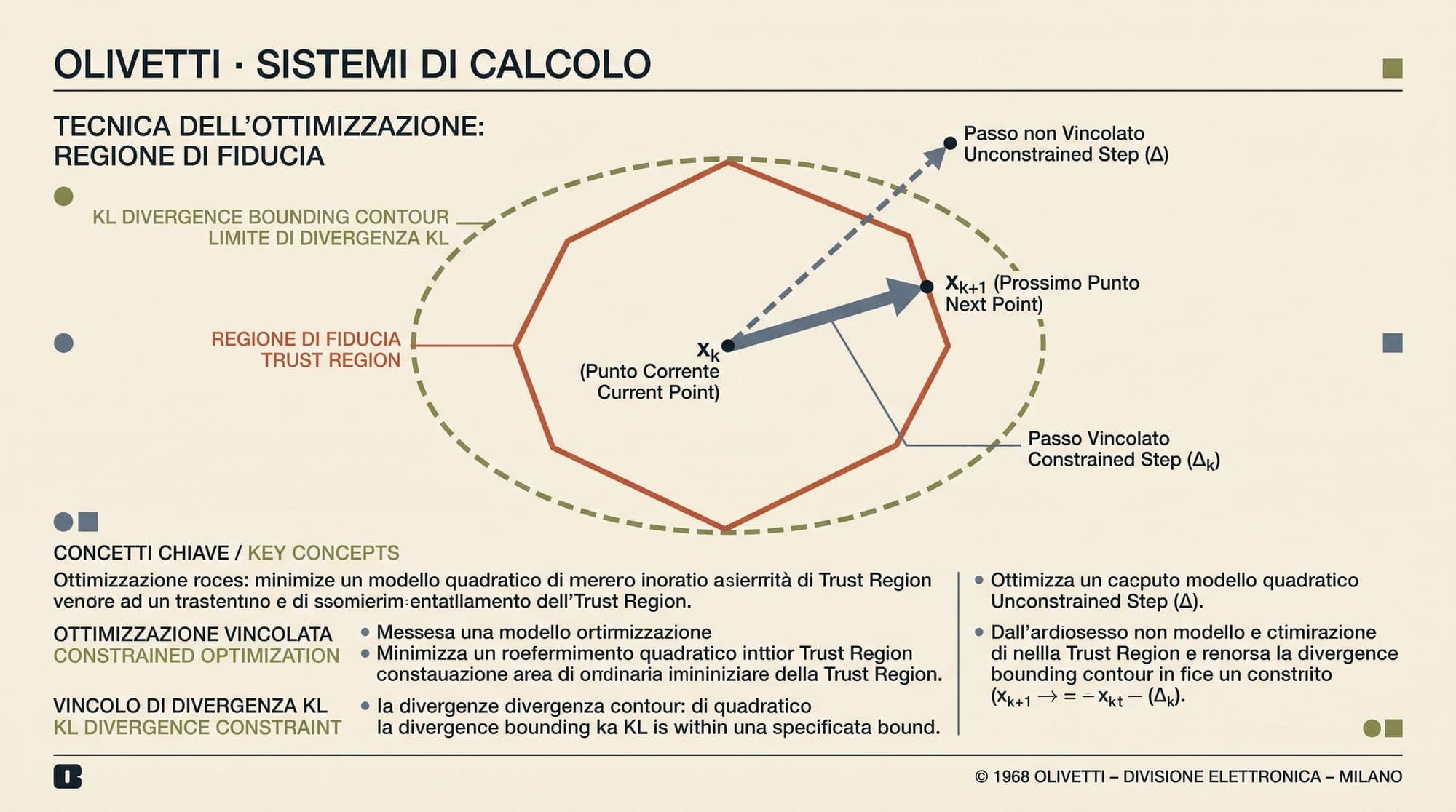
  18. Trust Region Policy Optimization: Mathematical Foundations, Monotonic Improvement Guarantees, and Conjugate Gradient Updates

    Trust Region Policy Optimization: Mathematical Foundations, Monotonic Improvement Guarantees, and Conjugate Gradient Updates In policy gradient reinforcement learning, optimization dynamics differ fundamentally from standard supervised learning. In supervised regression or classification, the underlying data distribution $P(x, y)$ remains stationary throughout training; a sub-optimal parameter update merely yields high loss on the current batch without corrupting future sample collection. In re

    AI
    9 min read
  19. Vector Quantization for LLM Weights in Production: Comparing QuIP#, AQLM, and VPTQ Architecture, Dequantization Kernels, and 2-Bit Serving Economics

    Vector Quantization for LLM Weights in Production: Comparing QuIP#, AQLM, and VPTQ Architecture, Dequantization Kernels, and 2-Bit Serving Economics Scalar post-training quantization methods such as GPTQ and AWQ have become the standard for compressing large language models to 4-bit integer formats (INT4). At 4 bits per parameter, scalar techniques preserve over 98% of baseline 16-bit floating-point (FP16/BF16) model accuracy across common benchmarks. However, pushing scalar quantization below

    AI
    9 min read
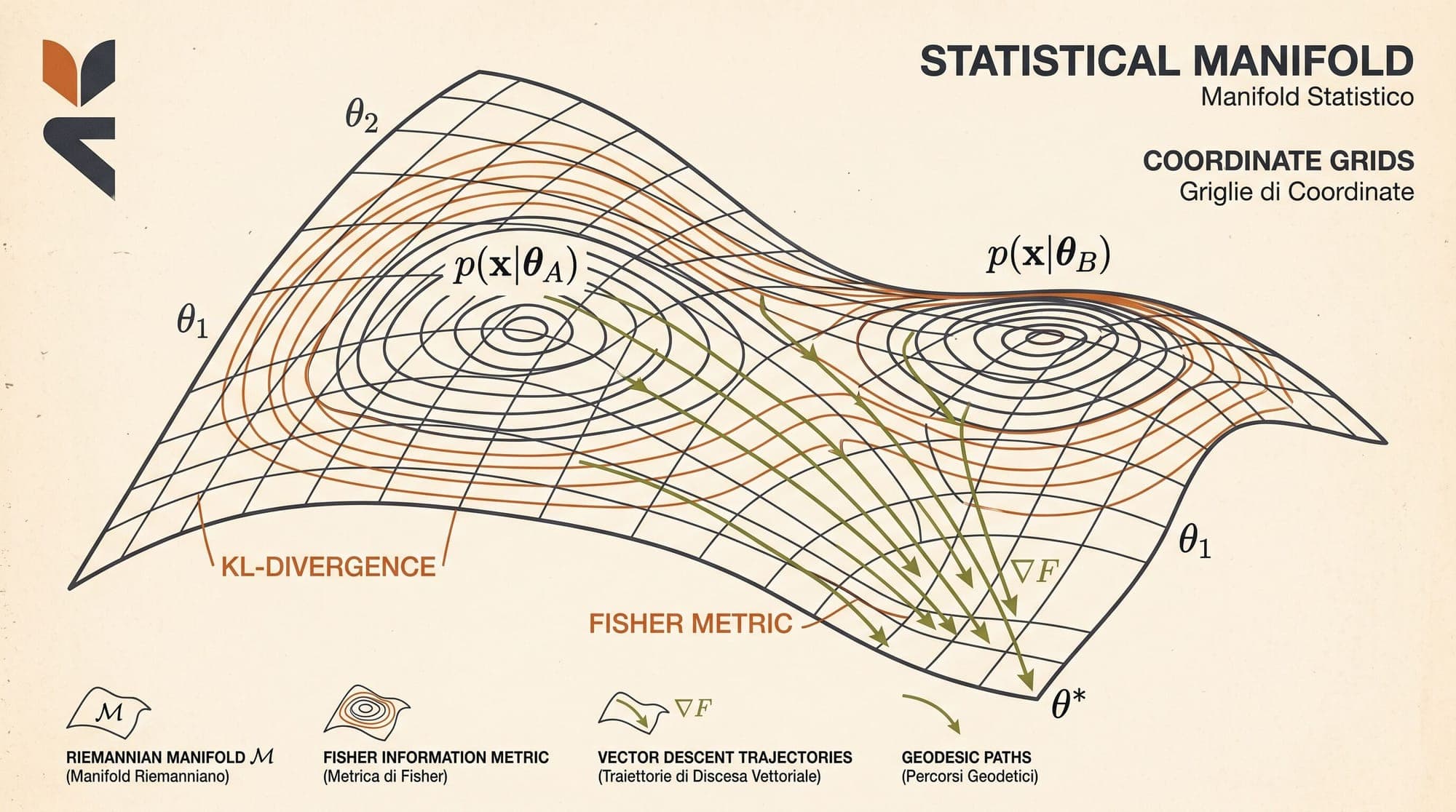
  20. The Fisher Information Matrix and Natural Gradient Descent: How Information Geometry, Riemannian Manifolds, and Curvature Invariance Reshape Neural Optimization

    The Fisher Information Matrix and Natural Gradient Descent: How Information Geometry, Riemannian Manifolds, and Curvature Invariance Reshape Neural Optimization Standard gradient descent operates under an implicit, often unexamined assumption: that parameter space is Euclidean. When an optimizer updates network weights via $\theta_{t+1} = \theta_t - \eta \nabla_\theta \mathcal{L}(\theta)$, it calculates the direction of steepest descent within an arbitrary coordinate system. If the network is r

    AI
    10 min read