Research / page 20

Research

470 articles

Articles, page 20

381-400 of 470
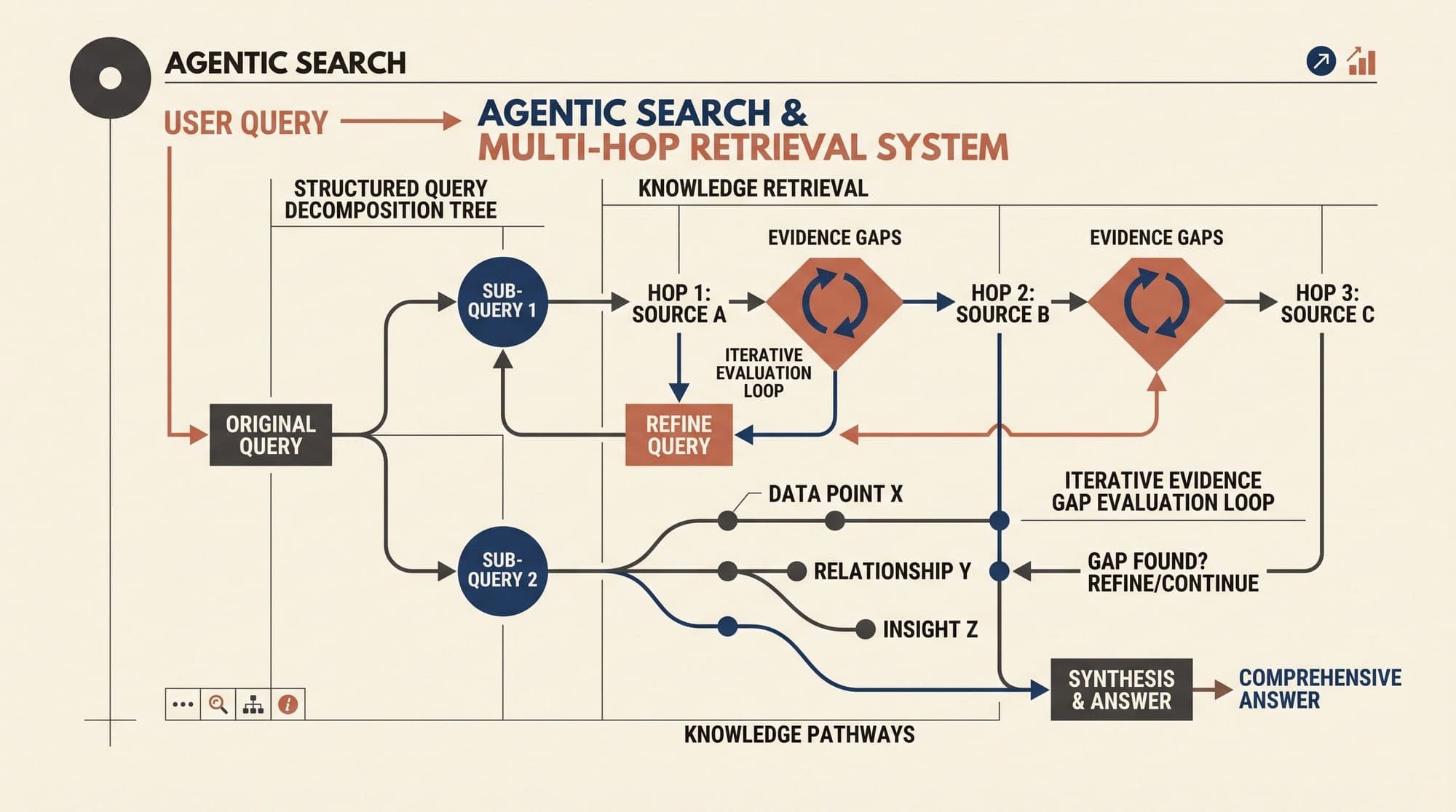
  1. Agentic Search and Multi-Hop Retrieval in Production: Query Decomposition, Evidence-Gap Loops, and Synthesis Architecture

    Standard retrieval-augmented generation (RAG) relies on a single-pass paradigm: an incoming prompt is embedded, matched against a vector or hybrid index, and the top-k passages are injected into the generator's context window. This linear workflow functions reliably for direct fact retrieval, but it breaks down on complex research tasks. When a query requires chained dependencies, comparative analysis across isolated documents, or multi-step reasoning, single-shot retrieval fails because the req
    AI
    5 min read
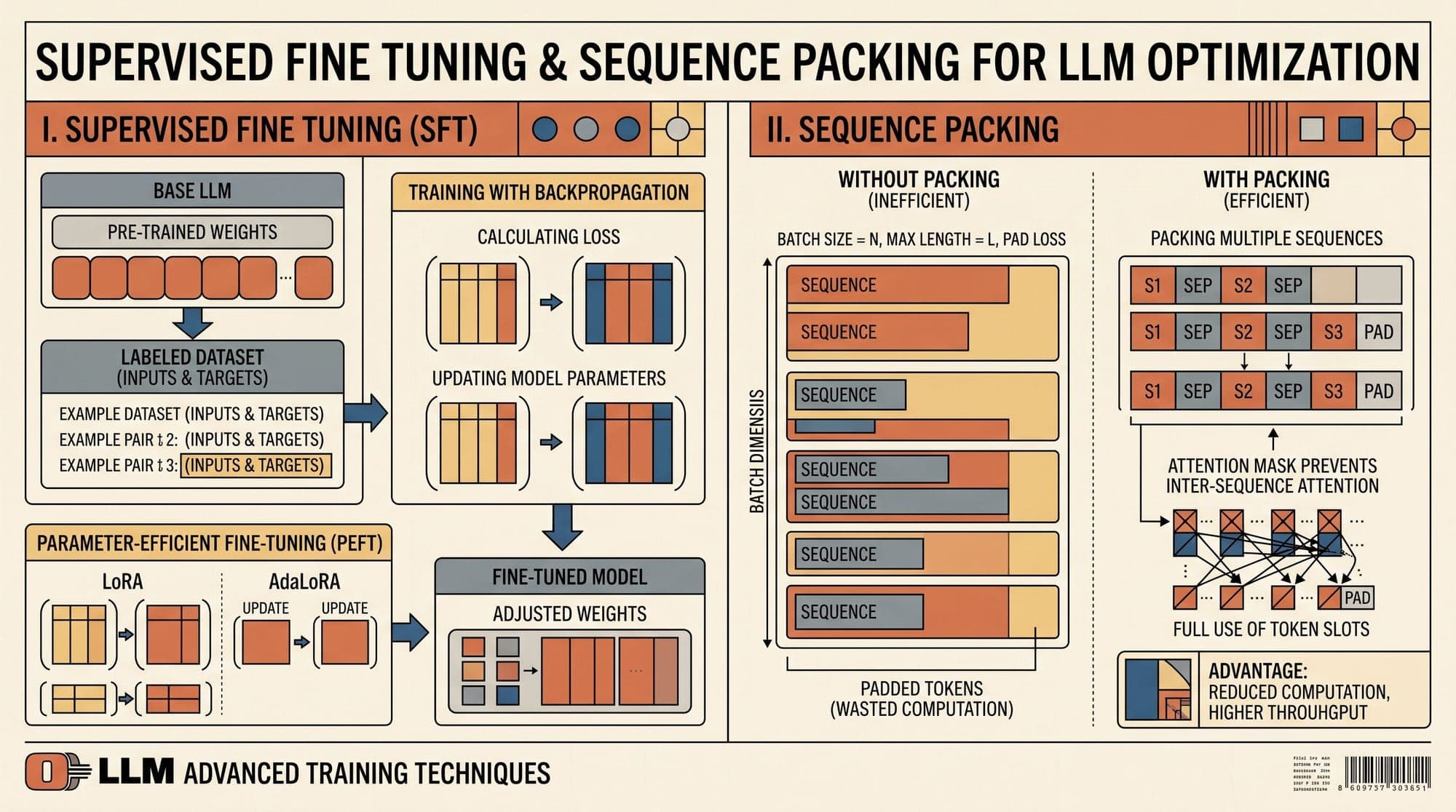
  2. Supervised Fine-Tuning in Large Language Models: Loss Masking, Sequence Packing, and Alignment Dynamics

    Pre-training endows a large language model with broad linguistic patterns, world knowledge, and reasoning primitives by predicting the next token across trillions of uncurated web tokens. However, a raw base model remains a document completer rather than an interactive assistant. Given a prompt such as "Explain how a compiler works," a base model is as likely to generate additional exam questions or web navigation headers as it is to answer the query. Supervised Fine-Tuning (SFT), frequently te

    AI
    7 min read
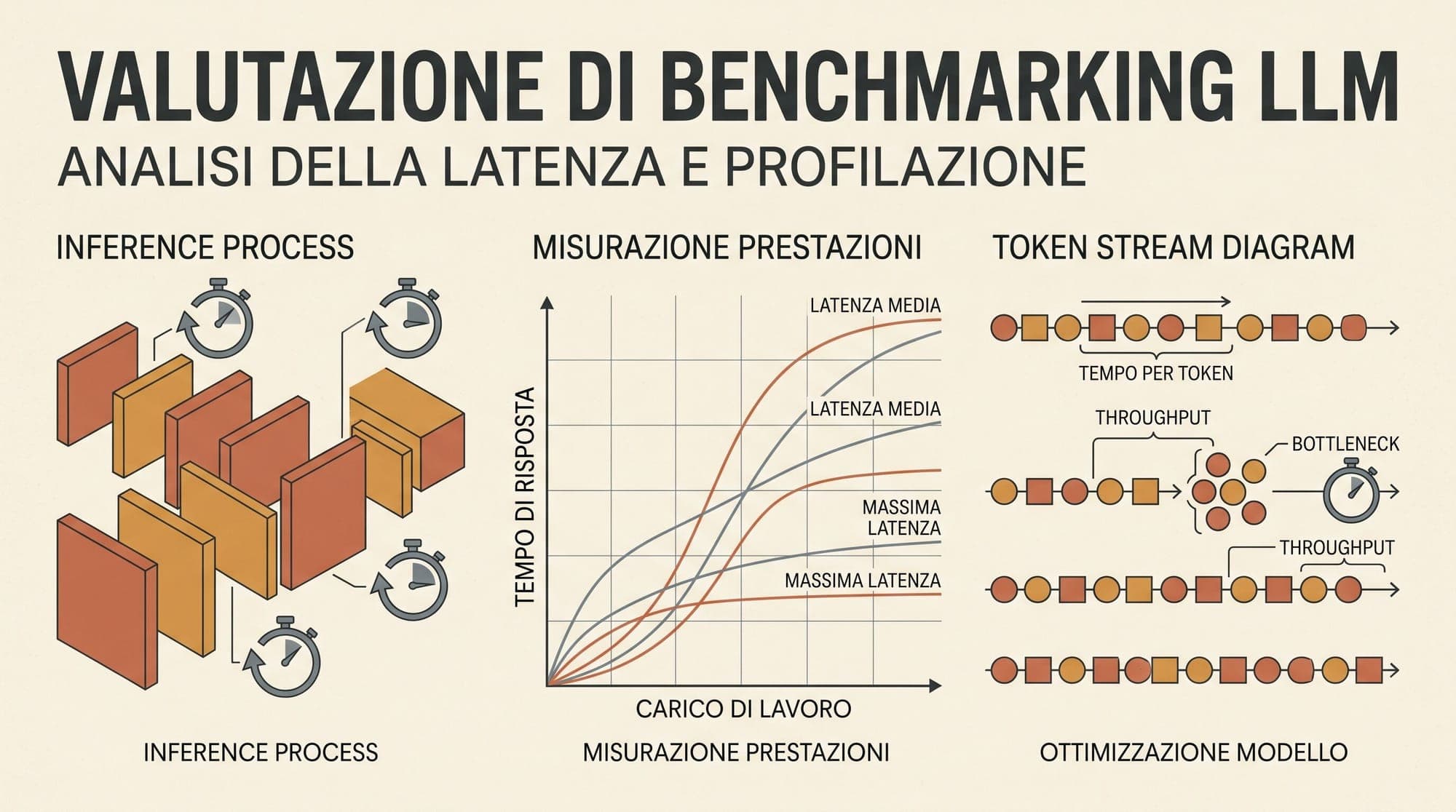
  3. Benchmarking LLM Inference in Production: Architecture, Metrics, and Tooling Across AIPerf, GuideLLM, and LLMPerf

    Traditional HTTP load-testing tools such as Apache Bench, wrk, and Locust evaluate systems using uniform request-response cycles. These tools send a payload, wait for the full response, and compute metrics such as requests per second (RPS) and round-trip latency percentiles. For stateless REST APIs, this model aligns directly with user experience. Large language model (LLM) serving fundamentally breaks this abstraction. An inference request is not an atomic computation. It consists of two disti

    AI
    7 min read
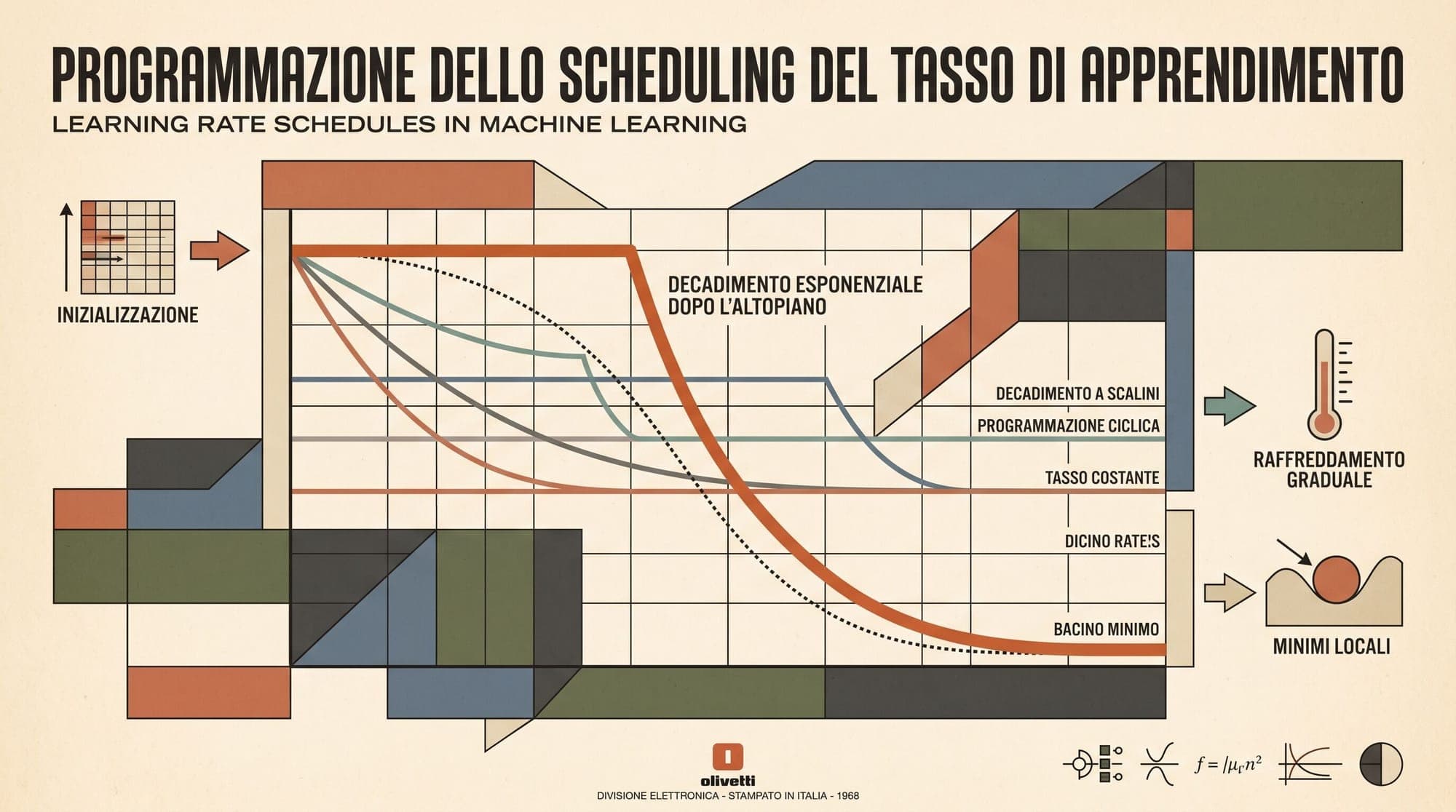
  4. Warmup-Stable-Decay (WSD): How Decoupled Annealing Replaced Cosine Decay in Modern LLM Pre-Training

    For years, foundation model pre-training adhered to a standard optimization convention: linear learning rate warmup followed by a full-horizon cosine decay. Adopted across GPT-3, PaLM, Chinchilla, and LLaMA, cosine annealing provided stable convergence across diverse parameter scales. However, it introduced a severe structural limitation: the learning rate schedule is rigidly tied to a fixed, upfront token budget. If a team decides to extend pre-training mid-run, branch into domain-specific vari

    AI
    6 min read
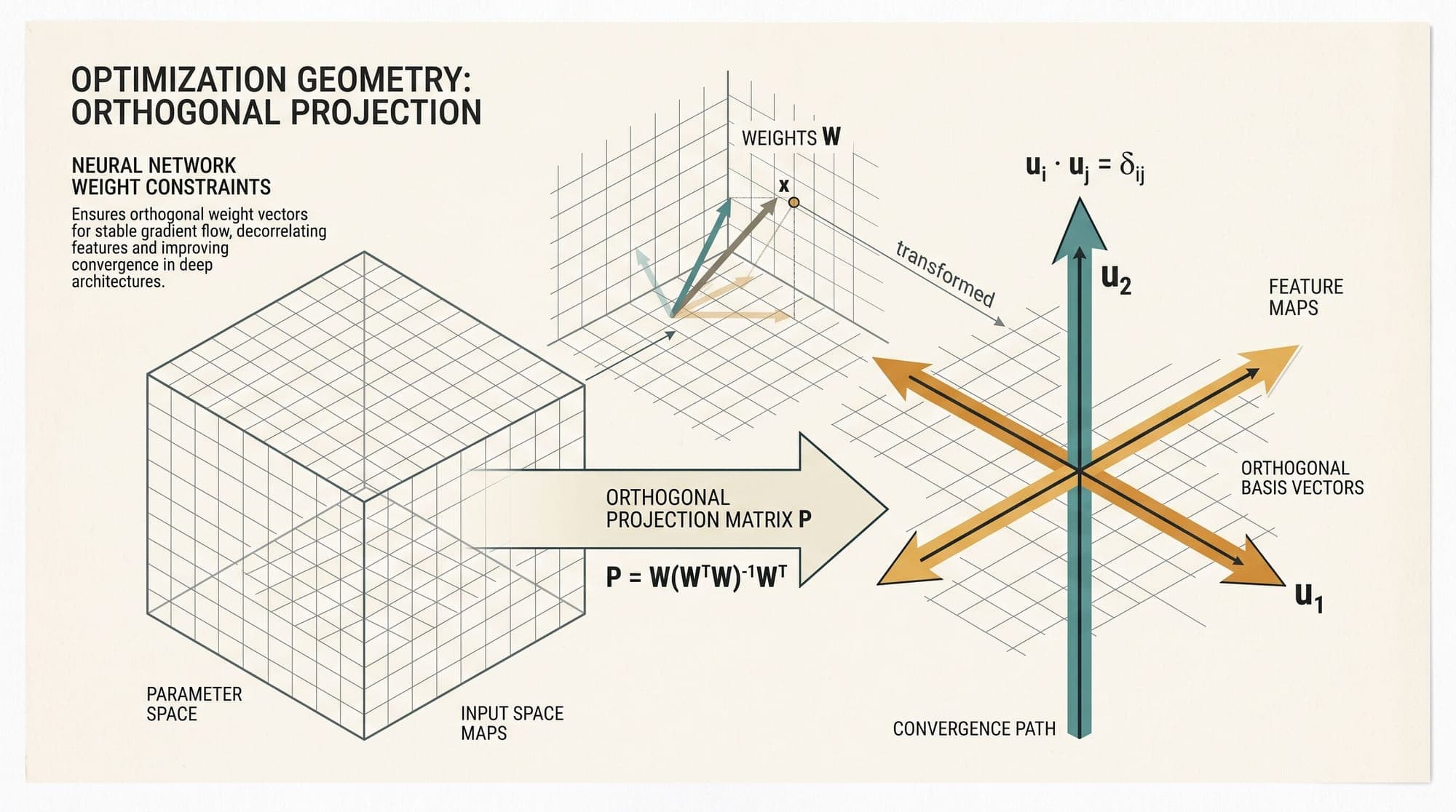
  5. Muon Optimizer: How Matrix Orthogonalization and Newton-Schulz Iterations Accelerate LLM Training

    Modern large language model pre-training has relied on AdamW as its default optimizer for nearly a decade. While AdamW provides robust convergence across varied architectures, its fundamental formulation treats neural network weights as flat collections of independent scalar parameters. For the 2D weight matrices that dominate Transformer architectures—including attention projections and feed-forward linear layers—this coordinate-wise treatment ignores the underlying matrix geometry and singular

    AI
    5 min read
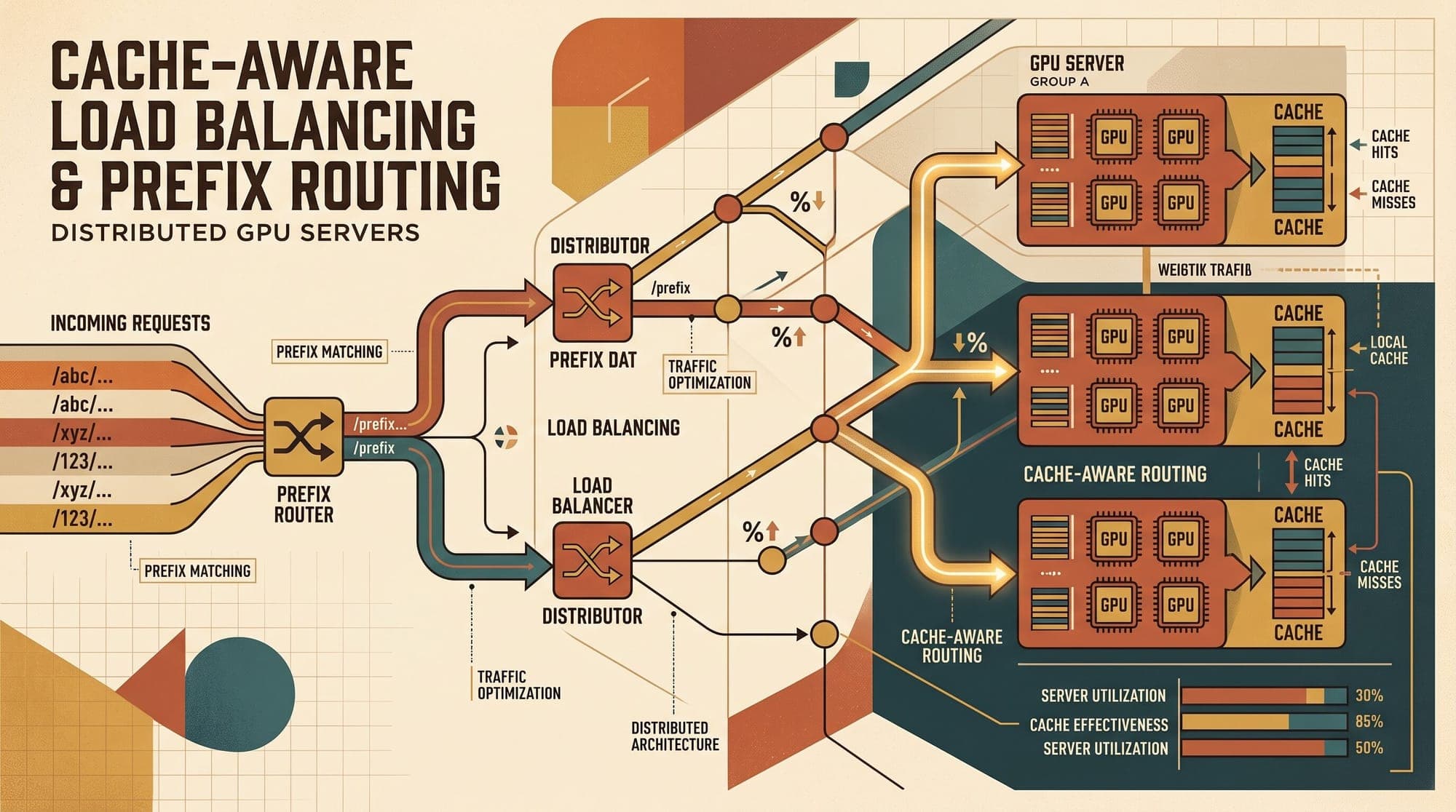
  6. Cache-Aware Load Balancing in Production LLM Serving: Architecture, Prefix Affinity, and Multi-Replica Routing Trade-Offs

    Cache-Aware Load Balancing in Production LLM Serving: Architecture, Prefix Affinity, and Multi-Replica Routing Trade-Offs When scaling large language model inference across multiple GPU worker nodes, standard Layer-4 and Layer-7 load balancing algorithms create an unseen performance cliff. Round-robin, least-connections, and random routing distribute HTTP/gRPC requests uniformly across compute replicas. However, modern LLM inference engines rely on prompt caching mechanisms, such as vLLM Automa

    AI
    6 min read
  7. SwiGLU and Gated Linear Units: How Bilinear Gating Replaced Standard FFNs in Modern LLMs

    Every modern open-weight and frontier large language model, from Meta's LLaMA 3 and Mistral to Alibaba's Qwen 2.5 and DeepSeek-V3, has abandoned the standard two-layer Feed-Forward Network (FFN) originally introduced in the 2017 Transformer architecture. In its place, model architectures have converged almost universally on Gated Linear Units (GLU), specifically the Swish-Gated Linear Unit (SwiGLU). While the original Transformer relied on standard non-linear activations like ReLU or Gaussian E

    AI
    6 min read
  8. Leaked Flock Safety Code Exposes OS Investigate AI System for Police Surveillance

    A technical analysis of client-side code exposed on Flock Safety's login portals has revealed OS Investigate, an unannounced artificial intelligence platform designed to track individuals and analyze vehicular travel patterns across police departments nationwide. The findings, first reported by WIRED and verified by independent security researchers, detail an AI-driven investigative system that links automated license plate reader (ALPR) networks with police databases and commercial records. Fl

    AI
    2 min read
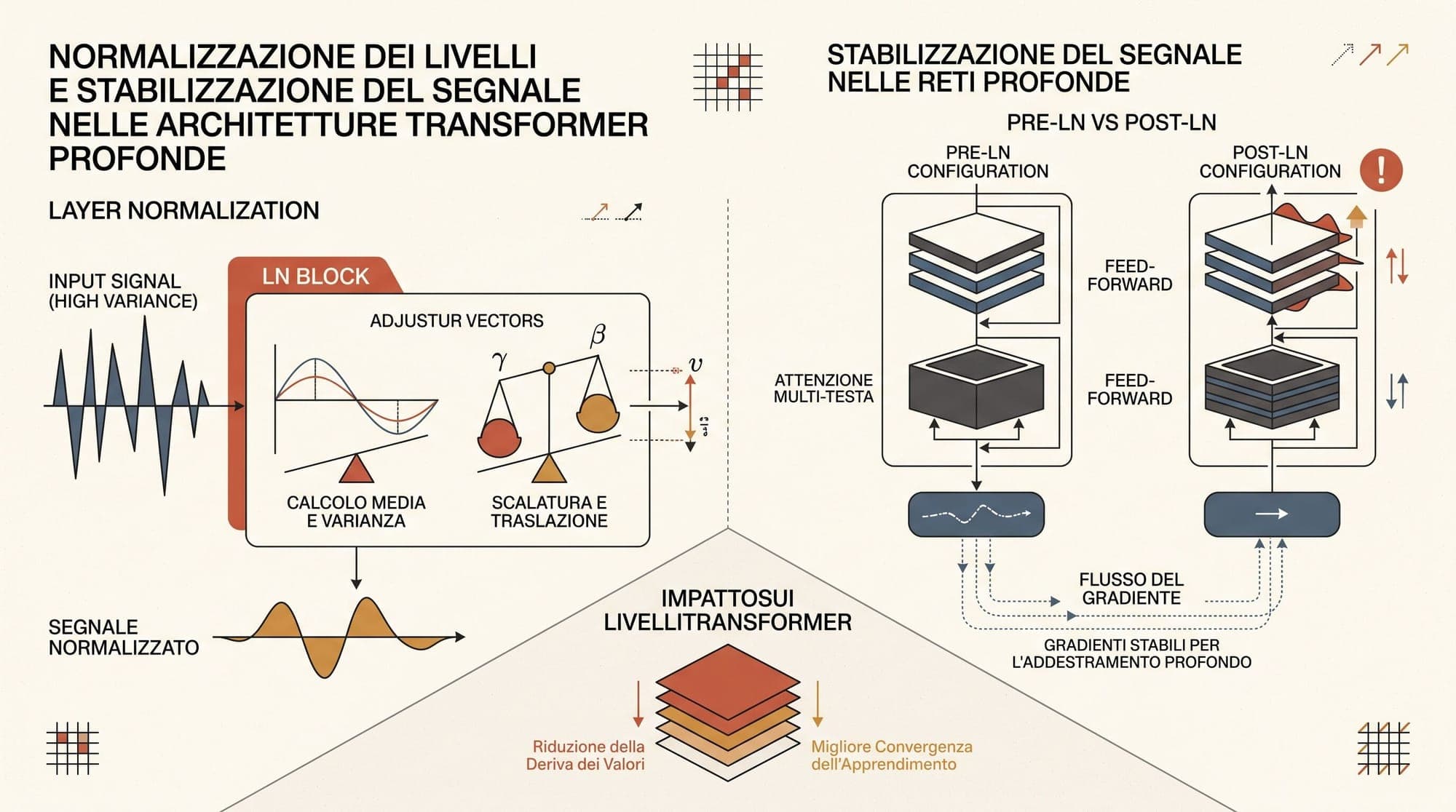
  9. Layer Normalization and RMSNorm in Large Language Models: How Pre-LN, Scaling Invariance, and QK-Norm Stabilize Deep Transformers

    Training deep autoregressive Transformers requires maintaining numerical stability across dozens or hundreds of stacked attention and feed-forward blocks. As models scale from 7 billion to hundreds of billions of parameters, uncontrolled variance growth along the residual stream or unbounded attention logits can trigger catastrophic loss spikes, gradient underflow, or numerical divergence. Normalization layers act as the primary stabilizing mechanism in modern Large Language Models (LLMs). Whil

    AI
    8 min read
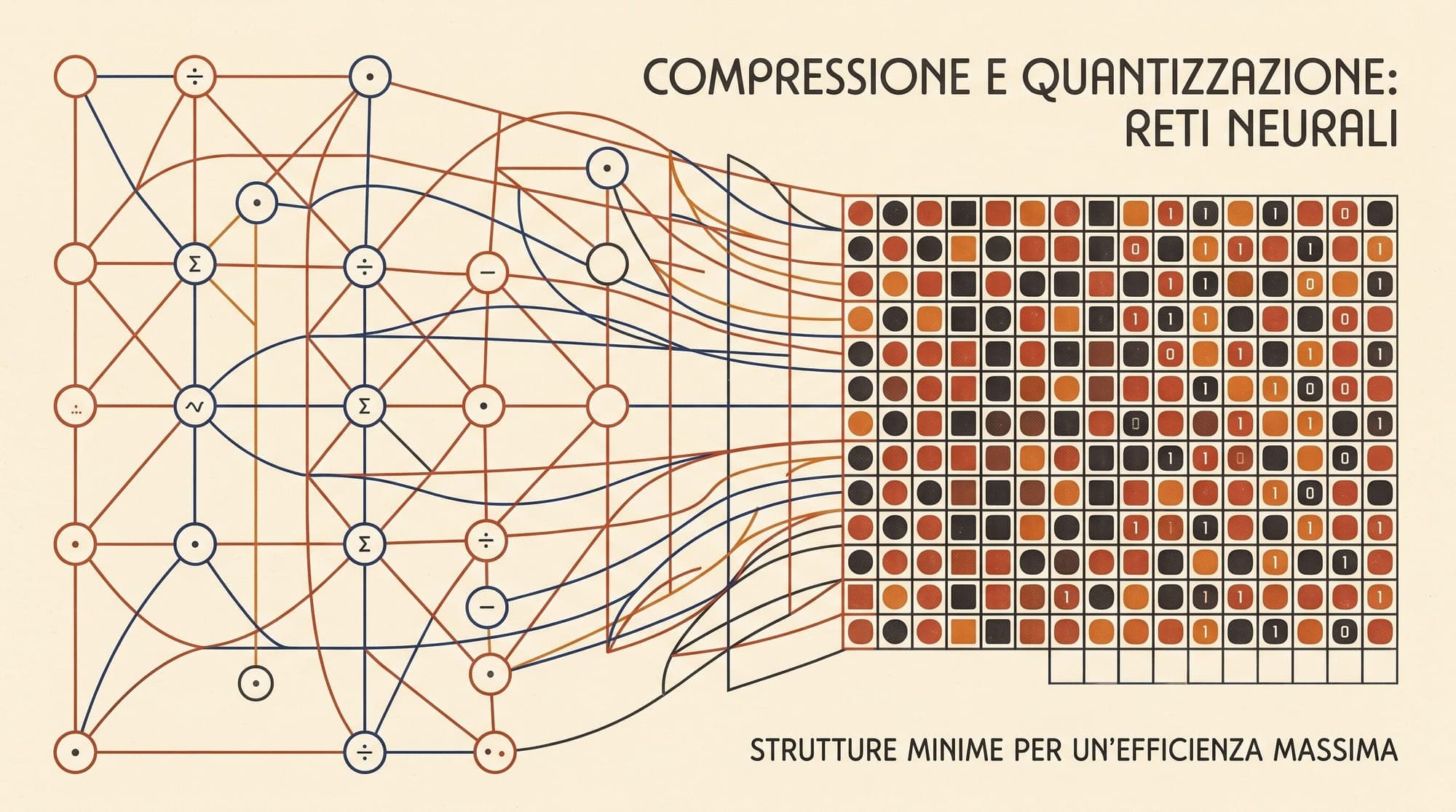
  10. Liquid AI Releases Quantization-Aware Distilled Q4_0 Checkpoints for LFM2.5 Models

    Liquid AI has released Quantization-Aware Distillation (QAD) Q4_0 GGUF checkpoints for its LFM2.5 model series, allowing edge runtimes to execute 4-bit quantized non-transformer architectures without the accuracy degradation typically associated with standard post-training quantization (PTQ). The release covers four models in the LFM2.5 family: LFM2.5-230M, LFM2.5-350M, LFM2.5-1.2B-Instruct, and LFM2.5-2.6B. The checkpoints are packaged in the standard GGUF format and run across llama.cpp and c

    AI
    2 min read
  11. Long-Context LLMs vs. RAG in Production: Break-Even Economics, Attention Degradation, and Hybrid Architectures

    The emergence of production models supporting context windows of 1 million tokens or more, including Google Gemini 1.5 Pro, Anthropic Claude 3.5 Sonnet, and OpenAI GPT-4o, has disrupted conventional enterprise retrieval architectures. For several years, Retrieval-Augmented Generation (RAG) served as the mandatory workaround for strict context limits, forcing engineering teams to build chunking pipelines, embedding indices, and vector database infrastructures. With massive context windows and th

    AI
    6 min read
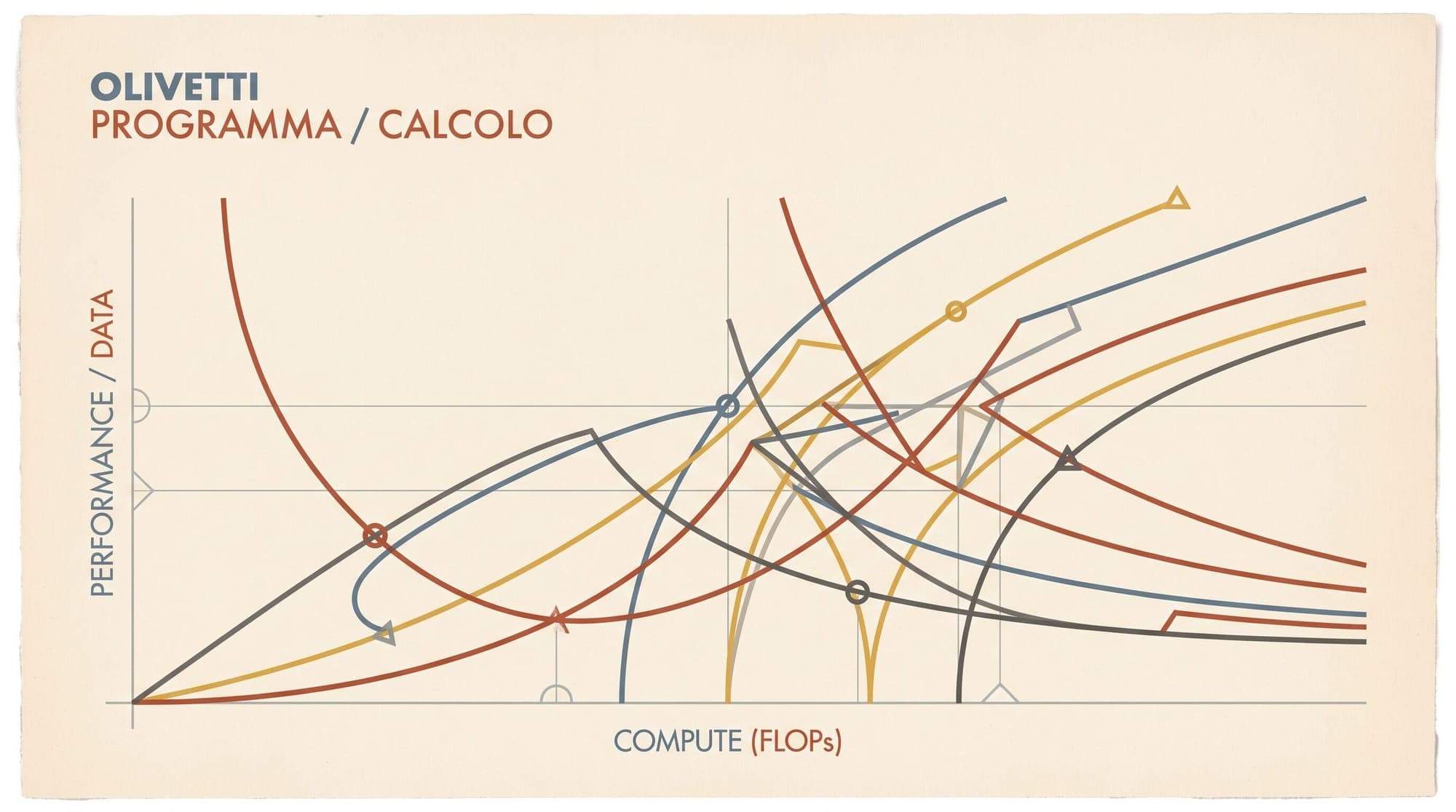
  12. Chinchilla Scaling Laws: How Compute-Optimal Pre-Training and Inference Economics Reshaped LLM Architecture

    Before 2022, frontier artificial intelligence labs scaled large language models primarily by increasing parameter counts while keeping training dataset sizes relatively static. OpenAI's 2020 GPT-3 model trained 175 billion parameters on 300 billion tokens. DeepMind's 2021 Gopher trained 280 billion parameters on 300 billion tokens, and Megatron-Turing NLG scaled to 530 billion parameters on 270 billion tokens. These allocation decisions followed early empirical scaling laws that suggested parame

    Education
    6 min read
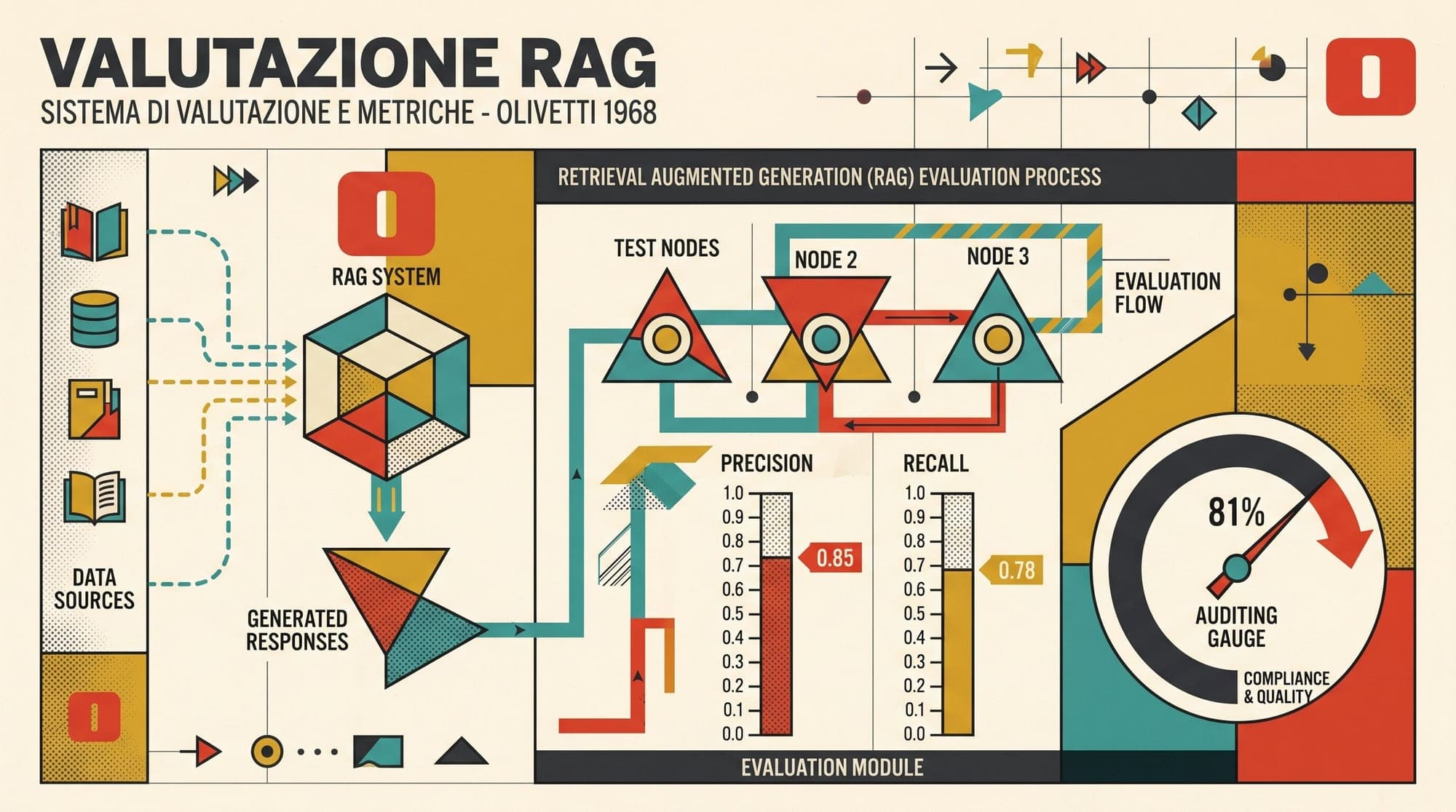
  13. RAG Evaluation Frameworks in Production: Architecture, Metrics, and CI/CD Trade-Offs for Ragas, DeepEval, TruLens, and ARES

    Production Retrieval-Augmented Generation (RAG) systems fail silently. Unlike traditional software pipelines that throw explicit exceptions on invalid states, a broken RAG pipeline produces syntactically fluent, confident prose that conceals severe underlying defects. When a user receives an incorrect response, the failure can stem from multiple distinct failure points across the stack: the query embedding failed to retrieve relevant chunks, the reranker discarded the critical passage, the chunk

    LLM
    7 min read
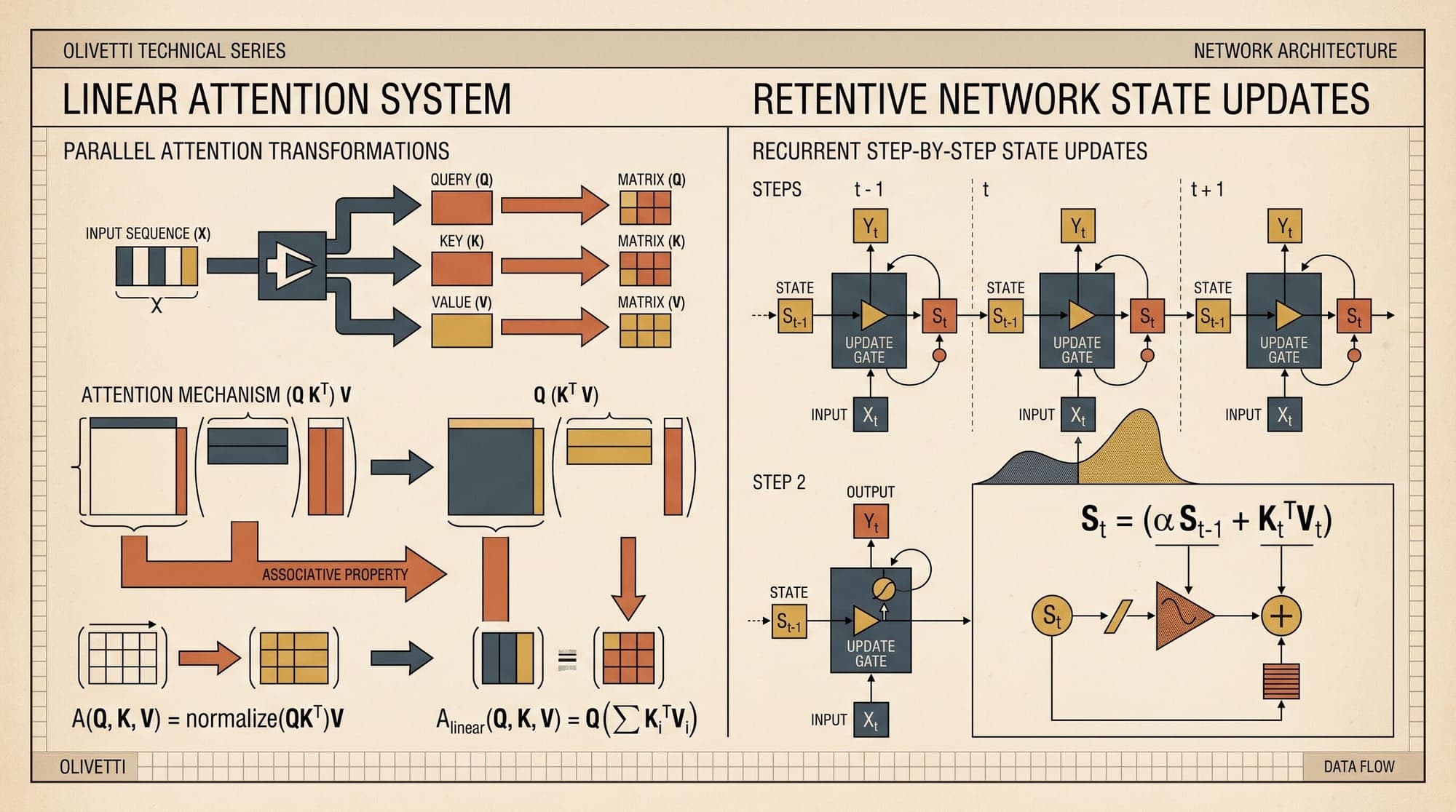
  14. Linear Attention and Retentive Networks: How Recurrent Duals and Chunkwise Tiling Eliminate the Quadratic Bottleneck

    Linear Attention and Retentive Networks: How Recurrent Duals and Chunkwise Tiling Eliminate the Quadratic Bottleneck Autoregressive large language models built on standard multi-head self-attention face two fundamental scaling ceilings: quadratic compute and memory complexity during pre-training, and linearly expanding key-value (KV) cache memory footprints during autoregressive generation. While optimizations such as FlashAttention reduce memory access overheads and Grouped-Query Attention (GQ

    Architecture
    8 min read
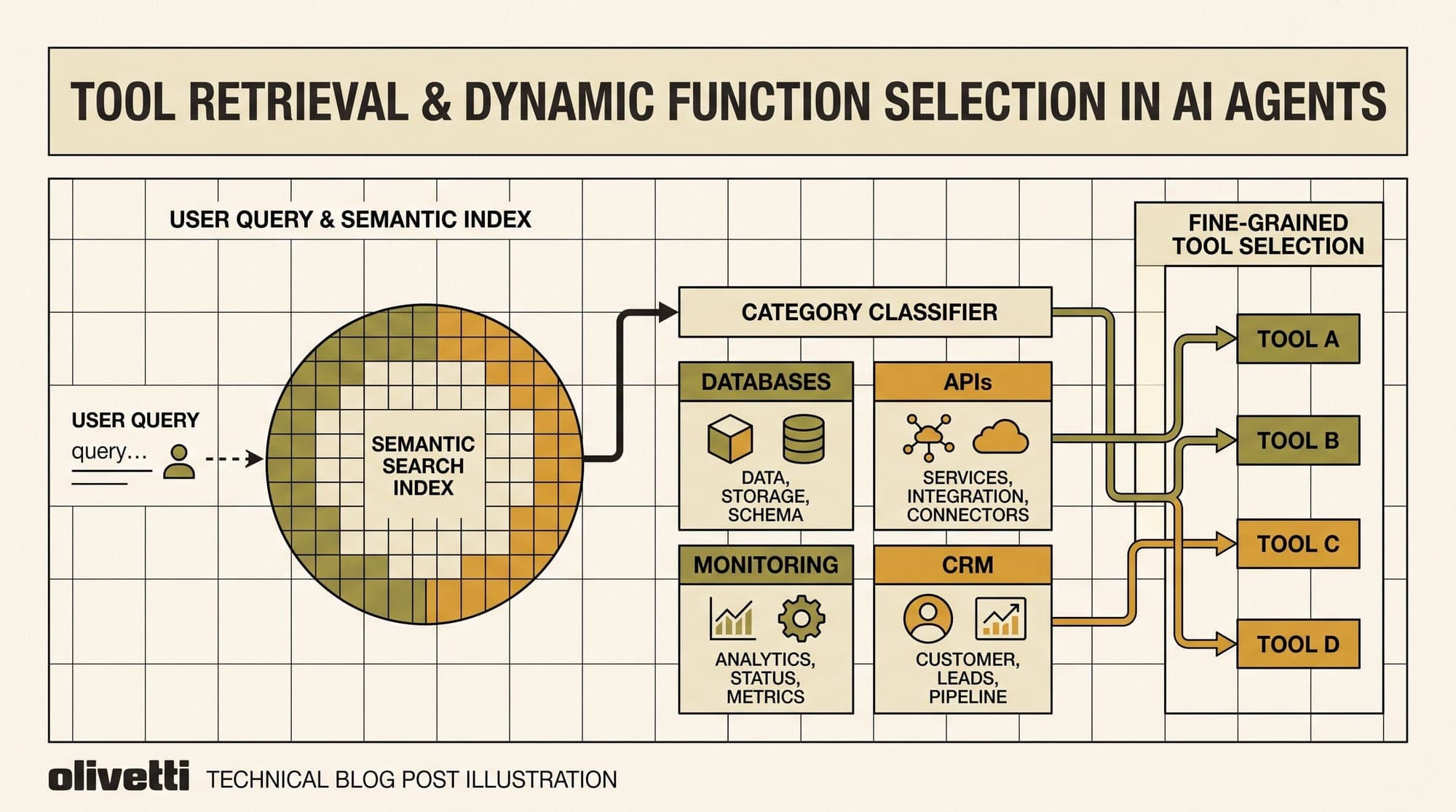
  15. Tool Retrieval and Dynamic Function Selection in Production AI Agents: Architecture, Semantic Indexing, and Serving Trade-Offs

    Tool Retrieval and Dynamic Function Selection in Production AI Agents: Architecture, Semantic Indexing, and Serving Trade-Offs The default approach to LLM tool calling—stuffing every function schema into the prompt—works for demos with a dozen tools. It fails in production where agents face hundreds or thousands of available functions. Context windows saturate, selection accuracy degrades, and latency grows linearly with registry size. This post surveys the architectural progression from stati

    AI
    6 min read
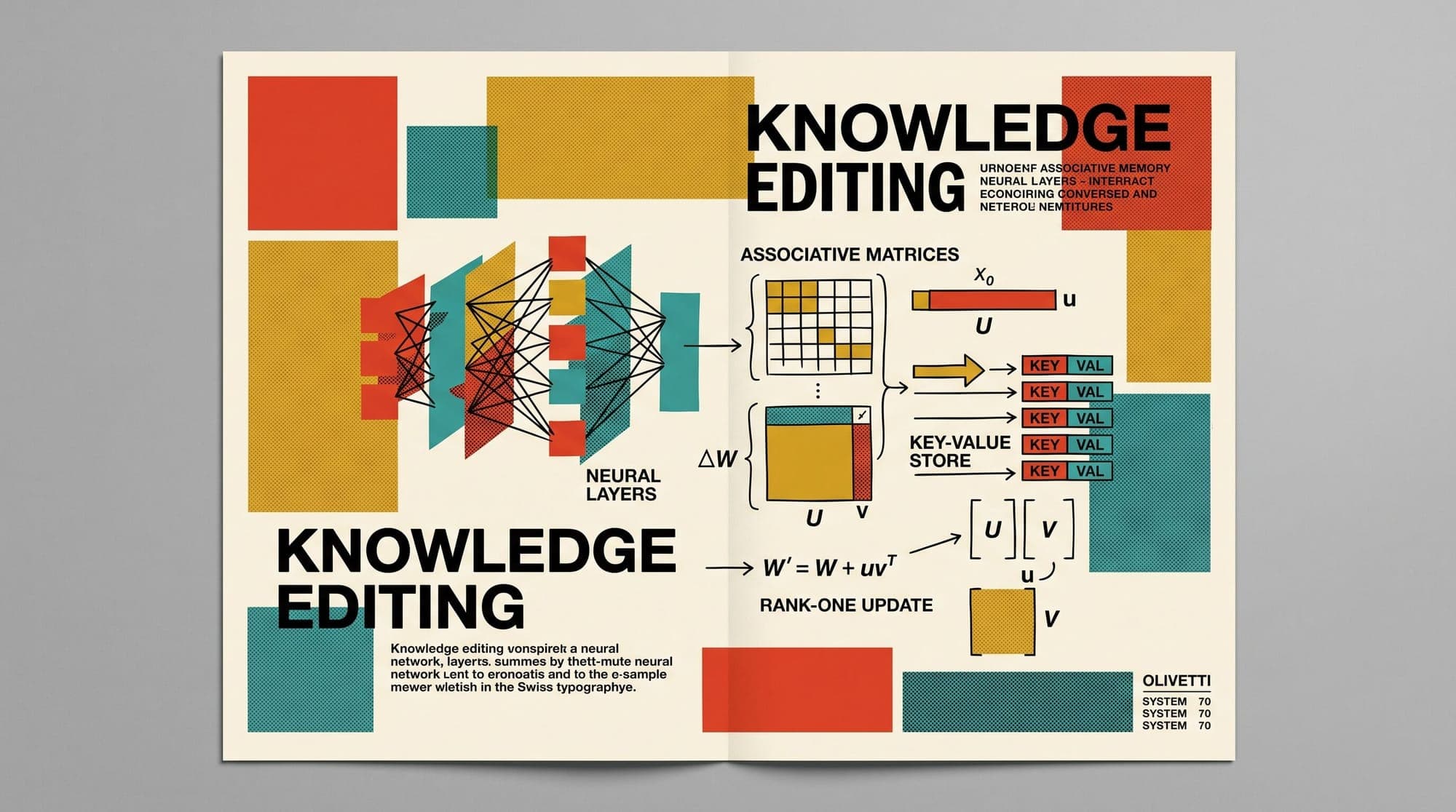
  16. Knowledge Editing in Large Language Models: How Causal Tracing, ROME, and MEMIT Modify Factual Storage in MLP Weights

    Updating factual information in pre-trained large language models has traditionally required two imperfect extremes: computationally expensive continual pre-training, or external prompt-stuffing through Retrieval-Augmented Generation (RAG). Standard gradient descent fine-tuning on isolated facts leads to catastrophic forgetting, parameter drift, and degraded general reasoning. To solve this, mechanistic interpretability researchers introduced direct model editing: a paradigm that treats transfo

    AI
    6 min read
  17. MIT, Stanford, and 12 Academic Labs Launch Public AI Observatory to Track Real-World LLM Usage

    A consortium of researchers from MIT, Stanford University, and 12 other academic institutions has launched the Public AI Observatory (ai-observatory.org), an independent, auditable data repository designed to measure how individuals interact with artificial intelligence assistants in real-world settings. The initiative aims to address the empirical opacity surrounding commercial LLM deployment. While frontier AI developers such as OpenAI and Anthropic periodically release aggregated user metric

    research
    1 min read
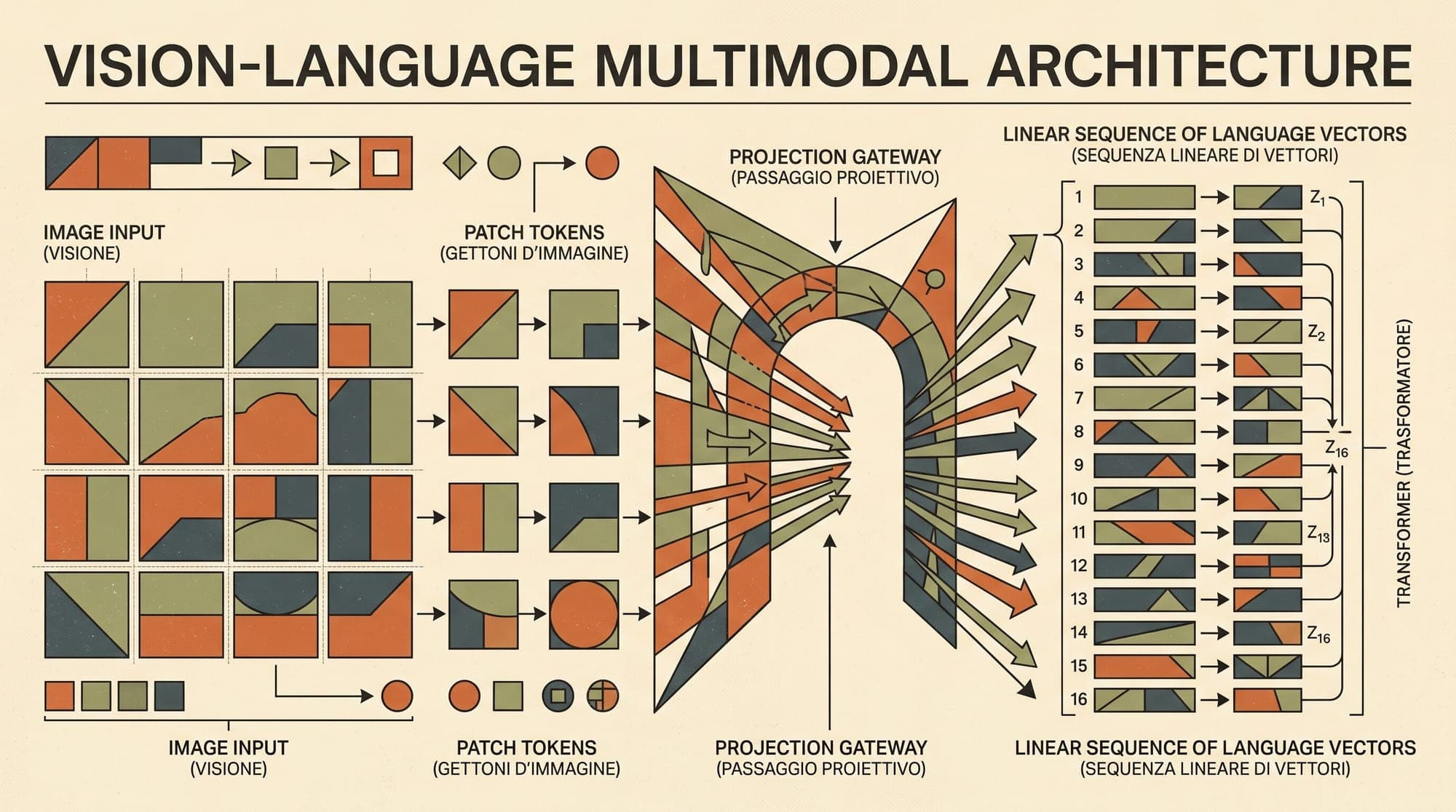
  18. Vision-Language Model Architectures: How Vision Encoders, Token Projectors, and Dynamic Resolution Bridge Modalities

    Modern large language models operate exclusively on discrete sequences of token embeddings. Integrating visual perception into these systems requires converting continuous, two-dimensional spatial arrays into linear sequences of embedding vectors that match the dimensionality and distribution of the language model's hidden states. Vision-language models (VLMs) like LLaVA, Flamingo, Qwen2-VL, and InternVL accomplish this conversion through a three-stage pipeline: a vision encoder, a cross-modal

    AI
    7 min read
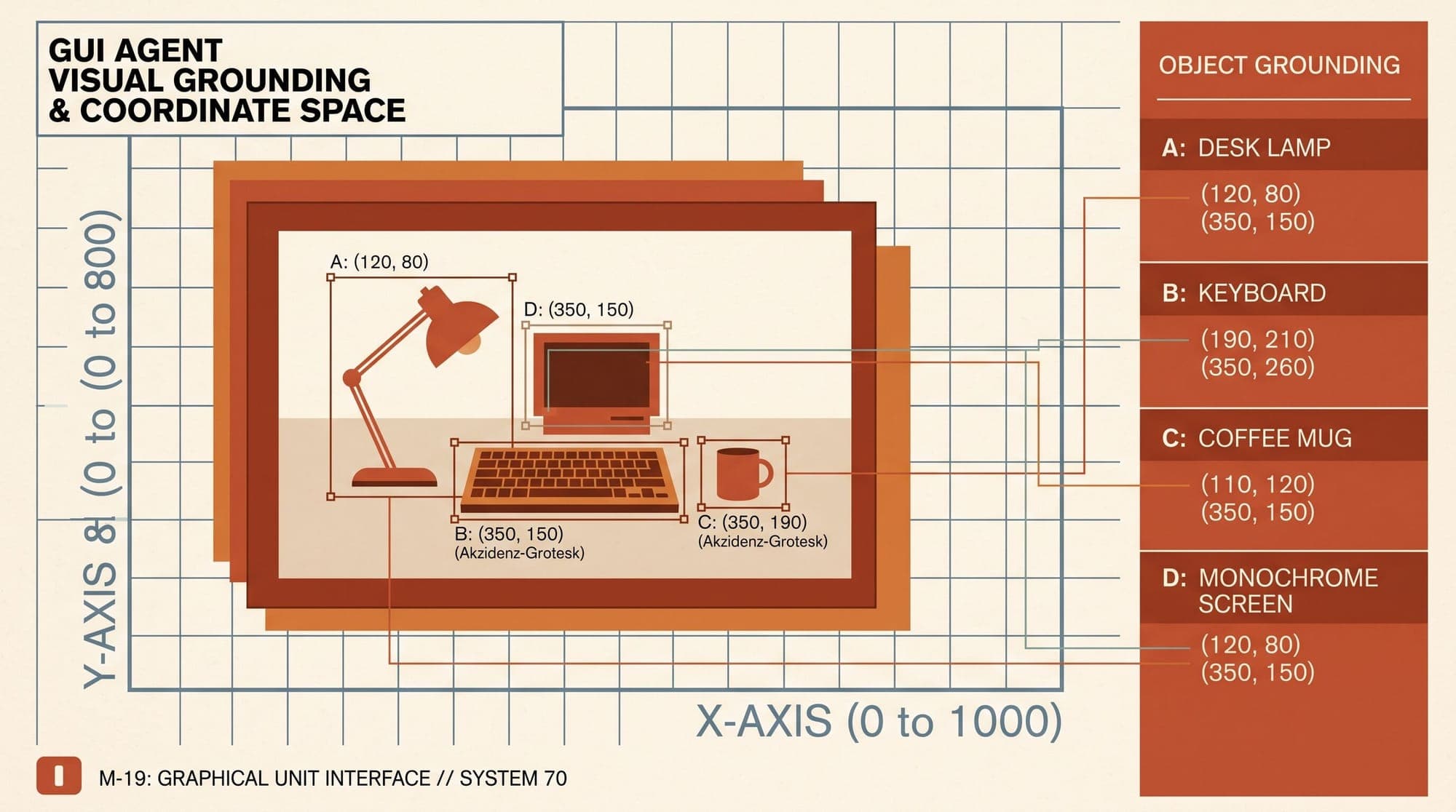
  19. GUI Agent Architectures in Production: Visual Grounding, DOM vs. Pixel Parsing, and Action Spaces

    Graphical user interface (GUI) automation has undergone a structural transition from programmatic DOM manipulation to vision-based foundation agents. Where earlier browser automation relied on CSS selectors, XPath expressions, and accessibility trees, modern desktop and cross-platform agents interact with operating systems through raw pixel observations and virtual input devices. Deploying GUI agents in production environments introduces distinct engineering constraints. Visual grounding precis

    AI
    6 min read
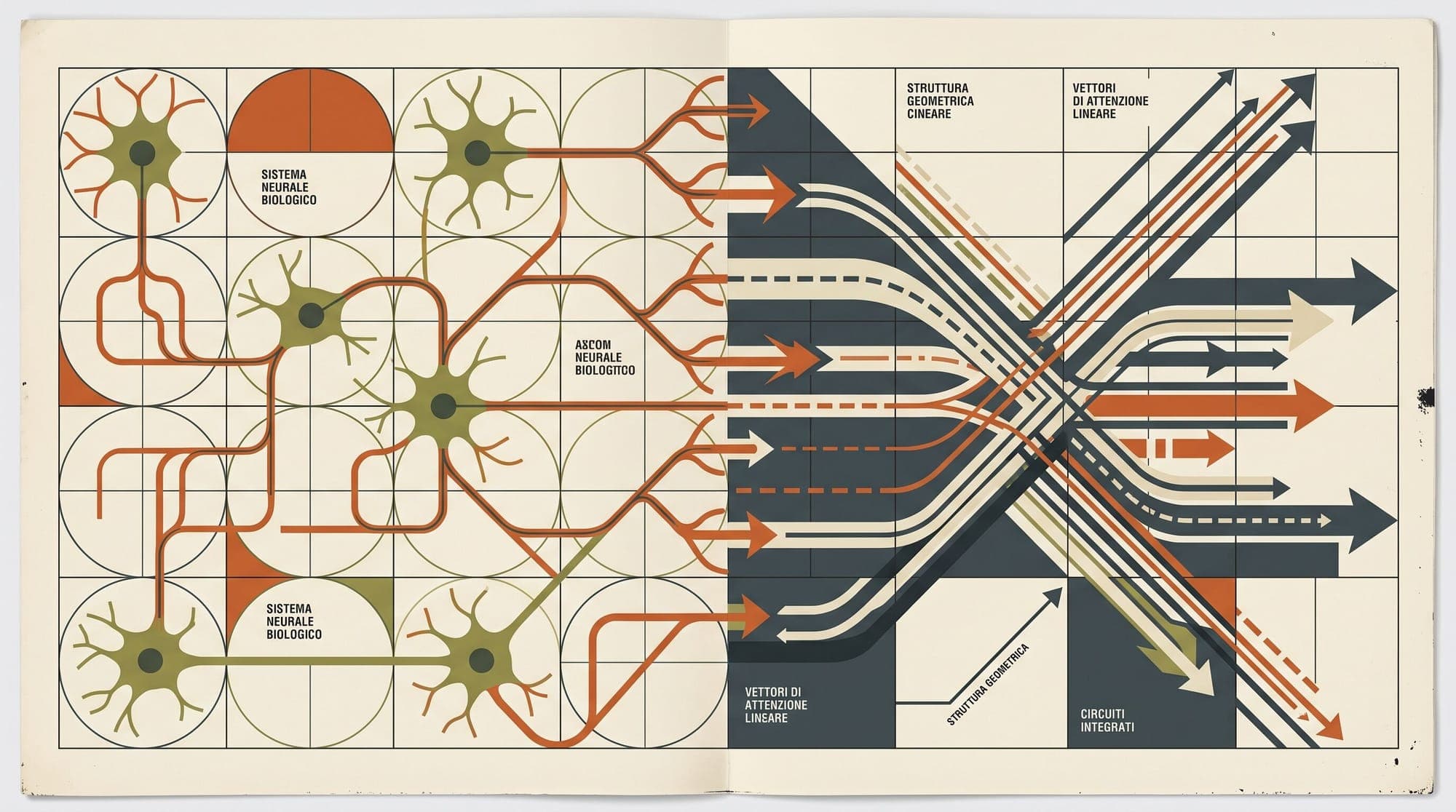
  20. Pathway Secures $30M Seed at $500M Valuation to Scale BDH Post-Transformer Architecture

    AI research company Pathway has secured additional capital at a $500 million valuation, bringing its total seed funding to $30 million. The company is developing a post-Transformer architecture dubbed Baby Dragon Hatchling (BDH) designed to combine continuous in-weights adaptation, long-horizon reasoning, and memory within neural representations without relying on expanding KV caches or external retrieval pipelines. The BDH Post-Transformer Architecture Standard Transformer architectures suff

    AI
    2 min read